
#NonFiction The Year of Lear: Shakespeare in 1606
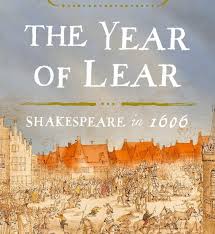
- Author: J. Shapiro
- Title: The Year of Lear
- Published: 2015
- Genre: non-fiction
- List of Challenges 2020
- Monthly plan
Introduction:
- This book is about what Shakespeare (WS) wrote in and
- around 1606 and what was taking place at that time.
- It is a slice of a writer’s life.
- WS’s emotional life in 1606 is lost to us.
- But by looking at what he wrote in dialogue in these times (King Lear (1605),
- Anthony and Cleopatra (1606), Macbeth (1605)
- …we can begin to recover what he was thinking about.
What did I learn?
- Shakespeare’s defining feature was his
- overhauling of plots old plays then inventing his own.
- Ch 1-7 were the most interesting (50% of the book)
- giving me new insights about “King Lear”.
- The play turns on King Lear’s
- ill-fated decision to divide his kingdoms.
- Does the king go mad b/c foolishly divided his kingdoms or
- b/c of his ruinous relationship with his daughters?
What did 1606 mean for Shakespeare?
- The description of the Gunpowder Plot to blow up
- the House of Lords was evidence
- ..that resentments were bubbling up.
- Shakespeare and other playwrights recognized
- that something had changed in their world.
Conclusion:
- Shakespeare struggled to find his footing in the early years of the 1605-1607.
- No year’s output would be more extraordinary than that of 1606.
- He finished this year—King Lear, Macbeth, and Antony and Cleopatra.
- They form a trilogy of sorts that
- collectively reflect their fraught cultural moment.
- An outburst of The Plague in July 1606
- ..had a clear impact on WS and his plays.
- In Macbeth the ringing of church bells
- for the dead and dying is most striking:
- “The dead man’s knell / Is there scarce asked for who;
- and good men’s lives expire before the flowers in their caps…” (Act 4, scene 3)
Last thoughts:
- I wanted to know more about Shakespeare’s plays
- and had to do some serious ‘cherry-picking’ to extract
- what I was looking for.
- 75% is history and only 25% is really about the plays by Shakespeare.
- Too much history….not enough Shakespeare!
- #InformativeButDisappointing
 NancyElin.blog
Trackbacks & Pingbacks