
Killing for Country David Marr

- Author: David Marr
- Title: Killing for Country (452 pg) 2023
- Genre: Non-fiction
- Australian TBR List
- #AusReadingMonth23 @ This Reading Life (Brona’s Books)
Introduction:
- This is a richly detailed saga of
- …politics and power in the colonial world
- …of land seized, fortunes made and lost.
- The violence let loose as squatters and
- their allies fought for possession of the country.
- It is a war still unresolved in today’s Australia.
Conclusion
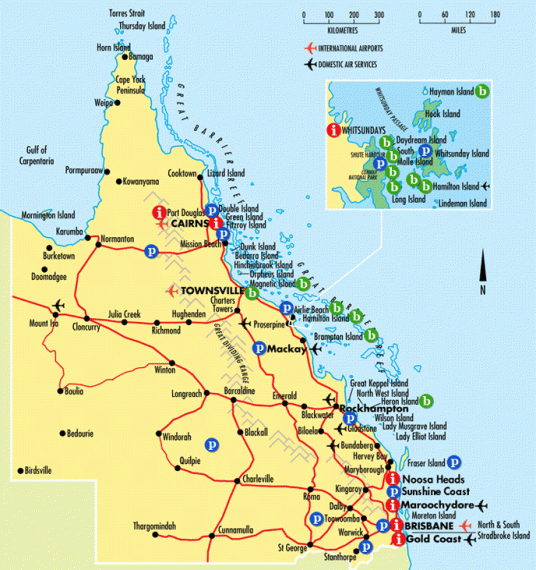
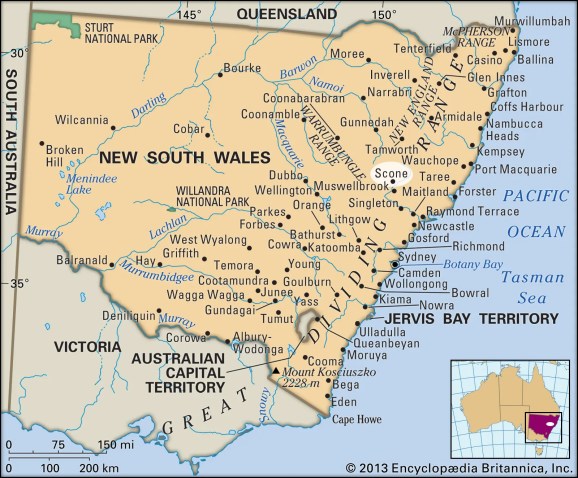
- Book is a of movement from Sydney to NT moving inland…
- …clients (squatters) looking for grazing lands for the merino sheep.
- They engage explorers to make pioneering journeys with the Native Police
- crossing rivers and swamps looking for a stock route.
- Land is claimed….blacks are murdered or chased off the lands.
- Many chapters mention
- …Reg Uhr and his brother D’arcy Uhr.
- Why?
- David Marr wanted to tell the story of his own family’s
- bloody business with the Aboriginal people.
- His ancestors were members of the force until
- the late 1860s.
- That led Mr. Marr into the history of the Native Police.
- For 50 years the Native Police operated without the intervention of
- judge, jury or the law as it went about its work.
- In conclusion…the Australian Native Police was
- “an armed, mobile wing of the government” (ch 25)
- that protected the settlers from the people whose
- country they were invading.
- Australian Native Police (info wikipedia)
Last thoughts:
- This book is one big history lesson
- …but so depressing and difficult to finish.
- Too many sheep and not enough grass on the land
- so…the powerful landowners must steal from the aboriginals!
- This feels like the ‘dark side’ of Australia, cringe worthy
- reading how the Aboriginal peoples were treated. Utter contempt.
- Chapters follow wikipedia information but
- David Marr has inserted direct quotes from legal acts,
- from newspapers The Gazette, The Monitor, The Australian, and
- reports about crimes committed with vivid details and
- witness accounts used during several trials.
- Mr Marr gets 5 stars for all the research he has done!
- PS: I’ve read many books
- about Australia (fiction) and cannot
- …remember ANY mention of Australian The Native Police!
- Has anybody discovered the Australian The Native Police
- …in other books?
- Please let me know in a comment.
Notes:
New Australian words:
- Blackbutt = Yarri tree
- Paperbark – Broad-leaved medium-sized, fast-growing tree
- Peacocking. (Australian slang) – “to pick out the eyes”
- of the land by selecting or buying up the choice pieces and water-frontages,
- so that the adjoining territory is practically useless to any one else.
The important bureaucrats:
- Gov. Lachlan Macquarie (1762-1824) – Gov. NSW 1810-1821 – introducred reforms
- Rev. Samuel Marsden (1765-1838) – profits making while saving souls
- John Bigge (1780 – 1843) English judge – sent to NSW bring law and order
- Gen. Ralph Darling, (1772 – 1858) Gov. NSW from 1825 to 1831 – “a tyrant…”
- Richard Jones (1786 – 1852) English-born politician/landowner in NSW – “the boss…”
- Bishop William Grant Broughton (1788 – 1853) …another attempt to save souls
- Gen. Richard Bourke (1777 – 1855) Gov. NSW 1810-1821 – wanted the emancipation of convicts
- Frederick “Filibuster” Walker (1820 – 1866) Commandant of the Native Police.
The masscres….just awful.
- Waterloo Creek massacre
- Gravesend station
- Myall Creek massacre
- Pallamallawa
- Myall Creek massacre
- Cullin-la-ringo massacre
9 Comments
Post a comment
 NancyElin.blog
We have an author talk with David Marr coming up at work next week which I hope I’m not too tired to attend.
As for books with Native Police and/or trackers there were the Bony series of books written by Arthur Upfield. I think you read Alexis Wright’s Tracker a few years ago too (although that is non-fiction). Henry Reynolds would be another author/researcher to check out. As is Telling Tennant’s Story.
The Sun Walks Down by Fiona McFarlane (which I read & Loved last year) has an Indigenous tracker. But I can’t think of any other fiction ones right now.
I did find this site thought, that you might find handy…
https://australianfrontierconflicts.com.au/resources/books/
I hope you go to the talk with D. Marr! Do a blog post about it! Tell him his book here…on the other side of the world…had a deep impact on me. He educated me about the “dark side” of Australian history. Marr mentions Reynolds in the book 2 x also in the aknowledgments. His book “The Other Side of the Frontier” was used by Marr for many references. Trackers by Ms Wright… I read it at a stage when I was totally ignorant of the First Peoples plight in Australia. I should add a footnote to my review that I will re-read it with the knowledge I have accrued in the past 10 years by joining #AusReadingMonth! I’m always enthusiasic a/b your challenge b/c it is truly a challenge for me to learn more about Aussie, Aussie, Aussie! I will put the books you mentioned on my TBR Australian Reading List, thanks so much. I also want to read The Commandant (writer?, the name escapes me now)…I’m sure I will recognize some of the aspects of Australian society (lock them up…and throw away the key)…mentality. Better to hear the Australian history from a ‘black armband’ approach rather that read the “white blindfold” approach which emphasises progress, inclusion.
That sounds like a powerful and difficult read – thank you for highlighting the book for us.
Powerful…but it seems Australia hasn’t changed its “stance” (from 1830s -> 2020s) about the right of the Aboriginal people. The result of today’s VOICE referendum ( a proposal to enshrine an Indigenous voice to parliament in the nation’s constitution) with 73% of the vote counted: 60% NO – 40% YES. Not one state in Australia voted for the ref in the majority….so sad.
Yes I saw that on our news, gutting (although there were Aboriginal people on the No side so I don’t think it was completely clear cut).
…and a lot of misinformation spread through social media.
Oh yes completely that, and it’s also hard to know what out media is emphasising.
This sounds like an interesting book but I don’t think I could read it.
I did read some books in the Bony series by Upfield in my youth, but I have forgotten them which is why I should read at least one or two of them.
Tracy, there were NF books I read this year that were…difficult.
A few on the Australian Political Book Award longlist (injustice towards Indigenous people of Australia) and
some disturbing books during Black History Month (blatant racism).
But we should not turn away from these books…must understand what is going on in this world. Thanks for your comment!