
Classic: Dutch writer W.F. Hermans
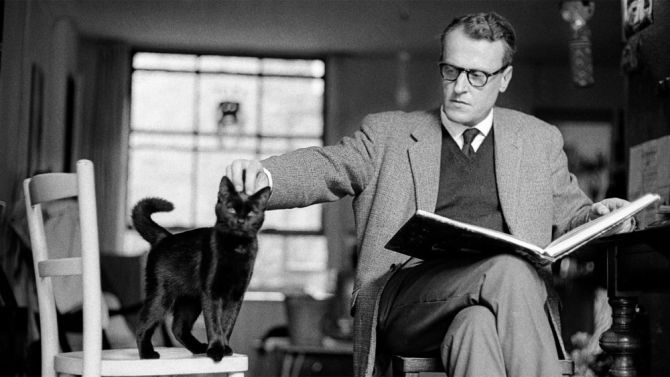
- Author: W.F. Hermans
- Title: Nooit Meer Slapen
- Published: 1966
- Language: Dutch ( available in translation: Beyond Sleep)
- #20BooksOfAutumn
- #ccbookreviews
- Trivia: W.F. Hermans is considered one of
- ‘The Big Three’ 20th C writers in Dutch literature.
- You can read more about W.F. Hermans HERE
- List Reading Challenges 2018
- Monthly planning
- Classic Club Master list
Conclusion:
- Dutch is my second language.
- It was time I started 20 books by Dutch authors
- …considered 20th C must reads.
- W.F. Hermans is the first one on the list.
- Ch 1-12 were very slow...but if you keep reading the
- book picks up steam ch 27 until the end.
- Main character: geologist Alfred is obsessed with ‘discovering something new’.
- He wants to prove to his deceased father he has not wasted his life.
- Hermans uses the philosophy of Wittgenstein (3 references) and the
- Symbol: a compass to help Alfred find his direction
- …physically (during a failed expedition on a Norwegian glacier)
- …and spiritually (start a new life.)
- It is a good book….but not great.
- The war novel The Dark Room of Damocles
- is the author’s ‘chef’ d’oeuvre
- W.F. Hermans was member of the Dutch resistance WW II.
#Poetry Danez Smith: Forward Award Poetry 2018
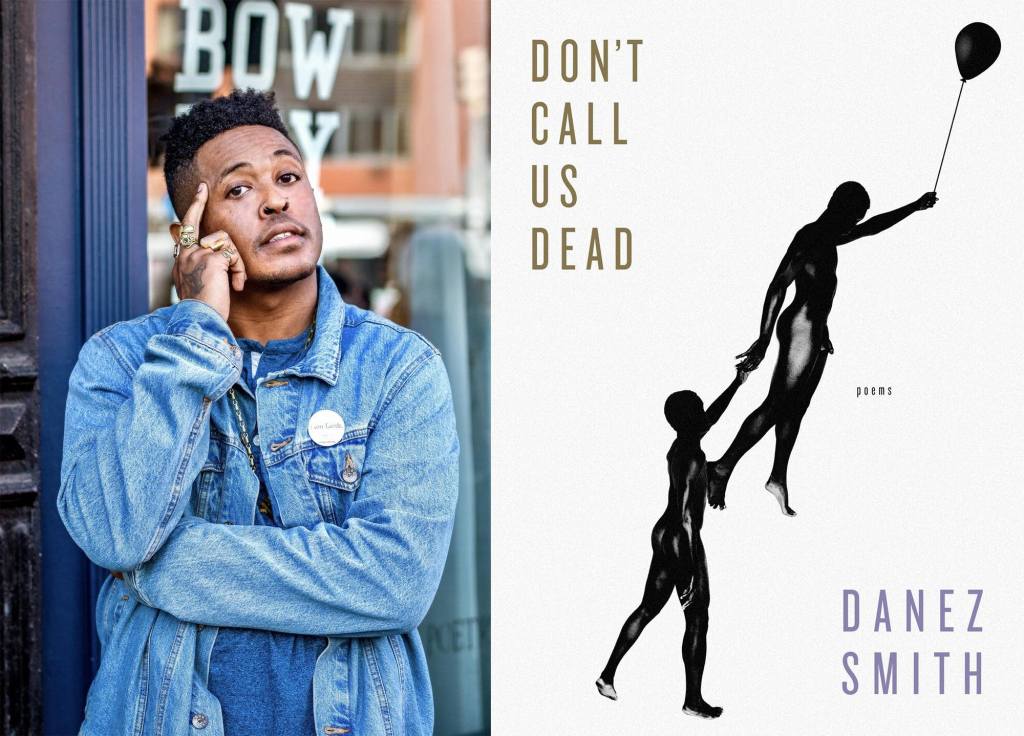
- Author: Danez Smith
- Title: Don’t Call Us Dead
- Published: 2017
- Genre: poems
- Trivia: Short list National Book Award 2017
- Trivia: Awarded Forward Prize in London 18 September 2018
Conclusion:
- Once I figured out who ‘WE” were and
- what “HERE” meant and
- where SOMEWHERE and SOMEPLACE is…
- in the first poem ‘Summer, Somehere’
- my mind wanted to race through the entire collection immediately.
- Don’t.
- Take the time to read each poem at least 10 x…let them sink in.
- Danez Smith has broken through the formal poetry rules and created a
- poetry that is unique …all its own.
- There is a crude but eloquent energy in every piece of writing
- Danez Smith is a meteorite of the poetry world.
“Don’t Call Us Dead,” landed on the longlist for the National Book Award 2017.
WINNER:
Frank Bidart, Half-light: Collected Poems 1965-2016 (Farrar, Straus and Giroux / Macmillan Publishers)
Finalists:
- Leslie Harrison, The Book of Endings (University of Akron Press)
- Layli Long Soldier, WHEREAS (Graywolf Press)
- Shane McCrae, In the Language of My Captor (Wesleyan University Press)
- Danez Smith, Don’t Call Us Dead (Graywolf Press)
Last thoughts:
- Don’t Call Us Dead wrestles with what it means to
- be a young black gay man in America.
- It begins with a lengthy poem — “summer, somewhere” —
- that imagines a utopic afterlife for
- victims of racism and police brutality.
- This is not language…it is music in your head!
- Here is the first stanza of the poem…..amazing!
“summer, somewhere”
somewhere, a sun. below, boys brown
as rye play the dozens & ball, jump
in the air & stay there. boys become new
moons, gum-dark on all sides, beg bruise
-blue water to fly, at least tide, at least
spit back a father or two. i won’t get started.
history is what it is. it knows what it did.
bad dog. bad blood. bad day to be a boy
color of a July well spent. but here, not earth
not heaven, we can’t recall our white shirts
turned ruby gowns. here, there’s no language
for officer or law, no color to call white.
if snow fell, it’d fall black. please, don’t call
us dead, call us alive someplace better.
we say our own names when we pray.
we go out for sweets & come back.
#AWW 2018 Atomic Thunder (NF)
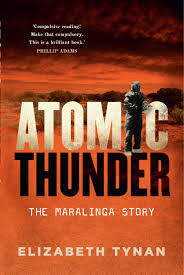
- Author: E. Tynan
- Title: Atomic Thunder: The Maralinga Story
- Published: 2016
- Winner CHASS Award 2017 Australia Book Prize
- Winner Prime Minister’s Literary Award 2017 in the Australian History
- List of Challenges 2018
- Monthly plan
- #AWW2018 @AusWomenWriters
Who is Elizabeth Tynan?
- Elizabeth Tynan is a science writer and academic
- at the James Cook University in Queensland, Australia.
- She completed a PhD on aspects of British nuclear testing in Australia.
What is Atomic Thunder about?
- Britain wanted to join the nuclear club.
- Britain needed Australia’s geographic assets (testing ground)
- …and its distance from the British electorate.
- Britain conducted three atomic explosions at
- the Monte Bello Islands off the coast of Western Australia
- …and nine at Maralinga and Emu.
- This book chronicles the scandals that ensued:
- 1950 Australian prime minister Robert Menzies
- agreed to atomic tests without informing his government
- the overall levels and distribution of radioactivity
- …that wreaked havoc on Indigenous communities
- …and turned the land into a radioactive wasteland
- the uncovering of the extensive secrecy around British testing
- This book is the most comprehensive account of the whole saga.
- After the British departed they left an unholy mess behind.
Conclusion:
Strong point:
- Mw Tynan shows in the last chapters
- the transformation Australia society has endured.
- What a difference a generation makes
- …layers of secrecy and inertia are lifted!
- Investigative journalists and media are not
- ….interested in comforting the powerful
- No more stonewalling….
- The people of Australia demand accountability!
Quote: pg 290
- “Britain knew in the 1960’s that radioactivity at its former nucelar
- test site in Australia was worse than first thought.
- But it did not tell the Australians.“
Quote: pg 300
- “Australia in the 1950s and early 1960s was essentially
- ….an atomic banana republic…
- useful only for its resources…especially uranium and land.”
- Chilling and selfish attitude of Britain
- treating Australia as a lackey. Disgraceful
Last thoughts:
- The whole story is shocking but while I was reading
- chapter 9 Clean-ups and Cover-ups I put my hands
- over my lips in absolute horror.
- Clean up crews were working 12-hr shifts scooping
- up topsoil that was liberally
- …dotted with plutonium-contaminated fragments.
- No-one says any thing about this to George Owen (British Army recruit).
- After 5 months working at Maralinga he is discharged.
- Soon after he notices strange growths on his hands.
- This is plutonium-239….
- 1 millionth of a gram may be sufficient to
- cause lung cancer if inhaled.
- How much dust did Owen inhale?
- Speechless….
- #MustRead
- PS…I read it in one day…could NOT put it own!
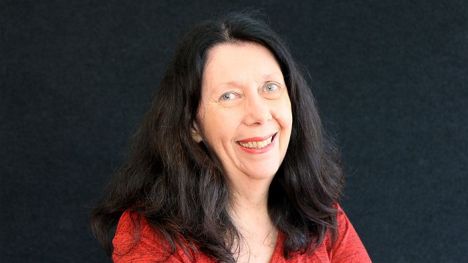

 NancyElin.blog