
23
Dec
#AWW 2019 True Stories

- Author: Helen Garner
- Title: True Stories
- Published: 1996
- Genre: essays
- Rating: A+++++
- List of Challenges 2019
- Monthly plan
- #AWW2019 @AusWomenWriter
Conclusion:
- Yet again, another Helen Garner book
- …that I did NOT want to end!
- She is a magnificent wirter and I am
- glued to the page with the vivid details she provides.
- I kept this book under my pillow (IPod audio book)
- to transport me to the ‘reading room’ between
- being awake ….and asleep.
- Some stories I had to listen to twice
- …fell asleep before the ending.
- Who does not wake up at 3 am sometimes for no reason?
- This audio book was the perfect ‘sleeping pill’.
- Helen Garner’s voice is soothing and you drift off quickly.
Last thoughts:
Favorites:
- Selections about her sisters
- Cruising on Russian ocean liner
- Five train trips in the region of Melbourne
- Stories about authors, Patrick White and Elizabeth Jolley
- The Insults of Age
- Marriage
- Death
- Labour Maternity Ward, Penrith
- These are only a few that really impressed me.
- One story I started but could not finish:
- Killing Daneil.
- Garner is known for her true crime books
- …and this story was just too distressing (child abuse)
- So, you are warned….you can just skip it…as I did.
- Helen Garner delves deeply into a crime
- so vivdly it is impossible to read….and I imagine
- just as hard to put on paper.
- It is an extraordinary way of writing.
- She has to take care that
- ..she is not “drawn into the darkness”
- …of the subject she is writing about.
- Her books, for example This House of Grief
- have taken an emotional an
- physical toll on Helen Garner.
#MustMustRead
- A book to read leisurely….
- that stays with you for a lifetime.
16
Dec
#AWW 2019 Victorian Literary Best YA Novel
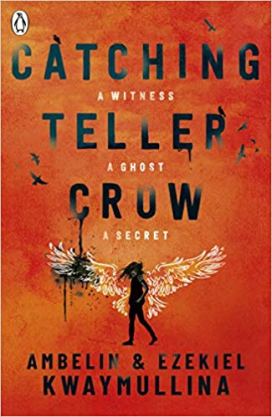
- Author Ambelin & Ezekiel Kwaymullina
- Title: Catching Teller Crow
- Genre: ghost story (speculative fiction)
- Reading time: 2 hrs 40 min
- Published: 2019
- List of Challenges 2019
- Monthly plan
- #AWW2019
- @AusWomenWriters
- Trivia: 2019 Winner Aurealis Award Best Young Adults Novel
- Trivia: 2019 Winner Victorian Premier’s Literary Awards
- Best Writing for Young Adults.
Introduction:
- A ghost girl who is staying with her father while he grieves.
- In doing so, she begins to help him with a murder mystery.
Hook:
- The hook is the concept that Officer Teller’s
- assistant while investigating a series of murders
- …is his daughter’s…ghost!
- Another hook is the witness’s statement that
- “This thing didn’t start with the fire…It started at sunset” (pg 24)
- And who is Tansy Webster and her angels? Wings flapping? (pg 94)
- Now readers are turning pages
- ….curious….tension!
Themes
- Loss of a loved one and the stages of mourning or
- …grief are overriding themes.
- Injustice towards the Aboriginal people
- …is also a strong theme.
Parallels: Mike Teller vs Derek Bell
- Both Officer Michael Teller (Beth’s Dad) and
- Officer Derek Bell grew up in small town and
- their fathers were also cops!
- Gerry Bell and Officer Teller sr.
Parallels: Father and daughter –> epiphany moments (pg 132)
- Both Beth (daughter) and Mike Teller (father) have
- epiphany moments:
- Beth realizes she does not belong here (with the living). (pg 130)
- Mike Teller realizes he is blaming himself
- …for an accident he could not prevent.
- He feels he failed his daughter.
- He was holding on to a burden
- …something that was not his to bear. (pg 133)
Contrasts: Father vs son (pg 132)
- Officer Michael teller does not want to be like his
- racist father. He was a police officer who did not do
- enough to protect the Aboriginals.
- Mike did not want to be one of those
- people who didn’t pay attention.
- Officer Teller took any injustice
- ….personally (wife was Aboriginal)
- when Aboriginals are not treated right.
Contrasts: Beth in “Catching Teller Crow” vs Else in “The Endsister”
- Narrator Beth is just about the same age as Else in The Endsister
- One is dead….one is still alive
- …one is cheerful….and one is confused, isolated.
- Beth shows no signs of ‘the teenage brain’ as did Else.
- It seems once you’ve died…all your problems disappear!
- ….mood swings, erratic behavior, ill-tempered….
- I will try to find a moment in Beth’s
- narration that shows her in a bad mood!
- Yes, she does cry….she had to make an important decision
- …about the colours.
Strong point: Beth’s ghost is Detective M. Teller’s assistant
- This is a great plot device.
- Beth can linger in places once
- her father has left to eavesdrop
- on suspects conversations and actions!
- #Clever
Strong point: Role reversal literary device (pg 11)
- “He and I were the reverse of each other:
- I couldn’t remember my death;
- Dad couldn’t remember my life…” (pg 11)
- Another role reversal….
- Dad was looking after Beth when his wife died.
- That had kept Dad going.
- Now Beth was looking after her Dad
- ….to keep him going. (pg 13)
Strong point: Writing style varies… for certain effects!
- Chapters about CATCHING...
- Isobel speaks in staccato sentences.
- Staccato sentences are short and often emphatic to
- focus the reader or listener on content.
- This technique borrowed from poetry intensifies
- Catching’s aboriginal storytelling…
- with base emotions….earthy!
- This conveys certain kinds of emotions in particular,
- namely fear, anxiety, anger, confusion and stress.
Strong point: Izzy’s storytelling
- These chapters are fun to read.
- You can lose yourself in them…
- let you imagination soar.
- I’m sure YA readers can find something
- in these tellings to hold on to.
- I enjoyed these next few lines:
- — Courage eats fear.
- — Joy eats sadness.
- — Choose the opposite of grey.
#NoWeakPoints !!
Conclusion:
- This was absolutely a stunning novel!
- I’ve never been so entertained reading YA fiction.
- I think the storytelling (Aboriginal influences) was spot on.
- But the most important part of the book for me
- ….was how people dealt with grief. (Officer Mike Teller)
- They say time is a healer.
- But grief is always in the hollow of your heart.
- It’s just waiting for something to shake it out.
- Beth was there to shake it out of her Dad.
- Because loss never really leaves you.
- Loss alters you.
- #MustRead….worthy winner
- Victorian Premier’s Literary Awards
- Best Young Adults Novel 2019
11
Dec
Brett Whiteley Australian Artist
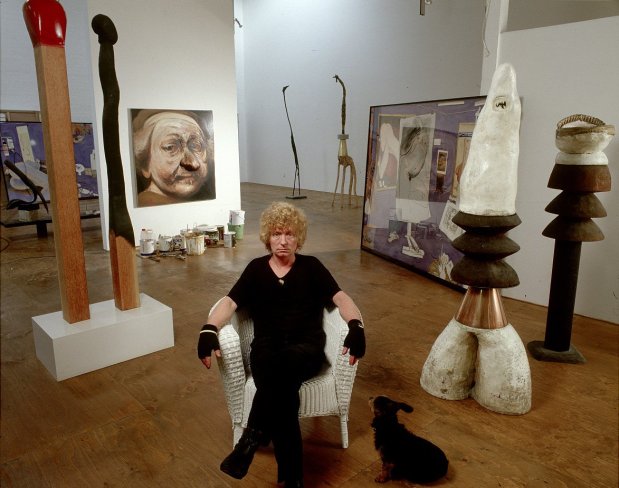
- Author: Ashleigh Wilson
- Title: Brett Whiteley: Art, Life and the Other Thing
- Genre: biography
- Reading time: 13 hours 25 min (audio book)
- Published: 2017
- List of Challenges 2019
- Monthly plan
- Trivia: #ABIA 2017 short list (Australian Book Industry Awards)
- @ashleighbwilson
- @artgalleryofNSW
- @ABIAs_Awards
Introduction:
- Of all the Australian painters who emerged during the mid
- 20th century Brett Whiteley was the (Wikipedia link for more info)
- most mercurial, the most ambitious
- to make an impact on the world at large.
- I had NEVER heard of Brett Whiteley
- …and realize it was my loss.
- Delighted to discover this brilliant
- biography by Ashleigh Wilson.
Brett Whitely:
- Born in Australia, Whiteley moved to Europe in 1960 determined to make an impression.
- Before long he was the youngest artist to have work acquired by the Tate.
- With his wife, Wendy (1941), and daughter, Arkie (1964-2001), Whiteley
- then immersed himself in bohemian New York.
- Despite many affairs…Brett proclaims that
- he and his wife Wendy “We’re lifers.”
- His art depended on his relationship to Wendy.
- It had been that way since his early abstractions.
Ashleigh Wilson:
- He has been a journalist for almost two decades.
- He received a Walkley Award for his reports on unethical behavior
- in the Aboriginal art industry, a series that led to a Senate inquiry.
- He has been The Australian’s Arts Editor since 2011.
- Wilson follows the chronological order of Whiteley’s paintings:
- Early works
Abstraction
Bathroom series (sensual sketches of Wendy)
John Christie (serial killer) & London Zoo
Lavender Bay, Australia
Portraits
Birds
Landscapes
The studio & late works
Conclusion:
- Brett Whiteley (1939 – 1992)
- died from a drug overdose.
- He was an heroin addict.
- The deeper problem was that his
- dependency was entwined with his art.
- Like many addicts he found it hard to imagine life sober.
- Heroin provided stability...
- …and to live without it was like to peering into darkness.
- It was one thing to be clean for his health
- …but what would it mean for his art?
- He was found dead at the Beach Motel, Thirroul Australia.
- This expansive biography
- Wilson gave the essential details about the death. (ch 22)
- Chapters 1-21 concentrate on the
- …richness and variety of Whiteley’s work
- …and the many exhibitions he held and prizes won.
- #ExcellentBiography
- Worth your reading time!
Strong point:
- Ashleigh Wilson Wilson takes the reader through a
- virtual art gallery describing and assortiment
- …of Brett Whiteley’s paintings.
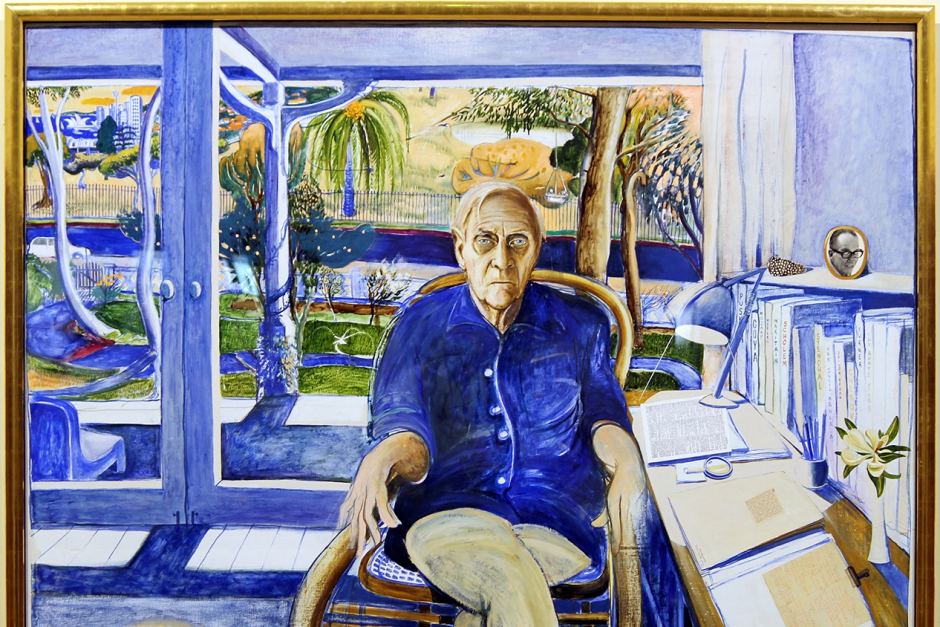
Portrait of Patrick White (Brett Whiteley)
- Photo in frame….Emmanuel George “Manoly” Lascaris
- Look at White’s eyes and
- ….Centennial Park in the backround.
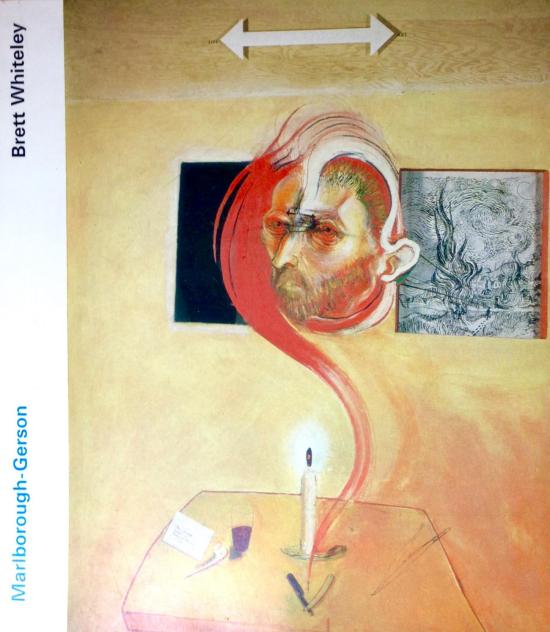
Portrait Vincent van Gogh
- On the table….a candle, a pipe, a letter to Theo and a razor.
- Two arrows:
- towards the right = good, light and sanity
- towards the left = evil, darkness and madness
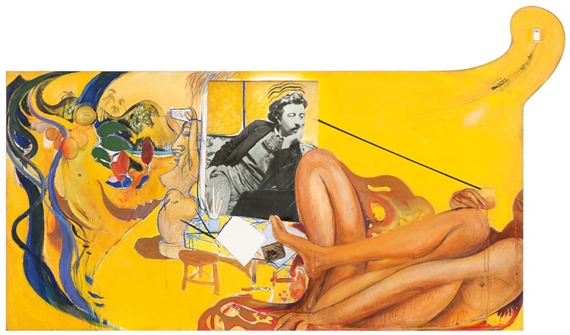
Portrait of Gauguin
- Gaughin on the eve of his attempted suicide
- We see ‘The Tree of Knowledge, photograph of Van Gogh and a woman’s body.
- Brett had extended the right side to an ear shape with a bottle with a white substance
- labled ‘Arsenic’.
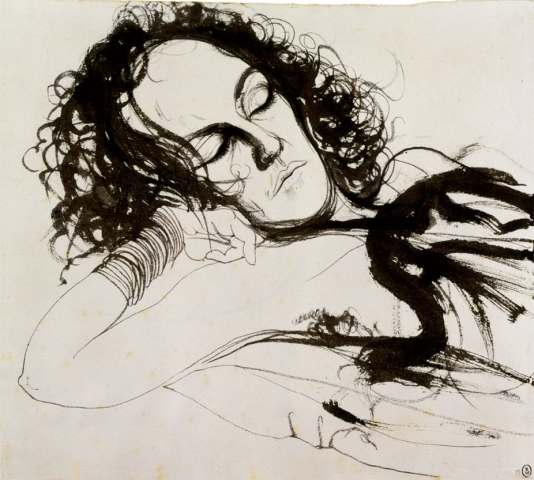
Portrait Wendy (wife)
- Brett Whiteley was a master draughtsman.
- This sketch reveals his command of line.
- The way Brett could capture the essence of his
- subject with only a few simple sweeps.
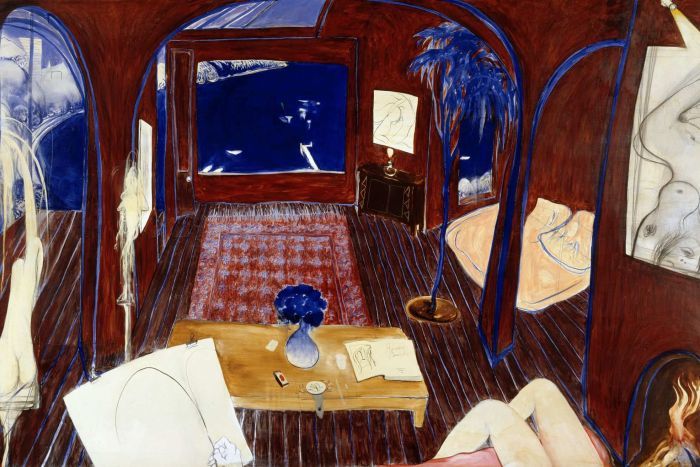
Henri’s Armchair
- This is Brett Whiteley’s debt to Matisse.
- He painted the interior of Lavender Bay where the
- …water can be seen through the window
- …frame at the end of the room beyond the arches.
- It is a domestic workmanlike scene.
- Two legs on the couch and used matches
- …are scattered on the coffee table.
- There is a vase and notebook on which is written the title of the painting.
- As in the works of his historical model, Matisse,
- ….there are notes of domesticity:
- bed, open fire, and several works of Whiteley in the room
- …a sculpture, a nude drawing and an erotic drawing.
- There is a deep red brown color in the house
- …but the blue is all around.
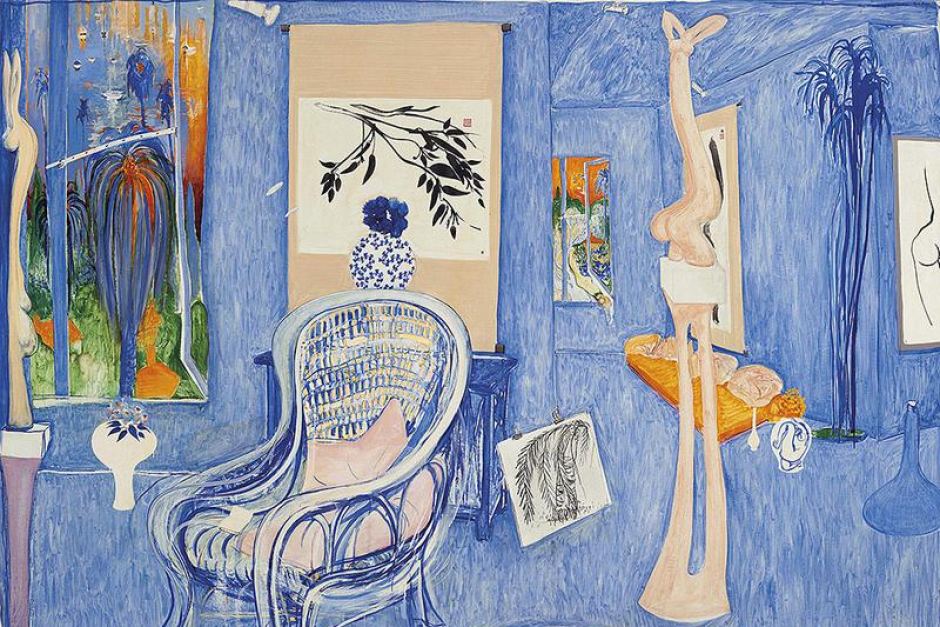
My Armchair
- This was the most expensive painting in Brett’s
- September 1976 Australian Galleries exhibition.
- This painting’s was priced for 10.000 dollars.
- This was a companion piece for “Henri’s Armchair”.
- The blue soaked canvas inside Brett’s studio including
- pictures (B/W = ‘Inside an Avocado Tree’), sculptures
- …a view out to the Sydney Harbour and the chair in which
- …he sat to reflect on the art around him.
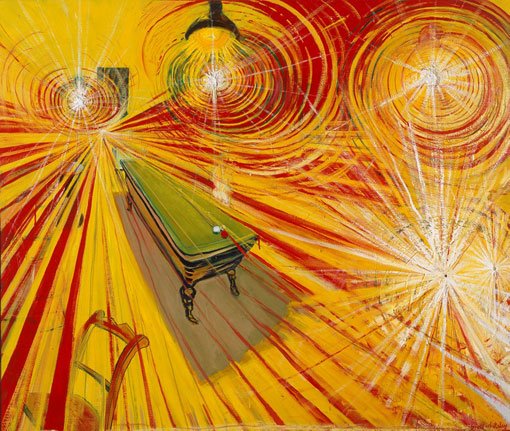
Another way of Looking….Vincent
- Whiteley pays homage to Vincent van Gogh and
- …the profound influence this Dutch post-impressionist
- painter had on Whiteley throughout his career.
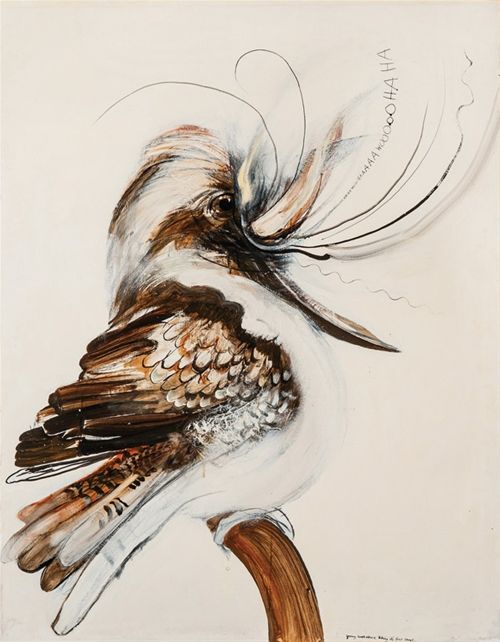
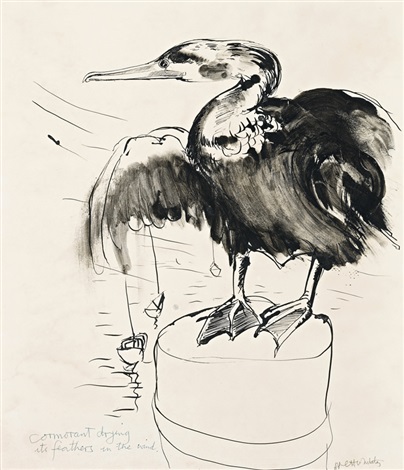
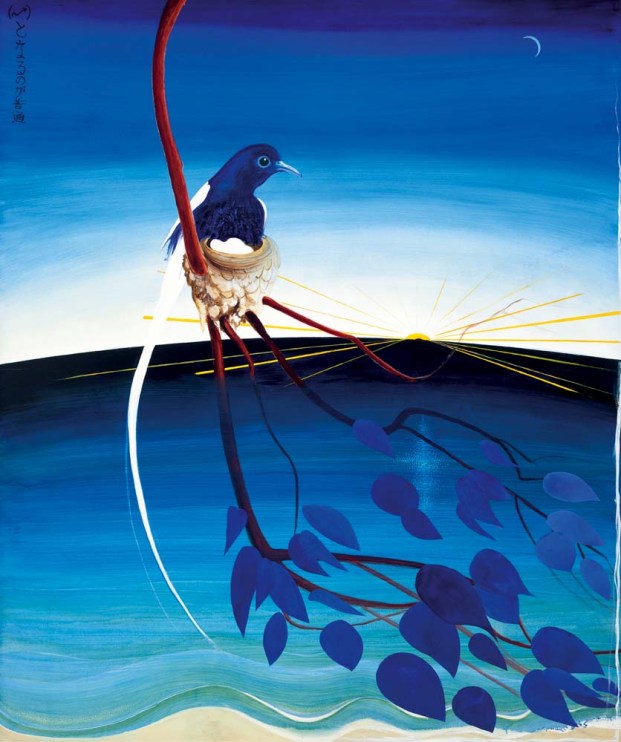
Birds:
- I had to include some of the most beautiful sketches/paintings of birds!
- Whiteley first came to notice the captivating beauty of birds
- …in July 1969 during a blissful five-month stay in a small cottage
- in the village of Navutulevu, about eighty kilometres from Suva in Fiji.
- The couple, with their five year-old daughter Arkie,
- lived simply and happily and enjoyed their
- island paradise after the turmoil and bustle of New York.
- Wendy Whiteley summed the period up well: ‘We really did live in Paradise there.”
Kookaburra
Cormorant
The sunrise, Japanese: Good morning
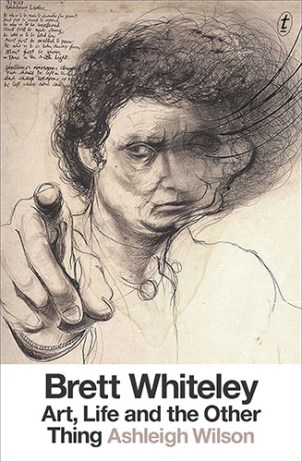
Bookcover: (self-portrait)
7
Dec
#AWW 2019 Nine Lives: Women Writers
- Author: Susan Sheridan
- Title: Nine Lives: Postwar Women Writers Making Their Mark
- Published: 2011
- Genre: non-fiction
- Rating: A
- Trivia: This book has been sitting on my TBR for two years!
- List of Challenges 2019
- Monthly plan
- #AWW2019 @AusWomenWriters
NOTE:
- Trying to get back to books with
- …’one’ very good eye after cataract surgery
- …the the other eye ready for correction in 2 weeks.
- #NeedCoffee
Introduction:
- Why did I wait so long to read this wonderful book?
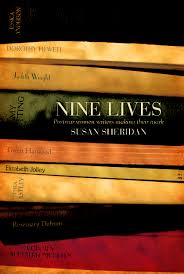
- I think the bland bookcover did not catch my eye.
- Ms Sheridan should have used thumbnail photos of te
- …talented Australian writers she was about to introduce to this reader!
- This books contains
- nine condensed, compact biographies of Australian Women writers
- Sheridan highlights a generation of women writers
- overlooked in the Australian contemporary literary scene.
- These women writers who were born between 1915-1930:
- Judith Wright
Thea Astley
Dorothy Hewett
Rosemary Dobson
Dorothy Aucherlonie Green
Gwen Harwood
Jessica Anderson
Amy Witting
Elizabeth Jolley
- All had children...
- J. Wright and D. Green were the sole support of their families.
- The nine women were versatile writers
- poet, playwright, novelist, short stories,
- non-fiction (autobiography), literary critic and editor.
- T. Astely won Miles Franklin Award 4x, Jessica Anderson 2x and E. Jolley 1x.
- All shared a sense of urgency…
- their vocation, their ‘need’ to be a writer
- that would not let them rest.
- Judith Wright – was an important name in the emerging postwar literature.
- She was one of the few Australian poets to achieve international recognition.
- Ms Wright is the author of of several collections of poetry,
- including The Moving Image, Woman to
- Man, The Gateway, The Two Fires, Birds,
- The Other Half, Magpies, Shadow, Hunting Snake, among others.
- Her work is noted for a keen focus on the Australian environment.
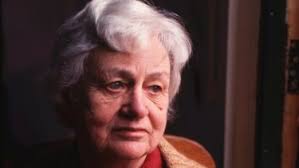
- Thea Astley – I am a huge fan of this writer.
- I did learn more tidbits of info about this woman.
- Critics were not always kind to Thea Astely.
- The ending of The Slow Natives
- …was “…too sentimental and melodramatic.
- I didn’t think so!
- Even Patrick White was harsh.
- Criticism should be like rain
- …gentle enough to nourish growth without
- …destroying the roots.
- White’s fault finding ended their friendship.
- Thea Astley won Miles Franklin Award four times!
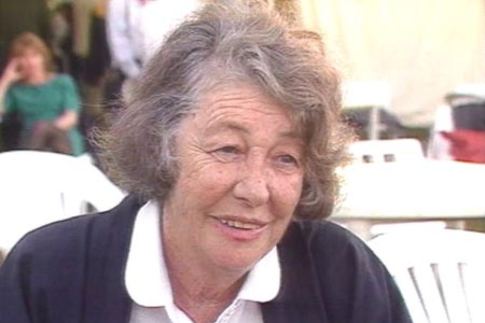
- Dorothy Hewett – After reading Ms Hewett’s short biography in this book the
- only thing that suited this woman is the song: Born to be Wild !!
- Once I read about the tumultuous life of Dorothy Hewett I knew
- I had to read her books.
- I ordered Baker’s Dozen ( 13 short stories)…
- …cannot wait to read it!

- Rosemary Dobson – She was fully established as a poet by the age of 35.
- She published 14 collections of poems.
- The Judges of the NSW Premier’s Literary Awards in 1996
- described her significance as follows:
- “The level of originality and strength of
- Rosemary’s poetry cannot be underestimated…”
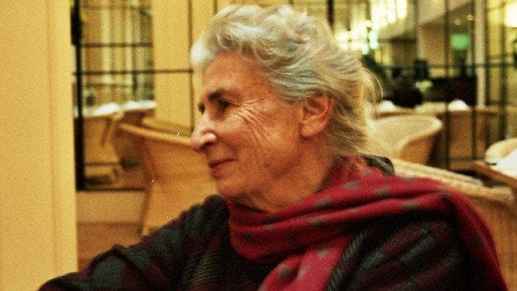
- Dorothy Auchterlonie Green – She saw herself primarily as a scholar.
- Ms Green felt overworked and
- under-recognized, trapped by circumstances of her life and unsure of her capacity as a poet.
- She won widespread admiration for her poetry, literary scholarship
- her reviews and social criticism and inspirational teaching.
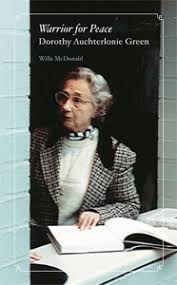
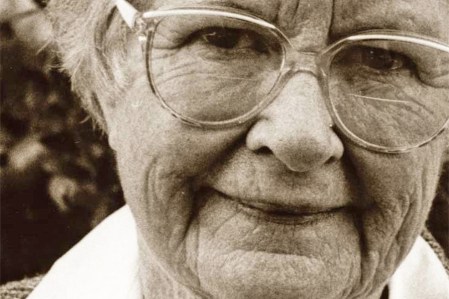
- Gwen Harwood – She was sick of the way poetry
- editors (Meanjin) treated her…no accepting her work.
- Ms Harwoon created several nom de plume: Geyer , Lehmann and Stone.
- Geyer and Lehmann were regularly invited to meet editors for lunch next time they were in Sydney
- or Melbourne. Geyer was evern invited to read at the Adelaide Festival.
- ….he respectively declined.
- Awards
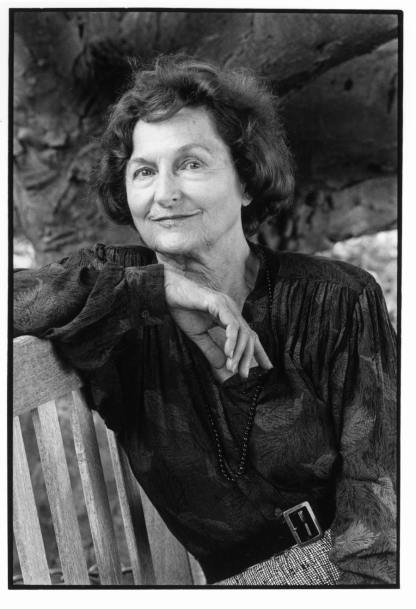
- Jessica Anderson – She was in a male-dominated and
- Anglocentric publishing world.
- How did she survive?
- She cultivated the qualities of character and
- strategies of survival necessary to
- sustain enough belief in herself to go on writing.
- She won the Miles Franklin Award twice…1978 and 1980.
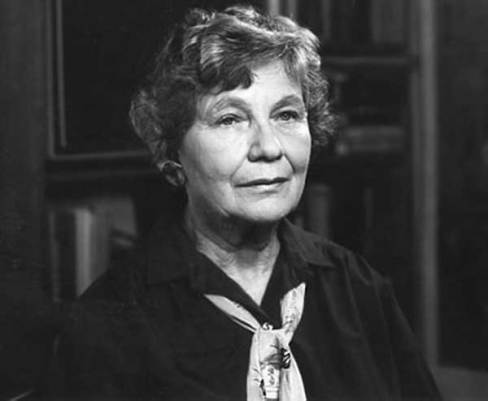
- Amy Witting – For many years Amy Witting was invisible in the literary world.
- She won the Patrick White Award 1993
- for writers who have not received adequate recognition.
- I am waiting for her book of short stories to arrive…Marriages
- …I’m sure Amy Witting will have much to tell about this institution!
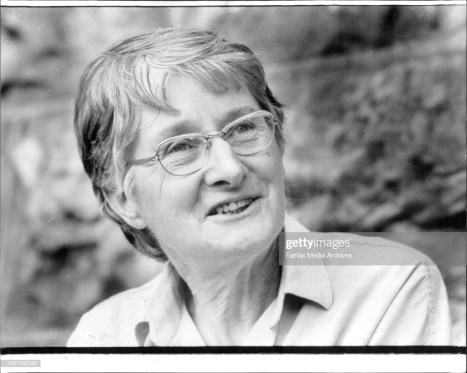
- Elizabeth Jolley – In a single year she received 39 rejection slips
- …yet she persisted.
- She won Miles Franklin Award 1986.
6
Oct
#AWW 2019 Gabbie Stroud “Teacher”
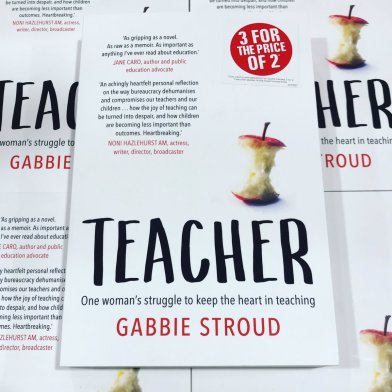
- Author: Gabbie Stroud
- Title: Teacher
- Published: 2018
- Genre: biography (290 pg)
- Trivia: 2019 ABIA Awards short list
- List of Challenges 2019
- Monthly plan
- #AWW2019
- @AusWomenWriter
Introduction:
- Gabrielle Stroud was a primary school teacher from 1999 to 2015.
- In 2014, Gabrielle Stroud was a very dedicated teacher.
- Months later, she resigned in frustration and despair.
- She realized that the Naplan-test education model
- …was stopping her from teaching individual children
- …according to their needs and talents.
- Gabrielle tells the full story:
- how she came to teaching…
- what makes a great teacher…
- what our kids need from their teachers…
- and what it was that finally broke her.
Conclusion:
- This book is a good effort of a teacher moving
- from the classroom into a writing career.
- I’m sure we will be hearing more from Gabbie Stroud
- and I hope her writing skills will be even better.
- I have seen many reviews on Goodreads and I
- cannot agree: this is not a 5 star book.
- It is enjoyable but not profound.
- In my opinion...less is more:
- less family backround
- — mother, sisters, boyfriend, chit-chat with daughters
- even more reflections about teaching
- — chapter 16 a teaching adventure at a Heritage School
- in Canada was wrapped up in less than a chapter!
- I’m sure there must be more to tell.
- Writing style: this all comes down to the reader’s
- own preferences.
- I felt that Stroud could improve her writing by
- less use of clichés...
- Ch 8:
- “I felt older, fatigued but the cup was still half full….”
- Ch 26:
- “…the glass is half full…but the water didn’t taste right.”
- Ch 30:
- “We all fall down Gab, our true measure is how we rise up.”
- Ch 30
- ” I did’t leave teaching….teaching left me.”
- Dialogue: is conversational, simple.
- Pathos: There were very few experiences
- …that stirred up my emotions of pity, sympathy, and sorrow.
- Problems were mentioned..but in a light, fluffy tone.
- I was not swept away by Stroud’s story
- …as I was with the personal essays of written
- Ashleigh Young in “Can You Tolerate This?“
- This is the type of depth in the writing I hoped
- Stroud would tell me about….the teaching profession.
- What finally broke Stroud? (..in my opinion)
- Teaching was changing too fast
- …and Stroud’s adaptation was too slow.
- Jack Welch…CEO of General Electric Company 1981-2001
- phrased it perfectly.
- ..and we all can learn from it:
- “When the rate of change on the outside
- …exceeds the rate of change on the inside
- …then the end is near.”
Last Thoughts:
- There was one spark in chapter 5 that
- I thought would ignite the book:
- Core message…
- ” You showed me how to teach
- …now show me how to be a teacher.”
- Unfortunately this memoir/biography…fizzled out.
- I hate flat soda.
8
Apr
#AWW 2019: Robin Dalton
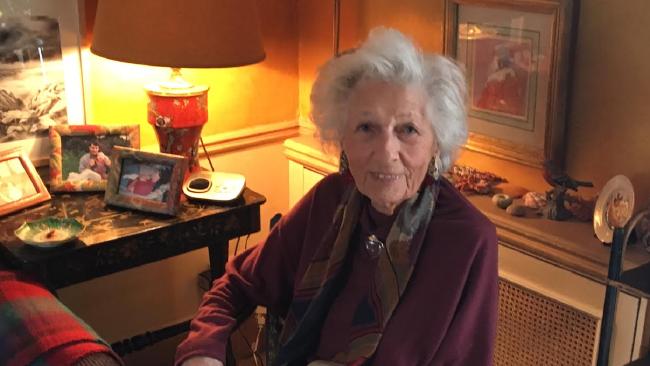
- Author: Robin Dalton (1920)
- Title: Aunts Up the Cross
- Published: 1965
- Genre: memoir
- List of Challenges 2019
- Monthly plan
- #AWW2019
- @AusWomenWriters
Introduction:
- Aunts up the Cross is about Daltons’s childhood with her
- …eccentric extended family in Sydney’s Kings Cross.
- Her father was an open-all-hours doctor, known affectionately as “the gun doc”.
- Dr Eakin, Mrs. Eakin, Nana….and the close relationship the author had
- …with Aunt Bertie and Aunt Juliet.
- Robin Dalton is now 99…and still going strong!
- I loved this quote I found…
- Being old is not a problem, and the future not really a consideration:
- “I haven’t got a future, I’m practically tottering off the edge …”
Conclusion:
- I haven’t laughed so much about a book in years!
- This is an absolute gem!
- Tears of laughter while reading the theatrics the Eakin’s supper table.
- Tony ‘the bookmaker’ McGill is seated next to Mrs. Eakin’s aged governess Sally.
- Suddenly Tony unabashedly makes Sally ‘an offer she can’t refuse’! (…read the book!)
- Robin Dalton’s father was a tease
- .….and the book if filled with his practical jokes!
- But nothing, no nothing can compare to
- …the laughter I enjoyed while reading
- ..how Mrs. Eakin killed the plumber and
- ..the best joke about a fish I have heard in YEARS!
- All can be found in …chapter 3…and much more!
- No spoilers….just a enthusiastic recommendation
- Aunts Up the Cross!
- Light, funny memoir…perfect book
- to lazily sit in the garden with a G&T…and laugh!
- You can read it in a few hours, just 142 pages!
- #Hysterical!

1
May
Cardinal Pell
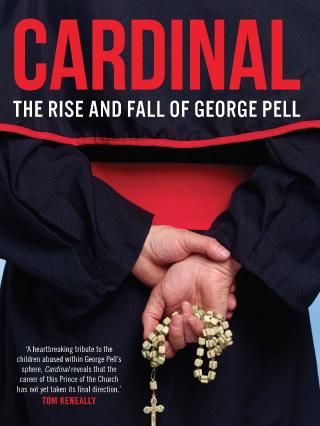
- Title: Cardinal: The Rise and Fall of George Pell
- Author: Louise Milligan
- Published: 2017
- Trivia: #AWW (Australian Women Writers)
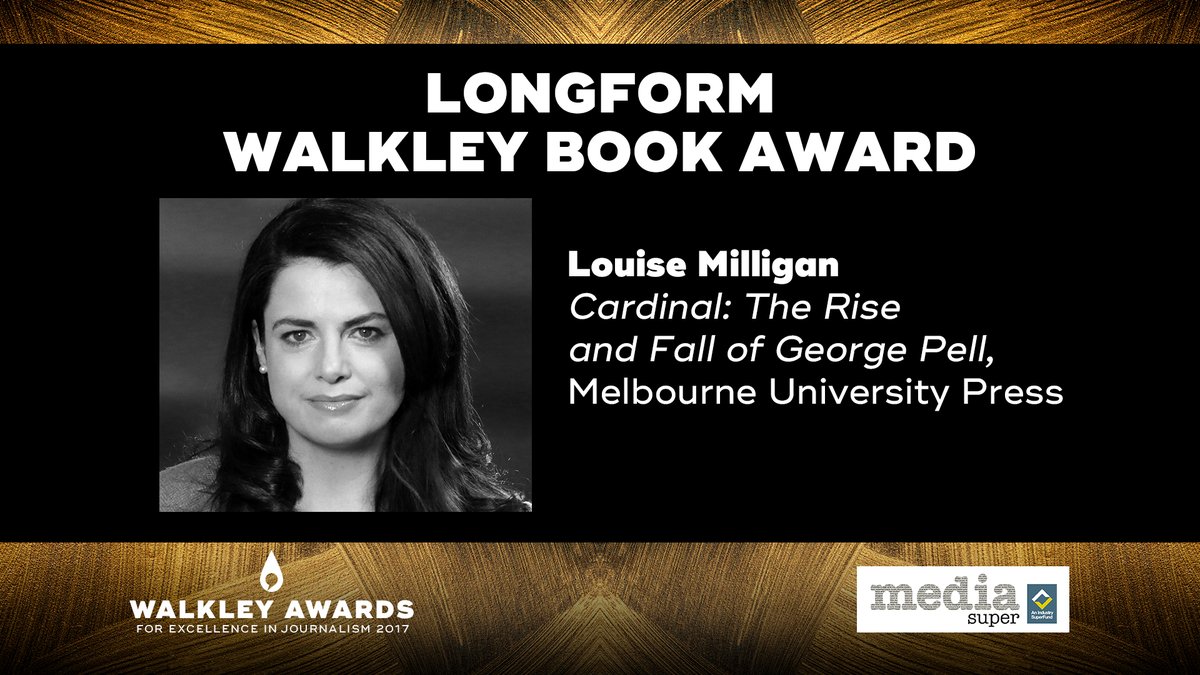
- Trivia: Awarded Walkley Book of Year 2017 ( Australian journalism prizes)
- Trivia: Last News! 01 May 2018
Review:
- The winner of the 2017 Walkley Book Award is Louise Milligan.
- This her explosive book about…. “Cardinal: The rise and fall of George Pell”.
- Louise Milligan’s book examines Australia’s
- …most senior Catholic through the lens of the child abuse saga
- …which has dogged the Catholic Church.
- She tells how George Pell rose from Ballarat boy to Oxford.
- He rose through the ranks to become the Vatican’s indispensable “treasurer”.
- Louise Milligan is an excellent investigative journalist
- …who has followed the story doggedly
- She pieced together the story with sensitivity and care
- ….from thousands of pages of historical documents
- ….and interviews with hundreds of people.
- The book has had an enormous impact.
- Last thoughts:
- I discovered this book by accident:
- …winner of the Walkley Book of the Year Award 2017
- The investigation is ongoing….
- …Cardinal Pell will appear in court on 05 March 2018.
- This book is groundbreaking
- ….and nerve wracking for the Vatican.
- It is impossible to add anything else to this review.
- My mind is exhausted and I am stunned and speechless
- …about the cover-ups concerning George Pell and child abuse by the
- …Catholic Church.
- #MustRead
27
Jan
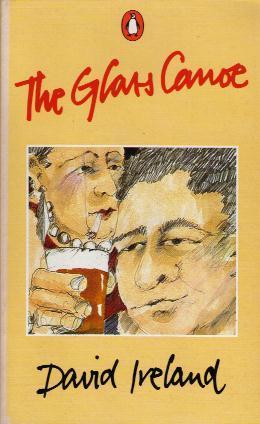
The Glass Canoe

- Author: D. Ireland
- Title: The Glass Canoe
- Published: 1976
- Trivia: Awarded Miles Franklin Award 1976
- List of Challenges
- Monthly plan
Introduction:
- The novel is about a man who spends his life at the pub…
- seeing the world through his beer glass – a glass canoe.
- The novel is told through the voice of Meat Man.
Title: The Glass Canoe (beer glass)
- …the glass got bigger and bigger, we stepped into the
- glass and claimed our freedom to float away. (pg 114)
Best quote: about gambling:
- He went to the races looking for the golden fleece
- …and got shorn. (pg 74)
Beer:
- Beer tasted thick and nourishing…like roast beef! (pg 14)
- …the liquid golden god that spouted from taps.
- …the god with no voice of his own spoken through us.
- …we jumped into the froth of beer as if it was the spume of surf
- …like delighted children. (pg 52)
Conclusion:
- The bar attracts the men…like moths to a flame.
- Barflys used to drink to erase their aches and tiredness.
- Now there are only a few of them left to do a hard day’s work
- ….they drink to erase everything.
- This book is a collection of fragments that describe
- inner city larrikins who belong to a tribe.
- Their watering hole is the bar at the Southern Cross Hotel.
- There were high points:
- The Pub Widow, Mac the copper and Territorial Animal (Blackie the pub dog)
- There were low points:
- Liz the Large, Ronny and Prudence.
- My favorite barfly was ‘philosopher’ Alky Jack.
- He is the voice of the author himself, David Ireland.
- He comments …about being Australian, the Queen and politics.
- Queen: “She’s not a bad thing […] can really hold her grog as well” (pg 37)
- The book is full of bars, barflys, beer, broads and brawls.
- At the beginning I was drawn to the quirky characters
- …unfortunately the last 50% of the book felt like a punctured balloon.
 NancyElin.blog