
SAVE: Tom Griffiths The Art of Time Travel

Prologue:
- Each individual has their own personal measure of time that depends on where they are and how they are moving.
- Historians are global storytelers.
- Historians in this book build knowledge of the past. These writrs are from all walks of life, for instance there is an archaelologist, poet, farmer, novelist and many more. They all have a craft …intellectual, artistic and technical skills.
- Questions raised….will I learn the answers in this book?
- How does writing of history differ from fiction?
- What is the interplay of evidence and imagination?
- What styles of art do we see in historical scholarship? (impress, still-life, pointillism, cubisim, magic realism?) NOTE: I never stopped to think of history in terms of art movements!)
- History is sometimes sees as just dates and facts. Historians show us that the past is alive and shifting.
Chapter 1: The Timeless Land: Eleanor Dark (novelist)
- Australia itself, the ‘timeless land’ seen through very different eyes.
- Eleanor Dark had captured something of the mystery of the land
- …the coming of time to a timeless land
- … a sense of the impact of European arrival on both Europeans and Aboriginals.
- The second novel in the trilogy, ‘Storm of Time’, ‘No Barrier’…
- …seeing Australian history though slightly different eyes.
- I looked on Goodreads and found this review:
- The Timeless Land (first published in 1941)
- is a work of historical fiction by Eleanor Dark (1901–1985).
- It is the first novel in The Timeless Land trilogy, which is about the
- European settlement and exploration of Australia.
- The narrative is told from English and Aboriginal points of view.
- The novel describes the first years of the colony,
- the attempts by Captain Arthur Phillips to impose
- European values and standards on the Aborigines.
- It also describes the famine suffered by the settlement, and t
- he devastating effects of introduced disease on the Aboriginal population.
- The novel ends in 1792, but the epilogue returns focus to
- Bennilong and provides a glimpse of
- …how his life has been dislocated.
- …Now I’m ready to read the essay:
- Eleanor Dark has been seen to be neglected
- as a female writer, social critic, Australian novelist and
- also as an historian. (see notes highlighted in Kindle)
- I read that ED most joyful moment was the 10 minutes after completion of her book
- …short-lived before the next bug bit. Writing for ED was physically and mentally hard ( research). This remined me to Helen Garner….she too was physically and mentally burdened by her writing!
- In her fiction ED was fascinated by time, the uneven flow and fabric of it was mysterious.
- Modern writers depict life in terms of fluidity, uncertainty rather than linearity and order.
- Waterway (1938) ED played with the subjectivity of time…its capacity to stretch or intensify in individual experience. I felt this while biking UP Alpe d’Huez…14 km UP. I thought time would go on forever….never end.
- I was curious how ED fared against TAstley on the survey ABR 2009 Australian best novels. 2 scored 2 while Eleanor Dark scored 4!!
- ED female character: believed in farming….and bravely advocating social change.
- ED ‘s character Caroline Chisholm The Peaceful Army ….she went into the heart of colonial history. Three shadows: treatment of convicts – emigrants – aborigines.
- ED’s fiction was disciplined with referenced facts. Historical novels took over her life. She became a slave to her respect for past reality…past time. ED wanted to write a more radical historical account, one from the inside looking out from her cave….
- ED’s Aborginal people were primitive in a material sense and their conditions of life seemed like those of animals, but there was something noble in their spirit.
- I found this book The Colony by Grace Karskens….it sounds very good…early history of Sidney! In her history the space between cultures was not a void…it was full of posibilites.
- A World-Proof Life by ISBN: 978 0 9802840 2 7
Marivic Wyndham…sounds great…but I can’t find it anywhere! Marivic Wyndham’s account of Eleanor Dark both runs parallel to and argues with (1901-1985) Eleanor Dark: a Writer’s Life, the biography Judith Clark and I published in 1998. Dark was a major figure in Australian writing from the 1930s to the 1950s; her work incorporates elements of modernism, popular fiction, and historical saga. The house where she and Eric Dark, doctor, left-wing writer and activist, lived is now Varuna: the Writers’ House, thanks to Michael Dark. Our biography aimed to allow Eleanor Dark to speak for herself; this book wrestles its subject to the ground. It presents different perspectives, highlighting the privileged (‘world-proof’) aspect of Dark’s life. There were tensions between the austere but safe middle class life of Varuna (with Eric’s support and perhaps over-protectiveness) and her aloofness and ideas of engagement and community. Eleanor’s up there in the clouds, Jean Devanny said. This book began as a thesis and the writer labours her points. Her argument makes artificial distinctions – ‘the artist’, ‘the radical’ – and confuses ‘feminist interpretation’ with ‘victim’. But there are some lively, well argued interpretations of events in Eleanor Dark’s life, and admirable moments when she brings a deeply private woman to life.
Chapter 2: The Journey to Monaro: (1898-1988) Keith Hancock (historian)
- Introduction to Hancock and like-minded writers. They wrote of regional history with a moral and evironmental edge: Margaret Kiddle – (Victoria’s western plains) – George Seddon (the Snowy, Searching for the Snowy) – Keith Hancock (Monaro) – Eric Rolls (scrub, Pilliga A Million Wild Acres).
- This chapter was not very intresting.
Chapter 3: Entering the Stone Circle: John Mulvaney (1925-2016) archaeologist
John Mulvaney applied objective scientific techniques to the chronology of ancient Australia. At times important finds were claimed exclusive ownership by the Aboriginal people. Mulvaney argued that human remains found should be reburied…of course…but in a ‘Keeping Place’ managed by Indigenous people. He believed this option would have future benefits to Aboriginal as well as non-Aboriginal.
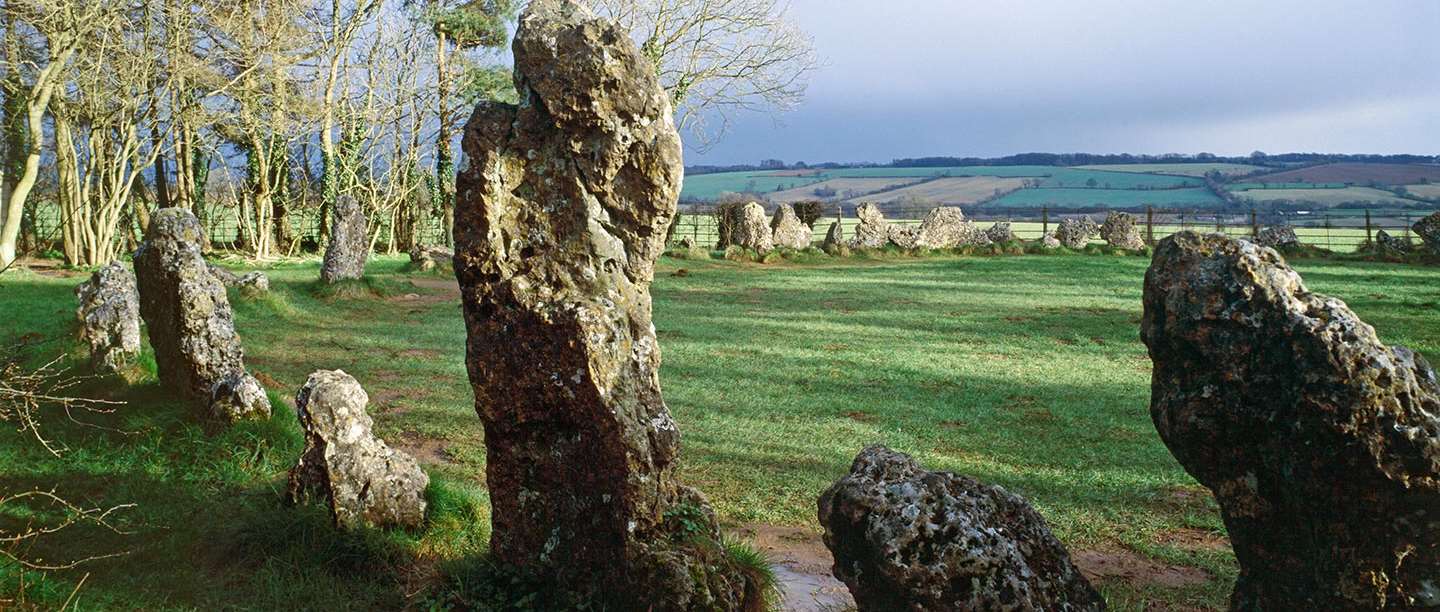
Mulvaney set out to use archaeological techniques and perspectives to humanise the past. Mulvaney was often identified as ‘the scientist’ bringing objective techniques to a world dominated by conjecture and prejudice. Yet he was also an humanist educating the collectors and some of his professional colleagues to the human drama of ancient Australia. Rollright Stones in England that so impressed Mulvaney during his studies in England.
Chapter 4: The Magpie: Geoffrey Blainey (1930)
- Blainey was always a loner. As an intelletual he championed people on the land. As a writer he took on the mante of speaking for ordinary Australians. As a literate man he celebrated their occasional illiteracy. He was a ‘public’ historian before his time.
- His natural world is of landscapes, elements and resources. It is there for humans to use ofr their profit or neglect to their peril. According to Blainey…it was not the open sea that shaped Australian civilisation, but the ecological reality of soil and climate.
- Surprising to read that Blainey thinks the pendulum has swung too far with reference to climate science. The pendulum will swing back again. He percieves another brittle and extreme mood, another fashion about to recede. I had difficultuy accepting this after having read Feeling the Heat by Jo Chandler!
Chapter 5: The Cry of the Dead: Judith Wright – oke…but not earthshattering
Chapter 6: The Creative Imagination: Greg Dening (1931-2008) (ex-Jesuit priest)
- “The only way to fail Professor Dening…was not to take a risk” (pg 100)
- Researched is characterized as heroic. Writing is instinctive. Creativity is unconscious. Insights are personal.
- According to Greg Dening …research is collegial and require courage; imagination need not be fantasy; freedoms do exist in non-fiction; creativity can be collaborative and communal; true stories are entrancing.
- Greg Dening urged his students to feel that all the arts of fiction were available to them in writing true stories, but alos aimedd to educate the public to a different understanding of the realm of imagination, to see the creativity in the telling of true stories. (Think or Helen Garner’s books!!)
- What is history according to Greg Dening?
- History is the discipline without a discipline, the one social science that aspires to represent the totality of human experience.
- “Discorse is unending…Nothing is discovered finally.
- The moments of understanding stand like sentences in a conversation.”
- THE BEST CHAPTER….it gave me skin shivers when I read the last words.
Chapter 7: The Frontier Fallen: Henry Reynolds (1938)
- Chapter in which I learned the most…about the ‘forgotten war’ and lawyer, historian Noel Pearson
- The struggle between professional standards and political ends that shaped th kind of historian Reynolds is: empiricist, rational, highly structured, heavily evidenced, reinforcing and repetitive, professionally conservative, accessible to the courts. Reynolds has always been a ‘just-do-it’ historian. His style is lean, linear and logical and it is honed out of his engagement with passion, politics and power.
- Forgotten War by H. Reynolds (READ??)
- Considered by many to be the current leading historian on ‘the great Australian silence’, Reynolds has written Forgotten War with a remarkably straightforward and erudite pen. Reynolds does not depend on the lyrical, hyperbolic language sometimes used by Australian histories to evoke the brutality of the past. Reynolds has remained scrutinisingly close to the sources he cites, and in doing so, he has produced a book that is accessible for the expert and the novice alike.
- Forgotten War is Henry Reynolds’ latest attempt to elevate the place of Aboriginal Australians in the national consciousness. It is a broad and meticulously researched overview of colonial Australia’s treatment of Indigenous Australia, and worthy of our most scrupulous attention.
- The Australian Frontier Wars were fought from 1788 to the 1920s between Indigenous Australians and an invading coalition of white settlers, militia, police, and colonial soldiers. Estimates of the total death toll range between 20,000 and 50,000 Aboriginal lives lost and between 2,000 to 2,500 Europeans.In a 5 year period the Aboriginals killed something like 250 settlers and no doubt many of them were killed but the ratio was much closer.
- Now 250 settlers killed in short period of time in a small colony brings it close to many of the other small wars Australia has been involved in. So just in terms of the conflict, the number of people killed, the damage done the cost of the conflict, that conflict in Tasmania must be seen as a war.
- Reynolds said that in the history departments he found no interest and people didn’t think it was a very decent or honourable thing to be researching (forgotten war). So there was resistance from people who didn’t want to know about this very terrible and brutal aspect of Australian history.
- I think the past is important. I’m a historian, that’s my profession but I think the past is important and I think that it is absolutely critical that we understand and appreciate and empathise with Indigenous Australians.
Chapter 8: Disobedience: Eric Rolls
- Chapter 7 Eric Rolls A Million Wild Acres….Tom Griffiths said this would be THE book about Australia he would put in the hands of any visitor to his country to help them understand it!
- I just ordered Rolls’ book all the way from Australia!…can’t wait to read it!
- Griffths thinks it is the BEST environmental history yet written of Australia! Les Murray condsidered this book to be like an extended, crafted campfire yarn in which everyne has dignity of a name. TONE: discursive (rambling…) and laconic (terse, concise)..like a saga ( Saga Land?)
- Rolls enchants the forest….and presents us with a speak land….raucous with sound! The whole book reads as if the trees themselves are telling the story! That delighted me!
- The central story is simple…it is in Rolls’ words….about the growing of a forest. Why was A Million Wild Acres so popular? It spoke directly to so many people. “…it is unique and path-breaking yet represented an organic integrity and a common vernacular.” (ref: The Art of Time Travel: Historians and Their Craft, T. Griffiths, ch 8)
Chapter 9: Voyaging South: Stephen Murray-Smith (1922-1988)
- Antarctica – read enough about this in Feeling the Heat.
Chapter 10: History as Art: Donna Merwick – ex nun, married to Greg Dening
- Sorry, not even T. Griffiths could make this chapter interesting. :(
Chapter 11: Walking the City: Graeme Davison – so-so…learned what public history is!
- Davison set out his professional credo in his Monash retirement lecture:
- ‘To be a professor, to profess history, is to assume a responsibility, not just to practise one’s discipline, but also to advocate and defend it.
- At Monash he created a new post-graduate program in Public History.
- He aimed to train historians for employment outside the academy as commissioned historians and consultants.
- He wanted to narrow the gap between academic and public history.
- What is public history? Public history is deeply rooted in the areas of historic preservation, museum curatorship, and other related fields. The field has become increasingly professionalized.
- Most common settings for the practice of public history are:
- …museums, historic homes and historic sites, parks, battlefields, archives, film and television companies, and all levels of government.
- Davison studies not only cities….but also the decline of country towns
- …surburban myths and rural ideals.
- Graeme had long been interested in the city as a natural system. The city is both a machine and an organism. It has the tick of a clock as well as a heatbeat. Davison chose a clock and a car to reveal the inner workings of a city.
- Clock seeks to master time. Car seeks to master space. One is on your wrist….the other is in your garage. Both are personal, intimate, elegant accessories of our lives.
Chapter 12: History and Fiction: Inga Clendinnen (1934-2016)
- Clendinnen’s work focused on social history, and the history of cultural encounters.
- She was considered an authority on Aztec civilisation and
- …pre-Columbian ritual human sacrifice
Chapters: 13 Grace Karskens
- Winner of the 2010 Prime Minister’s Literary Award for Non-Fiction
- The Colony is the story of the marvellously contrary, endlessly energetic early years of Sydney.
- It is an intimate account of the transformation of a campsite in a
- …beautiful cove to the town that later became Australia’s largest and best-known city.
- From the sparkling beaches to the foothills of the Blue Mountains, Grace Karskens
- skillfully reveals how landscape shaped the lives of the original Aboriginal inhabitants and newcomers alike.
- Relationships between the colonial authorities and ordinary men and women broke with old patterns.
- She uncovers the ties between the burgeoning township and its rural hinterland.
- Grace Karskens teaches Australian History at the University of New South Wales.
- She is the author of The Rocks: Life in Early Sydney
Chapters: 14
Mike Smith – Archaeology of Australia’s Deserts
-
- This is the first book-length study of the archaeology of Australia’s deserts
- It is one of the world’s major habitats and the
- …largest block of drylands in the southern hemisphere.
- Written by one of Australia’s leading desert archaeologists,
- …the book interweaves a history of research with archaeological data.
- For all its global significance and uniqueness, the story of Australia’s desert societies gets scant treatment in accessible science texts.
- A story that covers 60,000 years of development, change, growth and consolidation seems so important to understand.
- It is a compelling picture of societies responding to climactic conditions, changing technologies and social organisation to survive.
- Smith decided he wanted to be an archaeologist at the end of primary school!
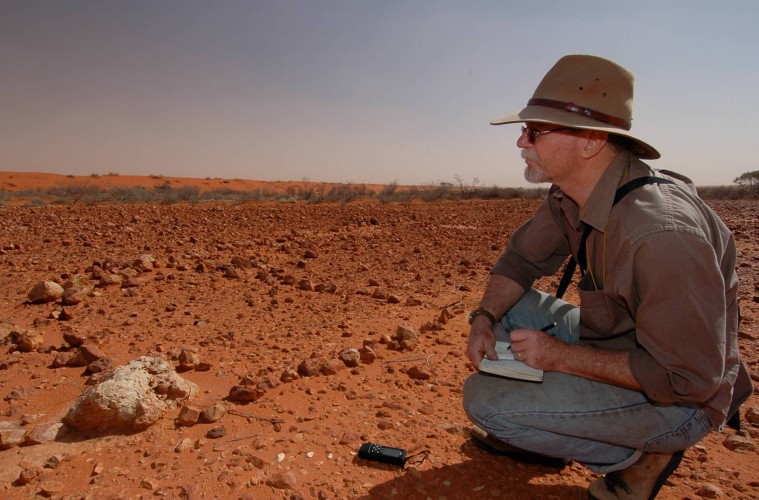
- Smith has a gravediggers certificate! Stratigraphy is a key concept to modern archaeological theory and practice. Modern excavation techniques are based on stratigraphic principles. The concept derives from the geological use of the idea that sedimentation takes place according to uniform principles. When archaeological finds are below the surface of the ground the identification of the context of each find is vital in enabling the archaeologist to draw conclusions about the site and about the nature and date of its occupation.
READY: #AWW2019 Henry Handel Richardson
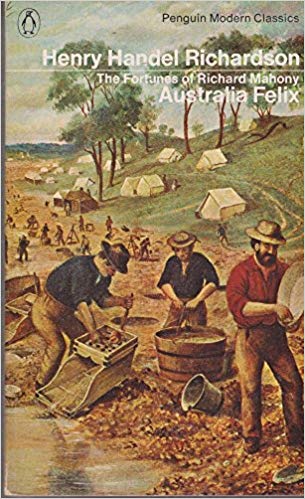
- Author: Henry Handel Richardson
- Genre: novel
- Title: Australia Felix (mentioned in John Turnham’s speech pg 255)
- Published: 1917
- Table of Contents: 4 parts, 385 pages, 40 chapters
- Theme: Sky, not spirit, do they change, those who cross the sea. (Horace)
- Trivia: Richard Mahony is a complex portrayal of Richardson’s own father.
- List of Challenges
- Monthly planning
- AWW Gen 2 @The Australian Legend
Why read the preface?
- In the preface Richardson describes the setting:
- You feel as if you are there in Ballarat Victoria Australia.
- I was going to skip it but am glad I did not.
- I was ready for chapter one with the ‘initiating’ event and
- could place the action in the landscape of ‘The Flat’.
- The writer continues to describe the open roads, ridges and
- …bush country around Warrenhiep and Buninyong as Mahony continues on his life’s journey.
Quickscan:
- Australia Felix is the story of
- …Dr. Richard Townshend Mahony’s coming to
- …Australia from Ireland as a young man (1851)
- He struggles to keep his head above water
- Soon he meets Mary Turnham (16 yr) and marries her.
- Mahony begins his medical practice again.
- …becomes the most skillful and prosperous doctor in Ballarat.
- Mahoney decides to sell his practice.
- …and sets sail with Mary to England.
- The next part of the trilogy will describe his English life.
Timeline: 14 years
Part 1: Mahoney is 28 yrs – 2 months…my estimate
Part 2: Polly is 16 yrs – 2 years
Part 3: 2 years
Part 4: skip 4 years between part 3-4
End: Mahoney is 42 yrs and Polly is 30
Life Events: Richardson ends each part with ‘life events’:
Part 1 = marriage to Polly
Part 2 = return to the medical profession and remain in Ballarat
Part 3 = investment earns RM a profit and is out of poverty’s grip
Part 4 = about to embark on a journey
What is the turning point in the book?
- Part 1-4: chronological order with flashbacks to childhood in Dublin.
- Part II ch 8: TURNING POINT in the book.
- Mahony dies NOT to leave Ballarat, returns to the medical profession.
What is the moment of ‘epiphany’ for Mahony?
- Part 4 ch 3: Mahony meets the owner of a
- small chemist’s shop, Mr Tangye. (pg 288-294)
- Tangyne is ‘the warning’ that was foreshadowed in the poem
- Lochiel’s Warning by Thomas Campbell !! (pg 113)
- Mahony is despondent.
Strong point: sense of place
- I liked Richardson’s detailed
- …descriptions of scenes of ‘gold-digging‘ (preface);
- sudden thundering storm (part III ch 8)
- busy election day in town (part III ch 11).
- She includes the fossickers,
- ….sounds of digging and tools that are used.
- The the colors and sounds of the weather:
- …doors rattling loose like teeth in their sockets.
- The marching bands, fife and drums,
- …straggling processions…dragging banners
- in the middle of noise-makers and schoolchildren.
Weak point: too many subplots…felt almost Dickensian!
- There are too many characters and subplots that detract from the main narrative.
- I felt overwhelmed.
- Six subplots is too many for any length of book.
- I decided to just concentrate on the major characters and
- …let the secondary ones just drift in one ear and out the other.
subplot: John Turnham’s rise to prominent place in society
subplot: Ned and Jerry Turnham – one is lazy and wants to make a fortune
subplot: Sarah Turnham: – flighty, kittenish, town-bred airs,”French” genteel elegance.
subplot: Family Beamish: Mr + Mrs., Jinny, Tilly
subplot: Family Ocock , father and sons Henry, Tommy and Johnny
subplot: Purdy and his pursuit of riches at the Ballarat site
subplot: Family Glendennings – child abuse, alcoholism, adultry
What impressed me most in Richardson’s writing style?
- The book just did not capture my heart!
- Alliteration, use of color, personification were average
- I found only a few really good metaphors!
- Mahony’ s struggle with religion appeared at intervals. (Part II ch 8 – Part III ch 3)
- Perhaps Richardson felt it important to include this side of her character,
- but I didn’t feel it enhanced the story.
- Finally when got to Part 4 I realized how important the ‘religious’ aspect is for the book!
- Bravo, H.H. Richardson….now you HAVE captured my heart.
Best chapters: Part 4 chapter 3 – 6 – 7 (very powerful !)
What are the ‘allusions’ that Richadson uses in the story?
Allusions connect the text with the larger world.
Allusion: Dorcas: (Bible) a charitable woman of Joppa (Acts 9:36-42);
Allusion: Phoebus: Greek Mythology; Apollo, the god of the sun.
Allusion: “O tempora o mores” is a sentence by Cicero.
Allusion: James Syme (1799 – 1870) pioneering Scottish surgeon.
Allusion: Backdrop Crimean War (1853-1856)
Allusion: David Syme (1827 – 1908) was a Scottish-Australian newspaper proprietor of The Age.
Allusion: Paintings “Battle of Waterloo” and “Harvey discovering the circulation of blood.”
Alllusion: Horace: – wonderful, really expresses the ‘essence’ of the book!
Sky, not spirit, do they change, those who cross the sea.
How does the character of Mahony change?
- Mahony strives for extreme happiness
- …but (wife, good job and finances, comfortable environment).
- He needs to learn to be less rigid in this thinking.
- Learn to balance his emotions.
- CHANGE: Mahony does consider Polly’s situation
- …when he promised not to argue with Mrs. Beamish
- …while she attended to Polly’s last days of pregnancy.
What is Mahony’s great character flaw:
- Mahoney is in the grip of black and white thinking.
- It robs him of the balance in his life
- Mahoney does not see that people are ‘gray’.
- No one is just good or bad.
- Mahony does not realize that he is
- …never going to be everything he wants to be.
- We’re human, we’re imperfect.
- CHANGE: (pg 144) Mahoney is learning to listen…
- “One was forced almost against one’s will to listen to him (Ned) …
- …Mahony toned down his first sweeping judgement of his young relative.”
Conclusion:
- I read every sentence closely and
- ….it took me 2 weeks to read 385 pages.
- In the beginning The Fortunes of Richard Mahony
- …didn’t meet up to my expectations.
- It was good…but not great.
- Yet as I progressed.
- I finally saw the connections, the deeper meaning that
- …Richardson wanted to expose.
- I persevered… and discovered part 4 is the best!!
Last thoughts:
- Sometimes one writer’s strength (Ruth Park, characterization)
- is another’s weakness.
- Richardson outshines Ruth Park with her
- dialogue, allusions, sense of place and gestures.
- I enjoyed Ruth Park’s The Harp in the South and
- …Nevil Shute’s On The Beach but
- ..The Fortunes of Richard Mahony was even better
- I found the best description of Richard Mahony
- …in a quote by André Malraux:
- “Man is not what he thinks he is…He is what he hides.
#AusReadingMonth 2021 Wrap-up post

- It has been a long summer…
- filled with climate change events COP26 (fires, hurricanes, floods)
- ….USA finally ending a 20 yr war….(…exit was messy)
- ….battle to control Covid #DeltaVariant and now
- …a new #OmicronVariant continues!!
- I always look forward to #AusReadingMonth2021
- @bronasbooks (This Reading Life)
- ….and want to thank her for doing a wonderful
- …job hosting and reviewing!
For #AusReadingMonth2021 I read:
- Coda – Thea Astley (1994) (novella) REVIEW
- The Year of Living Dangerously – ( 224 pg) Chris Koch (1978) REVIEW
- Vertigo: A Novella – (144 pg) Amanda Lohrey (2008) (novella) REVIEW
- The Newspaper of Claremont Street – Elizabeth Jolley (1981) (novella) REVIEW
- Tea and Sympathetic Magic – Tansy Rayner Roberts (novella) REVIEW
- I’m Ready Now – (156 pg) Nigel Featherstone (novella) REVIEW
- Australian Food – Bill Grannger 2020 REVIEW (cookbook)
- Always Add Lemon – Danielle Alvarez REVIEW (cookbook)
- In Praise of Veg – Alice Zaslavsky REVIEW (cookbook)
- Basics to Brillance – Donna Hay (398 pg) 2017 REVIEW (cookbook)
#AusReadingMonth21 Always Add Lemon
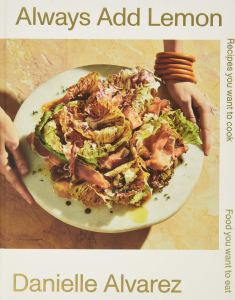
- Author: Danielle Alvarez
- Title: Always Add Lemon
- Published: 2020
- Trivia: Danielle Alvarez is the chef behind Sydney restaurant Fred’s.
- Monthly reading plan
- #NonFicNov 2021
- #AusReadingMonth2021 @bronasbooks
- #AWW 2021
Quick Scan:
- Of all the cookbooks I review for #AusReadingMonth 2021
- Danielle Alvarex is the chef with the most impressive credentials!
- Born to a food-loving Cuban family in Miami.
- She trained at some of the most prestigious restaurants in California:
- The French Laundry, then Boulettes Larder and finally Chez Panisse.
- She brought these culinary talents with her to Sydney in 2016.
- Ms Alvarez asked her to head up and design the kitchen the new restaurant, Fred’s.
Conclusion:
- Ms Alvarez sets the cooking bar very high!
- I thought I would dip into her book and select a recipe and have
- ….a meal quickly on the table.
- Little did I know, the author expects the reader to be a bit more serious!
- The book is full of beautiful, culinary inspiration,
- …but I found the recipes somewhat unapproachable.
- I became anxious just thinking of cooking Ms Alvarez’s suggestions.
- There are so many ways to go wrong.
- Funny, I am the only one in the kitchen…and eating my food
- …but still I feel judged (by myself) when I create a disaster.
- Looking at the photo’s of perfect food….by a master chef
- …intimidates me.
Personal Challenge:
- At first glance ….these recipes look a little too time-consuming.
- They feel more suited for a restaurant professional.
- The language felt complicated, ingredients that I had to look
- up in the culinary dictionary!
- Every time I decided to cook
- something I was discouraged halfway reading the instructions!
- I put the book away for weeks….just postponing the inevitable.
Results:
- Section: salads (17 recipes) I’m making the first 7 salads.
- As you can see many ingredients are not available for this mere mortal
- …and that is what makes many delicious recipes feel “unapproachable”
- I will improvise and do my best!
- Beetroot (yellow) – persimmons (not available) – feta, honey, pistachio nuts and
- Aleppo chili flakes ( not available..use ordinary flakes)
- Update:
- Best replacement or persimmon is a peach or nectarine.
- It is Autumn and…these fruits are NOT is season.
- I just used thinly sliced oranges.
-
Yellow beets..who would have thought!
-
My first attempt at Danielle Alvarez’s (top-chef) starters in
-
…her book Always Add Lemon.
-
No persimmon in my neck of the woods
-
…so I just used thinly sliced oranges.
-
This salad takes planning but is delicious.
-
You would easily pay 12-15 euro for this starter in a restaurant


- Fig and goat’s curd salad – smokey paprika vinaigrette
- (ingredient for dressing pimentón de La Vera dulce….not available)
- Tomato salad with sumac, onions, tahini yoghurt (not avaliable...
- I’ll make it with yogurt and sesame paste) – fennel
- Tomato and fried crouton salad with olive oil packed tinned tuna – capers
- Cucumbers with mustard vinaigrette and dille
- Belgian Endive (…radicchio (not available) with bagna cuda
- (Ms Alvarez raves about this dipping sauce) and walnut oil
- Zucchini with mint, lemon and bottarga
- (not available…and it is just as well, sounds vile, see Google)
Strong point:
- The book is a well-made beautiful book
- …feels luxurious with high quality paper.
- So impressed the images that I’ll add the links to the
- photographer Benito Martin
- stylist Jessica Johnson
- …just take a look at their portfolio’s ….creative genius!
Update:
Pg 16: How to dress a salad – Chardonnay and honey vinaigrette
- I have NO chardonnay or sherry vinegar.
- Substitute: balsamic vinagar
- Substitute: Listau Sherry ….made with grapes grown in the Jerez area of Spain.
- Lustau sherry is the industry’s gold standard
- … a sweet sherry from Pedro Ximenz grapes.
- Jury: unanimous vote…this is a keeper!
- Lessons learned:
- I did not know that a salad dressing should marinate 15 min before using!
- Always use just-washed hands (not tongs)…you need to feel the dressing coating the leaves!
- Taste….more salt? ….more honey?….more vinegar?
- Different salad leaves require different amounts of dressing
- …bitter radiicchio needs more dressing/salt
- …delicate leaf like arugula (rucloa) wants smallest amount of dressing
- …gentle touch just to coat them.
Update:
- Ms Alvarez challenges me again on pg 17 “Salsa Verde”.
- Original recipe was too salty for me (capers and anchovies).
- If I make this again I would reduce the acid (vinagar or lemon juice) and oil by half!
- I would use 1/2 amount of the “salty elements”
- ..and drain the shallots of vinegar and only
- add the shallots to the condiment.
- I froze 1 TB portions to be thawed in the fridge…worked perfectly.
- I TB is thawed within 5 mi…and I used it mixed
- into my mashed potatoes!
- Jury: Lovely burst of flavor, dille, chives, honey and parsely.
#AusReadingMonth 2021 Cookbook nr 3
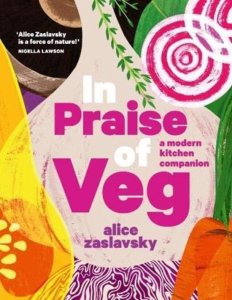
- Author: Alice Zaslavsky
- Title: In Praise of Veg
- Published: 2020
- Monthly reading plan
- #NonFicNov 2021
- #AusReadingMonth2021 @bronasbooks
- #AWW 2021
Award:
- In Praise of Veg won the 2021 ABIA (@abia_awards)
- …for the best non-fiction illustrated book.
- This award is voted on by members of the publishing industry.
- The longlist is selected by a group of 250 publishers and book-sellers
- The winner is decided on by an esteemed panel of experts.
Quick Scan:
- 50 favorite vegetable varieties, offering 150+ recipes.
- The book is filled with countless tips on flavor combinations,
- rule-of-thumb buying/storing/cooking methods,
- shortcuts, and veg wisdom from over 50 of the world’s top chefs.
- Strong point: Very Educational
- ...and I thought I knew enough about veggies…but I learned so much
Conclusion:
- After reading Basics to Brillance by Donna Hay….on black paper
- …this book is a joy to open!
- The book is 70% reading….and 30% recipes.
- Weak point: recipes lacked imagination….
- I had the feeling I’d read these cooking suggestions in other books!
- I did find some very good tips about storing veggies and herbs
- …but the recipes were a big disappointment.
- Strong point: book is a visual delight!
- Within the pages of In Praise of Veg, the recipes are refreshingly grouped
- …together according to the color of each vegetable.
- Strong point: book is about vegetables but NOT purely plant-based
- Ms Zaslavsky says: “… it is a “plant-forward” source of inspiration.”
- The premise is… “to start with veg and build a dish around it”.
#AusReadingMonth 2021 Cookbook nr 2
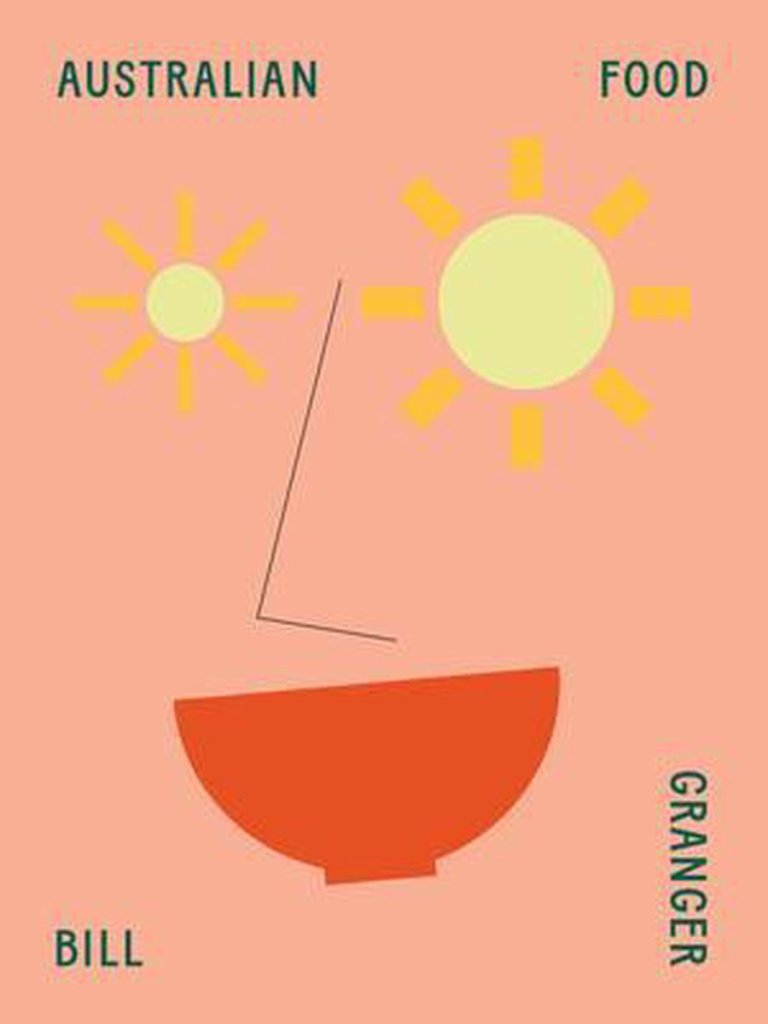
- Author: Bill Granger (1969)
- Title: Australian Food
- Published: 2020
- Monthly plan
- #AusReadingMonth2021 @bronasbooks
- #NonficNov
Backround:
- Bill Granger is very famous in Australia.
- Granger was born to a vegetarian mother and a
- father who worked as a butcher.
- He lives with his wife Natalie Elliott and their three daughters.
- Strong point: the dedication in the book is just so beautiful:
- “For Natalie”
- Her name might not be above the door,
- but the door would never open without her.”
- With eighteen restaurants around the world, Bill Granger has spread
- the Aussie way of dining far beyond the beaches of Sydney.
- There are 5 photo’s of Bill in the book
- …how approachable he looks and
- …how handsome padding across the beach in his bare feet.
- Bill’s crinkly smile is infectious…he makes me believe I can really cook!
- I was surprised he is photographed with a coffee and newspaper
- instead of a huge glass of wine in the kitchen…like me.
- Sydney-style avo toast, was popularized by
- Australian chef-restaurateur Bill Granger,
- whose early 90s version…toast, mashed avocado, lime, salt, chilli flakes
- …has since taken over the world.
Conclusion:
- Weak point: font used in the index is too small…or my eyes are too old
- Strong point: I made 1 recipe from each section except BBQ.
- I was introduced to at least 8 ingredients I never used before.
- This was because Bill Granger makes many Asian influenced dishes…all new to me!
- This aspect of the book makes it so exciting to cook with Bill Granger.

Update: 20.11.2021
- Leave it to Bill to come up with
- …the answer to my “Christmas Party” prayers!
- I’m hosting a 4 course Christmas dinner for friends.
- I love wine with my food….but don’t want to send the guests home
- and have them washing the wine and champagne out of their hair the next day
- …along with a hangover.
- So..Bill gave me the Negroni Spritz on page 174 (Australian Food).
- I’ve modified it to replace:
- 100 ml wine –> cold water
- 30 ml vermouth –> juice of one lemon
- ice cubes, curl of lemon peel and 40 ml Campari
- …small squeeze honey if you like a bit of sweetness!
- Absolutely a visual refreshing delight in a wine glass!
#Novella 2022 Elizabeth Jolley

- Author: Elizabeth Jolley (1923-2007)
- Title: The Newspaper of Claremont Street (pg 128)
- Genre: novella
- Published: 1981
- Monthly plan
- #AWW 2021
- #AusReadingMonth2021 @Bronasbooks
- #NovNov @746Books
- @bookishbeck
Quick Scan:
- The story is about a woman (“Weekly”)
- who works cleaning houses for people
- ..but who has a life long wish.
- Strong point: tension
- Ms Jolley creates tension in the story because the reader
- …WANTS to know what the wish is!
- Strong point: relatable character
- The major character is relatable.
- Ms Jolley creates vulnerability in her character by
- …giving her a burning desire for something.
- Will this desire overcome “Weekly” and
- …drive her to extremes…to a disaster?
- Strong point: structure
- Ms Morris’s life revolves.
- The story is not in chronological order.
- Just like many women…while busy cleaning house your thoughts drift
- off and “Weekly” revisits her family situation,
- siblings, and her clients
- …on .
Conclusion:
- I enjoyed the wit and life lessons Ms Jolley revealed in Margarite.
- She is lonely and emotionally alienated from their surroundings.
- Margarite lives in an imaginatively friendlier world
- ….saving her money for her big wish.
- Ms Jolley also describes how
- “She is trapped.”
- She was overcome by the unfairness in the world.” (pg 154)
- The reader is waiting for the moment when “Weekly”
- …will break the unchangeable pattern that is her life.
- This novella really packs a lot into a short space.
- It is dense enough to allow the reader to
- fully inhabit another world,
- …but short enough to be read in one sitting.
- What’s not to love?
- #MustRead
#AusReadingMonth 2022 Tansy Roberts
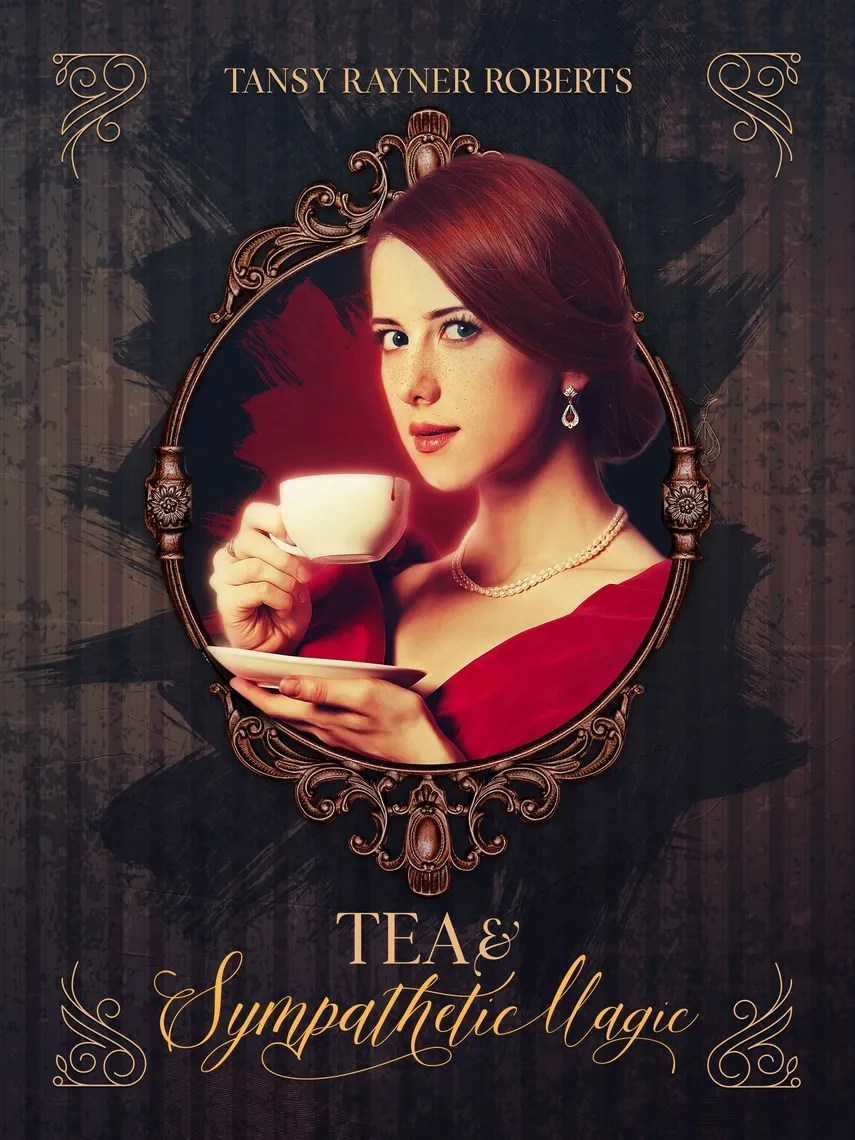
- Author: Tansy Rayner Roberts (1978)
- Title: Tea and Sympathetic Magic (pg 73)
- Genre: novella
- Published: 2021
- Monthly plan
- #AusReadingMonth2021 @Bronasbooks
- #NovNov @746Books
- @bookishbeck
- #AWW 2021
Quick Scan:
- Tea and Sympathetic Magic
- Miss Mnemosyne Seabourne teams up with a fascinating
- spellcracker Mr. Thornbury to foil the kidnapping of the
- Herny Jupiter the Duke of Storm
- …and prevent a forced marriage.
Notes:
- Strong point:
- Ms Roberts use names
- from mythology and the solar system for her characters!
- Henry Jupiter – is a very eligible bachelor, with grand library.
- The planet Jupiter’s most iconic feature is a
- giant STORM know as the Giant Red spot.
- The Duke is wearing “…a bright orange cravat.” (pg 10)
- …just like The Giant Red Spot on Jupiter!
- Ms Roberts uses this info to create
- “Henry Jupiter, the Duke of Storm”.
- Strong point:
- Ms Roberts uses lovely names of moons for female characters
- Moons circle planets…usually men in society!
- Mnemosyne – moon of Saturn
- Europa – moon of Jupiter
- Galatea – moon of Neptune
- Strong point: Ms Roberts does highlight important issues
- …that the main character Mnemosyne is passionate about:
- A) Rules for men were different than for women...
- Duke of Storm enjoys special rituals to meet his demands
- “brimming cup of tea and does not have to wait 2 seconds”
- ….and he had done nothing to deserve this attention. (pg 10)
- “This is the world we live in: one where
- B) Ladies traveled by the slow path,
- …while gentlemen were allowed short-cuts.” (pg 17)
- C) “No one should marry the wrong person.” (pg 39)
- Weak point:
- the title suggests “magic” but I was so
- …disappointed.
- The idea of a spellcracker…walking through portals, transforming
- a ball into a prickly hedgehog to stop a wedding and throwing
- tea cups at a wedding cake to release a captive wedding guest
- …is NOT my idea of magic.
- It is just not.
Last Thoughts:
- I decided to read this novella because I so
- enjoyed Girl Reporter by Ms Roberts last year.
- I missed a great story idea, a memorable main character
- and unique writing style.
- IMO this novella is like cotton candy
- …sickly sweet, all fluff and just melts away.
- #IAmNOTIntendedTargetAudience

#Novella nr 3: NovNov – AusReadingMonth 2021
- Author: Thea Astley
- Title: Coda
- Genre: novella
- Published: 1994 (188 pg)
- Monthly reading plan
- #AusReadingMonth2021 @bronasbooks
- #NovNov @746Books
- @bookishbeck
- #AWW
Introduction:
- I started reading the complete works of Theas Astley during
- #AusReadingMonth in 2017
- …and have finished 13/17!
- Finally I found a copy of Beachmasters @ Amazon.co.uk.
- That book is NOT easy to come by!
- Collected Short Stories (1997)
- ….also a very difficult or very expensive book to acquire!
Novels
- Girl with a Monkey (1958)
- A Descant for Gossips (1960)
- The Well Dressed Explorer (1962) Miles Franklin winner
- The Slow Natives (1965) Miles Franklin winner
- Boat Load of Home Folk (1968)
- The Acolyte (1972) Miles Franklin winner
- A Kindness Cup (1974)
- An Item from the Late News (1982)
- Beachmasters (1985)
- It’s Raining in Mango (1987)
- Reaching Tin River (1990)
- Vanishing Points (1992)
- Coda (1994)
- The Multiple Effects of Rainshadow (1996) Miles Franklin long/shortlist
- Drylands (1999) Miles Franklin winner
Short stories
- Hunting the Wild Pineapple (1979)
- Collected Stories (1997)
Quick Scan:
- Coda examines the despair of old age.
- Thea Astley is a truth-teller about becoming an “aged” misfit in society.
- Strong point: Ms Astley is still able to cut through
- …the tragedy with a sharp literary wit.
- Occasionally the narrative is interrupted by stories plucked from the
- Australian newspapers:
- “…there has been an alarming increase in so-called
- ...’granny-dumping’ throughout the country.” (Condamine Examiner, 16 Jan 1992)
Character: Kathleen Hackendorf
- Born 1920s, no real ambition except get out of Townsville!
- We see her sitting in a tacky Mall at a plastic table under a fig tree
- drinking her coffee as she contemplates life and her grammatical losses:
- “I’m losing my nouns!”
- Daughter, Shamrock, wants her mother on a shelf like a cracked doodad.
- Son, Brian, a financial schemer in his second marriage has no time for his mother.
- Both have sold Kathleen’s house out from under her and put down the dog.
- BFF …Kathleen at least has her dotty dear friend Daisy
- Only trouble is ….Daisy is dead.
Conclusion:
- I hope I’ve given you just a taste of
- …what you can expect in this book.
- Read as Kathleen wonders when the buzz went out of her life...as she is
- “…rooting about for words in the old handbag of her years.” (pg 188)
- Weak point: I found the pages devoted to Brian’s
- “crackpot stratagems” (pg 106) too long.
- It ruined the mood of the story about the aging Kathleen!
- Weak point: In the end, expected some fireworks from Ms Astley
- …but Kathleen’s life story seemed to just fizzle out.
- Again, I am a fan of Thea Astley and find that some of her
- later books lack the punch of her best books
- The Slow Natives, The Acolyte, Boat Load of Home Folk and
- …A Descant for Gossips.
- #MildlyDisappointed
#AusReadingMonth 2021 Christopher Koch
- Author: Christopher Koch (1932-2013)
- Title: The Year of Living Dangerously
- Published: 1978 (224 pg)
- Trivia: This book helped Australia to shift its cultural focus from
- Britain and Ireland toward its increasing engagement with Asia
- ….and continuing into 21st C (nuclear powered submarines from USA)
- Trivia: The banned film (1982) version directed by Australian Peter Weir
- was shown for the first time in 2000 at Jakarta Film Festival.
- Monthly planning
- #AusReadingMonth2021 @bronasbooks
Quick Scan:
- C. J. Koch’s The Year of Living Dangerously takes its title
- from Sukarno’s term for 1965, the year in which the novel takes place.
- R. J. Cook, first-person narrator, recounts the events that occurred
- during that tumultuous, chaotic year.
- In 1965 Sukarno was overthrown (see book published 2020: The Jakarta Method)
- and Suharto, a right-wing officer, assumed control of the Indonesian government.
- Sukarno’s fate, however, is linked to the fates of the characters:
- Guy Hamilton – a correspondent for an Australian news network
- Trivia: loosely based on Mr. Koch’s younger brother, Philip.
- Billy Kwan – an Australian-Chinese dwarf who is a highly intelligent cameraman
- Jill Bryant – the woman both men love.
Conclusion:
- This was an amazing book…just stunning!
- I saw the movie version in 1980s and didn’t understand any of
- the politics in Indonesia and USA’s use of…
- The Jakarta Method.
- Now I do..and it isn’t a pretty picture for America’s foreign policy.
- Has anything changed?? (Syria, Iraq, Afghanistan….and now Taiwan?)
- Chris Koch is an excellent writer/journalist and several intrigues
- were weaved seamlessly into the story.
- I could not stop reading…..
- Billy Kwan is the “spider in the web”
- …the Wayang shadow play puppet master!
- The ending of the book was genius.
- Please, don’t miss this #classic
- It is probably waiting for you on the library shelf
- …better yet, buy it and support your local bookstore.
- #MustRead.
 NancyElin.blog