
#AWW2019 Lesley Williams

- Author: Lesley and Tammy Williams
- Title: Not Just Black and White
- Published: 2015
- Genre: indigenous issues non-fiction
- Trivia: 2016 Queensland Premier’s Award work of State Significance
- Trivia 2014 David Unaipon Award Winner
- List of Challenges 2019
- Monthly plan
- #AWW2019
- @AusWomenWriters
Quickscan:
- This is a writing collaboration between
- mother (Lesley) and daughter (Tammy).
- Lesley Williams was forced to leave the
- Cherbourg Aboriginal Settlement
- …at a young age to work as a domestic servant.
- Lesley never saw her wages.
- They were kept ‘safe’ by the government.
- This book relates her nine-year journey for answers:
- …where is all that money she earned?
- Lesley confronts the government
- …in a judicial wrestling match!
Conclusion:
- Mrs Williams describes her youth
- while giving the reader a clear mental image
- of the backdrop Cherbourg settlement.
- It was difficult to read about her life
- under cruel Protection Act that uprooted
- thousands of Aboriginal people.
- because of her strong character and vision
- she was able overcome many hardships.
- There were several messages in the book that
- resonated to me:
- Williams feels a strong sense of Aboriginal community. (safety network)
- Williams struggles to fight injustice (racial, financial)
- Williams reminds all people who suffer racism…
- Best quote:
- “There are two ways to fight racism:
- — fight with your fists
- — fight with your talents and achievements”
- Nothing hurts a racist more
- …when they see you achieving
Last thoughts
- Good literature unnerves you…..
- …or takes you somewhere to consider things
- ….things that you might not have considered
- thinking about before.
- This book took me into the Cherbourg Settlement.
- It showed me the strength of family…
- that remained unbroken for Lesley Williams.
- It has only been in the last generations
- …that Aboriginal writers have been published.
- They now are able to tell their stories, their truths.
- #ReadDiversity
#NSW Premier’s 2019 Special Award B. Boochani
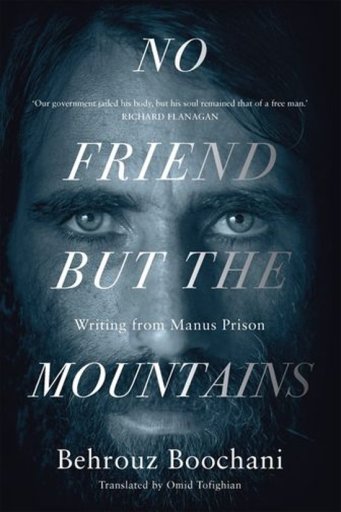
- Author: B. Boochani
- Title: No Friend But The Moutains
- Published: 2018
- Genre: non-fiction
- List of Challenges 2019
- Monthly plan
- #NSWPLA
- @MacmillianAus
- @Picadorbooks
- Trivia:
- A special award of $10,000 was made to
- Manus Island refugee Behrooz Boochani
- for his book No Friend but the Mountains: Writing from Manus Prison.
- Boochani’s book was ineligible for the NSW Premier’s Literary Awards
- which require authors to be Australian citizens.
- Trivia:
- The book won the top prize at the
- Victorian Premier’s Literary Awards in January 2019.
- This year was an exception made to the eligibility requirements.
- Trivia: WINNER ….Australia National Biography Award 2019
Introduction:
- Prison literature is always a difficult read.
- For instance the Pulitzer Prize Winner History 2017
- Blood in the Water by H. Thompson (worth your reading time!)
- But it is necessary to know the disturbing truths
- ….that are not always in the news.
- Boochani’s book was not a pleasure to read.
- I persevered to force myself out of my comfort zone.
- My review is in fragments.
- I could not add any commentary to this
- confrontational book.
- According to PEN International
- “Manus Island has become notorious for its
- …ill-treatment of detainees where violence,
- sexual abuse and self-harm are reportedly common.
- No Friend But the Mountains: Writing from Manus Prison
- is an autobiographical account
- …of Boochani’s perilous journey
- from Indonesia to Christmas Island and thence to Manus.
- He tells of what life is like for the detained men.
- #LiteratureDoesHavePower
Conclusion:
0-25%:
The trip to Manus (ch 1-4)
Boochani enters Manus Prison (ch 5-6)
25% – 60%:
- Once a concept is mentioned
- it is repeated over and over
- …again for several paragraphs:
- stench of hairy man’s breath (ch 7)
- smell of putrid soil
- fans
- mosquitos
- rooms
- pissing
- filthy toilets
- distress caused by saying ‘hi’
- bellowing of profanities
- prison becomes hive of killer bees
- prisoners become wolves…threat to everyone else
- Generator (cuts off water and electricity)
- ….manipulates minds
Queuing for food (ch 8)
- everything is micromanaged and mechanical
- meat is like pieces of car tyre
- guards like shepherds guiding a herd of sheep
- Nicknames: the Cow…first one entering dining area
- starvation has a smell…
- officers and cooks work 2 week shifts
- …then leave the island to be replaced
- answer to all the prisoners question:
- …”The Boss has given orders.”
- queue in the telephone room
Father’s Day…men struggle for the telephone (ch 9)
- …this leads to bruises and bodily harm.
- power of biceps can determine many situations
- distributing cakes….devoured right off the cardboard
- …mayhem but Boochiani does not move.
- …he knows “I am an animal that has already lost the game.”
60-100%
- I am a child of war. (ch 10)
- Boochani describes the guards crushing a unruly prisoner.
- This chapter reminds me of a mind becoming unhinged.
It’s hard to discern a genuine smile… (ch 11)
- Toothache…terrible pain…worse treatment!
- Self-harm in the prison becomes a cultural practice.
- When prisonor spills his blood he appears to enter into ecstasy.
- It is a moment emitting the scent of death.
- According to Boochani every prisoner must
- …look out for the prisoner standing next to him.
- The most important thing is they must challenge the
- Kyriarchal System of the prison.
- …Kyriarchy is a system that creates webs of privilege and exclusion.
Revolt in Mike Prison…August 2014. (ch 12)
- Death of Reza…the gentle giant.
Last thoughts:
- Despite winning the prestigious
- New South Wales Special Literary Award 2019
- with a prize worth $10.000 dollars
- Boochani may not leave Manus Island
- …and his future is unknown.
#AWW2019 Nakkiah Lui (playwright)

- Author: Nakkiah Lui (1991) Gamillaroi and Torres Strait Islander woman
- Title: Black is the New White
- Published: 2019 (book)
- Opening night: 10 May 2017 Sydney Theatre Company
- Genre: play (romantic comedy)
- Trivia: Indigenous issues
- Trivia: 2018 winner NSW Lit Award for Playwriting
- Trivia: 2018 shortlist Victorian Premier’s Award Drama
- List of Challenges 2019
- Monthly plan
- #AWW2019
- @AusWomenWriters
- @AllenandUnwin
Quickscan:
- Young couple Charlotte Gibson and
- Francis Smith are newly engaged.
- But their fathers are political rivals.
- The Gibson and Smith families gather for Christmas lunch.
- Unexpected guests, sudden self-realizations
- …and family secrets disrupt their meal.
- Themes: land rights, politics, relationships, identity, class.
- Question: What is it to be Aboriginal and middle class?
Structure:
- 7 scenes
- 8 characters:
- Engaged couple (20s) Charlotte and Francis
- Their respective parents (50-60s) Joan, Ray, Maire and Dennison
- Daughter (nr 2) and son-in-law (30s) Rose and Sonny
Dialogue:
- To speed up the pace Nakkiah uses overlapping dialogue.
- The idea was to write dialogue
- …the way people really speak
- …so that characters cut off the
- beginnings and ends of each other’s sentences.
- Full revelation of emotions is transformed into comedy.
- At times it feels like community (scene 3-4-5-6)
- ….and at times like chaos! (scene 7)
References:
- To give the play a very culturally modern feel we read about a
- virtual reality mask, twitter, Michell Obama, Hillary and Bill Clinton,
- Kim and Kayne Kardishan, Beyoncé and JayZ, Martin Luther King,
- Waleed Aly, Alicia Keyes,
- Netflix series House of Cards and the movie Cluesless.
Narrator:
- Lui uses a technique of the narrator to
- give the audience/reader the backstory.
- The narrator comments on action, adds insight
- …on characters, stage elements
- …developing a precise and complete character persona.
Conclusion:
- I will not reveal any spoilers
- …..the play should be read with a clean slate.
- You will enjoy the unfinished battles
- …in the character’s public and private lives!
- We follow the maze from character to character….
- …with the climatic scene 7
- …which includes 15 ‘bombshells’ of information!
- In Black is the New White (title revealed in scene 4)
- …you meet 8 characters who
- challenge stereotypes of
- Aboriginal and Torres Strait Islander people.
- With Nakkiah Lui’s comic descriptions of
- their personal interaction and commentary
- …you have an unforgettable romantic comedy
- …and many life lessons.
- #MustRead #MustLaugh
#Ockham NZ Awards MY CHOICE winner Fiona Kidman
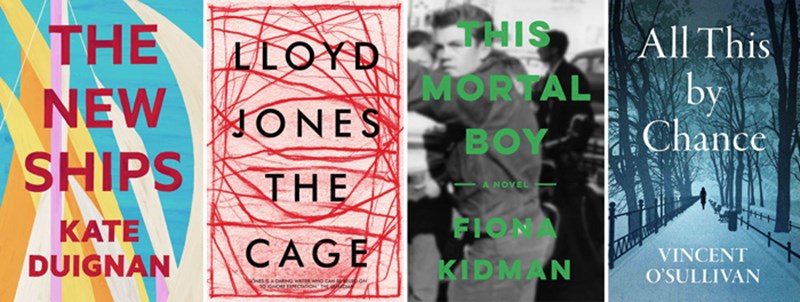
- Author: Dame Fiona Judith Kidman DNZM OBE (1940)
- Title: This Mortal Boy
- Published: 2018
- Genre: historical fiction
- List of Challenges 2019
- Monthly reading plan
- #AWW2019
- @AusWomenWriters
- Trivia: 2019 Winner of The New Zealand Booklovers’ Prize for Fiction
- Trivia: 2018 Shortlisted for the NZ Heritage Book Awards
- Trivia: 2019 Shortlisted for the Ockham New Zealand Book Awards
- #TheOckhams will be awarded 14 May 2019.
- @PenguinBooks_NZ
Quickscan:
- On 05 December1955
- …New Zealand’s second-last execution occurred.
- The victim was a young Irishman,
- Albert (Paddy) Black…a bog-trotter.
- He knifed a man, Johnny McBride…bit of a rough diamond,
- in a bar-room brawl 26 July 1955
- …called the “juke-box murder”.
- Public revulsion at his execution was a major force
- ..in abolishing the death penalty in 1961.
- Black was convicted of murder and executed.
- Yet there were clear signs that his trial
- …was a severe miscarriage of justice.
- Main characters:
- Albert (Paddy) Black Irish, aka Shaun Donavan (killer)
- Alan Keith Jacques English, aka Johnny McBride (victim)
- Setting change: 1955 Belfast Ireland
- Flashback: Belfast, parents, childhood, WW II, sailing to life in NZ
- Setting: NZ Aukland, Wellington, Auckland Parliament House
- Mt Eden Prison NZ (arrested awaits trial),
- Ye Olde Barn cafe (crime scene)
- Setting: Station Hotel Aukland NZ (where jury is staying during trial)
- Setting: Aukland Court house – jury’s decision (ch 19)
- Setting: Mount Eden Prison…execution
Conclusion:
- This story is based on facts that are in no way
- sentimentalized by the author.
- This Mortal Boy reads like a Greek Tragedy
- …we know what is going to happen in the last act.
- The platform on the gallows will actually be a trapdoor.
- The book is a stark report about a young boy who
- made a mistake and paid the ultimate price, his life.
- Strong point:
- Research
- Dame Fiona Kidman has studied the trial transcripts
- …read copies of Albert Black’s letters to friend his Peter
- ..and visited Ireland to research the public records in Belfast
- (births, marriages, deaths).
- Chapter 27 is and eyewitness report of the execution by J. Young.
- (…a very confronting read)
- Trial witnesses, lawyers and members of the jury are fictional.
- Strong point:
- Kidman examines history with a fine tooth comb.
- She supports her story with references
- to Australian politicians, The Mazengarb 1954 (report on moral delinquency)
- …and the hanging of Fred Foster July 1955 for the ‘Milk Bar Murder’.
- Strong point:
- The jury
- In chapter two Kidman takes time to
- …introduce the reader to the 12 men on the jury.
- At first I thought Kidman was being too detailed.
- But later I realized why it is important to know the
- social class (job, education) of these men.
- Only then can we understand the decision making
- process about Albert Black:
- guilty or not guilty.
- Three jurors add doubt to the arguments for guilty.
- I was captivated and drawn in as these jurors try to
- remain staunchly against a guilty verdict.
- You will read what happened
- ….that pushed the verdict to guilty!
- Weak point of audio book:
- The singing!
- I’d rather read that someone is humming or singing a song
- …than to actually hearing it. #Distracting.
- Strong point:
- Ch 14 – Oliver Buchanan, lawyer
- We imagine that the case is open and shut but…
- Buchanan works tirelessly to help his client
- …avoid the death penalty.
- There is something missing in this case
- …but he cannot find the piece.
- Buchanan is interested in
- what happened before Paddy stabbed Johnny
- …that can prove that this crime was based on an accident.
- Buchanan quotes Thomas Hardy:
- “…for every bad..there is a worse.”
Last thoughts:
- Capital punishment…is such a contentious issue.
- While reading this book I was forced to think
- about the consequences of this policy.
- #Heartwrenching
- MY CHOICE to win Ockham 2019 for Fiction.
Quote:
- Juror – Arthur university lecturer discusses… life? or death ?
- “…are you all so far beyond reproach
- that you have a right to make this decision?
- I’m not sure that I am.”

#Poetry Winner Victorian Lit Award 2019
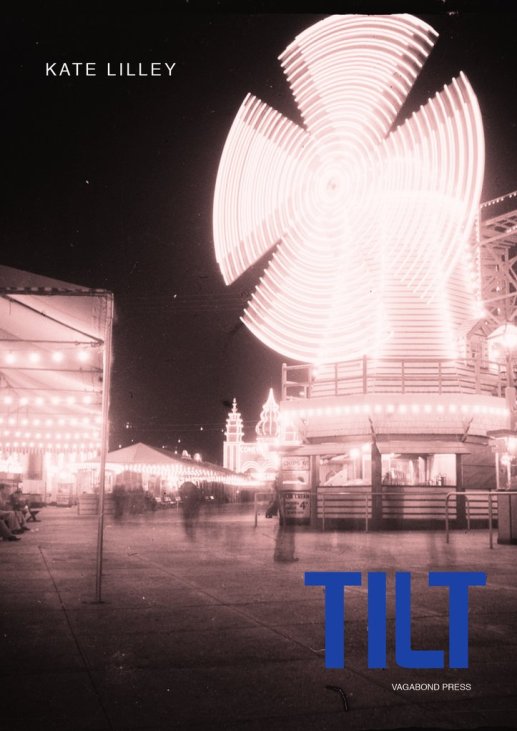
- Author: Kate Lilley
- Title: Tilt
- Published: 2018
- Genre: poetry (38 poems)
- Cover: 1948 photograph of Luna Park lighted windmill, Sydney
- Title: Tilt….express the feeling of being off-balance
- Trivia: 2019 Victorian Premier’s Award for poetry – winner
- List of Challenges 2019
- Monthly plan
- #AWW2019
- @AusWomenWriters
Introduction:
- Just finished reading 38 poems:
- TILT by Kate Lilley.
- Her talents…are mentally exhausting
- …and I mean that in a good way.
- Time for aperitif #Heineken.
- Poetry is hard work….more so than a novel!

What did I learn about just by reading these poems?
- Queen Christina – cult scenes in the movie with Greta Garbo (Poem: Femme Forte)
- Taboo subject unheard of in polite circles 19th C Edinburgh
- …The Drumsheugh Gardens School scandal 1810 (Poem: Children’s Hour)
- Slice of life of forgotten 1970s queer strip in Sydney (Poem: Tilt)
- Lillian Hellman’s 1934 production of Children’s Hour
- ….(see scandal Edinburgh) (Poem: Children’s Hour)
- La Maupin 17th C French swordswoman who caused
- havoc in a convent trying to escape with
- …her lesbian lover (OH!) (Poem: Children’s Hour)
- Kate Lilley’s 10 autobiographical poems (part 1) #heartwrenching
- I learned about Greta Garbo’s post showbiz life as recluse in NYC
- ..this was a poem-essay (Poem: Garbo at ‘Wits End’)
- Corporate talk “If you need me get in touch, backchannel me”
- (Poem: Coda)…sense of closure with first poem Tilt
- Poem for lovers in a transnational/digital world (Poem: Weather Channel)
- I learned why Lilley wrote an elegy for her father (author)
- …Merv Lilley (Poem: Her Bush Balland [Bourke St Elegy])
- …but not for her mother (poet) Dorothy Hewett (Poem: Memorandum)
- Lilley asks the question: (social issues)
- Why send a ship to sea unseaworthy? (refugees, mandatory detention)
- ..offering care to cargo
- …rather than care for people (Poem: In Harm’s Way)
Strong point: autobiographical poems
- Poetry tells us the history of the human heart.
- If you only read these 10 poems (pg 11-30)
- …than my mission is accomplished to encourage
- more readers to pick up a book of poems.
- I dove into TILT cold turkey.
- I thought:
- I speak English, the poem is in English
- and I still have no idea what it all means.
- Then I started to research Kate Lilley’s
- dysfunctional family.
- There are issues in the autobiographical poems
- …major issues!
- Kate Lilley was immersed (involuntarily)
- into the Bohemian lifestyle of her parents
- Merv Lilley and Dorothy Hewett in 1970s Sydney.
- Both Kate and her sister were being
- …abused by friends of their parents, predators.
- Lilley has suffered for years trying to put her life back together
- …after living with a mother who’s mottto was: ”Boys Will Be Boys”.
First lines of autobiographical poems: set the scene, setting
- This is a seductive device
- …dangling a setting in front of the reader.
- It does not make too many demands
- of there reader at the beginning.
- That will come later.
- The first couple of stanzas takes the reader
- …by the hand and guides him into the poem.
First lines…
- Fonzies Fantasyland at 31 Oxford St nows a disappointing IGA [SETS SCENE, A SETTING]
- One morning walking down Bourke St I hear my father’s voice [SETS SCENE, A SETTING]
- Mystic Rainbow cuisenaire rods (math learning aid)
- The first man who put his hands on me ( Oh, we are curious)
- Sounds quaint but in those days… [SETS SCENE, A SETTING]
- Winter White crepe maxi (…don’t know where this is going)
- At the Australian Society of Authors Xmas Party ( …we are curious)
- Conversation meant listening to adults (…been there, done that!)
- We were all there (…who is WE? …where is THERE?)
- He appears in the doorway [SETS SCENE, A SETTING]
- The girl I sat next to in maths at high-school (…we are curious, what about her?)
- Pushed up against the metal rim of the shower (…feels aggressive, [SETS SCENE, A SETTING]
- Overhead on the street [SETS SCENE, A SETTING]
- For her to die like that nobody there (…who? ) [SETS SCENE, A SETTING]
Conclusion:
- 38 poems
- 3 parts:
- Tilt (autobiographical and confessional poems)
- In Harm’s Way (based on events and experience in psychiatry)
- Realia (facts) – (poems related to Greta Garbo, and many ‘list poems’)
- I liked 65% of these poems
- ….pretty good return on investment.
- Unique: Kate Lilley writes list poems (…completely new for me!)
- By listing words Lilley wants to create a sense of what this book
- is about: dysfunctional family – therapy, hospital – Greta Garbo
- by just listing carefully selected words.
- List poems are puzzles!
Last thoughts:
- A poem is like a diary
- ….without the lock and key.
- Poetry is not difficult.
- I’ve read 5 different collections in the past weeks
- …and EVERY book was enthralling!
- I never get this buzz after reading a novel…never!
Collections read:
- USA – Jericho Brown – Anisfield-Wolf Award 2015
- IRELAND – Gerard Fanning – Winner Rooney Prize Poetry 1993
- NEW ZEALAND – Therese Lloyd – Shorlist Ockham Prize 2019 (prize 14 May 2019)
- AUSTRALIA – Kate Lilley – Winner Victorian Premier’s Award 2019
- NEW ZEALAND – Cilla McQueen – Shorlist Ockham Prize 2011
#AWW2019 Winner NSW Lit Award for Drama
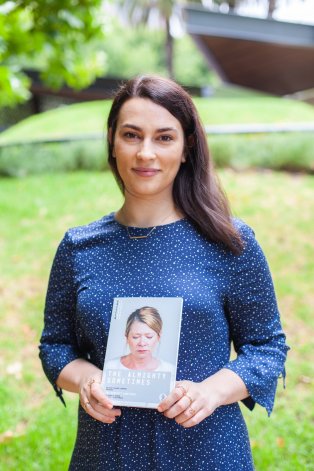
- Author: Kendall Feaver
- Title: The Almighty Sometimes
- Published: 2018
- Genre: play
- List of Challenges 2019
- Monthly plan
- #AWW2019
- @AusWomenWriters
- @Brow_Books
- @kendallfeaver
- #NSWPLA
Awards:
- Triivia: 2019 Prize for Drama: NSW Literary Awards
- Trivia: 2019 Prize for Drama: Victorian Premier’s Award
- Trivia: 2018 Judges’ Award Bruntwood Prize for Playwriting
- Trivia: 2018 Best New Play at the UK Theatre Awards
Quickscan:
- The play centers on a young woman (Anna).
- She has been medicated for a range of mood and
- behavioral disorders since she was a child.
- Now she wants to find out what
- ...her life would be like without pills.
- The play takes an unflinching look at
- mental illness and medication among young people.
What is the structure of the play?
- Act 1 (7 scenes) – reading time: 1 hr 30 min
- Act 2 (6 scenes) – reading time: 50 min
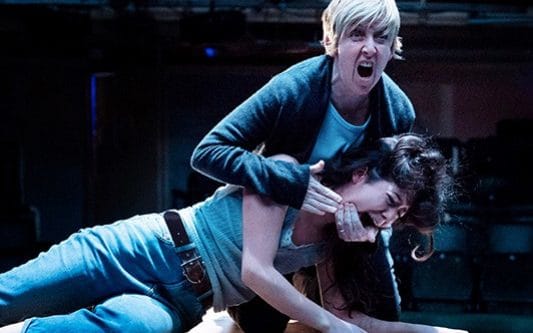
Cover:
- There are two book covers
- ….that convey different messages.
- Daughter: breaking free…carefree and in control of her life
- …after she chooses to stop her mental illness medication.
- Mother: having spent years keeping her daughter safe
- …is powerless to stop her.
Daughter: Anna

Mother: Renée
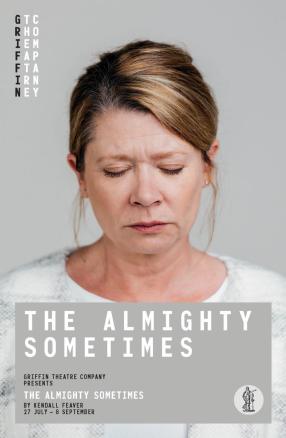
What is the trigger in Act 1 ….something big at stake?
- Anna suffers from mental
- ….heath issues (bipolar) since she was a child.
- In Act 1 she is 18 yr and decides
- …she wants to stop with her medication.
- This is a very scary decision she makes.
- It affects everyone else around her.
- Her mother really struggles NOT to intervene.
What is the tension in the play?
- Anna has one desire…to stop medicating
- …and be in control of her life.
- The journey pursuing this desire forms the plot.
- The tension for the audience is
- the DOUBT that is aroused about Anna…
- “..will she or won’t she break free of the pills?”
- Strong point:
- Ms Feaver generates a subtext (stories of 8 yr girl)
- ….that she can play off of in the play
- The history of what has happened
- …moments that refer to the character’s past.
- are very important part of the play.
- Strong point:
- The play is deliberately intimidating
- …about a girl in a sudden state of crisis
- …to raise awareness
- …about youth’s mental health issues.
- Ms Kendall has done extensive research
- and spoken to many psychiatrists.
- It took Kendall Feaver 5 years to finish the script.
- Strong Point:
- Title: The Almighty Sometimes
- …has intrigued me from the beginning!
- It refers to an option on questionnaires:
- Never – Always – Sometimes.
- Sometimes....Anna is troubled
- …but sometimes she is
- …good, kind and capable.
- It is a hard choice a mother
- …must make when answering
- …questions about her daughter.
Conclusion:
- 2-Act structure is a simple.
- It looks at the character’s journey
- …in he clinical world living day to day
- with a mental health condition.
- There is a routine of life between
- mother and daughter that passes for existence.
- Frenetic activity is expressed in the
- …dialogue with boyfriend Oliver
- …and psychiatrist Vivienne.
- Later this gives way to many
- moments of silence between daughter and mother.
- Anna is pushed to the extreme
- …as her internal and external worlds explode.
- Act 1 may feel a bit too long…but keep reading.
- Act 2 is where the fireworks display starts!
Last thoughts:
- Mother-daughter relationships are complex.
- Some mothers and daughters are best friends.
- Some avoid conflict.
- Others talk through everything…
- …not so between Anna and Renée!
- Strong point:
- The best part of the play…
- …as Kendall Feaver shows us a
- snapshot of real life with a protective mother
- …and a daughter who feels she’s been lied
- …to, misunderstood and mis-diagnosed!
- The Almighty Sometimes is best seen on stage
- where sparks will fly between mother and daughter.
- Reading the play is the only alternative I have
- ….but am probably missing the best part:
- …the actors performance!
#Poetry Cilla McQueen

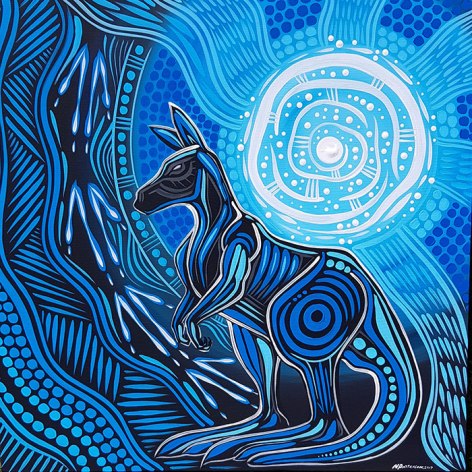
- Author: Cilla McQueen
- Title: The Radio Room (34 poems)
- Published: 2011
- Genre: poetry
- List of Challenges 2019
- Monthly plan
- #AWW2019
- @AusWomenWriters
- Trivia: Ockham NZ Awards shortlisted Poetry Prize 2011
- Trivia: If you ever read this collection of poems
- …I will save you some time.
- It took me 2 days to find the meaning of Maori words
- mentioned in three poems: About the Fog, Reprise and
- Talking to My Tokotoko.
- “Hopupu Honengenenge Matangi Rau”
- …which in Maori means
- “the long water which bubbles, swirls and is uneven”.
- #YourWelcome
Who is Cilla McQueen?
- Mcqueen was Born in Birmingham, England
- …and moved to New Zealand when she was four years old.
- She ranks amongst the finest poets of her generation.
- Trivia: Three New Zealand Book Awards
- Trivia: 2009 Prime Minister’s Award for Literary Achievement
- Trivia: New Zealand’s Poet Laureateship (2009-2011)
- In The Radio Room, Poet Laureate Cilla McQueen
- …travels space and time, throwing thoughts (Poem: Bookworm)
- from Bluff NZ , her corner of the world, to the ancient Celtic islands
- of her ancestors. (St Klida, Island Mull) (Poem series: Elements 1,2,3,4)
Conclusion: My notes about a few poems….
Poem: The Ghostly Beast
- Reference: 15th C Scottish history
- Macdonalds of Clanranald…carry off booty van rival clan
- …rough estimante 600 cows.
- McQueen describes fear of people “in the bothy” (cottage)
- Sounds of “song of a storm, roiling tempest”
- “…a lowing so close”
- Is it a our cow or the ghosts of stolen cattle?
- Conclusion: No emotional impact but I do
- learn that McQueen bases many poems
- on her Scottish heritage.
- #BadChoice for kick-off poem in collecton :(
Poem: About the Fog
- Reference: feelings about loss (mother)
- McQueen’s personal journal…
- …pages destroyed b/c book left on a table
- ….during a foggy night.
- …”vanished thoughts”
- washed away “…as if by tears.”
- Blue ink turned “…turquoise wash
- …word-slivers….beld edges”
- Conclusion: very moving poem
- #TimeForKleenex
Reading tip:
- I read this poem 1 x … it made no sense.
- I’m too close to the text, to eager to understand
- …hence see nothing!
- Then I wrote each stanza in longhand,
- absorbing each sentence as I went on.
- That is the best way to ‘read’ poems.
- You just have to invest some time and
- effort to distill the poet’s message.
- Sometimes objects art not things.
- Objects are news…that is part of the puzzle.
Poems: Altar (Elements 1)
- Reference: Island of Mull– 15th C MacKinnon’s Cave
- Deep inside lies a large, flat slab of rock, known as Fingal’s Table
- used as an altar by hermits and early followers of the Christian church.
- The first part of the poem
- …refers to the ‘sin’ of killing
- the Great Auk bird on St. Kilda, Scotland 1844.
- The second part refers to a Greek mythical figure of
- a warrior Amazon.
- She offers the spirits a gift as does…the narrator.
- The poem is bookended:
- Part 1: laid our sin on the altar
- Part 2: laid our prayer on the altar
- Conclusion: this poem needed some
- research to understand it (Great Auk).
- No emotional impact…just historical interest
- #Dud
Poem Beacon (Elements 2)
- Reference: Island of Mull– 15th C MacKinnon’s Cave
- This was very different compared to Altar (Elements 1)
- I thought there would be a connection
- ….but the contrast was the best part!
- McQueen uses beautiful lyrical language to
- give us an image of a beacon of light
- leaping from “altar to altar, island to island”.
- Conclusion: Images linger; fascinated
- McQueen makes a (lighthouse) beam come to life …
- “a quartz shiver”….with ” quicksilver feet’!
- #Magical
Poem: Bookworm
- Reference: Martin Martin from the Island of Skye.
- 1690s he decided to visit St. Kilda and
- record the natural history and culture.
- This was a frustrating read.
- I must have read it 10 x…!
- It feels as if McQueen read the historical
- document by M. Martin and just left her
- thoughts drift: “tell past to know time present”.
- She compares herself with a (title) bookworm
- that tunnels through books
- …as she does through memory.
- Literary device:
- antimetabole (reversal of words)
- “…on dark ground white words, on white ground dark words.”
- This device can be pithy and powerful
- …but it fell flat in this poem.
- Conclusion: exasperated…only wish Ms McQueen
- could explain this poem to me.
- PS:...to make matters worse
- …my reading glasses broke today
- so I was forced to read this through “old lenses”!
Poem: Foveaux Express
- Reference: ferry between Bluff and Stewart Island
- McQueen compares poetry to the catamaran ferry ride.
- Ferry: it is ‘swift as the stroke of a pen…text in motion’
- Poem: “…gimballed (supported) on muscling swells (waves)
- …word-ware cargo.”
- Conclusion: McQueen tells me why I should read poems:
- “Poetry takes you apart, puts you back different”
Poem: Lens
- Literary devices: filled with …alliteration and assonant rhyme
- webbed wash-house windows
- dusty dwang (building), bee-sting blue-bag
Poem: Ripples
- This poem is considered one of the best poems of New Zealand
- The Poets mentioned in “Ripples” are Joanna Paul (1945-2003)
- and Hone Tuwhare (1922-2008).
- #Impressive
Poem: Soapy Water
- McQueen is so clever!
- #Hysterical!
Poem: Three Elaborations
- After reading several poems like this one
- ….topic is about a beloved one who passed away.
- …gone with Ganyede, beloved one,
- to fill the crystal glasses of the gods.
- …you swore to send a message back from death…
- …empty VB bottles queueing by the sink
- …all gone – the house as quiet as Miss McKenzie’s old piano…
- I can assume Hone Tuwhare was
- Cilla McQueens life partner after her divorce in 1986.
- I can find no biographical information to support my
- assumption…just a ‘woman’s intuition’ that Hone was the
- #LoveOfHerLife.
Poem: Coastling (Elements 3)
- I took a page out of Mcqueen’s book and
- …let MY thoughts drift after reading this poem:
Poem:
- I meet myself coming the other way.
- Distinguish between two grains of sand.
- No power on earth can change me,
- nothing pins me down.
- Within my high and low I belong to none.
- A sacred slate where law is written.
- Conclusion: Title: Coastline
- I imagine a beach and
- …the poet gazing at her footprints (“…met myself”).
- Nothing “pins me down”.
- Footprints are washed away
- …by the next wave (“belong to none”).
- The next step she makes is
- …on “a sacred slate where law is written.”
Poem: Mining Lament
- This is playful poetic pantoum!
- A verse form composed of stanzas in which the
- second and fourth lines
- ….are repeated as the
- …first and third lines of the following stanza.
- 10 lines and McQueen stretches the poem to 20 lines
- ….a pantoum!
- She repeats lines so subtly
- …that if you read it without a warning
- you would think it contains 20 separate lines of poetry!
- #BrainTeaser
- NOTE: the last line of a pantoum is the same as the first,
- making this a form of ouroboros type.
- The ouroboros a SYMBOL in the form of a snake
- …consuming its own tail.
- The poem ends where it begins
- ….a never-ending circle.
- How cool is that?
- #WhoSaidPoetryIsBoring
What is my favorite poem in the collection?
- It has to be a poem of friendship for 2nd Poet Laureate of
- New Zealand Hone Tuwhare. (1922-2008).
Poem: Letter to Hone 1
- I so impressed by the tenderness and
- affectionate words McQueen uses to celebrate this poet.
- I can only assume this is a tribute to him just after his death.
- He passed away in 2008 and
- …this collection was published 2010.
- I don’t usually post the poems I read…but this one
- I must share:
- Note: Matua Tokotoko = Maori carved walking stick
- …that is a symbol of great respect.
Letter to Hone 1
- Dear Hone, by your Matua Tokotoko
- sacred in my awkward arms,
- its cool black mockings
- my shallow grasp
- I was
- utterly blown away.
- I am sitting beside you at Kaka Point
- in an armchair with chrome arm-rests
- very close to the stove.
- You smile at me,
- look back at the flames,
- add a couple of logs,
- take my hand in your bronze one,
- doze awhile;
- Open your bright dark eyes,
- give precise instructions as to the location of
- the whisky bottle
- on the kitchen shelf, and of two glasses.
- I bring them like a lamb.
- You pour a might dram.
Last Poem: Your Eyes
- Of course…no mistake
- Hoen T. was McQueen’s soul mate.
- Trivia: Yvonne mentioned in the last line
- is the NZ writer Yvonne du Fresne (1929-2011)
Last thoughts:
- Unlike poems by
- Jericho Brown (USA, raw, gritty)
- Gerard Fanning (IRELAND, nostalgic, playful)
- Therese Lloyd (NZ, heartbreak, visiting Ed Hopper’s paintings)
- Cilla McQueen’s poems were exhausting!
- I mean this in a good way…she makes me think.
- Her best poems are about her grief losing Hone Tuwhare.
- Also best poems include the ones in which
- …McQueen shows us what is like at…
- the end of the world in New Zealand her hometown
- Bluff in Southland is the country’s most southerly tip,
- Subjects: weather, animals, whaling, oystering, shipwrecks, the sea.
- She has a sharp eye for particularly New Zealand detail.
- “my Tolotoko” (Poem: About the Fog)
- A tokotoko is a traditional Māori carved ceremonial walking stick.
- ..a symbol of authority and status for the speaker holding it.
- “bronze totara” (Poem: Crazy Horse) – tree in New Zealand
- “In a kowhai two bellbird sing…” (Poem: In Hand) –
- small tree and bird prevalent to New Zealand (greenish colors)
- McQueen’s most difficult poems are based on
- …Scottish myth, legend and history.
- It requires more research to understand
- …just a few snapshots in the poems.
#Ockham NZ Awards poetry Therese Lloyd
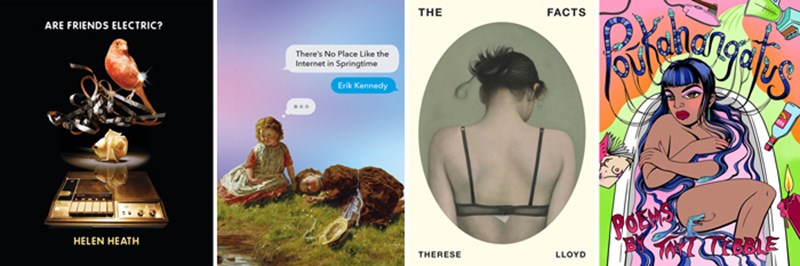
- Author: Therese Lloyd
- Title: The Facts
- Published: 2018
- Genre: poetry
- Trivia: 2019 Ockham NZ Book Awards shortlist
- List of Challenges 2019
- Monthly plan
- @theockhams
- @VUPBooks
- #AWW2019
- @AusWomenWriters
Poem: “no title”
- Just 64 words, no title, no punctuation, no capital letters.
- But this poem had the
- …emotional impact of fear and hope.
- Fear moves one away from something a feeling
- “common and strangely comfortable.”
- Hope moves one towards something a feeling
- that starts with “a voiceless wish”.
- The heightened image of a ‘pinned down moth”
- who wants to fly home is beautiful.
- A moth where the ‘hot glass ceiling” (of specimen drawer)
- “reflected only her calm, resolute gaze.”
- How often do we feel ‘pinned down’?
- Conclusion: excellent poem to kick-off this collection
- …it will linger in your mind.
Prose poem: On Looking at Photographs in High School Yearbooks
Appears as prose (anecdotes about school chums and her mother)
Reads like poetry (…not really, no pattern, rhythm, rhyme)
No line breaks (…just paragraphs)
What can I find ‘poetic about it?
No much, no elaborate metaphors
but I did find one symbol: eclipse and
repetition of the word ‘lack’ to help me pinpoint
the core message of the prose poem.
Conclusion:
Narrator: “…hated myself” for the “..lack of shimmer, the confusion”
The yearbooks “brought a swift eclipse of 28 years.” (Re: symbol)
“There is always more lack waiting” and
it fell like a shadow (Re: phase of eclipse) over her life.
Now the yearbooks have shone light on her memories (Re: phase of eclipse)
and she discovers the faces of those girls (Re: in yearbooks)
“All naked and plain. We all had it.”
Poem: Y2k
- Y2K (2 long stanzas) felt like to distinct poems.
- stanza 1: What is humanness….what does it feel like?
- stanza 2: NZ feels high-esteem “… That lovely conceit of time”
- …because in 2000 Gisbourne NZ felt the first rays of sunshine
- …in the new millennium.
- Conclusion: average poem with no emotional impact for me.
Poem: On Metaphysical Insight (metaphysical = ‘after the physical’)
- It took me an hour to read 10 lines!
- That attests to the Therese Lloyd’s talent.
- She walks creatively into a painting by Ed Hopper
- ….but the reader must discover
- …which painting it is from the clues in the poem.
- Lloyd opens the poem:
- “Night-time alone suffocates colour.”
- Now the reader must see the
- …thick black oils, smeared yellow lights
- and a frowning bowl of fruit
- …to help one to unlock this poem.
- Conclusion: Chef d’oeuvre, master work!
- I saw things in Ed Hopper’s painting after reading
- …this poem that I never saw before.
Most difficult section to comprehend:
Pg 34-43
- Lloyd wants to illustrate that poems echo
- and reecho against each other.
- ‘They cannot live alone anymore than we can”.
- Five poems and than five second drafts of these poems
- …were difficult appreciate.
- I just do not have the poetic savvy
- to see connections or disjunction between the poems.
- Sigh.
Update: I found the connections! Now you try!
Best selection…..absolutely amazing.
- The Facts (pg 44-52)
- Listen to a broken heart….
- …it is sounds more like a confession.
Poem: Funeral Playlist (pg 68)
- Never read a poem with a playlist before!
- With Spotify I listened to Lloyd’s selections.
- I tried to find the line(s) in the lyrics that would
- reveal the emotions Lloyd has hidden in this poem
- #Inventive
- Playlist:
- Into My Arms (Nick Cave and The Bad Seeds)
- Here’s Where the Story Ends (The Sundays)
- Avalon (Brian Ferry, Roxy Music)
Conclusion:
- I reviewed a few of the poems in this book.
- There are 32 poems divided into groups:
- Time — Desire — Absence.
- Lloyd writes 3 poems with reference to
- 3 paintings by Ed Hopper: Office at Night
- Western Hotel and Eleven a.m.
- If you place the image of the painting from Google images
- in front of you and then read these poems
- …it is an unique poetic experience!
- The Facts is MY CHOICE to win
- Ockham NZ Book Award 2019 for poetry.
- It is the ONLY collection I could get my hands on
- before 14 May 2019.
- Will one of the other nominees win?
- …only the jury can tell us
- …and I will see if I agree after 15th of July
- …when my books arrive!
Last thoughts:
- I think of reading poetry in terms of Zen:
- Trying new things reminds us
- …that it’s ok to take small steps,
- to make a little progress each day.
- It’s ok to feel inept at something at first.
- The goal is learning, not perfecting.
#Ockham NZ Awards shortlist Lloyd Jones
- Author: Lloyd Jones
- Title: The Cage
- Published: 2018
- Trivia: 2019 Ockham NZ Book Awards shortlist
- List of Challenges 2019
- Monthly plan
- @theockhams
- @text_publishing
Why did I read this book?
- The Cage is shortlisted for Ockham Book Awards (New Zealand)
- I wanted to see why the jury selected this book.
Why after reading 20% of the book I was ready to call it quits?
- Usually a book starts out slowly and gets better and better.
- This book did exact the opposite.
- I slogged through chapters 1-8. (20%)
- The reader is presented a bizarre hotel that
- decides two strangers are too ‘other’ and should
- be caged in the backyard of the hotel.
What did I do differently after ch 8?
- I realized if I stop short I’ll risk missing something incredible.
- Resisting the impulse to stop midway also teaches the reader strength.
- I read the book as a fable
- Forget the bazaar framework of a hotel
- …and it’s eccentric owners who have caged two guests.
- Look for the observations that Lloyd Jones is making
- …to teach us a moral lesson.
- He wants us to see
- …strangers (refugees) from another perspective
- ….not just staring or gazing at them on a TV screen.
- He uses animals that mimic human traits
- …and humans that treat others as animals
Strong point:
- Lloyd Jones uses the
- ….fable, a literary device.
- The author made lets animals teach a moral lesson.
- There are some powerful images in the book:
- Narrator compares strangers to sheep:
- Sheep: spectacular single-mindedness
- …they eat in response to coming famine
- during the day they hardly know what to do with themselves
- Strangers: (refugees …like sheep)
- look forward to each new day
- it may bring release.
- It passes.
- There is another endless night to get through.
Strong point:
- Observations…and there were many excellent
- descriptions of the plight of refugees...
- that will pierce your soul.
- Once your soul has been pierced then you are able to help others.
- Example observation:
- Pressed around their eyes is a bruising confusion.
- They stand mesmerized by their circumstances
- …where just a moment ago, in their minds at least,
- they were in their kitchen at home.
- Example observation:
- Strangers (refugees) pace…
- they do it to alleviate a feeling of
- ..helplessness when rain is falling.
- They do not wish to be cooperative like grass
- …or submissive like mud.
- Example observation:
- Trustee (authority) Mr Bennett:
- “They are not incarcerated, they are temporally caged.”
- Viktor (cook in the hotel): “And the difference?”
Strong point:
- Best chapter for moral lesson – Ch 11 Setting: Zoo
- Lesson: The animals (strangers, refugees) don’t hate us
- …they alternate between bewilderment and boredom.”
- Core message book – Ch 21 Setting: Hotel backyard
- Trustees authorities) no longer go down to the yard
- …the narrator must transcribe what he sees.
- The Trustees are only interested in the facts
- …they don’t get the fuller story of life inside the cage”
Weak point:
- The book is too long!! (43 chapter and just 263 pages)
- After reading 50 % of the book
- …my interest seriously wavered.
- Note: I noticed around chapter 22
- ….the narrative repeats itself
- over and over
- with observations, food for the strangers at the feeding hole,
- narrator playing the clarinet,
- visits to a zoo, strangers pace in the cage,
- sit on log or huddle in the back against a stone memorial wall…
- relieving themselves in a newly dug hole.
- The strangers, visitors or Trustees (owners of hotel)
- keep asking “ Is there any news?
Weak point:
- Flashbacks that
- made no sense to me in the narrative!
- Narrator…
- flies in a plane with his father
- travels on a particular road with his father
- visits a lighthouse with his mother
- recalls a snorkeling holiday!
Weak point:
- Strange threads in the narrative…
- Note: I don’t really understand the symbol of the narrator playing his clarinet all the time. Is it just to make music “to sooth the savage beast?” (strangers, refugees)
- Note: constant thread in the book: narrator is serving breakfast ( eggs, toast, jam, coffee etc) to strangers through a feeding hole.
- Note: woman in the hat…demented neighbor who visits the cage or a asylum representative or just a vision?
Weak point: useless chapters…just useless ( filler?)
Ch 25 Stangers receive a plate warmer…Trustees celebrate with a sparkling glass of wine and the narrator plays a song on his clarinet. What is the point?
Ch 26 Descriptions of nightmares ( Mr. Bennett and the Mole), strangers attempt to stand on the plate warmer and piling stones against the cage as a wall. Narrator brings the strangers some toilet paper…then he plays a song on his clarinet. What is the point?
Ch 27 Katie (little girl in hotel) wants to feed them (strangers). Strangers asleep in the dirt. Strangers are encouraged to grow own vegetables – Katie and narrator visit zoo again. What is the point?
Conclusion:
- Criticism should be like a rain
- … gentle enough to nourish growth
- …without destroying the roots.
- I have found many strong points in this book
- …but I think the author could have trimmed
- his manuscript in ch 22 – 35.
- With a little less clarinet…wallowing in the dirty cage
- coffee, toast and eggs in the feeding hole
- …it would give this book extra polish.
- #JustSaying
- Yes this book is confronting.
- No….unfortunately…not my choice
- for the Ockham NZ Book Award 2019.
 NancyElin.blog