
#Ockham New Zealand Awards shortlist
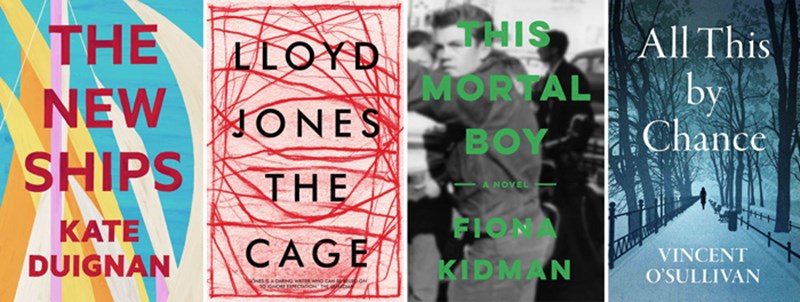
- My next shortlist: Ockham New Zealand Book Awards 2019
- Kate Duignan
- Lloyd Jones
- Fiona Kidman
- Vincent O’Sullivan
- …have all made the shortlist for the coveted $53,000 Fiction prize.
- I won’t have much time to read them all because
- the prize will be announced on 14 May 2019.
- How many can I read before the deadline?
- Today starts my Ockham Awards read-a-thon!
- My POETRY predictions….will be late (pre-order books)
Fiction:
- The New Ships – Kate Duignan – pre-order arrives 15 July!
- The Cage – Lloyd Jones – READ (review)
- This Mortal Boy – Fiona Kidman – READ (review)
- All This by Chance – V. O’Sullivan – NOT reading…novel over 3 generations…not for me!
Non-Fiction:

- Hudson & Halls: The Food of Love – Joanne Drayton (no e-book yet…)
- Memory Pieces – Maurice Gee – pre-order arrives 08 Aug
- We Can Make a Life – C. Henry – READ
- With Them Through Hell – Anna Rogers – NOT READING
- (only in hardcover and costs 68 euros! (...too expensive for me!)
Poetry:

- Are Friends Electric ? – H. Heath (Ockham NZ Award poetry 2019) – READ
- There’s No Place Like the Internet in Springtime – E.Kennedy – pre-order 15 July
- The Facts – Therese Lloyd – READ
- Poūkahangatus by Tayi Tibble – pre-order 15 July
#NSW Premier’s Award 2019 shortlist Chris Hammer
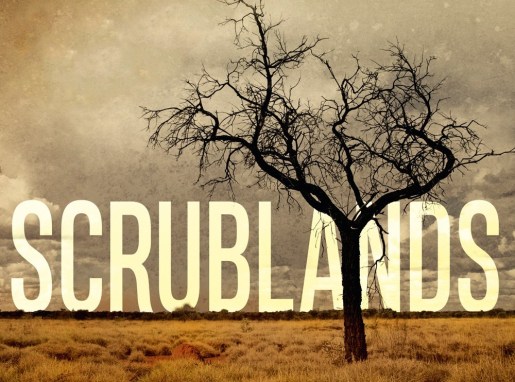
- Author: Chris Hammer
- Title: Scrublands
- Published: 2018
- Publisher: Allen & Unwin
- Genre: Aussie Noir
- Trivia: 2019 NSW Premier’s Literary Awards shortlist
- Trivia: 2019 ABIA Awards shortlist General Fiction Book of the Year
- Trivia: 2019 Indie Book Awards shortlist
- List of Challenges 2019
- Monthly plan
- @NSW_PLA
- @AllenandUnwin
Quickscan:
- In Riversend, an isolated rural community
- ….afflicted by an endless drought,
- a young priest does the unthinkable, killing five parishioners
- before being taken down himself.
- Journalist Martin Scarsden arrives in in town.
- He is assigned to write a feature story
- “a-year-after-the-crime” how people are coping with this tragedy.
- Some townsfolk don’t believe the priest was a child abuser.
- Some people were in love with him.
- Martin is here to get “the story behind the story”!
- Was Byron Swift a mass murder…who cared?
Strong point: The heat….is a character in this book!
- Great descriptions of the furnace wind
- …the blowtorch streetscape!
- Martin, journo visiting town, drapes a once-damp
- …towel around the steering wheel.
- …difficult it is to drive with burning fingers!
Strong point: narrator audio book Rupert Degas
- Rupert Degas is spot on!
- The voices of the characters that he creates
- drive this complex story.
- The voices he creates are distinct.
- — the local derro (Aus slang for vagrant)
- grizzled beard, streaked with grey, rheumy eyes
- — receptionist at local Black Dog Motel
- His female voices are the best I have heard a male produce!
- …be prepared for the Aussie accent…wonderful!
- I have never heard anything like him.
Conclusion:
- What can I say?
- No spoilers…not a single one
- because you have to experience
- the twists and turns as I did.
- Strong point: Like us, characters grow, change,
- ..make mistakes and learn (or don’t).
- Strong point: there was NO obvious foreshadowing
- ….I was stunned by every revelation because the
- characters can be very unreliable!
- Nothing felt predictable.
- Strong point: the setting is an active part in the plot twists!
- Hammer uses the setting to build suspense
- …2 huge fires and the fight to survive
- ….what is hidden in a locked room at the hotel?
- …what happened in the church on the day of the shooting?
- There is just so much to like in this book.
- It is a ripping read
- ….and the audio book brings (13 hr 17 min)
- the story alive!
- …voices of Harley Slouch, Codger Harris.
- I’ve read 4/6 nominees for New Writing Prize.
- Reading Flames this week but
- …this book is MY CHOICE
- to win UTS Glenda Adams Prize for New Writing
- in the NSW Premier’s Literary Awards 2019.
- The winner will be announced 29 April 2019.
- #BestCrimeFiction
- This is in the top 10 of all the mystery books I have read!
#NSW Premier’s Award shortlist Gerald Murnane

- Author: Gerald Murnane
- Title: Border Districts
- Published: 2017 (GiramondoBooks)
- Published 2019: (And Other Stories)
- Trivia: 2019 NSW Premier’s Literary Awards shortlist
- Trivia: 2018 Prime Minister’s Literary Awards winner
- Trivia: 2018 ALS Gold Medal shortlist
- Trivia: 2018 Miles Franklin Award shortlist
- Trivia: 2018 Voss Literary Prize longlist
- List of Challenges 2019
- Monthly plan
- @NSW_PLA
- @GiramondoBooks
- @andothertweets
Conclusion:
- This is one of the most difficult books to review.
- Initially I was tempted to close the book
- …after the first 20-30 pages.
- Murnane’s thoughts rambled on and on and
- …I just did not see the point.
- Then something happened.
- Words, phrases kept being repeated.
- I thought if I found the words that are most prominent in the
- narrative…this could guide me into finding a theme.
- coloured 80x – glass 109x – window(s) 78x – house 134x.
- I tried to find the meaning of:
- Window spaces (empty) = sightless people blind to the truth
- Window spaces (stained glass, leadlight glass) =
- people who have gathered in their life pieces of glass with
- …distortions and colors (like Murnane).
- They see reality that has been modified.
- Murnane calls it looking at things with
- …”a subtly different tint” this “wavering richness”.
- Murnane reveals:
- “I consider myself a student of colours, and shades and hues and tints.”
- It seems Murnane is telling us how
- his coloured panes of glass (stained glass)
- shaded the veranda in his mind.
Last thoughts:
- This is not an easy read.
- But great books are not meant to be easy!
- You must be prepared to go with the
- narrative flow even if you think
- …it is just going around in circles
- It is….but Murnane does have a purpose.
- Murnane wants us to be aware of the colors
- and distortions we are looking through!
- How we look at things makes all the difference
- Look at the glass from the sides of your eyes
- “…this has taught me more than gazing or staring.”
- Introspective books with self-examing characteristics
- do not always win a prestigious prize in the literary world.
- But this book does deserve awards for its
- ..innovative contemporary writing.
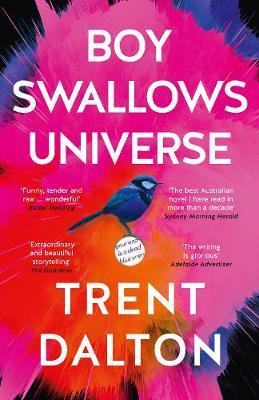
#NSW Premier’s Award shortlist Trent Dalton
- Author: Trent Dalton
- Title: Boy Swallows Universe
- Published: 2018
- Trivia: Winner of Book of the Year 2019 Indie Book Awards
- Trivia: Shortlist NSW Premier’s Awards (2 prizes)
- Trivia: Shortlist ABIA Awards (2 prizes)
- List of Challenges 2019
- Monthly plan
- @NSW_PLA
- @HarperCollinsAU
Finished: 20.04.2019
Genre: novel
Rating: A+++
Conclusion:
- In this book that is 60% fact and 40% fantasy
- we get to know the story of Eli Bell.
- And whether you realize it or not, you also
- get to know the story of Trent Dalton..the author.
- The novel gradually narrows its focus from
- bizarre childhood, teen years with stepfather and
- ex-con babysitter….
- to Eli’s life long ambition journalism.
- The ending becomes a bottleneck from which
- character and reader feel they can’t escape
- …..being dragged
- into a macabre universe!
- The book was a delight to read
- ..a real roller coaster ride!
- I have read 3/6 of the nominees that appealed to me.
- I’m NOT reading The Shepherd’s Hut
- …Aussie vernacular is too foulmouthed for my taste.
- Boy Swallows Universe is MY CHOICE
- as winner of Christina Stead Prize for Fiction
- (NSW Literary Awards 2019)

#NSW Premier’s Award shortlist Billy Griffiths (NF)
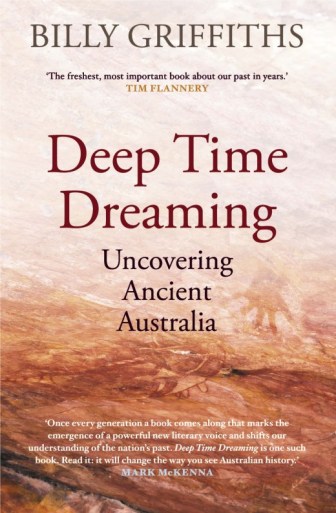
- Author: Billy Griffiths
- Title: Deep Time Dreaming
- Published: 2018
- Publisher: Black Inc.
- List of Challenges 2019
- Monthly plan
- @NSW_PLA
- @BlackIncBooks
Awards:
- 2018 John Mulvaney Book Award ( significant contribution to Australian archaeology)
- Shortlisted, 2018 Queensland Literary Awards
- Shortlisted, 2019 NSW Premier’s Literary Awards (29 April announcement)
- Longlisted, 2019 Australian Book Industry Awards (02 May announcement)
Quickscan:
- Deep Time Dreaming is a history of Australia
- …told in stones and bones.
- Griffiths highlights in several anecdotal chapters
- ….about many illustrative archeologists (male and female)
- the basic conflict in this discipline:
- How to view the past?
- critical deep time perspective vs the past as a living heritage.
- This is a complex question of ownership and belonging.
- Strong point: The book reveals in a conversational tone
- …easy to read for a novice like me…
- the slow slow shift to deep time dreaming.
Title:
- What is Deep Time Dreaming?
- The term was coined by B. Spencer and F. Gillen (Introduction)
- It is NOT to dig in search of treasure.
- It is to seek, understand a place from fragments
- …that have survived for thousands of years.
- It is an act of wonder.
Conclusion:
- I decided to read this book and listen to the audio. (11 hr 27 min)
- Listen to a sample of the book!
- Strong point: narrator Tom Griffiths is a delight to listen to!
- At times I was swept away by deep and profound
- sacredness of the Aboriginal people’s cultural life.
- Archeologist R.A. Gould published information/images that he promised
- ….would not be shared in his book Yiwara (1969)
- The author was on a Aboriginal ‘hit-list’ for his betrayal.

- At another time I read about the Franklin River dispute in Tasmania
- The Franklin was ‘not just a river‘
- …it has the epitome of a lost forest.
- The photo by Peter Dombrovskis
- … was the poster image during the
- explosive ecological and political debacle. (read chapter 9)
- The photo is impressive.
- …and takes me halfway across the world in
- my thoughts.

Morning Mist Rock Island Bend
Last thoughts:
- This book taught me more about Australia
- …and the rise of Aboriginal awareness by the nation,
- …it’s dedicated team of archeologists starting in 1950s
- with John Mulvaney than any other non-fiction I’ve read.
- I would highly recommend reading and listening to this book.
- With the help of Wikipedia (biographical info about archeologists)
- …and Google images this book is a magic carpet to
- …ancient Australia!
- I’ve read ALL the non-fictions shortlisted books
- …with the exception of The Erratics (not available in Netherlands).
- Deep Time Dreaming is MY CHOICE
- as winner of the non-fiction
- Douglas Stewart Prize ( NSW Literary Awards 2019)
#NSW Premier’s Award 2019 shortlist – read-a-thon!



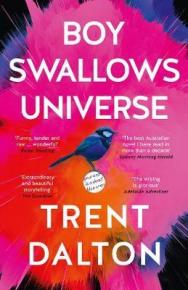
- My next shortlist: NSW Premier’s Award 2019
- I won’t have much time to read them all because
- the prize will be announced on 29 April 2019.
- How many can I read before the deadline?
- Today starts my NSW Premier’s Award read-a-thon!
- @NSW_PLA
- #NSWPLA
Christina Stead Prize for Fiction
4/6
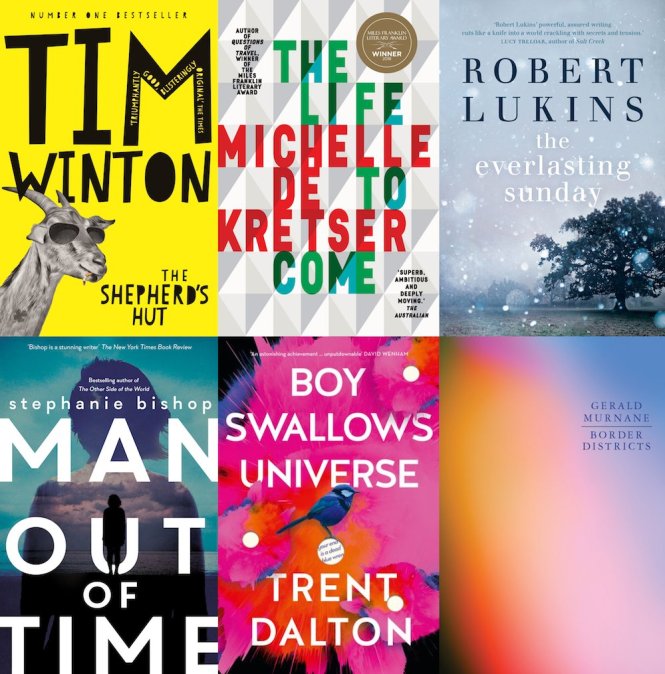
Man Out of Time – Stephanie Bishop
Boy Swallows Universe – Trent Dalton – READ (Stunning!)
The Life to Come – Michelle de Kretser – WINNER
The Everlasting Sunday – Robert Lukins – READ
Border Districts – Gerald Murnane – READ
The Shepherd’s Hut – Tim Winton – READ (Bah!)
Douglas Stewart prize for Non-Fiction
5/6
Saga Land – Richard Fidler & Kári Gíslason – READ
Deep Time Dreaming: Uncovering Ancient Australia B. Griffiths – READ – WINNER
The Trauma Cleaner – Sarah Krasnostein – READ – WINNER
The Erratics – Vicki Laveau-Harvie
Axiomatic – Maria Tumarkin – READ
Tracker – Alexis Wright – READ
BOOK OF THE YEAR:
Deep Time Dreaming: Uncovering Ancient Australia B. Griffiths – READ – WINNER
SPECIAL AWARD
- No Friend But the Mountains:
- The True Story of an Illegaaly Imprisoned Refugee – B. Boochani
UTS Glenda Adams Prize for New Writing
4/6
Flames – Robbie Arnott – READ
Boy Swallows Universe – Trent Dalton – READ – WINNER + People’s Choice Award
Scrublands – Chris Hammer – READ
The Everlasting Sunday – Robert Lukins – READ
Pink Mountain on Locust Island – Jamie Marina Lau – READ
The Lucky Galah – Tracy Sorensen
Multicultural NSW Award
1/6
The Lebs – Michael Mohammed Ahmad – WINNER – READ
Rainforest – Eileen Chong – NOT reading yet ….no e-book
Home is Nearby – Magdalena McGuire – NOT reading yet …no e-book
Always Another Country: A Memoir- S. Msimang NOT reading yet …no e-book
Too Much Lip – Melissa Lucashenko – READ
Miss Ex-Yugoslavia – Sofija Stefanovic NOT reading yet …no e-book
Taboo – Kim Scott – Winner 2018
The Drover’s Wife – Leah Purcell – READ (review) – Winner 2017
#AWW 2019 Ashleigh Young
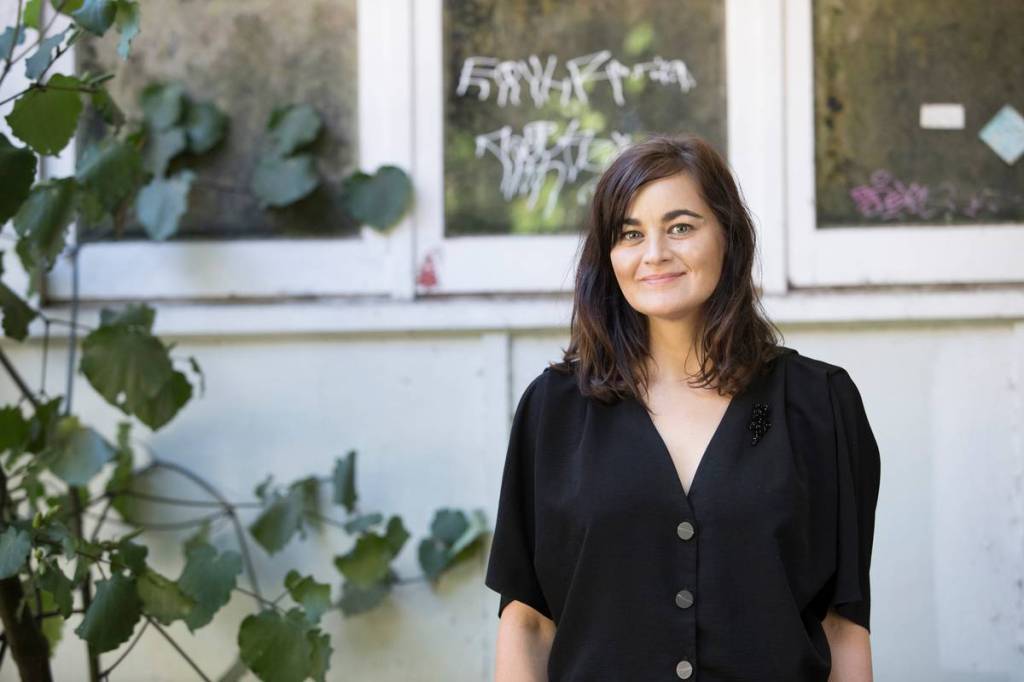
- Author: Ashleigh Young
- Title: Can You Tolerate This?
- Published: 2016
- Genre: essays
- List of Challenges 2019
- Monthly plan
- #AWW2019
- @AusWomenWriters
- Trivia: Shortlist Rathbones Folio Prize 2019
- Trivia: Yale University Windham-Campbell prize 2017
- Trivia: Ockham New Zealand Book Award (NF) 2017
- Trivia: Adam Foundation Prize Creative Writing 2017
Conclusion:
Bones
- This would not have been my choice to start an essay collection.
- Topic was not a good hook...not funny or emotional
- …just a bit strange.
Witches
- Story took me back to the carefree summer days on a beach.
- I can’t remember the last time
- …I jumped into the ocean….how sad is that?
The Te Kūiti Underground
- Absolutely enchanting…author’s memories of her father.
- “…he became in my eyes more and more eccentric,
- …and I became more narrow-minded.”
Postie
- Just a story that leaves the reader
- with a message from an eccentric French postman:
- “ …how wonderful it is if we just keep going
- …a simple stumbling block…can change
- the entire story of out lives and deaths.”
- #SmileOnMyFace
On Any Walk
- Once I start a walk…I never turn back.
- I just remember how far I’ve come
- .How much distance would be wasted
- …if I turn back?
- Once I’m home …the coffee tastes so special!
- Ashleigh Young will…
- #NeverGiveUp
Big Red
- I’m speechless….
- We are introduced tp author’s family
- …mom, dad and 2 brothers.
- Ashleigh Young is an amazing talent
- …..one of the BEST essays.
Window Seat
- We’ve all been there
- …on a plane with a talkative passenger next to us.
- Only this passenger….could she be and angel?
- #Spooky
Black Dog Book
- What you possess…you loose.
- Happy family dog story….but sometimes
- Mom has to make the difficult decision
- …and call the vet.
- #HardToSayGoodbye
Katherine Would Approve
- Anecdotes about the period when
- Ashleigh Young was director of
- Katherine Mansfield Birthplace House
- …in Wellington, New Zealand.
- #Job
Wolfman
- What to do when a harmless comment stings?
- #ThinkBeforeYouSpeak
Can You Tolerate This?
- After reading this essay I had to close my Kindle
- take off my glasses and close my eyes.
- #PowerfulWriting
- …one of the BEST essays
Seas of Trees
- Eye-opener about a disturbing
- …social trend in Japan: hikikomori.
- Creative young people becoming modern-day hermits.
- #PTSS
Bikram’s Knee
- If you are determined to find a way back to strength
- nothing is unfix-able.
- This is a very, very personal essay about Ashleigh’s
- Struggle to accept the awkwardness of her body.
- She keeps waiting on the gym bench, elbows on her knees
- head in her hand
- .…waiting for transformation.
- #Yoga #Running
- ….one of the BEST essays.
Unveiling
- The author visits a Maori ritual
- …unveiling a headstone of a family member.
- She will write a story to
- accompany the photographs her friend is taking.
On Breathing
- So funny about a simple decision
- ,,,author decides to breath noisily
- …when she feels puffed
- during a taxing bike ride.
- #Quirky
On Going Away
- Insightful look at relationships…
- Going away and then coming back together
- …this surge of
- anger and relief is toxic.
- Solution: compress it into one moment
- …like stepping into a manhole.
- A sharp, pure accident with a beginning and an end.
- #Insightful
Anemone
- Heartwrenching…to try to reach into the past
- and hold on to some one…
- …to try and stop time.
- #Depression
Lark
- Heartwarming observations and anecdotes
- about a woman who decides
- …to write a book about her life.
- The story is clearly referring to
- …Ashleigh Young’s mother.
- #Hysterical
- ...one of the BEST essays.
Last thoughts:
- Extremely well-written set of essays
- …in quiet, elegant joy-to-read prose.
- External circumstances
- …family, job, body shape or where you live..
- cannot determine your happiness.
- Ashleigh Young shows us
- happiness depends on what we are given.
- This a book best read ‘slowly’…
- I was not ready to say goodbye…
- ..to Ashleigh Young’s beautiful writing.
- I’m anxiously waiting for her next book!
- #MustRead
.
#AWW 2019 Fiona Wright
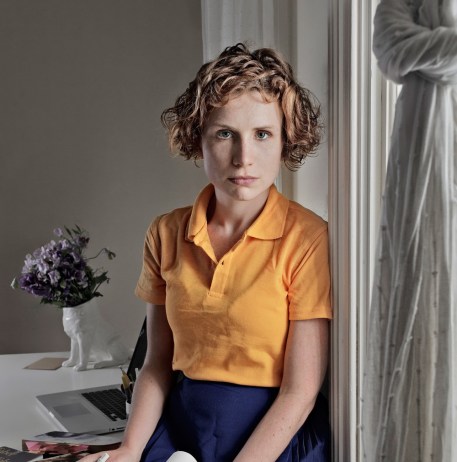
- Author: Fiona Wright
- Title: Small Acts of Disappearance: Essays on Hunger (10 essays)
- Published: 2015
- List of Challenges 2019
- Monthly reading plan
- #AWW2019 @AusWomenWriters
- Trivia: Winner of the Kibble Literary Award 2016
- Winner 2016 Non-Fiction Book Award in the Queensland Literary Awards.
- Shortlisted for the 2016 Stella Prize
Introduction:
- Wright examines her own anorexia and the significance of hunger.
- She writes frankly and movingly about a
- …difficult and very personal subject.
- She provides insights into her reading,
- …travels and her interactions with others.
- In several essays Wright relates
- …her experience to that of characters.
- In novels there are characters who starve themselves:
- For Love Alone by Christina Stead,
- Cloudstreet by Tim Winton and
- The Bluebird Cafe by Carmel Bird.
In Colombo …malnutrition, she misses it
- First sentence: I’ll always remember the
- …particular intensity that malnutrition brings on,
- …I know that I miss it still.
- Reaction: Hunger keeps the author separate from
- the rituals of society not only in Colombo.
- 70% impressions of the writer’s apprenticeship at a newspaper
- ….30% about her illness.
In Hospital …sickest
- First Sentence: At my sickest, a lover once folded a
- blanket over my shoulderblade before curling against my back to sleep.
- Reaction: Hunger is a mediator, it stands between the author and the world. Hunger is addictive. Hunger is support, it is scaffolding. Hunger became my safest state.
- 100%….very powerful, personal and disturbing.
In Berlin …interesting facts
- First sentence: I felt smaller in Berlin than I ever had before;
- the Northern Germans are, by and large, a big-boned people,
- …the shanks of their legs are particularly impressive.
- Reaction: The author visits a labour camp, Sachsenhausen.
- The body never forgets starvation.
- Sad…the author bought food to give her
- …pantry shelves an appearance of normality.
- “I didn’t choose my hunger. That no one ever does.”
- Wright describes returning to a family she
- …lived with during her studies 10 years ago.
- She had been well then.
- She did not know what lay ahead.
In Miniature …presenting a paradox
- First sentence: It seems a strange place to start writing about the miniature,
- but I want to begin on the internet, because I found there,
- for a time, a thing I could hardly have conceived would have existed,
- a community of illness, specifically for the kinds of illnesses that
- …we often keep silent and hidden within ourselves.
- Reaction: Breathtakingly beautiful…how Fiona Wright sees her
- …fascination with miniature reflected in her illness.
- This essay was poetic!
In Increments …sickness personified “gnawing”
- I’ll never know the point where my physical illness
- ..gave way to something different,
- something more complex, but more and more I think
- …now that hunger was always with me, always
- …gnawing away somewhere in me, and my illness
- …just allowed this hunger to assert itself in the only
- …way that could possibly have been acceptable to me.
In Books I …analogy in books
- The year that I first became ill, when my physical condition first developed,
- …was the first year that I studied Australian Literature.
In Books II …analogy in books
- There are books I have had with me in
- …hospital waiting rooms that I can never re-read without re-reading, too,
- …the traces that they carry of the spaces that I took them into.
In Group ….mother vs daughter
- There are some conversation that you shouldn’t have with your mother,
- especially if you are a poet, and especially if you are a
- …poet four months into you third stint of group therapy.
In Passing …sad news
- I received the news digitally, in a text
- …from my old housemate, Kat.
In Hindsight …looking back
- I resisted, for a long time, reading any anorexia memoirs,
- …even though I’d been reading about
- ..the condition in fiction and textbooks.
Conclusion:
- The cover of Fiona Wright’s book keeps catching my eye.
- What kind of story is behind those eyes.
- Fiona Wright (born 1983) is an Australian poet and critic.
- Small Acts of Disappearance: Essays in Hunger (2015)
- is a collection of ten essays that detail the author’s
- own experience with anorexia.
- The longest essay is ‘In Group’
- …the shortest is ‘In Passing’.
- The best? I loved them all.
- I wrote down a few words about the first few essays.
- Each one draws me in with the first sentence.
- After reading one essay
- ….I have to get up and do something else
- …I must let my thoughts settle.
- Fiona Wright has shared her life
- …stripped bare and gray as sheet-iron.
- The more Fiona thinks about her body
- the more she knows it is no longer her own.
- Her body tries to fold up at the first sign of danger
- …as if disappearing into a shell.
- #MustRead
#Stella Prize 2019 shortlist Jamie M. Lau
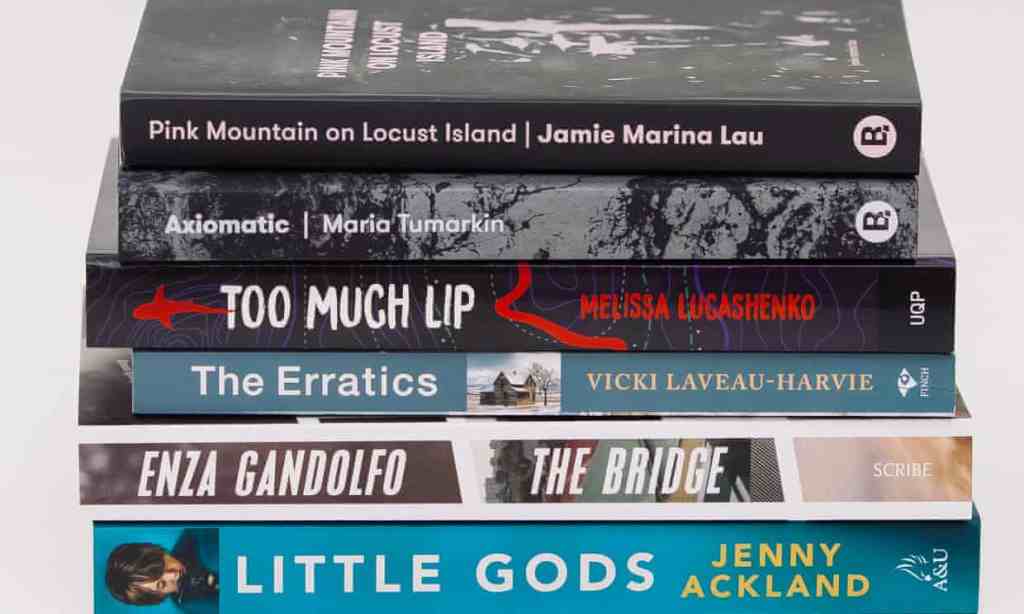
- Well, this ends my reading shortlist #StellaPrize 2019.
- I’ve done my best!
- Unfortunately I cannot purchase
- Little Gods or The Erratics in The Netherlands.
- You can read my review os Axiomatic on Goodreads.
Shortlisted books: 4/6
- Author: Jamie Marina Lau (1997)
- Title: Pink Mountain on Locust Island
- Published: 2018
- Trivia: shortlisted 2019 Stella Prize ($ 50.000 prize!)
- List of Challenges 2019
- Monthly plan
- #StellaPrize
- #AWW2019
- @AusWomenWriters
Quickscan:
- The novel centers around Monk (15 yr girl)
- Monk lives in Chinatown with her failed-artist-father
- She introduces her new found
- …friend the mysterious Santa Coy to her dad.
- Her father adopts Santa Coy as his artistic disciple.
- The chapters are fragmented
- …and reveal situations Monk observes.
- These vivid and intense vignettes move from
- Chinatown, casinos, music, tv-static, love, hunger and violence.
- Title: chapter ‘Everybody’s Dying in the Summer””
- …pink rock that two amateur pushers gave you isn’t a mountain,
- …it’s a crater.”
Strong point: poetic technique
- Style: poetic
- Clear, concise, and uncluttered style
- … and with a confident voice.
- Lau uses bullet points, snippets of a letter,
- shopping lists, menus, chats and repetitions.
- She gives us an objective description of her world,
- clear straightforward words
- …ending with a simple statements of feeling.
Strong point: dialogue
- Dialogue: without quotation marks
- I noticed how “clean” the text looks without quotes
- and is somehow more immediate.
- Cormac McCarthy once said:
- “…the intent of dialogue without quotations
- ….is to make the reading easier, not harder.
- If you write properly you shouldn’t have to punctuate.”
Strong point: this book introduced me to new music!
- I listened to
- Japanese Jazz Fusion
- Pianist Hiromi Uehara (1979) LISTEN
- Her joy is infectious! She certainly got rhythm!
- You won’t believe your ears!
- Blues with a Latin beat
- Pianist Horace Silver (1928-2014) American jazz pianist LISTEN
- Silver’s break came in 1950, when his trio backed saxophonist Stan Getz.
Strong point: urban vocabulary
- Some expressions absolutely stumped me!
- “Sitting like Ls, our backs against the bed…” = sitting like losers? lost souls??
- Have you ever watched a
- …video of digitized acid trip on internet?
- I have…after reading this book! Eye-opener!
- Unplug: forgetting one’s problems in a Gen Z digitized world
- ” I pack my computer, my xanax.”
Strong point: captures a precise moment of thought.
- Lau writes some profound closing sentences:
- Ch “Aunty Linda”:
- She says: “Would you look away if somebody was
- forcing you to look at their emotions?
- He says: I’m here now aren’t I?”
- Ch “Home Run Ballad”:
- “I try praying for Sadie….
- I ask Aunt Linda how you know it’s working.
- She tells me that nobody knows…
- ..and that’s the best part.”
Conclusion:
- Do you want to meet tomorrow’s literary star today?
- Read this bold and adventurous work
- …by Jamie Marina Lau!
- This book falls under the Gen Z label.
- Monk’s character is a
- reflection of a crazy access to visual information.
- Monk’s age perspective is 15 yr.
- She is not defining herself by what she knows.
- She’s just observing.
- Gen Z’ers reading and writing
- …talents are being transformed
- …due to their familiarity with
- …digital devices, platforms and texts.
- Pink Mountain on Locust Island reflects
- ..this transformation by it’s experimental form!
- If you put the ‘out-there’, wierd, brash, disjointed aside
- and read the book to find a few gems of real thought
- then you have done justice to this new rising literary
- star of the Gen Z generation.
- It is not conventional….it may not appeal to everyone
- ….but Jamie Marina Lau impressed this Baby Boomer!
Last thoughts:
- Perhaps people of Gen Z
- will find the book more appealing than others.
- Gen Z’ers are being taught to consume information
- …in the way Jamie Marina Lau describes it in her book.
- I had no idea how to approach the book.
- Before reading ….I researched all 106 chapter titles!
- Some of the titles made sense after reading the book
- …most did not!
- There are many allusions to food, music and the bible!
- Can it win the Stella Prize?
- Is it too experimental?
- I wonder what #Stella will decide!

#Stella Prize 2019 shortlist Melissa Lucashenko
Shortlisted books: 2/6
- Author: Melissa Lucashenko (1967)
- Title: Too Much Lip
- Published: 2018
- Trivia: shortlisted 2019 Stella Prize ($ 50.000 prize!)
- List of Challenges 2019
- Monthly plan
- #StellaPrize
- #AWW2019
- @AusWomenWriters
Quickscan:
- Kerry Salter returns to her hometown of Durrongo
- …to bid farewell to her dying grandfather.
- She becomes embroiled in
- …the dramas of her dysfunctional family.
Conclusion:
- This book was difficult to enter…
- ..narrative and the characters.
- The family relations were hard to sort out because there are so
- …many people to keep track of!
- Great-grandparents (‘Chinky’ Joe, Gran Ava)
- Grandparents (Pop Joe, Granny Ruth)
- Mother-father (Pretty Mary and Charlie)
- Brothers-sisters “Koala” Ken, Donna, “Black Superman”, Kerry
- Aunts, uncles, nephews and cousins…
Weak point: Book is not filled with richly crafted sentences.
Strong point:
- An emotional mood/tone cannot be measured
- …but it can be spoken!
- The writer uses a specific choice of words
- slang (“truesgod!”)
- local phrases, (Norco butter, plate of hammer and onion)
- misspellings ( wanna, granny is ‘ere ta help’)
- profane expressions
- …that you can imagine are in all the chapters!
- These word choices express the lifestyle, viewpoint and
- dysfunctionality of the Satler Aboriginal family.
Last Thoughts:
- Amid all the bizarre images, voices and actions
- in this book with some very complex characters
- we see passion, love and forgiveness in the Satler family.
- Language is the culture. (Aboriginal)
- If you lose your language you’ve lost your culture.
- Lucashenko manages to find a balance
- between emotions and language
- …that really impressed me!
 NancyElin.blog