Skip to content

Posts from the ‘Australian Authors’ Category

28
Jun

Classic: Thea Astley


Introduction:

  1. I love a good short story.
  2. Usually I review just one story to post on this blog.
  3. W. Trevor  and John Updike are favorites of mine,
  4. ..but a collection is the hardest thing to review.
  5. I want to give Thea Astley the attention she deserves and
  6. …have spent 4 days reading eight short stories!


Weak point:

  1. I felt only a few of the selections were real short stories.
  2. Instead Astely uses each ‘story’ as a continuation of
  3. Keith’s thoughts and adventures in Queensland.
  4. A short story must come to the point!
  5. A short story must reveal in 1st or 2nd
  6. paragraph the mood, theme and conflict.
  7. Astley fails on this point.
  8. In The Curate Breaker  there was a clear  conflict
  9. between the Catholic priest and Anglican minister.
  10. The resolution was believable and touching.
  11. This story made this reader pause and think.
  12. #Bravo


Conclusion

  1. I read these eight stories and have reviewed four.
  2. The first story was a disappointment and
  3. …I had to push myself to read the rest of the book.
  4. I was expecting a short story and got  what sounded
  5. …like the exposition of a novel!
  6. So you’ve been warned: the first story is a dud.
  7. But I kept  reading…giving Astely a chance to improve!


4 REVIEWS     I’ll let you discover the rest yourself!


North: Some Compass Readings: Eden

  1. Setting: Carins
  2. Title: refers to the first two sentences:
  3. “Let me draw you a map…put it just north of 20 and 146 east…
  4. sea bitten rind of coast…limbo for those who’ve lost direction.”
  5. Parents: Iris and Bernard are exact opposites:
  6. Iris: gorges on horoscopes, sports a lucky color and
  7. it always seems to be the Ides of March.
  8. Bernard: jocular, jaunty and tips his son an unsmiling
  9. wink as he he rattles his newspaper busily.
  10. Narrator:  Keith Leverson
  11. Note: Iris, Bernard and Keith are
  12. characters are from Astley’s book The Slow Natives.
  13. A suburban couple, Iris and Bernard, 
  14. …have drifted into the shallows of middle-aged boredom.
  15. Their fourteen-year-old son, Keith  is a stranger.

Plot:

  1. Fourteen-year-old son, Keith is now
  2. middle-aged, thinning blond hair and
  3. ..has lost one leg in a car accident
  4. …that was central in the book The Slow Natives.
  5. Keith sets out on a journey  from Carins
  6. to Falls Gorge on the Kuranda railway.
  7. Keith/Astley  rants about the influx of lean, arrogantly young
  8. Balmain and South Yarra drop-outs, 
  9. the new urban trendies and
  10. the  middle-aged straights trying to adopt the patois and local dress.
  11. Theme: landscape is beautiful in Queensland
  12. ….but you get more magic from strangers (the misfits).


Weak point: allusions

  1. The use of allusions in Astley’s novels is
  2. one of the elements of her style  that I enjoy reading.
  3. But in her short stories I think she has
  4. overreached herself and lost much of her focus


Weak point:  Tone

  1. The tone achieved by the use of allusions
  2. shifted from imaginative in her novels...
  3. to pedantic in the short stories.


Conclusion:

  1. This was NOT an easy read.
  2. Astley starts her story in the present but
  3. flashbacks to a month ago, then yesterday,
  4. …then the present again.
  5. It was hard to follow. 
  6. The author makes it even more complex….
  7. by filling the story with too many allusions.
  8. Brilliant writing….but not a well-balanced story.
  9. Thea Astely’s novels?   TOP! 
  10. Thea Astely’s short stories?   Not her strong point!
  • Allusion: poem Trade Winds by J. Masefield
  • Allusion:  Shakespeare’s Hamlet
  • Allusion: to Virgil  “Sera comans, Iris” (the late blooming…)
  • Allusion: D.H. Lawrence poem Green:
  • “…the gorge is evaporating in green light,
  • green into greeness as Lawrence might have said…”
  • ... Astely assumes we all know who Lawrence is.


The Curate Breaker

Conclusion:

  1. This was a normal short story….a pleasure to read
  2. …with a beginning, middle and end.
  3. The story centers around an insanely bitter conflict
  4. between the Roman Catholic priest and the Anglican canon.
  5. Father Rassini and Canon Morrow  are at odds
  6. …but their lives are heartbreakingly parallel.
  7. The tragedy is….neither the priest nor the canon
  8. see their uncharitable behavior.
  9. Canon Morrow flatters and shields his ego from blame
  10. when we make mistakes (berating his wife…severely, angrily)
  11. because he is doing God’s work.
  12. Father Rassini observes this behavior and is appalled.
  13. But this suave man of God realizes he is no better than Canon Morrow.
  14. Father Rassini has callously ill-treated his father
  15. snapping and shouting at him when the elderly parent falters.
  16. Father Rassini suddenly leaves the house after seeing
  17. his frail, grey parent shelling peas for the evening meal.
  18. Father Rassini must spend some quiet time with God,
  19. asking Him to show him where he needs to change.


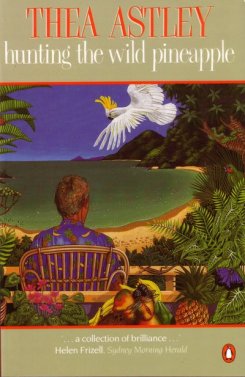
Hunting the Wild Pineapple

Conclusion:

  1. I was hoping to have a great time enjoying
  2. Astley’s humor and  finding out what
  3. in heaven’s name the wild pineapple meant.
  4. My enthusiasm waned.
  5. Why do bad souffles happen to good cooks?
  6. Why do dull stories….happen to good writers?
  7. This story started out with Astley’s keen observation of bored
  8. people  at a tropical Bed and Breakfast
  9. …where the pink gin, vodkas on ice
  10. …and stingers kept the guests
  11. in a permanent ‘happy-hour’.
  12. There was some sexual tension arising  among
  13. B&B owner, guests and two plantation workers (gay and bi).
  14. But nothing that made the story shine.
  15. Hunting the Wild Pineapple was a hoax to
  16. …take bored and slightly tipse guests
  17. …on a wild goose chase.
  18. This story had so much potential
  19. ..and I hoped it would entertain me as much as
  20. Boat Load of Home Folk,
  21. but this short story sadly #Collapsed.


A Northern Belle

Conclusion:

  1. Astley uses no alcohol, no allusions  only Clarice’s tears and embedded fears:
  2. Fear black men instilled by her mother
  3. Fear of sins of the flesh instilled by the nuns, Mother Suplice.
  4. Irony: her mother was determined her daughter Clarice would marry well
  5. ….but her only true love was Bixer, her dog.
  6. Weak point: 
  7. There is no real epiphany, no redemptive moment.
  8. Just a sad life that ends with a traumatized unmarried
  9. …50 yr old woman….screaming.
  10. #Disappointing, lacking imagination.


15
Jun

Victorian Premier’s Literary Award Drama 2018

Nisha and Yvette


Introduction:

Understanding characters in plays allows the reader to relate to
different situations, backgrounds, and cultures.
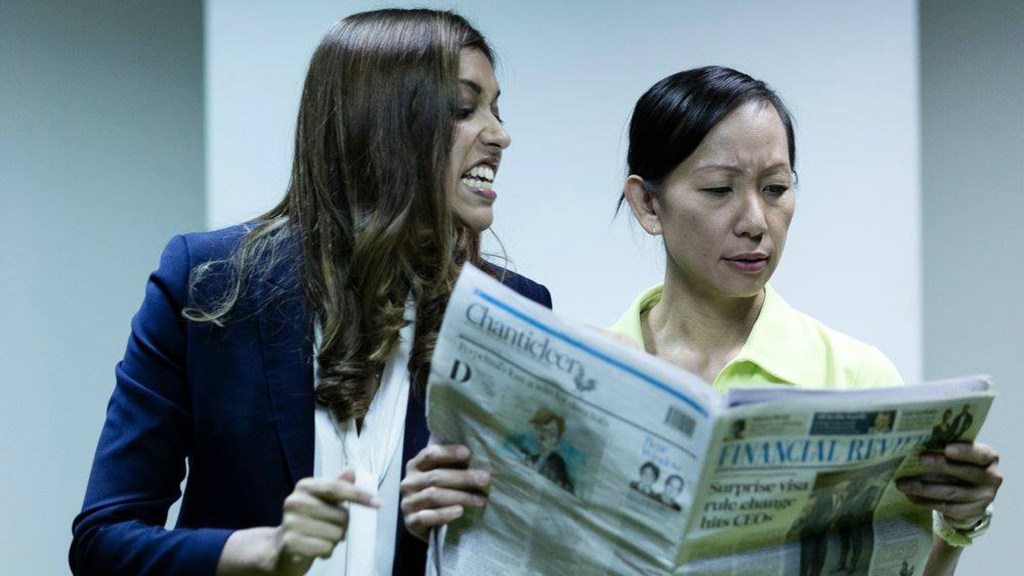
Asian-Australian office cleaner Yvette clashes with
ambitious Australian-Indian Nisha corporate executive officer in multinational.
A lasting friendship begins.….


What is the play about?

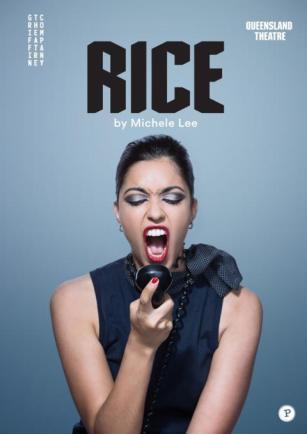
  1. Michele Lee writes plays about women of colour.
  2. Rice is about an ambitious, self-obsessed Indian executive
  3. Nisha Gupta (28 yr) working for Golden Fields Company.
  4. She is the granddaughter of a West Bengal immigrant.
  5. She is ‘second in charge’ of an agricultural company.
  6. Yvette Tang (61 yr) is a Chinese immigrant.
  7. She is a single-mother, one daughter.
  8. She is an office cleaner.
  9. Yvette and Nisha.… multicultural women
  10. …making their way in modern Australia.


Metaphor:

  1. Metaphor:  Nisha is on the top floor of the building
  2. ….successful.
  3. Metaphor:  Yvette  is in the basement of the building
  4. .…struggling with a menial job.


Strong point:

  1. Michele Lee uses parallels throughout the play to show
  2. us the connection between Yvette and Nisha.
  3. It took me 2 readings to discover them all!


Yvette and Nisha:  similarities

  1. both work in Golden Fields building
  2. both have emotional ties to family – yvette/daughter; Nisha/grandmother
  3. both are  ‘putting on an act’
  4. Yvette = “little old cleaner victim” – Nisha = “Your corporate act”
  5. both are businesswomen
  6. Yvette: Import.”You think I import plastics? (imports Prada knock-offs)
  7. Nisha: I’m E.O. of Golden Fields. I’m strategic!
  8. both live in suburbs of  Melbourne
  9. ….but at opposite sides. Yvette: Eltham – Nisha: Werribee


Strong point:

  1. The ‘tit-for-tat’  dialogue between Nisha and Yvette…
  2. It snaps, crackles and pops off the page.
  3. Nisha:  You’re the one with the vacuum cleaner. End of story
  4. Yvette: Not the end
  5. Nisha:  Chinese cleaner
  6. Yvette: Indian princess
  7. Nisha:  You’re a cleaner
  8. Yvette: You’re a baby
  9. Yvette: I empty. (complained that Nisha left her rubbish on desk an not in bin)
  10. Nisha:  Both my bins are full. Nothing on the table. Happy?


Friendship:

  1. They’re from different cultures, different generations
  2. …but  a bond develops between Yvette and Nisha
  3. Yvette: Act 1  Very fussy. Very big bitch. Hope she get fired
  4. Yvette: Act 3   (…she mumurs)  “I will miss you little shadow.
  5. Nisha:  Act 1 I stay. I eat. I make a mountain of rubbish for you.
  6. Nisha:  Act 3 You tell me what to do…Well I pretty much did, ok?
  7. Yvette: Act 3  “All you want is me to say you are right.”
  8. Nisha:  Act 3 “Say something about me. Tell me. Judge me


Echoes:  of friendship

  1. Act 1:
  2. Nisha “This is the part of the story where we first meet.”
  3. Yvette: “This the part where we eat.” (rice together….)
  4. Rice is an ancient symbol of wealth,
  5. success, fertility and good health.
  6. It is powerful.
  7. Act 3:
  8. Yvette “This is the part where we leave together.
  9. This is the part where we go.”


Yvette changes:

  1. Plays the victim …(act 2)
  2. …groveling at the feet of David Egan, son of CEO of Coles company.
  3. Does not express her opinion…”But not everything I think I have to say.”
  4. Change:
  5. Act 3 we see a ‘re-born’ Yvette with a voice!
  6. A voice in sync with the new generation….her daughter Sheree!
  7. “Mr. David Egan. Fuck you.
  8. “Coles is evil and the system is broken.
  9. And that is all I have to say to you. Mr. David Egan.”


Nisha changes:

  1. In the first two acts Nisha is a corporate ‘high-roller.”
  2. She has a better grasp of the world.
  3. She is is a little brighter than the next person.
  4. She is a high stakes player who is willing
  5. to place large bets and take risks.
  6. She is brokering a rice deal with biggest retainer in the world.
  7. Plot:  Nisha’s fatal overseas
  8. business trip to sell rice to the Indians.
  9. “Any day now this phone is going to sing.”
  10. …this is game-changing, history-breaking.”
  11. Change:
  12. Act 3 “I don’t do anything special. (E.O) It’s a bullshit title.
  13. Nisha once demanded Yvette clean….end of story.
  14. Now Nisha helps Yvette empty bins,
  15. …squashes the rubbish down and adds in new bin liners.
  16. She’s about to be fired….the rise and fall of Nisha.


Strong point: 

  1. Michele Lee allows Yvette a
  2. heightened level of knowledge about Nisha.
  3. The older generation may not have
  4. a Masters degree from University of Sydney
  5. but Yvette can teach Nisha.
  6. Yvette  shows her that she should not be afraid of
  7. shame…of failing…not being perfect.
  8. Yvette has learned that the hard way.


Nisha and Yvette help each other:

  1. Courage is the feeling we need to bring to the surface
  2. if we want to change things.
  3. Nisha helps Yvette find her voice and the courage to quit.
  4. The courage to be closer to her daughter.
  5. Yvette helps Nisha to see the world from ‘street level’
  6. and realize how lucky she is.
  7. “You need help? Huh? Why? You are young,
  8. you have a job. Look at you.


Strong point:  coded words, foreign languages…multicultural

  1. Echoes: Wo hui xiang nie de, xiao yingzi”
  2. This is the thread that connects Yvette to Nisha
  3. I will miss you little shadow”.
  4. Echoes:  “Tini bijoyer sathei aasen.”
  5. This is the thread that connects Nisha to Yvette
  6. and her grandmother.
  7. “She moves with victory.”


Valerie:  voice that makes you stop and think…comic relief.

  1. Valerie is a  60+ Russian who
  2. …is the cleaning service supervisor of Yvette.
  3. She is only in the first act…but has something to say!
  4. Valerie and Yvette represent the older generation.
  5. How is that fussy bitch? (Nisha)
  6. Fuck you time sheet! (cleaners trained for 2 minute only office clean)
  7. Why is this world worse than when we came into it?
  8. Don’t look so tragic. Life is shit. Company training say so.


Theme:  mother vs daughter

  1. Yvette Chinese cleaner  vs  Sheree political activist/law student.
  2. These are the emotional scenes
  3. a mother and a  daughter.
  4. Yvette and Sheree are from different generations.
  5. Act 1:
  6. “In this world you bring me shame, but I only have you…
  7. …you only have me.”
  8. They are exact opposites.
  9. Act 2:
  10. Sheree wants trouble,
  11. to step on corporate toes, be  a modern-day martyr.
  12. Yvette wants to keep a low profile… nose to the grindstone.
  13. Yvette has learned it does not pay ‘to make waves.’
  14. Act 2:
  15. Mother and daughter clash.
  16. Sheree speaks her mind: “You only do things for yourself” ….
  17. Yvette: “Your Ma, always, always, everything to help you, keep you….”
  18. In Act 3 I found the most poignant remarks by Yvette:
  19. “Thank you for being mine.”


What is different in this play?

  1. Characters: There are 11 characters in the play.
  2. but just two actresses on the stage.
  3. The women can change their voices, accents
  4. and stage lighting (according to the stage directions)
  5. helps differentiate the characters.
  6. TWO protagonists:  Nisha and Yvette
  7. story lines are   closely intertwined,
  8. …both in the plot and the theme.
  9. Structure: NOT  the classic 3 act play
  10. focus on 1 character – conflict-driven –
  11. cause and effect….progressively raising the stakes.
  12. This is OPEN MODEL:
  13. uses  parallel action, echoes
  14. events linked by coincidence
  15. ending, instead of resolution


Conclusion:  my thoughts

Note:  I have learned that when I read a play I know I will absorb only the basics during the first reading: characters, setting, structure of the play. The best way to read a play is just before bedtime. Then I try to retell mysef what the play is about. In the morning I have new thoughts about conflicts, parallels, repetition of phrases (echoes). Reading a play is more difficult than reading a novel!

Note: This play is a brilliant piece or writing that you will not realize if you just read it once. The subplots are good (Graeme, Tom, Johnny Song) but concentrate on the  main character’s dialogues of Nisha and Yvette.  Try to hear….what is NOT being said!  Michele Lee has deservedly won  prestigious prizes: Victorian Premier’s Award Drama 2018 and Queensland Premier’s Award Drama 2016-2017.

Note: Reading a play on Kindle…is not as much fun.  In the book I can make notes, highlight dialogue. Yes, I can do that on Kindle…..but I love having the script in front of me. It is an intimate reading of a playwrights hard work!  It is so much fun to dissect a play.


Australian ‘new to me’ or slang:

  1. ASOS:  – global fashion place for 20-somethings
  2. The Iconic: Australian/New Zealand   fashion place for 20-somethings
  3. bogan  – One of minimal intelligence, standards and fasion sense. Located in Australia, found in caravan parks, housing commission, the pub or Centrelink queues. (Urban dictionary)


9
Jun

Mackellar: How to Get There


Introduction:

  1. I read an essay by Maggie Mackellar last year in
  2. The Best Australian Essays 2016
  3. …and was very impressed.
  4. Mackellar has had a tough life
  5. …death of young husband, single mother… but she is resilient.
  6. I want to read how she sets out her new life in Tasmania.


Conclusion:

  1. I had my reservations about the book in the first few chapters.
  2. Mackellar was describing her new relationship with Jim and
  3. the move to Tasmania in micro-details.
  4. But soon after reading the “inner thoughts’ pages between chapters
  5. …I was drawn into Mackellar’s world.
  6. “I promised  myself I would never trust again.
  7. How does anyone ever learn to love again.”
  8. Through every small opening in life
  9. …through rips and tears and tatters….life pours.
  10. Mackellar: “I’ve raised these kids,
  11. I deserve some companionship, some love.
  12. I’ve done this on my own for 10 years.”
  13. Mackeller struggles to set down roots in Tasmania:
  14. a new love….compromise chips away at identity
  15. writer’s block
  16. homesickness..the acid rain that leaches into happiness.
  17. “Home, I must learn to say home.” (ch 6)
  18. This was a great read in which
  19. …Mackellar pours her heart out
  20. …and I mean that in a good way.
  21. “Sitting in the quiet I also fear my own inadequacy
  22. …to be the woman all these people need me to be.”
  23. #Insightful


Last thoughts:

  1. I dare you to read this book
  2. …especially the last 3 chapters + epilogue without
  3. feeling emotional, a welling up in your eyes
  4. …..as you try to reach out to Maggie Mackellar.
  5. I wanted to tell her
  6. …your book? your life?
  7. …..Job well done!


Wineglass Bay, Tasmania 

  1. This is the view Mackellar had during
  2. …her few days of solitude writing.
  3. This is one  of the most beautiful beaches in the world!

7
Jun

Essays: The Australian Face (editor Catriona Menzies)

  • Title: The Australian Face: Essays from The Sydney Review of Books
  • Published: 2017
  • Editor: Catriona Menzies PikeEditor Sydney Review of Books.
  • She holds a PhD in English literature from the University of Sydney.
  • Editor: James Ley –  Professional literary critic. 
  • He holds a PhD in English literature from the University of Western Sydney.


What is the Sydney Review of Books?

The Sydney Review of Books was launched in 2013 out of frustration at the diminishing public space for Australian criticism on literature.


What is this book about?

To celebrate the Sydney Review of Books first five years online Ms Menzies and J. Ley have selected the ‘cream of the crop‘ out of more than 500 published essays over the years. This anthology contains  essays on Australian fiction, poetry and non-fiction.


What are essays for?

They are for thinking about things that need to be thought about. This book highlights several popular Australian authors ( H. Garner, A. Wright, M.B. Clarke and Les Murray (…could win Nobel Prize!). But I enjoyed discovering a forgotten Australian poet, Lesbia Harford, the literature scholar John Frow (impressive credentials!) and Moya Costello.

This book not only reveals the mainstream writers….but also  extremely talented essayists like Jeff Sparrow, Julieanne Lamond and Ben Etherington.


Here are some of my notes:


#ExcellentEssay: Gut Instinct by James Ley

  1. James Ley is not only editor but has contributed a
  2. brilliant essay about H. Garner’s House of Grief.
  3. He examines Garner’s style in this book about a slow
  4. grinding process of two court cases the
  5. provide the narrative spine of the book.


#ExcellentEssay: The Brain Feign by Ben Etherington

  1. Ben Etherington’s essay was a refreshing critical look at a number of
  2. Australian book reviewers
  3. ….offering a ‘chorus of weak cheers’ about recent publications.
  4. Etherson’s complaint in his essay is that critics
  5. summarise the content, recapitulate the blurb,
  6. describe the author’s reputation but none of the critics work
  7. to demonstrate WHY the novel deserves a prize or not!


#NotAFan: Sings for the Soul by Anthony Ullmann

  1. Unfortunately I gave up on Anthony Uhlmann’s essay.
  2. This my be very well MY problem…and not reflection on the writer.
  3. But read the essay yourself…and let me know what YOU think!


#ExcellentEssay: Render It Barely – Jeff Sparrow

  1. Impressive essay by Jeff Sparrow about a forgotten Australian poet
  2. Lesbia Harford.
  3. I knew nothing about Jeff Sparrow or Lesbia Harford.
  4. Ms Harford’s poems are worth reading
  5. …especially her love poems and factory poems
  6. …but Sparrow emphasizes
  7. that they should be read with the
  8. …knowledge of what was happening in
  9. Australian society (rise of Marxism and the Communist Party,
  10. the working class demanding rights, the world WWI and
  11. in the poet’s own life (lovers Guido Baracchi and Katie Lush).
  12. I am eager to read more articles written by Jeff Sparrow!
  13. Jeff Sparrow is a writer, editor, and broadcaster.
  14. He writes a fortnightly column for The Guardian and was the contributes
  15. regularly to many other Australian and international publications.
  16. He was the immediate past editor of literary journal Overland.
  17. I enjoy is style:
  18. …he does not want to preach…. he wants to teach.


#ExcellentEssay: The Australian Face by Julieanne Lamond

  1. Ms Lamond discusses The Barracuda by Christos Tsjolkas.
  2. She compares it to the author’s popular novel The Slap.
  3. Australia in The Slap: why hatred can hold communities together.
  4. Australia in The Barracuda: shows the absurdity of
  5. …the idea that Australia is a classless society.
  6. Sounds like these books are filled with some ‘fireworks’!


Last thoughts:

  1. This is one of the best anthologies of essays I’ve ever read
  2. Another  collection of eassys I enjoyed
  3. …was Zadie Smith’s  Feel Free.
  4. I’m including The Australian Face review on the
  5. Australian Women Writers Challenge. #AWW2018
  6. I feel Ms Catriona Menzies-Pike should enjoy some praise for
  7. guiding The Sydney Review of Books and together with J. Ley
  8. …selecting some great pieces of writing.
  9. Discover the rest of the essays  yourself!
  10. #GreatRead 


3
Jun

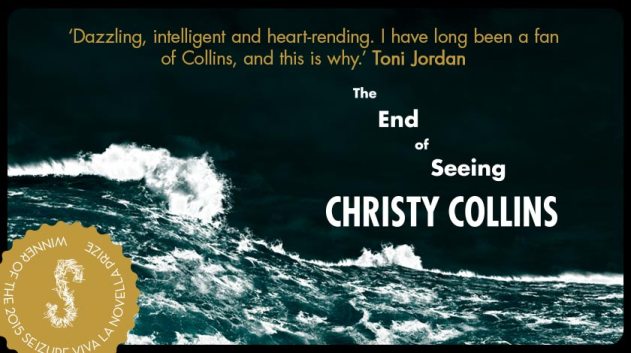
Christy Collins: The End of Seeing


Conclusion:

  1. I am aggressively attacking my TBR list
  2. I found Christy Collins’ The End of Seeing.
  3. I have NO idea why I bought this book or who Ms Collins is.
  4. So I went into the novel(la) with a clean slate.
  5. The first three chapters captured my attention.
  6. Ms Collins gave us the small details of what Ana feels
  7. while trying to come to grips with her grief (death of child, partner).
  8. After 50%… I realized this is not a book I am enjoying.
  9. Ms Collins places Ana’s  past life with partner and baby as
  10. one of the main subplots…it almost overshadows the rest of the book.
  11. IMO I would have preferred less baby and more intrigue…
  12. about the missing photo journalist (partner) and people trafficking.


Last thoughts:

  1. Sometimes a book does not click with me.
  2. The style  is wrong….the taste not my own.
  3. Others have praised this book and
  4. …that is their right to express an opinion.
  5. We as readers also agree to disagree at times.
  6. But reading what I dislike helps me refine what it is I value.
  7. It is always a win-win situation.
  8. Who knew I would like the horror genre was
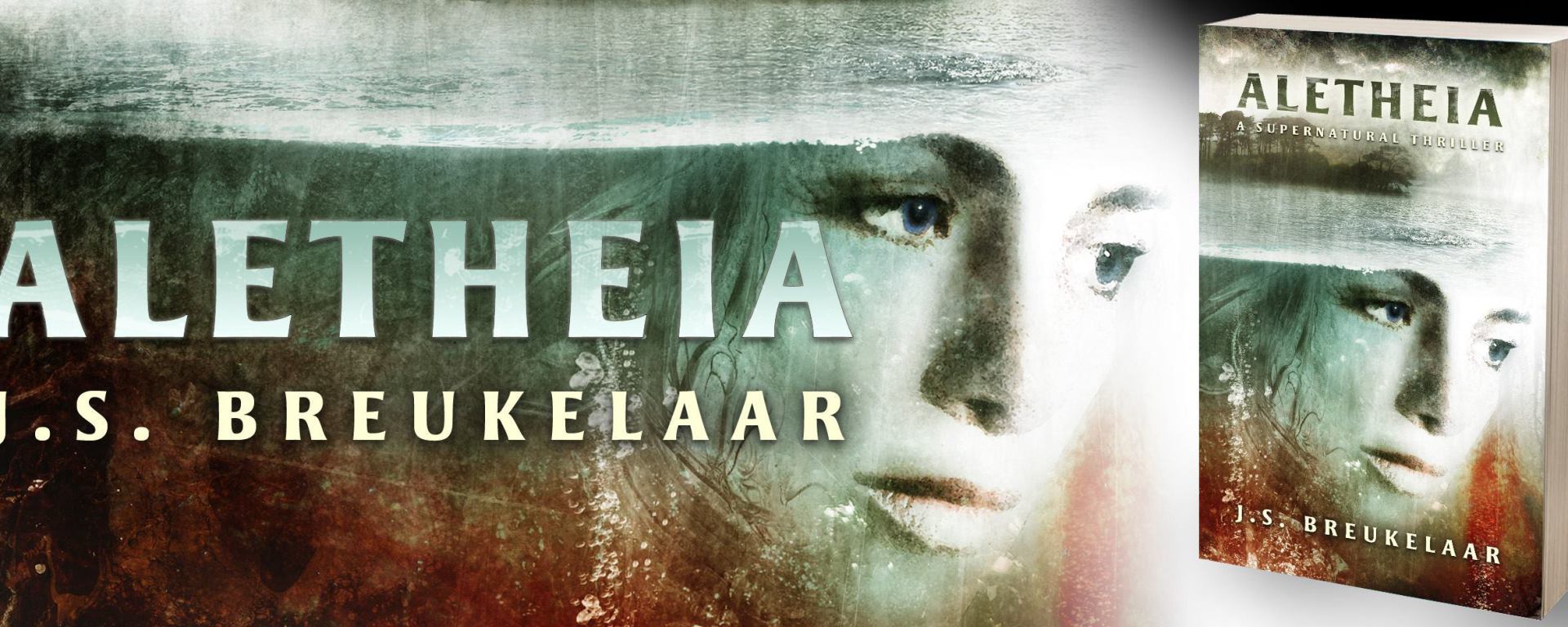
  9. …it not for taking a chance on Aletheia by J.S. Breukelaar?


2
Jun

Indie Book Award Non-Fiction 2018 Saga Land


Introduction:

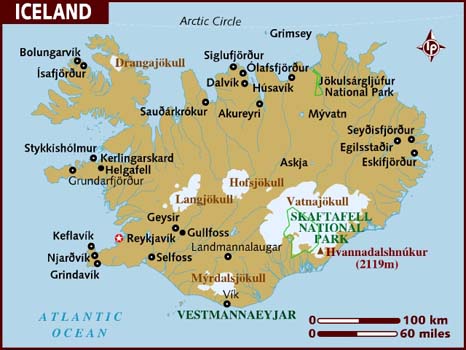
  1. Saga Land is a heartfelt tribute to Iceland and its Viking history by
  2. Richard Fidler (Australian writer/radio presenter)
  3. and his friend, Kári Gíslason (Australian/Icelandic writer/academic).
  4. Kári Gíslason was born in Reykjavik to an Australian woman named Susan
  5. …and her Icelandic lover named Gísli.
  6. Gísli begged Susan to keep his identity secret.
  7. When the son Gíslason returned to Iceland
  8. …as a young adult he contacted his half-siblings.
  9. At a family get-together Gísli (father) told
  10. ..Gíslason (illegitimate son) that he was
  11. descended from Snorri Sturluson.
  12. He  was Iceland’s most famous saga author.

Goal:

  1. Fidler and Gíslason embarked on a journey to Iceland with two purposes:
  2. to make a radio documentary retelling some of the sagas
  3. to discover whether Gíslason really is descended from Sturluson.
  4. Saga Land records their two trips to Iceland.
  5. The radio program went to air in 2016 and is now a podcast.

Structure:

  1. The book is divided into four parts.
  2. Fidler and Gíslason taking turns to tell the story.
  3. The stories  are woven skilfully into the narrative of the road trip.
  4.  — Fascinating insight into Iceland’s little-known history and literature.
  5.  — Compelling story of one man’s quest to reclaim his identity.

Thingvellir (assembly valley), Iceland


What is a saga?

  • The sagas are the true stories of the Vikings
  • ….who settled in Iceland in the Middle Ages.
  • They are tales of honour and revenge.
  • Richard and Kári travel across Iceland
  • to the places where the sagas unfolded a thousand years ago.
  • They cross fields, streams and fjords to
  • immerse themselves in the folklore of this fiercely beautiful island.
  • There is another mission: to resolve a longstanding family mystery:
  • …a gift from Kari’s Icelandic father
  • …that might connect him to the greatest of the saga authors.


Conclusion:

  1. Kari Gislason takes the reader
  2. …on a personal journey to find his roots
  3. Kari  spoke no more than 100 words with his father
  4. …saw him only 4 times in his lifetime.
  5. But father and son shared a few special secrets.
  6. This book describes an incredible family reunion.
  7. Kari takes his sons to meet their grandfather…(grave).
  8. Richard Fidler was co-author with Kari and together they
  9. explored Icelandic history and the 13th C literature of sagas.
  10. All elements of the book (history, literature, families) are
  11. equally balanced and the chapters alternate seamlessly
  12. …to keep you reading and wondering about Iceland.
  13. I needed to follow the chapters while google-ing images of
  14. Isfajordur, Helgahell, Thingvellir….etc.
  15. I knew nothing about  Iceland....
  16. …and now I want to visit the country!
  17. #WorldFromMyArmchair   read

Aurora Borealis in Glacial Lagoon Iceland

1
Jun

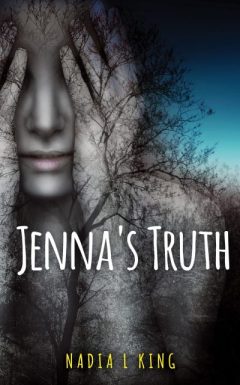
YA: Jenna’s Truth


Strong point:

  1. Ms King expresses the emotions of a young girl
  2. that feel universal…timeless. We all at one point
  3. have felt being an outsider in school….it hurts.


Strong point:

  1. The devil is in the details.…and Ms King knows that!
  2. I rarely read in stories about women’s perfume.
  3. People I remember from school had signature fragrances.
  4. It was your ‘calling card’… L’Air du Temps, Blue Grass, Miss Dior.
  5. Jenna can finally sit next to Tina
  6. ….the in-crowd… and whiff her perfume.


Strong point:

  1. Ms. Nadia has translated a tragic story of Amanda Todd
  2. into a poignant book.
  3. The book is enriched with teaching notes and
  4. discussion questions.
  5. Sometimes young people don’t know how
  6. tell people they are being bullied.
  7. Ms. King has added a ‘need help’ page with
  8. addresses and phone numbers children can call.


Conclusion:

  1. Here I am a 60+’er reading about the
  2. pain of being an outsider (Jenna)  in high-school.
  3. Ms King describes  details that  STILL resonate
  4. …taking me back to the 1960’s.
  5. It seems then and now
  6. ….the feeling when someone saves
  7. you a seat in class is  “like basking in the sun” !
  8. And yes, I agree with Ms King and her character Jenna
  9. Physics never made any sense.
  10. Of course Insta page, selfies and Snapchat are new
  11. …but that just adds to the 21st C feel of the book.
  12. This book deserves the praise it has reaped.
  13. Young girls should be aware…
  14. There is so much more to life
  15. …being snubbed or bad-mouthed,
  16. and worst of all cyber-bullying by puerile girls.
  17. #Heartbreaking


Last thoughts:

  1. I’ll tell you a two secrets….
  2. I had this book flown in from Australia!
  3. I read the book aloud to my cats.
  4. It was great fun and I could put on my snarky voice.
  5. But this does not dampen
  6. …the effect the book had on me.
  7. So young, so unhappy with life
  8. ….so tragic, I can hardly imagine
  9. …the pain Jenna/Amanda Todd went through.
  10. #Cyberbulling must stop.
17
May

Aurealis Award Best Horror Novel 2017 short list


  1. Well, I’m still looking for horror!
  2. I read the winner of the
  3. Aurealis Award Best Horror Novel 2017
  4. Soon and was mildly impressed.
  5. Now I have decided to look further….on the short list.
  6. I found Aletheia by J.S. Breukelaar
  7. The name has potential….but is it horrific?
  8. I have never heard of the author but according to
  9. …some comment I saw this book is
  10. a demanding story that will grip the reader and
  11. …hold them relentlessly until the end.
  12. Does the book drip strangeness?
  13. I will put the book to the test!


Feedback:  response to comment by Tracy at  Bitter Tea and Mystery

Tracy, I was just like you…Horror, avoid at all costs.
Now I have found that horror is not only slasher narratives with blood dripping from chainsaws!
It is creating with language and imagery an unsettling tense feeling as to what is yet to come.
There are different sorts of horror gothic –Dracula-  and Supernatural –Aletheia- non-supernatural. This category includes frightening crime or mystery stories. I read Lemaitre’s –Alex- ..and was frightened to death by rats attacking a victim! Tracy, perhaps you are reading horror and didn’t realize it!


Title:  

  1. Aletheia is the Greek goddess of truth… Roman name Veritas.
  2. In this book Aletheia refers not so much to the truth.
  3. …but how you find it.”


Genre:  supernatural horror

  1. Breukelaar uses phrases that create a creepy unsettling air.
  2. Strong point being the imagery and personification of the lake.
  3. The one of the best ‘horror’ chapters was  ch 16 Dark Wind.
  4. Lee faces the supernatural unknown he feels on the lake.
  5. What do you want?  And the lake doesn’t answer,
  6. …but somethig else does.”


Theme:  fear

  1. Find the blind spot…what they refuse to see is what they are afraid of.
  2. What do the men refuse to see? (Lee – Doc – Frankie)
  3. What must the women do?
  4. Thettie  must find room to ‘move in their blind spot’
  5. Bryce: blinded in one eye…yet she saw everyone’s fears.


  1. Motif – tongue  (reptilian, poisonous, death)
  2. Vernon’s tongue-tip flicked out (ch1)
  3. – a black tongue of lake water (ch 5)
  4. – …licked the glass of the dream-window
  5. – the black dream tongue fading…(ch 9)
  6. – a tongue dragged itself along the steamy
  7. – inside of the window… (10)
  8. black tongues of lake….lap hungrily at the side of the canoe (ch 16)
  9. This is a great horror effect!


  1. Motif  – triangle  (fate)
  2. I found one quote that perhaps is the idea behind the form:
  3. “…a triangulation that finally began to make sense.
  4. Geometry is fate.” (ch 13)
  5. Place names:
  6. Triangle Gully, Triangle Bridge, Triangle Creek Triangle Falls
  7. business triangles: Homer with a rifle – a dirt-colored shack – pails for the dogs
  8. love triangles – Archy – Bryce – Grif
  9. guilt triangles – Frankie – Thettie – Doc
  10. child/mother triangles –  Archy – Thettie – Grif
  11. This brings tension….someone will be left out
  12. but who?


  1. Motif – eye    (evil eye?)
  2. Many references to eye – fish hook
  3. Bryce catches ‘baby’ – doll on fishing line —-fish hook in eye.
  4. Lee’s son draws a howling mutation (in lake?) and his
  5. mother crayon in a burning star in its dead eye.
  6. Bryce: one-eye water rat
  7. Lee began to move off, but the
  8. …amber slice in her (Bryce) eye held him in place.
  9. Bryce: wore an eye patch that “seemed to eat up the all the light”
  10. There are many more references
  11. …..try to find them!


HOOK:   What hooked me?

  1. I cannot pinpoint one specific moment in the first
  2. few chapters that I can say ‘hooked’ me.
  3. Of course the ‘shock and awe’ of the first sentence
  4. ….but there must be more. 
  5. I wasn’t interested in reading the book in the first place
  6. ….but wanted to investigate the shortlist
  7. …Aurealis Prize Best Horror Novel  2017.
  8. The fact that I kept reading
  9. ….because of the quality of the writing is the hook.
  10. If you can keep ME interested in a horror book
  11. …then you must be doing something right
  12. ….#Bravo  J.M. Breuklaar


Foreshadowing:

  1. J.S. Breukelaar is a master of foreshadowing.
  2. She made her plot clues subtle and for this reader
  3. ….apparent during a re-reading!
  4. The author wants to build suspense.
  5. I tried to read very carefully and the book is intricately plotted.
  6. I had to read 10 chapters…then re-read/skim them
  7. to pick up on what I had missed the first time around.
  8. Once I had a grasp of the basic conflicts
  9. ….reading was much smoother…and creepier!


Personification:

  1. Breukelaar personifies the lake
  2. ..whenever she can giving it a  horror-touch:
  3. …the lake jumped at her between the houses.
  4. …a black tongue of the lake licked her heel.
  5. …the lake winked between the trees.
  6. crouched waiting for the unrisen sun.
  7. shrank from a rascally moon.
  8. …(weed) the lake sucked it in.


Characters:

  1. Lee:  obsessed with the lake after his son was
  2. …killed and parts of body thrown in lake (horror)
  3. “Death is not the end, neither for the dead
  4. nor those they leave behind.” (ch14)
  5. Thettie: obsessed with guilt from the past
  6. “I got to make things right….” (ch 13)
  7. Bryce:  ….she is not what she seems!


Setting: 

  1. Breukelaar used a chewy setting
  2. …something she could set her teeth into!
  3. Breukelaar  uses personification 
  4. the lake jumped, winked,
  5. licked at her heels.
  6. She used all the features of the lake
  7. the lake oozed and spread, cold, dark and indestructible
  8. ….black tongue of lake water licked her heel
  9. to increase the creepy unsettling  feelings in the story.
  10. What is the hungry nameless thing in the lake?
  11. I was fascinated by a lake…..that came to life!


Tone:  creepy

  1. Breukelaar created a very wierd 
  2. …creepy world in the Pennsylvania back country.
  3. “The lake flushed purple, bruised by its own loveliness
  4. ….leaves dripped bloody from the trees.
  5. Lee looks through shards of glass…
  6. …like seeing the world through alien tears (ch 6)
  7. Breukelaar shows ….does not tell.
  8. She uses the sense of smell (80x) to prickle the reader’s imagination.
  9. …the metallic smell of the lake, smell of burnt wiring, burned waffels,
  10. her breath smells like cocoa and some kind of vegetable,
  11. the smell of iodine-soaked bandage.


Tension:  …every page tingles with tension!

  1. I was mesmerized by the character’s
  2. …thoughts of obsessions and death wishes.
  3. For example:
  4. This is Lee’s obsession….to probe the lake until he finds his son.
  5. Lee’s death wish “…the only way to beat the monster
  6. …is to join it.” (ch 16)
  7. Throughout the book I kept wondering
  8. …will good triumph over evil…or NOT!


Conclusion:     Mainstream fiction or horror fiction?

  1. I was surprised to find in J.S. Breukelaar’s  horror novel
  2. superior writing and great emotional depth (example ch 11).
  3. My preconceptions that horror is
  4. …less than mainstream fiction are gone forever!
  5. The horror writer wants us to expand our imagination with images.
  6. Best image… was the island in the middle of the lake.
  7. I had to admire how creative Breukelaar is!
  8. “Island was a bugger sneezed out in nostril shape
  9. …with nose-hair foliage.” (ch 2)

Last Thoughts:


  1. With all due respect to  people who know how to judge literature…
  2. I would like to see the jury report of
  3. …Aurealis Awards Best Horror Novel 2017.
  4. I read the winner Soon by Lois Murphy and Aletheia short listed.
  5. As a reader J.S. Breukelaar’s novel should have won!
  6. #MustRead….really a must! 


What is the most important difference between Soon and Aletheia ?

  1. While reading Aletheia
  2. I was constantly asking myself questions.
  3. …which plot twist do I think is coming next?
  4. While reading Soon
  5. ….my imagination was not aroused
  6. ….nothing in the book
  7. spurred me on to think with the author.
  8. This is what I mean when I say that  Soon did not engage me
  9. …but Aletheia did!
  10. Wonderful reading experience….that you should not miss!
13
May

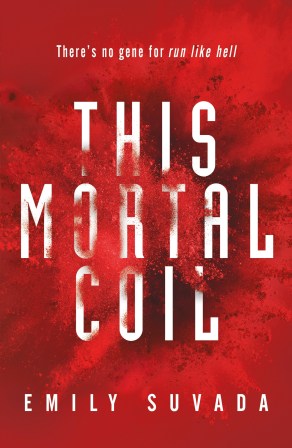
Aurealis Award Best YA Novel 2017 short list


Quickscan plot:

  1. Cat’s father is Dr. Lachlan Agatta.
  2. He is a legendary  geneticist who has been kidnapped
  3. by a shadowy  organization called Cartaxus.
  4. Cat  is left to survive the last two years on her own.
  5. She can no longer escape involvement with the Cartaxus.
  6. This is where it gets personal.
  7. Cole, a Cartaxus soldier, arrives with
  8. …news that her father has been killed.
  9. Cat’s instincts tell her it’s just another Cartaxus lie.
  10. But Cole also brings a message.
  11. Before Dr. Lachlan died…
  12. he managed to create a vaccine against the killing virus.
  13. Cole needs Cat’s  genius-hacker skills to
  14. …crack Cartaxus’ encrypted code and save the human race.


Conclusion:

  1. Classic hook:  the reader is in the middle of the action
  2. ….then chapter two begins with:
  3. “Two years earlier….”
  4. The characters are in a technological wonderland with
  5. a hellishly corporate backdrop (Cartaxus).
  6. “They want your brain, but don’t need your legs” (ch 2)
  7. Cat Agatta (hacker nickname: Bobcat)
  8. must use all her skills to decode her late father’s message.
  9. But is her father, Dr. Lalhan Agatta….really dead?
  10. There is a lot to digest in this book.
  11. The reader who loves…
  12. computers – files – servers – code – apps – databases
  13. …smash-and-grab hacking, Fibonacci search technique
  14. …ribbons of synthetic DNA
  15. …and swarms of drones…will love this book.
  16. If you are not tech-savvy…you may lose interest.
  17. The book tackles challenging issues:
  18. …a daughter trying to understand (break free of) her father
  19. ..a daughter mapping out
  20. …her boundaries in ethics (DNA) and in love.


Last thoughts:

  1. In YA books….the voice of the young includes
  2. …lots of swearing.
  3. Not in this book….just a few shit’s, batshit and shitloads.
  4. M.J. Ward in Psynode  cleverly avoided this problem of swearing
  5. …that might influence gatekeepers and not include the book
  6. …in school libraries.
  7. She used her urban-brand of swearing…fugg  and shiz!
  8. Of course YA would not be YA without
  9. …a love triangle Dax – Cat – Cole.
  10. blurring the boundary between romance/erotica.
  11. “We spent the week trying to ignore
  12. …the energy crackling between us,
  13. like two humming electrodes just waiting for a spark.”
  14. Hmmm… personally I prefer words like:
  15. “We’ll always have Paris.”  in a love scene.
  16. Not planning to read  Suvada’s #2 book in this series.
  17. …It is just “not my thing.”
  18. I am looking forward to Sally Abbott’s next SF book.
  19. Try reading Abbott’s  Closing Down
  20. ..and see if you agree with me! (score: 5 star)
11
May

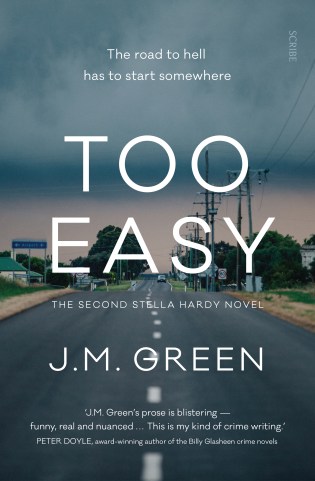
Crime Fiction: Too Easy


Review:

STRONG POINT:  Stella is not perfect….she bends the law when it is necessary!

STRONG POINT: J.M. Green writes in the first person and that offers the reader all the internal wit, the wisecracks and asides that hard-boiled Stella Hardy dishes out! Now Stella can tell the reader what she REALLY thinks. Stella’s description of Felicity is a lively mental image:

INNER DIALOGUE: Felicity answers phone at Brophy’s art gallery  Stella: “Formal register, posh accent. Young. Voice had a whip-sting of condescension….the ‘transcendental’ model. My reptilian instincts licked the air.” Who did she think she was? We’re in a creative peak. The nerve of her. “…the room swam in red mist and my heart burned black!”

WEAK POINT: If I had any problem with this novel, it was very difficult to maintain my focus with so many subplots. I think a crime fiction book shines when it evokes a single emotional response…the feeling of suspense… pretty much non-stop.
Stella vs family – relationship with mother, sister, brother-in-law, brother and two nephews. The conflict about selling the Hardy farm stuck out like a sore thumb in a drug/gangster crime fiction novel! The scenes felt boring, flat, choppy and lacking spark. In my opinion this subplot could have been eliminated without affecting the plot!
Stella vs Felicity: girlfight – Stella is not standing by and let the ‘harpy’ (Felicity) take over his (boyfriend) life! “Game on, Felicity, I said to myself as I picked up a puri and cracked its head open.”

WEAK POINT: The author attempts some sort of contemporary realism with too many references to pop-culture ( movies, soundtracks, synth-band etc). USA folk punk band Voilent Femmes (ch 4-19), Karen Carpenter ‘Superstar’ (ch 19-50), The Big Lebowski (ch 15), Tolkien’s Lord of the Rings (ch 30) and movie Blood Diamond (ch 7-12-15-31-44), Cool Hand Luke (ch 41) Human League 1977 British synth-band (ch 34-35-48), soundtrack harmonica in Morricone riff (ch 31), music Amy Whitehouse (ch 44) movie Crouching Tiger, HIdden Dragon (ch 44). I’m sure she wanted to fill out the fictional details of Stella’s world in Melbourne but in the end it just became irritating. Less is more.

WEAK POINT:  55  chapters…is this really necessary in a crime fiction novel? There are many chapters with a long scene that could have been explained in a few sentences in the previous  chapter. Examples: Grocery shopping in exotic store and an impromtu telephone call from Afshan and Shahid  (in Australia on temporary protective visa) about bowling in “Funky Town” amusement parlour…it felt like ‘filler’.


Conclusion:

  1. I don’t read many crime fiction books so all
  2. the weak and strong points are
  3. based on my personal preferences.
  4. I started off thinking this could be a book I loved.
  5. J.M. Green’s her writing style drew me in immediately.
  6. As time went on, the story  seemed to slow down
  7. …veered off in to many subplots.
  8. I began to lose rather than gain interest.
  9. J.M. Green address social issues:
  10. Biker gang Corpse Flower’s gambit grooming children (literally)
  11. …as drug mules on the Burma/China border (Kengtung) and
  12. …selling the organs of homeless Melbourne street children.
  13. Theme: “The powerless seeking justice was a
  14. …time-consuming, soul-destroying business.”
  15. I did enjoy the book but it could have been shorter.
  16. I did learn some Australian slang….
  17. Last Thoughts;
  18. Loved this book for its sense of ‘Melbourne’. J.M. Green took me through the shadows and streets of Footscray, Thornbury, Sunshine, Kew East, Maribyrnong. Norlane, St Albans, Noble Park, Clayton, Hughesdale, Keysborough, Braybrook, Seddon, Caroline Springs.
    I learned that there is Australian whiskey Corio Five Star! I just found that there was too much going on in Stella’s life. If you read the book be prepared for a conclusion that left me thinking: “This reminds me of a ‘showdown at the OK-Corral…30 second shootout between the lawmen and members of a loosely organized group of outlaws!”

AUSTRALIAN SLANG: “…An evening of claptrap with this ditsy nong” (Felicity)  nong = a stupid or incompetent person.  “I dropped a lobster on the table.” AUS twenty-dollar note is sometimes called a “lobster” in reference to its distinctive pink colour. “As exits went it was rip, shit and bust. =  with extreme vigour and enthusiasm

AUSTRALIAN SLANG: “Grouse”  = word heard mostly in Australia’s 2nd largest city, Melbourne meaning something wonderful, amazing.