
#AWW2020 Wild Sea: a history of the southern ocean
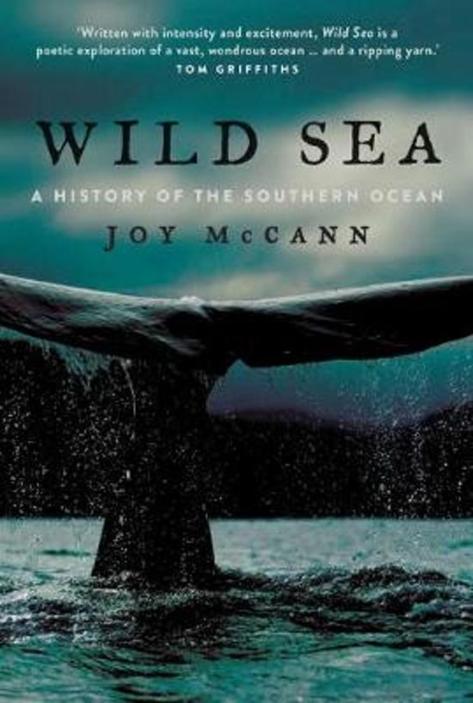
- Author: Joy McCann
- Title: Wild Sea: a history of the southern ocean (258 pg)
- Published: 2018
- Genre: non-fiction
- Rating: C+
- Trivia: 2019 Australian Book Industry Awards (ABIA) longlist
- List of Challenges 2020
- Monthly plan
- #AWW2020 @AusWomenWriter
The Southern Ocean:
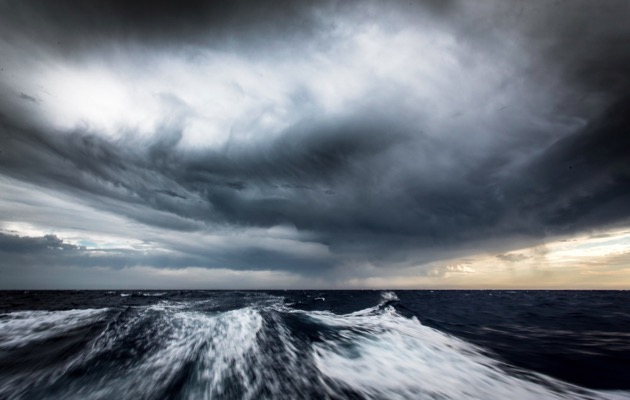
- Solo sailors call it ‘the South’, as if to emphasize its alien difference.
- The Southern Ocean is a place most of us have never been to
- …and never wish to visit.
- It is a realm of cold grey skies and raging winds
- …that eternally circulate round the bottom of the world.
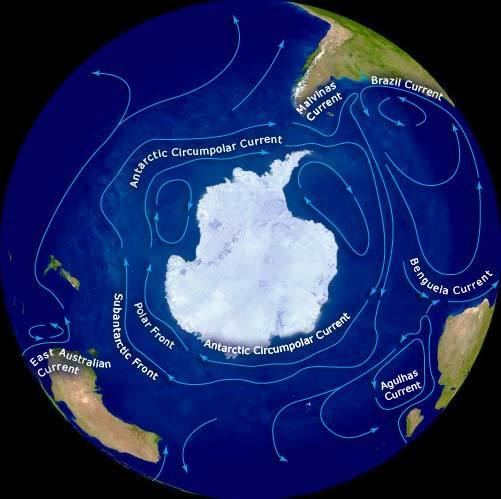
Antartic Circumpolar Ocean Current:
Ch 1 Ocean – continental drift
- Pangaea –> current pattern of continents –> creation of oceans
- The continents don’t change or move independently
- …but are transported by the shifting tectonic plates.

Ch 2 Winds
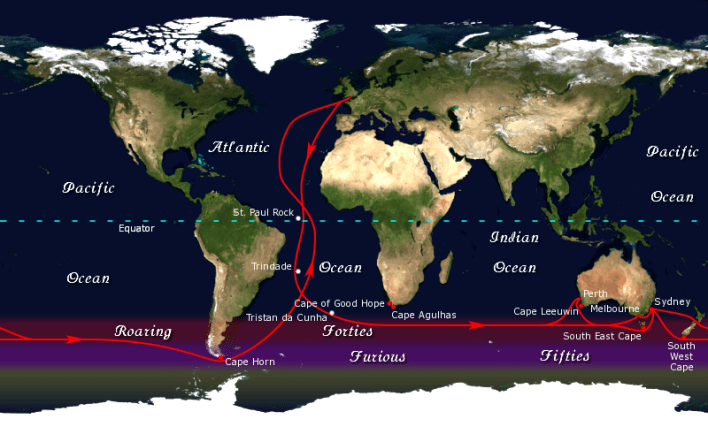
Clipper Route…. took advantage of the Roaring Forties and Furious Fifties winds….92 days London — Sydney 1862.
Ch 3 Coast
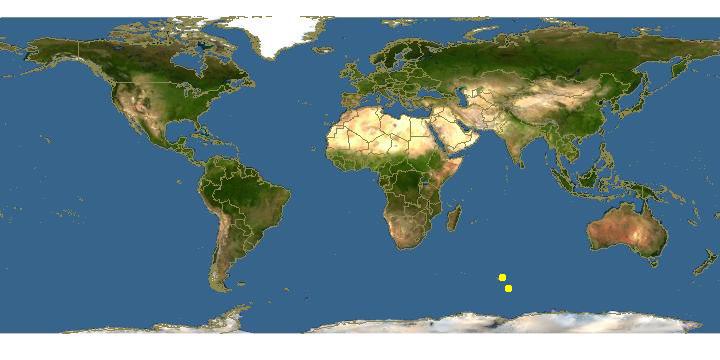
Located in the southern Indian Ocean off the eastern coast of Africa and just north of Antarctica are the Kerguelen Islands. A French territory, this island group (known as Îles de la Desolation in French) is considered to be one of the most isolated places on Earth. (…2 little white dots!)
Ch 4 Ice
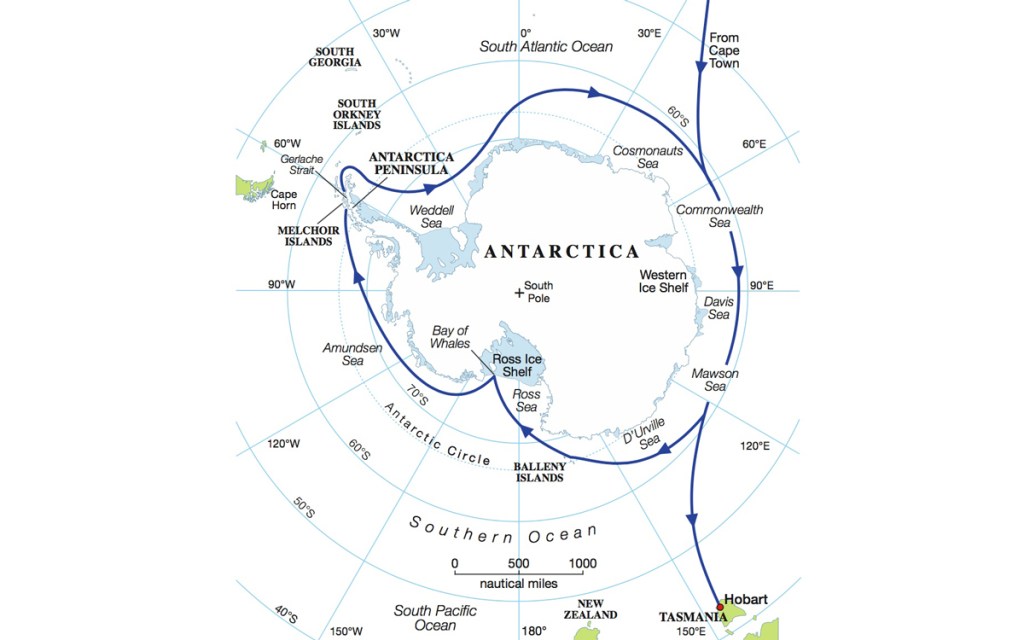
- To sail from the Southern Ocean towards the open waters of the Ross Sea you have to push through the ice a number of times….an ice barrier 100 miles wide.
- As the Southern Ocean is dominated by strong westerly winds it encourages a clockwise route.
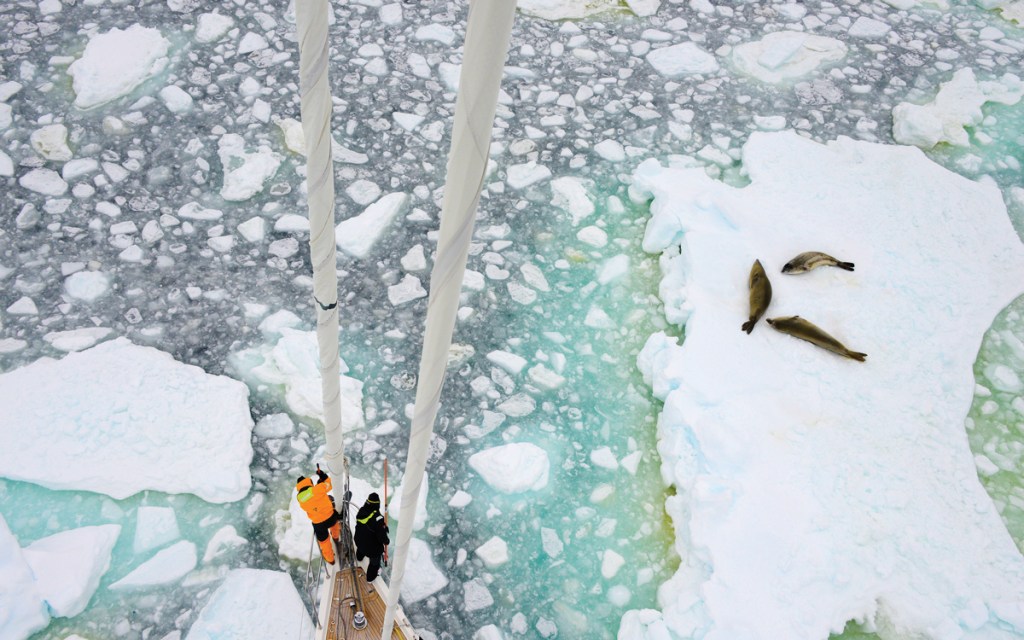
- Antartica is only accessible for a few weeks in summer (January-February).
- By March ships risk being trapped in sea ice until the next spring.
- The ice begins to close in trapping you for the winter
- ….an experience no one is likely to survive.
Ch 5 Deep
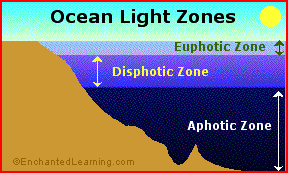
- The ‘twilight zone is formally known as the dysphotic zone.
- Below 1000 meters lies the midnight zone…complete darkness.
Ch 6 Current
- ANIMATION of Antarctic Bottom Water
- A remarkably detailed animation of the movement of the
- …densest and coldest water in the world around Antarctica.
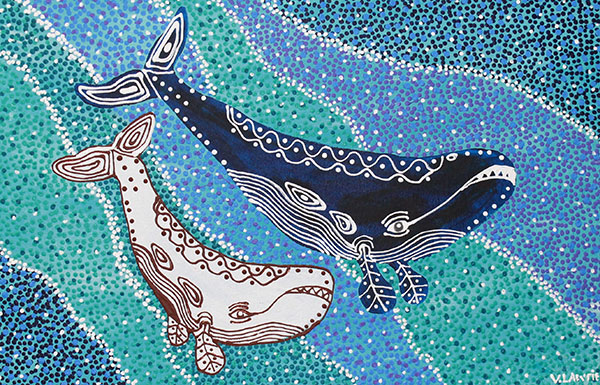
- The whale is the totem of the Mirning people (Ngargangurie)
Ch 7 Convergence
- The Southern Ocean is no longer simply a remote space devoid of human habitation.
- The Earth is dependent upon the ocean’s heartbeat of seasonal ice
- …its carbon-filled lungs and slow circulation of its deep currents.
- Ocean covers 80 per cent of the Southern Hemisphere.
- Australia sits at an ocean cross-roads.
- Changes in the southern oceans may also alter the
- ….climate processes that control rainfall over Australia.
- We need to understand the influence of the
- …southern oceans on climate and sea levels.
- This book is a good place to start!
- #Bravo Joy McCann

Conclusion:
- Detailing a mysterious realm that’s as vital to our existence as the air we breathe.
- Wild Sea: a history of the southern ocean
- is
- As the title says …it is a history
- …and Joy McCann uses many 19th C references.
- I must applaud the author because in her NOTES
- …she also includes many links to websites
- …(Kindle edition) with a trove of information.
- The only weak point in the book is
- ….I was always tempted to leave the text to often and explore
- the links she provided!
- PS: book contains some beautiful illustrations
- ….perfect viewing with Kindle!
- (…I never knew an albatross could be so big!! …see foto)
- Reading tips:
- Roving Mariners: Australian Aboriginal Whalers and Sealers in the Southern Oceans (2012)
- Slicing the Silence: Voyaging to Antarctica – T. Griffiths (2010)
#AWW 2019 True Stories

- Author: Helen Garner
- Title: True Stories
- Published: 1996
- Genre: essays
- Rating: A+++++
- List of Challenges 2019
- Monthly plan
- #AWW2019 @AusWomenWriter
Conclusion:
- Yet again, another Helen Garner book
- …that I did NOT want to end!
- She is a magnificent wirter and I am
- glued to the page with the vivid details she provides.
- I kept this book under my pillow (IPod audio book)
- to transport me to the ‘reading room’ between
- being awake ….and asleep.
- Some stories I had to listen to twice
- …fell asleep before the ending.
- Who does not wake up at 3 am sometimes for no reason?
- This audio book was the perfect ‘sleeping pill’.
- Helen Garner’s voice is soothing and you drift off quickly.
Last thoughts:
Favorites:
- Selections about her sisters
- Cruising on Russian ocean liner
- Five train trips in the region of Melbourne
- Stories about authors, Patrick White and Elizabeth Jolley
- The Insults of Age
- Marriage
- Death
- Labour Maternity Ward, Penrith
- These are only a few that really impressed me.
- One story I started but could not finish:
- Killing Daneil.
- Garner is known for her true crime books
- …and this story was just too distressing (child abuse)
- So, you are warned….you can just skip it…as I did.
- Helen Garner delves deeply into a crime
- so vivdly it is impossible to read….and I imagine
- just as hard to put on paper.
- It is an extraordinary way of writing.
- She has to take care that
- ..she is not “drawn into the darkness”
- …of the subject she is writing about.
- Her books, for example This House of Grief
- have taken an emotional an
- physical toll on Helen Garner.
#MustMustRead
- A book to read leisurely….
- that stays with you for a lifetime.
#AWW 2019 Drylands
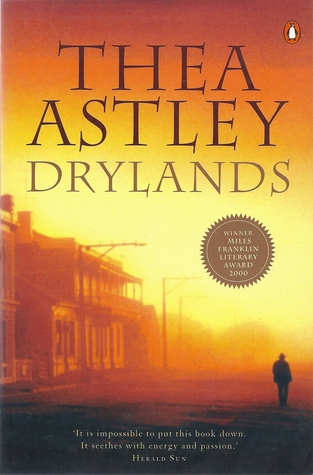
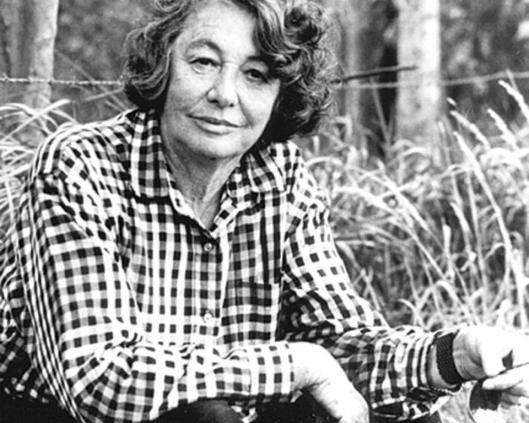
- Author: Thea Astley (1925-2004)
- Title: Drylands
- Published: 1999
- Genre: novel
- Setting: Drylands and nearby town of Red Plains
- Trivia: 2000 winner Miles Franklin Literary Award
- List of Challenges 2019
- Monthly plan
- #AWW2019
- @AusWomenWriter
Introduction:
- Helen Garner once said in an interview: ‘
- Not being able to read after cataract surgery for 10 days
- …..was unbearable”
- I know how she felt.
- Desperate to quench my reading thirst
- ….I’m listening to Drylands by Thea Astley. (7 hrs 17 minutes)
- Perhaps when I can enjoy better vision
- ….I will re-read the paperback version.
- Astely’s prose is worth savoring again.
Conclusion:
- In her flat above Drylands’ newsagency,
- Janet Deakin (voice of the author herself…)
- is writing a book for the world’s last reader.
- She describes a cast of oddball characters
- in the small bush town of Drylands.
- ...desperate housewife’s ‘Walk to Canossa”
- …unnerving bar noise ‘seeping in like conscience’
- …staring at the closed bar ‘the Legless Lizard’ with
- its door bolt ‘hanging like a limp hand’
- But the town is being outmaneuvered by drought
- and begins to empty
- “…pouring itself out like water into sand.”
- As Janet decides to sell her store
- “it wasn’t dust she wanted to shake off her feet
- ….it was memories”
- Last scrawled message on her desk: ‘Get a life…‘
- Her response: ‘Too late.‘
- These are just a few tidbits
- I remembered while listening
- to Thea Astley’s last masterpiece.
- #Bravo
#AWW 2019 Victorian Literary Best YA Novel
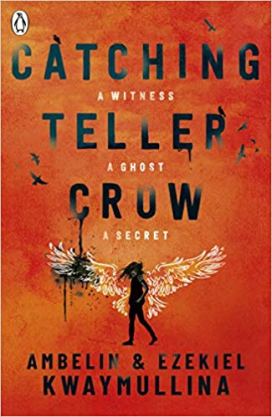
- Author Ambelin & Ezekiel Kwaymullina
- Title: Catching Teller Crow
- Genre: ghost story (speculative fiction)
- Reading time: 2 hrs 40 min
- Published: 2019
- List of Challenges 2019
- Monthly plan
- #AWW2019
- @AusWomenWriters
- Trivia: 2019 Winner Aurealis Award Best Young Adults Novel
- Trivia: 2019 Winner Victorian Premier’s Literary Awards
- Best Writing for Young Adults.
Introduction:
- A ghost girl who is staying with her father while he grieves.
- In doing so, she begins to help him with a murder mystery.
Hook:
- The hook is the concept that Officer Teller’s
- assistant while investigating a series of murders
- …is his daughter’s…ghost!
- Another hook is the witness’s statement that
- “This thing didn’t start with the fire…It started at sunset” (pg 24)
- And who is Tansy Webster and her angels? Wings flapping? (pg 94)
- Now readers are turning pages
- ….curious….tension!
Themes
- Loss of a loved one and the stages of mourning or
- …grief are overriding themes.
- Injustice towards the Aboriginal people
- …is also a strong theme.
Parallels: Mike Teller vs Derek Bell
- Both Officer Michael Teller (Beth’s Dad) and
- Officer Derek Bell grew up in small town and
- their fathers were also cops!
- Gerry Bell and Officer Teller sr.
Parallels: Father and daughter –> epiphany moments (pg 132)
- Both Beth (daughter) and Mike Teller (father) have
- epiphany moments:
- Beth realizes she does not belong here (with the living). (pg 130)
- Mike Teller realizes he is blaming himself
- …for an accident he could not prevent.
- He feels he failed his daughter.
- He was holding on to a burden
- …something that was not his to bear. (pg 133)
Contrasts: Father vs son (pg 132)
- Officer Michael teller does not want to be like his
- racist father. He was a police officer who did not do
- enough to protect the Aboriginals.
- Mike did not want to be one of those
- people who didn’t pay attention.
- Officer Teller took any injustice
- ….personally (wife was Aboriginal)
- when Aboriginals are not treated right.
Contrasts: Beth in “Catching Teller Crow” vs Else in “The Endsister”
- Narrator Beth is just about the same age as Else in The Endsister
- One is dead….one is still alive
- …one is cheerful….and one is confused, isolated.
- Beth shows no signs of ‘the teenage brain’ as did Else.
- It seems once you’ve died…all your problems disappear!
- ….mood swings, erratic behavior, ill-tempered….
- I will try to find a moment in Beth’s
- narration that shows her in a bad mood!
- Yes, she does cry….she had to make an important decision
- …about the colours.
Strong point: Beth’s ghost is Detective M. Teller’s assistant
- This is a great plot device.
- Beth can linger in places once
- her father has left to eavesdrop
- on suspects conversations and actions!
- #Clever
Strong point: Role reversal literary device (pg 11)
- “He and I were the reverse of each other:
- I couldn’t remember my death;
- Dad couldn’t remember my life…” (pg 11)
- Another role reversal….
- Dad was looking after Beth when his wife died.
- That had kept Dad going.
- Now Beth was looking after her Dad
- ….to keep him going. (pg 13)
Strong point: Writing style varies… for certain effects!
- Chapters about CATCHING...
- Isobel speaks in staccato sentences.
- Staccato sentences are short and often emphatic to
- focus the reader or listener on content.
- This technique borrowed from poetry intensifies
- Catching’s aboriginal storytelling…
- with base emotions….earthy!
- This conveys certain kinds of emotions in particular,
- namely fear, anxiety, anger, confusion and stress.
Strong point: Izzy’s storytelling
- These chapters are fun to read.
- You can lose yourself in them…
- let you imagination soar.
- I’m sure YA readers can find something
- in these tellings to hold on to.
- I enjoyed these next few lines:
- — Courage eats fear.
- — Joy eats sadness.
- — Choose the opposite of grey.
#NoWeakPoints !!
Conclusion:
- This was absolutely a stunning novel!
- I’ve never been so entertained reading YA fiction.
- I think the storytelling (Aboriginal influences) was spot on.
- But the most important part of the book for me
- ….was how people dealt with grief. (Officer Mike Teller)
- They say time is a healer.
- But grief is always in the hollow of your heart.
- It’s just waiting for something to shake it out.
- Beth was there to shake it out of her Dad.
- Because loss never really leaves you.
- Loss alters you.
- #MustRead….worthy winner
- Victorian Premier’s Literary Awards
- Best Young Adults Novel 2019
#AWW 2019 Nine Lives: Women Writers
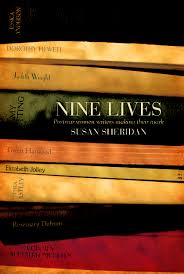
- Author: Susan Sheridan
- Title: Nine Lives: Postwar Women Writers Making Their Mark
- Published: 2011
- Genre: non-fiction
- Rating: A
- Trivia: This book has been sitting on my TBR for two years!
- List of Challenges 2019
- Monthly plan
- #AWW2019 @AusWomenWriters
NOTE:
- Trying to get back to books with
- …’one’ very good eye after cataract surgery
- …the the other eye ready for correction in 2 weeks.
- #NeedCoffee
Introduction:
- Why did I wait so long to read this wonderful book?
- I think the bland bookcover did not catch my eye.
- Ms Sheridan should have used thumbnail photos of te
- …talented Australian writers she was about to introduce to this reader!
- This books contains
- nine condensed, compact biographies of Australian Women writers
- Sheridan highlights a generation of women writers
- overlooked in the Australian contemporary literary scene.
- These women writers who were born between 1915-1930:
- Judith Wright
Thea Astley
Dorothy Hewett
Rosemary Dobson
Dorothy Aucherlonie Green
Gwen Harwood
Jessica Anderson
Amy Witting
Elizabeth Jolley
- All had children...
- J. Wright and D. Green were the sole support of their families.
- The nine women were versatile writers
- poet, playwright, novelist, short stories,
- non-fiction (autobiography), literary critic and editor.
- T. Astely won Miles Franklin Award 4x, Jessica Anderson 2x and E. Jolley 1x.
- All shared a sense of urgency…
- their vocation, their ‘need’ to be a writer
- that would not let them rest.
- Judith Wright – was an important name in the emerging postwar literature.
- She was one of the few Australian poets to achieve international recognition.
- Ms Wright is the author of of several collections of poetry,
- including The Moving Image, Woman to
- Man, The Gateway, The Two Fires, Birds,
- The Other Half, Magpies, Shadow, Hunting Snake, among others.
- Her work is noted for a keen focus on the Australian environment.
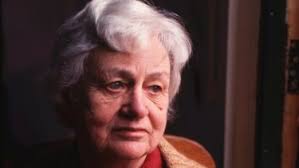
- Thea Astley – I am a huge fan of this writer.
- I did learn more tidbits of info about this woman.
- Critics were not always kind to Thea Astely.
- The ending of The Slow Natives
- …was “…too sentimental and melodramatic.
- I didn’t think so!
- Even Patrick White was harsh.
- Criticism should be like rain
- …gentle enough to nourish growth without
- …destroying the roots.
- White’s fault finding ended their friendship.
- Thea Astley won Miles Franklin Award four times!
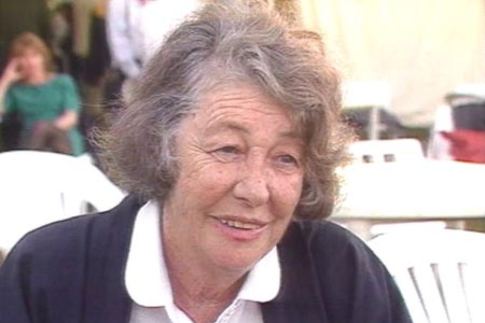
- Dorothy Hewett – After reading Ms Hewett’s short biography in this book the
- only thing that suited this woman is the song: Born to be Wild !!
- Once I read about the tumultuous life of Dorothy Hewett I knew
- I had to read her books.
- I ordered Baker’s Dozen ( 13 short stories)…
- …cannot wait to read it!

- Rosemary Dobson – She was fully established as a poet by the age of 35.
- She published 14 collections of poems.
- The Judges of the NSW Premier’s Literary Awards in 1996
- described her significance as follows:
- “The level of originality and strength of
- Rosemary’s poetry cannot be underestimated…”
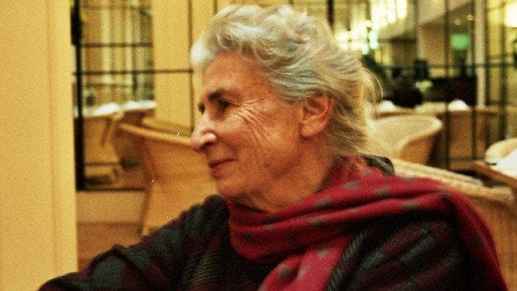
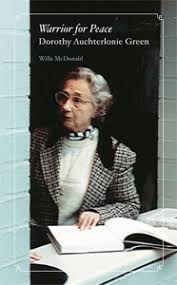
- Dorothy Auchterlonie Green – She saw herself primarily as a scholar.
- Ms Green felt overworked and
- under-recognized, trapped by circumstances of her life and unsure of her capacity as a poet.
- She won widespread admiration for her poetry, literary scholarship
- her reviews and social criticism and inspirational teaching.
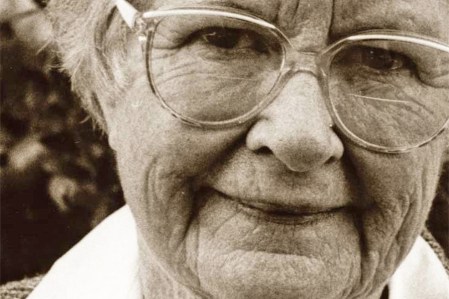
- Gwen Harwood – She was sick of the way poetry
- editors (Meanjin) treated her…no accepting her work.
- Ms Harwoon created several nom de plume: Geyer , Lehmann and Stone.
- Geyer and Lehmann were regularly invited to meet editors for lunch next time they were in Sydney
- or Melbourne. Geyer was evern invited to read at the Adelaide Festival.
- ….he respectively declined.
- Awards
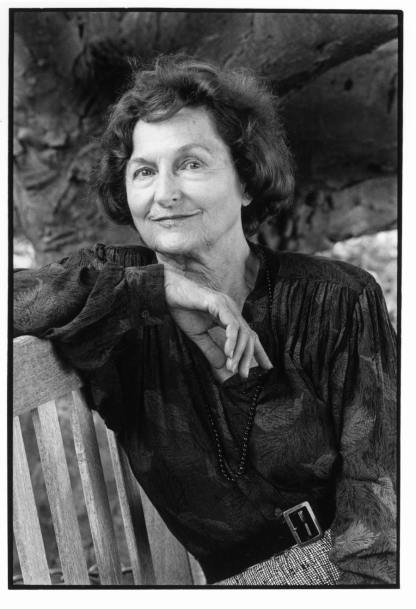
- Jessica Anderson – She was in a male-dominated and
- Anglocentric publishing world.
- How did she survive?
- She cultivated the qualities of character and
- strategies of survival necessary to
- sustain enough belief in herself to go on writing.
- She won the Miles Franklin Award twice…1978 and 1980.
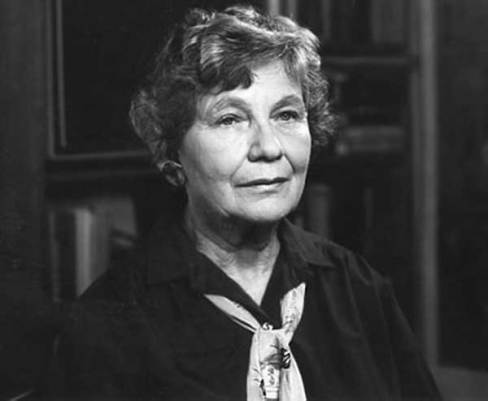
- Amy Witting – For many years Amy Witting was invisible in the literary world.
- She won the Patrick White Award 1993
- for writers who have not received adequate recognition.
- I am waiting for her book of short stories to arrive…Marriages
- …I’m sure Amy Witting will have much to tell about this institution!
- Elizabeth Jolley – In a single year she received 39 rejection slips
- …yet she persisted.
- She won Miles Franklin Award 1986.
#AUSReadingMonth Aurealis Award Best Horror Novel 2018

- Author Kaaron Warren
- Title: Tide of Stone
- Genre: Speculative fiction (horror)
- Published: 2018
- List of Challenges 2019
- Monthly plan
- #AusReadingMonth @Brona’s Books
- #AWW2019
- @AusWomenWriters
- Trivia: 2018 Winner Aurealis Award Best Horror Novel
Introduction:
- Once again I am leaving my comfort zone.
- Will this book leave me white-kunckled
- ….cringing in fear with
- …heightened pulse, sweaty palms and a
- sinking feeling in the pit of my stomach.
- I am about to find out!
Plot:
- Phillipa is a nurses aide in a home
- for the elderly (all….dementia patients).
- She is leaving for a 1 year internship in The Time Ball Tower.
- Phillippa: ” The tower never left me.
- I’d dream about it, hallucinate it when I was away.
- It calls to the best of us, they say.”
- Cover: The Time Ball Tower
- Symbolism: Ball dropping every day, keeping time
- Setting: small town in Australia, Tempuston (tempus; Latin for time)
- Motif: camera.…Phillipa is constantly taking photographs!
Conclusion:
- Chapter 1: Phillipa Muskett
- This must be the longest first chapter
- …I ever read! (reading time: 2 hours!)
- But Kaaron Warren is setting the scene
- ...leaving a path ‘hooks, moments of tension’
- …that overwhelmed this reader.
- …I noted at least 24 moments of reflection by Phillipa
- giving the reader a good impression about
- her wants (be famous), fears and hopes for the future.
- Many characters stop to give her advice before she
- leaves for a year in The Time Ball Tower
- Burnett (suffers from dementia, was keeper in 1868!)
- ….is still patient in elderly home! (time travel?, ghost?)
- BFF Renata (grandmother is a witch!)
- Phillipa’s Grandmother (Frances Styles, keeper 1938)
- Photography teacher
- and especially Kate Hoff (keeper 2010)
- She gives Philippa the most important advice:.
- how to act with the prisoners
- because they can
- …“Smell of a woman…makes them difficult.”
- Kate also give Phillipa all the report files
- …written by keepers who have served
- in The Tower in the past!
- I am sitting on the edge of my seat because
- …Philippa is about to read them all!
- I expect a lot of ‘shock and awe” in this book!
Weak point:
- After an exciting first chapter (18 % of the book)
- we read the ‘secret files’ from the Tower keepers.
- Quirky, repetitive…but not scary at all! (44 % of the book).
- Warren often refers to a personage from history
- Hess, Jacob H. Smith, Baron von Sternberg
- …and you have to consult Wikipedia to learn more about
- some unfamiliar names.
- Every file ends in a report that is identical for all keepers
- with an exception for Frances Styles, an a few mention that
- the prisoner does not need a bath.
- This just felt gimmicky.
- It does not add to the horror element of the book.
Strong or weak point?
- Palpable sexually oriented glaze over many elements
- of the story when Phillippa
- …is finally the keeper in The Tower. (62 % of the book)
- Does this increase the ‘horror element”
- …or is it good for book sales?
- You decide.
- Personally…I wish Warren was
- a more creative writer
- …rather than use the pornographic angle.
Weak point:
- There isn’t very much tension in the last section
- Phillipa as keeper.
- Prisoners babble on and on…nothing we haven’t
- heard before in the book.
- I try to keep engaged by noting how Phillipa
- is changing from the first day as keep….until her last.
- That is the only real interesting part at this point
- Where’s the horror?
- I’m not seeing it!
- I expected much more from a
- an Aurealis Awards prize
- …Best Horror book of 2018!
Weak point:
- Well, I did not find the shock and awe
- …I expected in this book
- Warren gives the reader and ‘information dump’ in chapter 1
- ….and now you have to try to connect that information with
- the individual keepers who have written reports.
- This involved flipping back and forth to chapter one.
- This is one way to structure a book
- …but I found it ruined the flow of the narrative.
- It became irritating.
Last Thoughts;
- Honestly, I enjoyed Warren’s book (2017)
- The Grief Hole much more than this book!
- 44% of the book was ‘filling” – keeper’s files.
- Plot twists with a bit of tension started
- on page 346…..91% of the book!
- I was expecting lightning in a bottle
- …and only I got static electricity on the rug!
- #Disappointment
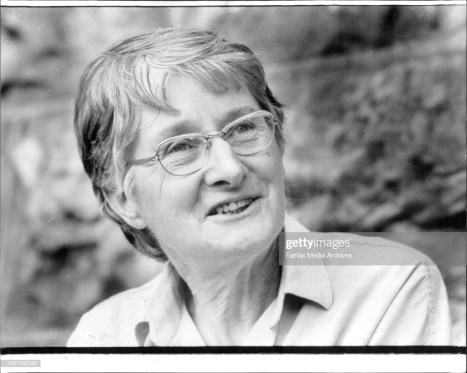
Kaaron Warren
#AWW 2019 Gabbie Stroud “Teacher”
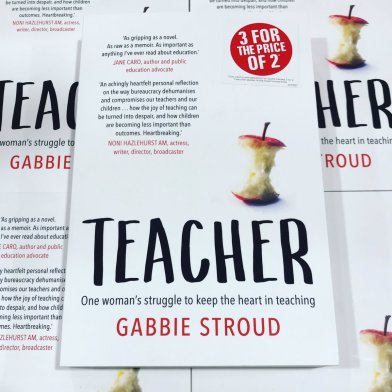
- Author: Gabbie Stroud
- Title: Teacher
- Published: 2018
- Genre: biography (290 pg)
- Trivia: 2019 ABIA Awards short list
- List of Challenges 2019
- Monthly plan
- #AWW2019
- @AusWomenWriter
Introduction:
- Gabrielle Stroud was a primary school teacher from 1999 to 2015.
- In 2014, Gabrielle Stroud was a very dedicated teacher.
- Months later, she resigned in frustration and despair.
- She realized that the Naplan-test education model
- …was stopping her from teaching individual children
- …according to their needs and talents.
- Gabrielle tells the full story:
- how she came to teaching…
- what makes a great teacher…
- what our kids need from their teachers…
- and what it was that finally broke her.
Conclusion:
- This book is a good effort of a teacher moving
- from the classroom into a writing career.
- I’m sure we will be hearing more from Gabbie Stroud
- and I hope her writing skills will be even better.
- I have seen many reviews on Goodreads and I
- cannot agree: this is not a 5 star book.
- It is enjoyable but not profound.
- In my opinion...less is more:
- less family backround
- — mother, sisters, boyfriend, chit-chat with daughters
- even more reflections about teaching
- — chapter 16 a teaching adventure at a Heritage School
- in Canada was wrapped up in less than a chapter!
- I’m sure there must be more to tell.
- Writing style: this all comes down to the reader’s
- own preferences.
- I felt that Stroud could improve her writing by
- less use of clichés...
- Ch 8:
- “I felt older, fatigued but the cup was still half full….”
- Ch 26:
- “…the glass is half full…but the water didn’t taste right.”
- Ch 30:
- “We all fall down Gab, our true measure is how we rise up.”
- Ch 30
- ” I did’t leave teaching….teaching left me.”
- Dialogue: is conversational, simple.
- Pathos: There were very few experiences
- …that stirred up my emotions of pity, sympathy, and sorrow.
- Problems were mentioned..but in a light, fluffy tone.
- I was not swept away by Stroud’s story
- …as I was with the personal essays of written
- Ashleigh Young in “Can You Tolerate This?“
- This is the type of depth in the writing I hoped
- Stroud would tell me about….the teaching profession.
- What finally broke Stroud? (..in my opinion)
- Teaching was changing too fast
- …and Stroud’s adaptation was too slow.
- Jack Welch…CEO of General Electric Company 1981-2001
- phrased it perfectly.
- ..and we all can learn from it:
- “When the rate of change on the outside
- …exceeds the rate of change on the inside
- …then the end is near.”
Last Thoughts:
- There was one spark in chapter 5 that
- I thought would ignite the book:
- Core message…
- ” You showed me how to teach
- …now show me how to be a teacher.”
- Unfortunately this memoir/biography…fizzled out.
- I hate flat soda.
#AWW2019 ‘My trip Down Under’

Green Island Reef, Carins Australia
- It is time to turn off NETFLIX and
- ….get back to reading!
- I’ve made a list for
- ….my literary trip Down Under
- reading some great Australian female authors.
- It’s summer down there so here I come!
- List of Challenges 2019
- Monthly reading plan
- #AWW2019
- @AusWomenWriters
My List:
- Everywhere I Look – Helen Garner – READ
- A Kindness Cup – Thea Astley – READ – paperback (…need magnifying glass!)
- Drylands – Thea Astley – audio book
- It’s Raining in Mango – Thea Astley – audio book
- True Stories – Helen Garner – audio book
- Wild Sea: A History of the Southern Ocean – Joy McCann – Kindle
- Say No To Death – Dymphna Cusack – Kindle
- The Timeless Land – Eleanor Dark – Kindle
- The Man on the Headland – Kylie Tennant – Kindle
- The Commandant – Jessica Anderson – Kindle
- The Torrents (play) – Oriel Gray – Kindle
- Highway of Lost Hearts (play) – Mary Anne Butler – Kindle
- Transparency (play) – Suzie Miller – Kindle
- SHIT (play) – Patricia Cornelius – Kindle
- Honour (play) – Joanna Murray-Smith – Kindle
- The Dead Still Cry Out: Story of a Combat Cameraman – Helen Lewis – Kindle
- Danger Music – Eddie Ayres – Kindle
- Dr Space Junk vs The Universe: Archaeology and the future – Alice Gorman – paperback
- An Item from the Late News – Thea Astley – paperback
#AWW2019 Mary Anne Butler (playwright)

- Author: Mary Anne Butler
- Title: Broken
- Published: 2016
- Genre: play
- Rating: A+++++
- Trivia: 2016 Victorian Premier’s Literary Awards (drama)
- Trivia: 2016 Victorian Premier’s Literary Awards (literature)
- List of Challenges 2019
- Monthly plan
- #AWW2019
- @AusWomenWriter
- #AusReadingMonth @Brona’s Books
Conclusion:
- Some plays should not be analyzed…they just have to sink in.
- Mary Anne Butler
- …has written a phenomenal script.
- It is intimate, realistic and breathtaking drama.
- Three characters weave their story
- ….criss-crossing their lives with each other.
- I read the play 4 times:
- 1 x reading the role of Ham (man driving on desert road)
- 1 x the role of Ash (female in car accident)
- 1 x Mia (Ham’s wife…home alone after a great loss).
- Now I was ready to read the play
- with the voices echoing in my mind.
- This is THE best play I’ve read in a very….long time!
- Strong point:
- Stellar example of dramatic construction (dramaturgy)
- and …inventive dialogue!
- #MustRead….really a must!

#Poetry Selina Tusitala Marsh Poet Laureate NZ

- Author: Selina Tusitala Marsh
- Title: Fast Talking PI (32 poems)
- Publshed: 2009
- Triva: 2010 New Zealand Society of Authors (NZSA)
- Jessie Mackay Award for Best First Book of Poetry Winner
- Trivia: Selina Tusitala Marsh (1971) is a poet and academic
- …and is the New Zealand Poet Laureate for 2017–2019
- List of Challenges 2019
- Monthly plan
- #AWW2019
- @AusWomenWriters
- #TBR challenge update
Selina Tusitala Marsh:
- Selina Tusitala Marsh is of Samoan, Tuvalu, English and French descent.
- She was the first Pacific Islander to graduate
- with a PhD in English from the University of Auckland and
- is now a lecturer in the English Department, specialising in Pacific literature.
- Oh, reading these poems with many
- Samoan words/references
- is going to be a challenge.
- Thank goodness….
- Ms Marsh has added a glossary for words the reader
- probably won’t understand.
- Thank you, poet laureate!
My notes on a few poems….
Googling Tusitala – Very good…and clever!
Marsh has listed the choices Google returns
when she googles ‘Tusitala’.
Last line is the clincher that brings a laugh:
‘The tusitala bookshelf in barcelona@bookcrossing.com
— there’s no wrong way to eat a rhesus.”
(BookCrossing is the act of releasing your books
“into the wild” for a stranger to find via the website)
Not Another Nafanua Poem – good
First I have to look up nafanua!
— Nafanua is the Samoan goddess of war
Afaksai (half-caste) – very good, rich with Samoan words!
Calabash Breakers – good
Hone Said – so-so..too cryptic…see glossary!
Things on Thursdays
Very good… should sound familiar to all struggling
female writers balancing family, work and writing!
Song for Terry – good…intriguing because I cannot discover who “Anne” is!
Langston’s Mother (very short poem…)
absolutely stunning because this poem led me to Langston Hughes’ poem
Mother To Son….breathtaking.
Mother to Son (Langston Hughes)
Well, son, I’ll tell you:
Life for me ain’t been no crystal stair.
It’s had tacks in it,
And splinters,
And boards torn up,
And places with no carpet on the floor—
Bare.
But all the time
I’se been a-climbin’ on,
And reachin’ landin’s,
And turnin’ corners,
And sometimes goin’ in the dark
Where there ain’t been no light.
So boy, don’t you turn back.
Don’t you set down on the steps
’Cause you finds it’s kinder hard.
Don’t you fall now—
For I’se still goin’, honey,
I’se still climbin’,
And life for me ain’t been no crystal stair.
(…if you don’t get ‘skin shivers after reading this..you don’t have a pulse!)
Cardboard Crowns – very good
Sum of Mum – good, very clever!
Wild Horses – …need help understanding this one
Three to Four – intense…memories of a car accident
Le Amataga – not able to find something in this poem by myself…need the glossary!
Spare the Rod – This poem brings to mind ancient rock engravings…. not easy to grasp
A Samoan Star-chant for Matariki – too cryptic
…need more knowledge of Samoan words/myth
(In the Māori language Matariki is both the name of the Pleiades star cluster
and also of the season of its first rising
in late May or early June.
This is a marker of the beginning of the new year.)
Circle of Stones – Poems don’t have to be just understood…they can lead you to other things. This poem put in in touch with the Fale Pasifika at University of Aukland. Fale is the name a a Samoan building, the center of the community. On You Tube you can watch History of the Fale Pasifika….just filled with spiritual meaning for this University to let all Pacific people know they belong.
Guys Like Gaughin – very good…clever!
Nails for Sex – very good! This is based on history and is worth reading about before you start this poem…then it all will make sense!
Mutiny on Pitcairn – average
Two Nudes of a Tahitian Beach, 1894 – good…based on this painting by Gauguin
Venus in Transit – poem mentions many well known connections to Venus in Transit…..but who is Rowan? The poet refers to NZ author Rowan Metcalfe’s book Venus in Transit (2004). This novel tells the story from a new and unexpected perspective, that of the Tahitian women who joined the Bounty mutineers and sailed away with them to make new lives.
Realpolitik (expansionist national policy) -…reflecting on Capt. Cook/crew, who brought disease to Tahitian women.
Contact 101 – how different people (philosopher, scientist, anthropologist) see South Pacific women
Has the whole tribe come out from England? – Wellington has been overrun by the British
What’s Sarong With This – pun…”What’s Wrong with This?” – very good, very intense!

The Curator – …description of a poem reading (Ms Marsh?) in a museum, sharp-edged.
Hawai’i: Prelude to a Journey – very good, glimpse of all sides of Hawaii and visitors….also a reference to a Hawaiian deity Pele, goddess of volcanos “…Pele’s pen, her black ink lava ever pricking the night.” There is so much in this poem you could spend some time investigating many aspects of this poem!
Touring Hawaii and Its People – very good….looking for ?? with a flowering crown in a museum. (..one of the Hawaiian monarchy?)
Alice’s Billboard – strange….can’t make head or tails of this one, sorry!
Fast Talkin’n PI – (title poem) – Oh, I think I finally found who “ANNE” is if the poem….”Song for Terry”!
Fast Talking PI (pronounced pee-eye) = pacific islander
reflects the poet’s focus on issues affecting
Pacific communities in New Zealand, and
indigenous peoples around the world
… including the challenges and
…triumphs of being afakasi (mixed race).
LISTEN TO THE POET HERSELF!
 NancyElin.blog