
#Classic: The Twelve Caesars (Suetonius)

- Author: Suetonius (69 – 122 AD)
- Title: The Twelve Caesars
- Written: 121 AD
- Genre: biography (Wikipedia The Twelve Caesars)
- List of Challenges
- Monthly plan
- Classic Club Master list
Quickscan: List of Roman Emperors
Notes:
- This is not a book that I would choose to snuggle up with
- on a cold winter day. Thus I decided to listen to the audio book.
- I could keep doing my chores….etc and still absorb the
- tidbits of history that I did not know!
- 50 % of the book is about the first 3 Caesars:
- Julius, Augustus, Tiberius chapters 1-18
- Audio book 40 chapters (20 min per chapter)
- Roman emperor was a risky job: only 3 died of natural causes
- …the rest were assassinated or committed suicide!
Julius Caesar (reigned 5 years)
- He wore laurel crowns as often as possible.
- The wreath suited Caesar especially well with
- the green leaves hiding his balding head.
- It was good to be reminded that Servilia (b.104 BC, d. 42 BC)
- was just a wicked as Livia was
- during her relationship with Augustus Caesar.
- Livia remains in my memory in TV series I, Claudius.
- Servilla came be seen in TV series Rome.
- The series I, Claudius NEVER showed
- …the audience the sadistic cruelty of Tiberius!
- You have to read about it to believe it!
Augustus Caesar (reigned 40 years)
- Father: Gaius Otavius (politician) but he died when AC was 4 years old.
- Adopted father: Julius Caesar.
- Wives: each of these marriages lasted 2 yr Clodia, Scribonia
- Livia was here to stay.
- She was a shrewd woman, 23 yr marriage, no children, 1 miscarriage.
- Augustus also divided city regions and districts,
- …appointed nightly watch against fires (sort of fire brigade).
- Calendar: Augustus was born in September named 8th month August
- because in this month he received his first council ship.
- Lists: These pages about Augustus Caesar is a long list of achievements:
- circus games, gladiators, laws, allocating corn
- exhibiting curiosities: rhino, tiger and extremely long snake!
- Lists: of omens Augustus Caesar believed to foreshadow trouble (2 crows attack an eagle!)
- As soon as Livia comes on the scene
- ….the narrative becomes more interesting.
- After watching the TV series I, Claudius
- I could apply a face (actor, actress) to many names!
- Julia: Daughter is banished for 5 years for her lewd behavior.
- Strong point: personal habits were described
- …negligent in dress, took afternoon naps with his shoes always on!
- Augustus slept in the same chamber on Palatine Hill for 40 years.
- His private room where he was NOT to be
- disturbed (top floor Palatine Hill home) called “Syracuse”.
Tiberius pg 104 (reigned 22 years)
- He was emperor Augustus Caesar’s successor.
- Augustus adopted Tiberius (his mother was Livia AC’s 2nd wife)
- Tiberius was a reluctant emperor!
- Livia (mother) demanded equal share of power.
- Mother and son parted on bad terms.
- When she died Tiberius annulled her will and did not grieve his loss!
- Daughter-in-law Agrippina the Elder
- claimed Tiberius had her husband Germanicus murdered.
- Germanicus was Tiberius’ nephew AND adopted son.
- Tiberius banished her to the island of Pandateria.
- …and ordered a centurion to beat out one of her eyes!
- Tiberius was not finished yet….
- He starved his 2 (adoptive) grandsons to death.
- Tiberius was sadist…deriving pleasure from cruelty.
- In one day 20 people (men, women and boys) were killed flung down
- the Gemonian Stairs (steps located in the ancient city of Rome)
- …and then dragged into the Tiber River.
- He put a centurion to death for stealing a peacock out of his orchard!
- #Ouch
Conclusion:
- I took notes about the first 3 Caesars.
- You can discover the other rulers yourself!
- This was an excellent overview of these emperors
- The book solidified my understanding of the
- Julio-Claudian (27 BC-68 AD)
- Flavian dynasties (68-96 AD)
- Audio book narrator: Charles Griffin (excellent).
- The writing is clear, simple and easy to understand.
- Strong point:
- Insights into the social and political order of the times
- …and the psychology of these powerful yet flawed individuals.
- I loved the music played between chapters….imperial!
Last thoughts:
- Roman emperors are not known as being compassionate
- …but Emperor Vespasian was the exception!
- If you like historial fiction perhaps you would like Lindsey Davis’
- The Course of Honour.
- The love story of Vespasian and his mistress
- …the freed slave woman Antonia Caenis.
- This book recreates Ancient Rome’s most turbulent period.
#Non-fiction: The Age of Eisenhower
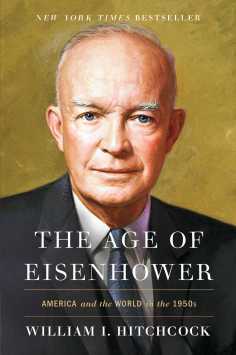
- Author: W.L. Hitchcock
- Title: The Age of Eisenhower
- Genre: non-fiction
- Published: 2018
- #NonFiction
- List of Challenges
- Monthly plan
Did you know?
- Eisenhower agreed to give 400 million dollar
- to France to keep them fighting in Indo-China 1956.
- Eisenhower did not trust Nixon. Ike tried to ‘push’ off the ticket election
- 1956 by dangling a cabinet post in front of ‘Tricky Dick’.
- Nixon did not take the bait.
- Eisenhower suffered from a blood clot in his heart September 1956.
- What did Nixon do? He slipped out of his house through the back door
- to avoid the press.
- Nixon was scared to death ….he might have to lead the country!
Conclusion:
- These are some of the items that I did not know.
- This book reflected a man who remained
- a social conservative who was anxious about
- …clashes b/t federal courts and local customs (civil rights movement).
- Eisenhower was not used to change
- ….wary of challenging hierarchy.
- Yet Eisenhower did manage
- to surpass his limitations and supported
- The Civil Rights act 1957 and enforced court ordered
- …for desegragation in Little Rock Arkansas.
- which makes him a worthy president in my opinion.
Last thoughts:
- I thought America in the 1950’s would electrify me.
- Unfortunately, it was …to be the fractious 1960’s
- with Nixon, Kennedy, LBJ these were presidents that
- interested me more than “I like IKE’.
- The book was interesting and informative.
- Eisenhower made many good calls in the White House
- …an ran a fundamentally honest administration.
- Ike was and remained a #GoodSoldier.
Non-fiction: Pulitzer
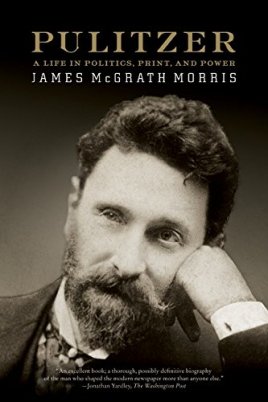
- Author: J. McGrath Morris
- Title: Pulitzer
- Published: 2010
- List of Challenges 2018
- Monthly plan
- Non-Fiction Reading List
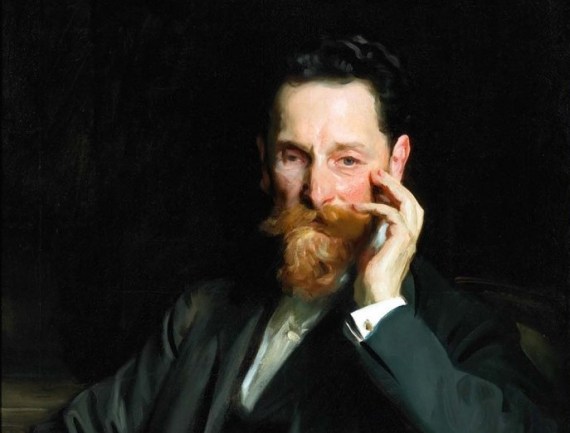
Trivia: Portrait of Joseph Pulitzer by J. Singer Sargent
- …if cover one eye and you see a tyrant
- …cover the other eye you see a unhappy depressed man.
- Fascinating.
Genre: biography (31 chapters, 463 pg)
Rating: C
#NonFicNov
- This book started slowly:
- emigration from Hungary odd jobs in USA and
- local politics in St. Louis Missouri.
- The narrative finally got interesting in chapter 16
- …once Pulitzer became a newspaper mogul in NYC.
- Pulitzer was obsessed with control over his empire and literally
- worked himself to death.
- But what do you do with fame and fortune when your
- health problems lock you up in a gilded cage?
- #GoodButNotGreat
#Dutch: nr.2 Shortlist Libris History Prize 2018
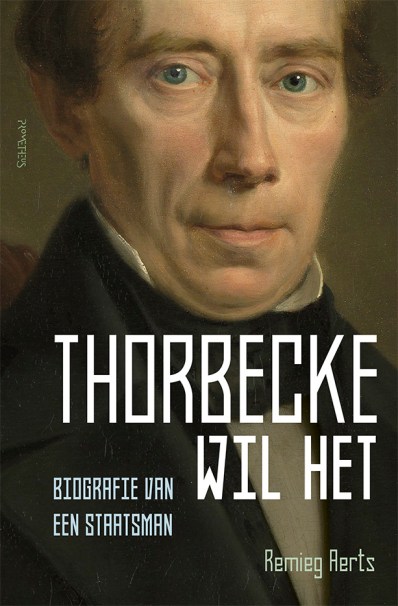
- Author: Remieg Aerts
- Title: Thorbecke Wil Het
- Published: 2018
- Trivia: Shortlist Libris Literature Prize 2018 for History
- Trivia: Winner PrinsjesBoekenprijs 2018 (best political book of the year)
Conclusion:
- I guess the idiom that best describes Thorbecke is:
- “…all work and no play makes Jack a dull boy.”
- After reading this monumental biography about the man
- who formed modern The Netherlands
- ….Thorbecke was far from dull!
- It is difficult to compare Thorbecke with any current politician.
- He was from another era:
- style was singular: we do it my way….or no way
- his thinking came from another source… German philosophy
- his personality was controversial:
- …when Throbecke enters a room, the temperature invariably drops.
- The Netherlands is indebted to this great man.
- Thorbecke had a vision for Dutch politics.
- He always asked himself:
- “Did I act and guide the government
- for a better and stronger future?”
- As the author so poignantly remarks in this last sentence:
- “How many people can honesty ask themselves this question today?
Last thoughts:
- I’ve lived in The Netherlands for years and everywhere you
- see Thorbeckeplein, Thorbeckstraat or Thorbecke School
- …but who was this man?
- I think 80% if the Dutch know he was important
- …but they don’t know why he was
- …a pivotal man in Dutch history.
- If you are willing to persevere through 763 pages
- with an analyses of:
- Thorbecke’s intellectual development (early years)
- his marriage to Adelheid Solger (one of the greatest love stories 19th C)
- the parliamentary culture in The Hague
- ….(led a team to create the modern Dutch Constitution 1848)
- his leadership (Thorbecke PM 1849 – 1872)
- …you will discover a man who towered above all others.
- Weak point: book is massive, difficult to balance in my tired hands!
- Strong point: there are many…
- ….but the last section pg 738 – 763 is excellent.
- Remieg Aerts ties up loose ends as a biographer
- …and links Thorbecke’s legacy to our modern times.
Shortlist Libris Prize 2018 for History:
- I’ve read Nobel Streven and De Sigarenfabriek van Isay Rottenberg.
- The winner will be announced 28 October 2018
- …I don’t think I can manage to read the last 2 books before Sunday.

Non-fiction: James Wright: A Life in Poetry
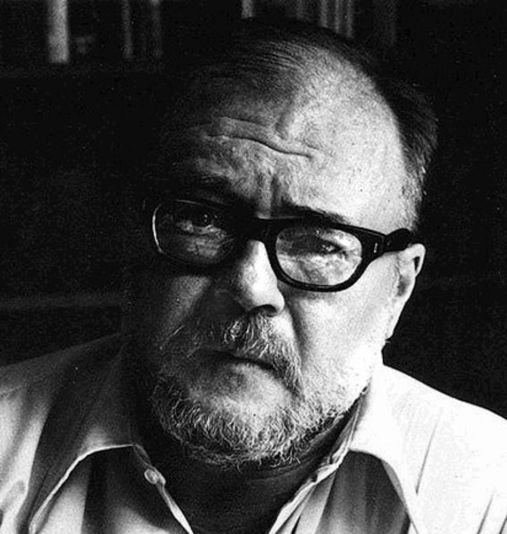
- Author: J. Blunk
- Title: James Wright: A Life in Poetry
- Published: 2017
- Trivia: 1972 Collected Poems won the Pulitzer Prize.
- List Reading Challenges 2018
- Monthly planning
- #20BooksOfAutumn
Introduction:
- You know how once in a while you run into a book that’s
- so good you don’t want it to end,
- so you draw read it very slowly, drawing it out?
- For me, this is one of those books.
- I just had a few pages more to read
- ….but stopped and started to end my night’s reading last night and
- ….went to bed.
- I just did not want Jimmy to leave me last night.
Conclusion:
- James Wright is one of the best poets I’ve ever read.
- (Seamus Heaney…is the very best!)
- Why?
- His poems are written in plain language that can connect with the reader.
- Too many poets are cryptic
- ….they think the purpose of poetry is to be cryptic.
- Poetry should be plain and simple
- …but that does not mean it cannot be complex.
Strong point:
- The book packs an emotional punch without cliche.
- Blunt succeeds in conveying a portrait of James Wright’s
- frenzied urgency, his depression, struggle with alcoholism
- …and the obsession to know what makes us tick.
James Wright (1927-1980)
- He was the poet of the downtrodden in mind and body,
- the castaways of society,
- the commonplace victims trapped in the poor streets.
James Wright
- He did not walk around, observing the world and
- coining apt analogies for what appears most striking.
- He suffered to express is emotions….
James Wright
- He had an appetite for new materials during sabbaticals in Europe
- …especially his beloved Verona.
- “ I’d rather be dead in Verona than immortal in Ohio.”
James Wright
- He suffered from depression and his poems were
- his newly invented safe rooms.
- Places we might not have noticed until Wright showed them to us.
James Wright
- A poem has physical landscapes….”my grave, my ditch of defeat.”
- Martins Ferry, Ohio was the center of James Wright’s poetic imagination
- …hardscrabble existance.
- It was a touchstone and other landscapes are tried against it.
James Wright
- He gives vivid impression of grief and longing.
- …when he wrote an elegy for the scholar Philip Timberlake.
- He was one of Wright’s first mentors in 1949.
- The title is in itself a poem… What Can a Man Bear.
- It is sorrow distilled into eight lines:
…alone
All afternoon, I take my time to
mourn.
I am too cold to cry against the
snow
Of roots and stars, drifting above
your face.
Why is this poem to poignant?
- James Wright seems to….
- extend a hand to the reader and say:
- “Come here, with me and lets share
- …this experience of language.”
Last thoughts:
- Reading this book these last 5 days
- …felt like breathing pure oxygen.
- Being immersed with such a troubled and
- …brilliant poet has shaken me to the core.
- Wright’s poems contain a density of emotion that stirs the soul.
- Who did Wright emulate? Meister Eckhart.
- Wright reminds himself often of Eckahrt’s way toward an orderly life:
- “…simply to do the next thing.”
- Wright was tormented by depression and loneliness
- …not of the body, but loneliness of the soul.
- I think the title of one of his
- …most famous collections sums it up:
- “The Branch Will Not Break”
Clive James: poem ‘The River in the Sky’

- Author: Clive James
- Title: The River in the Sky (epic poem)
- Published: 2018
- List of Challenges 2018
- Monthly plan
- #20BooksOfAutumn
Quickscan:
- Genre: autobiographical epic poem
- Topic: meditation on aging…lost golden age…now inaccessible
- Tone: We find Clive James in ill-health but high spirits
- ….clear impassioned wisdom alwys quietly carving sage words.
- Form: dramatic monologue (epic poem with Clive as the hero)
- Language: unadorned, forceful with many flyaway cultural observations
- …and allusions that should be investigated!
- Trauma: Father’s death
- “I was there to watch my mother take the news.
- It still now deprives me of speech,”
- James said his life’s works “ springs from that one dreadful moment”.
- First line: “All is not lost….out past the journey’s edge.” (repeated line: 77)
- It is a reference to Milton’s poem Paradise Lost.
How did Clive James write this book?
- I think the writer sat in his kitchen/library and
- …just starred at the walls
- ..his thoughts take us on an autobiographical journey.
- Books are beautiful.
- He compares his wall of books
- …to the painted colorful frescoes in a Pharaoh’s tomb.
- James mentions his daughters:
- “…of this tomb when you helped me weed my books”.
- These are the walls he sees first thing in the morning.
- It is a work of art, with all of the
- different size books and their color bindings.
- Clive James is a master at creating images:
- “.. (I am) ..but the living god (Pharaoh)
- in the departure lounge (tomb/kitchen-library) surrounded
- …by his glistering aftermath–. (books)
What does Clive James want to achieve in this book?
- James is dying….and he has know this for many years.
- He is: “Planning last strategies…employ these closing hours
- to write its seedlings down“. (seedlings of poetry)
- “This is a river song linking vivd foci where
- once my mind was formed that now must fall apart.”
- The turning point in the writer’s life was
- the death of his father in a plane crash. (1945)
- The flight was to return this prisoner of war WW II to his wife and son
- ….10 days after the war ended.
- We read “…strength ebbs from my limbs” but James wants to…
- “…my fragile treasures link together in review.”
What is the structure of the book?
- This is an epic poem with Clive James as the hero.
- He shifts constantly….from the ancient past with
- Egyptian, Greek mythology to his childhood
- …Jannali in the summer heat, Clifton Gardens, Botany Bay;
- college days (dedicated book May Week was in June (1990)
- …to Tom Weiskel.…college friend who died;
- life in Australia with memories about
- Keith Miller (cricket player, war pilot) and
- Kim Bonython (war pilot, lover of jazz, race cars and art)
- Darcy Dugan (Australian bank robber)
- and of course the Hill at the SCG, Sydney Cricket Ground.
- There are many overlaps between
- …events and states as presented by the text.
- This requires some dedication from the reader
- to investigate items mentioned by Clive James.
- If you take the time to do this
- …it will enrich the reading experience.
What was the sentence(s) – image that impressed me the most?
- QUOTE:
- “Gliding is what I do, here at the finish, in the final hour.”
- Note: This can also be a reference to the title
- The River in the Sky.
- The writer tells us he will be gliding…
- “in the star clusters, in the gulf between the galaxies.” (pg 4)
- IMAGE:
- Clive James compares himself to the Sun Voyager.
- The Sun Voyager in Reykjavik Iceland was
- …essentially envisaged as being a dreamboat
- …an ode to the sun symbolizing light and hope.

Conclusion:
- If you read this book be prepared to follow Clive James
- through a maze of memories.
- He backtracks, looks forward and stands still amazed that he is still alive!
- He’s danced the tango in Rio with a beautiful blind woman.
- He’s met the love of his life while listening to Maria Callas
- He’s pampered by two beautiful daughters.
- James is a poet and some of his insights took my breath away:
- “Time, it is thereby proven, is the sea
- …whose artifacts are joined by separateness.”
- Strong point: James shows us his spirit of youth.
- Even in old age, and his refusal to resign and face life passively.
- “If my ashes end up in an hour-glass….I can go on working.”
- Note: I’m reading this poem slowly, carefully line for line
- this my be the last time I can enjoy
- ….Clive James while he is still with us.
- I don’t want to read his books in grief…but in joy.
- #MustRead
- #MustReflect

#AWW 2018 The Enigmatic Mr. Deakin
- Author: Judith Brett
- Title: The Enigmatic Mr. Deakin
- Published: 2018
- Trivia: Winner National Biography Award 2018
- List of Challenges 2018
- Monthly plan
- #AWW2018 @AusWomenWriters
Conclusion:
- This is a book about the history, politics and philosophy
- of Australian liberals.
- It is Australian politics leading up to Deakin Government
- and his years as Prime Minister 1903-1908.
- As a brilliant speaker Deakin became one of the kind of people
- who are very good at playing the political game.
- Judtih Brett has done almost the impossible
- …make a shy, studious, religious man seem interesting.
- Remember this is not a literary biography but a political biography.
- It’s going to be full of elections, and policy making.
- So if you are not really interested in this topic
- ….the book will be a tough read.
Last thoughts:
- It is not easy to write a political biography
- It is not easy to condense an entire life into the form of a book
- …an interesting book.
- You have to find the right balance between
- historical fact and emotion to give the subject a pulse.
- I felt only a regular missed heartbeat.
- The author did not punch me with enough
- little details that make the character relatable.
- It is difficult to read the book you are writing
- as if you were the reader…instead of a writer.
- Perhaps that may have improved this book.
Classic: The Life of Johnson
- Author: J. Boswell
- Title: The Life of Johnson
- Published: 1791
- Audio book: 51 hr
- Narrator: David Timson
- Kindle book: Penguin Classic, 1134 pages, published 2008
- List Challenges 2018
- Monthly planning
- Classic Club Master list
- Trivia: I used the combination audio and ebook.
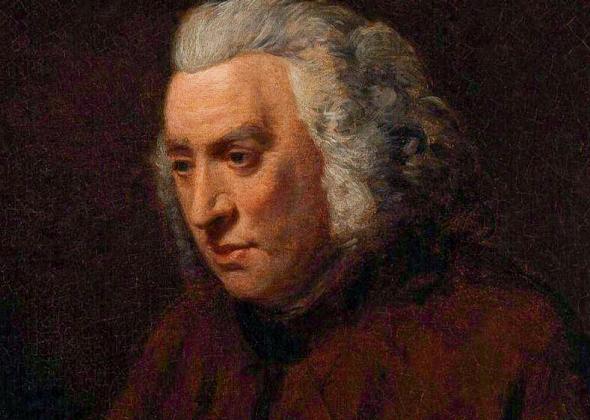
Samuel Johnson:
Johnson was a national icon who
epitomised the idea of English character and language
He loved wit more than wine and
men of genius more than sycophants!
Masterpiece: Johnson’s Dictionary is his masterpiece.
He once said: “Dictionaries are like watches.
The worst is better than none, and
the best cannot be expected to go quite true.”
Masterpiece: In 1755 Johnson struggled and ultimate triumphed to ‘fix’ the language
This proved to be one of the English language’s most significant cultural monuments
Johnson sometimes introduced his own humorous opinions:
Lexicographer: a writer of dictionaries, a harmless drudge.
STYLE: a union of force, vivacity and insight
TONE: common sense and controlled ridicule
POLITICS: – unquestioning belief in monarchy and violent distrust of its critics
CONVERSATION: Johnson considered conversation a contest “…I do not mean the victor must have the better argument…but is superiority of parts and knowledge must appear.”
Who was the conversationalist who could best challenge Johnson? Johnson admits that is is always Edmund Burke. Johnson considered him an extraordinary man. “His stream of mind is perpetual.”
PAMPHLET: Samuel Johnson wrote a famous political pamphlet for the North ministry.
Taxation, no Tyranny in reference to fellow-subjects in America.
It was thought wisest to omit some bitter taunts against the colonists .
OPINION: Johnson favors neither conciliation or separation of America
but a return to patterns of imperial discipline!
WIT: I enjoyed Johnson’s good humored wit.
For example he teases Boswell with the differences between England and Scotland!
Johnson gives you a forcible hug and shakes laughter out of you whether you will or not.
WIT vs WRITERS: Johnson is a man with humor at the tip of his tongue
He has a witty comeback to follow every statement.
His spoken words are not always found in favour regarding his opinions.
Johnson did not have a high regard for two eminent writers:
Henry Fielding and Samuel Richardson!
Historians: “…the verbiage of Robertson or the foppery of Sir John Dalrymple.” OUCH!
But Johnson praised…John Bunyan. “His Pilgrim’s Progress has great merit…”
The Netherlands: I was stopped in my ‘morning walk tracks’ when I heard that Johnson was interested in book written in the dialect of my province Friesland The Netherlands! . Boswell even mentioned the University of Vranyker ( Franeker, The Netherlands). It was a seat of great learning 1585-1811. I was married in Franker and lived there for 7 years!
What do Samuel Johnson and Nancy have in common?
We both learned the low Dutch language!
Dutch has been a civilized language for
…more than a thousand years and has a rich literature.
Dutch is the third Germanic language after English and German.
Perhaps I should read the classic Thomas à Kempis
…in Dutch as Samuel Johnson did! (pg 835)
RUNNING JOKE: –> Samuel Johnson vs Mrs. James Boswell
Johnson continues to end his letters to James Boswell with a special salutation to Boswell’s wife:
1775: My compliments to Mrs. Boswell, who does not love me.
1775: I know that she does not love me; but I intend to press in wishing her well till I get the better of her!”
1776: I hope my irreconcilable enemy, Mrs. Boswell, is well. Desire her not to transmit her malevolence to the young people.” (Boswell’s children)
1776: “If Mrs. Boswell would be friends with me, we might now shut the temple of Janus.” (temple in Rome that opened in time of war….closed in time of peace.)
WHAT IS THIS ALL ABOUT?
This alludes to Johnson’s old feudal principle of preferring male to female succession!
Johnson has great fun ‘teasing’ Mrs Boswell in this manner.
Reconciled:
1777: Boswell writes to Johnson that his wife begs he accept her compliments….and will send him some home-made orange marmalade. Just read Johnson’s reply….he still is teasing her!
“Tell Mrs. Boswell I shall taste her marmalade cautiously at first. “Timeo Danaos et dona ferentes.” (Virgil, Aeneid ) “I fear the Greeks, even when they bring gifts.”
ENEMIES: Not everyone was enamoured by Samuel Johnson. After a scathing review of Soame Jenyns’ essay (1756) the writer clearly believes revenge is a dish best served cold.
He wrote this sarcastic epitaph for the deceased Samuel Johnson:
Here lies poor Johnson. Reader, have a care,
Tread lightly, lest you rouse a sleeping bear;
Religious, moral, generous, and humane
He was—but self-sufficient, rude, and vain;
Ill-bred and over-bearing in dispute,
A scholar and a Christian—yet a brute.
CONCLUSION:
READING PLAN: I had difficulty at the beginning of the book. I had to adjust to Boswell’s style.
He relates facts and leaves little room for analysis. During the conversations with Johnson many illustrious writers, historians, (Hailes) poets, (Dryer) publishers (Dodsley), literary critic (John Dennis) and even an actor (Garrick) and Scottish physician/writer (Cheyne)
are mentioned. I checked names on Wikipedia. Only this way could I enjoy the jibes Johnson made about many people.
I found once I reached page 554 (Kindle edition) with 50% still to read….I finally felt the pulse of the book. Johnson was unleashing his ‘bon mots’ that were a product of his quick imagination and his eloquence and total mastery of the English language.
BE WARNED: As in all books of biography that are very long
your eyes will glaze over at a certain point. Mine did.
I choose to skim over long letters about non-literary issues and various discussions about lengthy judicial cases or the problems of getting books published. My interest was in Johnson’s comments with Boswell about books and writers and their correspondence between Johnson and Boswell.
LAST THOUGHTS: Great quote: wine
Johnson’s cup runneth over with wise observations.
Boswell: You said once to me not to drink wine was a deduction of life.
Johnson: …it is a diminution of pleasure to be sure but not of happiness. There is more happiness in being rational.
Non-fiction: Maupassant (biography)
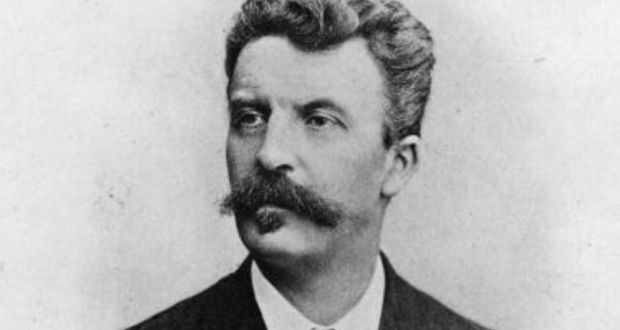
- Author: F. Maritnez
- Title: Maupassant (1850-1893)
- Genre: biography
- Published: 2012
- In order to understand any books by Maupassant it is
- …important to know more about the man.
- Here is my review of the biography of Maupassant.
- I hope it will provide you with some information that
- …can help you.
|
||||
|
|
- Maupassant deserves more of my attention.
- I want to learn more about the man before starting another one of his books.
- I’m also Interested in the mothers of these world writers.
- Who were they?
- How did they influence/nurture their children.
- As the saying goes..” the apple does not fall far from the tree!”
- Maupassant enjoyed a carefree youth in Normandy.
- I’m so impressed by his wise and loving mother.
- I did not feel any character like her in Bel-Ami.
- On the contrary, his father was much more
- …like the “parvenu” social climbing G Duroy!
- Mme Maupassant leaves her husband and is determined to make sure Guy:
- ” il faut apprendre l’art et les manières”. (He must learn the art of good manners)
- His life was short and the book will cover 27 years (1866-1893) in the next 162 pages.
- This glimpse of the man is even more interesting to me than the book Bel-Ami.
- His love of La Normand, son bateau, compagnon fidèle, Matho ( le chien).
- Maupassant struggled with ridged Catholic schooling .
- He vows never to belong to Les Parisiennes.
- Under the guidance of Flaubert GdM will “entreprendre une oeuvre de longue haleine”
- Guy is now chained to his desk earning a living and wasting his time.
- GdM has his dark side hidden by his “gaillardise (guy-ness)
- …figure tranche (honest face) et manières simples” .
- He reveals his true feeling in letters to his kind mother.
- “Je me trouve seul devant ma table avec ma triste lamp”. (…alone at my desk with my lamp)
- Winter terrified GdM: (black…sinsiter…deep….the midnight of the year)
- C ‘est décembre qui me terrifie, le mois noir,
- le mois sinistre, le mois profond , la minuit de l’ année…”
- Maupassant is burning the candle at both ends.
- He is a depressed workaholic who is suffering from heart problems and syphilis.
- After recuperating in the Alpes he celebrates…in a brothel.
- “cette amélioration au bordel.” (old habits never die)
- It is no surprise that his life will be short and that he will produces,
- in his last 15 years, a waterfall of literature that we still enjoy today:
- 300 short stories, 6 novels, 3 travel books and 1 book of poetry.
- Sickness, debt, employment do not impact Maupassant as does the death of “le vieux” Flaubert. This book is full of correspondence between GdM en GF.
- Flaubert is constantly rescuing Maupassant and guiding him to greatness.
- GdM flirts and wins over a new lover but as usual the flame goes out very soon.
- Guy gets easlily bored.
- Une Vie (1883) was an homage to Flaubert.
- “A Life” is completed. His (Maupassant) is finally starting
- Fact: Guy was starting to go blind and hired a butler to help him
- These two men were never separated during the last 10 yrs.
- Page after page Maupassant complains about boredom:
- “Je m’ embête sans relâche, sans repos, sans espoir”.
- (bored…constantly, no hope)
- Relentlessly bored wanting nothing, expecting nothing.
- Guy can be tiresome at times.
- Maupassant, man of the world, is happiest when alone.
- (live in absolute solitude)
- “je vis dans une solitude absolue.
- Je suis dans un bain de repos, silence, dans un bain d’ adieu”.
- (…bath of rest, silence, good-byes).
- The main character, Jeanne, is based on
- …Maupassant’s mother, Laure le Poittevin.
- She was a victim on an uphappy marriage and submitted
- herself to an adulterous and violent husband.
- Laure made a strong move…supported by her friend G. Flaubert
- and left her husband which was unusual in the 19th C.
- She concentrated all her attention on her son, Guy.
- As you read the book you can see the similarities
- between Laure and Jeanne
- I expected GdM to be more like Bel-Ami…the social climber.
- He is just the opposite, a lover of nature and the sea.
- Piroli the cat loves him, Francois (butler) cares for him
- …and the literary world reveres him.
- Maupassant finds it hard to cope with the needs of
- …his mentally ill brother Hervé, elderly mother Laure and his own health.
- He tries to bury his worries with “sous rires et gaieté” . .
- Interesting was the anguish GdM went through visiting his now insane brother.
- Heartbreaking. We feel GdM wondering
- “… quand sera-ce mon tour?”
- Will he be the next in the family to loose their mind?
- The end is near.
- Looking in the mirror GdM sees how death is ruining his body.
- He flees to every thermal spa but they are a “Way of the Cross” for him.
- It takes him 1 minute to write 1 word, he is practically blind.
- On 06 Jan 1892 GdM is in a
- …straight jacket and committed to an asylum in Paris.
- His butler, Francois, visits him everyday.
- GdM died 1,5 years later on 06 July 1893. (43 yr)
- Maupassant was a very private person, little is known about him.
- He said: “Je laisse seulement parler de mes livres“
- Let them only talk about my books….
Spin #18: Means of Ascent LBJ

- Author: R. Caro (1935)
- Title: Means of Ascent
- Published: 1990
- Audio book: 22 hr
- Narrator: Grover Gardner (excellent voice)
- Trivia: #ccspin nr 18
- Means of Ascent is …..a modern non-fiction classic
- Monthly planning
- List Challenges 2018
- Classic Club Master list
Quickscan:
- Robert Caro is writing The Years of Lyndon Johnson.
- Four volumes have been published and he is working on vol 5.
- As of 2017 400 pages were typed for this last book.
- Now Caro is moving to Vietnam to continue the writing process.
- I cannot emphasize enough
- …what a monumental historical document
- …Robert Caro is giving us.
- I read volume 1 The Path to Power…it was very good.
- All of the volumes are chunksters and the only way I can
- read them is using an audio version on my IPOD.
- I listen during my walks, while doing household chores,
- riding my bike to the grocery store….and 30 min before sleeping.
- LBJ and Nancy have become very close!
Conclusion:
- Volume 2 is a blow-by-blow account of the drama
- concerning the back-round and outcome of the
- 1948 Senate seat of Texas election.
- Caro reveals an exhaustive amount of
- …details only recently available to historians.
- There are long testimonies given in court by individuals who
- conspired with LBJ to STEAL the election!
- Needless to say.
- …the Johnsons family is not fond of Robert Caro.
- This book was about LBJ but it did spur me on
- …to learn more about the defeated candidate in the race:
- ‘Coke’ Stevens and the demcratic political boss
- that put LBJ in the 1948 senate, The Duke of Duval
- …George Berham Parr
- #MeanerThanABarnyardDog
Last thoughts:
- Means of Ascent paled in comparison to
- …the blockbuster volume 1 The Path to Power.
- A senatorial race in Texas 1948 may seem to be a turning point
- …in modern politics but is was just a ‘run-of-the-mill’
- type of campaign in USA even today!
- The only difference being the role of
- Twitter, FB social media and the
- …phenomenon of ‘fake news’ websites!
- Backroom deals, bibes, intimidation even ballot-box stuffing
- …it is STILL going on.
- LBJ is just one of many USA politicians that have entered office
- by these distinct patterns or methods of operation
- ……Modus Operandi.
- Oh, don’t forget there are also rich fathers who make sure
- their son is the first Catholic president in the White House.
- I recommend the book about
- the MAN behind JFK…
- The Patriarch by David Nasaw (2012).
- #EyeOpener
My notes:
August 3, 2018
Listened to introduction that lasted 1 hour 11 min on IPOD!
This book will look at 7 years 1941-1948. LBJ won a senate seat in election 1948…by just 87 votes. Why was this election a watershed moment? It was the end of ‘ol school politics’ ( handshaking, backslapping and the three B’s: beef steak, bourbon and blondes) and the start of the new school politics (media, TV, backroom deals of pressure and persuasion).
August 7, 2018
August 14, 2018
…for being able to endure her insensitive husband.
August 15, 2018
August 16, 2018
Well, it’s official…LBJ did not buy his Texas senate election 1948…he stole it! Putting this man in high office…changed the course of history (Vietnam).
How many subsequent US elections have been stolen….I wonder.
 NancyElin.blog