
#Classic: Moby Dick
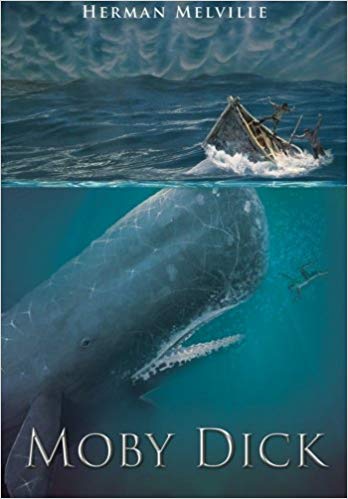
- Author: H. Melville
- Title: Moby Dick
- Published: 1851
- Trivia: PLOT Wikipedia
- Chunkster: 450 pg or more
- CC Spin #19 @The Classics Club – FINISHED !
- List of Challenges
- Monthly plan
- Classic Club Master list
Quickscan: Mixture of plots:
1. Overcoming the Monster: (the White Whale)
3. Quest: (Destroy the White Whale)
4. Voyage and Return: (whaling trip on the Pequod)
5. Comedy: (Stubb dialogue)
6. Tragedy: (Dead of Queeseg)
7. Rebirth: Ishmael (character survives after so many perils)
9. Rebellion against the one: (Starbuck thinks of killing Ahab to save ship/crew)
Characters: my favorites….
Ishmael:
- The narrator in the book, not only relaying the story
- …but going on at length about whale facts and
- various philosophical questions.
Queequg:
- He demonstrates that despite one’s appearance
- …people have more in common than they believe.
- Queequg also brings life through death. (coffin is float for survival)
Secret motto:
- Ego non baptizo te in nomine patris, sed in nomine diaboli!
- Ahab howls these words as harpoon iron is devoured the baptismal blood.
- ”I baptize thee, not in the name of the Father, but in the name of the Devil.”
- Captain Ahab is speaking to his harpoon as it tastes whale blood for the first time.
- The quote is significant because Herman Melville wrote to his
- …friend Nathaniel Hawthorne that
- ..the line was the book’s secret motto.
Conclusion:
- On the most basic level, the White Whale in the novel
- is the object of Ahab’s obsession.
- Everything in the plot of Moby-Dick is directed
- …toward the final, tragic confrontation between
- …Ahab, his crew, and the White Whale.
- The White Whale wins the fight.
- Ahab and nearly the entire crew of the Pequod die.
- The fact that the White Whale cannot be beaten
- ….contributes to the way it is used as a symbol.
- Power of Moby Dick is symbolic of God.
- Symbol of a force man cannot defeat.
- Pursuit of God: Ahab purses God in a manner driven by hate
- …vengeance rather than something peaceful.
Last thoughts:
- Ch 1-54 is worth the read….but then I hit a wall!
- Ch 55-100….it was a ‘touch and go’ endeavor to keep reading!
- There’s a lot of scrimshaw and blubber!
- The last 30 chapters finally capture my attention again.
- This book would be much improved
- …without the whaling tutorial! (ch 56)
- Sometimes tiresome and challenging
- is a compliment about a classic book.
- It’s like climbing a mountain….hard work
- …but the view is terrific when you get to the top!
- Now…the view from the top
- …wasn’t worth the hike.
- #YouHaveBeenWarned
My notes:
November 29, 2018
Learning some basic concepts that play an important role in Moby Dick
Melville creates well rounded characters
The first paragraph describes my start
December 2, 2018
Slowly moving forward:
December 6, 2018
Starting ch 28 ….now we finally meet Ahab!
30 pages a day…
December 11, 2018
Ch 70: I pushed through ch 54-70 which is more or less
Ch 1-54 is a good narrative….I expect once we get back to the conflict
Ch 94: More whaling…stay away from whale spuits,
The only chapter with some narrative was
January 9, 2019
Finshed during the Christmas holidays.
#Classic Flannery O’Connor
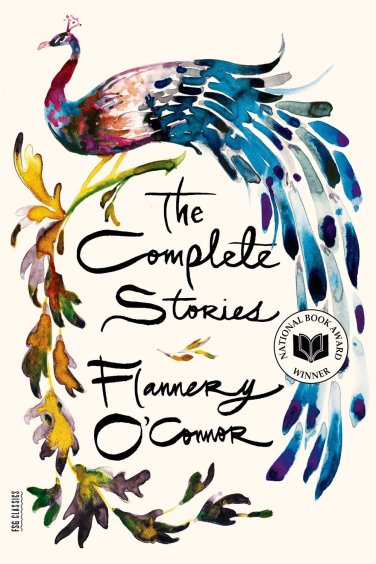
- Author: Flannery O’ Connor (1925-1964)
- Backround information (Wikipedia)
- Title: The Selected Stories (31)
- Trivia: Complete Stories won the
- 1972 U.S. National Book Award for Fiction.
- List of Challenges
- Monthly plan
- Classic Club Master list
Conclusion:
- I’ve had this book on TBR for 2 years!
- I was very, very impressed.
- It would be bleak stuff if it weren’t so enthralling,
- ….and sometimes laugh-out-loud funny.
- O’Connor works in major social issues (race) and religious themes
- …( suffering, epiphany), but doesn’t hit the reader over the head with them.
- Some stories are dark with a surprise ending.
- Strong point: She writes the Negro dialect as if she
- …spoke it herself, and portrays
- …southern speech patterns easily.
- I took me 4 days to read all 31 (long) short stories.
- A Displaced Person is 42 pages
- The Lame Shall Enter First is 38 pages
- 10 stories are between 20-29 pages
- 54% very good stories!
- Reading up on O’Connor’s life, which came to an early end from illness,
- ….it wasn’t hard for me to see how some of
- …her own personal trials must have informed her work.
- #MustRead Classic
Table of Contents:
- The Geranium – Old man (lives with daughter NYC) homesick for the South (YES)
- The Barber – man and barber have a political discussion (YES)
- Wildcat – blind man can’t see but can smell the wildcat (YES)
- The Crop – writer (O’Connor?)….glimpse how a writer plots a story
- The Turkey – young boy…chases turkey, wants to impress family (YES)
- The Train – young man on train trip…felt like a pointless story
- The Peeler – Fast talking potato peeler salesman vs blind street preacher
- The Heart of the Park – Enoch spies on ladies at the swimming pool strange story
- A Stroke of Good Fortune – Ruby is having a baby…but she doesn’t know it!
- Enoch and the Gorilla – Enoch stares at the ape in the zoo
- Good Man is Hard to Find – famous O’Connor story (YES)
- A Late Encounter With the Enemy – grandfather attends granddaughter’s graduation
- The Life You Save May Be Your Own – one-arm drifter marries young girl (YES)
- The River – young neglected boy taken to river baptizing by his babysitter
- A. Circle of Fire – three teenage boys come for unexpected visit
- The Displaced Person – widow (dairy farm) tries to decide if she will fire employee (YES)
- A Temple of the Holy Ghost – 14 yr girls (Catholic school) visit their mother’s friend (YES)
- The Artificial Nigger – Grandfather takes grandson on first train trip to Atlanta (YES)
- Good Country People – Bible salesman comes to the door….fools everybody. (so-so)
- You Can’t Be Any Poorer Than Dead – grand uncle-nephew…bury me. (YES haunting)
- Greenleaf – widow owns dairy farm with 2 lazy sons – neighbour’s bull is in her herd! (YES)
- A View of the Woods – grandfather – granddaughter (9 yr)..his heir – haunting story (YES)
- The Enduring Chill – son travels from NYC back home to mother. (very funny…YES)
- The Comforts of Home – Mother takes ‘con-artist’ in home… (surprise ending…YES)
- Everything That Rises Must Converge Mother-son on a bus ride (absolutely amazing YES)
- The Partridge Festival – young man (23 yr) visits his two great-aunts (very good..YES)
- The Lame Shall Enter First – Father-son (11 yr) grieving for dead mother (powerful…YES)
- Why Do the Heathen Rage? widow faced with having an immature and inept young son
- Revelation – strange patients in the doctor’s waiting room
- Parker’s Back- drifter/handy-man ends up marrying hyper-religious wife…trouble.
- Judgement Day – Old man (lives with daughter NYC) longs to return to the South to die
#Classic: The Symposium
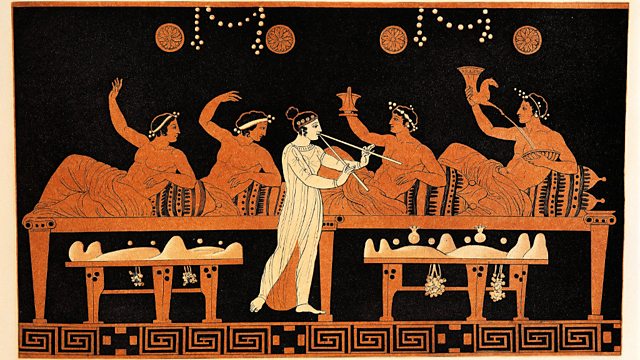
- Author: Plato
- Title: The Symposium
- Written: 380 BC…but the narrative is set in 416 BC
- Setting: Agathon’s house (playwright, poet)
- List of Challenges
- Monthly plan
- Classic Club Master list
What is The Symposium?
- This masterpiece of philosophy is
- …a dramatic dialogue set at a
- dinner party in ancient Athens.
- The guests agree not to drink because
- …they have over indulged on the previous night.
- The men discuss the nature of Love.
Why did Plato write The Symposium?
- Socrates was interested in the symposium
- as en educational form where erotic
- relationships took place.
- But the symposium was also place of great
- fun, merriment and entertainment.
Who was influenced by The Symposium?
- An Essay on the Beautiful.
- Ficino, M. translated the Platonic dialogues into latin in the Renaissance
- Freud, S. read and studied The Symposium
Most important metaphor?
- This topic is long and complicated.
- I added this link if you are interested.
- Ladder of Love (Wikipedia)
What is the significance of a drinking party?
- This was a ‘gentleman’s club’.
- There was a bawdy side but
- ..the most important aspect was
- the establishment of
- older male-younger male relationships.
- The older male (the lover)
- would guide the younger male (beloved)
- into Athenian social and political life
- in return for sexual favors.
Who are the important guests?
- Aristophanes – one of the greatest Athenian poets
- Phaerdus – associate of Socrates
- Eryximachus – doctor
- Aristodemus – narrator
- Aristophanes – poet, playwright
- Pausanias – lover of Agathon
- Agathon – tragic poet who is the host of the party
- Socrates – Athens’ most famous philosopher
- Alcibiades – important politician, rich, influential, womanizer
What are the major themes?
- Major: passionate love, desire, nature of knowledge
- Minor: virtue, happiness
What is characteristic of the speeches?
- In each of the speeches the nature of virtue is presented:
- Phaerdus – heroic deeds on the battlefield are important
- Agathon – poetic expertise is important
- Socrates – intellectual virtue is important
- Each speech is designed to praise Eros.
- Speeches explain how desires can be shaped
- to help us lead a better and happier life.
- Central is all the speeches is the concept of happiness.
How do speakers describe physical desire (Eros)?
Phaerdus (young student of rhetoric and poetry)
Romantic love (male/female and male/male) is praiseworthy.
If we’ve sacrificed our life for our beloved
…the gods will reward us after death.
This type of romantic love sounds admirable
…but there is also a lot of ‘dying young’!
Pausanias (legal expert)
The quality of erotic depends on the object of your love
…and the manner of your love.
He divides love into heavenly and common love.
Heavenly: lover (older) – beloved (younger) focuses on
the younger males spiritual development.
Common: physical love for either male or female
Eryximachus (doctor)
He divides erotic love in good and bad.
The doctor broadens erotic love to a cosmic force
..in medicine, music, climate, farming.
Good attraction of love = harmony and health
Bad attraction of love = disease and illness
Aristophanes (one of the greatest Athenian poets)
His speech is iconic.
This is a quirky almost absurd description how humans evolved.
Must read to appreciate Aristophanes imagination!
Love will make us find our other half.
Agathon (tragic poet who is the host of the party)
He gives a dazzling speech and receives the most applause.
The other speakers praise the benefits that eros (desire) brings
(heroic deeds on the battlefield…harmony and health)
But Agathon says…you can’t give another what you don’t have yourself!
Lovers are thus honorable, beautiful, wise and just.
Socrates (most famous Greek philosopher)
He tells a story that Diotima taught him!
She is a fictional priestess. She provides the
question and answer template possible
… that Socrates loves to use!
Diotima says what Socrates wants to say
…and Socrates is now the willing pupil.
Drunken Alcibiades…disrupts the party!
He give a moving passionate speech about the joy and
pain of loving Socrates.
Poor Alcibiades….he loves the right man in the wrong way.
I thought this was the most memorable speech! (shocker)
Conclusion:
- 5 speeches (Phaedrus, Eryximachus, Aristophanes, Pausanias, Agathon)
- 1 cross-questioning and speech about the truth of Love (Socrates)
- 1 dicey speech by Alcibiades
- …that is a ‘tell-all’ about his affair with ex-lover Socrates!
- After all the guest give their speeches
- …of course Socrates will be the last to speak.
- He dazzles and confuses me with his ‘typical questions”
- (conversation with priestess Diotima)
- This is the part of Socrates….I dread reading
- …he makes me think!
- You have to have at least a good 10 hrs sleep
- ..and be sharp of mind if you intend
- …to read anything involving Socrates!
- Reading time:
- It took me the entire day to read + notes (131 pages)
- I hope this review can help you and don’t hesitate
- …to try this #Classic for the die-hards!
#Classic: Richard II
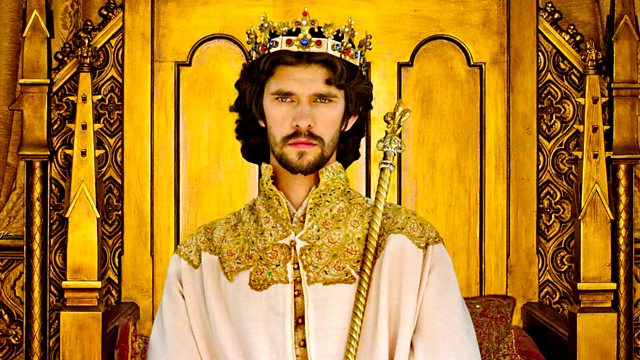
Ben Whishaw
- Author: W. Shakespeare
- Title: Richard II
- Written: 1593
- PLOT Wikipedia
- List of Challenges
- Monthly plan
- Classic Club Master list
- Trivia: BBC series The Hollow Crown
- Ben Whishaw was awarded BAFTA
- …..best actor prize 2012 as Richard II
Quickscan:
- Love triangles: None!
- Focus: the king is God’s appointee and above the law
- Family issue: Richard II steals cousin’s inheritance (Bolingbroke)
- Richard II: amateur politician, monarch treats England as a possession
- Henry Bolingbroke Duke of Herford: Machiavellian strategist
- Betrayal: Bolingbroke returns from banishment
- …instigates a coup, imprisonment and murder
- Pivotal scene: Act 4,1 – Richard removes his crown
- ” I give this heavy weight from off my head
- …And this unwieldy sceptre from my hand…”
- Minor characters with major role….move plot along:
- Duchess of Gloucester – devastated by loss her husband
- Duchess of York – exemplifies love for a child
- Queen Isabel – exemplifies devotion to husband Richard II
- Setting: England, Wales,
- …Westminster Hall (Act 4: deposition of Richard II)
- …Castles Flint, Pomfret, Berkeley and Tower of London
- Major theme: legal vs divine right to rule
- Minor theme: honor
- “My honor is my life; both grow in one
- Take honor from me; my life is done (Act 1)
- Symbol: hand mirror (Act 4,1)
- Richard speaks to images of himself in a mirror.
- ….then shatters the glass (his identity)
- Body count: 16
- Shakespeare mixes fact and fiction:
- Richard II wife, Queen Isabel, is an adult when she was widowed in the play.
- Reality: Isabel was a child bride (7 yr) and was widowed at 10 yrs old.
- Genre: history play used by Elizabethan monarch to legitimize power
- Shakespeare’s statement: Act 3,2
- “I had forgot myself; am I not king?
Awake, thou coward majesty! thou sleepest.”
Last thoughts:
- Once you know basic story line….
- this is a very readable play
- …and you learn about British history!
- #MustRead Classic
Watched DVD The Hollow Crown episode Richard II
- Act 1, 2: left out (short scene with John of Gaunt and Duchess of Gloucester)
- Act 3,1 beheading of traitors Bugsy and Greene (OMG)
- Act 3, 2 beautifully filmed…Richard II realizes….he’s doomed.
- Act 3,2 here where you find the title.
- “…for within the hollow crown that rounds the mortal temples of a king
- Keeps Death his court and there the antic sits…”
- Act 3,4 (short garden scene) the queen eavesdrops on the
- …gardener and hears her husband has abdicated.
- This scene is more powerful on film than in the play.
- Act 4, 1: so impressive!
- The film emphasizes the ‘Christ-like’ image of Richard II being
- brought to Westminster Hall in flowing
- …white robes and riding on a donkey!
- An emotional Richard II finally hands the “hollow crown’
- ….over to his cousin Bolingbroke. (future Henry IV)
- Reading the play first then
- …seeing it on film is absolutely thrilling.
- Act,5 5: …what a death scene Richard II.
- This DVD is truly worth you time and money!
Basic story line:
- Richard II is called upon to settle a dispute
- …between his cousin Henry Bolingbroke (future Henry IV)
- and Thomas Mowbray. (Act 1)
- Richard II calls for a duel but then halts it just before swords clash.
- Both duelers are banished from the realm. (Act 2)
- When Richard II banishes Bolingbroke and confiscates his property.
- …he begins a chain of events that bring about his own downfall.
- Richard II then leaves for wars against the rebels in Ireland.(Act 3)
- Bolingbroke returns to claim back his inheritance. (Act 3)
- Bolingbroke forces Richard II to abdicate. (Act 4)
- Bolingbroke takes Richard prisoner and lays claim to the throne. (Act 5)
- Henry Bolingbroke Duke of Herford becomes King Henry IV.
#Classic: Rebecca
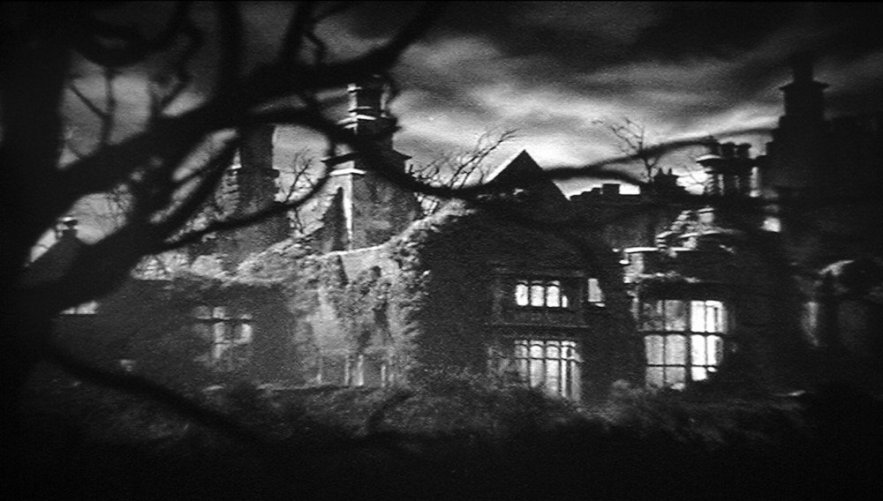
- Author: D. du Maurier
- Title: Rebecca
- Published: 1938
- List of Challenges
- Monthly plan
- Classic Club Master list
Quickscan:
- Lovers: Young girl met in Monte Carlo…(name?) and Max
- Family issue: reputation – Manderley must not fall into the hands of illegitimate heir
- Hook: Ch 1: mysterious, lyrical introduction about the estate of Manderley.
- Genre: Gothic romance…later a thriller
- Focus: heroine, her fears of physical danger real? or just paranoia?
- Pivotal plot twist: Max’ confession
- Villain: Mrs. Danvers manipulative, cold, ruthless (arsonist!)
- Heroine Mrs. de Winter: girl –>woman, child bride –> mature wife
- Minor character who plays major role: Col. Julyan
- Symbol: sea (Rebecca) deceptive beauty and destructive force
- Symbol: rhododendrons (Rebecca)
- “..stood 50 feet high twisted and entwined with bracken…” (pg 1)
- …”a lilac mated with a copper beech…”(heroine and Max) (pg 1)
- …so different one is a shrub…the other a tree.
- Motif: Feeling of a ghost in the house.
- Du Maurier’s statement: ” Last night I dreamt I went to Manderley again.” (iconic)
- Writing: very little information about heroine (no name!)
- Writing: frame story. begins at the end, moves into flashbacks
- Irony: We root for the criminal to escape punishment.
- Setting: Manderley, Cornish Coast
- Major themes: memory, reputation, appearance vs reality
- Max still in love with Rebecca?...reality: he hates her.
- Mrs. Danvers loyal servant?…reality: she terrorizes her mistress.
- Minor themes: isolation, entrapment (second wife)
- Body count: 1
Why is Rebecca similar to Othello?
Chapter 23:
- ” All married men with lovely wives are jealous, aren’t they?
- And some of ’em just can’t help playing Othello.”
Heroine and Desdemona:
- Innocence can be dangerous, even fatal.
- The young wife considers suicide.
- Desdemona is killed by Othello because
- ….she is innocent
- thinking she can be friendly with other men and still
- remain loyal and honorable in her marriage.
Heroine and Desdemona:
- Desdemona and Mrs. de Winter
- …were both young wives married to
- …men 20+ years older.
- Both women think
- …love is equivocal to submission.
Othello and Max:
- Othello and Max de Winter go to
- extremes to preserve their reputation
- …they both kill!
- Othello —> Desdamona is alleged of having an affair
- Max —> Rebecca tauted husband…expecting a child
- …pass it off as Max’ heir! (Manderley)
Othello and Max:
- Both men reject reason and clarity and rational thinking.
- They focus heavily on emotion and extreme passion.
- “Le crime passionnel”
Title:
- Book is titled Othello...but it is all about Iago!
- Book is titled Rebecca…but it is all about second wife, Mrs. de Winter!
Last thoughts:
- I had to ‘sleep on it’ to decide what I really thought of this book.
- I’m NOT following the herd on this one.
- The book was readable…in parts lyrical (ch 1)
- …but Du Maurier is not consistent.
- After two-thirds of the book
- …I finally got interested (Max’ confession).
- It is an average book that has
- …a cult following which keeps it on our radar.
- It started out so well.
- ..then it dropped below my endurance level.
- Dialogue was first person simple…
- and Mrs. Danvers was predictable spooky.
- This easy classic read will
- …always find its audience….just not me!
- I dare to be disliked while saying:
- the first bite was delicious….but
- it satisfies no craving.

#Classic: Othello
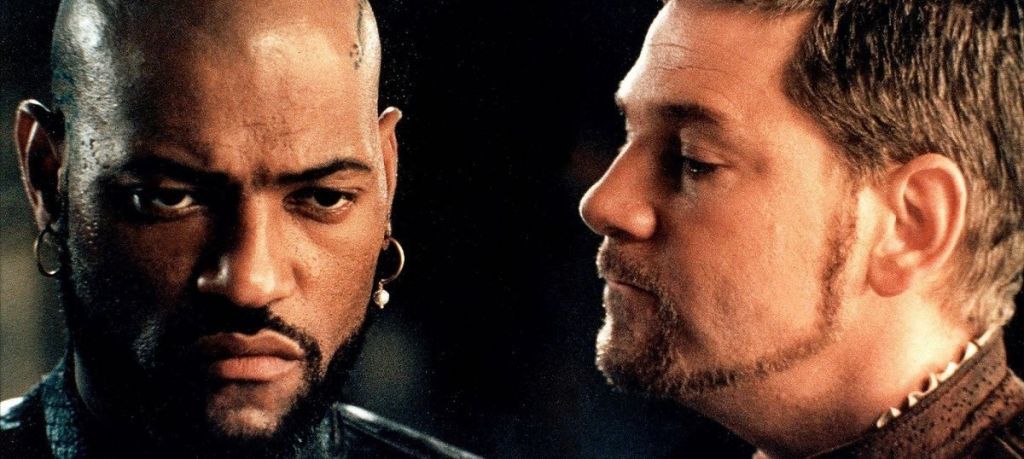
Lawrence Fishburne and Kenneth Branagh (1995)
- Author: W. Shakespeare
- Title: Othello
- Performed at court: 1603
- PLOT wikipedia page
- List of Challenges
- Monthly plan
- Classic Club Master list
Structure:
- Othello contains five acts with a total of 15 scenes
- If you go slowly…total reading time of three to four hours.
- I read the play Open Source Shakespeare website
- while I listened to the audio book (2 hr 36 min)
- It is an excellent recording of the
- November 2007 performance at the
- Donmar Warehouse Theatre in London.
- Chiwetel Ejiofor as the Moor Othello,
- Ewan McGregor as the scheming Iago
- and Kelly Reilly as the gentle Desdemona.
Quickscan:
- Love triangles: Othello – Desdemona – Roderigo
- Focus: race...Othello’s dark skin and humble origins (Moor)
- ..so important that Shakespeare put it in the title!
- Family issue: Desdemona marries an dark skinned ‘other’.
- ….her father is furious!
- Plot twists:…too many to list here…just read the play!
- Betrayal: Clever Iago deceives character and makes
- …them not trust a third party…Iago is never in the picture!
- Othello: main character, name is in the title of play but…
- ..the spotlight is on Iago 70% of the time!
- Fatal flaw Othello: jealousy
- Iago: spider, patiently making web that will ’emesh them all‘
- …character you love to hate!
- Desdemona: perfect Elizabethan wife (soft, passive, devoted
- Jealousy: “…green-eyed monster which doth mock the meat it feeds on.”
- Marriage: soliloquy by Othello before killing wife… (Act 5,2 1-24) powerful!
- Shakespeare’s statement: Who do you trust?
- Value of woman’s word, honor…Desdemona
- …vs that of a man “Honest, Iago”.
- Setting: Venice symbol law and order, rational thought and reason
- Setting: Cyprus symbol of chaos and disorder
- Major theme: appearance vs reality (lies vs truth)
- Minor themes: jealousy, racism, manipulation
- Body count: 4
- Quiz : only 2 WS’s plays feature …non-white characters
- ….Othello, but who is the other?
Conclusion: #MustRead Classic
#Classic: Midsummer Night’s Dream

- Author: W. Shakespeare
- Title: Midsummer Night’s Dream
- Performed at court: 1605
- List of Challenges
- Monthly plan
- Classic Club Master list
Quickscan:
- Love triangles:
- Demetrius and Lysander both want Hermia
- Demetrius and Lysander both want Helena (love potion working!)
- Plot twists:
- love potion, star-crossed lovers, unrequited love, mischievous fairies
- …magic and tangled web of love.
- Family issue: Egeus makes arranged marrige for Hermia with Demetrius
- Unrequited love: Helena’s love burns hot for Demetrius.
- Elopement: Hermia and Lysander flee to marry
- Forest: Lovers end up in the forest…now the FUN begins!
- Puck: “night wanderer”/narrator/mischief maker
- Queen of the fairies Titania : falls in love with an ‘ass’.
- Four lovers….live happily ever after.
- Act 5: Play-within-a-play: “Pyramus and Thisbe”
- The Mechanicals (amateur actors) provide comical ending
- Setting: Act 1-2 Athens — Act 3-4 enchanted forest — Act 5 Athens
Conclusion:
- Round characters:
- 4 lovers ( Hermia, Lysander, Helena, Demetrius) Puck, Bottom
- Flat characters:
- Theseus, Hippolyte, Egeus, Mechanicals, Oberon and Titania
- Major theme: male power and oppression of women
- ….in patriarchal society (women are property).
- Shakespeare:
- creates empathy for female characters and
- ….feels they need more voice!
- Minor theme: love is unpredictable!
- Best quote that sums up the play:
- “Lord, what fools these mortals be!”
- #Classic #MustRead
Last thoughts:
- BBC radio 3 – Good audio
- Note: Act 4,1
- ….some dialogue is placed in a different order!
#Classic: Dickens The Christmas Carol
- Author: Charles Dickens
- Genre: novella
- Title: The Christmas Carol
- Published: 1843
- Themes: memory, importance of family and friends , generosity
- Setting: London
Trivia:
- Charles Dickens was among the first members of The Ghost Club 1862 focusing on paranormal ghosts and haunting.
- Dickens was thought to have created the character of Ebenezer Scrooge after stumbling across the wealthy trader’s tombstone.He was shocked by the inscription, “Meanman” Dickens noted “To be remembered through eternity only for being mean seemed the greatest testament to a life wasted.”What Dickens failed to realise was that the tombstone actually read “Mealman” in recognition of the desceased successful career as a corn trader.
Introduction:
- Published in England in 1843, Charles Dickens’s A Christmas Carol had an immediate
- and lasting impact on the Christmas holiday.
- The novel’s lessons of charity and family spoke directly to a Victorian society.
Characterization: Ebenezer Scrooge:
- Dickens always uses names of characters to attract the readers imagination.
- Dickens uses Ebenezer Scrooge to remind us of things we ought not forget.
- The first name appears 2 x Marley’s ghost. 1 x Fezziwig 1 x on Scrooge’s gravestone.
- Ebenezer is anglicized version of the Hebrew name eben = stone and ezer = helper
- Literally = a stone that would offer assistance
- Metaphor: the gravestone with the name ‘Ebenezer’ offers Scrooge help.
- It reminds him (and the reader) how his life might end it he does not become a new man.
Characterization: Ebenezer Scrooge by his words: (pg 9)
- Words like are there no prisons, Union workhouses, The Treadmill and Poor Law show Scrooge’s opinion about helping the poor.
- He is not donating any money to help the poor!
- “Nothing”, replied Scrooge. You wish to be anonymous? I wish to be left alone.“
- Workhouse: public institution in which the destitute receive board and lodging
- The Treadmill: machine designed to power a mill with manual labor
- Poor Law: allowed the poor to be brought to workhouses
Characterization: by physical appearance Ebenezer Scrooge:
- Scrooge’s cold heart has affected his appearance.
- Nipped his pointed nose
- shrivelled his cheek
- stiffened his gait
- made his eyes red
- his thin lips blue
- his grating voice.
Ebenezer Scrooge:
- Scrooge represents a class of rich Victorians.
- They refuse to see the plight of the lower working class.
- They miss the warmth of family that the poor manage to maintain without money.
- Greed is “squeezing, wrenching, grasping, scraping, clutching” the life out of these Victorian snobs.
Foil:
- Foil is secondary character who is used as a comparison to show the difference with the main character.
- Fred, Scrooge’s nephew, embodies the joy of sharing Christmas
- “..a good time,a kind, forgiving, charitable time […]
- when men and women consent to open their shut up hearts freely…”. (pg 6)
- Scrooge reacts with bitter clearsightedness:
- “…every idiot who goes about with ‘Merry Christmas’s should be boiled with his own pudding,
- buried with a stake of holly through the heart.” (pg 6)
- Fred: face ruddy, all in a glow, eyes sparkled, – Scrooge: shrivelled cheek, red eyes, thin blue lips
Expression: to come down handsomely (pg 3)
- ‘they often “came down” handsomely, and Scrooge never did.’
- This is an ‘old fashioned’’ expression, but if you don’t understand it you will not see the reference to Scrooge.
- The weather gave more in rain and snow than Scrooge gave in money.
Expression: I’ll retire to Bedlam (pg 8)
- Bedlam was a popular name for St. Mary of Bethlehem hospital in London at the time of Dickens’s classic.
- It was a hospital for the mentally disturbed.
- Scrooge felt that it was more sane there than outside where people foolishly were celebrating Christmas.
Expression: St Dunstan (pg 12)
- Dunstan was a monk, archbishop of Canterbury and a Saint.
- In an old English folk rhyme he pulls the devil’s nose with red-hot tongs.
- Scrooge feels St. Dunstan should have nipped the devil’s nose with some of the cold wintery weather.
Imagery: vivd example of a mental picture is on page 3
- “Even the blindman’s dogs appeared to know him; and when they saw him coming on,
- would tug their owners into doorways and up courts and then would wag their tails
- as though they said ‘No eye at all is better than an evil eye, dark master.
- ’The dogs say that being blind is better than having an evil eye
- This refers to having some part of you that drives other people away.
- Unfortunately, Scrooge couldn’t care less what the dogs think of him.
Symbols:
- One piece of coal fire in counting-house: Scrooge’s miserly ways
- Knocker: symbolizes ‘welcome’, becomes ghostly head of Marley = beware those who enter.
Conclusion:
- Holiday….#MustRead!
- Merry Christmas….and to all a good night!
#Classic: Eusebius

- Author: Eusebius
- Title: Church History
- Published: 4th C AD
- List of Challenges 2018
- Monthly plan
- Non-Fiction Reading List
Who was Eusebius (260-340), Bishop of Caesarea?
- Eusebius lived and wrote in one of Rome’s provincial capitals,
- Caesarea (aka Sharon on the coastal plain of Israel.)
- He lived under direct Roman imperial power.
- He witnessed the persecution of Christians in Caesarea
- …under the governors Flavianus, Urbanus, and Firmilianus.
- Eusebius figures prominently in all
- …histories of late-ancient theology and philosophy
Why is Eusebius important?
- Eusebius worked at the library in Caesarea Palestina
- founded by the scholar Origen (ca. 185–ca. 254)
- He had access to numerous works of antiquity which have not survived.
Structure:
- Books 1-7 – the reign of Herod and birth of Jesus (book 1)
- then we read the events before Diocletian’s persecutions (14-311 AD)
- Books 8-9 – narration of recent persecutions (253-305 AD)
- Book 10 – reign of Emperor Constantine (306 – 312)
Genre: Greek-Roman history writing…with a whiff of an apology
Edition: Eusebius Penguin Classic ISBN 9780140445350
Theme: was celebration of the success of Christianity in the Roman world.
Significance of Eusebius: important source for historians, classicists and theologians
POV: Eusebius, a orthodox Christian
Intended audience: with a knowledge of Christian texts and accepts their sacred status
Title: History of the Church: Eusebius describes a group of bishops, martyrs,
and scholars. Eusebius excludes heretics as outsiders to the church.
Setting: Eusebius uses the Roman Empire as the borders of the Christian Church
Narrative: gives the readers a past about the church. It profiles of key individuals
that carry across several chapters Apostle John, Irenaeus, Origen, and Dionysius of Alexandria
Style: Eusebius has a roller-coaster reputation for both veracity and style.
What does Eusebius NOT do?
- He does not discuss of doctrine because he assumes reader knows it
- …and has a positive opinion of Christianity.
Strong point:
- After reading this book I feel I’m better prepared to
- participate in Jeopardy or University Challenge shows!
- I learned more about some heresies of the times.
- After reading this book it will be easier to read another classic (TBR)
- The Twelve Caesars by Suetonius!
Weak point:
- There are small items that consume reading time
- …skimming may be necessary!
- How Appolonius suffered Martyrdom at Rome
- …Roman senator who stuck to his beliefs.
- Blastus On Schism Who?
- Many lists of bishops of Jerusalem and Rome (skim)
- Date of Easter…lots of commotion!
- The Elegant Works of Irenæus
- …this is a whole other study…skim Wikipedia page Irenaeus!
- Heresy of Artemon
- …it seems Eusebius is the only historian who mentions this!.
Conclusion:
- There are just too many heretics,
- ..martyrs, saints, theologians to mention.
- This book is readable but I needed to extend my reading to
- Wikipedia and follow the footnotes closely
- …if I wanted to make heads or tails of Eusebius.
- This is a classic…I can say I read it.
- But…I’m not sure if it will be on many reading lists!
- This is definitely a book
- …for a dedicated reader of the classics!
Last thoughts:
- Glossary….This is very handy!
- Excellent “Who’s Who in Eusebius” + Latin terms (pg 339-427)
- Quick scan of emperors of Rome and
- bishops in Antioch – Jerusalem – Alexandria (pg 428-434)
- Tip: I did some extra ‘skimming’ of the Wikepedia page
- …of the emperor mentioned
- This gave me a bit more historical background.
- It made the reading of Eusebius much easier knowing more
- about the politics/rulers.
- #Classic or the die hards!
#Classic Satires Horace

Horace, Virgil en Varius by Charles François Jalabert
- Author: Horace
- Title: Satires I and Satires II (collection of 18 satirical poems)
- Published: 35 BC (60 pg)
- Reading time: 3 hrs
- List Reading Challenges 2018
- Monthly planning
- Classic Club Master list
Introduction:
- Hoace’s satires…
- These are very short poems….easy on the eye
- …and they enrich the mind!
Quickscan:
- Horace was a Roman poet of the 1st C B.C.
- Caesar Augustus knew with only a powerful army he
- …could not hold power.
- He needed poets to
- ….win the ‘hearts and minds’ of the people.
- Like Virgil, Horace proclaims the glory of Caesar Augustus.
Satires:
- Horace was also a straight talking man
- …trying to teach some life lessons:
- keep your head down
- don’t think the grass is greener on the other side
- avoid stress
- the advantages of a frugal life and plain living (Satire 2.2)
- don’t dabble in politics…and become a prisoner of ambition
- nothing compares with the pleasure of friendship
- it makes no difference what kind of parent you had
- ….if only you are a gentleman (Horace was a freedman’s (slave) son)
- … when an annoying person won’t leave despite hints! (Satire 1.9…funny!)
- Horace writes many…stories about eating an drinking!
- Moral? only way to a man’s heart is thru his stomach!
- Horace was articulate and discrete.
- His strong point was knowing when ‘to shut up’!
- Satires I (pg 3-32) Satires II (pg 33-63)
- are filled with fables, anecdotes and some dicey moments.
What is Horatian satire?
- Satire uses humor, exaggeration,
- ridicule and criticism to create change in others.
- Horatian satire is less harsh and takes a
- comical view at human injustices.
- Horatian satire is not negative.
- Pride and Prejudice is an example
- …of a novel showing Horatian satire.
- Jane Austen makes fun of
- various characters in the story.
- Some characters are simply
- …interested in the marriage
- …but not the relationship.
- Here are a few notes….
Satire 1.1 – Lesson learned: No man lives satisfied with his own
- What is the point piling ($$) up more than you need?
- If you get sick…is there someone who will care for you?
- No one wishes for your recovery
- …they’re waiting for your fortune!
- So let’s put an end to the race of money.
- Greed makes no one satisfied.
- Lead a happy live and…when his time is up
- quit life like …..a guest who has dined well.
Satire 1.2 – Horace wagging finger: avoid vices…especially women!
- Keep your hands off married women
- they are more misery than any real satisfaction
- Don’t damage you reputation.
Satire 1.3 – A wise man…. does not criticize faults of others…no one is free from faults!
- Description of Sardinian Tigellius singer and friend of Julius Caesar faults.
- Description of a lover blind to his girlfriend’s unattractive defects.
- Moral: beam in one’s eye – ne should not criticize the faults of someone else before correcting the faults within oneself.
- “…examine your own faults with eyes covered in ointment
- …in the case of friends’ faults your eyesight (is) sharper than an eagle’s…”
- Moral: when dealing with a friend do not show disgust of his defects …this is tactless.
- Turn defects upside down: penny-pinching?…no just careful with money!
- This attitude binds friends together and keeps their friendship.
Favorite quote:
- “If I am telling lies may my head
- …be spattered with white crow’s droppings…” (Satire 1.8)
- #Jick
Conclusion:
- This was a quick read …3 hrs.
- Horace gives us many wise lessons
- …be it at times very wordy and misogynistic!
- Core message:
- live life with integrity
- live life free from guilt
- have the love of friends.
- #MustRead Classic

 NancyElin.blog