
Classic: Dutch writer W.F. Hermans

- Author: W.F. Hermans
- Title: Nooit Meer Slapen
- Published: 1966
- Language: Dutch ( available in translation: Beyond Sleep)
- #20BooksOfAutumn
- #ccbookreviews
- Trivia: W.F. Hermans is considered one of
- ‘The Big Three’ 20th C writers in Dutch literature.
- You can read more about W.F. Hermans HERE
- List Reading Challenges 2018
- Monthly planning
- Classic Club Master list
Conclusion:
- Dutch is my second language.
- It was time I started 20 books by Dutch authors
- …considered 20th C must reads.
- W.F. Hermans is the first one on the list.
- Ch 1-12 were very slow...but if you keep reading the
- book picks up steam ch 27 until the end.
- Main character: geologist Alfred is obsessed with ‘discovering something new’.
- He wants to prove to his deceased father he has not wasted his life.
- Hermans uses the philosophy of Wittgenstein (3 references) and the
- Symbol: a compass to help Alfred find his direction
- …physically (during a failed expedition on a Norwegian glacier)
- …and spiritually (start a new life.)
- It is a good book….but not great.
- The war novel The Dark Room of Damocles
- is the author’s ‘chef’ d’oeuvre
- W.F. Hermans was member of the Dutch resistance WW II.
Classic: Pensées
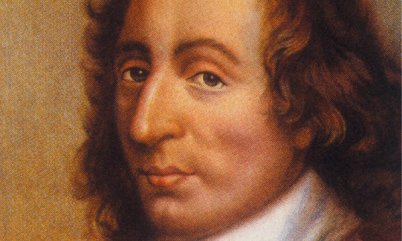
- Author: Blaise Pascal
- Title: Pensées
- Published: 1670 (incomplete at death)
- Language: French
- Edition: Le Livre de Poche ISBN 978225316960
- List Reading Challenges 2018
- Monthly planning
- Classic Club Master list
Conclusion:
- Difficult, difficult..very difficult to read in French!
- I realized the edition I had was more than just Pensées.
- Of the 736 pages I read the first part (pg 5-257)
- …and that was enough!
- But, no matter how difficult this book was
- …I never gave up.
- I knew there had to be some ‘gems’
- of wisdom waiting for me.
- Pascal was a genius in his time.
- He excelled in science and mathematics
- …before his turn to religion.
- Pensées captures his insights in elegant
- pithy (difficult) phrases.
- His words at times went over my head (existential)
- …but at other times his words went straight to my heart.
- I will end with one of his most famous quotes:
- “Le coeur a ses raisons que la raison ne connaît point”
- The heart has its reasons which reason does not know.
Last thoughts:
- Yes, I had thoughts….about Pascal’s thoughts!
- Here are a few things I jotted down while reading.
- This is a #Classic…and I am glad I can
- …say I have a general idea what it is about!
Humor: (pg 51)
The causes and effects of love:
… if Cleopatra’s nose had been shorter
….it would have changed the face of the world!
Faith: …beautifully said! (pg 55)
Faith is in our heart and
makes us NOT say I know….but I believe.
Literary devices:
Chiasmus: (pg 66)
The sentence is grammatically the same, even when it is reversed!
Peu de chose nous console parce que
Peu de chose nous afflige
A few things console us because
A few things distress us
Confession:
I skipped a few long discussions
about imagination vs reason….it was just too long
too complicated. (pg 66-73) Forgive me…
pyrrhonism – I skipped pg 113 – 119… Forgive me…
disproportion of man – I skipped pg 161 – 171… Forgive me…
These are not ‘short thoughts’ (pensées)…they are small essays!
that are difficult in English…not to mention in French.
Style Pascalienne:
Pascal uses (…what I call) 1-2-3 — 3-2-1 logic!
The words are reversed to give another meaning.
This ‘redoubles’ its complexity!
I have to read these fragments very slowly and let the thought sink in!
Here is an example:
Il soit force (1) d’obéir (2) à la justice. (3)
Il soit juste (3) d’obéir (2) à la force. (1)
It is forced to obey justice
…it is just to obey force. (pg 93)
Amusement (pg 121)
Men attempt to forget their misery
rather than find true happiness.
Only amusement permits him to flee
…his tragic existence.
Religion: (pg 151)
- There are a few true Christians.
There are those who believe - …but through superstition.
There are those who do not believe - …through the lack of moral restraint.
Few are in between
Religion: (pg 154)
Faith says what the senses cannot say
….but
not the contrary of what they (senses) say.
Faith is well above…and not against.
Thought: (Pensée) (pg171)
Our dignity is contained in the mind (pensée)
It is there that we pick ourselves up again….
Try to think.
#RIPXIII Classic: E.A. Poe “The Raven”

Author: Edgar Allan Poe
Genre: poem
Title: The Raven
Published: (1845)
Table of Contents: 18 six-line stanzas (108 lines)
Published by Penguin Books
Theme: remembrance vs forgetting
Just LISTEN to the poem…..goosebumps!
Introduction:
“The Raven” is a narrative poem by the American writer and poet Edgar Allan Poe.
It was published for the first time on January 29, 1845, in the New York Evening Mirror
Noted for its musicality, stylized language and supernatural atmosphere,
This is one of Poe’s best known and most reviewed poems.
I hope to find something interesting to mention about this classic!
Story:
The poem describes the tale of a student, desolated by the death of his beloved,
He is visitied on a stormy `bleak December´ night by an ominous bird´.
It traces the student´s slow descent into madness.
Strong point: Alliteration: is the repetition of the initial sounds of adjacent words.
While I nodded nearly napping, suddenly there came a tapping
Doubting, dreaming dreams no mortals ever dared to dream before
Followed fast and followed faster….
On this home by horror haunted…
And the Raven, never flitting, still is sitting, still is sitting.
Strong point: Rhythm
Repetition of words to give the poem a ‘throbbing’ rhythm….like a heart
“rapping, rapping”- tell me, tell me – “still is sitting, still is sitting”
Strong point: Rhyme
The structure of the poem is based on: A-B-C-B-B-B
Every 2nd – 4th lines rhyme – the 4th – 5th and 6th lines rhyme
- Line 1: Once upon a midnight dreary, while I pondered, weak and weary, A
- Line 2: Over many a quaint and curious volume of forgotten lore – B
- Line 3: While I nodded, nearly napping, suddenly there came a tapping, C
- Line 4: As of some one gently rapping, rapping at my chamber door – B
- Line 5:”‘Tis some visitor,” I muttered, “tapping at my chamber door – B
- Line 6: Only this and nothing more.” B
Strong point: meter with surprises!
In this poem Poe has used ‘meter’ in 3 different ways:
lines 1st – 3rd lines of evey stanza have 16 syllables
lines 2nd – 4th – 5th of every stanza have 15 syllables
line 6 of every stanza has only 7 syllables
Symbol: The Raven
There are some very subtle hidden meanings in the poem about the raven.
Finding these words is the most difficult part of reading poetry.
Line 38-40: The Raven enters the room. He is ‘stately’ and has a ‘mien of lord or lady’ – this suggests an image of a king.
Line 45: The Raven is not ‘craven’ ( cowardly).
The allusion to ‘crest be shorn and shaven’ refers to medieval tradition of head shaving of a coward.
Line 48: The Raven ‘quoth the Raven, Nevermore’ –
The student ‘marvelled’ (line 49) to hear the bird speak.
After 10 x repetitions of this utterance the narrator slides into a maddend, frenzied state.
Line 85: The narrator call the raven a ‘prophet’ believing he foretells the future.
Line 105 – 108: Final image of the bird is a ‘demon that is dreaming’
casting a ‘shadow that lies floating on the floor’.
Narrator is terrified
Symbol: bust of Pallas (line 42 and 105): –
symbol of wisdom meant to imply the narrator is a student
Symbol: Night’s Plutonian shore (line 48 and 98) –
allusion to the Roman god of the underworld
Symbol: nepenthe ( line 83-84)
allusion to a mythological drug that you might take to forget your grief and sadness.
Symbol: chamber door is repeated 11x
This refers to room and the chamber of the heart ( feelings)
Conclusion:
This is a poem for people who don’t like poetry!
It is one of my favorites and was FUN to ready and analyse.
The student “shrieked’ ‘take thy beak from out of my heart’.
But the bird ‘still is sitting, still is sitting’.
The beak keeps pecking at the heart repeating ‘Nevermore’
Theme: those we have loved and who become lost to us…
…can never be forgotten.
It may be painful to remember them….but it is more painful to give them up.
Last thoughts: Depressing stories can be uplifting.
It all depends on the writing skills…
Edgar Allan Poe is a master of words and chilling images.
#Classic: Patrick Kavanagh Irish poet

P. Kavanagh
(photo) https://www.davidcostellophotography.com/
- This lifelike statue of him seated on a bench
- on the bank or the Grand Canal in Dublin.
- Poem: The Bluebells are Withered Now under the Beech Trees
- Author: Patrick Kavanagh (Irish) 1904-1967
- Published: 1945
- List Challenges 2018
- Monthly planning
- Reading Ireland Month (…poem was left over from March)
- Masterpost 746 Books (Cathy)
- #readireland18
- #begorrathon18
Analysis:
- This is a poem of greater emotional complexity
- The tone is sombre even meditative.
- The poem attempts to renew in the face of experience
- light-hearted attitude that has disappeared.
- The poet Kavanagh lived in a boarding house on
- Raglan Road between autumn 1944 – October 1945.
- The poem records his unrequited romance with Hilda Moriarty,
- a twenty-two years old medical student at University College Dublin.
- Hilda was acclaimed as one of the most beautiful women in the city.
- Kavanagh was infatuated with her and often stalked her.
- From early 1945 she was desperately trying to escape his obsessive attention.

- One day in May 1945 Patrick and Hilda arrived at the railway station in Drumree
- …a couple of miles from Dunsany castle.
- Every May, serried ranks of bluebells nod their heads.
- That first image of walking through the bluebells
- made a profound impression on the poet.
The bluebells are withered now under the beech trees
The bluebells are withered now under the beech trees
And I am there – the ghost of myself – alone
Trying to remember a truth I once had known
Poking among the weeds on bare knees
Praying, praying poetic incantation
To call back life to that once-green plantation.
A score of grey ungrowthy stumps stand up
Like an old graveyard in my mind: Dingle, Cooleen
A shadowed corner of Saint Stephen’s Green
A noisy corner of the Country Shop
All chilly thoughts that bring no exaltation
No green leaf love to the beautiful plantation.
I dreamt it in my heart, it was not real
I should have known that love is but a season
Like spring. The flowers fade. Reason
Knows it cannot find its old ideal
And yet her breath still blows some undulation
Of leaf and flower to charm my dream plantation.
Last thoughts:
- I am very impressed with Kavanagh’s poetry.
- He did not have the posh education at Blackrock College in Dublin
- as did his friend Flann O’ Brian.
- But still Kavanagh produced some wonderful
- works based on his rural backround and
- …determination to educate himself.

Classic: Mary Wollstonecraft
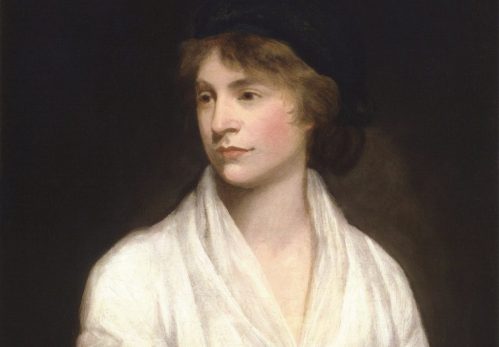
- Author: M. Wollstonecraft (1759-1797)
- Title: A Vindication of the Rights of Women
- Published: 1792
- Genre: philosophy
- List Challenges 2018
- Monthly planning
- Classic Club Master list
Feedback for Cleo Classical Carousel
Mary never had a formal education and she taught herself by
reading and working for a Scottish publication ‘Analytical Review’.
She wrote in her ‘peak’ 30 reviews per issue. Now that is a lot of reading…thinking….and writing. I guess she did like ‘namedropping’ .
Mary thought education/understanding (SENSE) was the touchstone…the standard by which judgement was made….and not as was the case by many women
being influenced by a gush of emotion! (SENSIBILITY)
This book needs a good eye to skim the ‘padding’ and get the Wollstonecraft’s important message. chapters 1-5 are the longest….then is it much easier.
One of my favorite chapters was 11 ‘Duty of Parents ( easy read and very short)
“The parent forms the heart and enlarges the
understanding of his child, has given the discharge of a duty.”
Introduction:
- A Vindication of the Rights of Women
- …is a document of 85.000 words (13 chapters, 222 pages)
- Wollstonecraft is an unusually repetitive writer
- ….and a lover of long quotes from Rousseau!
- This work could be condensed by 90 %
- …with no great amount of her sense lost.
Who was Mary Wollstonecraft?
- An in depth portrait of the author can be found here
- A self-taught London teacher, Mary
- ….and her sister Eliza became convinced
- that the girls they attempted to enlighten
- were already enslaved by a social training
- that subordinated them to men
- At the heart of Vindication of the Rights of Woman
- are the twin virtues of freedom of thought and devotion to family.
What is The Vindications in a nut shell?
- The document is a response to the many
- ‘Conduct Manuals’ circulating at the time.
- Jean-Jacques Rousseau: Emilius; Or, An Essay On Education. (1763)
- Dr. James Fordyce: Sermons To Young Women (1766)
- Dr. John Gregory: A Father’s Legacy To His Daughters (1774)
- Baroness De Stael: Corinne (1807)
- Mrs. Piozzi: Letters To And From The Late Samuel Johnson LL.D. (1788)
- Madame De Genlis: Adelaide And Theodore (1783)
- Hester Chapone: Letters On The Improvement Of The Mind (1773)
- Catherine Macaulay: Letters On Education (1790)
Reading strategy: 16 hours total reading
- Read the chapters preferably early in the day
- …with some strong coffee
- …when your mind is fresh.
- Wollstonecraft defends women
- against anti-feminist poets, clergymen,
- physicians and philosophers!
- She had read them all!
- Ch 1-3 – I took it slowly…just one chapter a day. = 5 hours
- Ch 4 – 5 = 5 hr
- Ch 6-7-8-9 took only 2,5 hours to read.
- I’m learning to skim..many extra paragraphs that
- are written to illustrate a single point
- example: ch 8: men becoming soldiers and statesmen
- or women who need representative is government.
- MW loves to elaborate on a proverbs
- …and more episodical observations.
- Ch 10-11-12-13 = 3,5 hr
Trivia:
- Novels, music, poetry, and gallantry,
- all tend to make women the creatures of sensation.
- Wollstonecraft: rejected the sentimental novel’s depiction of women
- silly shallow creature of emotion.
- Jane Austen: never mentioned Wollstonecraft by name
- …but several of her novels contain positive
- allusions to Wollstonecraft’s work….especially Sense and Sensibllity!
- Wollstonecraft:
- “ …reason is absolutely necessary to enable a woman to perform any duty properly,
- .. and I must again repeat, that sensibility is not reason!”
Conclusion:
- This was a great read….it really was!
- Warning: You just cannot rush the reading…it is too dense!
- I had to get used Wollstonecraft’s style
- She uses the ‘ask questions style.
- chapter 5 – 75 questions
- chapter 12 – (31x)
- chapter 13 – (29x)
- You have been warned!
- After reading 8 chapters
- ….I realized Wollstonecraft’s book
- is filled with self-indulgent verbiage.
- It is exasperating to read at times.
- Now I’ve decided to read the chapter
- selecting the CORE idea from each paragraph.
- I’m letting the rants against Rousseau flits by.
- Redundant questions per chapter
- …are getting only a glance from me.
- I get it….Wollstonecraft and Rousseau
- ….will never see eye to eye!
- I’ve finally finished A Vindication of the Rights of Women
- …and feel sad.
- I only wish I was given this piece of literature as a
- sophomore in high-school.
- It would have enlightened me more than the
- Catholic nuns who were part of the
- “pestiferous purple (pg 83)…which renders the
- progress of civilization a curse, and warps the understanding.”
- Wollstonecraft was well-read..for a woman of her times!
- Here are a few on the items she mentions:
- Milton
- Lord Francis Bacon
- Shakespeare: Hamlet
- Thomas Day: British author
- Job 38:11
- Matthew 25: 14-30 the parable of the five talents
- Philippians 4:7
- Mr David Hume
- S. Richardson (Clarissa)
- King Louis XIV
- Dr. Adam Smith: Scottish philosopher (Theory of Moral Sentiments, 1759)
- Gottfried von Leibniz (1646-1716) German philosopher
- Sir Edwin Sandys, English politician
- Lord Chesterfield’s Letters: (on education)
- Dryden
- Vicesimus Knox (1752-1821) essayist, headmaster, Anglican priest
- Lucretia: ancient Roman noblewoman
- Cerberus
- Dr. S. Johnson
- John Locke
- Jonathan Swift
- Charles James Fox, politician (1749-1806)
- Alexander Pope: 1743, Epistle to a Lady
- Cato
- WHEW!!
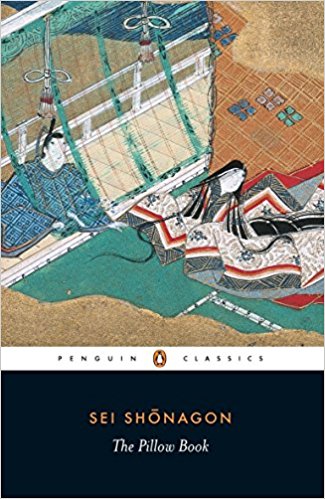
Classic: The Pillow Book
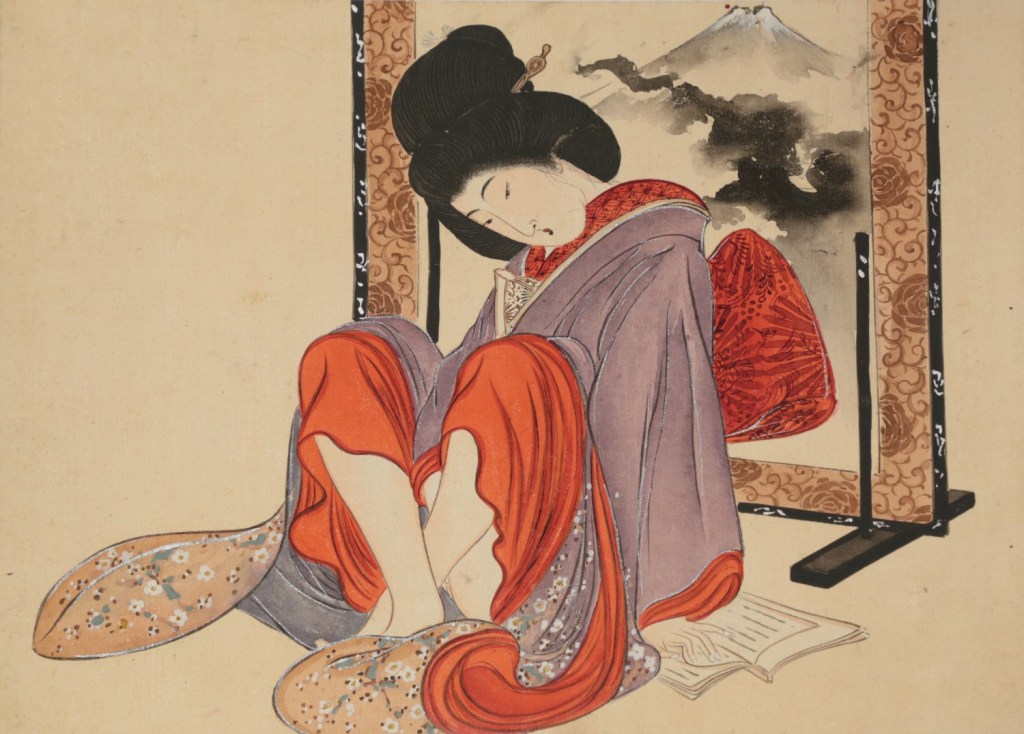
- Author: Sei Shonagon
- Title: The Pillow Book
- Written: 10th C Japan
- Published: Penguin Classic (2006) 400 pages
- List Challenges 2018
- Monthly planning
- Classic Club Master list
Notes:
- The tone and content of these ’thoughts’ seem very modern in outlook,
- full of interesting comments about pleasures
- (visiting, dinners, getting ready for important people)
- humour, historical commentary and analysis of
- processions, festivals and events, descriptions of nature, and
- compassion for misfortunes heard about other people.
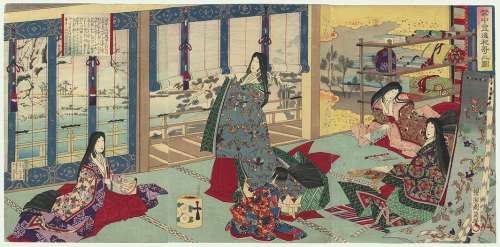
- It’s a unique and personal diary of a 10th C lady-in-waiting in Heian Japan.
- Sei Shonagon writes for her personal
- amusement about things that
- delight and also disgust her!
Who is Sei Shonagon?
- Sei Shonagon herself is a fascinating character.
- She is obviously educated, but at times sounds silly and petty.
- Her loyalty to her Empress is very touching.
- At the same time she is cruel and cold towards “ordinary” people.
- She seems to pay too much attention to the court dress and elegant verses.
- Being at court is the highest honour and achievement in life for her.
I especially liked pg 148:
Things that make the heart lurch with anxiety…
watching a horse race…
the voice of a secret lover in an unexpected place…
when a parent looks out of sorts…
when someone you detests arrives for a visit…!
….pg 150
Repulsive things:
back of a piece of sewing…
hairless baby mice tumbled out of a nest…
the inside of a cat’s ear…rather dirty place in darkness…
…pg 204
Things that just keep passing by:
A boat with its sail up…
People’s age…
Spring. Summer. Autumn. Winter
…pg 204
Things that no one notices:
The inauspicious days…
The ageing of people’s mothers…
Conclusion:
- While reading …the song
- “These are a few of my favorite things” from
- The Sound of Music keeps…popping into my head.
- That is what Sei writes about….her favorite things,
- especially how people are dressed in 10th C imperial court.
- There is the emphasis on the art of communicating
- one’s feelings by writing a poem.
- It was considered a valuable art.
- Lovers, queens, a lady-in-waiting all revel in poetic thoughts.
- Sei also…mentions painfully embarrassing things
- disconcerting, dispiriting and horribly startling things.
- Some of her complaints and delights are very 21st C!
- People never change!
Last thoughts:
- It’s fun to visit the members page of The Classics Club
- …to see what other people are reading
- I was inspired by Karla Strand’s Classic Club List
- to read The Pillow Book.
- Karla has selected some impressive examples
- …of classic women’s writing!
- #TakeALook at the ‘Members Page’
- …you can discover some great book!
Classic: The Life of Johnson
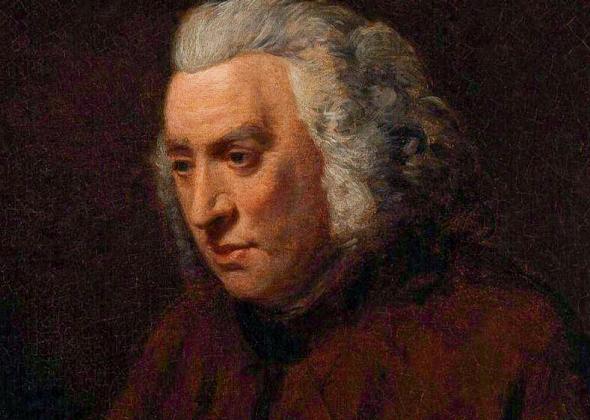
- Author: J. Boswell
- Title: The Life of Johnson
- Published: 1791
- Audio book: 51 hr
- Narrator: David Timson
- Kindle book: Penguin Classic, 1134 pages, published 2008
- List Challenges 2018
- Monthly planning
- Classic Club Master list
- Trivia: I used the combination audio and ebook.
Samuel Johnson:
Johnson was a national icon who
epitomised the idea of English character and language
He loved wit more than wine and
men of genius more than sycophants!
Masterpiece: Johnson’s Dictionary is his masterpiece.
He once said: “Dictionaries are like watches.
The worst is better than none, and
the best cannot be expected to go quite true.”
Masterpiece: In 1755 Johnson struggled and ultimate triumphed to ‘fix’ the language
This proved to be one of the English language’s most significant cultural monuments
Johnson sometimes introduced his own humorous opinions:
Lexicographer: a writer of dictionaries, a harmless drudge.
STYLE: a union of force, vivacity and insight
TONE: common sense and controlled ridicule
POLITICS: – unquestioning belief in monarchy and violent distrust of its critics
CONVERSATION: Johnson considered conversation a contest “…I do not mean the victor must have the better argument…but is superiority of parts and knowledge must appear.”
Who was the conversationalist who could best challenge Johnson? Johnson admits that is is always Edmund Burke. Johnson considered him an extraordinary man. “His stream of mind is perpetual.”
PAMPHLET: Samuel Johnson wrote a famous political pamphlet for the North ministry.
Taxation, no Tyranny in reference to fellow-subjects in America.
It was thought wisest to omit some bitter taunts against the colonists .
OPINION: Johnson favors neither conciliation or separation of America
but a return to patterns of imperial discipline!
WIT: I enjoyed Johnson’s good humored wit.
For example he teases Boswell with the differences between England and Scotland!
Johnson gives you a forcible hug and shakes laughter out of you whether you will or not.
WIT vs WRITERS: Johnson is a man with humor at the tip of his tongue
He has a witty comeback to follow every statement.
His spoken words are not always found in favour regarding his opinions.
Johnson did not have a high regard for two eminent writers:
Henry Fielding and Samuel Richardson!
Historians: “…the verbiage of Robertson or the foppery of Sir John Dalrymple.” OUCH!
But Johnson praised…John Bunyan. “His Pilgrim’s Progress has great merit…”
The Netherlands: I was stopped in my ‘morning walk tracks’ when I heard that Johnson was interested in book written in the dialect of my province Friesland The Netherlands! . Boswell even mentioned the University of Vranyker ( Franeker, The Netherlands). It was a seat of great learning 1585-1811. I was married in Franker and lived there for 7 years!
What do Samuel Johnson and Nancy have in common?
We both learned the low Dutch language!
Dutch has been a civilized language for
…more than a thousand years and has a rich literature.
Dutch is the third Germanic language after English and German.
Perhaps I should read the classic Thomas à Kempis
…in Dutch as Samuel Johnson did! (pg 835)
RUNNING JOKE: –> Samuel Johnson vs Mrs. James Boswell
Johnson continues to end his letters to James Boswell with a special salutation to Boswell’s wife:
1775: My compliments to Mrs. Boswell, who does not love me.
1775: I know that she does not love me; but I intend to press in wishing her well till I get the better of her!”
1776: I hope my irreconcilable enemy, Mrs. Boswell, is well. Desire her not to transmit her malevolence to the young people.” (Boswell’s children)
1776: “If Mrs. Boswell would be friends with me, we might now shut the temple of Janus.” (temple in Rome that opened in time of war….closed in time of peace.)
WHAT IS THIS ALL ABOUT?
This alludes to Johnson’s old feudal principle of preferring male to female succession!
Johnson has great fun ‘teasing’ Mrs Boswell in this manner.
Reconciled:
1777: Boswell writes to Johnson that his wife begs he accept her compliments….and will send him some home-made orange marmalade. Just read Johnson’s reply….he still is teasing her!
“Tell Mrs. Boswell I shall taste her marmalade cautiously at first. “Timeo Danaos et dona ferentes.” (Virgil, Aeneid ) “I fear the Greeks, even when they bring gifts.”
ENEMIES: Not everyone was enamoured by Samuel Johnson. After a scathing review of Soame Jenyns’ essay (1756) the writer clearly believes revenge is a dish best served cold.
He wrote this sarcastic epitaph for the deceased Samuel Johnson:
Here lies poor Johnson. Reader, have a care,
Tread lightly, lest you rouse a sleeping bear;
Religious, moral, generous, and humane
He was—but self-sufficient, rude, and vain;
Ill-bred and over-bearing in dispute,
A scholar and a Christian—yet a brute.
CONCLUSION:
READING PLAN: I had difficulty at the beginning of the book. I had to adjust to Boswell’s style.
He relates facts and leaves little room for analysis. During the conversations with Johnson many illustrious writers, historians, (Hailes) poets, (Dryer) publishers (Dodsley), literary critic (John Dennis) and even an actor (Garrick) and Scottish physician/writer (Cheyne)
are mentioned. I checked names on Wikipedia. Only this way could I enjoy the jibes Johnson made about many people.
I found once I reached page 554 (Kindle edition) with 50% still to read….I finally felt the pulse of the book. Johnson was unleashing his ‘bon mots’ that were a product of his quick imagination and his eloquence and total mastery of the English language.
BE WARNED: As in all books of biography that are very long
your eyes will glaze over at a certain point. Mine did.
I choose to skim over long letters about non-literary issues and various discussions about lengthy judicial cases or the problems of getting books published. My interest was in Johnson’s comments with Boswell about books and writers and their correspondence between Johnson and Boswell.
LAST THOUGHTS: Great quote: wine
Johnson’s cup runneth over with wise observations.
Boswell: You said once to me not to drink wine was a deduction of life.
Johnson: …it is a diminution of pleasure to be sure but not of happiness. There is more happiness in being rational.
R.I.P. Readers Imbibing Peril
The R.eaders I.mbibing P.eril challenge, otherwise known as R.I.P. takes place every September 1st through October 31st.
The purpose of the R.I.P. challenge is to enjoy books that could be classified as Mystery, Suspense, Thriller, Dark Fantasy, Gothic, Horror, or Supernatural.
There are multiple levels of participation (Perils):
- Peril the First – Read four books, any length, that fit the definition of R.I.P. literature.
- Peril the Second – Read two books of any length.
- Peril the Third – This Peril involves reading one book.
- Peril of the Short Story – You can read short stories any time during the challenge.
- Peril on the Screen – This is for those of us who like to watch suitably scary, eerie, mysterious, gothic fare during this time of year. It may be something on the small screen or large.
- Peril of the Review – Submit a short review of any book you read.
This year I will do
- Peril the First
- Peril of the Short Story
- Peril of the Review if I find some time.
- All my selections are from my TBR that I am trying desperately to reduce.
- These are all potential reads….it all depends on my ‘spooky’ mood.
- Hashtag: #RIPXIII
My list:
- Hawthorne – Henry James – READ (essay)
- Frankenstein – M. Shelley – READ (Gothic novel)
- Dark Entries – R. Aickman – READ (short stories)
- The Raven – E. A. Poe – READ (poem)
- Aletheia – J.S. Breukelaar – READ (horror)

 NancyElin.blog