
Power Without Glory
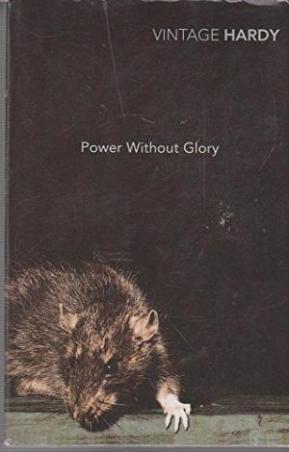
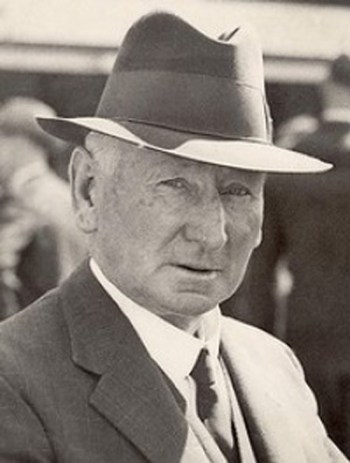
- Author: F. Hardy (1917-1994)
- Title: Power Without Glory (672 pages)
- Published: 1950
- List of Challenges 2017
- Lists of Awards
Conclusion:
- Frank Hardy wanted to expose poverty and
- the extent of political corruption in various aspects of Australian life.
- Hardy also wanted to make the case for the Communist Party.
- A novel aimed at a popular readership
- …about prominent figures in Australian politics
- and Catholic Church could do real damage.
- Weak point: Explosive at the time of publication (1950)
- ….the book loses some punch if you are not familiar
- ….with Australian politics 1920 – 1950.
- Archbishop Malone = Archbishop of Melbourne Daniel Mannix
- John West = John Wren
- John Wren was not a gangster, but a big city boss who
- …excelled at machine politics, and even funded the Catholic Church.
- Title: reference pg 390:
- “He (Wren) did not want glory — he wanted power without glory.”
- The title of Hardy’s novel is
- ….derived from the the end of the Lord’s Prayer (Pater Noster).
- “…For thine is the kingdom, and the power and the glory, for ever.”
- I had the luck having read the biography about Mannix by
- Brenda Niall … so the puzzle pieces all fell into place!
- Hardy does embellish the novel with claims of adultery.
- In 1951 Hardy was slapped with a libal suit.
- He had implied that John Wren’s wife Ellen had an affair by having her
- …“character”, Nellie West, bear another man’s child.
- Frank Hardy was found not guilty.
- Last thoughts:
- Coined as the most influential novel published in Australia in the 20th C
- …you have to read it taking into account
- the political climate in Melbourne at the time.
- It is and remains an…
- #AustralianClassic.
A Town Like Alice
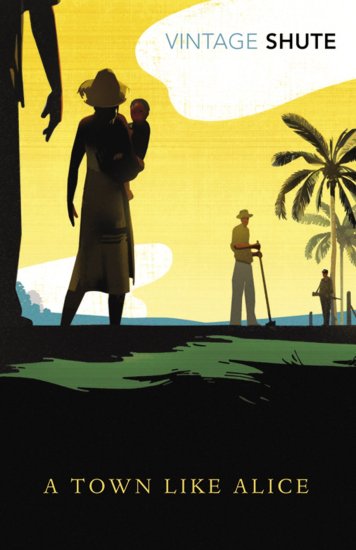
Author: Nevil Shute (1899-1960)
Title: A Town Like Alice (1950)
Genre: fiction (Australian classic)
Trivia: (NT) #AusReadingMonth @Brona’s Books
BINGO COMPLETED!! I went ‘the whole hog’ !!
- If you’re feeling a little touched by the sun, then
- …the Whole Hog may be for you.
- Read NINE books this November from all of the 8 states and territories
- …plus one freebie.
- The FREEBIE can be any book by an Australian author or
- or a book written by an overseas author but set entirely in Australia.
Introduction:
- Noel Strachan, an ageing and widowed solicitor,
- …had almost forgotten his client Douglas Macfadden
- …when in 1948 he received a telegram announcing his death.
- Strachan becomes trustee to McFadden’s niece Jean Paget
- who has inherited quite substantial sum from her uncle.
- The real story swings into action:
- Jean’s WW II experiences in Malaya and
- …what takes her to Australia is as much a
- …surprise for her as it is for the reader.
Conclusion:
- This was a delightful story.
- Jean’s work in England as a typist, her hardships during the
- WWII and most of all her adventures in Australia.
- It is a war story, a love story and how one person can change a town.
- I followed Jean Paget’s journeys on a map…
- flying from Darwin to Alice Springs to Carins and back in a Dragon!

- Reading A Town Like Alice felt like a road trip ‘in a road trip’
- Title: the only reference to it is in chapter 10.
- A book should whisk the reader on a ‘magic carpet’ to far off places.
- After reading A Town Like Alice I would love to visit Brisbane.
- Carins, Alice Springs and if I really could dream….
- visit Green Island where Jean and Joe
- …finally pledged their love for each other.

Last thoughts:
- I’ve read 3 books by Nevil Shute… (all during past.. #AusReadingMonth )
- On the Beach (1957)
- Trustee from the Toolroom (1960) and
- A Town Like Alice (1950).
- I saved the best for last!
- #GreatAussieRead
- #Inspiring
A Boat Load of Home Folk

Winslow Homer
- Author: Thea Astley (1925-2004)
- Title: A Boat Load of Home Folk
- Published: 1968
- Genre: social satire
- Setting: Coral Sea Island
- “…it was Maugham country” (tropical setting)
- “…Everything was Gauguinesqe.”
- Timeline: 48 hours
- Weather: “..it rained hammers of wet.”
- Trivia: #AWW AusWomenWriters
- Trivia: List of Challenges
Conclusion:
- The book recounts the effect of a hurricane on a group of Australians
- …stranded on a Coral Island.
- Love, infidelity, passion and prejudice
- …all come together in the ‘eye of a hurricane’.
- The plot is cleverly set within the saying of the Mass by a local Catholic Bishop.
- The characters are overwhelmed by their sinful unworthiness.
- “Domine, non sum dignus…” (Lord, I am not worthy…).
- Astley left the Catholic Church…..but she is not without God.
- She show us how her characters (…as well as Astley)
- found God outside of Christian practice.
- Thea Astley is blessed with a ‘nose for the lurking detail’.
- That is what makes her writing so exceptional in my opinion.
- What is unique about Astley was her readiness to take a side track.
- Her satire about the ‘steamy’ side of the Catholic clergy’s sexual urges
- ….that we now know more of… is bold!
- Priest Father Lake is just bout to ‘crack’ under the oppressive heat and his vocation.
- “…he could observe tantalizingly the brown John Terope (house boy)
- …padding between the lime trees towards the water tanks behind the school.” (pg 27)
- Even in the 1960’s Astley could see how it all
- tied up and was not afraid to publish it in her books!
- Tone: biting satire
- Astley criticizes the Catholic belief system…yet again!
- She exposes the weaknesses of the church adherents and the
- …bishop is very unsympathetic
- …and there is nothing ‘divine’ about him!
- #MustRead
- … Astley is a master writer!
Don’t you wish you could write like this?
Marriage:
- The bliss flaked off within months and there they were…
- the contestants, one battered, one victor…
- and the ropes sagging all around the ring.” (pg 60)
Lover:
- “Taking a lover was no more to her than…
- …an after work gin …” (pg 75)
PS: One of my favorite images:
- Miss Paradise and Miss Trump..
- …genteel ladies trying to graciously climb into a dinghy to go ashore.
- Astely captures this perfectly!
- “…the orgy of leg and thigh and overbalance…” (pg 16)

Lord of the Flies
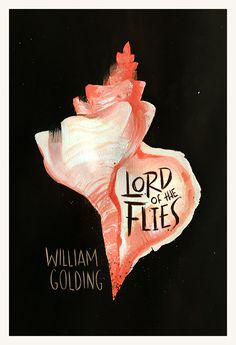
- Author: William Gerald Golding (1911 – 1993)
- Title: Lord of the Flies
- Published: 1954
- Genre: novel (allegory)
- Trivia: W. Golding was awarded Nobel Prize Literature 1983
- Trivia: This book is nr 41 Modern Library 100 Best Novels.
- Trivia: The novel was listen nr 70 on BBC’s 2003 survey ‘The Big Read’
- Trivia: List Reading Challenges 2017
- Trivia: Nobel Prize Reading Challenge
- #50BooksToReadBeforeYouDie
Conclusion:
- This is not a story that is scary because of plot twists or original characters.
- It is scary because it will frighten anyone in the deepest way to see
- what happens when man loses his sense of civility.
- The plot is simple.
- School boys crash land on a remote island with no adults.
- The boys set up their own government, with Ralph in charge.
- But things start to fall apart very quickly.
- The book it provokes fear on a most basic level.
What was the inspiration for the book ?
- Golding was tremendously affected by the WW II.
- The war had done something to him.
- Golding was involved as a marine officer.
- He was aboard the destroyer chasing the German battleship Bismarck.
- …he participated in the Normandy invasion.
- In Lord of the Flies Golding had shown
- …how cruel authorities are able to act.
- There are always people who follow them,
- …nevertheless, obediently.
- Examples: Hitler in Germany — Stalin in Russia
What are the reasons for its enduring legacy ?
- We are still fascinated by the central theme of the book:
- intelligence (Ralph, democratic leader) VS
- irrationality (Jack, totalitarian leader)
- The conch and Piggy´s glasses …become damaged.
- They are the symbols of the collapse of a democratic society.
Last thoughts:
- I read Lord of the Flies in high-school
- During this re-reading I finally understood the allegory.
- It has to do with my own development.
- I now understand more about
- …the ‘powers that be’ who ruled (rule) the world.
- #Classic
Cloudstreet
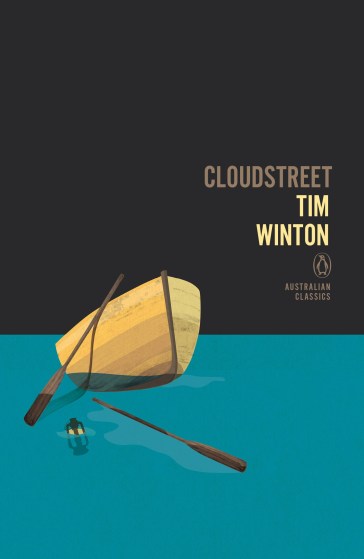
Finished: 07.11.2017
Score: 5 +++++
Title: Cloudstreet (1991)
Author: Tim Winton
Genre: fiction [Australian classic]
Trivia: (WA) AusReadingMonth @Brona’s Books
Trivia: Winner of 1992 Miles Franklin Award
The Miles Franklin Literary Award is an annual literary prize
awarded to a novel which is of
the highest literary merit and presents
Australian life in any of its phases.
Introduction:
I found this book on Jean Gleeson’s Top 50
Australian books in the last 200 years.
I have discovered so much by reading
Australian classics and that is all because of
Brona’s Books blog! (have a look!)
Plot:
The book chronicles the lives of two
working class Australian families,
…the Pickles and the Lambs.
They come to live together in a large house
called Cloudstreet in Perth 1943-1963.
Conclusion:
Don’t read this book!
If you REALLY want to appreciate the twang and jingle of Winton’s writing
you MUST listen to the audio book.
You can always….re-read the book version!
I was mesmerized by the voices and dialect.
My imagination ran wild envisioning the big house Cloudstreet
a big sagging joint
was boarded up and held its breath
heaved and sighed around them
he listened to the house cracking its knuckles
…hugging inwards, sucking in air…
the house seems to laugh at him…
the house breathes its first painless breath in half a century…
Winton weaves a paranormal feeling throughout the book
by introducing the nameless black man
that seems to pop up here and there in the life of
the main character ‘Quick’ Lamb.
He feels like a ‘black guardian angel’ that
guides Quick in the right direction.
Winton’s cast of characters are unforgettable.
Pickles: Sam and Dolly
He is always waiting for ‘Lady Luck’.
His luck had waxed and waned.
Like a gambler…he was on a lifelong losing streak.”
She realizes she’s had her chances
….beauty fades and suddenly you’re 60 yrs old
with secrets she has never revealed.
Lambs: Lester and Oriel:
He is a lovable father who bears the cross
of a terrible accident that left his son ‘a bit slow’.
He entertains the family “ the knife never lies!” and
comes to the aid of his neighbour, Sam.
He’s a real life saver.
She is god fearing, inflexible ready to
take command in a difficult family situation type of woman
…and is usually always right.
She is the backbone of the entire house Cloudstreet.
The love interest: Quick Lamb and Rose Pickles
Fifteen years they have been living under the same roof but never really noticed one another.
Yet once their orbital paths cross….it was love at first sight.
All these characters have one thing in common…their dreams.
“We all turn into the same thing, don’t we?
Memoires, shadows, worries, dreams.
We all join up somewhere in the end.” (pg 445)
Last thoughts:
I have enjoyed this audio book while….
…waiting for a train that never came on Tuesday
…quenching my thirst with a Heineken at lunch on Wednesday
…recovering from the aches and pains of a fitness session on Friday
…planting the last tulip bulbs on Saturday.
Now is is Sunday I have no more Pickles and Lambs to look forward to.
I was sad when this book ended.
It made me laugh.
It dazzled me with clever metaphors and similes.
It it made me stop and ponder some life questions
about family, love, commitment and death.
This is the BEST book I read this year!
#MustMustREAD
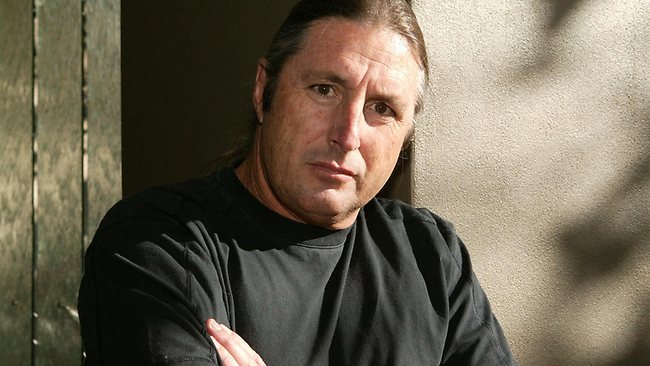
Famine by Tom Murphy Irish Playwright

- Author: Tom Murphy (1935 – 2018)
- Title: DruidMurphy: Plays by Tom Murphy
- Published: 1977
- Table of contents: 3 plays
- A Whistle in the Dark (1961) (read)
- Famine (1977) (read + review)
- Conversations on a Homecoming (1985) (read)
- Trivia: Ireland: Luck of the Irish Reading Challenge
- List Reading Challenges 2017
- T. Murphy died on 15 May 2018 (obituary)
Introduction:
- Tom Murphy grew up in Tuam, County Galway, a tough frontier town.
- The youngest of 10 children, he saw his family “wiped out” by emigration.
- He was religious as a child, but had faith beaten out of him by the Christian Brothers.
- “The repressiveness of the Catholic upbringing was extreme,” he shivers
- Murphy was inspired to write this play after
- ….reading The Great Hunger by C. Woodham-Smith.
What is Tom Murphy’s approach to writing a play with a historical background?
- Murphy reads many books about the subject of his play.
- Sometimes is takes him 1-2 years to write the script.
- He read at least 6 non fiction books
- …researched the collections of the Irish Folklore Commission
- …and 3 novels about the famine in Ireland.
- Novels: all by William Carleton
Valentine McClutchy: the Irish Agent
The Emigrants of Ahadarra
The Black Prophet.
In each case noting passages of dialogue and colloquial phrases.
What was TM’s biggest challenge?
- How to represent the action of more than 100 years ago so as to
- …engage audiences in the present time of theater.
What was Murphy’s goal?
- Murphy wanted to voice through the actors the
- general effect of famines on the poor.
- The neighborhood ties loosen of dissolve.
- Theft becomes endemic.
- Resistance changes into apathy.
- The feeling of a ‘group’ is shattered.
Famine
- Style: Brechtian history
- the Brechtian style that relies on the audience’s reflective detachment
- …rather than emotional involvement.
- Structure: 12 scenes (not divided into acts)
- Main character: John Connor —- unofficial leader of the village
- Minor characters: 3 women and 15 other male villagers
- Timeline: 1846 (Autumn) – 1847 (Spring)
- Setting: village of Glanconor – space is ‘charged’ with historical trauma.
What is the problem?
- John tells the villagers ‘We must do what is right’.
- — restrain violence
- — no attacks on convoy of corn-carts
- — providing hospitality to others…..even when his own family is starving.
What is the conflict?
- Doing ‘what’s right’ and placing faith in the laws of God and man
- …get him and the villagers no where.
- Passive resistance; pragmatic idealism ( John Connor) VS.
- Desperate reality (John’s wife) and
- Militant, activist, a survivor who favors violent action (Malachy O’ Leary)
Conclusion:
- Tom Murphy writes with more force and less nostalgia.
- Famine is hard edged realism.
- Scenes 1-4 introduce the reader to the characters and village.
- Scene 5 is powerful.…
- …and the language indicates the higher-class officials are speaking.
- Landlord, tenant John and the clergy Fr Horan and Fr Daley discuss the political
- …strategy that has been agreed upon by the government.
- The policy is to offer “..a great number of people an alternative to death.”
- The farmers will be given a paid ticket to leave the country…to emigrate to Canada.
- Fr Daley explodes when he hears “It is cheaper it clear them away”
- Fr Daley ask: “Who are we saving?”
- Scene 6-10 builds the tension…planned assassination, final interview for John Connor.
- He must choose to leave or stay in Glanconor
- “…I was born here, I’ll die here, I’ll rot here.”
- Scene 11 Tom Murphy brings the play to a close introducing unexpected actions.
- John Connor continues to be defiant, “..do what’s right”
- We see John as an isolated figure, perhaps he has lost his senses.
- Now the reader must decide: was John a hero or a fool?
Last thoughts:
Tom Murphy does not seek the limelight
…but his plays are ‘beacons’ of insight into
the Irish psyche.
He is considered to be the greatest living Irish playwright.
 NancyElin.blog