
7
Mar
#ReadIreland 2020 Jennifer Johnston
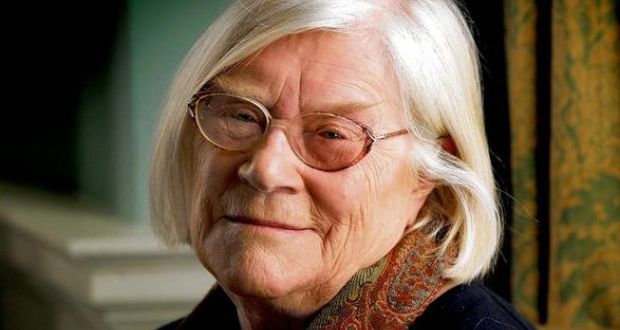
- Author: Jennifer Johnston
- Title: The Christmas Tree
- Published: 1981
- Genre: novella (168 pg)
- Reading time: 4 hours
- List of Challenges 2020
- Monthly plan
- Trivia: Jennifer Johnston (Dublin 1930) was awarded a
- Lifetime Achievement Award 2012 from the Irish Book Awards.
- #ReadingIrelandMonth20
- #Begorrathon20
- Rating: A+++++++
Conclusion:
- Jennifer Johnston is not a trendy read.
- She is 90…so she is not on the best sellers lists
- But my goodness…don’t let her writing pass you by!
- I won’t even give you a clue what it is about
- …I want you to discover it from page 1 by yourself.
- Her books are about relationships.
- This book was IMO about the sister-sister connection.
- I got goosebumps when I read the following lines….about
- a sister you really cannot get close to
- …try as hard as I have done:
- “We have a lot of genes an some memories in common.”
- Her stories are low key and personal but far from sentimental.
- Jennifer Johnston is underappreciated.
- But she is very good at what she does.
- Roddy Doyle considers Jennifer Johnston Ireland’s greatest writer.
- I had a ‘Trevor-shiver’ after reading the last page.
- The same feeling I have when I read a William Trevor short story….
- #Unforgettable
- PS: Two Moons is another one of her books…not to be missed!
1
Jul
#Classic Max Havelaar
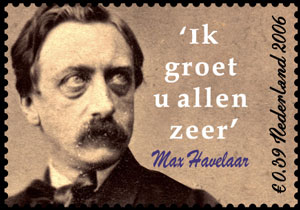
- Author: Eduard Douwes Dekker (Multatuli) (1820 – 1887)
- Genre: novel (satire)
- Title: Max Havelaar ( Language: Dutch)
- Published: 1860
- Table of Contents: 20 chapters, 315
- Timeline: 1842 ( Sumatra). 1856 (Lebak) 1860 (Amsterdam)
- Setting: Dutch East Indies
- Trivia: E. Douwes Dekker was one of Sigmund Freud’s favorite writers.
- List of Challenges 2019
- Monthly reading plan
Introduction:
- Eduard Douwes Dekker is better known by his pen name Multatuli.
- It is from latin ‘multa tuli’ meaning I have suffered much.
- This is a satire denouncing the abuses
- …of colonialism in the Dutch East Indies (Indonesia).
- 1838 Douwes Dekker became a civil servant in Java.
- All the secrets of Dutch administration were known to him.
- Disgusted with the actions of the Dutch in Java,
- …he had begun to about the abuses.
- Threatened with dismissal from
- …his office for his openness of speech.
- Dekker resigned his appointment.
- He returned to the Netherlands and wrote this
- scathing criticism of Dutch colonialism.
- In 2002 the Society of Dutch Literature proclaimed
- ….Multatuli the most important Dutch writer of all time
Quickscan:
- This is a grim depiction of life in a European colony, namely Indonesia.
- The description of web of hypocrisy of church-going Dutch.
- …and the repression of the natives under their rule endure.
- The Dutch derived benefits from others misery.
- Max Havelaar was beacon of hope.
- He was in a position of unquestionable power, Assistant-Resident.
- Havelaar struggled with the colonial government leaders ….to no avail.
Theme: exploitation; colonialism
Title: Dubble title “Max Havelaar or Coffee Auctions Dutch Trade Company”
- I had to research this information
- …..it would never have caught my eye!
- Irony: the title tells Mr. Droogstoppel that this book contains
- …information that he would be interested in: coffee auctions.
- He agrees to finance the rewriting of a final draft and publication of the book
- But it appears that there is nothing in the book about coffee or the Dutch Trade Company!
- The author misled Droogstoppel and the reading public!
- In 1860 coffee and trade were in the news.
- Multatuli wanted to have his book read. (pg 57)
- “Mijn boek moet de wereld in!”
- He was probably the first Dutch “whistleblower” !
- He used this ‘clever piece of irony’
- …to capture the public’s interest.
- Multatuli TRICKED the readers with a dubble title.
- He lured them to buy the book and
- …revealed the abuses he thought must be made public.
Narrators: 3 characters
- Droogstoppel: coffee broker at Last & Co.
- Stern: assistant Last & Co. ( = author Multatuli)
- Sjaalman: is thecharacter of Max Havelaar incognito in Amsterdam.
Structure: frame story (stories-within-stories)
- Story: Commentary in journals of Max Havelaar who abhors the exploitation of the Dutch East Indies natives.
- Story: Havelaar returns to Amsterdam with his exposé in rough draft and wants it to be published.
- Story: In the last chapter:
- Multatuli, the author himself, takes over the narrative.
- Droogstoppel is written ‘out of the book’.
- Multatuli writes what he wants to achieve.
- He wants the readers to share his outrage.
Breaking the 4th wall
- Multatuli speaks directly to the reader and ‘confronts’ him.
- Speaking to the reader acknowledges that this is a book or a story.
Unreliable narrator
- Mr. Droogstoppel coffee broker is characterized by exaggeration and bragging.
- Multatuli satirizes the coffee merchant, Droogstoppel, by simply letting him speak!
Irony:
- The use of words to convey the opposite of their literal meaning.
- Droogstoppel tells the reader ( pg 18) that the Dutch are successful because:
- …they conduct business honorably and maintain exemplary Christian beliefs.
- Irony: Mutatuli reveals that the Dutch say one thing in public and act differently in business!
- Droogstoppel gossips about other business partner’s family. (pg 25)
- Irony: But reminds us that he would never knowingly slander anybody!
Humor:
- There are some great examples of humor in Multatuli’s writing:
- The repetition in Droogstoppel’s emphatic dialogue
- reminding the reader that he always speaks the truth
- ” heus de zuivere waarheid” (pg 24) and
- conducts himself at all times with civility
- ” fatsoen gaat voor mijn boven alles” ( pg 31).
- In a bouncing carriage over a hobbley road Multatuli brings the choppy conversation
- before our eyes with one-word sentences. You can just hear it!
- I. Did. Not. Dare.To. Agree.
- ” Ik. Durfde. Het. Haar. Niet. Toezeggen.” ! (pg 101)
Conclusion:
- Weak point:
- This book was complicated with its intricate narrative structure.
- There is no chronological order, many flashbacks and 3 narrators.
- Weak point:
- Many pages of out-of-date style of dialogue which makes the reading difficult.
- Strong point:
- The shock effect caused by the author in chapter 20.
- This was his pulpit. It would be his chance to send a message to the Dutch and the world.
- Multatuli refers to the barbaric division in American society on pg 103.
- He must have read Uncle Tom’s Cabin (1852, H.B. Stowe) that exposed the abuse in USA.
- Multatuli shares Stowe’s social realism in his writing of Max Havelaar.
Last thoughts:
- I could relate to this book because
- of my knowledge of the ‘Dutch mentality’.
- I wonder if this book would appeal to
- a wider audience outside The Netherlands.
- I read the book in Dutch
- I liked the book but a recommendation to read it
- …..that’s a hard call.
- Dutch is the 7th most spoken language in Europe..
- The study of foreign languages
- …is simply the gift that keeps on giving.
24
Oct
#Dutch: nr.2 Shortlist Libris History Prize 2018
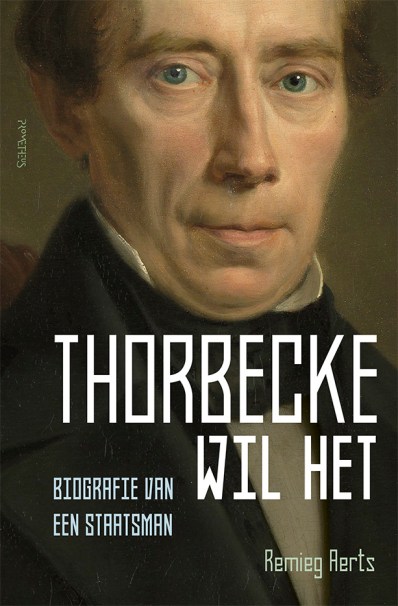
- Author: Remieg Aerts
- Title: Thorbecke Wil Het
- Published: 2018
- Trivia: Shortlist Libris Literature Prize 2018 for History
- Trivia: Winner PrinsjesBoekenprijs 2018 (best political book of the year)
Conclusion:
- I guess the idiom that best describes Thorbecke is:
- “…all work and no play makes Jack a dull boy.”
- After reading this monumental biography about the man
- who formed modern The Netherlands
- ….Thorbecke was far from dull!
- It is difficult to compare Thorbecke with any current politician.
- He was from another era:
- style was singular: we do it my way….or no way
- his thinking came from another source… German philosophy
- his personality was controversial:
- …when Throbecke enters a room, the temperature invariably drops.
- The Netherlands is indebted to this great man.
- Thorbecke had a vision for Dutch politics.
- He always asked himself:
- “Did I act and guide the government
- for a better and stronger future?”
- As the author so poignantly remarks in this last sentence:
- “How many people can honesty ask themselves this question today?
Last thoughts:
- I’ve lived in The Netherlands for years and everywhere you
- see Thorbeckeplein, Thorbeckstraat or Thorbecke School
- …but who was this man?
- I think 80% if the Dutch know he was important
- …but they don’t know why he was
- …a pivotal man in Dutch history.
- If you are willing to persevere through 763 pages
- with an analyses of:
- Thorbecke’s intellectual development (early years)
- his marriage to Adelheid Solger (one of the greatest love stories 19th C)
- the parliamentary culture in The Hague
- ….(led a team to create the modern Dutch Constitution 1848)
- his leadership (Thorbecke PM 1849 – 1872)
- …you will discover a man who towered above all others.
- Weak point: book is massive, difficult to balance in my tired hands!
- Strong point: there are many…
- ….but the last section pg 738 – 763 is excellent.
- Remieg Aerts ties up loose ends as a biographer
- …and links Thorbecke’s legacy to our modern times.
Shortlist Libris Prize 2018 for History:
- I’ve read Nobel Streven and De Sigarenfabriek van Isay Rottenberg.
- The winner will be announced 28 October 2018
- …I don’t think I can manage to read the last 2 books before Sunday.

18
Oct
#Dutch: Winner Libris History Prize 2018
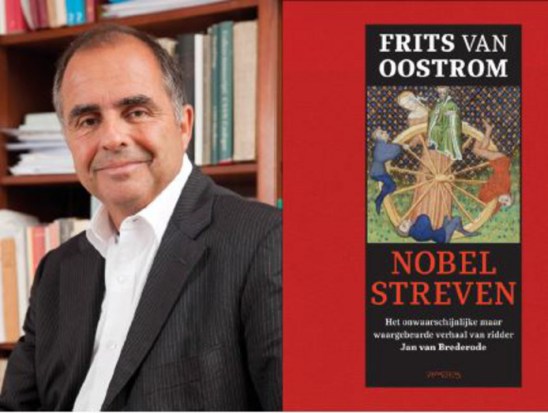
- Author: Frits van Oostrom
- Title: Nobel Streven
- Published: 2017 (Uitgever Prometheus)
- Trivia: WINNER !! Libris History Prize (Best History Book 2018)
- Trivia: Prize announcement 28 October 2018
- Trivia: Website Prof. F. Oostrom
- List of Challenges 2018
- Monthly plan
- Non-Fiction Reading List
Introduction:
- The Dutch literary-historical scholar gives us an
- incredible true story of the Late Middle Ages
- knight (ridder) Jan van Brederode. (1370-1415)
- Lord of Brederode was the heir apparent of an
- important Dutch noble family
- a lay brother in a Carthusian monastery
- mercenary who died during the Battle of Agincourt.
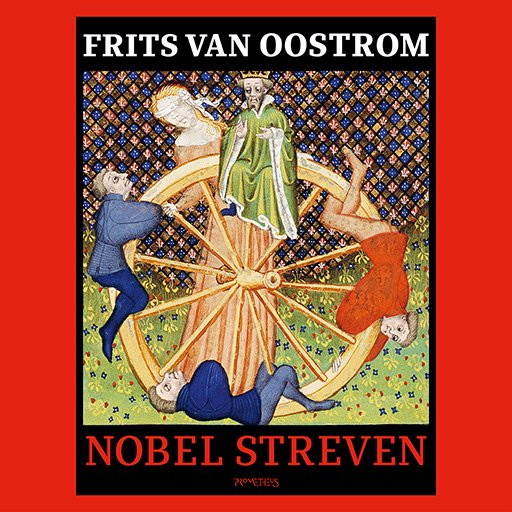
Book Cover: I was intrigued…what does it mean?
- Van Oostrom has chosen an image of the Wheel of Fortune.
- In the Middle Ages is was a
- …symbol of the capricious nature of Fate.
- Jan van Brederode’s fate: a childless marriage.
- It led him on a roller-coaster life that would have been
- …so different if only there was an heir.
- Here is a beautiful image by Jean Mielot with 4 stages of life:
- Left : I shall reign
- Top: I reign
- Right: I have reigned
- Bottom: lowly figure…I am without a kingdom

Strong point: archival research
- Van Oostrom is NOT relying on secondary sources or
- dated translations of medieval narratives.
- Van Oostrom ‘gets his hands dirty’
- ….does the hard work visiting achives in
- The Netherlands but most importantly
- …going to libraries in other neighboring lands.
Strong point: scholarly rigour which led to a literary discovery!
- Van Oostrom has found the author
- …of the Van Hulthem manuscript.
- It is nicknamed the “Night Watch of Middle Dutch literature”.
- This document is of invaluable importance
- providing a new look at the Late Middle Ages.
Strong point: readable
- Van Oostorm is a renowned Dutch historical scholar
- ….but he also knows his audience.
- He wanted to present to the average reader
- an intelligent picture of the Late Middle Ages
- in The Netherlands (1350-1450).
- His text is lucid, instructive yet has a ‘modern whiff’ using
- many familiar language idioms
- …and even references to
- Google maps an making a parallel
- between the Frisian Wars in on the periode 1399-1407
- and the 1967 Vietnam debacle.
Strong point: scope
- Van Oostrom draws on the chronicles of
- …Jan van Leiden (ca. 1480) but does not
- venture off into stories about
- …pageants, the Plague or Papal Schism.
- He keeps the focus on Jan van Brederode and his family.
- Van Oostrom brings history closer to the reader showing us
- …that people in the 21st C are so similar to those in the 14th C.
- We both struggle with debts, marriage (pressure to produce an heir)
- inheritance rights, family loyalty, a ‘Shylock’ of a father-in-law (Willem van Abcoude)!
Strong point: last chapters
- Just when I thought I had
- …reached my ‘history’ saturation point
- Van Oostrum revives me with a heartfelt chapter
- about the importance of historical investigation.
- He refers to many fellow 21st C historians
- who have provided pieces to a larger puzzle
- that give us all new insights into the past.
- #Bravo, Frits van Oostrom!
29
Sep
Classic: Dutch writer W.F. Hermans
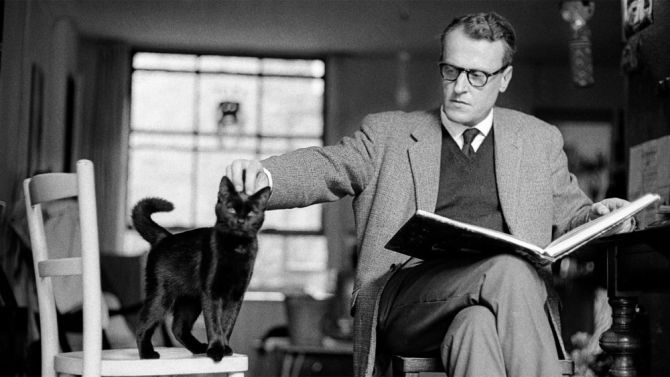
- Author: W.F. Hermans
- Title: Nooit Meer Slapen
- Published: 1966
- Language: Dutch ( available in translation: Beyond Sleep)
- #20BooksOfAutumn
- #ccbookreviews
- Trivia: W.F. Hermans is considered one of
- ‘The Big Three’ 20th C writers in Dutch literature.
- You can read more about W.F. Hermans HERE
- List Reading Challenges 2018
- Monthly planning
- Classic Club Master list
Conclusion:
- Dutch is my second language.
- It was time I started 20 books by Dutch authors
- …considered 20th C must reads.
- W.F. Hermans is the first one on the list.
- Ch 1-12 were very slow...but if you keep reading the
- book picks up steam ch 27 until the end.
- Main character: geologist Alfred is obsessed with ‘discovering something new’.
- He wants to prove to his deceased father he has not wasted his life.
- Hermans uses the philosophy of Wittgenstein (3 references) and the
- Symbol: a compass to help Alfred find his direction
- …physically (during a failed expedition on a Norwegian glacier)
- …and spiritually (start a new life.)
- It is a good book….but not great.
- The war novel The Dark Room of Damocles
- is the author’s ‘chef’ d’oeuvre
- W.F. Hermans was member of the Dutch resistance WW II.
 NancyElin.blog