
READY: #Classic Dombey and Son
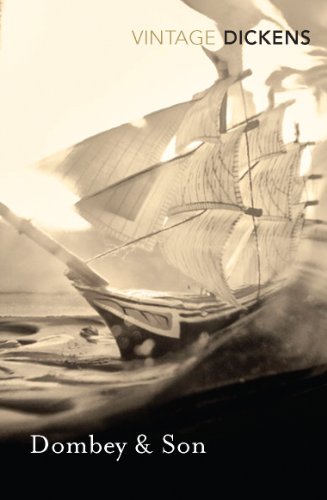
- Author: C. Dickens
- Title: Dombey and Son
- Published: 1847
- List Reading Challenges 2018
- Monthly planning
- Classic Club Master list
1. Explain the title. In what way is it suitable to the story.
Dombey & Son was the name of a well respected shipping/trading business. The title is the basis of a study of a Victorian middle-class family, the British trade with the colonies. Dickens described in ch 1: “The earth was made for Dombey & Son to trade in, and the sun and moon were made to give them light.” Dombey & Son was the centre of the ‘universe’. The narrative will tell the reader of this famliy’s rise and fall.
2. What is the predominant element in the story? Characterization
3. What is the setting? London, Brighton, Leamington Spa, Barbados
4. How does the author handle characterization?
a. Dombey is glad to hear the the nanny say: ” She hoped she knew her place”. (Mrs. Toodles). Dombey wants to be absolutely dominant (as does his social class) but needs somebody to dominate. The butler, footman, maids…“Mr. Dombey’s household subsided into their several places in the domestic system.” …but his daughter will not be so governed. When Florence leave the house she breaks Dombey’s domination. He looses control of his property, inheritance his classes’s values. Edith, Dombey’s second wife feels her marriage is enslavement; “ He sees me at the auction and he thinks it well to buy me” (ch 27)
b. Florence: the book begins with a the description of her as “base coin”. Dombey judges his daughter with ‘trade and capitalism’ in mind. She has little worth for him. But at the end of the book she is the “golden link” (ch 14) and “glorious sunshine” (ch 59) of her father’s life.
5. What sort of conflict confronts the leading character or characters?
a. External – Dombey is powerful, rich and feared..but is incapable of loving another person
b. Internal – Dombey must admit his ‘alienating flaw’ and try to redeem himself.
c. External – Florence is rejected by her father after the death of his heir, Paul.
d. Internal – Florence searches for the ‘magical behaviour‘ that will make her father love her.
6. How is the conflict resolved? No spoilers, this time!
7. Who tells the story? Third person omniscient
8. What is the timeline?
Florence is six years old. in chapter 1.
Florence is married with Walter Gay and has 2 children, Paul and Florence.
I estimate the time line between 20-25 years.
9. How does the story get started? What is the initial incident?
Mr. Dombey is a widower with two children; however, he only considers his son, Paul, to be worthy of his attention.
His daughter, Florence, is merely a “bad boy.”
Paul was to carry on the family name, but died of an illness that shattered Mr. Dombey’s hopes for an heir.
10. Briefly describe the rising action of the story.
Dombey’s neglect of his daughter Florence which caused problems his second wife, Edith.
Dombey trusts James Carker his devious business manager.
11. What is the high point, or climax, of the story?
After the sinking of SS Son and Heir Dombey & Son is bankrupt.
12. Discuss the falling action or close of the story.
Unfortunately Dombey loses his business and his wealth.
Dombey realizes that his daughter was the only person who truly cared for him, even when he had nothing left.
He reconnects with Florence in his later years and gains an heir through his son-in-law.
13. Does this story create any special mood?
Dickens uses houses, rooms and their decorations to create different moods that he needs in the narrative.
The book starts with images of a darkened room, crib in front of a warm fire. The new born son is compared to a muffin “ it was essential to toast him brown as he was very new”. (ch 1) The mood shifts after the death of Mrs Dombey. The house is cold, not fires glowing. The blank house inside and out, after the funeral the furniture was covered with great winding sheets, rooms ungarnished, windows-blinded, lookingglasses being papered up, lustre (chandelier) muffled in holland (cloth) looked like a monstrous tear depending from the ceilings eye.
14. What is the general theme of the story? The redeeming power of love.
15. Did you identify with any of the characters?
Florence: rejected by her father, does not let this influence her self-worth. She leaves her father’s house in disgrace and anger, finds happiness with Wally yet returns to save her father.
16. Does this story contain any of the following elements?
Symbol – bottle of Madeira: Bottle is opened to celebrate Wally’s employment as a clerk at Dombey & Son. “…we shall drink the other (last) bottle, Wally, he said, when you come to good fortune.” (ch 4). The bottle of Madeira has crossed and recrossed the trading routes. It has been shipwrecked and resurfaces and survives. These are all things that Wally will also do!
Irony: Wally sails and is shipwrecked on the SS Son and Heir. This is the beginning of Wally’s survival and start of a happy life. Ironically this is the end of Dombey who spirals into bankruptcy and depression.
Irony: Dombey cannot find love in his heart for his daughter. “But now he was ill at ease about her. She troubled his peace.” […] “– he was afraid that he might come to hate her. (ch 3) Ironically in the end Florence was the only one who could give him peace of mind!
Irony: Dombey considers Edith (2nd wife) as the only the person he can possess completely. He has lost possession of his daughter. Ironically at the end of the book the roles are reversed. Florence lives for Dombey’s love and Edith only scorns him.
Foreshadowing: Polly’s husband tells Dombey the worst that could happen to him was if he would lose one of his sons.(Toodle) “I couldn’t hardly afford but one thing in the world less, Sir. (Dombey) ” What is that?” (Toodle) ” To lose ’em Sir.” (ch 2). This foreshadows the death of Dombey’s son Paul.
Foreshadowing: father – daughter relationship – “Young as she was […] he felt as if she held the clue to something secret in his breast…” (ch 3)
Foreshadowing: Solomon Gills and Wally recall anecdotes of shipwrecks, casks of wine (Madeira = Wally) rolling about (Baltic Sea 1749) and SS George II breaking loose along the Cornwall coast (1771), SS Polyphemus (West Indies) catching fire and sinking. This foreshadows Wally’s shipwreck of the coast of Barbados. Suddenly Solomon Gills gave a short dry cough, and said: “Well, suppose we change the subject.” (ch 3)
27. Does the story contain a single effect or impression for the reader?
The remark made by nanny Susan Nipper impressed me the most: “girls are thrown away in this house”. This emphasizes the role of the woman in Dombey’s eyes. ‘Base coin’ , not currency that can be spent or invested. The first time we see Florence she is “in a corner”. Dickens does a wonderful job developing Florence with images and symbolism. The dying mother ‘clinging fast to the slight spar within her arms [as she] drifted out upon the dark and unknown sea that rolls around the world” (ch 1). This ‘slight spar’ will be the only thing her father can cling to and save his life.
#Fiction The Art of Racing in the Rain

#GoMax “…Keep pushing!!”
JANUARY
20.  by
by  Garth Stein
Finish date: 22 January 2022
Genre: Fiction
Rating: B+
Review:
Bad news: Push through the first chapters….sentimental as flowers pressed between the pages of a diary.
Good news: A beloved philosopher dog named Enzo is the one who teaches us everything we need to know about being human. Let the story embrace you…every reader will find a moment to connect at some level. I mean a dog is the narrator…what’s not to love?
Good news: My first impression was wrong. This turned out to be a great book…I loved it! Title The Art of Racing in the Rain was just perfect…captures the essence of the book! Drivers are afraid of the rain. Rain amplifies your mistakes.
Good news: I love the sport of Formula 1 so all the references to great champions of the past Emmo (Fittipaldi), Schumi, Senna etc were wonderful. I didn’t realize so many life lessons can be learned in the paddock and on the grid. My life lesson? No race has ever been won in the first corner…but plenty of races have been lost there.
Personal: New rule…never write the book review on the same day you finished the book! Sleep on it. After a few chapters of sugar-spin sentimentality I hoped the book would get better…and it did. Apart from the ‘tear-jerker’ content (dying dog, newlyweds, baby, dying wife and in-laws from hell) the book had a larger message for me. The Art of Racing in the Rain was a metaphor teaching me (us) how to overcome obstacles in the long race we call life (pg 314). We all race in the rain at some point. Remember the motto in the book:
The visible becomes inevitable.
The car goes where the eyes go (ch 37)
With fresh tires and a full load of fuel he would prove a formidable force.
#Novella Passing

- Author: Nella Larsen (1891-1964)
- Title: Passing
- Published: 1929 (176 pg)
- Genre: novella
- Monthly plan
- #ReadDiversely
Quick scan:
- Irene Redfield, a light-skinned African American woman
- …prominent member of the Harlem community,
- receives a letter from an old friend named Clare Kendry.
- Clare is light-skinned, but, unlike Irene,
- …Clare has decided to pass as white
- …and to make matters more complicated
- …is married to a wealthy racist white man.
- Their reunion is tense.
Conclusion:
- Larsen’s works are often classified as “uplift novels,”
- the purpose of which was to persuade educated white readers
- that the black middle class was, in fact, not unlike them.
- There was no need to discriminate against such obviously civilized people.
- There are many kinds of secrets,
- …from unspoken feelings and
- …quiet anxieties to hushed-up affairs in this small book!
- This novella is absolutely worth your reading time
- ….3 hrs and you have finished 176 pg of excellent writing!
- Strong point: Love the small twist
- …Ms Larsen bookends her novella ( part 1 ch 1 -> part 4 ch 4)
- See if you can discover how she did it!
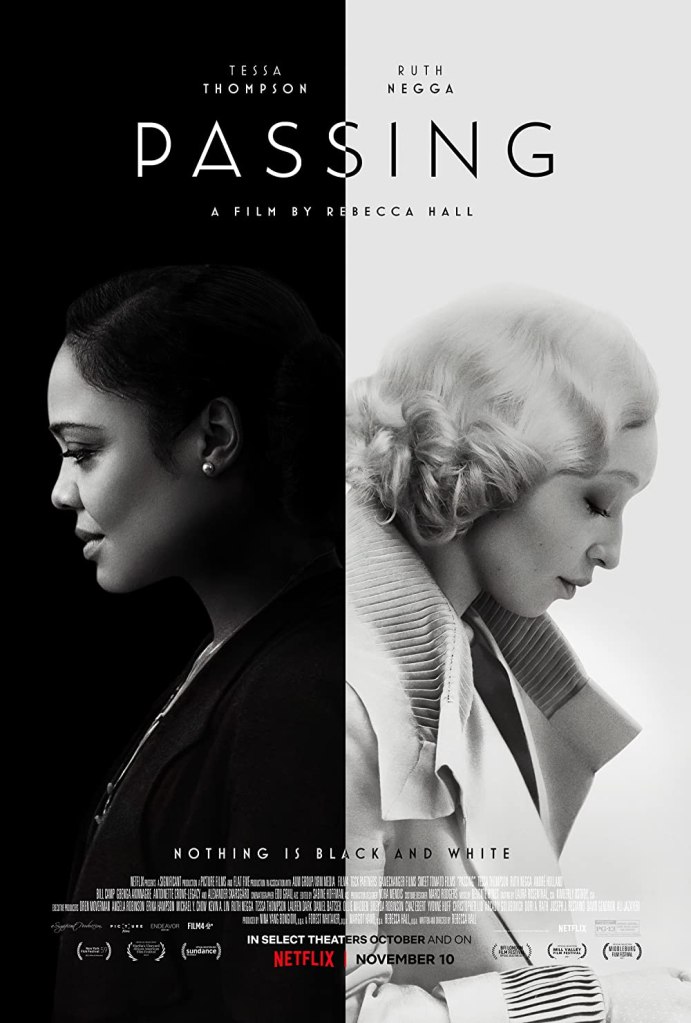
- Now…time to watch the Netflix version of “Passing” (2021)
- with Tessa Thompson and Ruth Negga
#Fiction Jason Mott Winner Nat Book Award 2021

- Author: Jason Mott
- Title: Hell of a Book
- Published: 2021 (320 pg)
- Monthly plan
- #ReadDiversely
Quick Scan:
- Hell of a Book goes to the heart of racism,
- police violence, and the hidden costs
- exacted upon Black Americans
- …and America as a whole.
Conclusion:
- Tight, intimate, imaginative,
- prescient, and completely heart wrenching…
- This book has taught me so much and there are things
- I’m ashamed of saying I never stopped to think about
- …how life can be for an outsider
- in a white supremacist land like USA.
- This book is brilliant as a talking point on what
- is white privilege and
- how are many white Americans STILL denying
- …that racism exists.
- My, God…read this book!
#AusReadingMonth2020 Pearly Gates

- Author: Owen Marshall
- Title: Pearly Gates
- Published: 2019
- Score: A
- Bingo card: FREE SPACE (New Zealand)
- List of Challenges 2020
- Monthly reading plan
- #AusReadingMonth2020
Conclusion:
- This was a delightful novel!
- Pearly Gates is an unforgettable character:
- …a great warm welcoming smile, full of confidence
- ….like the man who keeps friends
- …because he uses the right deodorant.
- But soon Pearly feels a weight he cannot endure.
- He carries it like an egg or a rock.
- “…hating the weight, fearing the knock” ( quote: Penelope Layland)
- No spoilers about the plot...that is how I read the book
- …and I just could not put it down.
- So curious how Pearly was going to solve this
- …existential crisis!
- #MustRead

#ReadIreland 2020 Jennifer Johnston

- Author: Jennifer Johnston
- Title: The Christmas Tree
- Published: 1981
- Genre: novella (168 pg)
- Reading time: 4 hours
- List of Challenges 2020
- Monthly plan
- Trivia: Jennifer Johnston (Dublin 1930) was awarded a
- Lifetime Achievement Award 2012 from the Irish Book Awards.
- #ReadingIrelandMonth20
- #Begorrathon20
- Rating: A+++++++
Conclusion:
- Jennifer Johnston is not a trendy read.
- She is 90…so she is not on the best sellers lists
- But my goodness…don’t let her writing pass you by!
- I won’t even give you a clue what it is about
- …I want you to discover it from page 1 by yourself.
- Her books are about relationships.
- This book was IMO about the sister-sister connection.
- I got goosebumps when I read the following lines….about
- a sister you really cannot get close to
- …try as hard as I have done:
- “We have a lot of genes an some memories in common.”
- Her stories are low key and personal but far from sentimental.
- Jennifer Johnston is underappreciated.
- But she is very good at what she does.
- Roddy Doyle considers Jennifer Johnston Ireland’s greatest writer.
- I had a ‘Trevor-shiver’ after reading the last page.
- The same feeling I have when I read a William Trevor short story….
- #Unforgettable
- PS: Two Moons is another one of her books…not to be missed!
Nancy @ The Movies “Messiah” (Netflix)
NANCY AT THE MOVIES
- For a change I’ll give you a NETFLIX review instead of a book.
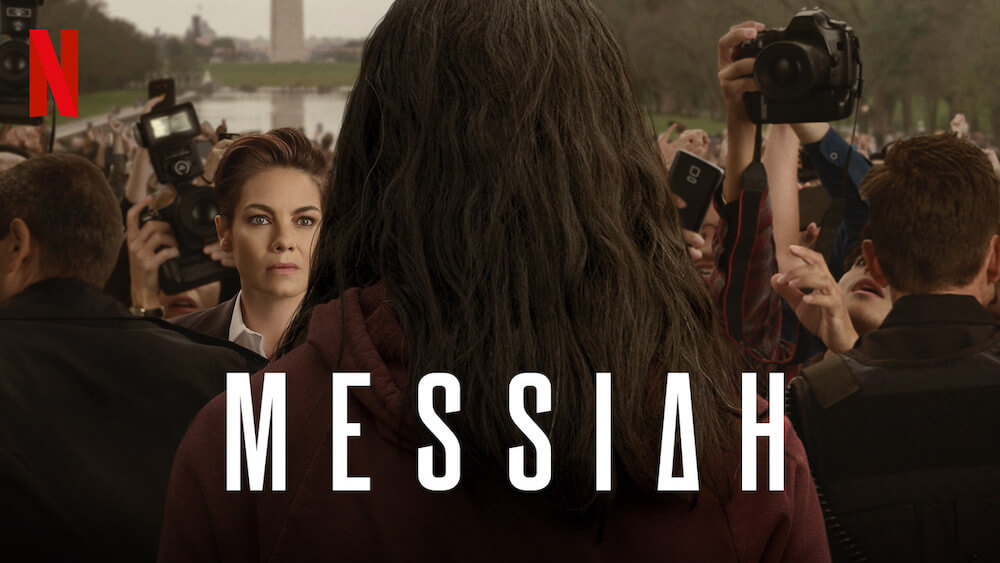
- Well, I had nothing to do yesterday so I watched MESSIAH on Netflix.
- The action is driven by the enterance of an outsider….a Messiah.
- Messiah season two hasn’t been confirmed, but surely it’s only a matter of time.
- Messiah could run for years.
- Now this is great news if you are an evangelical
- ….but if you like a strong plot, dramatic dialogue
- ( …all the CIA agent says when asked what the problem is: “It’s nothing”
- …this doesn’t move the narrativie along!)
- ……you will be sorely disappointed.
- IMDB gave it a 7.9 score…that must be a misprint.
- So, if you want to be bored for hours
- …..I highly recommend it!
#AWW 2019 Drylands
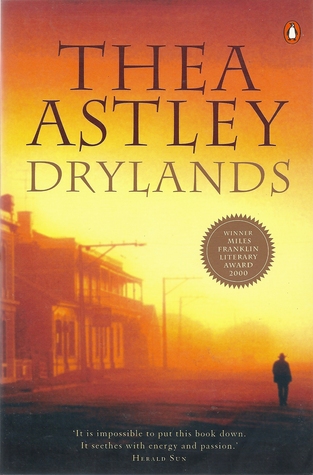
- Author: Thea Astley (1925-2004)
- Title: Drylands
- Published: 1999
- Genre: novel
- Setting: Drylands and nearby town of Red Plains
- Trivia: 2000 winner Miles Franklin Literary Award
- List of Challenges 2019
- Monthly plan
- #AWW2019
- @AusWomenWriter
Introduction:
- Helen Garner once said in an interview: ‘
- Not being able to read after cataract surgery for 10 days
- …..was unbearable”
- I know how she felt.
- Desperate to quench my reading thirst
- ….I’m listening to Drylands by Thea Astley. (7 hrs 17 minutes)
- Perhaps when I can enjoy better vision
- ….I will re-read the paperback version.
- Astely’s prose is worth savoring again.
Conclusion:
- In her flat above Drylands’ newsagency,
- Janet Deakin (voice of the author herself…)
- is writing a book for the world’s last reader.
- She describes a cast of oddball characters
- in the small bush town of Drylands.
- ...desperate housewife’s ‘Walk to Canossa”
- …unnerving bar noise ‘seeping in like conscience’
- …staring at the closed bar ‘the Legless Lizard’ with
- its door bolt ‘hanging like a limp hand’
- But the town is being outmaneuvered by drought
- and begins to empty
- “…pouring itself out like water into sand.”
- As Janet decides to sell her store
- “it wasn’t dust she wanted to shake off her feet
- ….it was memories”
- Last scrawled message on her desk: ‘Get a life…‘
- Her response: ‘Too late.‘
- These are just a few tidbits
- I remembered while listening
- to Thea Astley’s last masterpiece.
- #Bravo

#Classic Max Havelaar

- Author: Eduard Douwes Dekker (Multatuli) (1820 – 1887)
- Genre: novel (satire)
- Title: Max Havelaar ( Language: Dutch)
- Published: 1860
- Table of Contents: 20 chapters, 315
- Timeline: 1842 ( Sumatra). 1856 (Lebak) 1860 (Amsterdam)
- Setting: Dutch East Indies
- Trivia: E. Douwes Dekker was one of Sigmund Freud’s favorite writers.
- List of Challenges 2019
- Monthly reading plan
Introduction:
- Eduard Douwes Dekker is better known by his pen name Multatuli.
- It is from latin ‘multa tuli’ meaning I have suffered much.
- This is a satire denouncing the abuses
- …of colonialism in the Dutch East Indies (Indonesia).
- 1838 Douwes Dekker became a civil servant in Java.
- All the secrets of Dutch administration were known to him.
- Disgusted with the actions of the Dutch in Java,
- …he had begun to about the abuses.
- Threatened with dismissal from
- …his office for his openness of speech.
- Dekker resigned his appointment.
- He returned to the Netherlands and wrote this
- scathing criticism of Dutch colonialism.
- In 2002 the Society of Dutch Literature proclaimed
- ….Multatuli the most important Dutch writer of all time
Quickscan:
- This is a grim depiction of life in a European colony, namely Indonesia.
- The description of web of hypocrisy of church-going Dutch.
- …and the repression of the natives under their rule endure.
- The Dutch derived benefits from others misery.
- Max Havelaar was beacon of hope.
- He was in a position of unquestionable power, Assistant-Resident.
- Havelaar struggled with the colonial government leaders ….to no avail.
Theme: exploitation; colonialism
Title: Dubble title “Max Havelaar or Coffee Auctions Dutch Trade Company”
- I had to research this information
- …..it would never have caught my eye!
- Irony: the title tells Mr. Droogstoppel that this book contains
- …information that he would be interested in: coffee auctions.
- He agrees to finance the rewriting of a final draft and publication of the book
- But it appears that there is nothing in the book about coffee or the Dutch Trade Company!
- The author misled Droogstoppel and the reading public!
- In 1860 coffee and trade were in the news.
- Multatuli wanted to have his book read. (pg 57)
- “Mijn boek moet de wereld in!”
- He was probably the first Dutch “whistleblower” !
- He used this ‘clever piece of irony’
- …to capture the public’s interest.
- Multatuli TRICKED the readers with a dubble title.
- He lured them to buy the book and
- …revealed the abuses he thought must be made public.
Narrators: 3 characters
- Droogstoppel: coffee broker at Last & Co.
- Stern: assistant Last & Co. ( = author Multatuli)
- Sjaalman: is thecharacter of Max Havelaar incognito in Amsterdam.
Structure: frame story (stories-within-stories)
- Story: Commentary in journals of Max Havelaar who abhors the exploitation of the Dutch East Indies natives.
- Story: Havelaar returns to Amsterdam with his exposé in rough draft and wants it to be published.
- Story: In the last chapter:
- Multatuli, the author himself, takes over the narrative.
- Droogstoppel is written ‘out of the book’.
- Multatuli writes what he wants to achieve.
- He wants the readers to share his outrage.
Breaking the 4th wall
- Multatuli speaks directly to the reader and ‘confronts’ him.
- Speaking to the reader acknowledges that this is a book or a story.
Unreliable narrator
- Mr. Droogstoppel coffee broker is characterized by exaggeration and bragging.
- Multatuli satirizes the coffee merchant, Droogstoppel, by simply letting him speak!
Irony:
- The use of words to convey the opposite of their literal meaning.
- Droogstoppel tells the reader ( pg 18) that the Dutch are successful because:
- …they conduct business honorably and maintain exemplary Christian beliefs.
- Irony: Mutatuli reveals that the Dutch say one thing in public and act differently in business!
- Droogstoppel gossips about other business partner’s family. (pg 25)
- Irony: But reminds us that he would never knowingly slander anybody!
Humor:
- There are some great examples of humor in Multatuli’s writing:
- The repetition in Droogstoppel’s emphatic dialogue
- reminding the reader that he always speaks the truth
- ” heus de zuivere waarheid” (pg 24) and
- conducts himself at all times with civility
- ” fatsoen gaat voor mijn boven alles” ( pg 31).
- In a bouncing carriage over a hobbley road Multatuli brings the choppy conversation
- before our eyes with one-word sentences. You can just hear it!
- I. Did. Not. Dare.To. Agree.
- ” Ik. Durfde. Het. Haar. Niet. Toezeggen.” ! (pg 101)
Conclusion:
- Weak point:
- This book was complicated with its intricate narrative structure.
- There is no chronological order, many flashbacks and 3 narrators.
- Weak point:
- Many pages of out-of-date style of dialogue which makes the reading difficult.
- Strong point:
- The shock effect caused by the author in chapter 20.
- This was his pulpit. It would be his chance to send a message to the Dutch and the world.
- Multatuli refers to the barbaric division in American society on pg 103.
- He must have read Uncle Tom’s Cabin (1852, H.B. Stowe) that exposed the abuse in USA.
- Multatuli shares Stowe’s social realism in his writing of Max Havelaar.
Last thoughts:
- I could relate to this book because
- of my knowledge of the ‘Dutch mentality’.
- I wonder if this book would appeal to
- a wider audience outside The Netherlands.
- I read the book in Dutch
- I liked the book but a recommendation to read it
- …..that’s a hard call.
- Dutch is the 7th most spoken language in Europe..
- The study of foreign languages
- …is simply the gift that keeps on giving.
#Ockham NZ Awards MY CHOICE winner Fiona Kidman
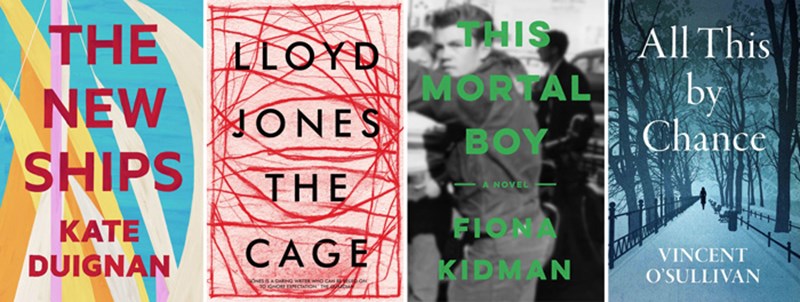
- Author: Dame Fiona Judith Kidman DNZM OBE (1940)
- Title: This Mortal Boy
- Published: 2018
- Genre: historical fiction
- List of Challenges 2019
- Monthly reading plan
- #AWW2019
- @AusWomenWriters
- Trivia: 2019 Winner of The New Zealand Booklovers’ Prize for Fiction
- Trivia: 2018 Shortlisted for the NZ Heritage Book Awards
- Trivia: 2019 Shortlisted for the Ockham New Zealand Book Awards
- #TheOckhams will be awarded 14 May 2019.
- @PenguinBooks_NZ
Quickscan:
- On 05 December1955
- …New Zealand’s second-last execution occurred.
- The victim was a young Irishman,
- Albert (Paddy) Black…a bog-trotter.
- He knifed a man, Johnny McBride…bit of a rough diamond,
- in a bar-room brawl 26 July 1955
- …called the “juke-box murder”.
- Public revulsion at his execution was a major force
- ..in abolishing the death penalty in 1961.
- Black was convicted of murder and executed.
- Yet there were clear signs that his trial
- …was a severe miscarriage of justice.
- Main characters:
- Albert (Paddy) Black Irish, aka Shaun Donavan (killer)
- Alan Keith Jacques English, aka Johnny McBride (victim)
- Setting change: 1955 Belfast Ireland
- Flashback: Belfast, parents, childhood, WW II, sailing to life in NZ
- Setting: NZ Aukland, Wellington, Auckland Parliament House
- Mt Eden Prison NZ (arrested awaits trial),
- Ye Olde Barn cafe (crime scene)
- Setting: Station Hotel Aukland NZ (where jury is staying during trial)
- Setting: Aukland Court house – jury’s decision (ch 19)
- Setting: Mount Eden Prison…execution
Conclusion:
- This story is based on facts that are in no way
- sentimentalized by the author.
- This Mortal Boy reads like a Greek Tragedy
- …we know what is going to happen in the last act.
- The platform on the gallows will actually be a trapdoor.
- The book is a stark report about a young boy who
- made a mistake and paid the ultimate price, his life.
- Strong point:
- Research
- Dame Fiona Kidman has studied the trial transcripts
- …read copies of Albert Black’s letters to friend his Peter
- ..and visited Ireland to research the public records in Belfast
- (births, marriages, deaths).
- Chapter 27 is and eyewitness report of the execution by J. Young.
- (…a very confronting read)
- Trial witnesses, lawyers and members of the jury are fictional.
- Strong point:
- Kidman examines history with a fine tooth comb.
- She supports her story with references
- to Australian politicians, The Mazengarb 1954 (report on moral delinquency)
- …and the hanging of Fred Foster July 1955 for the ‘Milk Bar Murder’.
- Strong point:
- The jury
- In chapter two Kidman takes time to
- …introduce the reader to the 12 men on the jury.
- At first I thought Kidman was being too detailed.
- But later I realized why it is important to know the
- social class (job, education) of these men.
- Only then can we understand the decision making
- process about Albert Black:
- guilty or not guilty.
- Three jurors add doubt to the arguments for guilty.
- I was captivated and drawn in as these jurors try to
- remain staunchly against a guilty verdict.
- You will read what happened
- ….that pushed the verdict to guilty!
- Weak point of audio book:
- The singing!
- I’d rather read that someone is humming or singing a song
- …than to actually hearing it. #Distracting.
- Strong point:
- Ch 14 – Oliver Buchanan, lawyer
- We imagine that the case is open and shut but…
- Buchanan works tirelessly to help his client
- …avoid the death penalty.
- There is something missing in this case
- …but he cannot find the piece.
- Buchanan is interested in
- what happened before Paddy stabbed Johnny
- …that can prove that this crime was based on an accident.
- Buchanan quotes Thomas Hardy:
- “…for every bad..there is a worse.”
Last thoughts:
- Capital punishment…is such a contentious issue.
- While reading this book I was forced to think
- about the consequences of this policy.
- #Heartwrenching
- MY CHOICE to win Ockham 2019 for Fiction.
Quote:
- Juror – Arthur university lecturer discusses… life? or death ?
- “…are you all so far beyond reproach
- that you have a right to make this decision?
- I’m not sure that I am.”

 NancyElin.blog