
Classic: G. de Maupassant
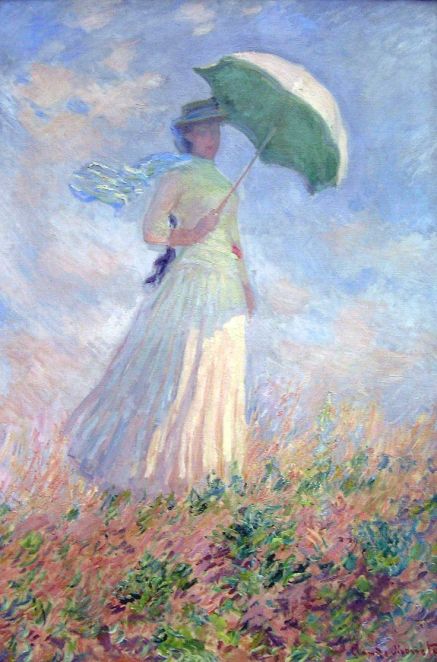
- Author: G. de Maupassant
- Title: Une Vie
- Published: 1883 ( first novel)
- Language: French
- List Challenges 2018
- Monthly planning
- Classic Club Master list
Conclusion:
- There is more to this book than meets the eye.
- Maupassant did not want to just tell a story.
- He wanted us to understand the meaning behind events.
- This was an eye-opener for me.
- How often do I read a story and say I liked it or not.
- I learned in this book to look at the structure..it has a hidden meaning.
- I noticed if Jeanne (MC) traveled…where to? …and how it changed her.
- In the first line we read ‘she packed her bags’
- …this reveals she is moving.
- “Jeanne, ayant fini ses malles…”
- Jeanne is in transition…from life during a convent education.
- to new places
- She travels 4 times.
- How did each voyage change her?
Themes: Love, marriage, motherhood, adultery, ruthless ambition
- What was Maupassant’s message in this book?
- Marriage is a trap!
Commentary:
- The decline of the ‘noblesse’ class who are incapable to adapt to the times
- The provincial morals and values Normandy in the 19th C
- The power of the Catholic Church and its prelates on the social order.
- Marriage: woman has the duty to be a good wife and mother
- …in exchange for losing any control over one’s life!
Look closely at the structure:
- Part 1 is filled with unbridled happiness.
- This is done to contrast the depths of
- Jeanne’s disillusionment in part 2… at the end of her life.
Look for a minor character:
- Tante Lison:
- There are many characters in the book
- …but I singled out one that touched my heart.
- No one noticed her, cared about her
- …she was ‘object familier, un meuble viviant.’
- Her nonexistence her isolation is obvious in the book
- ….but Maupassant put her in the spotlight!
- She is in every important scene even
- …as reader I had the tendency to just pass her by!
- preparing trousseau for Jeanne’s wedding
- is the only guest invited to Jeanne’s wedding
- godmother to Jeanne’s son Paul
- discovers Julien’s infidelity
- cares for Paul’s religious education
- attends family funerals and
- ….steps in as second mother to Jeanne.
Strong point:
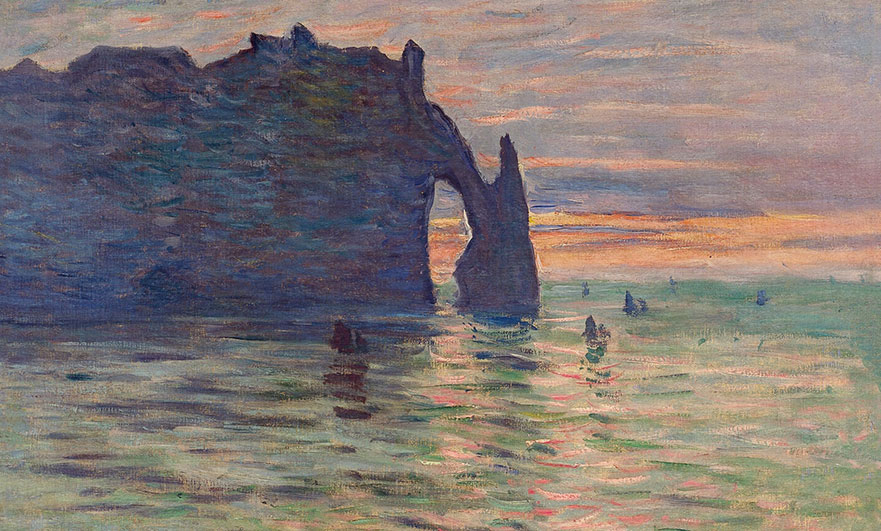
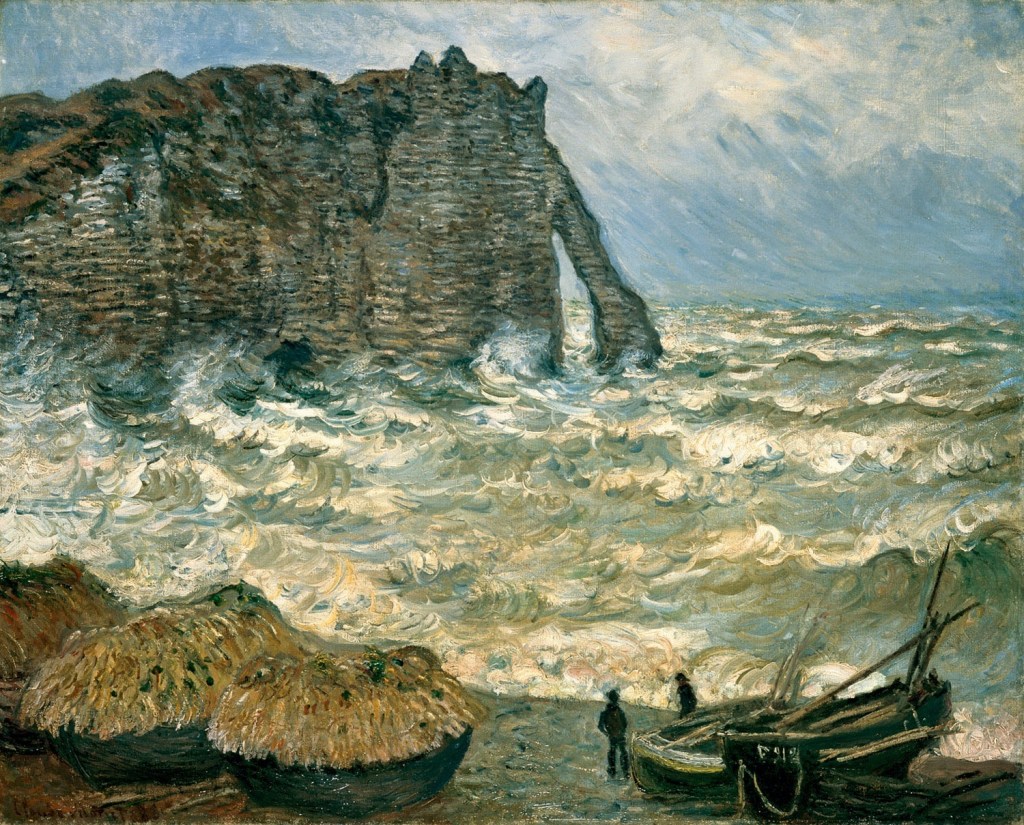
- I liked the descriptions of nature especially the coast of Normandy.
- Fishermen, their families, job, boats, beaches and cliffs.
- You can just smell the salt in the air of
- his beloved homeland, Etretat, France
- La mer – Jeanne’s strong feelings for the coast of Nomandy.
- The sea represents the infinite that stretches out before Jeanne
- and the many possibilities Une Vie has to offer her.
- La pluie – represents melancholy.
- Le soleil – represents joy
- Mausassant uses the changes in
- …seasons and nature to reflect Jeanne’s moods.

Last thoughts:
- The main character, Jeanne, is based on
- …Maupassant’s mother, Laure le Poittevin.
- She was a victim on an uphappy marriage and submitted
- herself to an adulterous and violent husband.
- Laure made a strong move…supported by her friend G. Flaubert
- and left her husband which was unusual in the 19th C.
- She concentrated all her attention on her son, Guy.
- As you read the book you can see the similarities
- between Laure and Jeanne.
- I enjoyed this book after I gave it time to settle in my mind.
- Maupassants’s Bel-Ami is his most polished novel.
- Both books are #Classics!
Prix Goncourt 2009: Trois femmes puissantes

- Author: M. NDiaye
- Title: Trois femmes puissantes
- Published: 2009
- Trivia: Awarded Prix Goncourt 2009
- Language: French (available in English translation)
- List Reading Challenges 2018
- Monthly reading planning
- List of French Books.
Notes:
NDiaye: She is the daughter of a French mother
and a Senegalese father she barely knows,
and married to a white Frenchman.
She firmly anchors autobiography in her stories.
Motif: NDiaye’s metamorphoses of people into animals (hypothetical)
in Three Strong Women (birds) as a form of escape or bad omens.
Story nr 1: Father: ‘perches’ in hammock and
sleeps in the flamboyant tree in his courtyard.
Story nr 2: bird crashed on windshield of a car twice!…bad omen
Story nr 3: young girl Khady
she tries to escape her circumstances…hoping she can soar away
like the bird “…un oiseau disparaissait au loin.”
…disappearing in the distance.
Story nr 1 – ‘Le mot juste’ was so balanced
every word packed a punch. There were few rambling thoughts
just the facts larded with emotion.
Plot: I loved this story that had a whiff of magic realism!
Story nr 2 – Run-on sentences, also known as fused sentences, occur
when two or more complete sentences are
squashed together without using proper punctuation.
NDiaye disappointed me with the use of run-on’s ad nauseam.
Plot: I did not like this story at all, “pointe barre!”. The story drags and ends up losing its focus entirely. Bah. #Confusing. If you feel as I did when reading story nr 2 just…”passez votre chemin”
…just move along to story nr 3!
Story nr 3 – This story is as smooth as silk…lucide, linéaire et lisable:
clear-sighted, with beginning-middle- end and most importantly…readable!
Last thoughts:
- I’m glad I got my emotional review on NDiaye’s book on paper
- …last night because I must adjust it.
- My ‘knee-jerk’ reaction to story 2 was due to my lack of
- French vocabulary.
- I was exasperated, exhausted and
- …disillusioned.
- I felt I’ll never learn French.
- That is not the best place to be when writing a review.
- The run on sentences confused my overworked brain.
- I just could not process the story.
- I returned to the part of story 2
- …that was my initial ‘breaking bad point’ this morning.
- I attempted to push through the story to the very end.
- I needed some strong coffee to help me.
- After reading all three stories I see:
- Three strong women – Noah – Fanta – Khady
- Three weak men – Noah’s father – Rudy – Lamine
- Three places:
- Noah in Senegal returning with difficulty
- Fanta in France thinking of Senegal…wishing she never left
- Khady in Senegal trying to get out
- Note: Senegal is never mentioned but there are markers
- in the story that point in that direction:
- Reubeuss prison, village Dara Salam,
- …arrondissement de Grand Youff, newspaper Le Soleil.
- Theme: The family is the basis in the 3 stories.
- The families are in decline and all lack a strong father figure.
- This is a clear link to NDiaye’s situation
- …when her father abandoned her
- …mother and sister to return to Senegal.
- Women: Each one of the heroines is torn between
- Senegal and France.
- Reading the stories you see them trying
- …to find there way between two continents.
- Marie NDiaye reveals her skills in three
- …completely different stories and styles.
- Unfortunately I did not like the second story.
- I hope to hear from others if
- …they also found it ‘rough reading’
- …be it in English or French.
- Strong point:
- I was most impressed by NDiaye’s vocabulary.
- She introduced me to so many new words
- Reading this book in French is not for the faint-hearted.
- It seems I’ve struggled with few of these books in 2018.
- My only compensation is
- ….I keep learning, and learning more French!
- #NeverGiveUp
Classic: Le Roman de la Rose (amour courtois)

- Author: G. de Lorris (1200-1240) et J. de Meun (1240-1305)
- Title: Le Roman de la Rose
- Published: 13th C
- Edition: Folio classique, ISBN 9782070375189
- Language: French
- List Challenges 2018
- Monthly planning
- Classic Club Master list
- Trivia: The first section of the poem was written by G. de Lorris
- 40 years later the work was completed by Jean de Meun.
- Trivia: This long poem was translated into Middle English verse by Chaucer
- The whole poem was translated into Modern English verse by F.S. Elilis
- Trivia: I’m reading the translation into Modern French by André Mary
Chapter 1
The Garden of Pleasure
- Wonderful descriptions of a paradise like garden
- with paintings decorating the wall of
- the énciente (enclosure) of virtues and vices.
- We meet some ladies and gentlemen frolicking
- and dancing (caroler).
- De Lorris describes there physical attributes
- lavish clothes (samit – heavy silk fabric)
- un riche samit décoré
Chapter 2:
The Spring of Narcissus:
- Descriptions are becoming increasingly more difficult.
- Do you know how many flowers, trees, herbs, grasses, insects….
- …are blooming and buzzing around in this orchard?
- Not to mention Narcissus falling for the ‘reflection trap’ in the pond
- Our narrator/poet seems to be hypnotized by the rose buds!
- Amour shoots five arrows flying into the heart of our narrator/poet.
- Ouch!
Chapter 3:
Hope and Despair
- This was the best chapter…..so far!
- Le Dieu d’Amour explains to our poet the
- his 13 commandments for courtly love.
- These rules were written in 13th C
- …but they seem timeless!
Conclusion:
- I will let you discover the rest of the book
- …does our poet/narrator
- …finally kiss his rose bud love?
- This is one of the oldest books
- …I’ve read this year (exclu myths).
- And I discovered….
- People have always been people.
- Cultures change, but humans don’t.
- Remember….. l’amour
- “The struggle is excessive and the joy is short-lived.” (pg 66)
- (La peine est excessive et la joie de courte durée.)
Last thoughts:
- Reading this book after struggling with the
- fire and brimstone religious text of Blaise Pascal felt like
- a relaxing, refreshing summer shower
- …after 4 week heat wave!
- Believe me I know how that feels!
Classic: Stendhal The Charterhouse of Parma
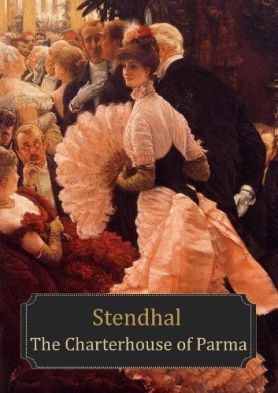
- Author: Stendhal
- Title: The Charterhouse of Parma
- Published: 1839
- Language: French
- List Reading Challenges 2018
- Monthly planning
- List of my French Books
- #CCBookReviews
Conclusion:
- Fabrice del Dongo, a young archbishop
- …gives his all to romance rather than to the Church.
- This creates complications for everyone around.
- Love triangle duchess Gina-Fabrice-Clélia is the basis of the book.
- The book collapses a few times:
- Battle of Waterloo, l’abbé Blanes reads the omens in Fabrice’s life.
- It takes 40 pages from the meeting with Giletti (hero’s rival over a love interest)
- to the knife fight resulting in Giletti’s death that puts Fabrice in prison.
- These are all scenes that don’t advance the action
- …and exhausted this reader.
- The story really gets underway when Fabrice enters prison
- …and falls in love with the jailer’s daughter, Clélia.
- This happens in chapter 18 that is more than halfway through the book.!
- If you can be patient and wait until the half way mark….
- you may enjoy this French classic.
Chateaubriand
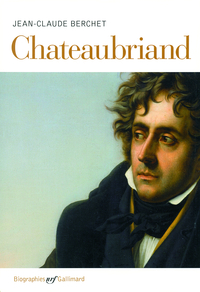
- Author: Jean-Claude Berchet (1939)
- Title: Chateaubriand
- Published: 2012
- Genre: biography
- Language: French
- Trivia: Berchet is a François-René Chateaubriand specialist.
- List Reading Challenges 2018
- Monthly planning
- Here is the list of my French Books.
- I have included reviews of books 2017 – 2018.
- Perhaps you can find a book you’d like to read!
Conclusion:
Strong point: combination of biography and history (start of Fr Revolution as experienced by Chateaubriand…interesting perspective! The entire system of medieval institutions had been destroyed!
Strong point: Berchet also takes time to explain the influence such great men as Malesherbes and Mirabeau had on Chateaubriand. The reader is treated to more than just the biography of Francois-Rene….but many more illustrious Frenchmen.
Travel: America, Chateaubriand traveled to the new world July – December 1791. He was bewitched (evoûté) by the landscape, people and especially the indians.
Chateaubriand: the man….was obsessed by the conviction that happiness is an illusion…elusive and not to be achieved. (pg 196)
Strong point: books like this etch ‘important dates and events’ in my mind more than all the ‘learn by heart’ studying done high-school.
I was never told to read an ‘extra historical book’ from a reading list to be used in class in addition to our text book! Why? There is so much more to learn that is NOT in the standard school books.
History: There are some good insights about the French Revolution in this book, 17 July 1789: You cannot fool all of the people….all of the time!
Louis XVI after fall of the Bastille proclaimed himself father of his ‘folk’. Unfortunately this ‘folk’ “ne tardera pas à lui couper la tête” !
They were quick to chop off his head!
Reading strategy: Decided to ‘skim’ 115 pages (231-347). We all know after Battle of Thionville (1792) C. was wounded, exiled to England, started writing his books and returned to France 06 May 1800. I’ve kept on ‘skimming’ when necessary.
Berchet goes ‘way overboard‘ with the years C. was in England. Many of his friends (Fontanes)…are included in this section and the death of C’s mother and sister Julie. Time to move on to history and Napoleon!
Structure of book: 50% biography – 25% travel journal (America, England, Italy, Greece, Turkey, Jerusalem, Egypt, Spain) 25% lives of other notables in Chateaubriand’s circle of friends. The book could have been 300 pages shorter.
Marriage: Arranged marriage with Celeste was a catastrophe. Chateaubriand had other love interests: Mme Delphine de Custine and Mme de Noailles.
Weak point: …useless, useless details! pg 540: the price of ‘La Vallée-aux-Loups’, the loan agreements and a list of furniture on the 1st floor of the building. This is just a waste of my reading time! Berchet: (ch 3) goes off course explaining Chateaubriand’s brother’s marriage contract!. If you read this book you get not only Francois René…but the entire family and in-laws!
Last thoughts:
- This book is NOT for the casual reader…comme moi!
- …who just wants to know about Chateaubriand in general terms.
- This book is for the serious scholar.
- Lesson learned:
- I should have just read Chateaubraind’s wikipedia page.
#Chateaubriand update:- I must wait and see every day
- …what Francois René C. has up his sleeve!
- He is NOT my idea of a perfect dinner guest.
- His brooding personality would make any soufflé collapse!
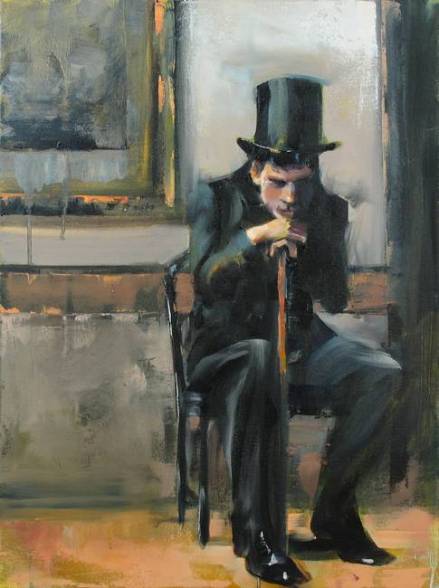
Brooding dinner guest…
Victor Hugo: Romancier de l’Abîme

Travailleurs de la mer
- Author: editor J. Hiddleston
- Title: Victor Hugo, Romancier de l’Abîme (essays)
- Published: 2002
- List Reading Challenges 2018
- Monthly reading planning
- Here is the list of the French Books Read.
- I have included reviews of books 2017 – 2018.
- Perhaps you can find a book you’d like to read!
Introduction:
- If you are interested reading any books by Victor Hugo
- ..it is always nice to have some back round information
- …you might not know!
- I’m reading Les Miserables at the moment
- …and want to read Hugo’s
- Dernier jour d’un condamné
- Travailleurs de la mer
- Here are a few notes I made after reading these essays.
Structure: 11 essays
7 essays in French
4 essays in English
Ch 2: Dernier jour d’un condamné
- Victor Hugo abandons ‘romanticisme noir’
- …in Bug-Jargal and Han d’Island.
- ..for romantic realism in Dernier jour d’un condamné.
- Hugo creates a character
- who presents arguments against capital punishment. (voice of V Hugo)
- Hugo uses the first person narrative.
- Trivia:…character never reveals the crime committed
- Trivia:…character reveals sarcastic bravoure
- ….rather than remorse for his crime.
Ch 6: Travailleurs de la mer
- In this chapter Delphine Glees draws my attention
- not only to Hugo’s writing Les Travalleurs de la mer
- but also to the drawing he made to accompany the book.
- Drawings do not represent the reality
- …but the fluctuating conditions of the sea and ships.
- Hugo stresses the impossibility of remaining stable in the world.

V. Hugo was also an artist
Ch 8: L’Homme qui rit
- This was a difficult chapter to understand
- because I have not read Hugo’s L’Homme qui rit.
- In this work Hugo uses costumes to reflect
- the personalities of the characters
- …and at times a sense of danger.
- Clothes are iridescent, opaque, white, black
- …and at time sparkling with lies!
- Themes Hugo often uses are:
- Gullibility (crédulité) of people (easily fooled)
- Poke fun at the grotesque – Quasimodo- in
- Notre-Dame de Paris …to forget their own misery.
- Manipulation of the aristocracy
- …sometimes court jesters are smarter than the king!
Ch 10: Barriers
- Hugo is fascinated by barriers…they are
- fragile, arbitrary and at times not ‘watertight’. (étanché)
- Barriers of the elements: Travailleurs de a mer
- Barriers of the social classes: Les Mis and Quatrevingt-treize
- Barriers that keep things out and keep thing in: Les Mis
- These frontiers exert pressure on the exterior and interior.
- The struggle between these frontiers will help humanity to advance.
- Hugo is interested in the shells people wear…their homes,
- their geographical shell (land of birth)
- …that may reveal their true identity.
- Hugo spends a great deal of time describing shells:
- constructions, edifices, scaffolds, walls, clothes that people wear.
- Shelters with barriers can be found in Les Mis:
- Gorgeau’s shack, the Petit-Picups convent, the house on rue Plumet
- …and ’l’éléphant de la Bastille.
Ch 11: Suicide
- Suicide is widespread in Hugo’s novels…
- …with the exception of Dernier jour d’un condamné.
- Some say Hugo’s obsession with suicide
- stems from the trauma of his brother’s suicide.
- Javert: commits suicide in Les Mis
- Valjean: places himself in a potentially suicidal position ( on the barricades)
- Trivia: Dante places suicides in the 7th circle of hell:
- … above Judas but beneath heretics and murderers.
- Suicide: the character is in an intolerable position
- no other way to make amends
- no other way of fulfilling a patriotic duty
- no other way of remaining faithful to one’s principles
- no other way of avoiding dishonour
- Javert: suicide represents
- the triumph of the spirit against the letter of the law.
- the triumph of humanity and love
- …against the blind and rigid principle.
Conclusion:
- This book was like a box of chocolates
- …you never know what you’re going to get!
- Not having read all the works of Victor Hugo
- …some of the references went over my head.
- But I did manage to lean one or two things.
- The tone of the book is academic.
- Personally I think some of the
- illustrious authors still need to ask themselves:
- Is this really good writing?
- Chapter 9 by Yves Gohin was an example.
- His analysis is impressive
- …but his style of writing left much to be desired.
- Gohin creates never-ending sentences that are
- impossible to read and grasp his concepts.
- He uses too many independent clauses.
- Gohin had something worthwhile to say
- …but his thoughts ramble clumsily from one to other
- …using sentence fragments that
- left ‘this reader’ exhausted and confused.
Biography: Berthe Morisot ‘Impressioniste’
- Author: D. Bona
- Title: Berthe Morisot: Le Secret de la femme en noir
- Published: 2000
- Language: French
- Trivia: Prix Goncourt de la Biographie 2000
- List Reading Challenges 2018
- Monthly reading planning
- #20BooksOfSummer
- List of Non-Fiction Books Read
Conclusion:
- This book was such an entertaining read.
- If you want to sharpen your ‘French Skills’
- I would recommend this book in a heartbeat.
- The French is easy to follow
- …and Berthe Morisot’s life is very interesting.
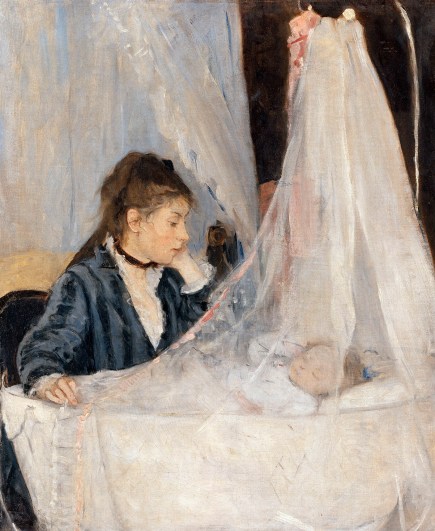
- Above is her ‘chef-d’oeuvre’ Le Berceau (1872).
- She painted her sister Edma and niece Blanche.
- Notice the shimmering quality of the cradle’s veil
- …the diagonal lines of the drapes behind Edma
- and flowing around the cradle.
- Notice the mother’s intimate gaze upon her infant
- …a moment of reflection, silence, peace with her
- …cheek leaning on her hand.
- Notice Edma’s bent left arm
- …a mirror image of the child’s arm.
- This paining is absolutely breathless.
- Trivia: After unsuccessful attempts to sell the painting
- …Le Berceau stayed in the model’s family
- …until it was bought by the Louvre in 1930.
Did you know?
Morisot was anorexic and at times fainted in front of the painting she was working on. After the birth of her daughter 1878 Berthe finally felt true joy. Her body rejuvenated and the dark circles under her eyes vanished.
Morisot was always referred to as ‘Madame’ by fellow artists and never Berthe.
Never commercially successful during her lifetime, she nevertheless outsold Claude Monet, Pierre-Auguste Renoir, and Alfred Sisley.
Morisot painted only 1 adult male...her husband Eugène Manet.


Last thoughts:
- I enjoy reading in French but it took me 5 years to
- build up a vocabulary.
- Of course I am still looking up words.
- A book that is easy to start with is the prize winning
- Charlotte by David Foenkinos.
- It was awarded Prix Renaudot 2014.
- Here is the LINK and I know you will enjoy it!
- Learning a 2nd or 3rd language opens up an entire
- new library for you.
- I can read books in English, French and Dutch!
- If I really try….I can get through a German book.
- All you have to do is choose a book
- …use this LINK for a very
- …good digital French-English dictionary (or other languages)
- …and you are starting a great adventure!
- Here is the list of the French Books Read.
- I have included reviews of books 2017 – 2018
Berthe Morisot:
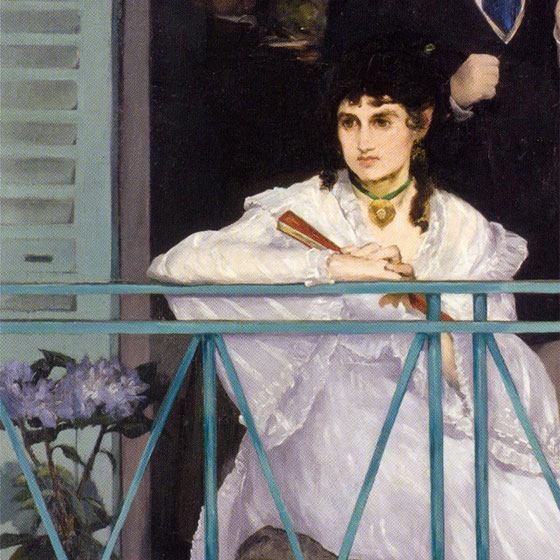
Le Balcon, E. Manet

Tartuffe
- Author: Molière
- Title: Tartuffe
- Language: French
- Preformed: 1669 first time Paris, Palais-Royal
- after being censured for years by the King.
- Trivia: List Reading Challenges 2018
- Monthly reading planning
- List of French Books
- List of Plays ( TBR)
Definition tartuffe:
- A person under the cover of a profound religious
- devotion and virtue tries to seduce
- his followers (entourage) for his own profit.
| Character | Description |
|---|---|
| Orgon | Head of the house and husband of Elmire, he is blinded by admiration for Tartuffe. |
| Tartuffe | Houseguest of Orgon, hypocritical religious devotee who attempts to seduce Elmire and foil Valère’s romantic quest. |
| Valère | The young romantic lead, who struggles to win the hand of his true love, Orgon’s daughter Mariane. |
| Madame Pernelle | Mother of Orgon; grandmother of Damis and Mariane |
| Elmire | Wife of Orgon, step-mother of Damis and Mariane |
| Dorine | Family housemaid, who tries to help expose Tartuffe and help Valère. |
| Cléante | Brother of Elmire, brother-in-law of Orgon |
| Mariane | Daughter of Orgon, the fiancée of Valère and sister of Damis |
| Damis | Son of Orgon; and brother of Mariane |
| Laurent | Servant of Tartuffe (non-speaking character) |
| Argas | Friend of Orgon who was anti-Louis XIV during the Fronde (mentioned but not seen). |
| Flipote | Servant of Madame Pernelle (non-speaking character) |
| Monsieur Loyal | A bailiff |
| A King’s Officer/The Exempt | An officer of the king |
Dramatic irony:
- M. Orgon is “blind”.
- He thinks Tartuffe will help him attain a place in heaven
- through pious devotion.
- Orgon offers Tartuffe a place in his home,
- his assets and even betrothed his daughter to the rascal.
- The family members (except his mother Mme Perenelle)
- and audience are aware of Tartuffe’s hypocrisy.
Plot:
- The plot is easy to follow and you can find all that information
- on the Tartuffe wikipedia page.
Conclusion:
- Reading this play was hard work.
- But I put in the hours and have made some discoveries.
- Molière was writing for his time and the play feels outdated.
- France had just witnessed the manipulation of
- Queen Anne of Austria by the
- La Compagine du Saint-Sacrement, a fundamentalist religious society.
- Anne was named regent upon her husband’s death (Louis XIII).
- Their four-year-old son was later crowned King Louis XIV of France.
- Moliere wanted to denounce by means of the play ‘Tartuffe”
- the power of this society.
- The society denounced heretics,
- …libertine morals and other pastimes the French love.
- it functioned as a sort of Inquisition!
- The King of France and the Bishop of Paris had the play banned!
Last thoughts:
- After reading the play I felt I was missing something.
- I decided to watch a french version on
- ….You Tube and follow the script.
- It was awful!
- The stage design was minimalist
- …costumes were drab (looked like rags….)
- …and the actors did not bring the nuances I hoped to find.
- All they did was shout!
- Again…I felt I was missing something.
- I decided to watch the Royal Shakespeare Company
- TV version broadcast in November 1985 on BBC
- …adapted by the Oscar winner writer Christopher Hampton.
- It was an absolute delight to watch such great English actors as
- Nigel Hawthorne as Orgon and Sir Anthony Sher as Tartuffe.
- Sher is unquestionably a Tartuffe that even Molière would love!
- I’m sure the film is available at better libraries…
- and here is the link for the play on You Tube.
- My advice? Read the play in English
- …if you are feeling adventurous …read it in French.
- Then sit down and enjoy this wonderful production
- of Tartuffe by Molière.
Trivia:
- Christopher Hampton (British playwright, 1946)
- has penned a new adaptation of Molière’s
- classic comedy Tartuffe, which will begin performances
- May 25 2018 at the Theatre Royal Haymarket, London.
- It will be directed by Gerald Garutti.
- In this new adaptation, the 17th century comedy moves to America, where a
- French film tycoon finds his life uprooted by Tartuffe.
- He is a radical American evangelist.
- Hmmm…interesting!

P
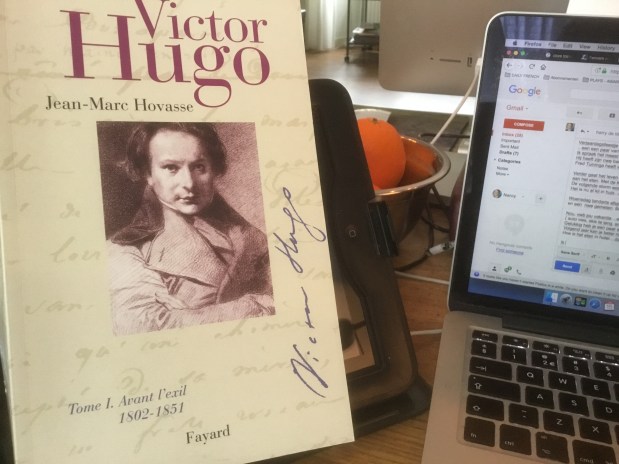
Victor Hugo vol 1 (1802-1851)

- Author: Jean-Marc Hovasse
- Title: Victor Hugo: vol 1 Avant l’exil 1802-1851 (1159 pg)
- Published: 2015
- Trivia: Monthy Reading Plan
- Trivia: Challenges 2018
- #LesMisReadalong
- @nicksenger.com
Conclusion:
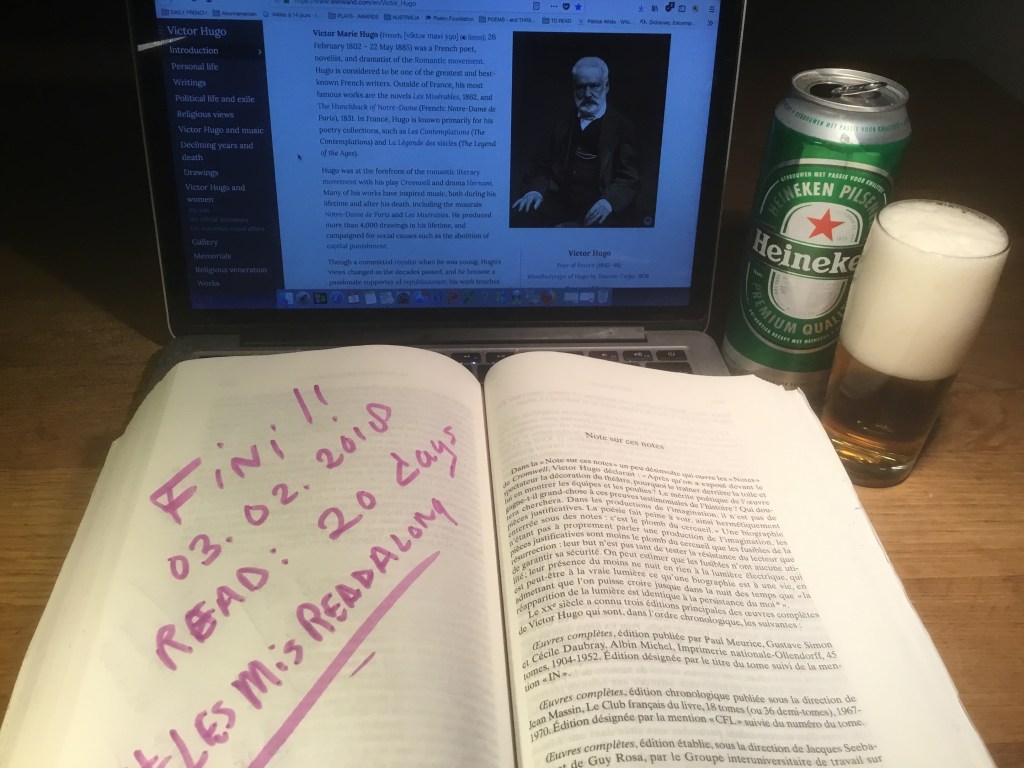
- I took me 3 weeks to read this book.
- I was exhasted when I reached pg 1159
- It felt like brushing my teeth, it became a daily habit.
- I jotted down some thoughts during my reading.
- It is impossible to give a review of the total book.
- I just cannot remember everything.
- I hope you can glean some information
- …from my notes that will interest you.
Notes:
Autobiographical: Hugo saturated all his works with memories, confidences and fragmented confessions. The author embedded characters/places in his poems and stories that were linked to his own name Hugo or people in his childhood.
There is secret code in Les Miserables that only Hugo and his long time lover Juliette Drouet would understand!
Notes: amazing family tree HUGO from father and mother’s side -ending with Hugo’s granddaughter Jeanne (1869-1941).Hovasse even includes the family tree of Victor Hugo’s (1802-1885) long time mistress Juliette Drouet (1806-1883)!
Notes: Some think Victor Hugo’s father was `not Leopold Sophie’s husband…but her lover General Victor Lahore! She asked him to be Hugo’s godfather and she named the baby after him! Hmmm.
Marriage of Hugo’a parents: Leopold and Sopie, was a train wreck!
Trivia: Tome IV, livre II, chapitre III. Il est intitulé “Apparition du père Mabeuf”
The character M. Mabeuf is a reference to a dictée that Victor Hugo completed when he was 7 years old. He made just one mistake…he left the ‘O’ out of boeuf! That simple incident found its way into one of the greatest novels written!
Trivia: The family life Valjean experienced rue Plumet resembles the 18 months that Hugo spent in Feuillantines….this was the first time he felt a loving family feeling….he was 7 yrs old.
Personage: Outlaw Jean Valjean is modeled on General Lahorie Victor Hugo’s godfather.
Spain: Victor Hugo’s father was stationed in Spain (general) and Victor spoke better Spanish than French at the age of 10 yrs old.
LesMis: chapter 1817 -this is a list of ‘triva’ that occurred in 1817. The most important fact is left out. Victor Hugo had entered a poem in the contest for Prix Poesie de L”Academie française…..and got an honourable mention. He was only 15 yrs but it was his official debut as a man of French Letters!
Quote: pg 210: Hugo’s advice: Live simply as other men…see what they see, feel what they feel and think a little more than they think!
Autobiographical: Hugo was living on a very small budget 1822 and sharing a room with his cousin Aldolphe. Reading LesMis notice the Marius’s budget this describes the real situation of Hugo! Marius and Hugo both had only 2 suits!
Autobiographical: The marriage of Marius and Cosette is a mixture of fact and fiction. The date of the marriage represents the first night with Juliet Drouet, VH’s long time lover, 16.02.1833.
The place of the wedding is not St. Suplice where VH and Adele were married….but Hugo moved it to St. Paul where he beloved daughter Léopoldine married her husband.
The sudden departure of Valjean from the marriage celebration represents the break with Eugène, Hugo’s brother, who was secretly in love with Adele himself. The description of the marriage night in Les Mis is apparently not of Hugo’s actual wedding night (12 Oct 1822) but the first night with Julliet Drouet (16 Febr 1833). Ouch!
Reading plan: the book turns out to be more than a biography…it is a guide through the Romantic period…and brushing against the next movement that was a reaction to Romanticism….’Parnassianism’.
I found that some chapters were difficult to read because I did not know many poets mentioned.
Trivia: Victor Hugo preferred beer over wine!
LesMis: Fantine is born 2 days after Victor Hugo was elected to Academie française (1841). Hugo witnessed a young girl being harassed in the street…this became Fantine.
M. Madeleine = Victor Hugo. Hugo is now taking notes about ‘les temps présents’ to help his move from literature to politics.
Wedding: Victor Hugo’s daughter Léopoldinen married on 15 Febr 1843. The ceremony was moved 1 day forward as not to coincide with 10th anniversary the affair H had started with Juliette Drouet. Cosette’s wedding day DID correspond with 16 February and was a coded message to Hugo’s mistress Juliette. Cosette’s wedding gown is the description of the dress Léopoldine wore on her wedding day.
Note: I was surprised how quickly Hovasse handed the wedding and death of Hugo’s most beloved daughter. It was done in 3 pages! Yet the reader is dragged through an ‘analyse extrêmement poussée’ (highly detailed) day to day description of 8 road trips!
Note: pg 948-952 1845: …very touching moments between Louis-Philippe (25 yrs older than VH) and the poet. Louis Philippe asked VH to linger after other guests left. LP spoke candidly and hoped VH would be a witness for history and reveal the man LP really was under the burden of the crown of France. Hugo wrote a condense version of these conversation is his chapter ‘Louis-Phillippe” in LesMis. (volume 4 ‘St Denis’, book 1 ch 3)
Updates Goodreads:
15.01.2018
Massive biography and it is only vol 1 (1802-1851)..but is is so good!
It read like a novel!”
16.01.2018
Victor Hugo ‘s writing is saturated with confidences and fragmented confessions. In 1871 after his exile Hugo visited many sites from his childhood. He was sad to see that only a patch of grass and a dilapidated section of a wall was left. “It was not worth looking at if not with the profound eye of memories”
20.01.2018
#LesMisReadalong + reading biography of V. Hugo:
Victor experienced a sad childhood coping with a messy and bitter divorce of his parents. Hugo was sent to boarding school (imprisonment was more like it…) by his father. Education was strict but Victor still managed some ‘joie de vivre’ by memorizing 30-40 lines of Hoarce or Virgil each night and in the morning translated the verses into French.
He was just 13 yr.
23.01.2018
#LesMisReadalong Poet friends (romantics, Royalists) A. Soumet, A. de Vigny turn a cold shoulder towards Hugo….as his political views dirft into liberalism. This hurts the sensitive Victor.
24.01.2018
#LesMisReadalong – very little about personal life of Victor Hugo only a few pages about his wedding (12 Oct 1822), birth son (1823-1823) and joy when daughter Leopoldien is born and is healthy. The rest was about literary publications (la Muse Francaise) and other poets involved. Hugo attends coronation King Charles X in Reims. All in all…a lot of reading and found only 2 references to things in Les Mis.
26.01.2018
#LesMisReadalong: Keep reading Les Mis daily chapter then…tackle the massive biography. Stats: 10 days, read 5 of 10 chapters, 380/1159 pages, Victor Hugo is 27 yr and just published his famous Odes and Ballads (1829) Expected more personal history but the emphasis is mostly on his writings, the Romantic movement and the other family, poets, publishers, illustrators and friends that swirl around Hugo. Exahusted.
28.01.2018
#LesMisReadalong – Success has its dark side. VH is only 28 yrs old and his world is starting to crumble. Brouhaha about play Hermani (banned by Charles X), defied censure and the play is a hit. Unfortunately VH is blind and does not see his marriage weakening under the pressure of fame. The ultimate deception: does Adèle feel more than friendship for VH’s closest friend Saint-Beuve? VH is a genius but feels weak.
29.01.2018
#LesMisReadalong – trivia about Victor Hugo
Crushing reviews of Notre-Dame de Paris (1831):
Stendhal thinks it is muck
Sainte-Beuve thinks it is not catholic enough.
Montelembert likes part about ND’s architecture….the rest, mèh!
Goethe thinks its is abominable…could hardly finish it.
Chateaubriand….no comment.
Oh, critics…..what do they know?
Notre-Dame de Parsis is still a classic!
30.01.2018
#LesMisReadalong- trivia: Victor Hugo used the biography of his mistress (Juliette Drouet) as a basis for Fantine….both orphans at a young age, placed in the care of a convent..both had to a struggle to survive.
This book is more than a biography…it is a panoramic view of the literary world of Paris 1790-1885. Classicists – art for art’s sake VS Romantics – usefulness of art for political and social change.
31.01.2108
#LesMisReadalong – Love affair with Juliette Drouet is dripping with passion. JD writes him every day…VH is not reading them as he used to. JD does not even come close to Mme Sévigné’s style. (dame des belle lettres 1626-1676). How many times can you say je t’adore? We get it!. The reader knows that VH will be starting his next romance with Leonie d’Aunet in 1837. VH is drawn to ladies like a moth to a flame!
01.02.2018
#LesMisReadalong- VH travels with Juliette but he is always taking notes, making sketches of cathedrals, architecture, towers. Visits ‘bagne’ (prison) in Toulon and Brest leave lasting impressions that he used in Les Mis. VH is elected to Academie française and L’ Assemblée. Death of Balzac leaves VH stunned…(1850). Life is still complicated: VH has wife, 4 children 2 mistresses (Juleitte, Léonie) and muse, Louise.
03.02.2018
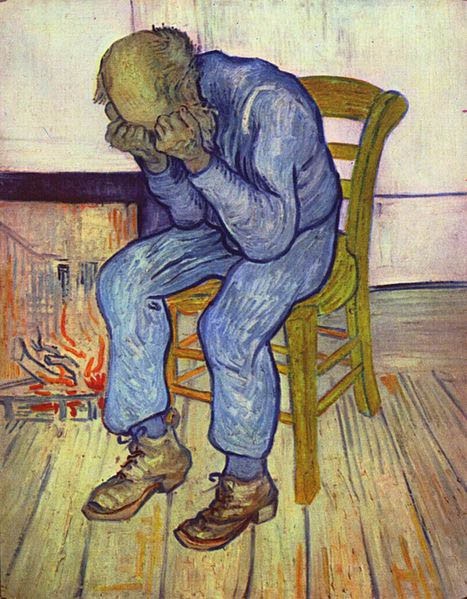
#LesMisReadalong I needed some visual by Vincent Van Gogh to push me today. Starting the last 100 pages of Victor Hugo bio (very long book in French ) and I am determined to reach the finish line tonight! #NeedCoffee
Finally VH achieves his goal…be the next René Chateaubriand! RC was 32 years older than VH and his role model. RC was poet and given peerage in 1815. VH was poet and given peerage 1845. He entered the Higher Chamber as a pair de France, where he spoke against the death penalty and social injustice, and in favour of freedom of the press and self-government for Poland.
Looking ahead….Note: Vol 2 Book 6 ch 7 coded message and reference to mistess Juliette Drouet
The names of Gauvain and Drouet are metioned.
Gauvain is Juliette’s family name and Drouet is the name she took for the theater. It is the name of a military uncle who adopted her at an early age.
Last chapters Whew: ..a lot of politics! Thriling to read how Victor Hugo managed to escape Paris 05.02.1851 after coup’d’état with a price on his head of 25.000 francs!
…Victor is only 49 yr…ready to go into exile after coup d’état 02 December 1851. We still have a long way to go! But having witnessed the massacres on the barricades….Hugo is determined to write down all that he saw in Les Misérables! #LesMisReadalong
Lemaitre: Couleurs de l’incendie

- Author: P. Lemaitre
- Title: Couleurs de l’incendie
- Published: 2018
- Trivia: List Reading Challenges 2018
- Trivia: Magic Square Challenge – A Translated book
- Monthly reading plan
- Theme: morality of revenge …when is revenge justified?
- Plot: Main character (Madeleine) has been wronged and becomes obsessed by revenge.
- Classic elements: disguise, deception and ‘framing’ victim with false evidence
- Arch-types:
- Madeline: The Mistreated Villain:
- A character who does things which the audience perceives as wicked,
- ….but only because he has been driven to them by the way she has been treated.
- Gustave: The Flawed Ruler:
- This powerful man with a flaw which causes his downfall.
- Paul: The Innocent Babe:
- The babe is often a victim of malignancy and
- …is the trigger for the revenge played out in the plot.
- M. Dupré: The Sidekick/The Clever ‘fixer’:
- The friend who helps main character carry out her Machiavellian plans.
Conclusion:
- This book is the second in Lemaitre’s new trilogy.
- The first book Au revoir là-haut was dazzling!
- The film version has just been nominated for 13 Caesars (French Oscars)
- If you haven’t read it….then put it on your TBR!
- With regards to Couleurs de l’incendie
- ...it left me wanting.
- It was missing something:
- the magical, lyrical text (1st book ‘clever scam’)
- no dramatic dialogue: heated rhythmic dispute to create a powerful effect.
- (1st book: Alfred and Edward were always arguing)
- In Couleurs de l’incendie …it was all ‘comme il faut’.
- Lemaitre uses ‘breaking The fourth wall only a few times.
- This is the imaginary wall that separates
- …the readers from the characters in the story.
- Perhaps he could have done that more often to draw ‘this reader’
- into the book.
- I read this book, but I was not ‘swept off my feet’ .
- I hope we will see more of his thrillers (polars) in the future.
- That is Pierre Lemaitre’s strongest genre.
Last thoughts:
BOOK: disappointing:
ALTHOUGH TEMPTED – Bien que tentée
AFTER HAVING HEARD – après avoir entendu ( after hearing…)
A REVIEW – une critique littéraire,
A READING OF THE BOOK – la lecture de ce livre
FINALLY DISAPPOINTED ME – m’a finalement déçue
Rien à voir avec (nothing like….)
Au-revoir là haut. Dommage !
 NancyElin.blog