
Classic: Stendhal The Charterhouse of Parma

- Author: Stendhal
- Title: The Charterhouse of Parma
- Published: 1839
- Language: French
- List Reading Challenges 2018
- Monthly planning
- List of my French Books
- #CCBookReviews
Conclusion:
- Fabrice del Dongo, a young archbishop
- …gives his all to romance rather than to the Church.
- This creates complications for everyone around.
- Love triangle duchess Gina-Fabrice-Clélia is the basis of the book.
- The book collapses a few times:
- Battle of Waterloo, l’abbé Blanes reads the omens in Fabrice’s life.
- It takes 40 pages from the meeting with Giletti (hero’s rival over a love interest)
- to the knife fight resulting in Giletti’s death that puts Fabrice in prison.
- These are all scenes that don’t advance the action
- …and exhausted this reader.
- The story really gets underway when Fabrice enters prison
- …and falls in love with the jailer’s daughter, Clélia.
- This happens in chapter 18 that is more than halfway through the book.!
- If you can be patient and wait until the half way mark….
- you may enjoy this French classic.
Chateaubriand

- Author: Jean-Claude Berchet (1939)
- Title: Chateaubriand
- Published: 2012
- Genre: biography
- Language: French
- Trivia: Berchet is a François-René Chateaubriand specialist.
- List Reading Challenges 2018
- Monthly planning
- Here is the list of my French Books.
- I have included reviews of books 2017 – 2018.
- Perhaps you can find a book you’d like to read!
Conclusion:
Strong point: combination of biography and history (start of Fr Revolution as experienced by Chateaubriand…interesting perspective! The entire system of medieval institutions had been destroyed!
Strong point: Berchet also takes time to explain the influence such great men as Malesherbes and Mirabeau had on Chateaubriand. The reader is treated to more than just the biography of Francois-Rene….but many more illustrious Frenchmen.
Travel: America, Chateaubriand traveled to the new world July – December 1791. He was bewitched (evoûté) by the landscape, people and especially the indians.
Chateaubriand: the man….was obsessed by the conviction that happiness is an illusion…elusive and not to be achieved. (pg 196)
Strong point: books like this etch ‘important dates and events’ in my mind more than all the ‘learn by heart’ studying done high-school.
I was never told to read an ‘extra historical book’ from a reading list to be used in class in addition to our text book! Why? There is so much more to learn that is NOT in the standard school books.
History: There are some good insights about the French Revolution in this book, 17 July 1789: You cannot fool all of the people….all of the time!
Louis XVI after fall of the Bastille proclaimed himself father of his ‘folk’. Unfortunately this ‘folk’ “ne tardera pas à lui couper la tête” !
They were quick to chop off his head!
Reading strategy: Decided to ‘skim’ 115 pages (231-347). We all know after Battle of Thionville (1792) C. was wounded, exiled to England, started writing his books and returned to France 06 May 1800. I’ve kept on ‘skimming’ when necessary.
Berchet goes ‘way overboard‘ with the years C. was in England. Many of his friends (Fontanes)…are included in this section and the death of C’s mother and sister Julie. Time to move on to history and Napoleon!
Structure of book: 50% biography – 25% travel journal (America, England, Italy, Greece, Turkey, Jerusalem, Egypt, Spain) 25% lives of other notables in Chateaubriand’s circle of friends. The book could have been 300 pages shorter.
Marriage: Arranged marriage with Celeste was a catastrophe. Chateaubriand had other love interests: Mme Delphine de Custine and Mme de Noailles.
Weak point: …useless, useless details! pg 540: the price of ‘La Vallée-aux-Loups’, the loan agreements and a list of furniture on the 1st floor of the building. This is just a waste of my reading time! Berchet: (ch 3) goes off course explaining Chateaubriand’s brother’s marriage contract!. If you read this book you get not only Francois René…but the entire family and in-laws!
Last thoughts:
- This book is NOT for the casual reader…comme moi!
- …who just wants to know about Chateaubriand in general terms.
- This book is for the serious scholar.
- Lesson learned:
- I should have just read Chateaubraind’s wikipedia page.
#Chateaubriand update:- I must wait and see every day
- …what Francois René C. has up his sleeve!
- He is NOT my idea of a perfect dinner guest.
- His brooding personality would make any soufflé collapse!
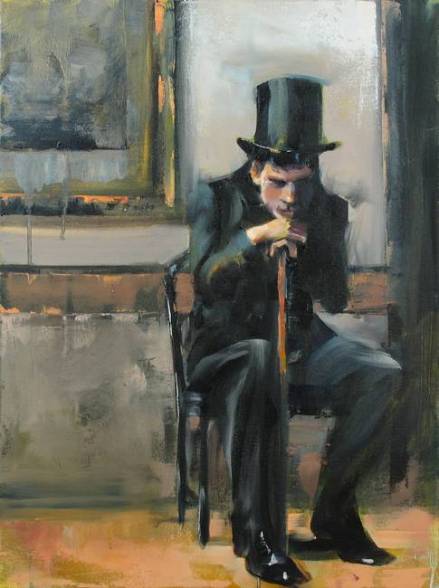
Brooding dinner guest…
#Paris In July Quiche Lorraine
- I just heard from Tamara @Thyme-For-Tea
- that #ParisInJuly has been extended until this Saturday.
- Here is my LAST post…and I want to share my
- French cooking experience.
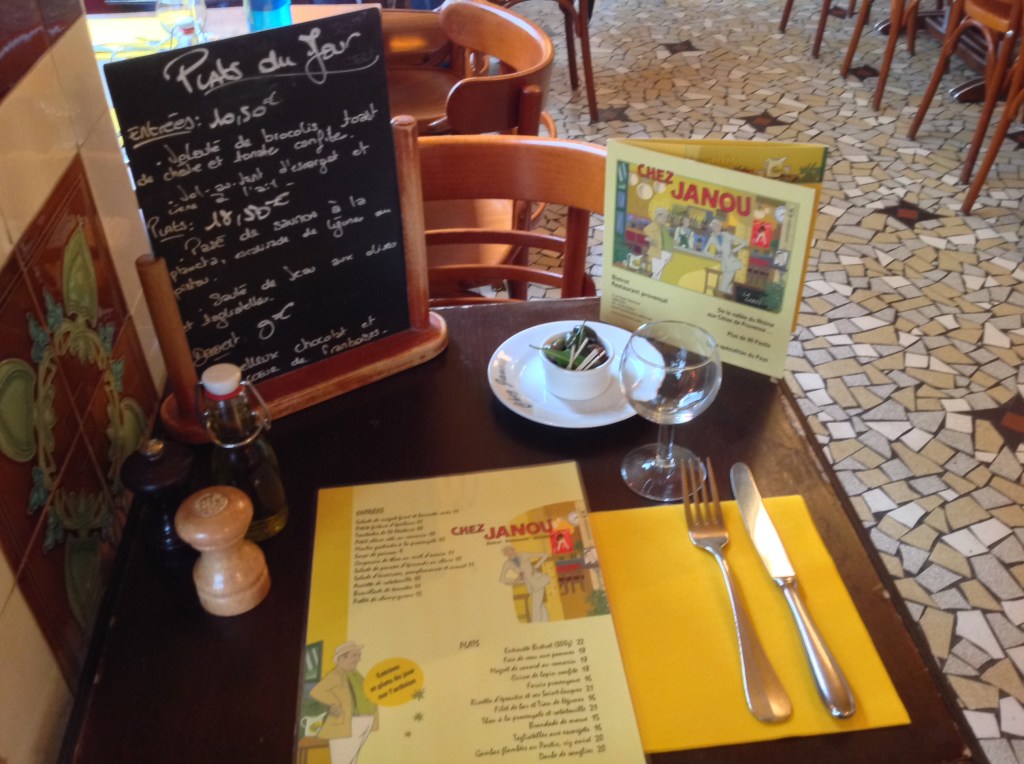
- I had a great lunch in Le Marais by Chez Janou
- 2 Rue Roger Verlomme, Paris.
- Here is the menu in this bistrot provençal.
- Today I made one of my favorite bistrot food: Quiche lorraine.
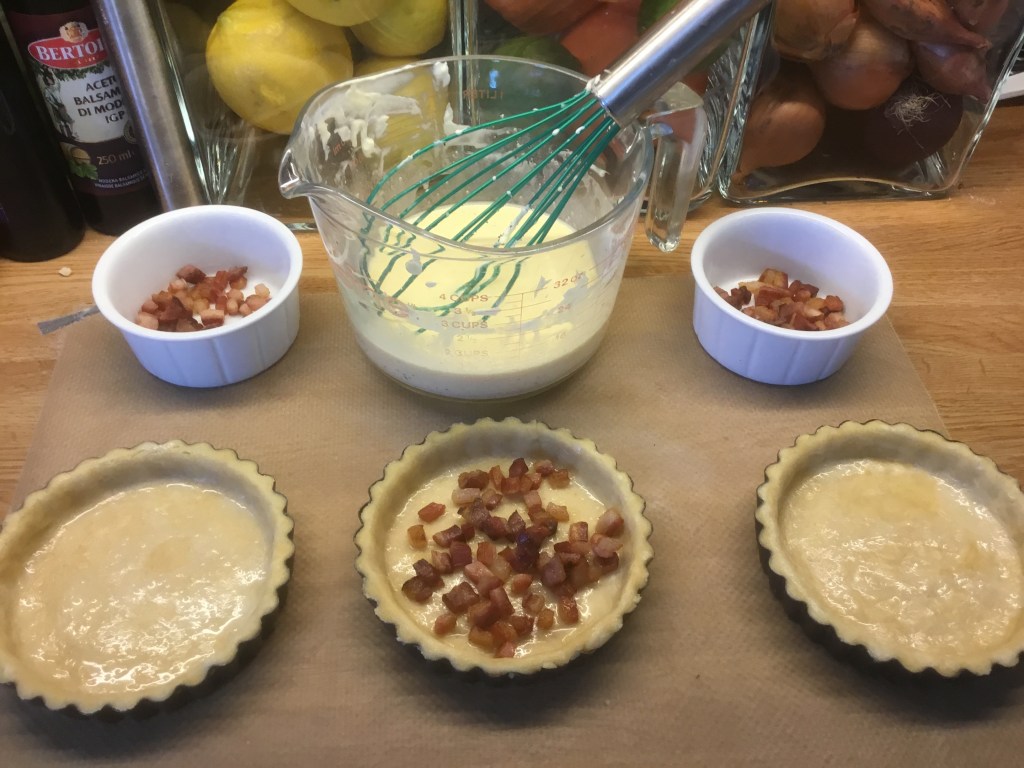
- I made the short pastry dough and this yielded 3 mini quiche.
- Problem: how to get the pastery in those little pans?
- As you can see I cut a round 13 cm and placed over the tin.
- Then I gathered the dough and rolled out another 13 cm round etc.
- You can find the recipe in La Petite Cuisine à Paris by R. Khoo (pg 100)
- Mini Quiche Lorraine: 180 C (350 F) – 20 min
- Have a look at the photos!
Préparation:

Assembler:
Bon Appétit!

Victor Hugo: Romancier de l’Abîme

Travailleurs de la mer
- Author: editor J. Hiddleston
- Title: Victor Hugo, Romancier de l’Abîme (essays)
- Published: 2002
- List Reading Challenges 2018
- Monthly reading planning
- Here is the list of the French Books Read.
- I have included reviews of books 2017 – 2018.
- Perhaps you can find a book you’d like to read!
Introduction:
- If you are interested reading any books by Victor Hugo
- ..it is always nice to have some back round information
- …you might not know!
- I’m reading Les Miserables at the moment
- …and want to read Hugo’s
- Dernier jour d’un condamné
- Travailleurs de la mer
- Here are a few notes I made after reading these essays.
Structure: 11 essays
7 essays in French
4 essays in English
Ch 2: Dernier jour d’un condamné
- Victor Hugo abandons ‘romanticisme noir’
- …in Bug-Jargal and Han d’Island.
- ..for romantic realism in Dernier jour d’un condamné.
- Hugo creates a character
- who presents arguments against capital punishment. (voice of V Hugo)
- Hugo uses the first person narrative.
- Trivia:…character never reveals the crime committed
- Trivia:…character reveals sarcastic bravoure
- ….rather than remorse for his crime.
Ch 6: Travailleurs de la mer
- In this chapter Delphine Glees draws my attention
- not only to Hugo’s writing Les Travalleurs de la mer
- but also to the drawing he made to accompany the book.
- Drawings do not represent the reality
- …but the fluctuating conditions of the sea and ships.
- Hugo stresses the impossibility of remaining stable in the world.

V. Hugo was also an artist
Ch 8: L’Homme qui rit
- This was a difficult chapter to understand
- because I have not read Hugo’s L’Homme qui rit.
- In this work Hugo uses costumes to reflect
- the personalities of the characters
- …and at times a sense of danger.
- Clothes are iridescent, opaque, white, black
- …and at time sparkling with lies!
- Themes Hugo often uses are:
- Gullibility (crédulité) of people (easily fooled)
- Poke fun at the grotesque – Quasimodo- in
- Notre-Dame de Paris …to forget their own misery.
- Manipulation of the aristocracy
- …sometimes court jesters are smarter than the king!
Ch 10: Barriers
- Hugo is fascinated by barriers…they are
- fragile, arbitrary and at times not ‘watertight’. (étanché)
- Barriers of the elements: Travailleurs de a mer
- Barriers of the social classes: Les Mis and Quatrevingt-treize
- Barriers that keep things out and keep thing in: Les Mis
- These frontiers exert pressure on the exterior and interior.
- The struggle between these frontiers will help humanity to advance.
- Hugo is interested in the shells people wear…their homes,
- their geographical shell (land of birth)
- …that may reveal their true identity.
- Hugo spends a great deal of time describing shells:
- constructions, edifices, scaffolds, walls, clothes that people wear.
- Shelters with barriers can be found in Les Mis:
- Gorgeau’s shack, the Petit-Picups convent, the house on rue Plumet
- …and ’l’éléphant de la Bastille.
Ch 11: Suicide
- Suicide is widespread in Hugo’s novels…
- …with the exception of Dernier jour d’un condamné.
- Some say Hugo’s obsession with suicide
- stems from the trauma of his brother’s suicide.
- Javert: commits suicide in Les Mis
- Valjean: places himself in a potentially suicidal position ( on the barricades)
- Trivia: Dante places suicides in the 7th circle of hell:
- … above Judas but beneath heretics and murderers.
- Suicide: the character is in an intolerable position
- no other way to make amends
- no other way of fulfilling a patriotic duty
- no other way of remaining faithful to one’s principles
- no other way of avoiding dishonour
- Javert: suicide represents
- the triumph of the spirit against the letter of the law.
- the triumph of humanity and love
- …against the blind and rigid principle.
Conclusion:
- This book was like a box of chocolates
- …you never know what you’re going to get!
- Not having read all the works of Victor Hugo
- …some of the references went over my head.
- But I did manage to lean one or two things.
- The tone of the book is academic.
- Personally I think some of the
- illustrious authors still need to ask themselves:
- Is this really good writing?
- Chapter 9 by Yves Gohin was an example.
- His analysis is impressive
- …but his style of writing left much to be desired.
- Gohin creates never-ending sentences that are
- impossible to read and grasp his concepts.
- He uses too many independent clauses.
- Gohin had something worthwhile to say
- …but his thoughts ramble clumsily from one to other
- …using sentence fragments that
- left ‘this reader’ exhausted and confused.

Biography: Berthe Morisot ‘Impressioniste’
- Author: D. Bona
- Title: Berthe Morisot: Le Secret de la femme en noir
- Published: 2000
- Language: French
- Trivia: Prix Goncourt de la Biographie 2000
- List Reading Challenges 2018
- Monthly reading planning
- #20BooksOfSummer
- List of Non-Fiction Books Read
Conclusion:
- This book was such an entertaining read.
- If you want to sharpen your ‘French Skills’
- I would recommend this book in a heartbeat.
- The French is easy to follow
- …and Berthe Morisot’s life is very interesting.
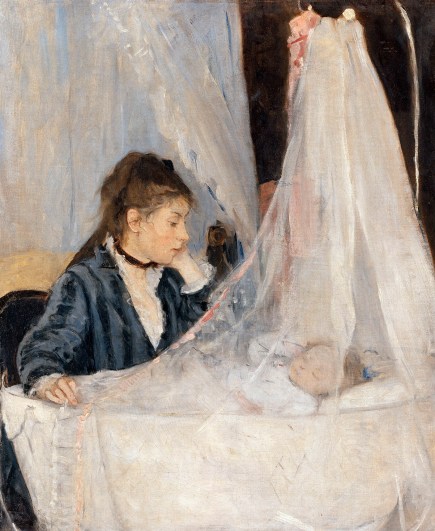
- Above is her ‘chef-d’oeuvre’ Le Berceau (1872).
- She painted her sister Edma and niece Blanche.
- Notice the shimmering quality of the cradle’s veil
- …the diagonal lines of the drapes behind Edma
- and flowing around the cradle.
- Notice the mother’s intimate gaze upon her infant
- …a moment of reflection, silence, peace with her
- …cheek leaning on her hand.
- Notice Edma’s bent left arm
- …a mirror image of the child’s arm.
- This paining is absolutely breathless.
- Trivia: After unsuccessful attempts to sell the painting
- …Le Berceau stayed in the model’s family
- …until it was bought by the Louvre in 1930.
Did you know?
Morisot was anorexic and at times fainted in front of the painting she was working on. After the birth of her daughter 1878 Berthe finally felt true joy. Her body rejuvenated and the dark circles under her eyes vanished.
Morisot was always referred to as ‘Madame’ by fellow artists and never Berthe.
Never commercially successful during her lifetime, she nevertheless outsold Claude Monet, Pierre-Auguste Renoir, and Alfred Sisley.
Morisot painted only 1 adult male...her husband Eugène Manet.


Last thoughts:
- I enjoy reading in French but it took me 5 years to
- build up a vocabulary.
- Of course I am still looking up words.
- A book that is easy to start with is the prize winning
- Charlotte by David Foenkinos.
- It was awarded Prix Renaudot 2014.
- Here is the LINK and I know you will enjoy it!
- Learning a 2nd or 3rd language opens up an entire
- new library for you.
- I can read books in English, French and Dutch!
- If I really try….I can get through a German book.
- All you have to do is choose a book
- …use this LINK for a very
- …good digital French-English dictionary (or other languages)
- …and you are starting a great adventure!
- Here is the list of the French Books Read.
- I have included reviews of books 2017 – 2018
Berthe Morisot:
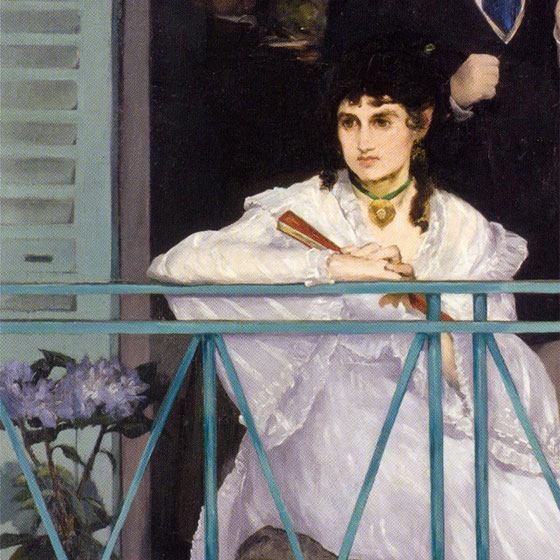
Le Balcon, E. Manet

#Paris In July Madeleines
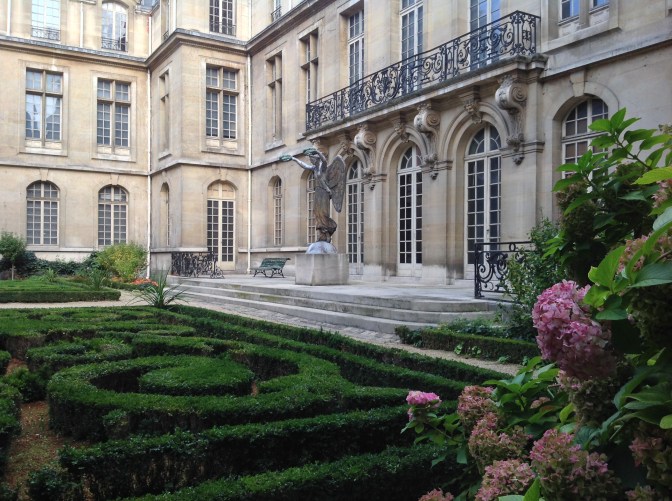
Musée Carnavalet:
Un voyage dans le Paris de la Belle Époque sur les pas de Marcel Proust, à la recherche d’un temps perdu…

What is the first thing you think of when you say Marcel Proust?
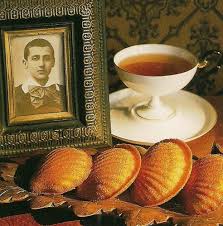
- Yes…and that is what I am going to try to make!
- Recipe is in La Petite Cuisine à Paris, page 88
- Madeleines à la crème de citron
Preparation:

Batter:
In three easy steps:
- Kitchen Aid (…if you have one) : mix eggs and sugar until frothy and pale yellow
- Bowl nr 1: sieve flour and baking powder then add the zest of 1 lemon
- Large bowl nr 2: mix milk with cooled melted butter then
- …add flour mixture is 2 parts.
- Let batter cool if fridge for a few hours or overnight.
- The recipe is in La Peitie Cuisine à Paris by R. Khoo, pg 88.
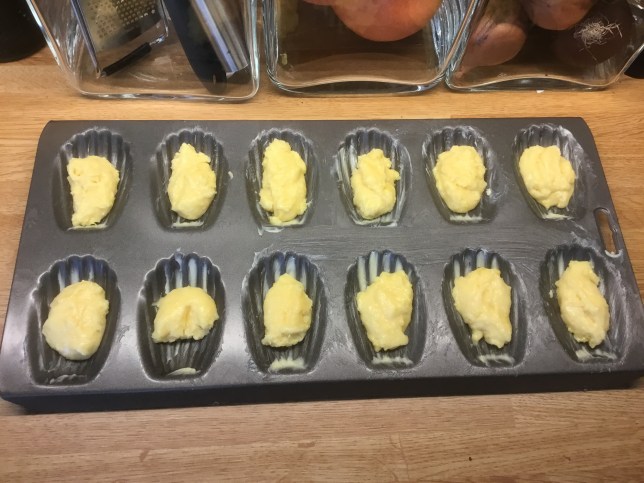
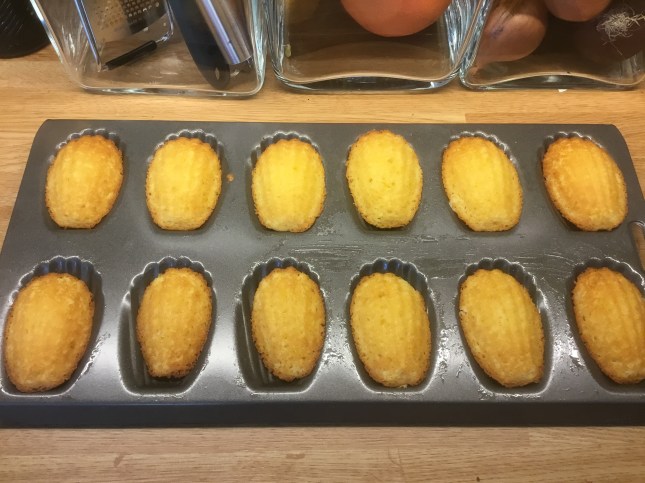
- I was up early this morning and baked the little cakes.
- Just 1 level tablespoon is enough batter in each form.
- You have to stay near the oven because these delicacies
- …bake quickly and you don’t want to burn them!
- Makes: 42 madeleines
- NOTE: this is the strangest recipe because you have to ‘manipulate the oven’.
- 190 C (375 F) – bake madeleines for 5 minutes
- turn OFF oven for 1 minute
- turn oven ON reduce temp to 160 C (320 F) – bake for 5 min

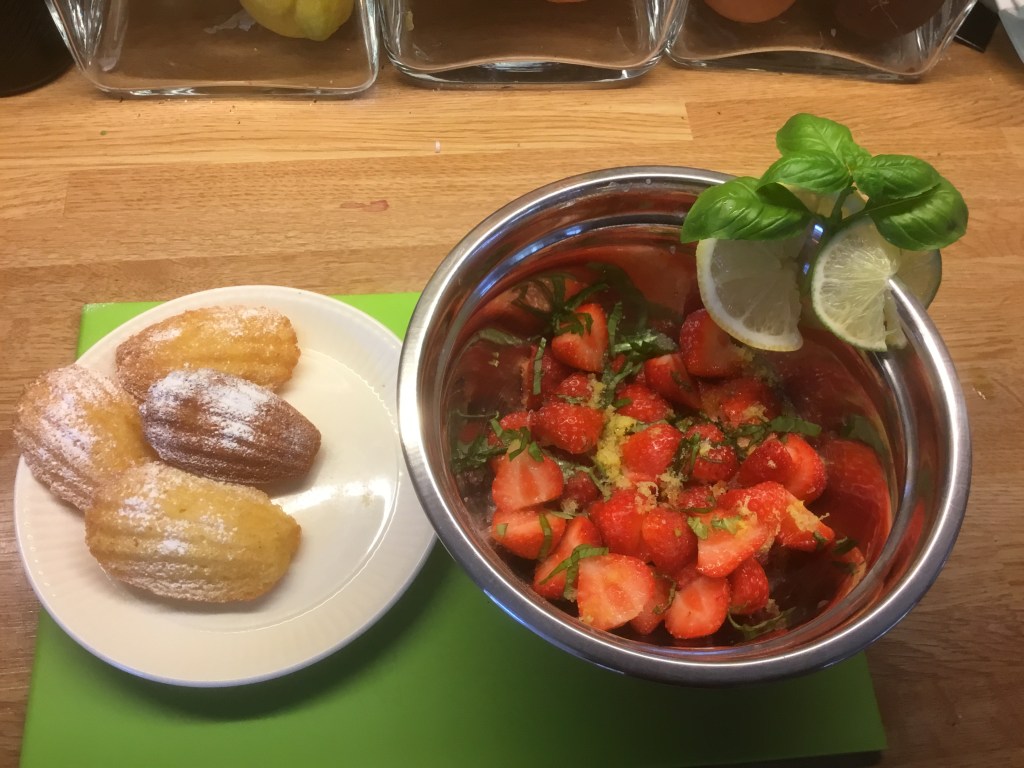
I made some French Strawberry Shortcake with a mixture of
Fraises au basilic et au citron
- 500 gr strawberries
- 1 TB lemon juice + zest of 1 lemon
- Sugar (..to your own taste)
- 6 chopped 6 basil leaves
- twist of the peppermill!
#Paris In July Kir Royale
Medici Fountain, Jardin du Luxembourg
- If there is one cocktail that has a
- …special place in my heart….it is Kir Royale.
- It was my first cocktail.
- I was 18 and studying in Paris for two months.
- One evening I went to La Comédie française.
- It was Molière Le Misanthrope and
- …honestly…I didn’t understand much of it.
- But later I went to a café with friends and met ‘Kir Royale’ !

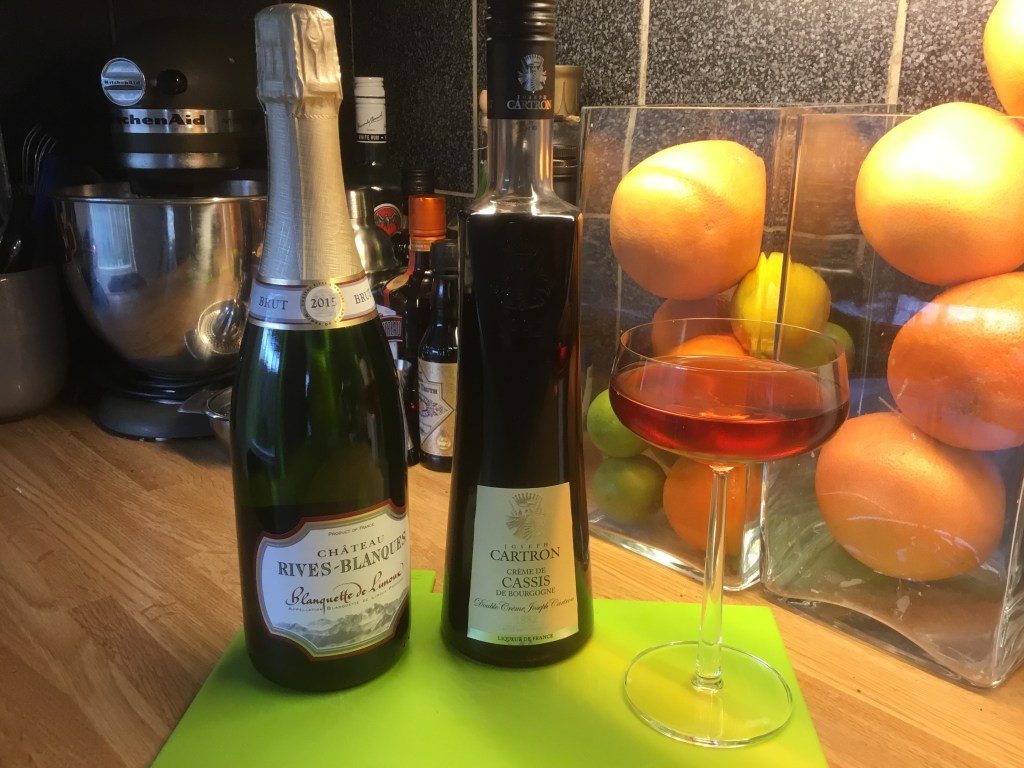
Kir Royale: sparkling wine (or champagne) + crème de cassis liqueur
- The Kir Royale—is named after Félix Kir.
- He was the mayor of Dijon who helped popularize the white-wine version of the drink.
- I’m using Joseph Cartron Crème de Cassis de Bourgogne.
- Crème de Cassis was one of Hercule Poirot’s favorite drinks!

- I’m using sparkling wine: Blanquette de Limoux instead of champagne.
- Blanquette de Limoux was first made in a Benedictine Abbey in SW France.
- This wine predates champagne and
- ….is in fact France’s oldest sparkling wine.
- Thomas Jefferson loved it, and served it to guests when he was president.
- Jefferson was America’s first oenophile.
- At his home at Monticello, his household consumed about 400 bottles of wine per year.
- All came from Europe, because in the early 19th century
- …wine grapes couldn’t yet be grown in North America.
Blanquette de Limoux:
- Limoux is the birthplace of high-quality sparkling wine production in France.
- Grape: 100% Mauzac known as blanquette due to the white coating on its leaves.
- Taste: beautiful dryness matched up with a zing of apples.
- It is a lovely glass of sparkling that’s much
- ….more interesting than any cava or prosecco.
Trivia:
- Jefferson insisted the wine be delivered in bottles, not casks.
- In this way the bottles were at least secure and c
- …couldn’t be watered down or filched by unscrupulous merchants or
- …thirsty crew members.

N@ncy’s bar:
- 2/3 c sparkling wine (160 ml)
- 1 TB crème de cassis (15 ml)
- There are also those that prefer…
- 2 TB crème de cassis (30 ml) to
- 1/2 c sparkling wine (120 ml)
- ...too rich for me…but you may like it.
- Glass: champagne flute or champagne coupe
- Garnish: optional….strawberry or black berry on the rim of glass!
France’s best kept secret…wines from Languedoc!
Conclusion:
- Elegant and easy….with just 2 ingredients.
- Taste: this Blanquette de Limoux tastes much more tart
- ..than my trusty Martini prosecco!
- It is also twice as expensive.
- The black current liqueur balances perfectly to
- …produce a unforgettable cocktail!
- I feel 18 again!
- If you have a bottle of sparkling wine in the fridge
- …you are always ready for a celebration!
- Excellent choice for a festive cocktail for
- …birthday, Christmas
- …or New Year!
#Paris in July Biscuits Breton

- Biscuits Breton with Lemon Curd
- …topped with whipped cream
- ..meringue in photo but I prefer crème chantilly
- After dieting for 5 months
- ….it is time to bend over the saddle…and let go of the reins!
- This month during #ParisInJuly
- I’m using La Petite Cuisine à Paris by R. Khoo. (see Amazon).
- It is time to celebrate the summer and its fruit and fresh veggies
- …..before you know it it will be winter here!
- This is a delightful cake to enjoy
- …as a special treat for 14 juillet!
- I made the lemon curd ( see post July 3 2018)
- Now it is time to make the basic biscuits Breton.
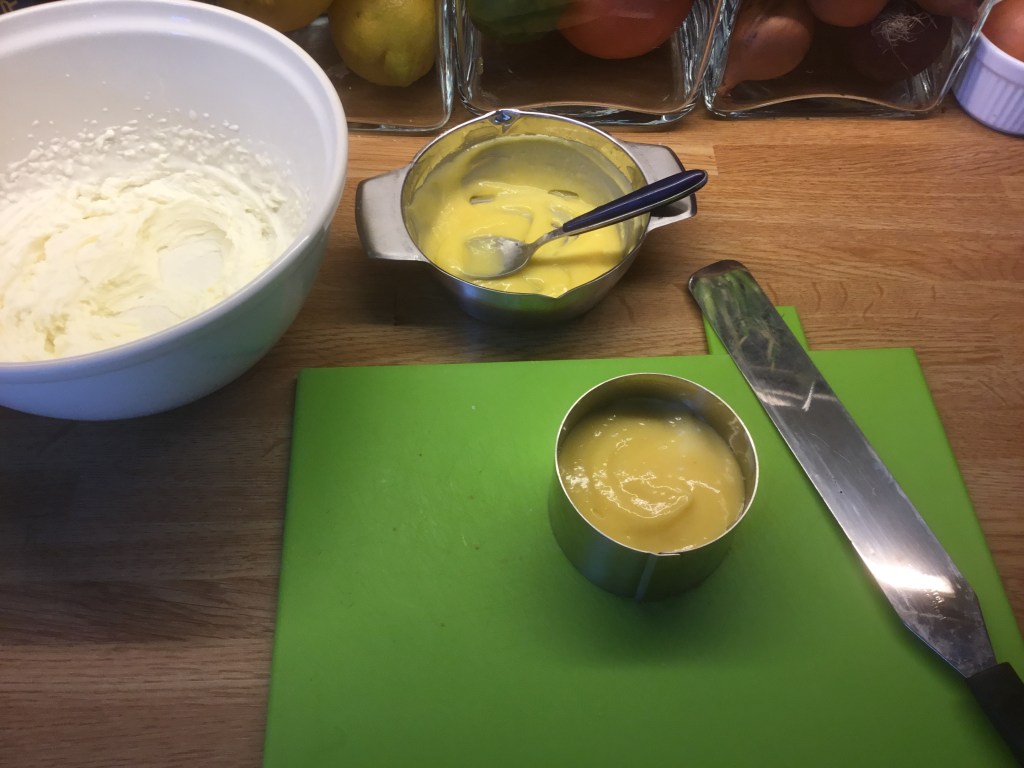
- To assemble, place a generous tablespoon of the lemon curd
- on top of the biscuits, followed by the whipped cream.
- Oven: 170 C (330 F) – 12-15 min
Biscuits Breton
- 3 egg yolks ( in photo 2 yolks…but you must use 3!)
- 125 gr softened butter
- 200 gr flour
- 100 gr sugar
- 1 tsp baking powder
- zest of 1 lemon
- pinch of salt
Preparation:
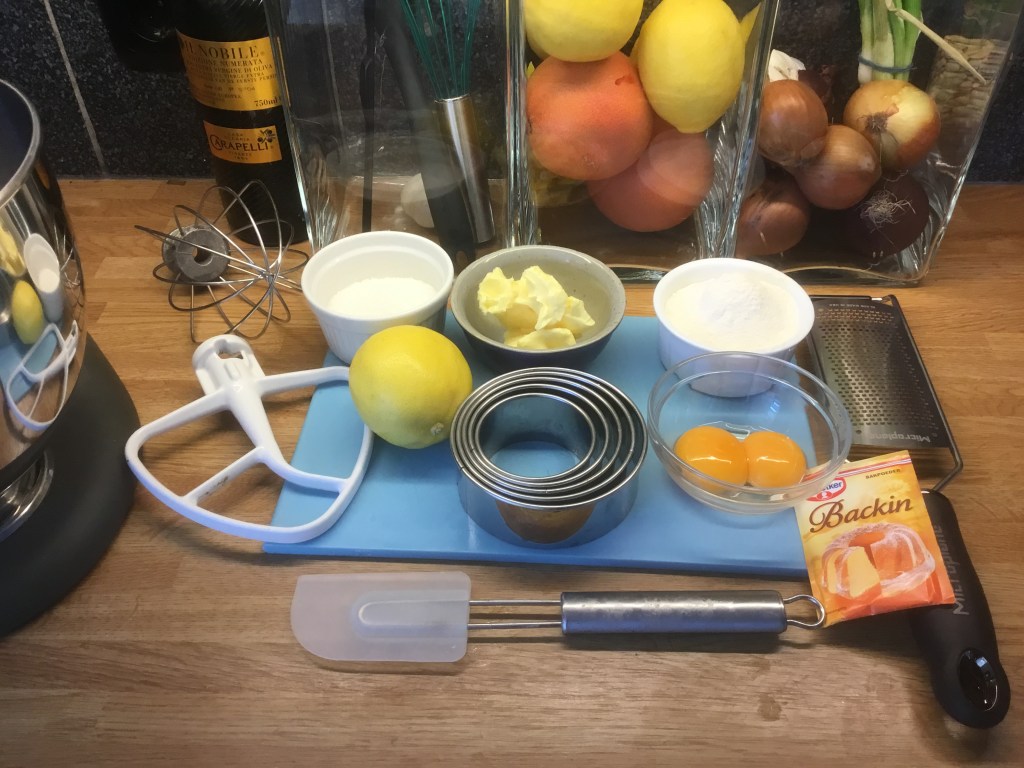
- WHISK butter, sugar, salt and zest until a pale yellow color
- … add yolks and continue to WHISK.
- CHANGE to DOUGH utensil
- …add flour and baking powder into batter —> MIX
- Wrap dough in cling foil.
- Chill 4 hrs or overnight
- Roll dough out to a 1/2 inch thickness
- ….and use culinary circle forms to make a perfect round biscuit!
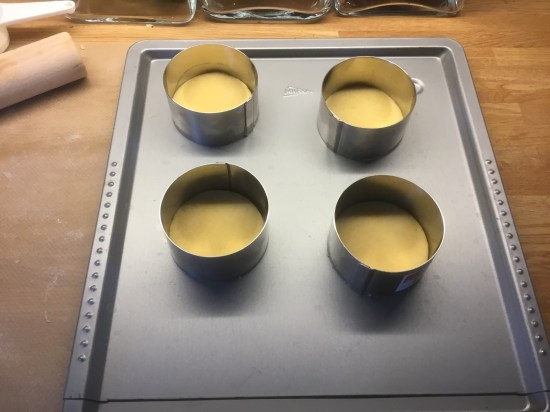
- Don’t remove the biscuit out of the form.
- Bake the biscuit in the form on a cookie sheet
- 170 C (330 F) 12-15 min until golden.
- Ready to roll…!
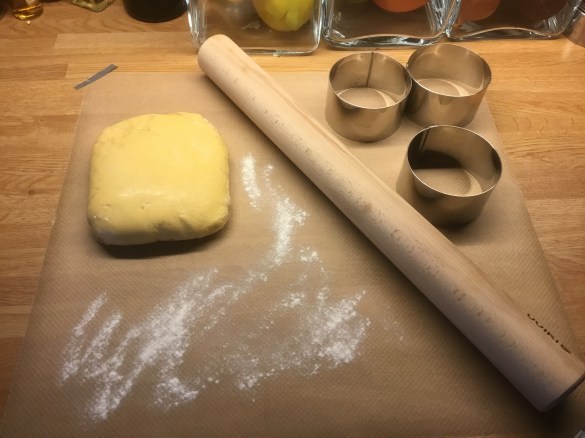
Notes:
- Conclusion: this recipe will make shortcakes.
- I used a biscuit cutter to make the rounds
- I cooked the biscuit in the cutter.
- Later I used the cutter again to help me layer the cake with
- lemon curd….topped with whipped cream
- If you let the cake stand…(see photo) the curd will ooze
- and cover the cake giving it an elegant look!
Preparation:

Bon appétit!

Still very hot in The Netherlands..
…enjoying a Crème de Cassis Spritzer!

#Paris In July French Wine

This wine is a real treat!
- Blanquette de Limoux is considered to be
- …the first sparkling white wine produced in France.
- It was created long before the Champagne region
- …became world-renowned for the sparkling wine Champagne.
- The first textual mention of “blanquette”,
- ….from the Occitan expression for “the small white”
- appeared in 1531 in papers written by
- …Benedictine monks at an abbey in Saint-Hilaire.
- No one can say it better than the French:
- “Cette blanquette or pâle libère des bulles fines et régulières,
- ainsi que (as well as) des parfums intenses de
- poire williams et de chèvrefeuille.” (honeysuckle)
- I enjoyed this wine with Camembert cheese as aperitif and
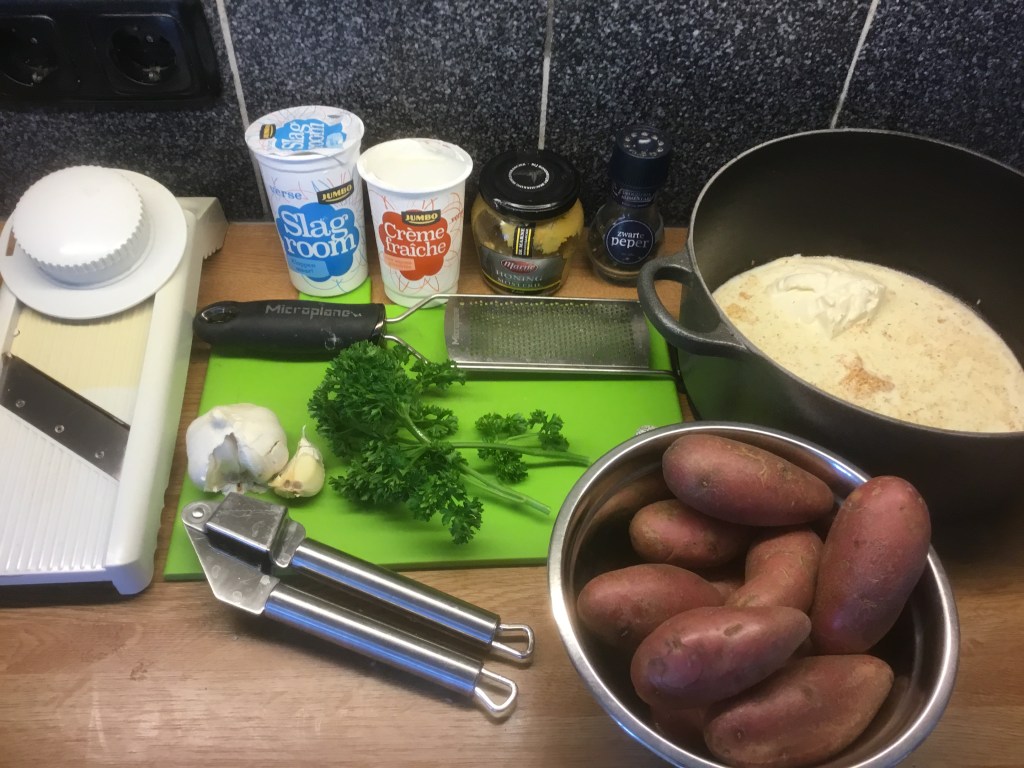
- …later with my gratin dauphinois. (La Petite Cuisine à Paris, R. Khoo, pg 34)
- I’m trying to make as many recipes as I can from this cookbook during
- #ParisInJuly.
Preparation:
Bon appétit!

#Paris In July Crème de citron

- This is the first step on my quest to make tarte au citron.
- I found this recipe in La Petite Cuisine à Paris by R. Khoo.
- I was looking for the right tangy taste.
- This recipe makes about 1 cup of crème de citron.
- When I make the tart I will make dubble or triple this amount.
- You can make this and save it in the fridge for a few days.
- Crème de citron is an elegant touch for a any special desert!
Lemon Curd:
In three easy steps:
- Large bowl: mix zest and juice of one lemon,
- pinch of salt, 40gr sugar, 45 gr butter and
- 2 egg yolks.
- Optional: adding 1/2 tsp cornstarch.
- I want the curd thick to use tarts.
- Warm slowly …keep stirring all the time!
- I warmed the mixture au bain maire.
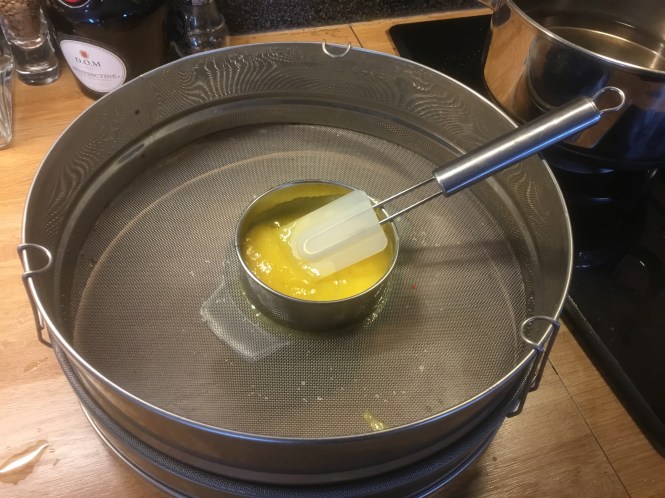
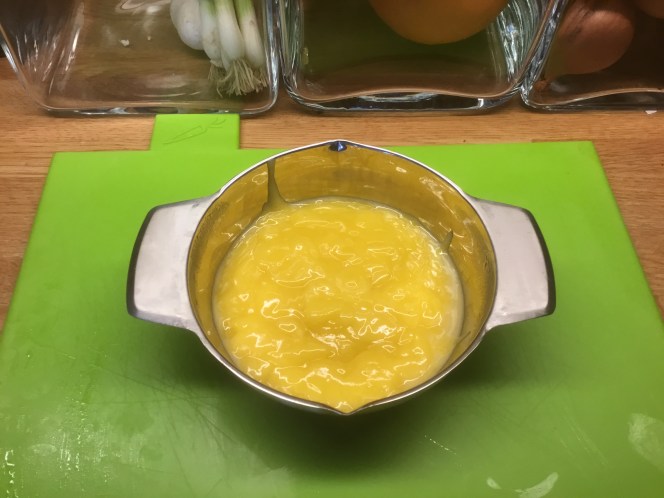
- For velvety perfection: pour cooked mixture through a sieve.
- Photo: I bought this fine mesh professional cooking sieve years ago
- I use it all the time to sift flour….and sauces
- Important! use a culinary ring to keep the curd in one
- …place otherwise it will be a mess.
- Believe me, I know.
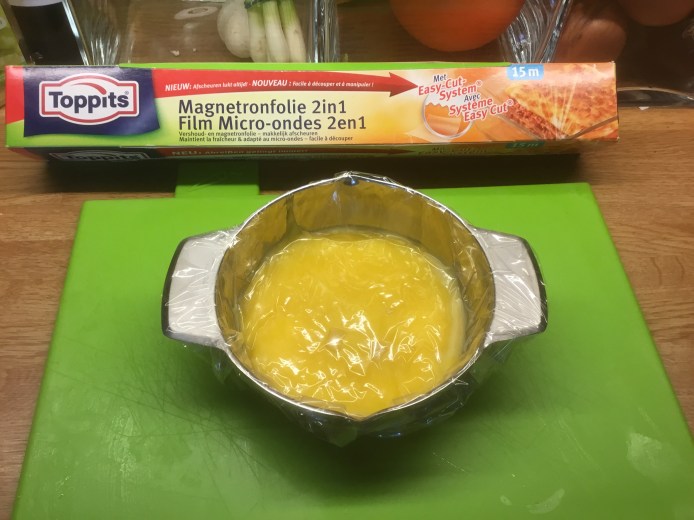
- Cover mixture with thin, clingy plastic wrap
- …and make sure wrap adheres to sauce.
- You want to avoid the formation of a ‘skin’ on the lemon curd.
- Cool in fridge for a few hours or overnight
- Here are the photo’s of all the steps!

 NancyElin.blog