
#Classic: The Twelve Caesars (Suetonius)

- Author: Suetonius (69 – 122 AD)
- Title: The Twelve Caesars
- Written: 121 AD
- Genre: biography (Wikipedia The Twelve Caesars)
- List of Challenges
- Monthly plan
- Classic Club Master list
Quickscan: List of Roman Emperors
Notes:
- This is not a book that I would choose to snuggle up with
- on a cold winter day. Thus I decided to listen to the audio book.
- I could keep doing my chores….etc and still absorb the
- tidbits of history that I did not know!
- 50 % of the book is about the first 3 Caesars:
- Julius, Augustus, Tiberius chapters 1-18
- Audio book 40 chapters (20 min per chapter)
- Roman emperor was a risky job: only 3 died of natural causes
- …the rest were assassinated or committed suicide!
Julius Caesar (reigned 5 years)
- He wore laurel crowns as often as possible.
- The wreath suited Caesar especially well with
- the green leaves hiding his balding head.
- It was good to be reminded that Servilia (b.104 BC, d. 42 BC)
- was just a wicked as Livia was
- during her relationship with Augustus Caesar.
- Livia remains in my memory in TV series I, Claudius.
- Servilla came be seen in TV series Rome.
- The series I, Claudius NEVER showed
- …the audience the sadistic cruelty of Tiberius!
- You have to read about it to believe it!
Augustus Caesar (reigned 40 years)
- Father: Gaius Otavius (politician) but he died when AC was 4 years old.
- Adopted father: Julius Caesar.
- Wives: each of these marriages lasted 2 yr Clodia, Scribonia
- Livia was here to stay.
- She was a shrewd woman, 23 yr marriage, no children, 1 miscarriage.
- Augustus also divided city regions and districts,
- …appointed nightly watch against fires (sort of fire brigade).
- Calendar: Augustus was born in September named 8th month August
- because in this month he received his first council ship.
- Lists: These pages about Augustus Caesar is a long list of achievements:
- circus games, gladiators, laws, allocating corn
- exhibiting curiosities: rhino, tiger and extremely long snake!
- Lists: of omens Augustus Caesar believed to foreshadow trouble (2 crows attack an eagle!)
- As soon as Livia comes on the scene
- ….the narrative becomes more interesting.
- After watching the TV series I, Claudius
- I could apply a face (actor, actress) to many names!
- Julia: Daughter is banished for 5 years for her lewd behavior.
- Strong point: personal habits were described
- …negligent in dress, took afternoon naps with his shoes always on!
- Augustus slept in the same chamber on Palatine Hill for 40 years.
- His private room where he was NOT to be
- disturbed (top floor Palatine Hill home) called “Syracuse”.
Tiberius pg 104 (reigned 22 years)
- He was emperor Augustus Caesar’s successor.
- Augustus adopted Tiberius (his mother was Livia AC’s 2nd wife)
- Tiberius was a reluctant emperor!
- Livia (mother) demanded equal share of power.
- Mother and son parted on bad terms.
- When she died Tiberius annulled her will and did not grieve his loss!
- Daughter-in-law Agrippina the Elder
- claimed Tiberius had her husband Germanicus murdered.
- Germanicus was Tiberius’ nephew AND adopted son.
- Tiberius banished her to the island of Pandateria.
- …and ordered a centurion to beat out one of her eyes!
- Tiberius was not finished yet….
- He starved his 2 (adoptive) grandsons to death.
- Tiberius was sadist…deriving pleasure from cruelty.
- In one day 20 people (men, women and boys) were killed flung down
- the Gemonian Stairs (steps located in the ancient city of Rome)
- …and then dragged into the Tiber River.
- He put a centurion to death for stealing a peacock out of his orchard!
- #Ouch
Conclusion:
- I took notes about the first 3 Caesars.
- You can discover the other rulers yourself!
- This was an excellent overview of these emperors
- The book solidified my understanding of the
- Julio-Claudian (27 BC-68 AD)
- Flavian dynasties (68-96 AD)
- Audio book narrator: Charles Griffin (excellent).
- The writing is clear, simple and easy to understand.
- Strong point:
- Insights into the social and political order of the times
- …and the psychology of these powerful yet flawed individuals.
- I loved the music played between chapters….imperial!
Last thoughts:
- Roman emperors are not known as being compassionate
- …but Emperor Vespasian was the exception!
- If you like historial fiction perhaps you would like Lindsey Davis’
- The Course of Honour.
- The love story of Vespasian and his mistress
- …the freed slave woman Antonia Caenis.
- This book recreates Ancient Rome’s most turbulent period.
#Classic: The Symposium
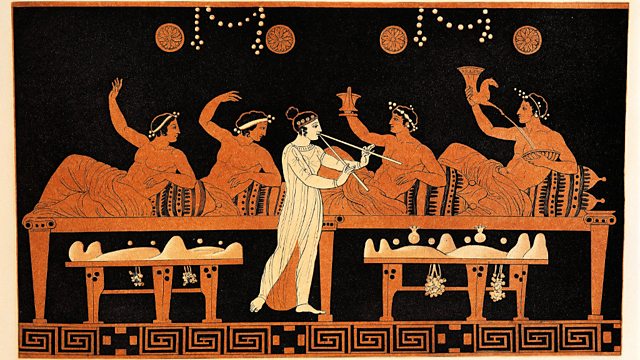
- Author: Plato
- Title: The Symposium
- Written: 380 BC…but the narrative is set in 416 BC
- Setting: Agathon’s house (playwright, poet)
- List of Challenges
- Monthly plan
- Classic Club Master list
What is The Symposium?
- This masterpiece of philosophy is
- …a dramatic dialogue set at a
- dinner party in ancient Athens.
- The guests agree not to drink because
- …they have over indulged on the previous night.
- The men discuss the nature of Love.
Why did Plato write The Symposium?
- Socrates was interested in the symposium
- as en educational form where erotic
- relationships took place.
- But the symposium was also place of great
- fun, merriment and entertainment.
Who was influenced by The Symposium?
- An Essay on the Beautiful.
- Ficino, M. translated the Platonic dialogues into latin in the Renaissance
- Freud, S. read and studied The Symposium
Most important metaphor?
- This topic is long and complicated.
- I added this link if you are interested.
- Ladder of Love (Wikipedia)
What is the significance of a drinking party?
- This was a ‘gentleman’s club’.
- There was a bawdy side but
- ..the most important aspect was
- the establishment of
- older male-younger male relationships.
- The older male (the lover)
- would guide the younger male (beloved)
- into Athenian social and political life
- in return for sexual favors.
Who are the important guests?
- Aristophanes – one of the greatest Athenian poets
- Phaerdus – associate of Socrates
- Eryximachus – doctor
- Aristodemus – narrator
- Aristophanes – poet, playwright
- Pausanias – lover of Agathon
- Agathon – tragic poet who is the host of the party
- Socrates – Athens’ most famous philosopher
- Alcibiades – important politician, rich, influential, womanizer
What are the major themes?
- Major: passionate love, desire, nature of knowledge
- Minor: virtue, happiness
What is characteristic of the speeches?
- In each of the speeches the nature of virtue is presented:
- Phaerdus – heroic deeds on the battlefield are important
- Agathon – poetic expertise is important
- Socrates – intellectual virtue is important
- Each speech is designed to praise Eros.
- Speeches explain how desires can be shaped
- to help us lead a better and happier life.
- Central is all the speeches is the concept of happiness.
How do speakers describe physical desire (Eros)?
Phaerdus (young student of rhetoric and poetry)
Romantic love (male/female and male/male) is praiseworthy.
If we’ve sacrificed our life for our beloved
…the gods will reward us after death.
This type of romantic love sounds admirable
…but there is also a lot of ‘dying young’!
Pausanias (legal expert)
The quality of erotic depends on the object of your love
…and the manner of your love.
He divides love into heavenly and common love.
Heavenly: lover (older) – beloved (younger) focuses on
the younger males spiritual development.
Common: physical love for either male or female
Eryximachus (doctor)
He divides erotic love in good and bad.
The doctor broadens erotic love to a cosmic force
..in medicine, music, climate, farming.
Good attraction of love = harmony and health
Bad attraction of love = disease and illness
Aristophanes (one of the greatest Athenian poets)
His speech is iconic.
This is a quirky almost absurd description how humans evolved.
Must read to appreciate Aristophanes imagination!
Love will make us find our other half.
Agathon (tragic poet who is the host of the party)
He gives a dazzling speech and receives the most applause.
The other speakers praise the benefits that eros (desire) brings
(heroic deeds on the battlefield…harmony and health)
But Agathon says…you can’t give another what you don’t have yourself!
Lovers are thus honorable, beautiful, wise and just.
Socrates (most famous Greek philosopher)
He tells a story that Diotima taught him!
She is a fictional priestess. She provides the
question and answer template possible
… that Socrates loves to use!
Diotima says what Socrates wants to say
…and Socrates is now the willing pupil.
Drunken Alcibiades…disrupts the party!
He give a moving passionate speech about the joy and
pain of loving Socrates.
Poor Alcibiades….he loves the right man in the wrong way.
I thought this was the most memorable speech! (shocker)
Conclusion:
- 5 speeches (Phaedrus, Eryximachus, Aristophanes, Pausanias, Agathon)
- 1 cross-questioning and speech about the truth of Love (Socrates)
- 1 dicey speech by Alcibiades
- …that is a ‘tell-all’ about his affair with ex-lover Socrates!
- After all the guest give their speeches
- …of course Socrates will be the last to speak.
- He dazzles and confuses me with his ‘typical questions”
- (conversation with priestess Diotima)
- This is the part of Socrates….I dread reading
- …he makes me think!
- You have to have at least a good 10 hrs sleep
- ..and be sharp of mind if you intend
- …to read anything involving Socrates!
- Reading time:
- It took me the entire day to read + notes (131 pages)
- I hope this review can help you and don’t hesitate
- …to try this #Classic for the die-hards!
#Classic: Eusebius

- Author: Eusebius
- Title: Church History
- Published: 4th C AD
- List of Challenges 2018
- Monthly plan
- Non-Fiction Reading List
Who was Eusebius (260-340), Bishop of Caesarea?
- Eusebius lived and wrote in one of Rome’s provincial capitals,
- Caesarea (aka Sharon on the coastal plain of Israel.)
- He lived under direct Roman imperial power.
- He witnessed the persecution of Christians in Caesarea
- …under the governors Flavianus, Urbanus, and Firmilianus.
- Eusebius figures prominently in all
- …histories of late-ancient theology and philosophy
Why is Eusebius important?
- Eusebius worked at the library in Caesarea Palestina
- founded by the scholar Origen (ca. 185–ca. 254)
- He had access to numerous works of antiquity which have not survived.
Structure:
- Books 1-7 – the reign of Herod and birth of Jesus (book 1)
- then we read the events before Diocletian’s persecutions (14-311 AD)
- Books 8-9 – narration of recent persecutions (253-305 AD)
- Book 10 – reign of Emperor Constantine (306 – 312)
Genre: Greek-Roman history writing…with a whiff of an apology
Edition: Eusebius Penguin Classic ISBN 9780140445350
Theme: was celebration of the success of Christianity in the Roman world.
Significance of Eusebius: important source for historians, classicists and theologians
POV: Eusebius, a orthodox Christian
Intended audience: with a knowledge of Christian texts and accepts their sacred status
Title: History of the Church: Eusebius describes a group of bishops, martyrs,
and scholars. Eusebius excludes heretics as outsiders to the church.
Setting: Eusebius uses the Roman Empire as the borders of the Christian Church
Narrative: gives the readers a past about the church. It profiles of key individuals
that carry across several chapters Apostle John, Irenaeus, Origen, and Dionysius of Alexandria
Style: Eusebius has a roller-coaster reputation for both veracity and style.
What does Eusebius NOT do?
- He does not discuss of doctrine because he assumes reader knows it
- …and has a positive opinion of Christianity.
Strong point:
- After reading this book I feel I’m better prepared to
- participate in Jeopardy or University Challenge shows!
- I learned more about some heresies of the times.
- After reading this book it will be easier to read another classic (TBR)
- The Twelve Caesars by Suetonius!
Weak point:
- There are small items that consume reading time
- …skimming may be necessary!
- How Appolonius suffered Martyrdom at Rome
- …Roman senator who stuck to his beliefs.
- Blastus On Schism Who?
- Many lists of bishops of Jerusalem and Rome (skim)
- Date of Easter…lots of commotion!
- The Elegant Works of Irenæus
- …this is a whole other study…skim Wikipedia page Irenaeus!
- Heresy of Artemon
- …it seems Eusebius is the only historian who mentions this!.
Conclusion:
- There are just too many heretics,
- ..martyrs, saints, theologians to mention.
- This book is readable but I needed to extend my reading to
- Wikipedia and follow the footnotes closely
- …if I wanted to make heads or tails of Eusebius.
- This is a classic…I can say I read it.
- But…I’m not sure if it will be on many reading lists!
- This is definitely a book
- …for a dedicated reader of the classics!
Last thoughts:
- Glossary….This is very handy!
- Excellent “Who’s Who in Eusebius” + Latin terms (pg 339-427)
- Quick scan of emperors of Rome and
- bishops in Antioch – Jerusalem – Alexandria (pg 428-434)
- Tip: I did some extra ‘skimming’ of the Wikepedia page
- …of the emperor mentioned
- This gave me a bit more historical background.
- It made the reading of Eusebius much easier knowing more
- about the politics/rulers.
- #Classic or the die hards!
#Classic Satires Horace

Horace, Virgil en Varius by Charles François Jalabert
- Author: Horace
- Title: Satires I and Satires II (collection of 18 satirical poems)
- Published: 35 BC (60 pg)
- Reading time: 3 hrs
- List Reading Challenges 2018
- Monthly planning
- Classic Club Master list
Introduction:
- Hoace’s satires…
- These are very short poems….easy on the eye
- …and they enrich the mind!
Quickscan:
- Horace was a Roman poet of the 1st C B.C.
- Caesar Augustus knew with only a powerful army he
- …could not hold power.
- He needed poets to
- ….win the ‘hearts and minds’ of the people.
- Like Virgil, Horace proclaims the glory of Caesar Augustus.
Satires:
- Horace was also a straight talking man
- …trying to teach some life lessons:
- keep your head down
- don’t think the grass is greener on the other side
- avoid stress
- the advantages of a frugal life and plain living (Satire 2.2)
- don’t dabble in politics…and become a prisoner of ambition
- nothing compares with the pleasure of friendship
- it makes no difference what kind of parent you had
- ….if only you are a gentleman (Horace was a freedman’s (slave) son)
- … when an annoying person won’t leave despite hints! (Satire 1.9…funny!)
- Horace writes many…stories about eating an drinking!
- Moral? only way to a man’s heart is thru his stomach!
- Horace was articulate and discrete.
- His strong point was knowing when ‘to shut up’!
- Satires I (pg 3-32) Satires II (pg 33-63)
- are filled with fables, anecdotes and some dicey moments.
What is Horatian satire?
- Satire uses humor, exaggeration,
- ridicule and criticism to create change in others.
- Horatian satire is less harsh and takes a
- comical view at human injustices.
- Horatian satire is not negative.
- Pride and Prejudice is an example
- …of a novel showing Horatian satire.
- Jane Austen makes fun of
- various characters in the story.
- Some characters are simply
- …interested in the marriage
- …but not the relationship.
- Here are a few notes….
Satire 1.1 – Lesson learned: No man lives satisfied with his own
- What is the point piling ($$) up more than you need?
- If you get sick…is there someone who will care for you?
- No one wishes for your recovery
- …they’re waiting for your fortune!
- So let’s put an end to the race of money.
- Greed makes no one satisfied.
- Lead a happy live and…when his time is up
- quit life like …..a guest who has dined well.
Satire 1.2 – Horace wagging finger: avoid vices…especially women!
- Keep your hands off married women
- they are more misery than any real satisfaction
- Don’t damage you reputation.
Satire 1.3 – A wise man…. does not criticize faults of others…no one is free from faults!
- Description of Sardinian Tigellius singer and friend of Julius Caesar faults.
- Description of a lover blind to his girlfriend’s unattractive defects.
- Moral: beam in one’s eye – ne should not criticize the faults of someone else before correcting the faults within oneself.
- “…examine your own faults with eyes covered in ointment
- …in the case of friends’ faults your eyesight (is) sharper than an eagle’s…”
- Moral: when dealing with a friend do not show disgust of his defects …this is tactless.
- Turn defects upside down: penny-pinching?…no just careful with money!
- This attitude binds friends together and keeps their friendship.
Favorite quote:
- “If I am telling lies may my head
- …be spattered with white crow’s droppings…” (Satire 1.8)
- #Jick
Conclusion:
- This was a quick read …3 hrs.
- Horace gives us many wise lessons
- …be it at times very wordy and misogynistic!
- Core message:
- live life with integrity
- live life free from guilt
- have the love of friends.
- #MustRead Classic

#Classic The Aeneid
- Author: Virgil
- Title: The Aeneid
- Genre: epic poem 12 chapters (178 pg)
- Written: between 29 and 19 BC
- List Reading Challenges 2018
- Monthly planning
- Classic Club Master list
Conclusion:
- Read all about this epic poem on the Wikipedia page The Aeneid
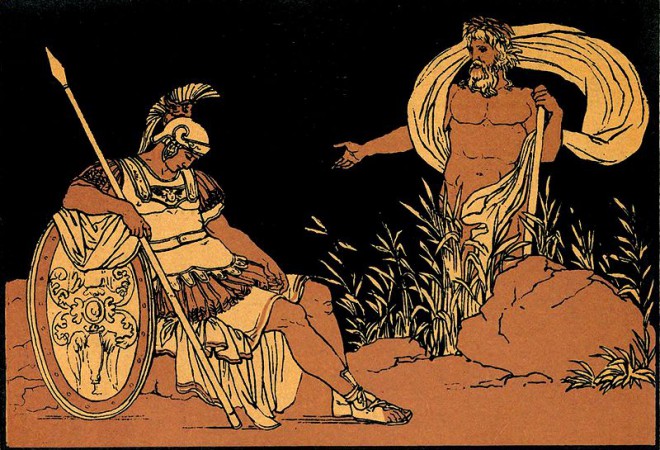
- I am as exhausted as Aeneas in this photo above!
- ….too exhausted to ruminate further about the poem.
- It has been a long 2 months
- …no binge reading but slowly just chapter by chapter.
- #MustRead.
My notes:
September 27, 2018
Ch 1
Shipwrecked, tired and wrapped in a cloud of mist by his mother Venus..Aeneas stumbles into Dido’s palace.
The gods above discuss the hero’s fate: this romance between two star crossed lovers…is doomed.
October 24, 2018
Ch 5
Never a dull moment on Sicily!
Athletic games, slithering snake over burial mound
Goddess Iris throws flaming tourch in the boats
and when we thought we’d seen enough…down comes
the god of sleep and shake dew off a bough.
Poor Palinurus falls asleep at the rudder and drowns….but nobody missed him!
October 26, 2018
Ch 6: Turning point in The Aeneid: From the underworld
Anchises (Aeneas’s father) commands Aeneas goes further and follow his destiny.
November 15, 2018
Ch 7 and 8
Modern readers enjoy ch 1-6 but for Virgil’s original readers the good part of the book begins now…war!
Who would have thought a war in this classic would start b/c somebody shot an arrow at the pet deer of Sylvia.
#AccidentsCanHappen
November 15, 2018
Ch 8 Re-read because I fell asleep with the audio book playing…missed a few things: Aeneid’s dream about a white sow and 30 piglets, Vulcan vomiting flaming fire searching for his stolen bulls and we met important character for the last chapters…Pallas the son of King Evander
#NeverDullMoment with Virgil
November 18, 2018
Ch 10-11
I’ve survived 3 generations: father (Anchieses) hero (Aeneas) child (Ascanius)
jilted lover (Dido) and whirlwind trip to see old friends in Hades
death of a pet deer….war drums…more dreams scenes than I can count!
I must finish this today!
November 19, 2018
Ch 12 grand finale!
Turnus has killed Pallas (…beloved friend of Aeneas)
Turnus is determined to fight Aeneas.
Loved by Turnus but betrothed to Aeneas, Lavina
becomes the prize for which the leaders contend in a bloody tribal war.
Aeneas leaves for the fight departs from his son
…’kisses him through his helmet’. (strange)
The fight begins.
Aeneas attacks Turnus… he is down for the count.
Aeneas hesitates for a moment but seeing the
sword belt of Pallas gleaming on Turnus’ shoulder
….he deals the final blow and kills his opponent.
End of story!
#Play Electra

- Author: Sophocles
- Title: Electra
- Written: 410 BC
- Revenge is a dish best served cold.
- Plot: read the backround and storyline on Wikipedia.
- Reading time: 1 hour 15 min
Introduction:
- This was truly a exceptional play.
- One settting…a few characters a
- …pressure-cooker domestic drama
- …that keeps us waiting for the climax!
Characters:
- Electra – princess of Argos
- King Agamemnon – king of Argos
- Clytemnestra – queen of Argos (father was the king of Sparta) sister of Helen of Troy
- Iphigenia – princess of Argos (sacrificed to gods by her father)
- Orestes – prince of Argos (twin brother Electra)
- Aegisthus – cousin of King Agamemnon….lover of Clytemnestra
- Chrysothemis – princess of Argos ( tries to calm Electra down!)
- Unlike her sister….she does not seek vengeance against her mother.
Tragedy:
- Pity: Lavinia is killed under false pretenses
- Fear: imagining what we would have done if we were in Electra’s shoes
- Flaw: Electra fails to balance passion (grief father’s murder) with reason.
- Recognition: Orestes pretends to be dead; he returns to Mycenae…is reunited with Electra.
- Pathos: Electra evokes our pathos when she
- ….says after hearing of the death of her brother
- ….there is no one to protect her. (appeals to our emotions…)
- “No. There was someone (brother). Here are his ashes.”
- Electra uses pathos: When she still believes her brother is dead,
- she makes an emotional speech over his urn,
- …begging to be dead and put into the urn as well.
- Here, she is using pathos in an attempt
- …to convince a higher power to take her life
Conclusion:
- Fast moving play filled with dramatic irony
- …WE know more than the characters.
- That will keep any Greek on the edge of their chair!
- Question:
- Did Sophocles ever watch TV show Sisters (1991-1996)
- Here are my thoughts about that!
- Major themes: is definitely betrayal, justice and revenge.
- Agamemnon betrays is wife Clytemnestra
- by to sacrificing his daughter (Lavinia) to the goddess Artemis.
- Clytemnestra betrays her husband
- ….by her affair with Aegisthus (King’s cousin) while he was at sea.
- Loyalty: Family loyalty surpasses loyalty to the state.
- For Electra vengeance remains necessary.
- Murders: wife kills husband (avenge her daughter’s death)
- With the aid of Electra, Orestes kills both his mother and her lover.
- Victims of crimes become criminals themselves.
- Strong point: Chrysothemis This character gave the play a modern feeling!
- She is a superficial girl.
- ..accepts the status quo in the family (remarriage mother)
- ..but remains very protective and close to Electra.
- Strong point: Dialogue: Chrysothemis speaking to Electra
- This sounds like an
- …episode of the TV show ‘Sisters’ (1991-1996)
- Now is the time to start being sensible.
- Don’ ruin your life in sheer stupidity.
- You won’t listen to reason at all, will you?
- Don’t throw your life away on plain stupidity.
- When you are sane you can think for both of us.
- Let’s just say there are times when justice is too big a risk.
- Control yourself!
Last thoughts:
- Greek plays are fun to read and ‘read about’.
- I always have to prepare dinner before starting a Greek play.
- Once I start reading and researching it…I forget to eat!
- But the hardest part is trying to find something new to say
- …about a play that has been
- …with us since time immemorial.
- It is just a…
- #MustRead
Classic: Seneca Letters From a Stoic
- Author: Seneca ( 4 BC – 65 AD)
- Title: Letters From a Stoic
- Published: 124 letters written at the end of his life.
- Trivia: Letters were written to Lucilius a CFO in Sciliy in 65 AD
- Topic: how to become a devoted stoic
- List Challenges 2018
- Monthly planning
- Classic Club Master list
Conclusion:
- For more information about Seneca and Stoicism
- …I refer you to the links in the header.
- This book is perfect bed-time reading.
- Tone is casual.
- Focus is on practical moral advice.
- Your mind can relax after a hectic day and let
- Seneca bring you back to basic thoughts about:
- mercy, anger, kindness, fate, happiness, and peace of mind.
- Strong points: writing style is full of brevity and sparkle.
- There are so many quotes that have lingered
- …too many to sum up.
- At the end of the book…the last letter (letter CXXIII)
- Seneca left me with these thoughts I use daily:
- Nothing is burdensome if taken lightly
- …nothing need arouse one’s irritation so long as one
- …doesn’t make it bigger than it is by getting irritated!
- It is in no man’s power to have whatever he wants
- …but he has it in his power not to wish
- …for what he hasn’t got.
- And as a person who struggles with an aching lower back
- Seneca spoke to me with these words:
- I’m deriving immeasurable satisfaction from the way my
- …tiredness is becoming reconcile to itself.
- What was brought on by exertion
- …rest is taking away.
 NancyElin.blog