
#Ireland Phillip McMahon (playwright)
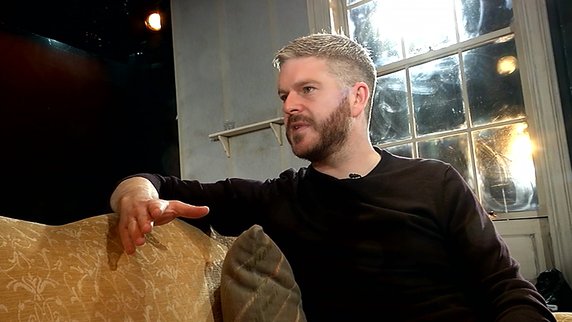
- Author: Phillip McMahon (1979)
- Title: Come On Home
- Opening night: July 2018
- Location: The Peacock Theatre is situated under the Abbey foyer.
- It is affiliated with Ireland’s National Theatre and
- The Abbey Theatre.Abbey Theatre Dublin
- Director: Rachel O’Riordan (1974)
- Trivia: Nominated Best New Play Irish Times Theatre Awards
- Winner: Announcement 31 March 2019
- List of Challenges 2019
- Monthly plan
- #ReadingIrelandMonth19
- @746books.com
Quickscan:
- The play is about a family forced
- …into a reunion under difficult circumstances.
- A family funeral is the best time to clear the air
- …and at the same time muddy the waters!
- The play deals with bigotry in a small town in Ireland.
- Characters talk about love, loss, abuse and drink.
- They must say difficult things.
- History and blood binds them
- …but they don’t know each other.
- Michael hasn’t been home in almost twenty years.
- He was kicked out of the seminary and
- …exiled from his family home.
- But now, the death of his mother sees him
- ….reunited with his two brothers
- …their partners and the local clergy.
- Questions must be answered.
- Scores met be settled.
Cast: 5 male actors – 2 female actors
- Brothers: Ray – Michael – Brian
- Clergy: Fr. Cleary – Fr. Seamus
- Partners: Aoife (Ray’s partner) – Martina (Brian’s wife)
- Setting: family living room, single setting = pressure-cooker play
- Secrets surface only under pressure.
- Strong emotions (despair, fear, anger) created by events
- Why does the character have difficulty telling these secrets?
- Is it fear? shame? pride?
- …that makes the words stick in the character’s throat?
- Theme: classic Irish drama –> exile …then returning home
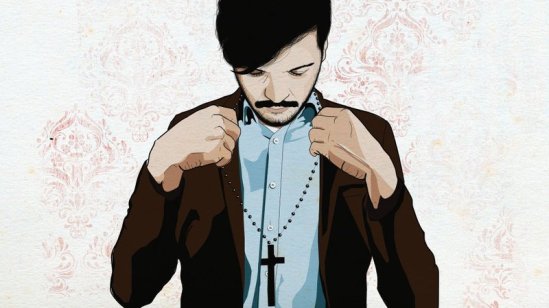
Conclusion:
- Phillip McMahon has created 2 act play with 8 scenes
- …that does NOT focus on a complex narrative plot line.
- He is interested in showing only the moments of intense conflict
- …that shape his characters.
- Ireland is changing and
- …themes as a gay priest…are now on stage.
- This makes the play feel fresh, surprising, and compelling.
- The real excitement is the pivotal moment
- …the moment when all control is in the balance.
- We hold our breath!
- What is that moment in this play?
- I’ll let you discover that
- Will it win the Irish Times Theatre Award?
- Award will be announced on 31st of March!
- #PowerfulPlay
#Ireland Essays on Modern Irish Writing
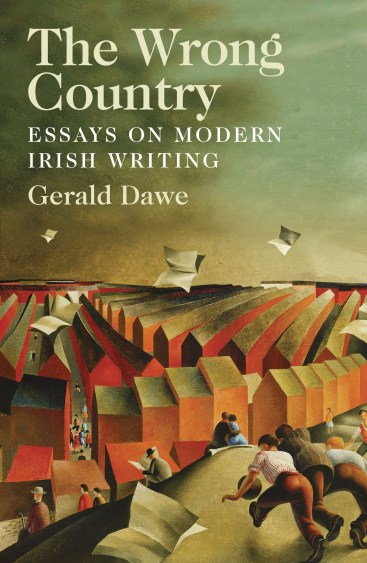
- Author: Gerard Dawe (1952)
- Title: The Wrong Country (14 essays)
- Published: 2018
- List of Challenges 2019
- Monthly plan
- #ReadingIrelandMonth19
- @746books.com
Introduction:
Gerard Dawe is a retired (2017) Professor in English from Trinity College Dublin and a poet.
Born in Belfast and started is family life in the west of Ireland, Galway.
Subject:
Series of 14 essay on modern Irish writing from from WB Yeats onwards.
Epigraph:
The epigraph is by Hugo Hamilton’s The Speckled People and
reflects Irish writers and their writing for me….excellent choice of words by G. Dawe!
“…You can’t be afraid of saying the opposite,
even if you look like a fool and everybody thinks you’re
in the wrong country, speaking the wrong language.
Dedication:
The book is also dedicated to an Irish poet who passed away in 2017, Gerard Fanning.
I have never heard of him.
His poem collections are difficult to find in The Netherlands.
I ordered his collection Water & Power.
I was the last book before his death.
I’m curious what he has to say.
Style:
The essays are in the form of invited lectures or contributions given by G. Dawe.
Tone is conversational and because it is a lecture it takes random turns.
I had to read carefully and ask myself “what did I really learn from this lecture?”
Tip:
I read about the author on Wikipedia before starting Dawe’s writing.
It gives a helicopter view of the writer before I start an essay.
Some of the writers discussed in the essays:
W.B. Yeats (1865-1939) Nobel Prize 1923 and
Samuel Beckett (1906-1989) Nobel Prize Literature 1969
Seamus Heaney (1939-2013) Nobel Prize 1995
- Note: …it is quite exceptional to have 3 Nobel Prize winners
- emerge from an Irish Protestant Group in literature!
James Plunkett, John Hewitt, Eavan Boland, Dorothy Molloy,
Michelle O’Sullivan, Leontia Flynn, Eiléan Ní Chuilleanáin, Ethna Carbery
Elizabeth Bowen, Mary Lavin, Kate O’Brien, John McGahern, Brendan Behan, JP Donleavy, Patrick Kavanagh, Seamus Deane, Derek Mahon, Medbh McGuckian, Stewart Parker.
- Read Eavan Boland’s The Poet’s Dublin....beautiful
- Reading Eiléan Ní Chuilleanáin‘s
- The Boys of Bluehill (40 poems published 2015)
- Read an essay by Seamus Heaney about Patrick Kavanaugh.
- Read Seamus Heaney Poetry
- Read Elizabeth Bowen The Death of the Heart
- Reading Medbh McGuckian Selected Poems 1978-1994
Topics:
- Early years: 1913 – 1939: Lockout Dublin, WW I, Easter 1916
- 1940s – 1950s: Tragic writing lives of American and Irish generations
- 1950s: Emigration of young Irish women to Britain
- 1960s: Boozy literary Dublin
- ….and onwards 2010s.
My notes on 7 essays:
Hearing Things: W.B. Yeats – S. Beckett
Beckett and Yeats had similar social, educational, Irish Protestantism backrounds. Beckett would create in his drama testimonials to Yeats. Beckett and Yeats met only once . 1933 Beckett went through extremely difficult tragic year: death cousin (TB) May 1933 and loss of his father (heart attack) June 1933. This marked the real beginnings of his life as a writer. He was 27 years old.
Plunkett’s City: James Plunkett
James Plunkett was an Irish writer (1920-2003) He was educated by The Christian Brothers in Dublin.
Plunkett grew up among the Dublin working class, petty bourgeoisie and lower intelligentsia.
Strumpet City is a 1969 historical novel by James Plunkett set in Dublin, Ireland, around the time of the 1913 Dublin Lock-out.
Strumpet City is movement between Dublin, Kingstown and the coastline of Dublin. Characters talk to one another as they observe the city around them. This is the long tradition of perambulation in Irish writing. The book starts in 1907 and ends 1914 with a troop ship leaving Dublin Bay for WW I. In the seven years the 1913 Lockout, struggles for social justice and democracy in Ireland revolve around Dublin.
Dawe introduces met to a poem which I read and listened to: Easter 1916 by W.B. Yeats.
This is a nice read/listen on Easter Morning….and remember what happened en changed Ireland forever.
Border Crossings:
John Harold Hewitt (1907 – 1987), who was born in Belfast, Northern Ireland, was the most significant Belfast poet to emerge before the 1960s generation of Northern Irish poets
that included Seamus Heaney, Derek Mahon and Michael Longley.
Hewitt’s verse expresses the
damage done by political division and nostalgia for a different past.
John Hewitt was a father figure for young Northern poets like Heaney and Longely.
I read Dawe’s essay and did not learn very much. I kept searching on the internet for a better image of this poet.I listened to readings of his poems “The Watchers” and “The Local Poet.” In this poem you can sense Hewitt’s modesty and shyness between the lines. Beautiful.
On Culture Northern Ireland website I found a concise introduction to John Hewitt that appealed to me more than Dawe’s essay.
We need Hewitt now more than ever to remind us that we have a tradition and a definable, colourful, multi-layered Ulsterness. That Ulster has a cultural and cultured mind that has nothing to do with universities. Now that we have, at least for political reasons, ceased to kill each other, Hewitt can teach us how to write poetry again in the peace of who we really are.
From The Ginger Man to Kitty Stobling
This is going to be an interesting essay because I HATED The Ginger Man by P J Donleavy. It was listed on Modern Library’s list of Best 100 novels of 20th C. Perhaps Gerard Dawe can tell me what I was not ‘getting’ in Donleavy’s book!
60% of the essay was a Dawe’s attempt to put Irish literature in the historical context of the 1950s (social,political) Donleavy was mentioned in two sentences! No analysis. 40% of the essay was about Patrick Kavanaugh. He produced an Irish classic “The Great Hunger” (poem) and fought tirelessly against the establishment in Dublin. Ireland 1950s was an age of innocence but also full of dark secrets (difficult (patriarchy) conditions for women, child abuse in the Catholic Church, Magdalene laundries).
The Passionate Transitory: John McGahern – REAL DISCOVERY!!
The Observer hailed him as “the greatest living Irish novelist” before his death in 2006 and in its obituary the Guardian described him as ‘arguably the most important Irish novelist since Samuel Beckett’. I never heard of John McGahern! (1934-2006)
Dawe’s essay was not very enlightening. I learned more while reading McGahern’s Wikipedia page!
McGahern had a very challenging life, moving schools repeatedly – often for no good reason – losing his mother to cancer when he was 10 yrs old…growing up with an absentee father and enduring physical, emotional, psychological abuse at the hands of his policeman father.
One of the preeminent Irish writers of our time, John McGahern has captivated readers with such poignant and heart-wrenching novels as Amongst Women and The Dark. Moving between tragedy and savage comedy, desperation and joy. John McGahern….all his books reflect his hard life experiences. Characters, events, attitudes are all peeled back to reveal reality. Sounds like a good author to add to reading lists!
I bought his first novel….The Barracks (1963) and his last book before he died…Memoir (2005).
Elizabeth Reegan (represents McGahern’s marries into the enclosed Irish village of her upbringing. The children are not her own; her husband is straining to break free from the servile security of the police force; and her own life, threatened by illness, seems to be losing the last vestiges of its purpose.
Novels
The Barracks (1963) AE Memorial Award, McCauley Fellowship.
The Dark (1965)
The Leavetaking (1975)
The Pornographer (1979)
Amongst Women (1990), Irish Times Literary Award (1991), nominated for the Booker Prize (1990).
That They May Face the Rising Sun (2001), Irish Novel of the Year (2003), nominated for the International Dublin Literary Award.
Non-Fiction: Memoir (2005)
Fatal Attractions: John Berryman in Dubiin
John Allyn McAlpin Berryman (1914 – 1972) was an American poet and scholar…not Irish but visited in Dublin. I wonder why Dawe added this essay to his book? This essay feels out of place…#JustSaying
History Lessons: Derek Mahon and Seamus Deane
Derek Mahon (1941) is an Irish poet. He was born in Belfast, Northern Ireland child of Ulster Protestant working class parents. Derek Mahon is regarded with Heaney and Longley as the leader of the resurgence of Irish poetry from the late 60s onwards. He writes lyric poetry of enormous wit, elegance and scepticism
Seamus Deane (1940) is an Irish poet, novelist, critic and intellectual historian. Born in Derry, Northern Ireland, Deane was brought up as part of a Catholic nationalist family. Of all the writers I’ve read about in the first 7 essays….Deane is the least interesting. Sorry, Seamus.
Last thoughts:
- I’ll let you discover the last 7 essays yourself.
- The purpose of reading this book was to broaden
- my Irish reading horizons.
- #MissionAccomplished
#Poetry Eavan Boland (poet)
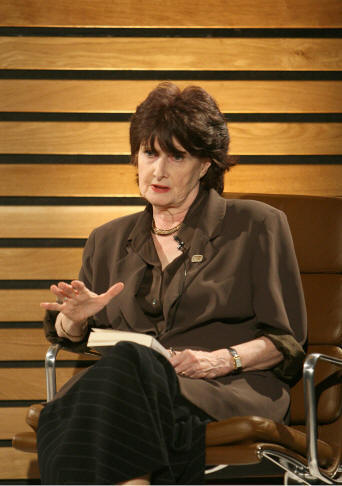
- Author: Eavan Boland
- Title: A Poet’s Dublin (35 poems)
- Published: 2014
- List of Challenges 2019
- Monthly plan
- #ReadingIrelandMonth19
- @746books.com
Structure:
The book is divided into 3 parts representing:
- the city Dublin (architecture, women, colony)
- the River Liffey (without the river there would be no city)
- the suburb Dundrum (treat the mundane life of a woman in
- the suburbs with children fairly)
- The book ends with a conversation
- that took place between Eavan Boland and Paula Meehan
- on her 70th birthday at the Abbey Theatre in 2014.
Conclusion:
- Weak point:
- Part 3 – Suburban Dundrum
- Eavan Boland tries to capture the sense of
- living in the new Ireland….subrubia
- but the poems offered few opportunities to reflect.
- They did not generate emotional power
- …to help me connect to Boland’s words.
- Strong point:
- Part 1 and 2- The city of Dublin and The River Liffey
- There were difficult issues and experiences
- told with with a clear-eyed honesty, openess
- and much humanity.
- There were 3 poems about her mother
- (elegy, marriage and her death).
- Poems about Boland as a Trinity College
- student in Dublin.
- Part 2: The Gifts of the River
- …all these poems were very good
- emphasizing the feeling of being a colony under
- the English….and the palpable joy of the
- beauty of the Grand Canal in Dublin or the
- carefree summer swimming hole at
- Blackrock Baths!
Last thoughts:
- This is a lovely way to discover a city.
- Not just pages of facts and figures….but feelings
- through the author’s poems.
- This book marks Eavan Boland’s 70th birthday,
- The poet has paired her poems about her native city Dublin
- with her own photographs.
My notes:
Once in Dublin
- Why did this poem put a smile on my face?
- The poem has emotion, idea, physical setting,
- language, image, rhythm…that brought back
- memories of my visit to Dublin years ago.
- In this poem we visit a Dublin of Boand’s past.
The Huguenot Graveyard at the Heart of the City
- I learned of the French Protestants
- who left Nantes France to settle in Dublin 1600s.
- This hidden cemetery is a place of shadow
- and remembrance.
- Nostalgic poem…that sparked my interest because
- some of the names on the cemetery plaque were familiar!
- Le Fanu:
- Joseph Thomas Sheridan Le Fanu
- was an Irish writer of Gothic tales and mystery novels.
- He was the leading ghost-story writer of the nineteenth century
- Another name….Becquett
- This was a relative of Samuel Beckett.
- Now that explains why Beckett felt at home in France.
The Doll’s Museum in Dublin
- This poem can be read in multiple ways by
- different audiences.
- The poem highlights Easter Day in Ireland.
- While there seems to be a gleeful mood in the air
- …the poem ends on a note that implies there is an
- underlying sadness:
- Easter Uprising 1916.
Heroic (Sonnet)
- As you walk through a city like Dublin your eyes gaze on
- bonze orators and granite patriots.
- Arms wide. Lips apart
- Eavan Boland is in her late teens, a student
- having recently returned to Dublin.
- She senses the powerful threat of heroism in the city during
- the turbulent years of The Troubles.
- Also she feels the growing awareness of the
- troubled role of women in Irish history and culture.
- There is no statue as she describes in the poem in Dublin
- (man with a gun) but was inspired by the statue
- of Robert Emmet (1778-1803) in St. Stephen’s Green.
- Irish nationalist and Republican, orator and rebel leader.
- He led an abortive rebellion against British rule in
- 1803 and was captured, tried and executed for high treason
- In this sonnet Boland imagines
- stone maleness – Irish history – heroism.
- She would you look at the statues of the Irish past
- and try to imagine heroism.
- Could she be heroic?
Anna Liffey
- This is an example of an Irish pastoral poem
- It s about the River Liffey in Dublin.
- and one of the few rivers in the world that
- is considered ‘female’.
- The Irish phrase Abhainn na Life means River Liffey
- The phrase has been Anglicanized to Anna Liffey.
- James Joyce included a character in Finnegin’s Wake
- called Anna Livia.
- Eavan Boland holds a conversation in a fragmented style
- with the river she can see from her doorway at home.
#Ireland: Edna O’Brien

- Author: Edan O’ Brien
- Title: Saints and Sinners
- Published: 2011
- Genre: 10 short stories (208 pg)
- List of Challenges 2019
- Monthly plan
- #ReadingIrelandMonth19
- @746books.com
Shovel Kings
- An absolutely feel good story.…it is the longest in this collection.
- Title: Shovel Kings refers to the young Irishmen who
- …came to England to do construction and digging work.
- On payday they felt like (shovel) kings!
- Edna O’Brien describes Rafferty (60+)…
- “He doesn’t belong in England and ditto Ireland
- ….exile is in the mind and there is no cure for that”
- Rafferty and Edna O’Brien have something in common:
- …both felt themselves as exiles having lived in England for 50 years.
Sinners
- Delia runs a small B&B in a rural village.
- The beating heart of this story is her response to events internally.
- Her thoughts run wild
- ….imaging what her 3 guest are doing in one bedroom.
- Flashbacks of her marriage and her children combined with a
- bizarre dream of saints disrobed
- ….drives her to frantically taking a sleeping pill.
- Strong point: pace
- Pacing feels like a hand pressed in the middle of our backs.
- …pushing us along.
- The sense of trying to catch up with Delia’s thoughts.
- This sense must never slack.
- Delia alludes to lewd machinations
- ….going on under her roof.
- We want to know more….sort of voyeurism!
Madame Cassandra
- Mildred is the first person narrator sitting on the steps of
- …Mme Cassandra’s caravan hoping for a meeting.
- Her marriage is falling apart.
- In a moment of emotion she quotes W. B.Yeats:
- ...”Never give all the heart outright.”
- Does the older wife have a card up her sleeve ?
- Can she outplay the young lover’s trump card?
- Strong point: Tension increases.
- We want to know what Mildred will do.
- How can Mme Cassandra help her?
- This was impressive writing
- ….creating a flow of thoughts with a whiff of humor
- …that seems erratic but is so very well constructed.
- Strong point: Edna O’Brien is a champion ‘withholder’.
- It is her unwillingness to over explain.
- She lets the story end ….and the reader must decide.
Black Flower
- Woman: Mona, painting teacher
- Man: Shane …in prison 15 years …just out a few weeks ago
- Mona and Shane meet to take a drive and have
- dinner in a restaurant.
- Shane is free but his enemies
- …are still looking for him.
- This was a short depressing story.
- I didn’t like it.
#Ireland: Dermot Healy

- Author: Dermot Healy (1947-2014)
- Title: The Goat’s Song
- Published: 1994
- List of Challenges 2019
- Monthly plan
- #ReadingIrelandMonth19
- @746books.com
Finished: 04.03.2019
Genre: novel
Rating: C
Conclusion:
- Part 1: Alcoholic playwright
- Part 2: Sergeant (father of actress) in RUC during The Troubles in No. Ireland
- Part 3: Aspiring actress in a toxic relationship with playwright
- ..and still sleeping her way to the top in the theatre world.
- These are the basic components.
- Part 1 and Part 3 were filled with the shenanigans of
- Jack (stereotype alcoholic Irishman) and Catherine.
- These lovers will never be compatible.
- They do nothing, go nowhere and do it slowly.
- It was like watching somebody kill themselves with a butter-knife.
- Part 2 was the BEST.
- Dermot Healy should have written the entire book about
- the complex character Jonathan Adams (No. Irish policeman).
- You sensed the fear Adams experienced
- of being assassinated by the IRA.
Last thoughts:
- Strong point: the book…it is intense, part 2 is riveting.
- Weak point: the writing is not entrancing and beautiful throughout.
- #MyHonestOpinion
#Valentine’s Day 2019
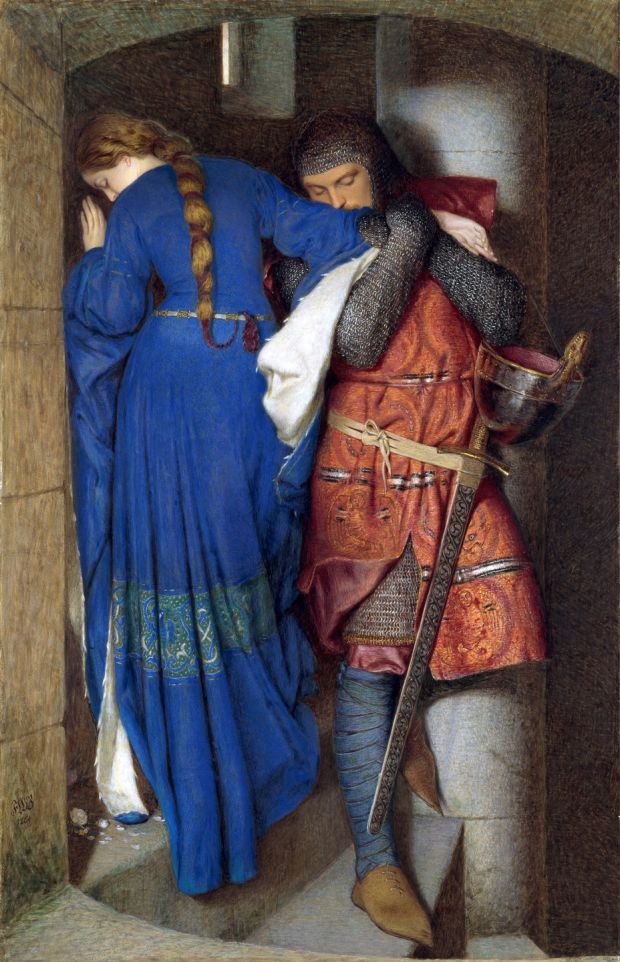
Hellelil and Hildebrand, the Meeting on the Turret Stairs (1864)
- …is a painting in the National Gallery of Ireland
- …by Irish artist Frederic William Burton (1816-1900).
- Based on a medieval Danish ballad about the ill-starred love between
- Hellelil and her bodyguard, Hildebrand,
- …it features the lovers sharing a fleeting moment of intimacy.
- Things don’t go well for them.
- When her father discovers their attachment he orders
- ..that her seven brothers should kill Hildebrand.
- But the bodyguard turns out to be a formidable adversary.
- He has killed six of the brothers and Hellelil’s father.
- Hellelil intervenes to save the life of her surviving sibling.
- Hildebrand succumbs to his wounds and
- …she decides she cannot live without him.
- #Breathtaking
#Irish Playwright Brian Friel
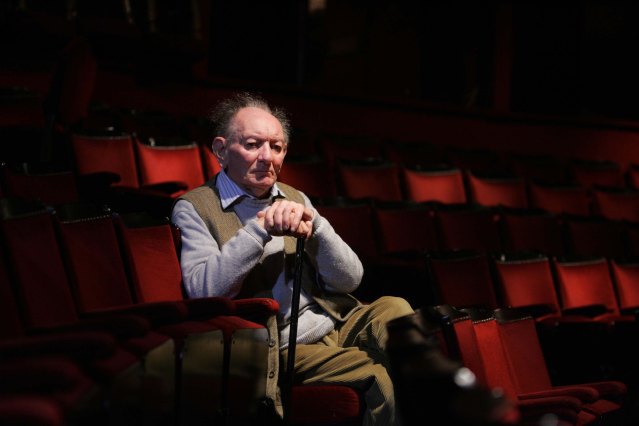
- Author: Brian Friel (1929-2015)
- Title: Philadelphia, Here I Come!
- Published: 1964
- Genre: tragicomedy
- Reading time: 1,5 hr
- Trivia: this play made Friel famous in
- …Dublin, London and New York
- List of Challenges 2018
- Monthly plan
- List of Plays
- #ReadIreland
Quickscan:
- The play describes Gareth’s last night in his home town of Ballybeg.
- He is an Irish lad about to set off for America.
- Friel recognizes an idea of home
- ….at the moment it is about to disappear.
Characters:
- Gareth is played by 2 actors: Public and Private.
- Friel reveals in this way the difference between
- how we see ourselves (lonely, emotional life)
- and how we appear to others (gregarious, social).
- Other characters are:
- Gar’s surrogate mother Madge; housekeeper
- Gar’s speechless, affectionless father
- Gar’s ex-fiancée Kate
Conclusion:
- This play grabs you by the hand not your throat.
- It is sentimental piece of writing with the
- right blend of regret….loveless youth, distant father.
- and laughter….on the threshold of escape to,
- “a vast restless place that
- …doesn’t give a damn about the past.”
- The reader must decide is this play about
- ….and exile or emigration?
- #WorthYourReadingTime
Last thoughts:
- This play is really meant to be seen and not only read!
- The interchanges between the two actors ‘Public and Private’
- bring a real dynamic that captures the audiences attention.
- The maternal touches/gestures of Madge
- …the surrogate mother show her loving character.
- She stuffs snacks and a few pound notes in Gar’s luggage,
- …invites 3 mates to come and say good-bye.
- She warns Gar to be strong…because he will get homesick.
- Her exit the end of the play will pluck a heart string!
#Classic: Patrick Kavanagh Irish poet
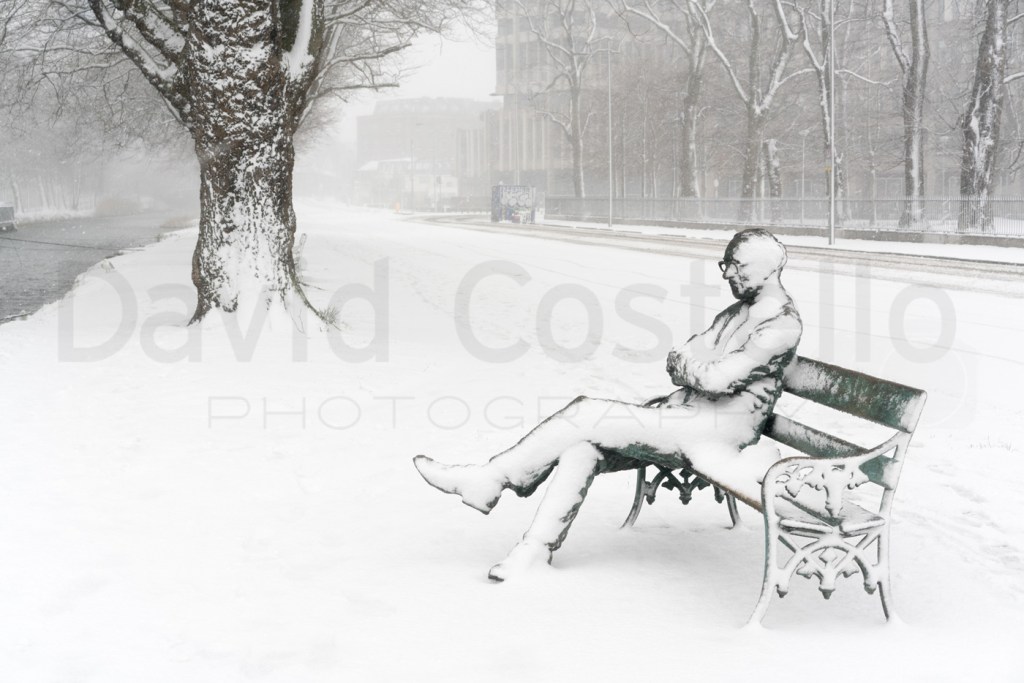
P. Kavanagh
(photo) https://www.davidcostellophotography.com/
- This lifelike statue of him seated on a bench
- on the bank or the Grand Canal in Dublin.
- Poem: The Bluebells are Withered Now under the Beech Trees
- Author: Patrick Kavanagh (Irish) 1904-1967
- Published: 1945
- List Challenges 2018
- Monthly planning
- Reading Ireland Month (…poem was left over from March)
- Masterpost 746 Books (Cathy)
- #readireland18
- #begorrathon18
Analysis:
- This is a poem of greater emotional complexity
- The tone is sombre even meditative.
- The poem attempts to renew in the face of experience
- light-hearted attitude that has disappeared.
- The poet Kavanagh lived in a boarding house on
- Raglan Road between autumn 1944 – October 1945.
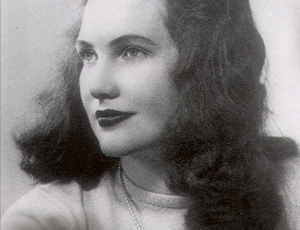
- The poem records his unrequited romance with Hilda Moriarty,
- a twenty-two years old medical student at University College Dublin.
- Hilda was acclaimed as one of the most beautiful women in the city.
- Kavanagh was infatuated with her and often stalked her.
- From early 1945 she was desperately trying to escape his obsessive attention.
- One day in May 1945 Patrick and Hilda arrived at the railway station in Drumree
- …a couple of miles from Dunsany castle.
- Every May, serried ranks of bluebells nod their heads.
- That first image of walking through the bluebells
- made a profound impression on the poet.
The bluebells are withered now under the beech trees
The bluebells are withered now under the beech trees
And I am there – the ghost of myself – alone
Trying to remember a truth I once had known
Poking among the weeds on bare knees
Praying, praying poetic incantation
To call back life to that once-green plantation.
A score of grey ungrowthy stumps stand up
Like an old graveyard in my mind: Dingle, Cooleen
A shadowed corner of Saint Stephen’s Green
A noisy corner of the Country Shop
All chilly thoughts that bring no exaltation
No green leaf love to the beautiful plantation.
I dreamt it in my heart, it was not real
I should have known that love is but a season
Like spring. The flowers fade. Reason
Knows it cannot find its old ideal
And yet her breath still blows some undulation
Of leaf and flower to charm my dream plantation.
Last thoughts:
- I am very impressed with Kavanagh’s poetry.
- He did not have the posh education at Blackrock College in Dublin
- as did his friend Flann O’ Brian.
- But still Kavanagh produced some wonderful
- works based on his rural backround and
- …determination to educate himself.

Memories of Youghal

Writer : W. Trevor
Title: Memories of Youghal
Theme: memories happy (familiar places, schools, stores)….unhappy (loneliness)
Setting: Youghal seaside resort town County Cork
Setting: terrace of the Hôtel les Galets in Bandol, France
Timeline: 1979, late April ( I calculated this out of information in the story)
- List of Challenges 2020
- Monthly plan
- #ReadingIrelandMonth20
- #Begorrathon20
Analysis:
1. Explain the title. Memories of Youghal In what way is it suitable to the story?
a. Trevor uses ‘he remembered’ ..she remember several times in the short story to stress we are reading about memories.
b. Where is Youghal? Novelist W. Trevor spent some of his early years in Youghal, and featured the town in his short story. “Memories of Youghal”. But we discover the conversations are taking place in Bandol, France on Côte d’Azur.
c. Trevor describes the beautiful Hôtel Les Galets and it’s surroundings ..mimosa, bougainvillea, oranges ripened, palm trees that flap in the breeze. This is so different from the place in the character’s minds…seaside coast of Ireland, sandy beach, shop near the lighthouse that sells Rainbow Toffees.
2. What is the predominant element in the story? Characters
a. Trevor uses body language, gestures, glances to communicate tension
b. between Quillan and Miss Ticher (64 yr) and Miss Grimshaw (64 yr)
c. during their casual talks on the hotel terrace.
d. Detective Quillan: 45 yr.
e. While reading the story I feel is investigating … his own childhood!
3. Who is the single main character about whom the story centers?
a. Quillan: is the main character. He is a detective (45 yr)
b. When a detective is in the story….who or what is he looking for?
c. Quillan is the boy at the beginning of the story.
d. The reader does to know that yet…..
e. Quillan is obsessed by the blows fate has forced upon him.
f. Had his parents not died…
g. Had a mystery woman succeeded in stealing him out of his pram…
h. …then he would have been a different man than he is now.
4. How does the story get started?
a. The narrator describes a character ‘he’ recalling
b. …memories of his childhood to an elderly woman on a hotel terrace.
5. Briefly describe the rising action of the story.
a. The action in the story is very subtle.
b. ‘He’ introduces himself as a detective who is
c. following an adulterous couple for her husband.
d. Quillan asks if he may have a casual conversation
e. with the elderly woman….
f. …so the couple won’t notice him.
6. What is the high point, or climax, of the story?
a. Quinlan with his eyes closed in warmth talks about
b. his childhood memories.
c. Three lines on page 53 are the emotional climax in the story.
d. The reader finally understands what is going on.
e. Quillan: “The woman wanted a child, Miss Ticher.
f. A child needs love.
g. Miss Ticher: ”A woman too,” whispered Miss Ticher.
7. Discuss the falling action or close of the story.
a. Miss Ticher’s thoughts: ‘She imagined…
b. — ironing his blazer
c. — his face as a child
d. The mood changes.
e. Miss Ticher thanks Quillan for his childhood memories
f. She watches him walk the length of the terrace.
g. Miss Ticher: “ How very cruel the world is.”
Strong point:
a. Drinking: is usually a part of Trevor’s stories
b. …red liquid(wine) and ice swirling in a glass of whisky.
c. Characters are imbibing, intoxicating, tipsy and a looseness about the lips
d. usually discloses secrets best kept silent.
e. Feelings: of sarcasm with hint of bitterness
f. sympathy is shrugged away.
Conclusion:
- This story was very good.
- Once I finished it I re-read the first
- …few pages looking for the clues I missed.
- There are a few lingering questions in my mind.
- How did Quillan find Miss Ticher?
- Well, isn’t that what a detective does….find people?
- Why did Quillan suspect that
- …Miss Tricher was someone from his past?
- Trevor gives us some clues that Quillan is on a mission.
- “….leaning closer to Miss Ticher and staring intently into her eyes…’
- “ Miss Ticher and Miss Grimshaw, said Quillan,
- …slowly as though savoring the two names.”
- The body language….and manner of speaking indicate
- that Quillan knows something about these two ladies.
- He knows they are part of the puzzle called his childhood.
- William Trevor’s short stories….never disappoint!
Wounds
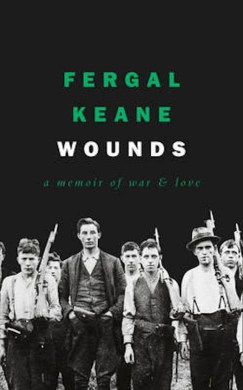
- Author: Fergal Keane (1961)
- Title: Wounds
- Published: 2017
- Genre: memoir
- Trivia: Winner 2017 non-fiction Irish Book of the Year Award
- List Reading Challenges 2018
- Monthly reading planning
Introduction:
- Keane wants us to understand the forces that produced
- the Irish War of Independence and Civil War.
- Keane zooms in and tells us his personal story about
- his town of Listowel, North Kerry Ireland.
- They all joined the revolution:
- grandmother Hannah,
- …her brother Mick and his friend Con.
- They took up guns to fight the British Empire.
- “This was to be a revolution of steel not poetry” (pg 26)
Notes:
- Land: ch 1
- It was an important theme in this book
- …who lost it, stole it, worked it and who gained from it.
- Nothing was so political than
- …the ground beneath your feet.
- Keane’s father would tell his son: “What you have, you hold.”
- Justice? ch 3
- It was not an easy life in Ireland 1879-1885
- ….famine and the start of the Land League.
- If a farmer declined to enter the organization
- he could expect to be boycotted,
- …experience cruel physical retaliation
- …or one day a bullet in his arm, if not his head.
- A network of secret groups sprang up across the country
- …to mete out the people’s justice.
- Auxiliaries and Black and Tans: ch 5
- This is the first book about Irish history
- …that I have read that has gone into such detail about
- security death squads and the
- …scale of brutality meted out to civilians.
- in the 1920’s…#Shock.
- Flying Columns: ch 6
- This was a small, independent, military unit capable of rapid mobility
- It is often an ad hoc unit, formed during the course of operations
- Political violence seems to simmer in Ireland…over centuries.
- Core tenet: Britian could only be drivan from Ireland by force.
Strong point: reads like a novel!
- The cover says it all Wounds…love and war.
- 50% of the book is a telling of the routine harassment
- …ambush, reprisal and assassination in the area
- Listowel, North Kerry Ireland.
- I expected a dry account of the Irish Troubles
- …but Keane has infused Irish history with journalist flair.
- The conflict between Republicans and Nationalists is fought out
- like a two-hander fist fight in front of the reader.
Conclusion:
- I am proud of my Irish roots.
- But after reading this book…
- …now I know why I’m so proud.
- Ireland suffered through a War of Independence,
- a Civil War and has emerged as a country
- that has learned to respect and live with each
- other’s differences.
- Fergal Keane’s book reveals in the last 4
- ….chapters his very personal story.
- “Memory is no longer a penance” (pg 299)
- #MustRead

Fergal Keane – Anglo-Irish Foreign correspondent with BBC News
 NancyElin.blog