
17
Dec
The Supreme Court Ireland
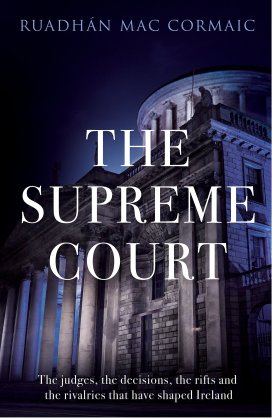
- Author: Ruádhan Mac Cormaic
- Title: The Supreme Court
- Published: 2016
- Trivia: Reading Ireland Challenge
- Trivia: List of Challenges 2017
Author: Who is Mac Cormaic?
- Ruadhan Mac Cormaic is the
- former Legal Affairs Correspondent and
- Paris Correspondent of the Irish Times.
- He is now the paper’s Foreign Affairs Correspondent.

What were the main struggles between 1950 – 2017 ?
- The duty of the Supreme Court judiciary is:
- Not rewrite the Constitution of Ireland
- …but make sure it was applied
- …to breath life into it
- …to break with the traditional reliance
- …on English law and legal methods
What is the book about?
- The book traces many landmark decisions and gives the reader an
- inside look at the internal ‘give and take’ among the judges
- to produce an objective agreement or dissent decision.
- It reveals who the judges are
- These men and women who usually want to stay out of the limelight.
How did Ireland change?
- Ireland moved from decisions about
- butter smugglers, disputes over greyhounds and a row about livestock licenses
- …to individual’s privacy rights (contraceptives),
- …referendum for European treaties,
- …decriminalization of homosexuality and
- …women’s rights to leave country to seek an abortion in England and much more.
- Ireland has made GIANT steps to become a
- modern, young, confident and economically strong country.
What impressed me about the book?
- It was fascinating to read each judges motivation to topics about
- the privacy of the individual (May McGee vs Attorney General; contraceptives)
- the need for more equality to allow
- women to serve jury duty and
- be fairly taxed
- a demand for referenda about European treaties
- secure the rights of people concerning
- the rules applied for extradition of
- …suspected criminal (IRA) offenders to England.
What is essential to know before reading the book?
- Political parties: this is all new for me!
- Fianna Fail (center right)
- Fine Gael (center right… liberal conservative)
- Oireachtas: = the legislature (structure of the Irish government
- The President of Ireland
- The two houses of the Oireachtas
- Dáil Éireann (lower house)
- Seanad Éireann (upper house)
What was my reading strategy?
- Best tip: use wikipedia
- Put a face on people mentioned in the book.
- Best tip: learn structure US courts vs Irish courts
- …just to put things into perspective.
Conclusion:
- Strong point:
- Ruadhán Mac Cormaic is a political journalist for the Irish Times.
- His writing style is NOT ACADEMIC…it is accessible
- …not only for those interested in law but also for
- anyone wanting to learn more how these
- …Supreme Court justices shaped Ireland.
- Mac Cormaic gives us the gripping inside story of the Irish judiciary,
- the judges, decisions, the rifts and the rivalries.
- Ruádhan Mac Cormaic lifts the veil on
- the Irish Supreme Court’s hidden world.
- The book is well-written and highly entertaining and
- in my opinion…
- #InformativeRead
QUICKSCAN Ireland:
- Ireland 1950’s:
- economy stagnant
- politics still haunted by civil war
- …ceaseless outward flow of people (emigration)
- 1960’s:
- broader shifts in society
- growing economy
- rising living standards
- 1970’s:
- emigration slows down
- women’s movement gaining strength
- population is young 50% under 26 yr
- 1980’s:
- High Court has its first female judge
- Mella Carroll
- 1990’s:
- First female and non-catholic…
- Supreme Court judge….Susan Denham.
- Chief Justice of the Supreme Court 2011-2017.
- She was a shrewd diplomat and key player behind
- a series of major reforms.
- 2000’s
- Supreme Court was must
- Focus on:
- …ensuring rights in political, criminal
- …and legal processes of the State.
- Focus on
- ...fair procedures and access to the courts
- 2010’s:
- Change: Fianna-Fail led governments
- …appointed a majority of lawyers who had
- …NO connections to the party!
- Susan Denham is appointed as the
- …first female Chief Supreme Court Justice! (2011)
30
Oct
Famine by Tom Murphy Irish Playwright
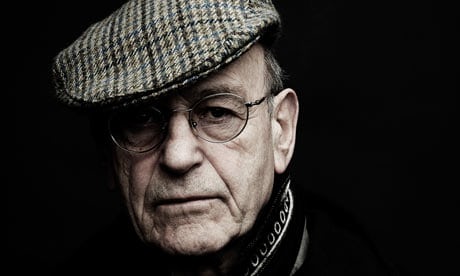
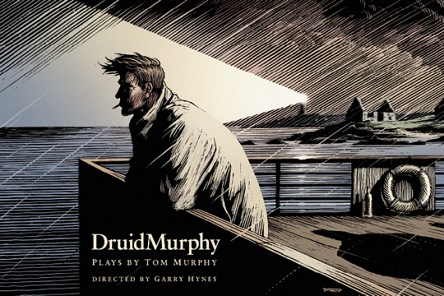
- Author: Tom Murphy (1935 – 2018)
- Title: DruidMurphy: Plays by Tom Murphy
- Published: 1977
- Table of contents: 3 plays
- A Whistle in the Dark (1961) (read)
- Famine (1977) (read + review)
- Conversations on a Homecoming (1985) (read)
- Trivia: Ireland: Luck of the Irish Reading Challenge
- List Reading Challenges 2017
- T. Murphy died on 15 May 2018 (obituary)
Introduction:
- Tom Murphy grew up in Tuam, County Galway, a tough frontier town.
- The youngest of 10 children, he saw his family “wiped out” by emigration.
- He was religious as a child, but had faith beaten out of him by the Christian Brothers.
- “The repressiveness of the Catholic upbringing was extreme,” he shivers
- Murphy was inspired to write this play after
- ….reading The Great Hunger by C. Woodham-Smith.
What is Tom Murphy’s approach to writing a play with a historical background?
- Murphy reads many books about the subject of his play.
- Sometimes is takes him 1-2 years to write the script.
- He read at least 6 non fiction books
- …researched the collections of the Irish Folklore Commission
- …and 3 novels about the famine in Ireland.
- Novels: all by William Carleton
Valentine McClutchy: the Irish Agent
The Emigrants of Ahadarra
The Black Prophet.
In each case noting passages of dialogue and colloquial phrases.
What was TM’s biggest challenge?
- How to represent the action of more than 100 years ago so as to
- …engage audiences in the present time of theater.
What was Murphy’s goal?
- Murphy wanted to voice through the actors the
- general effect of famines on the poor.
- The neighborhood ties loosen of dissolve.
- Theft becomes endemic.
- Resistance changes into apathy.
- The feeling of a ‘group’ is shattered.
Famine
- Style: Brechtian history
- the Brechtian style that relies on the audience’s reflective detachment
- …rather than emotional involvement.
- Structure: 12 scenes (not divided into acts)
- Main character: John Connor —- unofficial leader of the village
- Minor characters: 3 women and 15 other male villagers
- Timeline: 1846 (Autumn) – 1847 (Spring)
- Setting: village of Glanconor – space is ‘charged’ with historical trauma.
What is the problem?
- John tells the villagers ‘We must do what is right’.
- — restrain violence
- — no attacks on convoy of corn-carts
- — providing hospitality to others…..even when his own family is starving.
What is the conflict?
- Doing ‘what’s right’ and placing faith in the laws of God and man
- …get him and the villagers no where.
- Passive resistance; pragmatic idealism ( John Connor) VS.
- Desperate reality (John’s wife) and
- Militant, activist, a survivor who favors violent action (Malachy O’ Leary)
Conclusion:
- Tom Murphy writes with more force and less nostalgia.
- Famine is hard edged realism.
- Scenes 1-4 introduce the reader to the characters and village.
- Scene 5 is powerful.…
- …and the language indicates the higher-class officials are speaking.
- Landlord, tenant John and the clergy Fr Horan and Fr Daley discuss the political
- …strategy that has been agreed upon by the government.
- The policy is to offer “..a great number of people an alternative to death.”
- The farmers will be given a paid ticket to leave the country…to emigrate to Canada.
- Fr Daley explodes when he hears “It is cheaper it clear them away”
- Fr Daley ask: “Who are we saving?”
- Scene 6-10 builds the tension…planned assassination, final interview for John Connor.
- He must choose to leave or stay in Glanconor
- “…I was born here, I’ll die here, I’ll rot here.”
- Scene 11 Tom Murphy brings the play to a close introducing unexpected actions.
- John Connor continues to be defiant, “..do what’s right”
- We see John as an isolated figure, perhaps he has lost his senses.
- Now the reader must decide: was John a hero or a fool?
Last thoughts:
Tom Murphy does not seek the limelight
…but his plays are ‘beacons’ of insight into
the Irish psyche.
He is considered to be the greatest living Irish playwright.
 NancyElin.blog