
11
Jul
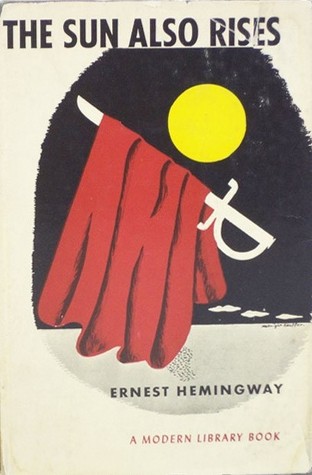
Classic: The Sun Also Rises

- Author: E. Hemingway (1899 – 1961)
- Title: The Sun Also Rises
- Published: 1926
- Genre: novel (roman à clef )
- List Reading Challenges 2018
- Monthly reading planning
- #20BooksOfSummer
- Trivia: E. Hemingway was awarded Nobel Prize Literature 1954
- Trivia: This book is nr 45 Modern Library 100 Best Novels.
- Trivia: Nobel Prize Reading Challenge
- #50BooksToReadBeforeYouDie
Introduction:
- Hemingway was part of what is called the Lost Generation.
- It was a group of expatriate writers
- ….who found real meaning in nothing.
- They spent their time reveling while living in Europe.
Title:
- The title comes from the epigraph.
- Despite the despair this ‘lost generation’ feels….there is hope.
- Ecclesiastes 1:5
- “Also, the sun rises and the sun sets;
- And hastening to its place it rises there again.”
Publication:
- When published in 1926, The Sun Also Rises
- …caused a bit of a stir
- among the Montparnasse expatriate crowd.
- Many of its characters were based on real people.
- Donald Ogden Stewart (character Bill Gorton )
- Harold Loeb (character Robert Cohn)
- Lady Duff Twysden (character Lady Brett Ashley)
Alcohol:
- This book is held together by
- …the buying, mixing, having, spilling and pouring out drinks.
- In O. Laing’s book The Trip to Echo Spring she mentions
- that “Hemingway, who’d been drunk since he was fifteen
- …had put more faith in rum than conversation.” (pg 92)
- Hemingway used alcohol to
- …blot out feelings that are otherwise unbearable.
- ”A bottle of wine was good company” (pg 236)
- Drinking reflects the characters attitude.
- Brett drinks for psychological/physical pleasure.
- The Count is a connoisseur.
- Brett: “Let’s enjoy a little more of this,”
- Brett pushed her glass forward (pg 66)
- Count: The count poured very carefully.
- “There, my dear. Now you enjoy that slowly,
- and then you can get drunk” (pg 66)
Hemingway code:
- Bullfighting fascinates Hemingway.
- He describes in great detail Pedro Romero’s
- …killing of the bull.
- He faces danger with understanding and dignity
- …undaunted, grace under pressure.
- FEELINGS fascinate Hemingway.
- Everyone in that time had feelings, as they called them,
- just as everyone has “feelings” now.
- Whether Jake leaned in a cab against Georgette or
- leaned in a cab against Brett
- ….Hemingway was searching where his feelings lay!
- Georgette? Brett?
Last thoughts:
- This book is considered a classic.
- The book didn’t interest me as a whole.
- Others may swear by it and Hemingway
- …but I just like The Old Man and the Sea. :)
- Advice: the book should be read
- …so you can form an opinion about it.
- It is on Modern Library’s Best 100 Novels List.
- Perhaps they could have selected a book written
- later in Hemingway’s life….his writing matured.
- I can agree with Hemingway……just once!
- “You´re always drinking my dear.
- Why don´t you just talk?” (pg 65)
- The Lost Generation–living in Paris during the 1920s
- …was lost on me.
- Finished: 11.07.2018
- Genre: novel
- Rating: D
- Conclusion:
I think I’m done with Hemingway.
I don’t care if he won the Nobel Prize or not!
There are better classics waiting to be read.
17
Mar
#Poetry Seamus Heaney

- Author: H. Vendler
- Title: Seamus Heaney
- Published: 1998
- List Reading Challenges 2018
- Monthly reading planning
- Reading Ireland Month
- Masterpost 746 Books (Cathy)
- #readireland18
- #begorrathon18
- #NonFicReads18 Doing Dewey (Katie)
- #DealMeIn2018 Jay’s Bibliophilopolis (book = 7 essays)
- Trivia: Seamus Heaney died following a short illness
- on August 30, 2013 at the age of 74.
- Heaney’s last words were in a text to his wife Marie were:
- “Noli timere“, which means “Do not be afraid.
Introduction:
- It took me a week to read this
- excellent overview of Seamus Heaney’s poems by
- American literary critic Helen Vendler.
- I could only manage 1 chapter day.
- There was so much to learn.
- …so much detail…that my mind
- …could absorb no more after 3 hours of reading.
Ch 1: Death of a Naturalist (1966) Door Into the Dark (1969) Wintering Out (1972)
- Early poems rooted in the Irish landscape.
- Heaney’s pastoral poems were not always idyllic.
- Midterm Break was heartbreaking
- ….about the death of his 4 yr brother.
- And of course Digging is one of his most famous poems.
- Heaney wanted to measure the pen against the sword
- “Between my finger and my thumb / The squat pen rests; snug as a gun”.
- Summer Home is a marriage-poem.
- It is a chilling account of a quarrel finally mended.
- But one of my favorites is ….Sunlight.
- I get ‘goosebumps’ when I read it.
- This is memorial to the central figure Aunt Mary.
- It is a warm, nostalgic rural sturdy.
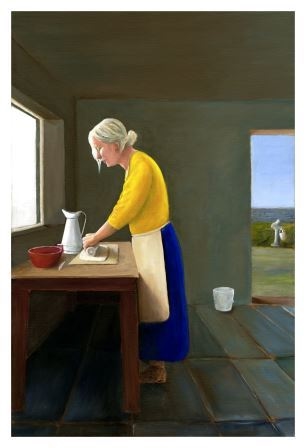
- I can see my mother with her floured hands, whitend nails
- …rubbing her hand s on her apron while she taught me how to make an apple pie.
- I imagine ‘honeyed water’ in a bucket warmed by the sun.
- Heaney truly brings you into a poetic state
- …dreaming while you are awake!
Ch 2: North (1975)
- This collection was the first that
- …dealt about the Troubles in Northern Ireland.
- Heaney looks frequently to the past for images and
- …symbols relevant to the violence and political unrest.
- The Bog poems are a symbolic representation of history.
- The poem should sound like the subject.
- Heaney tried to pull language as close as possible to the thing itself
- — so that a bog poem sounded boggy or a
- — Viking ship poem sounded lithe.
Ch 3: Station Island (1984)
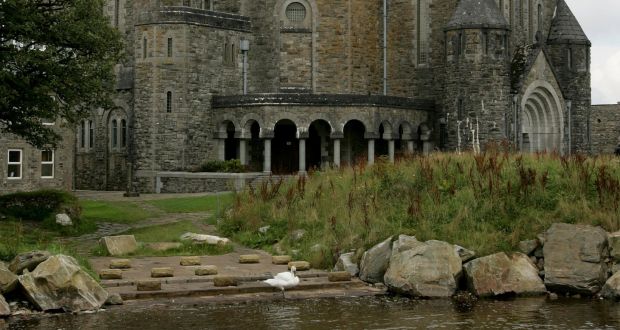
- The title refers to Station Island also known as
- St. Patrick’s Purgatory Co. Donegal.
- It is a site of Christian pilgrimage for many centuries.
- In this long Dantesque fiction of the poem the ghosts of Heaney’s past come
- crowding thick and fast around him in twelve episodes.
- One of my favorites poems in this collection is:
- The Old Icons – Heaney contemplates old pictures he
- …cannot bear to throw away.
- ” Why when it was all over, did I hold on to them?”
- SH cannot throw them out because they are NOT outdated.
- Everything has altered but nothing has changed.
- There will always be a huddled Catholic minority, a patriot and traitor.
Ch 3: Field Work (1979)
- Field Work is a record of Heaney’s four years (1972-1976)
- …living in rural County Wicklow in the
- …Republic of Ireland after leaving the violence of The Troubles.
- Field work is less political.
- 50% elegies (deliberate choice to remain on the everyday level)
- 50% domestic life with his wife (love poems) and friends.
- Heaney calls it the ‘music of what happens’.
- “It was still a proof that I could write poetry in my new situation.” (S. Heaney)
Ch 4: Alter Egos
- Alter-egos are people Heaney…might have become.
- These alter-egos were agriculturally timeless ones,
- …single artisans, seed-cutters, the thatcher, blacksmith and …the digger.
- Station Island is a long autobiographical poem-of-alter-egos.
Ch 5: The Haw Lantern (1987)
- Between 1984-1987 both parents died
- ….this caused a tear in the fabric of Heaney’s verse.
- Emptiness had replaced reality.
- The Haw Lantern is an intellectual volume.
- It ponders, values, chooses, judges and
- …examines the poet’s tendency to ‘second thoughts’.
- The title of the collection refers to the haw fruit.
- The fruit is an important symbol of defiance against winter
- It is a a symbol of the dignity of the Northern Irish in the face of violence and trouble.
- The image of the lantern is a reference to the traditional account of
- …philosopher Diogenes of Sinope.
- According to the story, Diogenes carried a lantern
- …through the streets in search of an honest man in the light.
Ch 6: Seeing Things (1991)
- What does the world look like seen through the eyes
- …approaching death?
- It erases senses and memory alike.
- Such a given entails and an alteration of style.
- These poems did not have the rich sensuality of Death of a Naturalist
- These poems did not have historicized thickness of the bog poems in North
- …or folk-quality of The Haw Lantern
- But rather the Shaker simplicity.
- Heaney uses the higher senses of sight and hearing
- …to make contact with objects without touching them.

Ch 7: The Spirit Level (1996)
- Heaney’s poetry in The Spirit Level is social.
- It is connected to the possibilities of hope, trust and mutual help.
- The Spirit Level looks into sustaining of life in an Afterwards.
- The poems are grounded in the doings of every day:
- — the poet as a child and his siblings are playing ‘train’ on the sofa,
- — Caedmon is a hardworking yardman,
- — Heaney’s mother ‘steeping her swollen feet’,
- — a blind neighbour, childhood playmate Rosie Keenan playing the piano,
- — Mary Heaney’ father after the death of his wife,
- becoming more and more adventurous as he
- ‘took out the power mower in his stride
- / Flirted and vaunted…/ Learned to microwave.’
- Stoicism is the virture of old age, when one’s progress is a best horizontal.
- It is a matter of living with and within the choices one has made
- ….like the old couple in A Walk.
- Two sonnets: first about parental devotion in a pastoral landscape
- …second about Heaney’s married relationship that has lasted more than three decades.
Conclusion:
- Helen Vendler is not easy to read.
- She is an important literary scholar
- …and her vocabulary is challenging.
- But this book was worth every minute I spent reading it
- Every minute.
- It is the first book I’ve read about
- …the changes in a poet’s writing through the years.
- Heaney started as an anonymous narrator in his early collections.
- He became political because of
- …his experiences during The Troubles.
- Later he turned to the everyday-ness of life.
- As he says…the music of what happens.
- As the American poet Christian Wiman said in his essay
- Take Love (Poetry Ireland Review, 27 September 2104):
- Seamus Heaney “…could take the edge of existence and
- give it actual edges.
- He could bring the cosmic into commonplace.“
- #MustRead

17
Jan
St. Joan
- Author: G.B. Shaw
- Title: St. Joan (1412-1431)
- Produced : 29 March 1924, New Theatre London
- Three-time Tony nominee Condola Rashad will take on the title role.
- Shaw wrote the play when he was 70 years old.
- The title role had been written with Sybille Thorndike specifically in mind.
- Trivia: Nobles Challenge
- Trivia: Shaw was awarded the Nobel Prize for Litrature 1925
- Trivia: This play helped Shaw win Nobel Prize for Literature 1925
- Trivia: St Joan will open on Broadway on the 25th of April 2018.
- Trivia: Monthly planning 2018
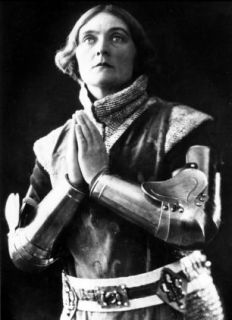
Characters:
- St. Joan
- Robert de Baudricourt (local squire where Joan lives)
- Richard de Beauchamp (Machiavellian English Earl of Warwick)
- Peter Cauchon, Bishop of Beauvais, tried to find Joan a loophole in the Inquisition.
- John De Stogumber is Warwick’s chaplain (religious fanatic).
- Dauphin, Charles (heir to the throne)
- Archbishop of Rheims
- Dunois, Commander of the French troops at Orleans
- ..and God and France are also major players in this play
Introduction:
- We all know the plot: (1 act with 7 scenes)
- Joan of Arc, claiming to have been told directly by God to
- flush the English out of northern France.
- She was granted control of the French army in 1429.
- She went on to break the siege of Orléans, only to be captured by the English.
- In the end she was tried for heresy and burnt at the stake.
- Timeline:
- scenes 1-5 (February – July 1429);
- scene 6 (May 1431, trial and burning at the stake)
- scene 7 (25 years later…1456) epilogue
Conclusion:
- This is a tragedy …with comic moments.
- Shaw’s melancholy attitude in part the result of his reaction to WWI.
- It took the Church of Rome nearly 500 years
- ….to decide whether she was a heretic or a saint.
- It took the Church of Rome only 30 minutes to burn her!
- Shaw wrote the play 3 years after St. Joan’s canonization.
- The play contains some of the playwright’s most acerbic writing.
- Strong point: Girl power
- the role of Saint Joan is …considered the actress’s equivalent of Hamlet
- It is not an easy role.
- Joan gushes sentimentality and melodrama yet she must…
- make Joan believable with her passion for both soldiering and religion.
- Strong point: epilogue
- This is THE most powerful part of the play….magnificent!
- #MustReadClassic …once in your lifetime!
- I read the play (free online)
- and listened to an audio version.
- I highly recommend St. Joan with Siobhan McKenna.
- It is available at Downpour.com
Last thoughts:
- I was surprised to learn that Shaw made specific notes about the play.
- He did NOT want it to be preformed in a medieval setting!
- On opening night…..faced with medieval stage decor, Shaw said:
- “They’ve killed my play.”
- National Theatre London broadcast on 16th February 2017
- St. Joan with Gemma Arterton live from the Donmar Warehouse.
- Here is a short trailer just to give you an impression.…
- I hope this performance will be available on DVD soon.
9
Nov
Lord of the Flies
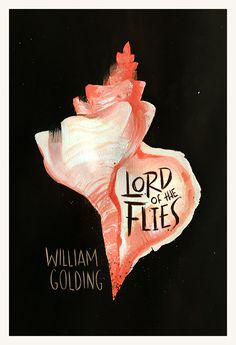
- Author: William Gerald Golding (1911 – 1993)
- Title: Lord of the Flies
- Published: 1954
- Genre: novel (allegory)
- Trivia: W. Golding was awarded Nobel Prize Literature 1983
- Trivia: This book is nr 41 Modern Library 100 Best Novels.
- Trivia: The novel was listen nr 70 on BBC’s 2003 survey ‘The Big Read’
- Trivia: List Reading Challenges 2017
- Trivia: Nobel Prize Reading Challenge
- #50BooksToReadBeforeYouDie
Conclusion:
- This is not a story that is scary because of plot twists or original characters.
- It is scary because it will frighten anyone in the deepest way to see
- what happens when man loses his sense of civility.
- The plot is simple.
- School boys crash land on a remote island with no adults.
- The boys set up their own government, with Ralph in charge.
- But things start to fall apart very quickly.
- The book it provokes fear on a most basic level.
What was the inspiration for the book ?
- Golding was tremendously affected by the WW II.
- The war had done something to him.
- Golding was involved as a marine officer.
- He was aboard the destroyer chasing the German battleship Bismarck.
- …he participated in the Normandy invasion.
- In Lord of the Flies Golding had shown
- …how cruel authorities are able to act.
- There are always people who follow them,
- …nevertheless, obediently.
- Examples: Hitler in Germany — Stalin in Russia
What are the reasons for its enduring legacy ?
- We are still fascinated by the central theme of the book:
- intelligence (Ralph, democratic leader) VS
- irrationality (Jack, totalitarian leader)
- The conch and Piggy´s glasses …become damaged.
- They are the symbols of the collapse of a democratic society.
Last thoughts:
- I read Lord of the Flies in high-school
- During this re-reading I finally understood the allegory.
- It has to do with my own development.
- I now understand more about
- …the ‘powers that be’ who ruled (rule) the world.
- #Classic
 NancyElin.blog