
#Ireland Essays on Modern Irish Writing
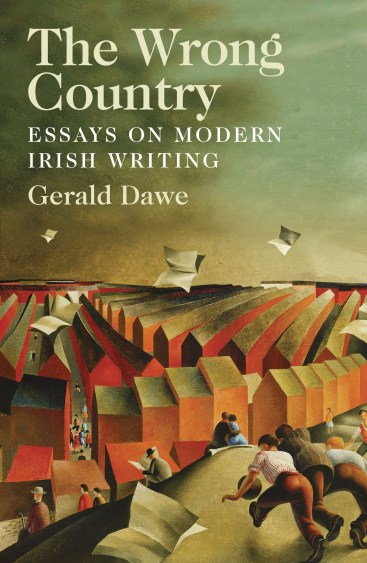
- Author: Gerard Dawe (1952)
- Title: The Wrong Country (14 essays)
- Published: 2018
- List of Challenges 2019
- Monthly plan
- #ReadingIrelandMonth19
- @746books.com
Introduction:
Gerard Dawe is a retired (2017) Professor in English from Trinity College Dublin and a poet.
Born in Belfast and started is family life in the west of Ireland, Galway.
Subject:
Series of 14 essay on modern Irish writing from from WB Yeats onwards.
Epigraph:
The epigraph is by Hugo Hamilton’s The Speckled People and
reflects Irish writers and their writing for me….excellent choice of words by G. Dawe!
“…You can’t be afraid of saying the opposite,
even if you look like a fool and everybody thinks you’re
in the wrong country, speaking the wrong language.
Dedication:
The book is also dedicated to an Irish poet who passed away in 2017, Gerard Fanning.
I have never heard of him.
His poem collections are difficult to find in The Netherlands.
I ordered his collection Water & Power.
I was the last book before his death.
I’m curious what he has to say.
Style:
The essays are in the form of invited lectures or contributions given by G. Dawe.
Tone is conversational and because it is a lecture it takes random turns.
I had to read carefully and ask myself “what did I really learn from this lecture?”
Tip:
I read about the author on Wikipedia before starting Dawe’s writing.
It gives a helicopter view of the writer before I start an essay.
Some of the writers discussed in the essays:
W.B. Yeats (1865-1939) Nobel Prize 1923 and
Samuel Beckett (1906-1989) Nobel Prize Literature 1969
Seamus Heaney (1939-2013) Nobel Prize 1995
- Note: …it is quite exceptional to have 3 Nobel Prize winners
- emerge from an Irish Protestant Group in literature!
James Plunkett, John Hewitt, Eavan Boland, Dorothy Molloy,
Michelle O’Sullivan, Leontia Flynn, Eiléan Ní Chuilleanáin, Ethna Carbery
Elizabeth Bowen, Mary Lavin, Kate O’Brien, John McGahern, Brendan Behan, JP Donleavy, Patrick Kavanagh, Seamus Deane, Derek Mahon, Medbh McGuckian, Stewart Parker.
- Read Eavan Boland’s The Poet’s Dublin....beautiful
- Reading Eiléan Ní Chuilleanáin‘s
- The Boys of Bluehill (40 poems published 2015)
- Read an essay by Seamus Heaney about Patrick Kavanaugh.
- Read Seamus Heaney Poetry
- Read Elizabeth Bowen The Death of the Heart
- Reading Medbh McGuckian Selected Poems 1978-1994
Topics:
- Early years: 1913 – 1939: Lockout Dublin, WW I, Easter 1916
- 1940s – 1950s: Tragic writing lives of American and Irish generations
- 1950s: Emigration of young Irish women to Britain
- 1960s: Boozy literary Dublin
- ….and onwards 2010s.
My notes on 7 essays:
Hearing Things: W.B. Yeats – S. Beckett
Beckett and Yeats had similar social, educational, Irish Protestantism backrounds. Beckett would create in his drama testimonials to Yeats. Beckett and Yeats met only once . 1933 Beckett went through extremely difficult tragic year: death cousin (TB) May 1933 and loss of his father (heart attack) June 1933. This marked the real beginnings of his life as a writer. He was 27 years old.
Plunkett’s City: James Plunkett
James Plunkett was an Irish writer (1920-2003) He was educated by The Christian Brothers in Dublin.
Plunkett grew up among the Dublin working class, petty bourgeoisie and lower intelligentsia.
Strumpet City is a 1969 historical novel by James Plunkett set in Dublin, Ireland, around the time of the 1913 Dublin Lock-out.
Strumpet City is movement between Dublin, Kingstown and the coastline of Dublin. Characters talk to one another as they observe the city around them. This is the long tradition of perambulation in Irish writing. The book starts in 1907 and ends 1914 with a troop ship leaving Dublin Bay for WW I. In the seven years the 1913 Lockout, struggles for social justice and democracy in Ireland revolve around Dublin.
Dawe introduces met to a poem which I read and listened to: Easter 1916 by W.B. Yeats.
This is a nice read/listen on Easter Morning….and remember what happened en changed Ireland forever.
Border Crossings:
John Harold Hewitt (1907 – 1987), who was born in Belfast, Northern Ireland, was the most significant Belfast poet to emerge before the 1960s generation of Northern Irish poets
that included Seamus Heaney, Derek Mahon and Michael Longley.
Hewitt’s verse expresses the
damage done by political division and nostalgia for a different past.
John Hewitt was a father figure for young Northern poets like Heaney and Longely.
I read Dawe’s essay and did not learn very much. I kept searching on the internet for a better image of this poet.I listened to readings of his poems “The Watchers” and “The Local Poet.” In this poem you can sense Hewitt’s modesty and shyness between the lines. Beautiful.
On Culture Northern Ireland website I found a concise introduction to John Hewitt that appealed to me more than Dawe’s essay.
We need Hewitt now more than ever to remind us that we have a tradition and a definable, colourful, multi-layered Ulsterness. That Ulster has a cultural and cultured mind that has nothing to do with universities. Now that we have, at least for political reasons, ceased to kill each other, Hewitt can teach us how to write poetry again in the peace of who we really are.
From The Ginger Man to Kitty Stobling
This is going to be an interesting essay because I HATED The Ginger Man by P J Donleavy. It was listed on Modern Library’s list of Best 100 novels of 20th C. Perhaps Gerard Dawe can tell me what I was not ‘getting’ in Donleavy’s book!
60% of the essay was a Dawe’s attempt to put Irish literature in the historical context of the 1950s (social,political) Donleavy was mentioned in two sentences! No analysis. 40% of the essay was about Patrick Kavanaugh. He produced an Irish classic “The Great Hunger” (poem) and fought tirelessly against the establishment in Dublin. Ireland 1950s was an age of innocence but also full of dark secrets (difficult (patriarchy) conditions for women, child abuse in the Catholic Church, Magdalene laundries).
The Passionate Transitory: John McGahern – REAL DISCOVERY!!
The Observer hailed him as “the greatest living Irish novelist” before his death in 2006 and in its obituary the Guardian described him as ‘arguably the most important Irish novelist since Samuel Beckett’. I never heard of John McGahern! (1934-2006)
Dawe’s essay was not very enlightening. I learned more while reading McGahern’s Wikipedia page!
McGahern had a very challenging life, moving schools repeatedly – often for no good reason – losing his mother to cancer when he was 10 yrs old…growing up with an absentee father and enduring physical, emotional, psychological abuse at the hands of his policeman father.
One of the preeminent Irish writers of our time, John McGahern has captivated readers with such poignant and heart-wrenching novels as Amongst Women and The Dark. Moving between tragedy and savage comedy, desperation and joy. John McGahern….all his books reflect his hard life experiences. Characters, events, attitudes are all peeled back to reveal reality. Sounds like a good author to add to reading lists!
I bought his first novel….The Barracks (1963) and his last book before he died…Memoir (2005).
Elizabeth Reegan (represents McGahern’s marries into the enclosed Irish village of her upbringing. The children are not her own; her husband is straining to break free from the servile security of the police force; and her own life, threatened by illness, seems to be losing the last vestiges of its purpose.
Novels
The Barracks (1963) AE Memorial Award, McCauley Fellowship.
The Dark (1965)
The Leavetaking (1975)
The Pornographer (1979)
Amongst Women (1990), Irish Times Literary Award (1991), nominated for the Booker Prize (1990).
That They May Face the Rising Sun (2001), Irish Novel of the Year (2003), nominated for the International Dublin Literary Award.
Non-Fiction: Memoir (2005)
Fatal Attractions: John Berryman in Dubiin
John Allyn McAlpin Berryman (1914 – 1972) was an American poet and scholar…not Irish but visited in Dublin. I wonder why Dawe added this essay to his book? This essay feels out of place…#JustSaying
History Lessons: Derek Mahon and Seamus Deane
Derek Mahon (1941) is an Irish poet. He was born in Belfast, Northern Ireland child of Ulster Protestant working class parents. Derek Mahon is regarded with Heaney and Longley as the leader of the resurgence of Irish poetry from the late 60s onwards. He writes lyric poetry of enormous wit, elegance and scepticism
Seamus Deane (1940) is an Irish poet, novelist, critic and intellectual historian. Born in Derry, Northern Ireland, Deane was brought up as part of a Catholic nationalist family. Of all the writers I’ve read about in the first 7 essays….Deane is the least interesting. Sorry, Seamus.
Last thoughts:
- I’ll let you discover the last 7 essays yourself.
- The purpose of reading this book was to broaden
- my Irish reading horizons.
- #MissionAccomplished
#Non-fiction: The American Short Story
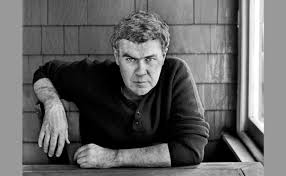
Raymond Carver
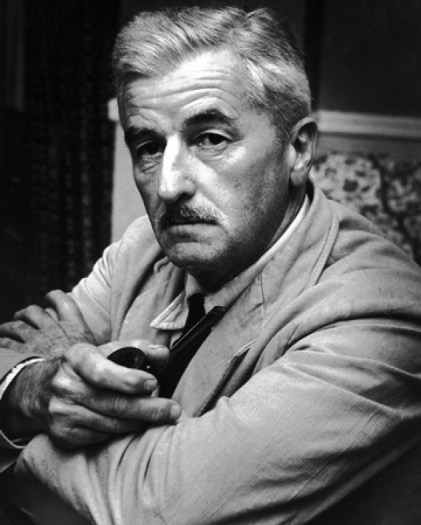
William Faulkner

John Updike

Flannery O’Connnor
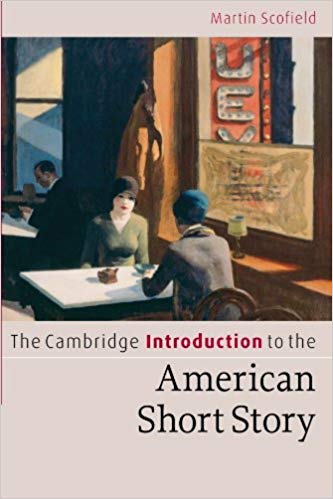
- Author: Martin Scofield
- Title: The Cambridge Intro to The American Short Story
- Published: 2006
- List of Challenges
- Monthly planning
- Non-Fiction List
- List of Short Stories read
Finished: 17.02.2019
Genre: non-fiction, literary reference
Rating: A
Conclusion:
- This was an excellent overview of the American short story!
- The short story is no longer the baby brother of the novel.
- It is a genre open to experimentation, new ethnic voices and
- focuses on the most intense and life-changing experiences.
- Raymond Carver kept a 3×5 card on his desk with a quote by
- Anton Chekhov:
- “ …and suddenly, everything became clear to him…”
- This was an expression of the essential short story effect.
Last thoughts:
- In this digital age with our declining attention spans
- …some may consider short stories as
- bonbons for lazy readers.
- I’ve discovered genius the day I dared to give up
- …on reading novels and read short stories.
- Example: The Complete Stories by Flannery O’Connor.
- Invite the coyote into your life!
- Invite the short story into your TBR!
#DNF: The Merchants of Truth

- Author: J. Abramson
- Title: The Merchants of Truth
- Published: 2019
- Trivia: DNF
- List of Challenges
- Monthly planning
- Non-Fiction List
Finished: 07.02.2019
Genre: non-fiction
Rating: NO SCORE
Conclusion:
- I’m being brutally honest
- I wanted to love this book because I am a news-junkie.
- I thought I would enjoy knowing more about
- Buzzfeed and Vice…but the selections were bland.
- Techies are bringing entertainment not news.
- Buzz staying within boundaries but
- …Vice pushing the limits of ‘edgy’.
- Even the chapters about NYT and Washington Post
- …in part one could not
- ‘hook’ me into reading any further.
- Old school established customs/conservatism in
- boardrooms of the icons in the 1980s publishing world
- is not a great springboard into an interesting book.
- Scandals that brought down Peter Arnett and Dan Rather
- ….some millennials would say “Who?”
Last Thoughts:
- I used to force myself to finish everything I started,
- which I think is quite good discipline when you’re young,
- but once you’ve established your taste, and the penny drops
- that there are only a certain number of books
- you’ll get to read before you die
- So I’m closing this book and ….moving on.
#Classic: The Twelve Caesars (Suetonius)

- Author: Suetonius (69 – 122 AD)
- Title: The Twelve Caesars
- Written: 121 AD
- Genre: biography (Wikipedia The Twelve Caesars)
- List of Challenges
- Monthly plan
- Classic Club Master list
Quickscan: List of Roman Emperors
Notes:
- This is not a book that I would choose to snuggle up with
- on a cold winter day. Thus I decided to listen to the audio book.
- I could keep doing my chores….etc and still absorb the
- tidbits of history that I did not know!
- 50 % of the book is about the first 3 Caesars:
- Julius, Augustus, Tiberius chapters 1-18
- Audio book 40 chapters (20 min per chapter)
- Roman emperor was a risky job: only 3 died of natural causes
- …the rest were assassinated or committed suicide!
Julius Caesar (reigned 5 years)
- He wore laurel crowns as often as possible.
- The wreath suited Caesar especially well with
- the green leaves hiding his balding head.
- It was good to be reminded that Servilia (b.104 BC, d. 42 BC)
- was just a wicked as Livia was
- during her relationship with Augustus Caesar.
- Livia remains in my memory in TV series I, Claudius.
- Servilla came be seen in TV series Rome.
- The series I, Claudius NEVER showed
- …the audience the sadistic cruelty of Tiberius!
- You have to read about it to believe it!
Augustus Caesar (reigned 40 years)
- Father: Gaius Otavius (politician) but he died when AC was 4 years old.
- Adopted father: Julius Caesar.
- Wives: each of these marriages lasted 2 yr Clodia, Scribonia
- Livia was here to stay.
- She was a shrewd woman, 23 yr marriage, no children, 1 miscarriage.
- Augustus also divided city regions and districts,
- …appointed nightly watch against fires (sort of fire brigade).
- Calendar: Augustus was born in September named 8th month August
- because in this month he received his first council ship.
- Lists: These pages about Augustus Caesar is a long list of achievements:
- circus games, gladiators, laws, allocating corn
- exhibiting curiosities: rhino, tiger and extremely long snake!
- Lists: of omens Augustus Caesar believed to foreshadow trouble (2 crows attack an eagle!)
- As soon as Livia comes on the scene
- ….the narrative becomes more interesting.
- After watching the TV series I, Claudius
- I could apply a face (actor, actress) to many names!
- Julia: Daughter is banished for 5 years for her lewd behavior.
- Strong point: personal habits were described
- …negligent in dress, took afternoon naps with his shoes always on!
- Augustus slept in the same chamber on Palatine Hill for 40 years.
- His private room where he was NOT to be
- disturbed (top floor Palatine Hill home) called “Syracuse”.
Tiberius pg 104 (reigned 22 years)
- He was emperor Augustus Caesar’s successor.
- Augustus adopted Tiberius (his mother was Livia AC’s 2nd wife)
- Tiberius was a reluctant emperor!
- Livia (mother) demanded equal share of power.
- Mother and son parted on bad terms.
- When she died Tiberius annulled her will and did not grieve his loss!
- Daughter-in-law Agrippina the Elder
- claimed Tiberius had her husband Germanicus murdered.
- Germanicus was Tiberius’ nephew AND adopted son.
- Tiberius banished her to the island of Pandateria.
- …and ordered a centurion to beat out one of her eyes!
- Tiberius was not finished yet….
- He starved his 2 (adoptive) grandsons to death.
- Tiberius was sadist…deriving pleasure from cruelty.
- In one day 20 people (men, women and boys) were killed flung down
- the Gemonian Stairs (steps located in the ancient city of Rome)
- …and then dragged into the Tiber River.
- He put a centurion to death for stealing a peacock out of his orchard!
- #Ouch
Conclusion:
- I took notes about the first 3 Caesars.
- You can discover the other rulers yourself!
- This was an excellent overview of these emperors
- The book solidified my understanding of the
- Julio-Claudian (27 BC-68 AD)
- Flavian dynasties (68-96 AD)
- Audio book narrator: Charles Griffin (excellent).
- The writing is clear, simple and easy to understand.
- Strong point:
- Insights into the social and political order of the times
- …and the psychology of these powerful yet flawed individuals.
- I loved the music played between chapters….imperial!
Last thoughts:
- Roman emperors are not known as being compassionate
- …but Emperor Vespasian was the exception!
- If you like historial fiction perhaps you would like Lindsey Davis’
- The Course of Honour.
- The love story of Vespasian and his mistress
- …the freed slave woman Antonia Caenis.
- This book recreates Ancient Rome’s most turbulent period.
#AWW2019 Louise Mack
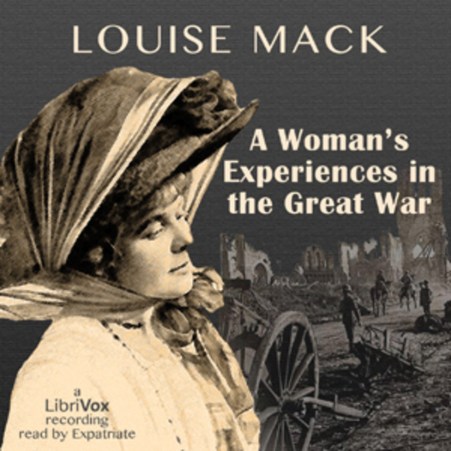
- Author: Louise Mack (1870-1935)
- Title: A Woman’s Experiences in the Great War
- Genre: non-fiction
- Published: 1915
- List of Challenges
- Monthly planning
- Non-Fiction List
- #AWW2019
- AWW Gen 2 Bill @The Australian Legend
Quickscan:
- In 1914 when war broke out Louise Mack was in Belgium
- where she continued to work as the first woman
- war correspondent for the
- Evening News and the London Daily Mail.
- This book is her eye-witness
- …account of the German invasion of Antwerp.
- 28 September – 10 October 1914 (1 week and 5 days)
Conclusion:
- While I read to this book I had to think of
- …the difference between Marie Colvin (1956-2012)
- foreign affairs correspondent for the British newspaper
- The Sunday Times and Louise Mack (1870-1935).
- While the Zeppelin returns to attack Antwerp
- I read Louise Mack saying:
- “…I saw my powder puff. I saw my bag.”
- “…no slippers came under my fingers,
- and I wanted slippers
- in case of going out into the streets.“
- I must just accept that this book
- …was written more than 100 years ago.
Last thoughts:
- Weak point: choppy writing style.
- Strong point: The chapters 46-47 were of special
- interest for me (I live in Netherlands)
- They describe Louise Mack’s impression
- of the Dutch welcoming
- …Belgium refugees after the fall of Antwerp.
- Good eye-witness reporting.
- …but very outmoded.
#Non-fiction: The Age of Eisenhower
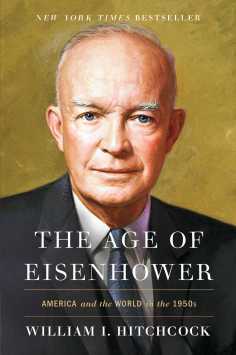
- Author: W.L. Hitchcock
- Title: The Age of Eisenhower
- Genre: non-fiction
- Published: 2018
- #NonFiction
- List of Challenges
- Monthly plan
Did you know?
- Eisenhower agreed to give 400 million dollar
- to France to keep them fighting in Indo-China 1956.
- Eisenhower did not trust Nixon. Ike tried to ‘push’ off the ticket election
- 1956 by dangling a cabinet post in front of ‘Tricky Dick’.
- Nixon did not take the bait.
- Eisenhower suffered from a blood clot in his heart September 1956.
- What did Nixon do? He slipped out of his house through the back door
- to avoid the press.
- Nixon was scared to death ….he might have to lead the country!
Conclusion:
- These are some of the items that I did not know.
- This book reflected a man who remained
- a social conservative who was anxious about
- …clashes b/t federal courts and local customs (civil rights movement).
- Eisenhower was not used to change
- ….wary of challenging hierarchy.
- Yet Eisenhower did manage
- to surpass his limitations and supported
- The Civil Rights act 1957 and enforced court ordered
- …for desegragation in Little Rock Arkansas.
- which makes him a worthy president in my opinion.
Last thoughts:
- I thought America in the 1950’s would electrify me.
- Unfortunately, it was …to be the fractious 1960’s
- with Nixon, Kennedy, LBJ these were presidents that
- interested me more than “I like IKE’.
- The book was interesting and informative.
- Eisenhower made many good calls in the White House
- …an ran a fundamentally honest administration.
- Ike was and remained a #GoodSoldier.
#AWW2018: Chloe Hooper “The Tall Man”

- Author: Chloe Hooper
- Title: The Tall Man
- Published: 2009
- List of Challenges 2018
- Monthly planning
- Non-Fiction Reading List
- #AWW2018 Challenge
- @AusWomenWriters
Introduction:
- This is the story of Palm Island, the tropical paradise
- …where one morning Cameron Doomadgee swore at a policeman
- ….and forty-five minutes later lay dead in a police cell.
- This is also the story of that policeman Christopher Hurley
- …and of the struggle to bring him to trial.
Conclusion:
- Chloe Hooper is asked to document
- ….the murder inquest that is about to begin.
- This book is a documentary with words.
- The author admits her ignorance about Palm Island that
- could fill a book…and it did.
- Ms Hooper was curious if readers would feel the outrage
- about this terrible death.
- It takes place against a complicated backdrop
- ….that many people tended to look away from.
- Strong point: Ms Hooper uses factual language
- …to create emotion!
- Strong point: Clear and direct way of telling the human side of
- …the Doomadgee case and its broader implications.
- Strong point: the book focuses on justice rather than crime.
- The narrative draws its power NOT from the human suffering
- …but from exposing the effects of decisions made around that suffering.
- #PageTurner

- Trivia: …..look at this list of awards!
- Winner- 2009 NSW Premier’s Literary Awards – Douglas Stewart Prize
- Winner – 2009 Australian Book Industry Award – General Non-fiction
- Winner – 2009 Victorian Premier’s Literary Awards – Non-fiction
- Winner – 2009 The Indie Book of the Year Award – Non-fiction
- Winner – 2009 Queensland Premier’s Literary Prize
- Winner – 2009 Davitt Award – Best True Crime
- Winner – 2009 John Button Prize
- Winner – Victorian Premier’s Literary Award 2009
- Winner – 2009 Ned Kelly Award – Non-fiction
- Winner – 2008 Western Australia Premier’s Literary Awards – Book of the Year & Non-Fiction
#Non-fiction: Indonesia ect.
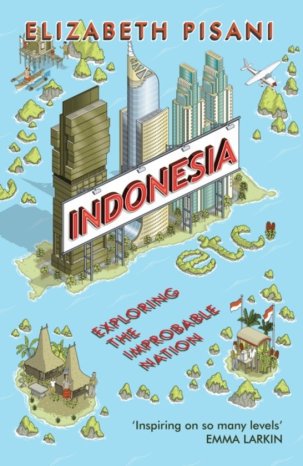
- Author: E. Pisani
- Title: Indonesia ect.
- Published: 2014
- List of Challenges 2018
- Monthly planning
- Non-Fiction Reading List
- Finished: 22.12.2018
- Genre: non-fiction
- Rating: B+
- #WorldFromMyArmchair
Conclusion:
- “Indonesia etc”….I know nothing about it.
- But Elizabeth Pisani’s book is the perfect place to start.
- She seamlessly blends her personal travelogue with fascinating facts
- about the most invisible country in the world.
- Indonesia occupies a unique place in among Asia’s major powers.
- The stronger Indonesia becomes, the more it could protect
- …other lands against China becoming THE dominant power in Asia.
- If it keeps its act together, will grow fast over the next few decades.
- and become a serious strategic player in Asia in its own right.
- #InterestingRead
#AWW 2018: Anita Heiss

- Editor: Anita Heiss
- Title: Growing Up Aboriginal in Australia
- Published: 2018
- List of Challenges 2018
- Monthly plan
- #AWW2018 @AusWomenWriters
Finished: 20.12.2018
Genre: non-fiction
Rating: B+
#TBRNovember
Conclusion:
- All these stories are important.
- People are being so open and
- …honest telling us
- what makes them be who they are.
- I took something from all these selections
- …but most of all I loved Marlee Silva.
- Her father used a great analogy
- …to explain to his young daughter
- what it means to be a product of two cultures.
- Her father poured two cups of black coffee
- …adds creamer to one of them.
- “..no matter how much milk you add: they’ll never not be coffee.”
- Marlee uses this image as a shield to this day.
- This book was an eye-opening education
- …for me about
- growing up Aboriginal in Australia.
- #MustRead
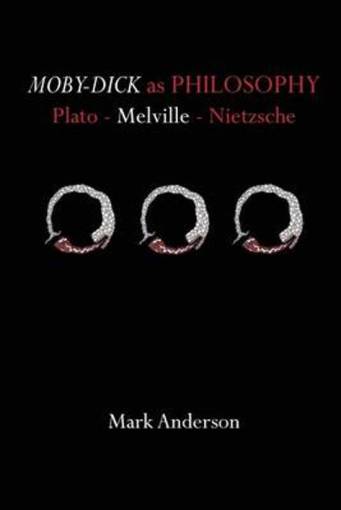
#Non-fiction: Moby Dick as Philosophy
- Author: Mark Anderson
- Title: Moby-Dick as Philosophy
- Published: 2015 (386 pg)
- Genre: non-fiction
- List Reading Challenges 2018
- Monthly planning
- Classic Club Master list
Conclusion:
- The author’s goal:
- link Herman Melville’s Moby Dick
- with the philosophical insights of
- Socrates, Plato, Aristotle and Nietzsche.
- I was searching for enlightenment about
- philosophy vs Melville’s Mody Dick but
- felt more confused at the end of the book
- …than at the beginning.
- Writing style helps to establish an author’s unique perspective.
- It helps our understanding of how they tell their stories.
- I got no help from Mark Anderson.
- While dealing with the grandeur of philosophy
- …insignificant wording just isn’t going to cut it.
- Anderson’s elaborate word choice
- …combined with complicated sentence structure
- made this complex book….even more of a challenge.
- It is no wonder after 50% I started to skim
- …for only information about Melville and left
- the author to go down other rabbit holes.
- I did not follow him!
Last thoughts:
- Mark Anderson’s flame that drives his passion for
- metaphysical speculation
- …felt like the fires of purgatory for me….a punishment.
 NancyElin.blog