
Non-fiction: Maupassant (biography)
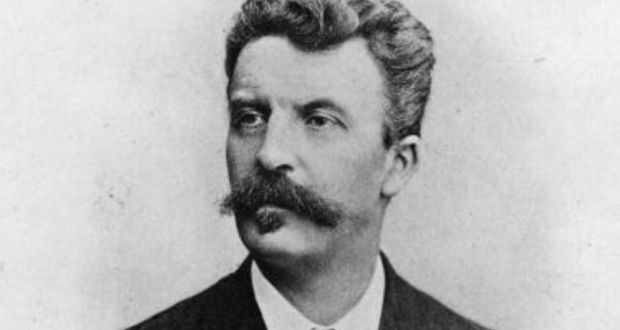
- Author: F. Maritnez
- Title: Maupassant (1850-1893)
- Genre: biography
- Published: 2012
- In order to understand any books by Maupassant it is
- …important to know more about the man.
- Here is my review of the biography of Maupassant.
- I hope it will provide you with some information that
- …can help you.
|
||||
|
|
- Maupassant deserves more of my attention.
- I want to learn more about the man before starting another one of his books.
- I’m also Interested in the mothers of these world writers.
- Who were they?
- How did they influence/nurture their children.
- As the saying goes..” the apple does not fall far from the tree!”
- Maupassant enjoyed a carefree youth in Normandy.
- I’m so impressed by his wise and loving mother.
- I did not feel any character like her in Bel-Ami.
- On the contrary, his father was much more
- …like the “parvenu” social climbing G Duroy!
- Mme Maupassant leaves her husband and is determined to make sure Guy:
- ” il faut apprendre l’art et les manières”. (He must learn the art of good manners)
- His life was short and the book will cover 27 years (1866-1893) in the next 162 pages.
- This glimpse of the man is even more interesting to me than the book Bel-Ami.
- His love of La Normand, son bateau, compagnon fidèle, Matho ( le chien).
- Maupassant struggled with ridged Catholic schooling .
- He vows never to belong to Les Parisiennes.
- Under the guidance of Flaubert GdM will “entreprendre une oeuvre de longue haleine”
- Guy is now chained to his desk earning a living and wasting his time.
- GdM has his dark side hidden by his “gaillardise (guy-ness)
- …figure tranche (honest face) et manières simples” .
- He reveals his true feeling in letters to his kind mother.
- “Je me trouve seul devant ma table avec ma triste lamp”. (…alone at my desk with my lamp)
- Winter terrified GdM: (black…sinsiter…deep….the midnight of the year)
- C ‘est décembre qui me terrifie, le mois noir,
- le mois sinistre, le mois profond , la minuit de l’ année…”
- Maupassant is burning the candle at both ends.
- He is a depressed workaholic who is suffering from heart problems and syphilis.
- After recuperating in the Alpes he celebrates…in a brothel.
- “cette amélioration au bordel.” (old habits never die)
- It is no surprise that his life will be short and that he will produces,
- in his last 15 years, a waterfall of literature that we still enjoy today:
- 300 short stories, 6 novels, 3 travel books and 1 book of poetry.
- Sickness, debt, employment do not impact Maupassant as does the death of “le vieux” Flaubert. This book is full of correspondence between GdM en GF.
- Flaubert is constantly rescuing Maupassant and guiding him to greatness.
- GdM flirts and wins over a new lover but as usual the flame goes out very soon.
- Guy gets easlily bored.
- Une Vie (1883) was an homage to Flaubert.
- “A Life” is completed. His (Maupassant) is finally starting
- Fact: Guy was starting to go blind and hired a butler to help him
- These two men were never separated during the last 10 yrs.
- Page after page Maupassant complains about boredom:
- “Je m’ embête sans relâche, sans repos, sans espoir”.
- (bored…constantly, no hope)
- Relentlessly bored wanting nothing, expecting nothing.
- Guy can be tiresome at times.
- Maupassant, man of the world, is happiest when alone.
- (live in absolute solitude)
- “je vis dans une solitude absolue.
- Je suis dans un bain de repos, silence, dans un bain d’ adieu”.
- (…bath of rest, silence, good-byes).
- The main character, Jeanne, is based on
- …Maupassant’s mother, Laure le Poittevin.
- She was a victim on an uphappy marriage and submitted
- herself to an adulterous and violent husband.
- Laure made a strong move…supported by her friend G. Flaubert
- and left her husband which was unusual in the 19th C.
- She concentrated all her attention on her son, Guy.
- As you read the book you can see the similarities
- between Laure and Jeanne
- I expected GdM to be more like Bel-Ami…the social climber.
- He is just the opposite, a lover of nature and the sea.
- Piroli the cat loves him, Francois (butler) cares for him
- …and the literary world reveres him.
- Maupassant finds it hard to cope with the needs of
- …his mentally ill brother Hervé, elderly mother Laure and his own health.
- He tries to bury his worries with “sous rires et gaieté” . .
- Interesting was the anguish GdM went through visiting his now insane brother.
- Heartbreaking. We feel GdM wondering
- “… quand sera-ce mon tour?”
- Will he be the next in the family to loose their mind?
- The end is near.
- Looking in the mirror GdM sees how death is ruining his body.
- He flees to every thermal spa but they are a “Way of the Cross” for him.
- It takes him 1 minute to write 1 word, he is practically blind.
- On 06 Jan 1892 GdM is in a
- …straight jacket and committed to an asylum in Paris.
- His butler, Francois, visits him everyday.
- GdM died 1,5 years later on 06 July 1893. (43 yr)
- Maupassant was a very private person, little is known about him.
- He said: “Je laisse seulement parler de mes livres“
- Let them only talk about my books….
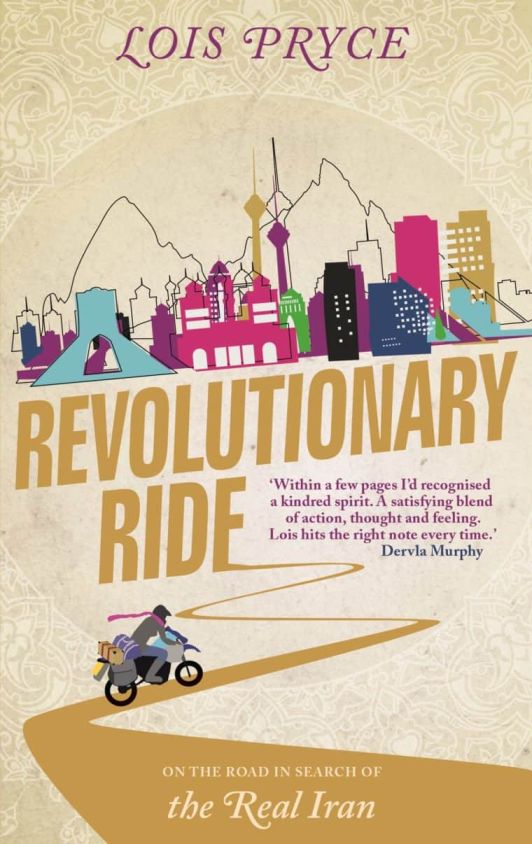
Non-fiction: Revolutionary Ride

- Author: Lois Pryce
- Title: Revolutionary Road (19 chapters ) (Iran)
- Published: 2017
- List of Challenges 2018
- Monthly plan
- WorldFromMyArmchair
- Trivia: Shortlisted E. Stanford Travel Book of the Year 2017
Introduction:
- Pryce tells us that the idea to visit Shiraz, Iran was
- …based on a message from ‘Habib’ clipped to her motorcycle.
- She probably had a book in mind from the outset
- and chose this destination to see for herself
- where the myths and the truth
- overlapped in her knowledge of Iran.
- We follow her from Tabriz, Quzvin, Tehran, Isfahan
- …ending the trip in Yzad and Shiraz.
Conclusion:
- Lois Pryce is a British journalist and a motorcycle traveler.
- Two qualities that enable her to write the book are:
- she is an established writer of non-fiction with a distinctive style and
- she approaches her travelogue as objective journalism.
- But any journey has a life of its own
- It is always defined by place, time and personality.
- Strong point: Pryce highlights the perils
- a woman faces traveling alone in Iran
- She succeeds in telling us about
- …the reality of women’s lives in that country.
- Strong point: Pryce shows her strength during
- a few nerve-wracking experiences:
- being tailgated by cars/ trucks on deserted back roads
- or attacked at a petrol station.
- Pryce learns that unease and anxiety are
- part of the process and cannot be rushed.
- Strong point: Pryce reports the conversations with
- ordinary Iranians as they explain the how the 1979
- Revolution and sanctions have impacted their lives.
- Tone: this changes according to Pryce’s mood.
- There were time she battled homesickness
- ….or was visibly shaken by a ‘fender bender’ in Tehran.
- At times Pryce felt a primal urge to
- …hide away for a while in a hotel.
- She needed some shelter.
- The hotel’s family invited her to the family for a meal
- …and after dinner opium smoke!
- For the first time all the tension in
- …her road-wary muscles was seeping away.
- A dreamy sense of well being washed over her.
Last Thoughts:
- Lois Pryce sums up her feelings:
- “I had been bracing myself for all
- the horrors predicted by the
- …doom-mongers back home.
- But instead I had been hit with a tidal wave of
- warmth and humanity to a degree
- that I have never experienced
- …anywhere in the world.
- Traveling is always an adventure
- but Lois Pryce has taken it to a new level:
- a woman on a solo motorcycle journey
- …through the Middel East, Iran.
- What will she come up against? How will she cope?
- This is an impressive piece of travel writing!
- #MustRead
- #WorldFromMyArmchair

Spin #18: Means of Ascent LBJ

- Author: R. Caro (1935)
- Title: Means of Ascent
- Published: 1990
- Audio book: 22 hr
- Narrator: Grover Gardner (excellent voice)
- Trivia: #ccspin nr 18
- Means of Ascent is …..a modern non-fiction classic
- Monthly planning
- List Challenges 2018
- Classic Club Master list
Quickscan:
- Robert Caro is writing The Years of Lyndon Johnson.
- Four volumes have been published and he is working on vol 5.
- As of 2017 400 pages were typed for this last book.
- Now Caro is moving to Vietnam to continue the writing process.
- I cannot emphasize enough
- …what a monumental historical document
- …Robert Caro is giving us.
- I read volume 1 The Path to Power…it was very good.
- All of the volumes are chunksters and the only way I can
- read them is using an audio version on my IPOD.
- I listen during my walks, while doing household chores,
- riding my bike to the grocery store….and 30 min before sleeping.
- LBJ and Nancy have become very close!
Conclusion:
- Volume 2 is a blow-by-blow account of the drama
- concerning the back-round and outcome of the
- 1948 Senate seat of Texas election.
- Caro reveals an exhaustive amount of
- …details only recently available to historians.
- There are long testimonies given in court by individuals who
- conspired with LBJ to STEAL the election!
- Needless to say.
- …the Johnsons family is not fond of Robert Caro.
- This book was about LBJ but it did spur me on
- …to learn more about the defeated candidate in the race:
- ‘Coke’ Stevens and the demcratic political boss
- that put LBJ in the 1948 senate, The Duke of Duval
- …George Berham Parr
- #MeanerThanABarnyardDog
Last thoughts:
- Means of Ascent paled in comparison to
- …the blockbuster volume 1 The Path to Power.
- A senatorial race in Texas 1948 may seem to be a turning point
- …in modern politics but is was just a ‘run-of-the-mill’
- type of campaign in USA even today!
- The only difference being the role of
- Twitter, FB social media and the
- …phenomenon of ‘fake news’ websites!
- Backroom deals, bibes, intimidation even ballot-box stuffing
- …it is STILL going on.
- LBJ is just one of many USA politicians that have entered office
- by these distinct patterns or methods of operation
- ……Modus Operandi.
- Oh, don’t forget there are also rich fathers who make sure
- their son is the first Catholic president in the White House.
- I recommend the book about
- the MAN behind JFK…
- The Patriarch by David Nasaw (2012).
- #EyeOpener
My notes:
August 3, 2018
Listened to introduction that lasted 1 hour 11 min on IPOD!
This book will look at 7 years 1941-1948. LBJ won a senate seat in election 1948…by just 87 votes. Why was this election a watershed moment? It was the end of ‘ol school politics’ ( handshaking, backslapping and the three B’s: beef steak, bourbon and blondes) and the start of the new school politics (media, TV, backroom deals of pressure and persuasion).
August 7, 2018
August 14, 2018
…for being able to endure her insensitive husband.
August 15, 2018
August 16, 2018
Well, it’s official…LBJ did not buy his Texas senate election 1948…he stole it! Putting this man in high office…changed the course of history (Vietnam).
How many subsequent US elections have been stolen….I wonder.
Chateaubriand
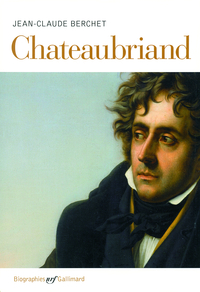
- Author: Jean-Claude Berchet (1939)
- Title: Chateaubriand
- Published: 2012
- Genre: biography
- Language: French
- Trivia: Berchet is a François-René Chateaubriand specialist.
- List Reading Challenges 2018
- Monthly planning
- Here is the list of my French Books.
- I have included reviews of books 2017 – 2018.
- Perhaps you can find a book you’d like to read!
Conclusion:
Strong point: combination of biography and history (start of Fr Revolution as experienced by Chateaubriand…interesting perspective! The entire system of medieval institutions had been destroyed!
Strong point: Berchet also takes time to explain the influence such great men as Malesherbes and Mirabeau had on Chateaubriand. The reader is treated to more than just the biography of Francois-Rene….but many more illustrious Frenchmen.
Travel: America, Chateaubriand traveled to the new world July – December 1791. He was bewitched (evoûté) by the landscape, people and especially the indians.
Chateaubriand: the man….was obsessed by the conviction that happiness is an illusion…elusive and not to be achieved. (pg 196)
Strong point: books like this etch ‘important dates and events’ in my mind more than all the ‘learn by heart’ studying done high-school.
I was never told to read an ‘extra historical book’ from a reading list to be used in class in addition to our text book! Why? There is so much more to learn that is NOT in the standard school books.
History: There are some good insights about the French Revolution in this book, 17 July 1789: You cannot fool all of the people….all of the time!
Louis XVI after fall of the Bastille proclaimed himself father of his ‘folk’. Unfortunately this ‘folk’ “ne tardera pas à lui couper la tête” !
They were quick to chop off his head!
Reading strategy: Decided to ‘skim’ 115 pages (231-347). We all know after Battle of Thionville (1792) C. was wounded, exiled to England, started writing his books and returned to France 06 May 1800. I’ve kept on ‘skimming’ when necessary.
Berchet goes ‘way overboard‘ with the years C. was in England. Many of his friends (Fontanes)…are included in this section and the death of C’s mother and sister Julie. Time to move on to history and Napoleon!
Structure of book: 50% biography – 25% travel journal (America, England, Italy, Greece, Turkey, Jerusalem, Egypt, Spain) 25% lives of other notables in Chateaubriand’s circle of friends. The book could have been 300 pages shorter.
Marriage: Arranged marriage with Celeste was a catastrophe. Chateaubriand had other love interests: Mme Delphine de Custine and Mme de Noailles.
Weak point: …useless, useless details! pg 540: the price of ‘La Vallée-aux-Loups’, the loan agreements and a list of furniture on the 1st floor of the building. This is just a waste of my reading time! Berchet: (ch 3) goes off course explaining Chateaubriand’s brother’s marriage contract!. If you read this book you get not only Francois René…but the entire family and in-laws!
Last thoughts:
- This book is NOT for the casual reader…comme moi!
- …who just wants to know about Chateaubriand in general terms.
- This book is for the serious scholar.
- Lesson learned:
- I should have just read Chateaubraind’s wikipedia page.
#Chateaubriand update:- I must wait and see every day
- …what Francois René C. has up his sleeve!
- He is NOT my idea of a perfect dinner guest.
- His brooding personality would make any soufflé collapse!
Brooding dinner guest…
Victor Hugo: Romancier de l’Abîme

Travailleurs de la mer
- Author: editor J. Hiddleston
- Title: Victor Hugo, Romancier de l’Abîme (essays)
- Published: 2002
- List Reading Challenges 2018
- Monthly reading planning
- Here is the list of the French Books Read.
- I have included reviews of books 2017 – 2018.
- Perhaps you can find a book you’d like to read!
Introduction:
- If you are interested reading any books by Victor Hugo
- ..it is always nice to have some back round information
- …you might not know!
- I’m reading Les Miserables at the moment
- …and want to read Hugo’s
- Dernier jour d’un condamné
- Travailleurs de la mer
- Here are a few notes I made after reading these essays.
Structure: 11 essays
7 essays in French
4 essays in English
Ch 2: Dernier jour d’un condamné
- Victor Hugo abandons ‘romanticisme noir’
- …in Bug-Jargal and Han d’Island.
- ..for romantic realism in Dernier jour d’un condamné.
- Hugo creates a character
- who presents arguments against capital punishment. (voice of V Hugo)
- Hugo uses the first person narrative.
- Trivia:…character never reveals the crime committed
- Trivia:…character reveals sarcastic bravoure
- ….rather than remorse for his crime.
Ch 6: Travailleurs de la mer
- In this chapter Delphine Glees draws my attention
- not only to Hugo’s writing Les Travalleurs de la mer
- but also to the drawing he made to accompany the book.
- Drawings do not represent the reality
- …but the fluctuating conditions of the sea and ships.
- Hugo stresses the impossibility of remaining stable in the world.

V. Hugo was also an artist
Ch 8: L’Homme qui rit
- This was a difficult chapter to understand
- because I have not read Hugo’s L’Homme qui rit.
- In this work Hugo uses costumes to reflect
- the personalities of the characters
- …and at times a sense of danger.
- Clothes are iridescent, opaque, white, black
- …and at time sparkling with lies!
- Themes Hugo often uses are:
- Gullibility (crédulité) of people (easily fooled)
- Poke fun at the grotesque – Quasimodo- in
- Notre-Dame de Paris …to forget their own misery.
- Manipulation of the aristocracy
- …sometimes court jesters are smarter than the king!
Ch 10: Barriers
- Hugo is fascinated by barriers…they are
- fragile, arbitrary and at times not ‘watertight’. (étanché)
- Barriers of the elements: Travailleurs de a mer
- Barriers of the social classes: Les Mis and Quatrevingt-treize
- Barriers that keep things out and keep thing in: Les Mis
- These frontiers exert pressure on the exterior and interior.
- The struggle between these frontiers will help humanity to advance.
- Hugo is interested in the shells people wear…their homes,
- their geographical shell (land of birth)
- …that may reveal their true identity.
- Hugo spends a great deal of time describing shells:
- constructions, edifices, scaffolds, walls, clothes that people wear.
- Shelters with barriers can be found in Les Mis:
- Gorgeau’s shack, the Petit-Picups convent, the house on rue Plumet
- …and ’l’éléphant de la Bastille.
Ch 11: Suicide
- Suicide is widespread in Hugo’s novels…
- …with the exception of Dernier jour d’un condamné.
- Some say Hugo’s obsession with suicide
- stems from the trauma of his brother’s suicide.
- Javert: commits suicide in Les Mis
- Valjean: places himself in a potentially suicidal position ( on the barricades)
- Trivia: Dante places suicides in the 7th circle of hell:
- … above Judas but beneath heretics and murderers.
- Suicide: the character is in an intolerable position
- no other way to make amends
- no other way of fulfilling a patriotic duty
- no other way of remaining faithful to one’s principles
- no other way of avoiding dishonour
- Javert: suicide represents
- the triumph of the spirit against the letter of the law.
- the triumph of humanity and love
- …against the blind and rigid principle.
Conclusion:
- This book was like a box of chocolates
- …you never know what you’re going to get!
- Not having read all the works of Victor Hugo
- …some of the references went over my head.
- But I did manage to lean one or two things.
- The tone of the book is academic.
- Personally I think some of the
- illustrious authors still need to ask themselves:
- Is this really good writing?
- Chapter 9 by Yves Gohin was an example.
- His analysis is impressive
- …but his style of writing left much to be desired.
- Gohin creates never-ending sentences that are
- impossible to read and grasp his concepts.
- He uses too many independent clauses.
- Gohin had something worthwhile to say
- …but his thoughts ramble clumsily from one to other
- …using sentence fragments that
- left ‘this reader’ exhausted and confused.
Classic: The Rise and Fall of the Third Reich

War correspondent, W. Shirer
- Author: W. Shirer
- Title: The Rise and Fall of the Third Reich
- Published: 1960
- Audio book: 57 hr 13 min
- List Reading Challenges 2018
- Monthly reading planning
- #20BooksOfSummer
- List of Non-Fiction Books Read
- Classic Club Master list
- #ccbookreviews
- #ccreadingupdate
Conclusion:
- The best description of this book
- …was written by H. Trevor-Roper
- a British historian at Oxford University
- who reviewed the book or the New York Times:
- “Light on our century’s darkest night
- the awful story of Hitler’s Germany is movingly told
- and masterfully studied.”
- I could not improve on this statement if I tried.
- What I can add are my thoughts while reading the book.
- This classic of non-fiction had been on my bookshelf for decades!.
- But the sheer size of the book intimated me…and I never read it.
- If I can give any advice
- …read this book because it is so insightful.
- The only way I managed to do
- ..it was using the audio book.
- I set out with Hitler, Goebbels, Himmler, Göring and a cast of
- …characters on my morning walks.
- I let Shirer’s words drift into my mind hoping I would learn a
- little more about Hitler, his rise to power and his
- …dreams of a pure nation that would rule the world!
- I wrote down a few notes after every walk.
Last thoughts:
- The Rise and Fall of the Third Reich has become more than
- …just another work of history.
- It has acquired the reputation as the best-selling historical work
- ever written in modern times.
- It is based on captured German secret documents.
- Don’t wait as long as I did to discover this book
- ….read it soon!
- Remember…
- Those who do not learn history are doomed to repeat it.‘
- (George Santayana, philosopher )
Notes:
May 20, 2018 – page 80
Beer Hall Putsch (8 Nov 1923) Hitler’s attempt to form a new government failed miserably. But Hiltler was not deterred…I’ll be back!
May 21, 2018 – page 117
Did you know?
It was obligatory (and politic) to present a copy of Mein Kampf to the bride and groom at their wedding?
Nearly every school child received a copy at graduation.
Now…that creates a boost in sales!
May 23, 2018 – page 150
Did you know?
Hitler’s great deep love was for his niece (1929). She was not to be seen with any man than himself. 1931 his niece decided ‘I’m done, going back to Vienna”. There was an argument between Hitler and the girl. The next morning she was found shot in her room.
May 24, 2018 – page 188
Election intrigues (1932) backroom politics, conspirators playing their last desperate hands, with so many details. This was an exhausting read (pg 150-188). I was glad when it all ended and on
Jan 30 1933…. Hitler was finally appointed as chancellor and in March 1933 Hitler would be named dictator. It’s all downhill from here!
May 25, 2018 – page 200
Did you know?
Göring suggests to Hitler that the Reichstag (parliament) be dissolved.
He didn’t mean that literally!
Oh, well ….it burnt to the ground….now
who did not get the memo?
May 26, 2018 – page 230
June 30-2 July 1934 Purge “The Night of the Long Knives”
Political executions of people who knew too much. Hitler’s power is now absolute. While this was going on Hitler was hosting a tea party on Sunday 01 July.
May 27, 2018 – page 279
Shirer mentions one of the most arrogant, icy and ruthless Nazis: Reinhard ‘Hangman’ Heydrich, chief of Security Police (SD) spying on everone! A great cross-read is HHhH by French author Laurent Binet (2010). The novel recounts Operation Anthropoid, the assassination of this Nazi leader in Prague during World War II. This will keep you glued to your summer beach chair!.
May 28, 2018 – page 300
Did you know?
Did The London Times play a dubious role in the disastrous appeasement of Hitler? Norman Ebbut chief correspondent for the paper in Berlin…his dispatches were much more revealing than other reporters. Much that he sent to London was NOT published! The Times editors read all his reports and knew what ‘really’ was going on in Nazi Germany! Ebbut was expelled by the Nazis in August 1937. After only a month back in England, Norman Ebbutt suffered a severe stroke, thus effectively ending his career as a journalist. He was 43 years old. A stroke at 43? That is very young….or was Ebbut a “man who knew too much?” MI6 …hmmmm?
May 29, 2018 – page 357
Did you know?
Hitler hated Vienna! (…such a beautiful city)
On the first day of Austrian invasion Hitler arrested
79.000 citizens of that town.
Austria is done an dusted…next stop Czechoslovakia!
June 6, 2018 – page 435
Goebbels is spreading fake news about Czechs attacking poor German citizens…March 1939 Czechoslovakia ceases to exist. With the newly empowered juggernaut of Hitler…next stop Poland!
June 8, 2018 – page 500
Did you know?
Hitler was as sly as a fox…never kept a promise and it was all about Make Germany Great Again….hmmm.
Adolf Hitler treated Danzig somewhat differently. During the Czechoslovakia annexation, Hitler was ready to use force. Danzig was the catalyst. Hitler intended to use it to provoke war with Poland…and it worked!
June 15, 2018 – page 520
Boris Johnson (UK) has predicted Vladimir Putin will revel in the World Cup in Russia this summer in the same way that Adolf Hitler did in the Olympic Games in Berlin in 1936.
I will have leave Hitler in Poland…. and put this book on the ‘back-burner’ while I ‘revel’ in the World Cup Soccer Championship.
June 25, 2018 – page 555
Poor Poland….invaded by Hitler and knocked out of the World Cup 2018.
Lose-lose situation.
July 8, 2018 – page 625
Did you know?
Mussolini was so worried about the approaching chance of world war that he sent a TOP SECRET message on 31 Aug 1939
(the eve of the attack on Poland by Hitler on 01 Sept )
to the British?
He promised despite his support of Hitler…
Mussolini would not attack England or France.
Not only Hitler can double cross friends….so can Il Duce!
July 11, 2018 – page 675
Did you know ?…..what the best kept secret was in WW II?
Hitler’s plan to invade and conquer Denmark and Norway!
I did not know that!
July 22, 2018 – page 758
Calculated ruthlessness of the Germans after bombing Rotterdam on May 14th 1940 would not be forgotten by the Dutch.
You will have excuse me for NOT feeling sorry that the German ‘manschaft’ was knocked out of the World Cup Soccer Championship in the first round.
July 22, 2018 – page 600
Did you know?
Once the Germans realized that Churchill and the British would never agree to a peace in July 1940…they were stunned!
No one had imagined Germany may have to attack and conquer England!
Germans had no PLAN-B! This is a great book with so many interesting insights!
July 23, 2018 – page 826
Did you know? ….that Denmark and Norway were sleeping at the switch. If I saw 10 German destroyers cursing on the horizon I’d be suspicious. Not the Scandinavians….before it was too late.
Russia is NOT going to make that mistake. They were WARNED by Pres. Roosevelt 10 days before the Hitler’s invasion on 22 June 1941.
#OperationBarbarossa
July 24, 2018 – page 903
December 1941 Hitler is at the zenith of his power…..after this day it’s all downhill.
At war with formidable opponents (UK-USA-FRANCE-RUSSIA and smaller key figures Poland, The Netherlands, Denmark, Norway…who now start fighting back….be it only with The Resistance.
#LastHailMary
July 24, 2018 – page 950
Stalingrad en El Alamein (Desert Fox, Rommel)…..military disasters.
Speechless. Starting the last…200 pages of 1149! NOTE: my father’s favorite general was Rommel. He loved the movie The Desert Fox (1951) with James Mason. We watched it together in 1961 on TV ‘Saturday Night at the Movies’ NBC! My mother’s favorite general was Patton! Mother never went to the movies….but made an exception to see George C. Scott dazzle in the movie. If you have never seen this movie do try to find it on DVD….it is amazing! The movie won many Oscars (Best picture, Best Director, Best Writing)…and Best actor for G.C. Scott. He famously refused to accept the award claiming that competition between actors was unfair. George C. Scott was a #ClassAct
July 26, 2018 – page 1100
February 1945 – it is evident the Hitler, his mission having failed to conquer the world, was ready to go down like Wotan at Valhalla ….taking his enemies and own people with him. I learn today about Operation Alsos…a fascinating scientific espionage story just waiting for me! US wants to know how close Nazi Germany was to getting the bomb.

Biography: Berthe Morisot ‘Impressioniste’
- Author: D. Bona
- Title: Berthe Morisot: Le Secret de la femme en noir
- Published: 2000
- Language: French
- Trivia: Prix Goncourt de la Biographie 2000
- List Reading Challenges 2018
- Monthly reading planning
- #20BooksOfSummer
- List of Non-Fiction Books Read
Conclusion:
- This book was such an entertaining read.
- If you want to sharpen your ‘French Skills’
- I would recommend this book in a heartbeat.
- The French is easy to follow
- …and Berthe Morisot’s life is very interesting.
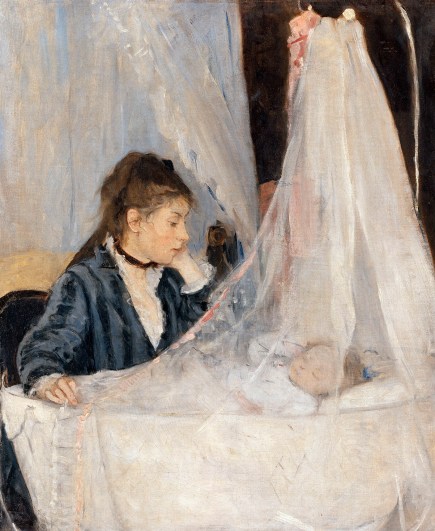
- Above is her ‘chef-d’oeuvre’ Le Berceau (1872).
- She painted her sister Edma and niece Blanche.
- Notice the shimmering quality of the cradle’s veil
- …the diagonal lines of the drapes behind Edma
- and flowing around the cradle.
- Notice the mother’s intimate gaze upon her infant
- …a moment of reflection, silence, peace with her
- …cheek leaning on her hand.
- Notice Edma’s bent left arm
- …a mirror image of the child’s arm.
- This paining is absolutely breathless.
- Trivia: After unsuccessful attempts to sell the painting
- …Le Berceau stayed in the model’s family
- …until it was bought by the Louvre in 1930.
Did you know?
Morisot was anorexic and at times fainted in front of the painting she was working on. After the birth of her daughter 1878 Berthe finally felt true joy. Her body rejuvenated and the dark circles under her eyes vanished.
Morisot was always referred to as ‘Madame’ by fellow artists and never Berthe.
Never commercially successful during her lifetime, she nevertheless outsold Claude Monet, Pierre-Auguste Renoir, and Alfred Sisley.
Morisot painted only 1 adult male...her husband Eugène Manet.


Last thoughts:
- I enjoy reading in French but it took me 5 years to
- build up a vocabulary.
- Of course I am still looking up words.
- A book that is easy to start with is the prize winning
- Charlotte by David Foenkinos.
- It was awarded Prix Renaudot 2014.
- Here is the LINK and I know you will enjoy it!
- Learning a 2nd or 3rd language opens up an entire
- new library for you.
- I can read books in English, French and Dutch!
- If I really try….I can get through a German book.
- All you have to do is choose a book
- …use this LINK for a very
- …good digital French-English dictionary (or other languages)
- …and you are starting a great adventure!
- Here is the list of the French Books Read.
- I have included reviews of books 2017 – 2018
Berthe Morisot:

Le Balcon, E. Manet

Why Horror Seduces
- Author: M Clasen
- Title: Why Horror Seduces
- Published: 2017
- Finished: 22.06.2018
- Genre: non-fiction
- Rating: A
- List of Challenges 2018
- Monthly reading plan
- #20BooksOfSummer
Why does horror work?
- Horror engages with psychological mechanisms
- …that have evolved over millions of years.
- We need fear to stay alert and alive.
- As long as we are fearful imaginative creatures
- ….there will be a central place for horror in our culture.
Does Clasen tell me anything new and interesting about ‘horror’?
- I learned to be alert for…
- alpha predators…man-eating shark in Spielberg’s Jaws
- clowns who hide their evil intentions with face paint or masks…in King’s IT
- shape-shifting creatures…vampires…in Stoker’s Dracula
- inanimate objects infused with malicious intent to kill… the car in King’s Christine
- supernatural agents who act like ordinary neighbors…in Polanski’s Rosemary’s Baby
- …and there is no way to have a fair fight with a ghost!
Conclusion:
- Since I read a few horror books this year:
- Soon, Who’s Afraid and Aletheia
- I wanted to learn
- …why horror seduces?
- We enjoy make believe
- ….want to experience negative emotions
- …but only in a safe context!
- There are many types of horror: disgust, fear, shock, loathing and dread.
- Some books are better than the movie: The Shining by S. King
- Some movies are better than the book: Jaws by R. Benchley
- Our appetite for horror will not go away anytime soon.
- Horror will stay with us and M. Clasen wants to explain why.
- Horror is not a genre like a western or crime fiction
- ….it is pure emotion!
Last thoughts:
- After reading this book I have learned that horror literature
- is more than furious poltergeists or chain-saw wielding rednecks!
- M Clasen explains why we are drawn to the dark side,
- …with sweaty palms, a racing pulse and
- …a sinking feeling in the pit of our stomach.
- Remember the iconic opening scene in Jaws (1978)?
- Remember the music?
- …Da-Dum…Da-Dum…Da-Dum-Da-Dum-Da-Dum
- I want to read more Horror and Dark Fantasy books
- …but don’t know where to find them!
- Here is the link for This Is Horror website.
- This website specializes in horror fiction and the craft of writing,
- Here are a few notes about
- Part 1. ...human fear system. (ch 1-4).
- Part 2 is an overview of post WW-II American horror.
- Edgar Allan Poe was America’s first horror writer.
- “…vision of terror that stalks within us.”
- Stephen King is the most successful horror writer
- ….selling more than 350 million books since 1974.
- Part 3 M. Clasen looks to the future moving from
- literature –> film –> interactive horror dimensions (niche market).
- Despite a sluggish begin (ch 1-4) the book picks up steam
- …and becomes stronger, faster and more insightful with each page!
Notes:
Chapter 1 – The tone is very academic ..what horror is and how it is studied. This was nice to know but was not a great ‘hook’ that would keep me reading. I plodded hoping to find some real interesting remarks.
Chapter 2 – This discusses why fear is our oldest and strongest emotion. Clasen describes the human fear system. The horror genre targets our fears…still I have not read anything….new!
GOOD – A well constructed horror story has us anxiously scanning the fictional environment for threats. That is very true! While reading Aletheia I was looking for foreshadowing or objects that appear in the story that would link to the ‘lake monster’ that awaits the characters!
Chapter 3 – This was an interesting chapter about monsters, scary scenes and terrified characters. Included is Stephen King’s personal top 10 terrors! The first one is what we all feel…fear of the dark! I had to laugh when Clasen mentions “…we should be terrified of cars and worry much less about snakes and spiders.” (pg 40).
Chapter 4 – People manipulate fear to produce pleasure. “…being absorbed in a fictional universe and made to feel afraid as a result…” It is the pleasure of feeling strong emotions in a safe context.
My top horror movies:
The Tingler (1959) – shock
An obsessed pathologist discovers and captures a parasitic creature
that grows when fear grips its host.
Can you imagine me….9 years old and watching this?
I’m still traumatized!
Psycho (1960)- shock
A Phoenix secretary embezzles $40,000 from her employer’s client, goes on the run, and checks into a remote motel run by a young man under the domination of his mother.
My mother learned her lesson and forbad me to see this movie!
Rosemary’s Baby (1968) – fear
A young couple moves in to an apartment only to be surrounded by peculiar neighbors and occurrences. When the wife becomes mysteriously pregnant, paranoia over the safety of her unborn child begins to control her life.
My sister and I went to see this movie…a flawless horror masterpiece,
at an afternoon showing…at night was too spooky.
The Exorcist (1973) – disgust
When a teenage girl is possessed by a mysterious entity, her mother seeks the help of two priests to save her daughter.
I was just married and felt so grown up
…but this movie brought me to my ‘horror limit’!
Jaws (1975) – anxiety, dread …something dangerous is out there but you don’t know where it is or when it will strike!
A local sheriff, a marine biologist and an old seafarer team up to hunt down a great white shark wrecking havoc in a beach resort.
I loved this one. The opening scene is iconic…the music!!
LISTEN to the film trailer narrated by Orson wells…. link
See the movie….before you go swimming.

A Very Expensive Poison

- Author: L. Harding
- Title: A Very Expensive Poison
- Published: 2016
- List of Challenges 2018
- Monthly reading plan
- #20BooksOfSummer
Finished: 20.06.2018
Genre: non-fiction (true crime)
Rating: B
Conclusion:
This book reads like a Le Carré espionage thriller!
Major theme is the death of Alex Litvineko 2006
and the final results of murder inquiry in London 2016.
Many names of Russian dissidents, double spies and ousted Russian oligarchs are mentioned. Victims were killed in drab suburbia (Alexander Litvinenko), often out in the open, on pavements (Boris Nemtsov), sometimes as the target was out walking their dog, or going shopping, with passers-by watching on in abject horror. (Sergei Skripal)
There seems to be a trend
…but who is the one giving the orders to kill?
Alexander Litvinenko – British naturalised Russian defector and former officer of the Russian FSB secret service who specialised in tackling organised crime in Russia.
(dead 2006, poisoning with radionuclide polonium-210)
“Badri” Patarkatsishvili – behind some of the most successful companies in today’s Russia (oligarch)
(dead 2008, collapse at his home, compounds known to be used by the former KGB can induce heart failure, but leave virtually no trace)
Boris Berezovsky – oligarch, agitator in Russian politics. He and Putin were sworn enemies.
(dead 2013, found in bathroom – death as “unexplained”)
Boris Nemtsov – outspoken critic of Vladimir Putin and his authoritarian, undemocratic regime.
(dead 2015, assassinated on a bridge near the Kremlin in Moscow, with four shots fired from the back.
Sergei Skripal – former Russian military intelligence officer who acted as a double agent for the UK’s intelligence services
(March 2018, poisoned with a nerve agent…survived)
Deep South: Shortlist Stanford Travel Book 2017

- Author: Paul Theroux
- Title: Deep South
- Published: 2015
- Trivia: Shortlist Stanford Travel Book of the Year 2017
- List of Challenges 2018
- Monthly reading plan
- #20BooksOfSummer
Finished: 16.06.2018
Genre: non-fiction travel writing
Rating: A+++
Conclusion:
- Flyspecks on a map….
- …forgotten towns with a creek or running stream
- …they were all backwaters literally and figuratively.
- Deep South by P. Theroux surprises me with every page.
- From North Carolina through Georgia,
- Tennessee and Alabama to Mississippi and Arkansas….
- in his first book to focus on his homeland,
- the veteran travel writer and novelist finds segregation
- still thrives in the old Confederate states.
Strong point:
- Paul Theroux is more interested in
- conversationthan sightseeing
- …the heart an soul of family narratives…the human wealth.
Strong point:
- Theroux captures the essence of the Deep South.
- At the moment in The Netherlands ( where this ex-pat lives) the news is
- all about the elderly who are becoming very lonely.
- People are living longer and must cope with a
- type of isolation due to physical health and mobility.
- NOT once in Theroux’s book is the word loneliness mentioned.
- Why?
- Because it is ‘the Southern way‘ to always be of
- assistance regardless of class, color or creed.
- …or if you aree a stranger from the North taking notes (Paul Theroux)
- ” Kin Ah h’ep you….in inny way? is the motto of the Deep South.
Last thoughts:
- Sometimes I don’t want a book to end….this is that kind of book!
- Theroux is a traveler but also a lover of literature.
- He explores Southern Fiction (especially Faulkner) to give the reader
- access to the reflective interior of southern states
- …so passive….so mute.
- #ExcellentRead
 NancyElin.blog