
Psychanalyse de Victor Hugo
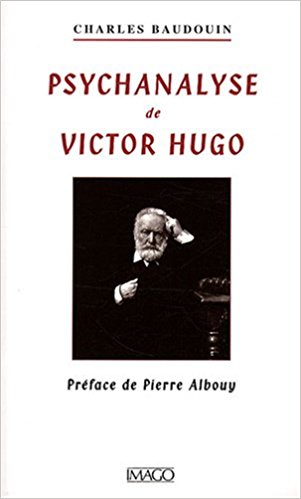
- Author: Charles Baudouin (1893 – 1963) was a French-Swiss psychoanalyst
- Title: Psychanalyse de Victor Hugo
- Published: 1943 (original) later in Paris, Ed. Imago, 2008.
- Trivia: read for information to help me with #LesMisReadalong
- Trivia: Monthy Reading Plan
Conclusion:
- This book was written in 1943 yet it never felt dated.
- I read it just to discover more about Victor Hugo the man.
- The book concentrates on the images used in Hugo’s poems.
- The use of antithesis for example…
- lumière-ombre, bien-mal, naissance-mort, amour-haine.
- The book is not available in English….so I struggled in French.
The author explained many complexes that Hugo was struggling with:
- Oedipus – demanding exclusively the love of his mother
- Guilt – brother Eugène became insane on Hugo’s wedding day and never recovered .
- His brother was madly in love with Adèle Foucher as well.
- The Chase – (poursuite) Les Mis: Valjean, the outlaw
- …his fate (fatalité) purses him.
- Retreat – (retraite) flee from tyrannical father = outside world
- —> to mother = refuge
- Les Mis: Valjean receives refuge in a convent.
- Convent is a typical symbol of a retreat…a maternal aisle.
His exile on Jersey and Guernsey felt like a new freedom.
- Hugo was constantly trying to reach the unconscious mind.
- He built a special porch on his house to gaze into
- … the heavens, stars, cosmos and the sea.

Shadows and darkness permeate Hugo’s thoughts.
- He believed that the darkness, the night was the normal state of our lives.
- Daylight was only here because our planet was close to a star….the sun.
- Abyss (gouffre) is mentioned more than 40 x in Les Misérables.
There are a few symbols that might be used in Les Misérables…..
- Spiderweb – In Notre-Dame Follo watches the
- fly struggle with the spider.
- It represents man’s struggle with inescapable fate (l’araignée)
- Spider – symbol of “La Mere terrible” who succeeds
- to imprison child in the chains in her web.
- Birds – represent passionate, free search into doctrines (bird = ideas)
- Window – linked to the subconscious
- …a place where you can drift into your memories/thoughts.
- Cord (rope) – dropped into a well….feeling of mystery, anguish
- Hibou (owl) – represents skepticism
- Chavue-souris – (bat) represents atheism
- Deep well (puits) – eternal mystery
- “ Quel puits que le coeur humain…” pg 1265 Les Mis
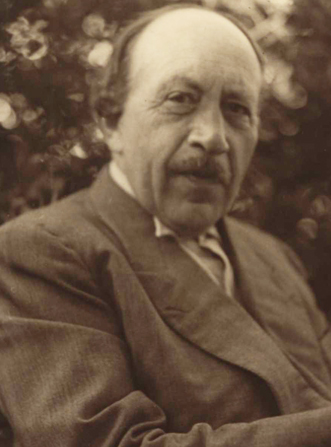
Charles Baudouin
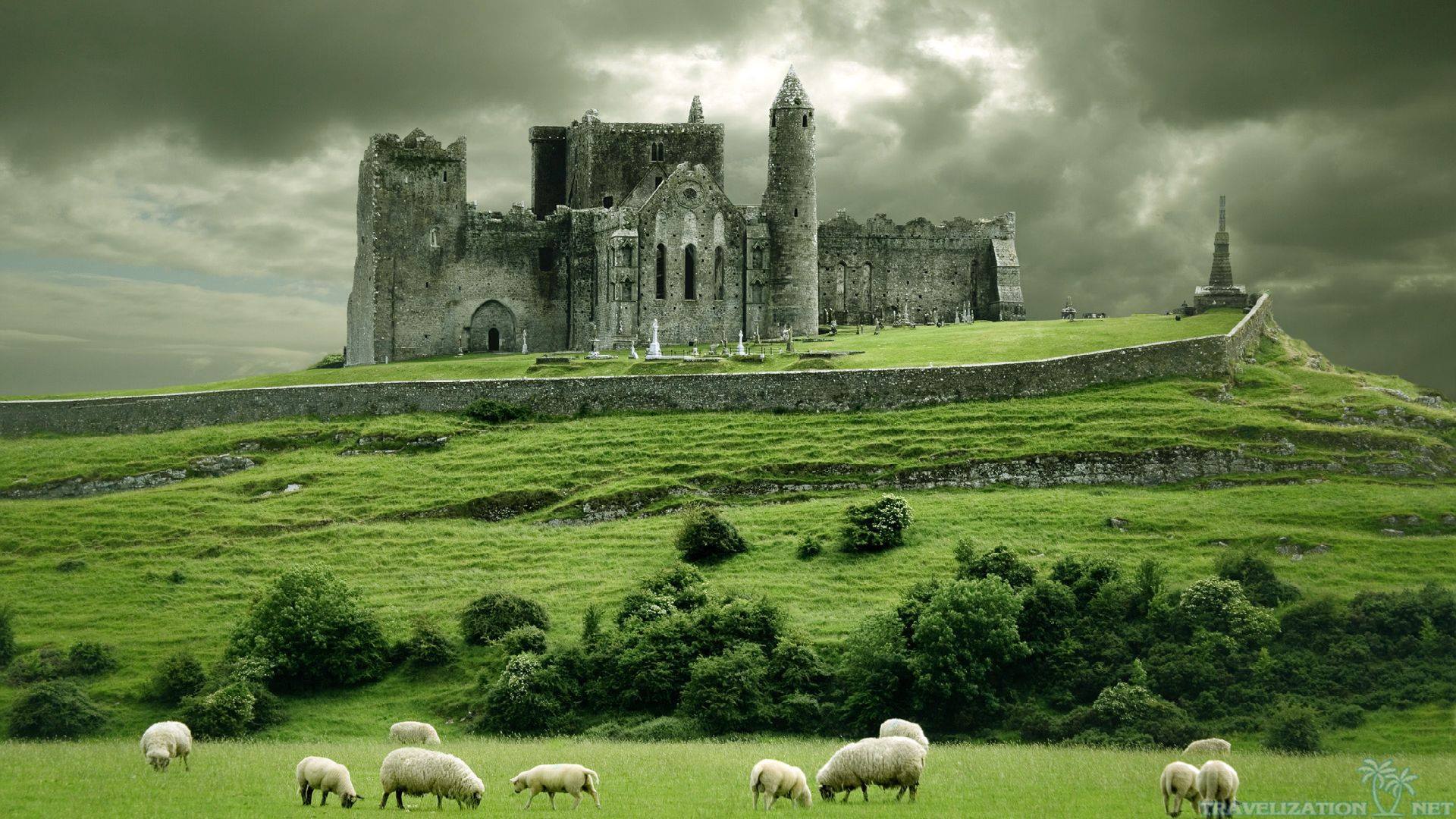
The Supreme Court Ireland
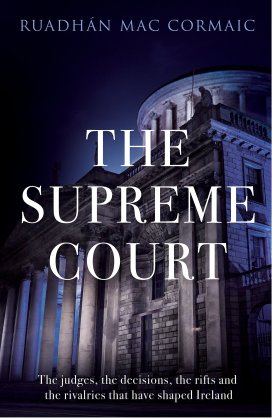
- Author: Ruádhan Mac Cormaic
- Title: The Supreme Court
- Published: 2016
- Trivia: Reading Ireland Challenge
- Trivia: List of Challenges 2017
Author: Who is Mac Cormaic?
- Ruadhan Mac Cormaic is the
- former Legal Affairs Correspondent and
- Paris Correspondent of the Irish Times.
- He is now the paper’s Foreign Affairs Correspondent.

What were the main struggles between 1950 – 2017 ?
- The duty of the Supreme Court judiciary is:
- Not rewrite the Constitution of Ireland
- …but make sure it was applied
- …to breath life into it
- …to break with the traditional reliance
- …on English law and legal methods
What is the book about?
- The book traces many landmark decisions and gives the reader an
- inside look at the internal ‘give and take’ among the judges
- to produce an objective agreement or dissent decision.
- It reveals who the judges are
- These men and women who usually want to stay out of the limelight.
How did Ireland change?
- Ireland moved from decisions about
- butter smugglers, disputes over greyhounds and a row about livestock licenses
- …to individual’s privacy rights (contraceptives),
- …referendum for European treaties,
- …decriminalization of homosexuality and
- …women’s rights to leave country to seek an abortion in England and much more.
- Ireland has made GIANT steps to become a
- modern, young, confident and economically strong country.
What impressed me about the book?
- It was fascinating to read each judges motivation to topics about
- the privacy of the individual (May McGee vs Attorney General; contraceptives)
- the need for more equality to allow
- women to serve jury duty and
- be fairly taxed
- a demand for referenda about European treaties
- secure the rights of people concerning
- the rules applied for extradition of
- …suspected criminal (IRA) offenders to England.
What is essential to know before reading the book?
- Political parties: this is all new for me!
- Fianna Fail (center right)
- Fine Gael (center right… liberal conservative)
- Oireachtas: = the legislature (structure of the Irish government
- The President of Ireland
- The two houses of the Oireachtas
- Dáil Éireann (lower house)
- Seanad Éireann (upper house)
What was my reading strategy?
- Best tip: use wikipedia
- Put a face on people mentioned in the book.
- Best tip: learn structure US courts vs Irish courts
- …just to put things into perspective.
Conclusion:
- Strong point:
- Ruadhán Mac Cormaic is a political journalist for the Irish Times.
- His writing style is NOT ACADEMIC…it is accessible
- …not only for those interested in law but also for
- anyone wanting to learn more how these
- …Supreme Court justices shaped Ireland.
- Mac Cormaic gives us the gripping inside story of the Irish judiciary,
- the judges, decisions, the rifts and the rivalries.
- Ruádhan Mac Cormaic lifts the veil on
- the Irish Supreme Court’s hidden world.
- The book is well-written and highly entertaining and
- in my opinion…
- #InformativeRead
QUICKSCAN Ireland:
- Ireland 1950’s:
- economy stagnant
- politics still haunted by civil war
- …ceaseless outward flow of people (emigration)
- 1960’s:
- broader shifts in society
- growing economy
- rising living standards
- 1970’s:
- emigration slows down
- women’s movement gaining strength
- population is young 50% under 26 yr
- 1980’s:
- High Court has its first female judge
- Mella Carroll
- 1990’s:
- First female and non-catholic…
- Supreme Court judge….Susan Denham.
- Chief Justice of the Supreme Court 2011-2017.
- She was a shrewd diplomat and key player behind
- a series of major reforms.
- 2000’s
- Supreme Court was must
- Focus on:
- …ensuring rights in political, criminal
- …and legal processes of the State.
- Focus on
- ...fair procedures and access to the courts
- 2010’s:
- Change: Fianna-Fail led governments
- …appointed a majority of lawyers who had
- …NO connections to the party!
- Susan Denham is appointed as the
- …first female Chief Supreme Court Justice! (2011)
Female Bodies on the American Stage
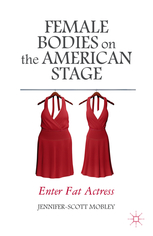
Author: J. Mobley
Genre: non-fiction (2014)
Rating: B
Review: Ms Jennifer Scott-Mobley is Assistant Professor – Theatre History & Dramaturgy at East Carolina University. She highlights and thus alters deeply ingrained attitudes about fat.
Ms Scott-Mobley takes the reader through ‘fat actress’ performances across stage, screen and television.
Strong point: the author makes clear that American audiences have become so accustomed to slender beauties as the standard…..that any body that strays outside the parameter interferes with the viewer’s notion of what is believable or what is realistic.
Strong point: Scott-Mobley reveals what many in society feel…
a woman’s body is associated with the base and material….her body is her identity. Man’s identity is connected to his soul and intellect.
Strong point: The book is filled with statements that made me stop and think:
1. As civil rights and freedoms for women increased
in the US.…the acceptable dress-size….decreased!
2. The media capitalizes on cultural fears, at times
obscuring facts and data in order to get
the results a public must hear: fat is bad and dangerous!
3. Those last 10 pounds which have NO significant
health consequences drive a multibillion-dollar diet industry!
Last thoughts:
I enjoyed this book…even though Ms Scott-Mobley
goes down several rabbit holes which were of no interest to me whatsoever. My interest lay in the analysis of plays by Tennessee Williams. He created female characters that used ‘fat behavior’ to disrupt the stasis (balance in the play) with their immoderate behavior
….driving the plot forward.
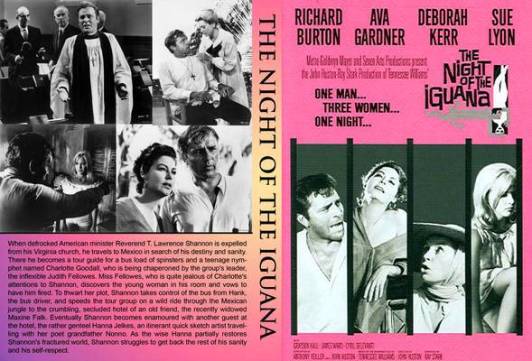
I will read plays The Rose Tattoo, Small Craft Warning and The Night of the Ignuana with
these new insights!
UPDATE:
I just read in the news that a Dutch super model walked down the catwalk in New York City. No, it isn’t our famous ex-Victoria Secret Doutzen Kroes …but Daniëlle Grondelle. Finally the barriers are being broken….. height 1,80 m 80 kg!

Position Doubtful

Tanami Desert Australian Sunset
- Author: Kim Mahood
- Title: Position Doubtful
- Published: 2016
- Genre: autobiography
- Trivia: (NT) #AusReadingMonth @Brona’s Books
- Trivia: #AWW @AusWomenWriters
- Trivia: List of Challenges 2017
- Trivia: #NonFicNov
- Trivia: #WorldFromMyArmchair challenge 2017
- Trivia: Position Doubtful was shortlisted for the
- 2017 Victorian Premier’s Award for non-fiction
- 2017 National Biography Award Australia and
- 2017 WON Australian Book Industry Award for the Small Publishers’ Adult Book of the Year.
Title:
- The book is named after a term Mahood came across
- …in her father’s account of his expedition
- across the Tanami Desert in 1962.
- He observed that the only landmark marked anywhere near his route
- …was marked Position Doubtful.
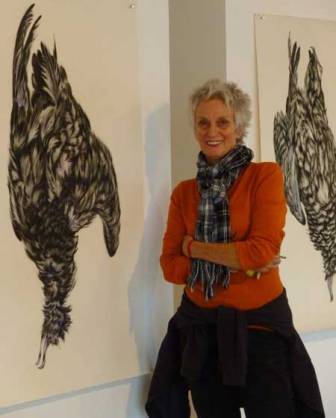
Kim Mahood:
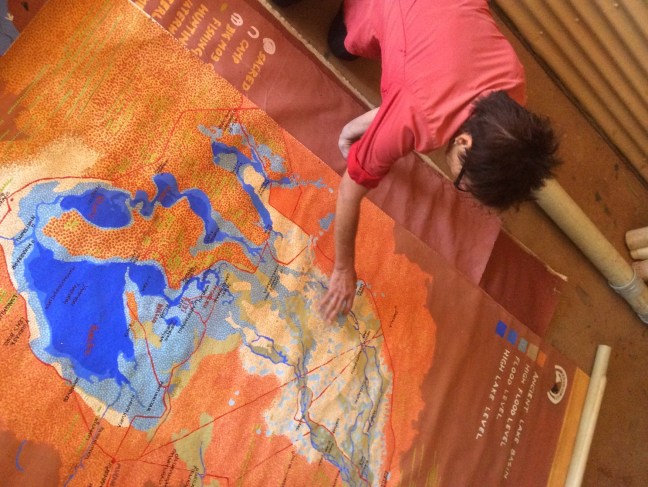
Kim, daughter of a Tanami rancher…
- grew up in the region of Tanami Desert
- …on a cattle station in East Kimberley.
- She was raised in part by Aboriginal people.
- She has a distinctly different and deeper relationship
- with the community here…
- living and working in Mulan for three months out of the year.
- Mahood has been painting a set of very large canvases
- that are at first simple topographical maps of the land.
- The maps are both works of art, but also
- documents that can help influence politics and policies.
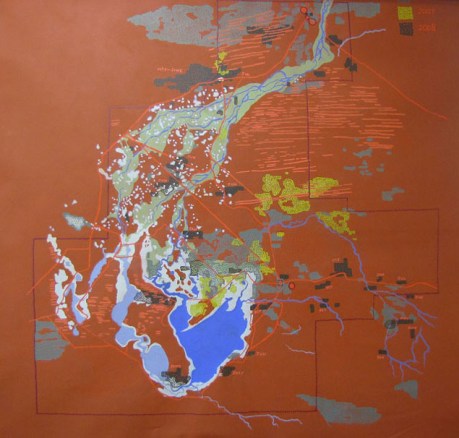
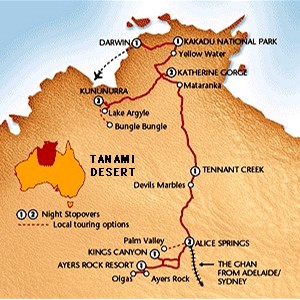
In this book Mahood takes us with her as she returned for
- 20 years to a remote pocket of inland Australia that extends
- across the Tanami Desert to the edge of East Kimberley.
- A one time pilgrimage to the country of her late childhood has
- morphed into yearly field trips with her artist friend Pam Lofts.
- “We were like migratory birds, driven to return year after year.” (pg 290)
There were very arcane chapters in which Manhood explains
- how she uses archaeological grids as an intermediary between
- her map making project and observance of aboriginal paintings.
- She learns to read the desert landscape with skill.
- Mahood uses these skills to give her maps and paintings the
- visual shimmer of the desert breathing the Aboriginal essence into her works.
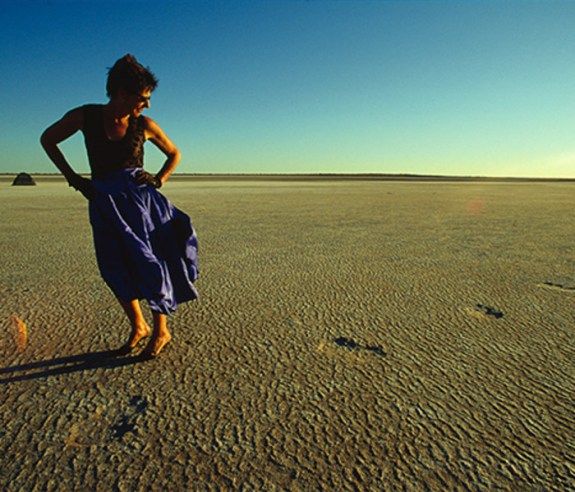
On a personal note….Mahood touchingly reveals her grief for
- friend Pam Lofts as she dies from MND (Lou Gehrig’s disease).
- She describes the map of their friendship.
- Mahood’s also makes peace with dog ghosts
- — Old Sam who made the first pilgrimage,
- Slippers for seven trips and now her pal Pirate.
The best chapters are the last 3:
- Requiem
- Unstable Horizons
- Undertow
- …just because they are so personal. (pg 286 – 339)
Last thoughts:
- This was a very informative but more importantly moving book.
- Kim Mahood can PAINT and WRITE !
- It is a combination of Jung and Geography
- It confirms what I also feel
- ….place, memory and emotion are inextricably linked.
- Bravo…Kim Mahood
- #MustRead or #MustListen audiobook.
- PS: For @Brona’s Books
- …I learned another word that pops into my head
- ….when I think of Australia: “the cockroach bush!”
C.J. Dennis
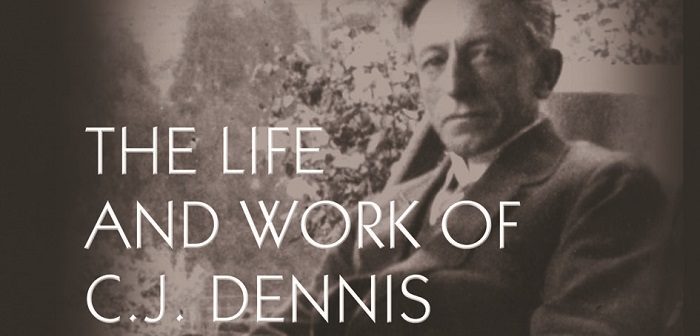
Author: P. Butterss
Title: The Life and Works of C.J. Dennis
Published: 2014
Trivia: (SA) #AusReadingMonth @Brona’s Books
Trivia: Winner National Biography Award 2015
Trivia: #NonFicNov
Trivia: List Reading Challenges 2017
Who was this man?
- C.J. Dennis (1876-1938) was an Australian poet known for his
- humorous poems and also his politically tinted verse about topical subjects.
- He is considered among Australia’s most famous poets. (…with H. Lawson and B. Paterson)
What are the main characteristics of his writing?
The essential ingredient was the reader’s emotional response.
His poetry was easy to understand and beneath the slangy twang
1. rolling rythm – rhyme
2. street slang
3. stage cockney
4. phonetic spellings
Best chapter:
- Best chapter 6:
- In this chapter we learn more about the poet’s, subtle meanings …..very insightful.
- Other chapters are awash with names of Dennis’s
- literary circles ( Sunnyside, Melbourne).
Title:
- Dennis wrote about a ‘sentimental bloke’…but he wasn’t sentimental at all.
- Throughout his career he was a hard-nosed business man.
- He does not want to advertise his change of political views
- ….it may annoy his readers/sales.
- The author everything to make sure his books were a ‘marketing success’.
- He asked the popular H. Lawson to write a foreward.
- He made his publisher agree to print his book BEFORE Christmas (sales?) and
- …publish a small pocket edition of ‘The Songs of a Sentimental Bloke
- …so that families could send it to the troops fighting at the front WWI.
- The book would boost the soldier’s morale….and earnings for Dennis!
Timeline: 1920’s – 1930’s:
- Author started to drink heavily again
- suffered from periods of depression an asthma.
- C.J. Dennis was the unofficial poet laureate of Australia!
- But slang an dialect were becoming unfashionable.
- light topical verse (politically tinted) that filled newspapers
- was in decline.
Conclusion:
- I enjoyed this book….and it is a shame that C.J. Dennis is practically
- …an unknown by a large reading public outside of Australia.
- His books are on Kindle for a mere 1 or 2 euro’s….
- I bought them all!
Major works:
- Major work: The Songs of a Sentimental Bloke
- Dennis acknowledges class division
- and then goes on to minimize it in his poems.
- “…how life and love can be splendid for
- …the common bloke as for the cultured (pg 113)
- Dennis used the archetypal Australian male values of the
- bushman…and channeled unruliness into hard work for his family.
- Major work: The Moods of Ginger Mick
- Dennis brings the bush values into a city setting
- ‘Mick’ was also important helping a nation (Australia)
- grieve after losing so many soldiers in WWI.
- Dennis used the archetypal Australian male values of the
- bushman…and channeled a backstreet fighter (larrikin) into an Anzac soldier.
- Major work: Poem: Comin’ Ome Frum Shearin’
- Conflict:
- Man’s domestic duty to provide for his family VS
- The delights of a wilder and freer masculine life
- Attraction of drinking VS destructiveness
- Major work: Poem: The Play
- Humorous parody recognizable to anyone with the minimun
- knowledge of Romeo & Juliet…
- …don’t forget Mick Curio !
My Place
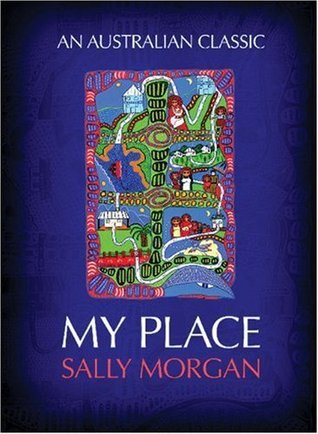
- Author: S. Morgan
- Title: My Place
- Published: 1987
- Genre: memoir
- Trivia: November Clean Up Challenge
- Trivia: (WA) #AusReadingMonth @Brona’s Books
- Trivia: List Reading Challenges 2017
What do we know about Sally Morgan?
- I knew nothing about Sally Morgan until I read
- Brona’s Books post in 2016 about her children’s book Sister Heart.
- Then I stumbled upon her simple poem Janey Told Me.
- In just a few words you feel something hidden…a stigma no one must know!
- During my weeks searching for books for #AusReadingMonth @Brona’s Books
- …I found myself curious about the plight of the Aboriginal race in Australia.
- So I decided to read My Place (memoir) by Ms Morgan.
- Brona tells us in her post:
- “Sally Morgan’s autobiography, My Place was
- one of the publishing super stories of the late 1980’s.
- Her story was fascinating but has since been
- …surrounded by various controversies and academic debates.”
Introduction:
- Sally Morgan tell us how she learned of her Indigenous Australian heritage.
- Morgan visits family, old acquaintances in the land of her ancestors.
- She tape-recorded the monologues of her relatives and they take over the narration.
Quote: pg 192
- Sally: I found out that there was a lot to be ashamed of.
- Mum: You mean we should feel ashamed?
- Sally: No, I mean Australia should.
Conclusion:
- This is one one of the first books written from the Aboriginal point of view.
- “No one knows what it was like for us.” (pg 208)
- People must realize that identity is a complex thing.
- Identity is often not fully dependent on
- …your culture or the way you look.
- Morgan’s family shame…
- was so strong that she had not been told she was indigenous.
- She was well into her teens when her mother admitted the truth. (pg 170-71)
- Sally Morgan’s book My Place was written 30 years ago.
- But is is still a very relevant
- She is an excellent storyteller…and her family history will touch a heart string.
- It touched mine!
Last thoughts:
- I started this book My Place yesterday in the train
- I never looked out the window because
- this story was very moving.
- The book really picks up steam in chapter ‘Owning up’ (pg 165).
- Pages 7-164 deal with Morgan’s childhood.
- Basic info…but not overly interesting.
- So you must decide is ‘skimming’ in the beginning
- …of the book is a good idea,
- Despite the slow start… the book engaged and entertained me
- ….that is what good books do!
Into the Heart of Tasmania
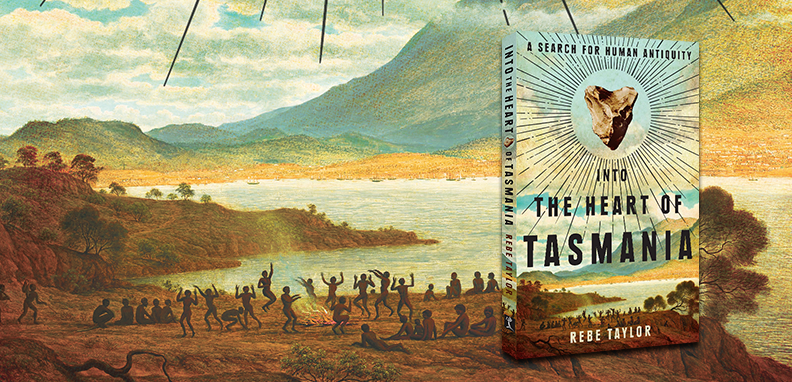
Title: Into the Heart of Tasmania (2017)
Author: Rebe Taylor
Genre: non-fiction; history
Trivia: (TAS) #AusReadingMonth @Brona’s Books
Trivia: #WorldFromMyArmchair Challenge (Tasmania)
Trivia: #NonFicNov
Trivia: #AWW @AustralianWomenWriters
- Trivia: Dr. Rebe Taylor is an Australian historian.
- Her book Into the Heart of Tasmania: A Search for Human Antiquity
- won the University of Southern Queensland History Book Award 2017.
Introduction:
- Into the Heart of Tasmania is a new history of Aboriginal Tasmania
- …the eccentric Englishman Ernest Westlake (geologist)
- ….and his hunt for man’s origins.
Who was Ernest Westlake? (1855-1922)
- English amateur scientist Ernest Westlake from about 1870 to 1920.
- The man who loved stones and the history they revealed!
- Westlake was officially a geologist… unofficially a self taught anthropologist
- The story of Ernest Westlake his collections is brought to life this book.
- I was most interested in what I could learn about Tasmania by reading Rebe Talylor’s book.
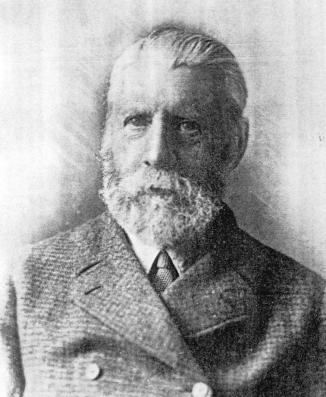
What did Westlake do?
- In 1908 E. Westlake packed a tent, a bicycle and forty tins of food and
- sailed from Liverpool to Port Melbourne Australia.
- He believed he found on the island of Tasmania the remnants (stone tools)
- …of an extinct race the Tasmanian Aboriginals.
- In the remotest corners of the island
- …Westlake did encounter via interviews
- ….the living indigenous communities.
Why were the Tasmanians so important for anthropology?
- The Tasmanians are believed to have been the most isolated race on earth.
- Their importance is their status as a cultural beginning.
- Because of their isolation and slow transformation
- …the Tasmanians ‘may have gone on little changed from early ages’ (pg 100)
What evidence do we have that the Tasmanian Aboriginals first human beings?
- Edward B. Tylor, ‘the father of anthropology’ after viewing an aboriginal stones
- …’the Taunton Scraper’ declared the Tasmanian Aboriginals as the ‘dawn of humanity.’

What was Westlake’s goal?
- Westlake wanted to rewrite history.
- In the process he finds and documents a living culture
- ...that had been declared extinct, Tasmanian Aboriginals.
Conclusion:
- I knew NOTHING about the Aboriginals or Tasmania!
- Strong point: Westlake lets the frontier violence done to the Aborigines
- seep through his anthropological journey.
- …(Risdon Cove Massacre, The Black War in Tasmania)
- I have never read about the injustice done to this race. #Shameful
- All in all did discover Tasmania….following Westlake’s journey on a digital map.
- Warning: Be prepared to ‘push’ through the first 50% of the book.
- I had to…. at times Westlake’s life back in England
- …was not so interesting after his return from Tasmania.
Structure:
- 1-8% – introduction to the man Ernest Westlake and his family and education
- 9-32% – described Westlake’s 1,5 year trip to Tasmania
- …Flinder Island and Cape Barren Island.
- 42-45% – Westlake’s return to England and his studies…and his death in 1922.
- 46-48% – Westlake’s Tasmanian stone collection and notes were now open to
- …Rhys Jones, University of Sydney earning his PhD in Tasmanian archeology (1966).
- 49- 57% The book gathers steam with the very interesting
- …escavations by R. Jones and his team (1965)
- Finally Dr. Rebe Taylor shines as she pulls all the diverse theories
- …together of past explorers into a ‘page turning’ last few pages!
- 57-100% – notes and other resource
Last thoughts:
- Rhys Jones the ‘cowboy archeologist’ once said:
- “Australian archaeological treasure is not gold or silver
- …it is time itself.”
- I thoroughly enjoyed this book despite a ‘few slow pages’.
- Dr. Rebe Taylor deserves
- …University of Southern Queensland History Book Award 2017
- Tasmania, the heart-shaped island, takes on a new meaning for me!
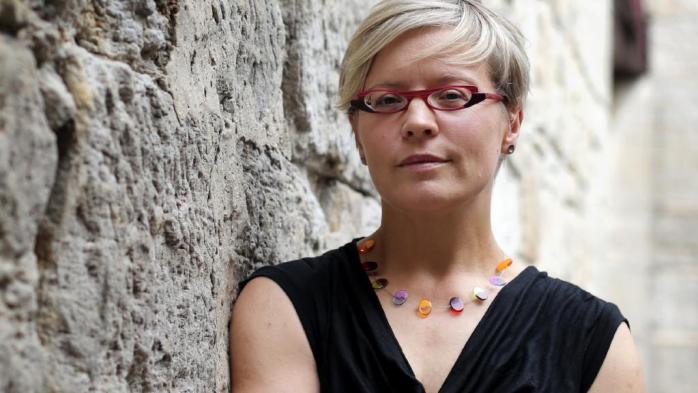
Dr. Rebe Taylor:
BTW:
I visited new museum websites:
Cast of Characters: Golden Age of The New Yorker
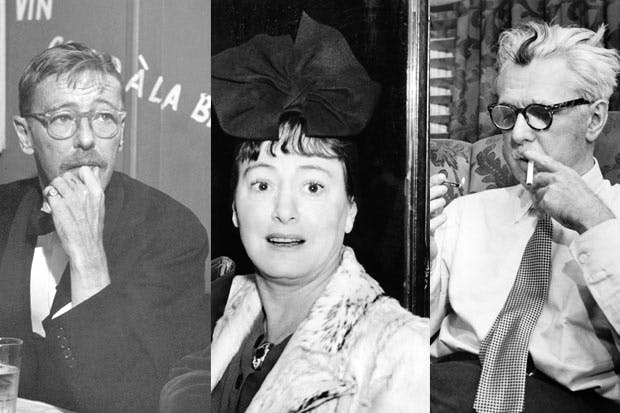
Wolcott Gibbs, Dorothy Parker, James Thurber
- Author: T. Vinciguerra
- Title: Cast of Characters: Golden Age of the New Yorker
- Published: 2016
- Trivia: #NonFicNov
- Trivia: List Reading Challenges 2017
Conclusion:
- The New Yorker has and still is beyond rivalry to a
- position of supremacy among American magazines.
- It has attained this by its the quality of writing.
- Of course, aspects of the New Yorker have always irritated people
- …its arrogant elegance.
- Raymond Chandler wrote:
- “Beyond the superficial sophistication the whole attitude of the
- New Yorker seems to me to have that same touch
- …of under-graduate sarcasm. (Ouch!) (pg 206)
- But I have not lived a day of my life without the magazine.
- It was in our house in 1950’s.
- I adored the cartoons of Charles Addams as a child.
- I am still addicted to the short fiction and profiles pieces.
- Book and movie, theater reviews?
- The New Yorker is my ‘first go-to source’.
-
Hilton Als is the current theater critic.
-
He has been awarded the 2017 Pulitzer Prize for Criticism.
-
Hilton Als never disappoints
-
His reviews are literary works of art, magnificiant!
-
He introduced me to some new American Theater playwrights
-
…who are serious, original, and deeply ambitious.
- Here are only a few worth reading….
- Annie Baker, Thomas Bradshaw, Lucas Hnath, Branden Jacobs-Jenkins,
- ,….Richard Maxwell, Sarah Ruhl, and Young Jean Lee.
- I have had a subscription to the New Yorker
- …for more than 40 years here in The Netherlands.
- It is my most treasured ‘link and contact’ to the old country.
- I’ve read a biography of Dorothy Parker,
- What Fresh Hell is This
- Collection of Essays by E.B. White and
- …many books by James Thurber.
- But I knew nothing about the abrasive Wolcott Gibbs.
- He was the theater critic from 1938 until his death in 1958.
- Wolcott wrote some of the magazine’s most remembered pieces.
- Wolcott Gibbs is by far the central character in this book
- .…followed by
- E.B. White, James Thurber, A.J. Liebling, Harold Ross, William Shawn
- …Charles Addams and Katherine White.
- Curiously…there was very little mention of Dorothy Parker
- …and Richard Bentley!
- If you love the New Yorker this is a …
- #MustRead
Salt Water

Author: Cathy McLennan
Title: Salt Water
Genre: memoir
Published: 2016
Trivia: (QLD) #AusReadingMonth @Brona’s Books
Trivia: #AWW @AusWomenWriters
Trivia: List of Challenges 2017
Trivia: #NonFicNov
Introduction
McLennan describes her book as a memoir.
- It based on the recollection of the facts about several court cases,
- her personal diaries, newspaper articles and judicial sentencing remarks.
- Theme: McLennan highlights indigenous issues to give us a better understanding of the problems.
- Time of self-reflection:
- McLennan reflected on her experience in the justice system.
- Title: refers to page 38.
- McLennan describes her feelings while swimming under salt water:
- “Under the sea it’s silent, the sounds of the world above vanish.”
- Strong point: McLennan does a great job recounting her cases and
- …all the emotions and efforts of those involved.
Conclusion:
Salt Water won University of Queensland
Non-Fiction Book Award 2017.
I read the book based on this recommendation.
I admit that I was expecting something else.
As I read the book I kept waiting for it to develop. It didn’t.
I was looking for items often in memoirs:
turning point in the author’s life
role-models or mentors who inspired the author
world event that changed the author’s view on life.
This was just a different sort of memoir.
It did not leave a lasting impression on me.
It was just not my cup of tea, but others may enjoy the book!
#NonFicNov 2017 Week 1
- Time to share my year of non-fiction and answer a few questions about the books.
- I discovered audio books are a great way to keep reading while commuting
- …or doing housework!
- I read a few non-fiction books in French.
- Interesting but they …take so long to read (vocabulary issues).
Non-fiction: 2017 ( AB= audio book)
Badinter, E. – Le pouvoir au féminin
Watson, D. – The Bush
Brodsky, J. – On Grief and Reason
Barry, B. – Georgiana Molloy: The Mind That Shines
Canetti, E. – The Voices of Marrakesh
Du Bois, W.E.B. – Of Our Spiritual Strivings
Franklin, R. – Shirley Jackson: A Rather Haunted Life (AB)
Eltchanihoff, M. – Dans la tête de Marine Le Pen
Fosse, J. – An Angle Walks Through the Stage
Galbraith, J.K. – The Great Crash, 1929 (AB)
Veil, S. – Un Vie
Greenwald, G. – No Place to Hide
Trumpington, J. – Coming Up Trumps: A Memoir (AB)
Hegarty, N. – The Story of Ireland
White, E.B. – Collection of Essays (AB)
Hochschild, A. – Strangers in their own Land
Brands, H.W. – The General and the President (AB)
Tye, Larry – Bobby Kennedy: The Making of a Liberal Icon (AB)
Jablonka, I. – Laëtitia
Sophocles’ ‘Oepidus The King: a Reader’s Guide – S. Sheehan
Jones, L. – Foxes Unearthed
Kaplan, G. – Bird Minds
Peraino, K. – A Force So Swift: Mao, Truman and Birth of Modern China (AB)
Brown, E. – The Bloody Mary Book
Lee, L. – Village Christmas
Massimino, M. – Spaceman
Levingston, S. – Kennedy and King (AB)
Lamb, K. – Thea Astley: Inventing Her Own Weather
Massie, R. – Catherine the Great
McCoole, S. – Easter Widows
Ogien, R. – My Thousand and One Nights
Prescott, T. – Neil Gaiman in the 21st Century
Rebanks, J. – The Shepherd’s Life
Katz, Yaakov – Weapon Wizards
Robinson, M. – The Death of Adam
Verdier, F. – Passagère du Silence
Adichie, Chimamanda Ngozi – Dear Ijeawele
Sayarer, J. Interstate
Lewis-Stempel, J. – The Running Hare
Sinha, M. – The Slave’s Cause
Wood, L. – Walking the Nile
Shestokas, D. – Constitutional Sound Bites
Briant, L. – Propaganda and Counter-Terrorism
Lahr, J. – Mad Pilgrimage of the Flesh: Tennessee Williams
White, R.C. – American Ulysses: A Life of Ulysses S. Grant
Tuchman, B. – A Distant Mirror
Viner, K. – How Technology Disrupted The Truth
De Tocqueville, A. – Democracy in America (AB)
Plutarch – Plutarch’s Lives
Paxton, R. – The Anatomy of Fascism (AB)
Meade, M. – Dorothy Parker: What Fresh Hell Is This
Paine, T. – Common Sense
Leovy, J. – Ghettoside: A True Story of Murder in America (AB)
Plato – The Republic
Yong, E. – I Contain Multitudes
Madigan, K. – Medieval Christianity: A New History
Sands, P. – East West Street
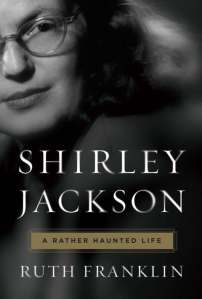
What was your favorite nonfiction read of the year? The best book has to be about a writer who has delighted many readers….but do you know what influenced Jackson so she could send shivers down our spines?
Shirley Jackson: A Rather Haunted Life by R. Franklin – National Book Critic’s Circle Award Biography 2016
What nonfiction book have you recommended the most?
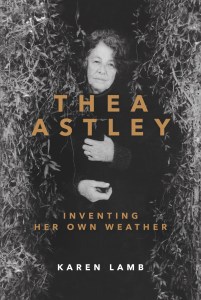
I would recommend reading more literary biographies…but discover authors outside the US or UK! Australia has a tremendous number of writers to read. Here is one of my favorites. Once you know more about the personal life of an author …their books take on a whole new dimension!
Thea Astley: Inventing Her Own Weather by K. Lamb (Australian writer) – Shortlist National Biography Award (Australia) 2016.
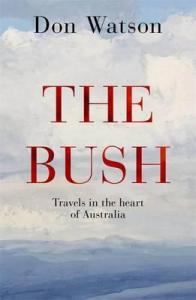
What is one topic or type of nonfiction you haven’t read enough of yet? I want to read more travel books – books about other countries. I use #WorldFromMyArmchair to collect my readings. I love to travel….but hate to leave the house! In 2018 I hope to read at least 1 travel book a month! This was my favorite ‘travel’ book of the year…
The Bush by Don Watson – Book of the Year Non-Fiction 2015 Queensland Literary Award
What are you hoping to get out of participating in Nonfiction November?
New books to add to my non-fiction TBR!
 NancyElin.blog