
#AWW 2019 Nine Lives: Women Writers
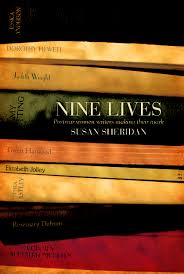
- Author: Susan Sheridan
- Title: Nine Lives: Postwar Women Writers Making Their Mark
- Published: 2011
- Genre: non-fiction
- Rating: A
- Trivia: This book has been sitting on my TBR for two years!
- List of Challenges 2019
- Monthly plan
- #AWW2019 @AusWomenWriters
NOTE:
- Trying to get back to books with
- …’one’ very good eye after cataract surgery
- …the the other eye ready for correction in 2 weeks.
- #NeedCoffee
Introduction:
- Why did I wait so long to read this wonderful book?
- I think the bland bookcover did not catch my eye.
- Ms Sheridan should have used thumbnail photos of te
- …talented Australian writers she was about to introduce to this reader!
- This books contains
- nine condensed, compact biographies of Australian Women writers
- Sheridan highlights a generation of women writers
- overlooked in the Australian contemporary literary scene.
- These women writers who were born between 1915-1930:
- Judith Wright
Thea Astley
Dorothy Hewett
Rosemary Dobson
Dorothy Aucherlonie Green
Gwen Harwood
Jessica Anderson
Amy Witting
Elizabeth Jolley
- All had children...
- J. Wright and D. Green were the sole support of their families.
- The nine women were versatile writers
- poet, playwright, novelist, short stories,
- non-fiction (autobiography), literary critic and editor.
- T. Astely won Miles Franklin Award 4x, Jessica Anderson 2x and E. Jolley 1x.
- All shared a sense of urgency…
- their vocation, their ‘need’ to be a writer
- that would not let them rest.
- Judith Wright – was an important name in the emerging postwar literature.
- She was one of the few Australian poets to achieve international recognition.
- Ms Wright is the author of of several collections of poetry,
- including The Moving Image, Woman to
- Man, The Gateway, The Two Fires, Birds,
- The Other Half, Magpies, Shadow, Hunting Snake, among others.
- Her work is noted for a keen focus on the Australian environment.
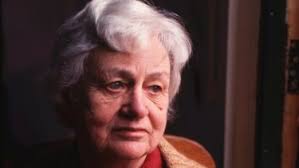
- Thea Astley – I am a huge fan of this writer.
- I did learn more tidbits of info about this woman.
- Critics were not always kind to Thea Astely.
- The ending of The Slow Natives
- …was “…too sentimental and melodramatic.
- I didn’t think so!
- Even Patrick White was harsh.
- Criticism should be like rain
- …gentle enough to nourish growth without
- …destroying the roots.
- White’s fault finding ended their friendship.
- Thea Astley won Miles Franklin Award four times!
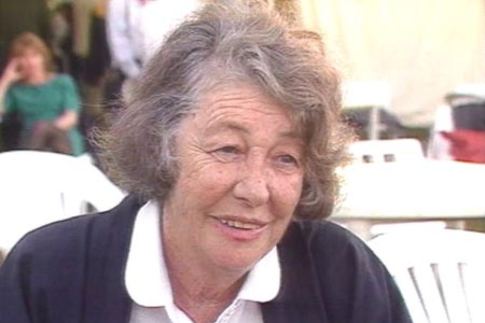
- Dorothy Hewett – After reading Ms Hewett’s short biography in this book the
- only thing that suited this woman is the song: Born to be Wild !!
- Once I read about the tumultuous life of Dorothy Hewett I knew
- I had to read her books.
- I ordered Baker’s Dozen ( 13 short stories)…
- …cannot wait to read it!

- Rosemary Dobson – She was fully established as a poet by the age of 35.
- She published 14 collections of poems.
- The Judges of the NSW Premier’s Literary Awards in 1996
- described her significance as follows:
- “The level of originality and strength of
- Rosemary’s poetry cannot be underestimated…”
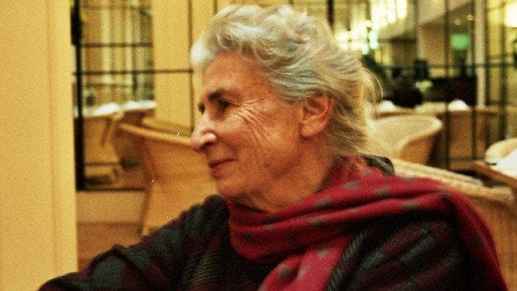
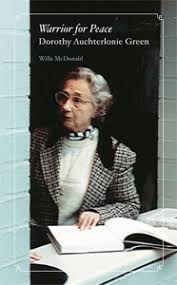
- Dorothy Auchterlonie Green – She saw herself primarily as a scholar.
- Ms Green felt overworked and
- under-recognized, trapped by circumstances of her life and unsure of her capacity as a poet.
- She won widespread admiration for her poetry, literary scholarship
- her reviews and social criticism and inspirational teaching.
- Gwen Harwood – She was sick of the way poetry
- editors (Meanjin) treated her…no accepting her work.
- Ms Harwoon created several nom de plume: Geyer , Lehmann and Stone.
- Geyer and Lehmann were regularly invited to meet editors for lunch next time they were in Sydney
- or Melbourne. Geyer was evern invited to read at the Adelaide Festival.
- ….he respectively declined.
- Awards
- Jessica Anderson – She was in a male-dominated and
- Anglocentric publishing world.
- How did she survive?
- She cultivated the qualities of character and
- strategies of survival necessary to
- sustain enough belief in herself to go on writing.
- She won the Miles Franklin Award twice…1978 and 1980.
- Amy Witting – For many years Amy Witting was invisible in the literary world.
- She won the Patrick White Award 1993
- for writers who have not received adequate recognition.
- I am waiting for her book of short stories to arrive…Marriages
- …I’m sure Amy Witting will have much to tell about this institution!
- Elizabeth Jolley – In a single year she received 39 rejection slips
- …yet she persisted.
- She won Miles Franklin Award 1986.
#AWW 2019 Gabbie Stroud “Teacher”
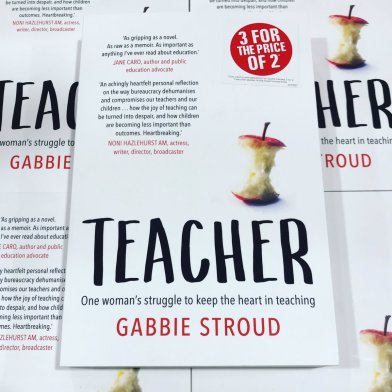
- Author: Gabbie Stroud
- Title: Teacher
- Published: 2018
- Genre: biography (290 pg)
- Trivia: 2019 ABIA Awards short list
- List of Challenges 2019
- Monthly plan
- #AWW2019
- @AusWomenWriter
Introduction:
- Gabrielle Stroud was a primary school teacher from 1999 to 2015.
- In 2014, Gabrielle Stroud was a very dedicated teacher.
- Months later, she resigned in frustration and despair.
- She realized that the Naplan-test education model
- …was stopping her from teaching individual children
- …according to their needs and talents.
- Gabrielle tells the full story:
- how she came to teaching…
- what makes a great teacher…
- what our kids need from their teachers…
- and what it was that finally broke her.
Conclusion:
- This book is a good effort of a teacher moving
- from the classroom into a writing career.
- I’m sure we will be hearing more from Gabbie Stroud
- and I hope her writing skills will be even better.
- I have seen many reviews on Goodreads and I
- cannot agree: this is not a 5 star book.
- It is enjoyable but not profound.
- In my opinion...less is more:
- less family backround
- — mother, sisters, boyfriend, chit-chat with daughters
- even more reflections about teaching
- — chapter 16 a teaching adventure at a Heritage School
- in Canada was wrapped up in less than a chapter!
- I’m sure there must be more to tell.
- Writing style: this all comes down to the reader’s
- own preferences.
- I felt that Stroud could improve her writing by
- less use of clichés...
- Ch 8:
- “I felt older, fatigued but the cup was still half full….”
- Ch 26:
- “…the glass is half full…but the water didn’t taste right.”
- Ch 30:
- “We all fall down Gab, our true measure is how we rise up.”
- Ch 30
- ” I did’t leave teaching….teaching left me.”
- Dialogue: is conversational, simple.
- Pathos: There were very few experiences
- …that stirred up my emotions of pity, sympathy, and sorrow.
- Problems were mentioned..but in a light, fluffy tone.
- I was not swept away by Stroud’s story
- …as I was with the personal essays of written
- Ashleigh Young in “Can You Tolerate This?“
- This is the type of depth in the writing I hoped
- Stroud would tell me about….the teaching profession.
- What finally broke Stroud? (..in my opinion)
- Teaching was changing too fast
- …and Stroud’s adaptation was too slow.
- Jack Welch…CEO of General Electric Company 1981-2001
- phrased it perfectly.
- ..and we all can learn from it:
- “When the rate of change on the outside
- …exceeds the rate of change on the inside
- …then the end is near.”
Last Thoughts:
- There was one spark in chapter 5 that
- I thought would ignite the book:
- Core message…
- ” You showed me how to teach
- …now show me how to be a teacher.”
- Unfortunately this memoir/biography…fizzled out.
- I hate flat soda.
#RIP XIV The Afterlife of Edgar Allan Poe

- Author: Scott Peeples
- Title: The Afterlife of Edgar Allan Poe
- Published: 2003
- Genre: non-fiction
- List Challenges 2019
- Monthly planning
- #RIPXIV @ReadersImbibingInPeril
Structure:
The Man That Was Used Up: Poe’s Place in American Literature
- Reading time 1 hr 15 min
- Discussion: about Poe’s character by biographers in the the late 19th C
- his alcoholism, inability to sympathize, fickleness, ugly humor, ill- tempered
- Paradox: Poe was unappreciated, rejected….but
- …this aura of mystery was good for business (bookselling)
- Why is Poe considered the most characteristic American poet?
- — he was beaten down by American materialism
- — he did not copy the English literary tradition
- — he explored the pathological side of American temperament
- — he was curious, interest toward the most strange and odd mysteries
- Conclusion: Poe was torn to pieces by many biographers but in
- 20th C he has been rebuilt into an ever more fascinating public figure
A Dream Within a Dream: Poe and Psychoanalysis
- Reading time 1 hr 15 min
- Discussion: Psychoanalysis could inspire new,
- inventive ways of reading Poe.
- Helicopter view…
- of several writers who have psychoanalyzed
- Poe’s writing:
- L. Purette, D.H. Lawrence, Marie Bonaparte, J. Robertson, J. Krutch
- …J. Lacan and many more.
- …looking at the anatomy of Poe’s unconscious.
- Conclusion:
- Basically this essay is about ‘What made Poe tick?‘
- Some insights made by Bonaparte sounded a bit
- far-tetched “…when Poe was tempted by living women, drink
- cleared the way for ‘flight’ and kept him faithful to his dead mother.”
- Honestly, this essay was more about the analysts
- ….pages and pages about Lacan,
- …then Poe himself!
Out of Space, Out of Time: From Early Formalism to Deconstruction
- Reading time 1 hr 02 min
- Discussion: is about 1950s New Criticism
- ….the deficiencies and limitations of Poe’s work.
- Not every critic feel Poe’s works should
- allowed into the temple of high literary art.
- Critics Brooks and Warren state:
- “…when you learn to read more carefully you’ll see
- that he’s (Poe) only a little better than pulp fiction
- …you read for pleasure.”
- Emerson had famously called Poe “the Jingle Man”
- because his poems sounded jingly, gimmicky!
- Conclusion: The critics want to teach me how to
- read Poe….I wish they would just let me enjoy his
- writing instead of trying to dissect Poe with structuralism,
- Post structuralism, and Deconstructism mumbo jumbo.
- The essay was filled with themes and philosophical issues.
- #Challenge
The Man of the Crowd: The Socio-Historical Poe
- Reading time 1 hr
- Discussion: In 1980s placing Poe’s text
- in question to other texts in the
- same period with emphasis on
- representations of race, gender and class.
- Conclusion: Again critics who insinuate the
- The Black Cat is figure for the abused slave
- …seems far-fetched.
- #IAmNotBuyingIt
Lionizing: Poe as Cultural Signifier
- Reading time 50 min
- Discussion: The pop-culture Poe
- Why has Poe proved so resilient over
- …150 years after his death?
- Peeples reviews books, plays, films and comics
- …entertainment derived from
- …Poe and his works.
- Conclusion: readable
Conclusion:
- We all know the uses of research material is
- a vital component to writing.
- Scott Peeples has cited about 350 works to
- create these essays.
- That feels a bit excessive
- for 5 essays with reading times of 1 hour 15 min.
- Great thoughts yes, but there is much
- ….cutting an pasting of direct quotes throughout the essays.
- This results in a confusion of voices and disrupts
- the flow of information.
- The writer must do more than parrot information!
- I did cherry pick some good insights about Poe and
- his writing but it was a laborious task.
- #NotWorthMyReadingTime
- …but you may enjoy this book!
#Non-fiction A Time of Gifts

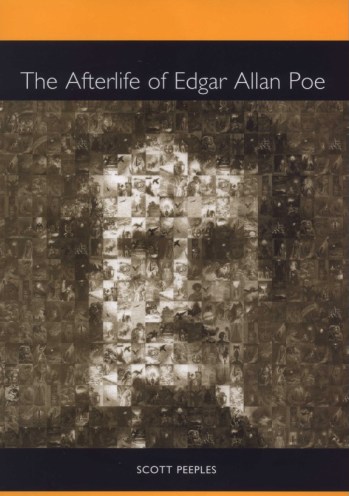
- Author: Patrick Fermor
- Title: A Time of Gifts
- Published: 1977
- Title: quote van Twelfth Night (poem by L. MacNeice)
- Illustration: John Craxton
- List of Challenges 2019
- Monthly plan
- #TBR 2019 challenge update
- #TBR 2018 challenge update
- #WorldFromMyArmchair
Conclusion:
- If you are looking for a nice rambling
- …colorful travelogue this is not the book for you.
- The travel diaries (1933) have been combed through
- and embellished to create this book in 1976.
- The narrative lacks a spark of spontaneity because
- Fermor’s travel thoughts have been resting for many years
- and the book suffers from many rewrites before it was
- …finally published.
- In all fairness, the book was received with
- tremendous enthusiasm (1976).
- It won:
- Thomas Cook Travel Award
- International PEN/Time Life Silver Pen Award
- W.H. Smith Prize (1978)
- So…you may still like this book
- …but I did not.
Strong point:
- Nicest passages are during Fermor’s walks
- through the countryside from village to village.
- No history, no hangovers, no libraries, no castles with
- moat and polished wood floors
- …just nature.
Strong point:
- Book oozes a special kind of personalized disorder!
- Fermor blends history, literature, biography, myth
- with his visits to cathedrals, libraries, pubs with or
- without a hangover!
Strong point: ‘The Hook”…that kept me reading
- Ch 1: Low Countries: good…
- Vivid images of boat leaving the estuary of the Thames River
- …describing Dutch landscape and interiors with comparisons
- of great paintings Brueghelish
- ….skaters, hunters in the snow.
- Fermor keeps his writing centered on his travels
- …no long daydreams or history.
Weak point:
- Up the Rhine:
- The book does not flow
- ….gets bogged down
- in Fermor’s musings:
- Fermor interjects the travel narrative
- ….with memories, historical trivia:
- …going back fourteen years (pg 43)
- …memories of school learning (pg 82)
- …theater for so much history (pg 92)
- …landsknechts in time of Emperor Max I (pg 96-101)
- Winterreise:
- Fermor admits it himself
- …slowing the narrative down!
- “…I must try to convey, even if it slows things
- up for a couple of pages.” (pg 123-133)
- The Danube: Seasons and Castles
- Brooding over one’s ignorance of painting (pg 147-156)
- …again slowing down.
- The Danube: Approach to a Kaiserstadt
- …let us run quickly through
- ..the relevant part of the story (The Tempest)
- …again slowing down (pg 170-171)
Fermor fills Vienna (3 week visit)
- …with anecdotes
- …not much wandering around the town.
- Hangover after last days of Carnival
- …visit to Akademie Library…
- …more musings about history and maps.
The Edge of the Slav World = …all history
Prague
- Cathedrals are always important part of the narrative
- (Cologne, Vienna, Prague)
- …but we end up with …another hangover
- …another library in The Old University
- …more history.
Slovakia: A Step Forward at Last
- Sorry, my eyes glazed over during this chapter
- ??
Marches of Hungary
- Fermor …cites direct long passages of his diary
- …perhaps he was too tired ( as I am now) to elucidate
- on this chapter.
Book ends…
- As a young man, the travel writer Patrick Leigh Fermor
- walked from the Hook of Holland to Constantinople in 1933/34.
- A Time of Gifts (vol 1) ends on the
- Maria Valeria Bridge in Slovakia.
- Fermor has difficulty leaving Slovakia
- and plunging into Hungry
- …but he must move on.
Last Thoughts:
- I’ve really lost interest (57%)
- I kept up with Fermor from
- December 1933 …leaving England
- and just lost interest in February 1934
- in the little village of Maidling Im Tal, Austria
- Just skimming to finish the book.
- The BEST travel book I’ve read was
- Deep South (2015) by Paul Theroux!
- Now, that was an excellent book
- …worth your reading time!
#Non-Fiction America’s War
- Author: Andrew Bacevich
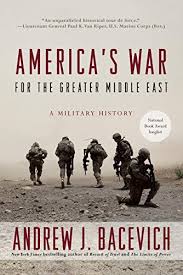
- Title: America’s War for the Greater Middle East: A Military History (480 pg)
- Published: 2016
- List of Challenges 2019
- Monthly plan
- #TBR 2019 challenge update
- #TBR 2018 challenge update
Structure: 480 pages
Part 1 – The Preliminaries ch 1-7
Part 2 – Entr’acte (“between the acts”) ch 8 – 11
Part 3 – Main Card ch 12-18
My Notes:
USA fights wars:
…1776 for independence
…1861 for slavery
…1980 US embarks upon a war for oil
Central irony:
- For America’s War for the Greater Middle East
- US’s tendency to focus on solving one problem,
- to exacerbate a second and plant the seeds of a third.”
- See: Wikipedia ‘Operation Cyclone”
Trivia:
- I noticed in chapter 1
- sound bites used in 1980s that
- …are now used by Trump!
- US didn’t want a distressed angel (Carter)
- ….passing judgement on their failings.
- The US wanted a president who would fix things! (MAGA)
- Carter viewed himself as “an agent of the Lord’
- Trump referred to himself as ‘the chosen one’
- …while speaking
- on his role in the ongoing trade war
- between the US and China. (21 Aug 2019)
Note: Ch 6:
- Especially interesting was the conscious
- effort by the US in 1982
- ….to open a secret channel
- ….to provide Baghdad with sensitive intel,
- satellite images, PC’s hell’s and heavy trucks etc.
What was USA’s plan….long term?
- US needed Saddam…..
- ….and with this non-military help
- it enabled Iraq to avoid outright defeat in Iraq-Iran war.
- But why?
- “…US had a compelling interest in positioning Iraq as a
- counterweight to a dangerous Islamic Republic.”
Note: Ch 7:
- The book comes alive for me with the
- US to hunkering down in Saudi Arabia and
- preparing to remove Saddam from Kuwait.
- My favorite no nonsense General
- “Stormin’ Norman” Schwarzkopf jr.
- He planned and led Operation Desert Storm—
- which defeated the Iraqi Army and liberated Kuwait
- Pg 117 this would be:
- “…Vietnam done right,
- …with a decisive victory the result.
- No shilly-shallying allowed.”
Conclusion:
- Don’t worry about memorizing all the names, dates, etc
- focus on the big picture…the important stuff will stick.
- This book is a wonderful re-cap of
- the history of the War for the Greater Middle East.
- Strong point: Bacevich makes non-fiction read like a novel!
- Great read…for history buffs!
- I was very impressed with Bacevich
- …his writing is crisp insight and info that is not in news articles.
- I enjoyed his comments about Gaddafi
- “…erratic buffoon less a serious
- …menace than a perennial pain in the behind!”
- …and I learned what ‘gunboat diplomacy is’.
- Part 3…you could probably easily skim this
- picking nuggets of info but most has
- been recently in the news (Obama, Osama Bin Laden).
- Loved to see names popping up who were in headlines
- …and now have faded away.
- Remember L. Paul Bremer, diplomat
- running the show in The Green Zone Baghdad?
- ….he earns extra cash now as a ski-instructor!
- Huh?
Last Thoughts:
- What was the MOST important thing I learned?
- …the 4 reasons why USA is still waging the
- War for the Greater Middle East.
- War has the seal of approval of Republicans and Democrats
- Aspiring Presidential candidates find it expedient to ‘support the troops’ (war)
- Individuals/institutions benefit from a long conflict (military industrial complex)
- MOST importantly…
- …Americans appear oblivious to what is occurring.
- All the more reason
- ….to read this book!
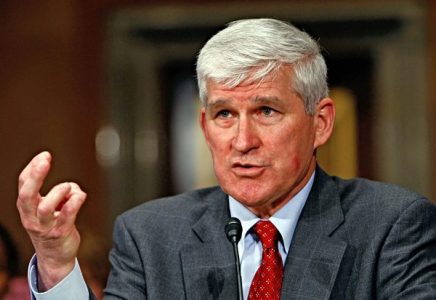
Bacevich is a West Point graduate. He holds a Ph.D. in American Diplomatic History from Princeton University, and taught at West Point and Johns Hopkins University before joining the faculty at Boston University in 1998
#Essays Best American Essays 2017
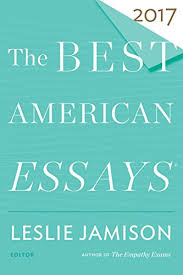
- Author: Leslie Jamison (editor)
- Title: Best American Essays 2017 (20 essays)
- Published: 2017
- List of Challenges 2019
- Monthly plan
- #TBR 2019 challenge update
- #TBR 2018 challenge update
Conclusion:
- I’ve reviewed the first 5 essays
- …and will let you discover the rest.
- The BEST essay was by Rachel Ghansah.
- “The Weight”
- Try to read anything by this Pulitzer Prize winner
- ….you won’t be disappointed.
Last Thoughts:
- Personally I was NOT impressed with the selected essays.
- They lacked creativity, insight and
- there were too many long personal essays.
- I’m not interested with your family relationships!
- I’ve read other collections that are WELL worth your reading time:
- Zadie Smith – Feel Free



My notes:
- Two Shallow Graves C+
- Jason Arment…
- served in Operation Iraqi Freedom
- as a Machine Gunner in the USMC.
- He’s earned an MFA in Creative Nonfiction
- from the Vermont College of Fine Arts.
- Arment is a warrior as witness who writes down things we don’t want to know.
- Reading time: 22 minutes
- Conclusion:
- This is not an essay
- …it is probably a chapter from
- Arment’s published book in 2017 Musalaheen (memoir)
- Arment writes vividly
- …but I’m not interested in war literature.
- The Weight A++++++
- Rachel K. Ghansah…
- is an American award-winning essayist.
- She won a Pulitzer Prize for Feature Writing in 2018 for her profile of
- white supremacist and mass murderer Dylann Roof
- who killed nine black people at a church in South Carolina.
- Gahnsah writes about her past reluctance
- to revere James Baldwin in this essay.
- She wants to provide a model others can build upon so that they
- …do not buckle under “The Weight” of Baldwin’s legacy.
- The man can finally rest in peace.
- Reading time: 38 minutes
- Conclusion:
- This essay is absolutely stunning!
- I suggest you read anything you can find
- by Rachel K. Ghansah!
- White Horse D-
- Elise Goldbach...
- She writes a courageous personal essay about a
- campus sexual attack and its aftermath.
- After 6 minutes I realize this is not the
- …essay I want to spend time reading.
- Reading time: — minutes
- Conclusion:
- This essay is difficult to read….so DNF!
- The City That Bleeds D-
- Lawrence Jackson…
- is a professor of English and history at
- Johns Hopkins University.
- He is a literary critic and compelling biographer.
- Essay starts out as a description of police officers
- on trial for brutality…and suddenly is a essay about
- L. Jackson’s ancestors in Baltimore.
- Reading time: 15 minutes
- Conclusion:
- This essay is makes valid points on
- the state affairs in Baltimore
- …the city that bleeds
- …but it did not hold my interest.
- It felt like Jackson shifts words here and there
- and tells me things I read in the news.
- The essay lacks depth.
- We Are Orphans Here C+
- Rachel Kushner…
- is an author of several novels
- The Flamethrowers (2013) and The Mars Room (2018)
- Ms Kushner spends a weekend in the Shuafat Refugee
- Camp in East Jerusalem.
- The essay is probably not simply about a place or a journey,
- but rather is about what she may discover
- about people, life on that journey and in that place.
- Reading time: 15 minutes
- Conclusion:
- This essay is travel essay
- The hard part was trying to find
- Kushner’s quest…
- …the reason for writing this essay.
- I think she wanted to confront the image
- that the international media uses to depict
- Shuafat Camp…
- ” …as the most dangerous place in Jerusalem”
- with her personal experience pg 66
- “…how wonderful it was in Shuafat Camp…how safe I felt.”
- The essay was….average.
- Unfortunately, it did not appeal to me
#Non-fiction The Coddling of the American Mind
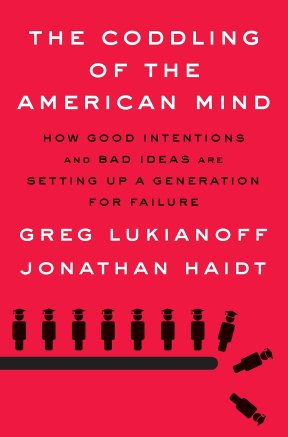
- Author: G. Lukianhoff, J. Haidt
- Ttile: The Coddling of the American Mind
- Published: 2018 (352 pg)
- Trivia: 2018 shortlist National Book Critics Circle Award for non-fiction
- List of Challenges 2019
- Monthly reading plan
- #TBR 2019 5/43
Introduction:
- This is a book for anyone who is confused by
- what is happening on college campuses today,
- ….or is concerned about the growing inability of
- Americans to live, work, and cooperate across party lines.
Topics:
- Rising political polarization (harassment by off campus right wing groups)
- Rise of teen depression and anxiety (especially women)
- Helicopter parenting (overprotective)
- Decline of free play (now…play is alone with computers, gaming)
- Rise of campus bureaucracy (eliminate courses from syllabus to avoid complaints)
- Rising passion for justice after major national events (campus politically engaged)
Conclusion:
- I was very impressed by
- Part 3: How did we Get Here?
- While reading this chapter I kept in mind the
- political climate in USA.
- I know the presidential campaigns 2020 will probably
- be very nasty…now I know what to look for!
- #MustRead
USA:
- Regardless of political persuasion,
- Americans today are deeply susceptible to a renunciation of reason
- …and celebration of ignorance. (ouch!)
- They know what they know without reading,
- …discussing or engaging those who might disagree with them.
TRUMP BASE
- They reject calm logic, eager to embrace the
- alternative news that supports their prejudices.
- SVP: Read: Strangers in Their Own Land (A. Hochschild)
- Americans must relearn how to engage civilly with one another,
- something hard to do with a bullying president as a role model.
SAD BUT TRUE…
- Gone are the days of moving speeches and well referenced debate.
- We have no Vidal and Buckley exchanges.
- Where are the Adlai Stevenson’s, the Dirkesens’s and Kennedy’s.
- A few hundred characters (tweet) or a
- ten second sound bite is what we get…
- shutting down the other side
- instead … of defeating with logic and reason.
TRENDS
- American politics is driven LESS by hope
- and more by the untruth of “US vs THEM”.
- THEY must be stopped at all costs.
CONGRESS:
- Norms for civility and bipartisanship
- between the two parties (Rep-Dem)
- …have nearly disappeared.
VOTERS:
- Years before this stark polarization
- voters rushed to the polls to choose
- their favorite candidate of their beloved political party.
- Today….it is the hostility towards the OUT party that
- make people more inclined to vote.
- In other words….
- Americans are motivated to get off their couches
- and get involved in political action
- not by LOVE for their party’s candidate
- but by HATRED for the other party’s candidate.
2010s
- Via Twitter and Facebook voters
- …encase themselves in an echo chamber.
- Filter bubbles are search engines
- …and You Tube algorithms
- designed to give you more
- …of what you seemed be interested in.
- This leads conservatives and liberals
- into disconnected ‘moral network’ backed up by
- contradictory informational worlds.
ISOLATION
- Physical and electronic isolation
- …from people we disagree with
- allows the forces of…
- bias
- group think
- tribalism
- …to push us further apart.
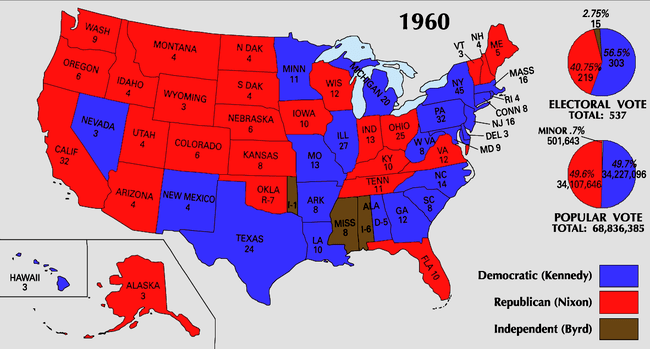
Political Map 1960 – Presidential race JFK vs Nixon
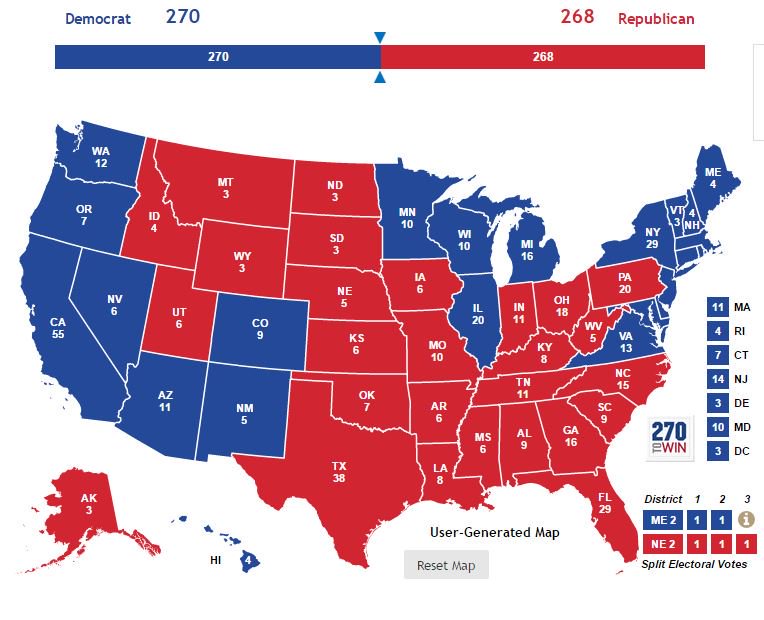
Prognose of political map 2020
#Non-fiction biography James Tiptree jr.
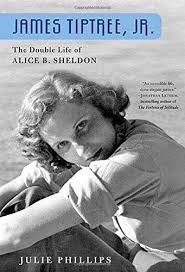
- Author: Julie Phillips
- Title: James Tiptree Jr.
- Trivia: aka Alice Sheldon 1915-1987
- Published: 2006
- Genre: biography
- List of Challenges 2019
- Monthly reading plan
- #20BooksOfSumme
- #TBR 2019 1/43
Conclusion:
- Literary tastes were changing in the 1960s.
- Women were searching for new books
- …they were tired of romances, doctors and stories about horses.
- Fantasy and SF introduced some very talented writers.
- James Tiptree Jr. was born…nom de plume Alice Sheldon.
- Tiptree burst onto the science fiction scene
- ….in the 1970s with a series of hard-edged, provocative short stories.
- Tiptree was hailed as a brilliant masculine writer.
- Ms Sheldon kept her JT persona very secret:
- no photo’s, no public appearances and
- most confusing was “his” strong
- feminist slant in his tales.
- For example The Women Men Don’t See.
- Women characters felt so alienated and powerless in society they
- choose to board a space ship with aliens rather than remain on earth!
- Strong point: This fascinating biography by Julie Phillips
- was ten years in the making.
- Julie Phillips takes us behind the scenes to learn the
- of the privileged yet troubled life of Alice Sheldon.
- With this information Sheldon’s short stories take on a new cachet.
- This book is considered one of the best biographies about a SF writer.
#Non-fiction Stamped From the Beginning
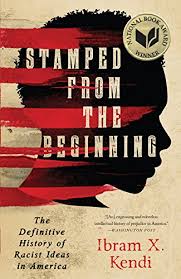
- Author: Ibram X. Kendi (1982)
- Title: Stamped From the Beginning
- Published: 2016 37 chapters, 511 pages
- I read the book + listened to the audio version.
- Audio book: 19 hours 8 minutes
- Trivia: 2016 National Book Award for Nonfiction
- Trivia: Kendi teaches history and international relations
- College of Arts and Sciences
- School of International Service at American University
- List of Challenges 2019
- Monthly reading plan
- #20BooksOfSummer
Introduction:
- Stamped From the Beginning is a magnificent book!
- Winner National Book Award 2016 for Non-fiction.
- Part 1 on is 1600s…get through it because in
- Part 2 with the introduction of Jefferson the book starts to sparkle!
- Part 3 Abolitionists…again get through is because
- Part 4 will take you from W.E. Du Bois up to Obama…riveting!
Conclusion:
- If you’ve never read anything about racism in USA…
- ..this probably would be the best place to start!
- The book is a #MustRead for
- …anyone interested in understanding
- contemporary issues in America.
- Ibram X. Kendi is stunningly clear and straightforward.
- The book reads much like a conversation….
- from from pre-colonial times to the present
- …from the slave trade boat to Obama.
- This is an excellent book that all Americans should read.
- …especially in the light of the
- …approaching presidential election 2020.
- It is a long book….requires some commitment.
- I learned that the tactics may have changed but the goal
- …has remained depressingly the same:
- “Do not let them vote!”
- “…If you can find a way to stop them,
- ….stop them!” (black Americans)
- This resulted in 2000 Bush winning Florida by 537 votes
- …and being elected president!
- This book certainly has made me reflect
- …on and rethink my own views about race.
- I wonder what will happen in elections 2020 to prevent
- …black Americans voicing their choice.
Last thoughts:
- This is a very informative and educational read.
- This book should be on every high-school reading list!
- It is interesting to compare and
- …note the similarities of racism in 19th and 20th C
- …that continue to exist even in the 21st century.
- Interview with Ibram X. Kendi
- …..explaining the title of the book
#Non-fiction Frederick Douglass: Prophet of Freedom
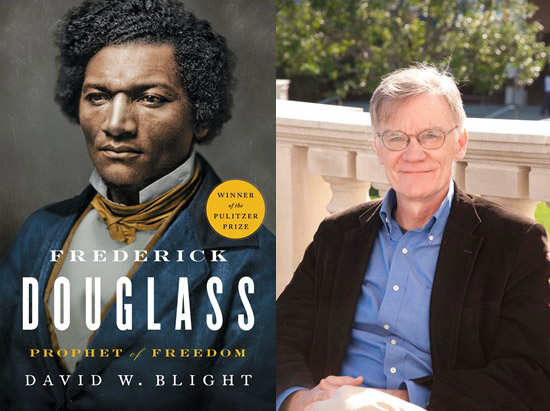
- Author: D. W. Blight
- Title: Frederick Douglass: Prophet of Freedom (1818-1895)
- Published: 2018
- Trivia: Pulitzer Prize for History 2019
- Wikipedia: Frederick Douglass
- List of Challenges 2019
- Monthly reading plan
- #20BooksOfSummer
- Audio Book 36 hrs 57 min
Conclusion:
Ch 1-16 Exposition…
- Childhood, slave work, escape
- from Maryland to the North, New York.
- Douglass was a renowned orator.
- He spent years on speaking tours
- in US and Europe against slavery.
Ch 17- 21 the book begins to sparkle…
- Douglass asks the question
- we are still asking…more than 150 years later:
- Why deprive the right to vote for black Americans?
- …what is the world afraid of?
Douglass meets Lincoln in the White House.
- Lincoln – the emancipator
- …the elegant restraint of a statesman
- …spoke with an eye on legality and public opinion
- Douglass – the national evangelist
- …with the fiery tones of a prophet.
Ch 22 – 31 Reconstruction….
- Douglass made no distinction between
- Andrew Johnson’s white supremacy and slavery itself…
- ….as long as Johnson controlled
- reconstruction the war was not over.
- Douglass speaking about President Andrew Johnson is an
- “…unmitigated calamity and a
- disgrace the country must stagger under.”
- Frederick Douglass was a
- frightening black man with brains
- …President Andrew Johnson’s basic nightmare!
Last thoughts:
- This is the best way to learn history…read biography.
- We read that progress has been made
- …but still America is polarized on the color line.
- The routine suppression of black voters
- is far-reaching and has devastating consequences.
- We cannot be silent about it.
Best quote….and worth thinking about
- There is NO negro problem.
- The problem is whether the American people have
- honesty enough, loyalty enough, patriotism enough
- to live up to their Constitution.
 NancyElin.blog