
#Play The Weir

Playwright: Conor McPherson (1971)
Title: The Weir (1997)
Theme: loneliness. Setting: pub in isolated town western Ireland
Trivia: The Weir won Laurence Olivier Award for Best New Play 1997.
Trivia: The Weir was voted one of the 100 most significant plays in 20th C
Genre: The Weir is a pastoral play. It gives the reader a slice of rural Irish life.
McPherson wants to contrast the country vs the city. …the actual vs the mythical storytelling.
- List Reading Challenges 2018
- Monthly reading planning
- Reading Ireland Month
- Masterpost 746 Books (Cathy)
- #readireland18
- #begorrathon18
Analysis:
1. Explain the title. The Weir In what way is it suitable to the story?
a. OLD – The weir is a barrier whose function originally was a fence made of sticks or wattles built across streams or rivers that trap fish. It acts as a sieve.
b. NEW – The weir refers to a local dam built in 1951 to regulate water and generate power. c. The title is suitable as a symbol between the contrasts in the play: old vs modern; world of folklore vs contemporary life; between agricultural tradition vs 20th C modern development.
2. What is the predominant element in the story? Characters
Jack: garage owner, 50’s
Brendan: the owner of the pub 30’s (only listens, no story to tell)
Jim: garage assistant, 40’s
Finbar Mack: a local businessman late 40’s
Valerie: a Dublin woman 30.
3. Who is the single main character about whom the story centers?
Jack: is the main character. He undergoes the greatest change.
b. He is the talkative leader of the barflys, ‘old-school’ Irish,
c. devoted to the national beverage of Guinness.
d. Finbar: (foil for Jack) ‘get rich quick’ Irish real estate man, flashy, content to drink
e. the ‘last beer anyone would choose’ bottled Harp.
f. Valerie: incomer; city folk, drinks white wine; Brendan is flustered….Wine?
g. He finally finds a bottle he received as a gift.
h. When pouring her glass he fills it up as he would a pint.
4. How does the story get started?
The play opens on a stormy night in Brendan’s pub.
b. A rural Irish pub is located in an isolated town in County Leitrim.
c. Brendan, the owner of the pub, opens the bar, fills the till and checks the beer taps.
d. Jack and Jim (his regulars) are gathering for their daily pint.
5. Briefly describe the rising action of the story.
The action in the play is very subtle. The arrival of a stranger from Dublin city, a beautiful woman (Valerie). She has just rented an old house in the area.
The barflys want to impress her or perhaps scare her off (?) …with eerie stories about souls past, spirits present, ghosts and …half-haunted encounters. It is an authentic night drinking with locals who have the gift of blarney.
6. What is the high point, or climax, of the story?
a. 4: Valerie’s true story…(read the play and discover this for yourself!)
7. Discuss the falling action or close of the story.
After Valerie’s story the mood changes.
Jack’s talk with Brendan and Valerie is the last…..it is a confession.
McPherson bookends the play.
Brendan closes the bar.
a. Weak point: no real conflict. Play writing is all about conflict. The power of the play derives from the power of argument in the dialogue. In this play all I could find were a few verbal jabs about horseracing betting tips.
b. Weak point: I was looking for the ‘lilt of Irish humor, the…capacity to make rapid and irresistible remarks. In this play I only chuckled twice: at the beginning (defect beer tap) and at the end (who are the Germans, really?)
c. Weak point: play contains 3 ghost stories barflys tell each other that were not scary.
d. Weak point: This play does not come to life on paper. It….MUST have actors to relate the emotions in the dialogue. I read the play twice before making a conclusion. I wanted to see if I missed something.
Conclusion:
- This was my first one-act play. It should be tightly compressed, short,
- with playing time max forty-five minutes.
- A single setting (pub) should be a ‘pressure-cooker play‘.
- The energy should build up, ready to blow off the pan’s cover.
- This play is ninety minutes long on stage.
- The play felt like it was quietly simmering on the back-burner.
- The only way to really enjoy the play is to see a stage performance.
- Playwright’s task is to create stories that generate emotional responses.
- I felt nothing.
- Some local color with expressions as yous , jays, and jayus.
- ..do not a great play make.
- Why did this play win Laurence Olivier Award for Best New Play 1997?
- I am #Clueless.

Conor McPherson
Girls and Boys
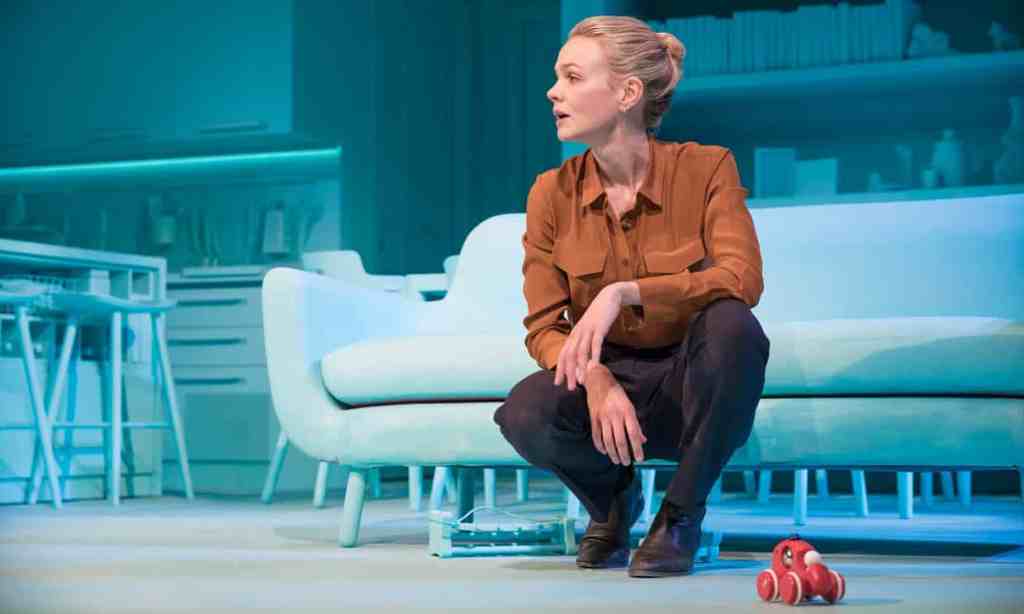
- Author: Dennis Kelly
- Title: Girls and Boys
- Published: 2018
- Director: Lyndsey Turner
- Trivia: Kelly’s new play had its world premier at
- The Royal Court Theatre in February 2018, starring Carey Mulligan.
- Trivia: Kelly began work on Girls and Boys over two years ago in Naples airport
- while waiting, …like the character in his play, for a flight.
- Trivia: tipped to be nominated for Olivier Award 2018
- Nominees are to be announced 06 March 2018.
- Trivia: List Reading Challenges 2018
- Monthly reading planning
- List of Plays ( TBR)
Notes:
- I never heard of David Kelly but the review of Girls and Boys caught my eye.
- It is praised as a master performance by Carey Mulligan.
- I wonder what all the hype is about?
- Dennis Kelly (1970) is a British writer for film, television and theatre.
Can you be taught to write plays?
- According to Mel Kenyon (D. Kelly’s literary agent)
- “I believe there is something instinctive about being able to create a dramatic arc.”
- “There are plays that masquerade as plays,
- with a big three-act structure,
- but there is no life force, no propulsion
- …they’re static. You can’t teach that.
- Dennis Kelly is a natural playwright.
- He feels a person’s pulse and expresses it in words.
- #Amazing
Notes:
- There is no dedication.
- Kelly only adds a list of names of people he would like to thank.
- Sally Hawkins, actress.
- Lucy Kirkwood, Stephen Stephens British playwrights.
- Mel Kenyon is Kelly’s literary agent.
- Matthew Warchus is Kelly’s friend
- …an award winning director.
- But the last person surprised me….
- …Euripides!
- But wasn’t Euripides a writer of classical tragedies?
Conclusion:
- This is not your usual list of acts and scenes.
- Kelly divides the play into
- 7 chats – narrator’s thoughts, life, job, marriage…at times flashbacks.
- 6 scenes – narrator’s daily grind at home
- …while confronting the antics of her two toddlers
- …Leanne (7 yr) and Danny (4 yr) (hysterical)
- …in one-sided conversations.
- It is just one actress…telling her story.
- Carey Mulligan is on the stage alone for 90 minutes
- …and charts with consummate skill the
- …disintegration of a relationship.
- This is a monologue.
- A potentially powerful but nonetheless simple form of theatre
- I was ‘blown away’…..by this play…utterly…
- #Unforgettable.
- I only wish I could see it on stage in London.
- #MustSee…if you are able to get tickets!

Tartuffe
- Author: Molière
- Title: Tartuffe
- Language: French
- Preformed: 1669 first time Paris, Palais-Royal
- after being censured for years by the King.
- Trivia: List Reading Challenges 2018
- Monthly reading planning
- List of French Books
- List of Plays ( TBR)
Definition tartuffe:
- A person under the cover of a profound religious
- devotion and virtue tries to seduce
- his followers (entourage) for his own profit.
| Character | Description |
|---|---|
| Orgon | Head of the house and husband of Elmire, he is blinded by admiration for Tartuffe. |
| Tartuffe | Houseguest of Orgon, hypocritical religious devotee who attempts to seduce Elmire and foil Valère’s romantic quest. |
| Valère | The young romantic lead, who struggles to win the hand of his true love, Orgon’s daughter Mariane. |
| Madame Pernelle | Mother of Orgon; grandmother of Damis and Mariane |
| Elmire | Wife of Orgon, step-mother of Damis and Mariane |
| Dorine | Family housemaid, who tries to help expose Tartuffe and help Valère. |
| Cléante | Brother of Elmire, brother-in-law of Orgon |
| Mariane | Daughter of Orgon, the fiancée of Valère and sister of Damis |
| Damis | Son of Orgon; and brother of Mariane |
| Laurent | Servant of Tartuffe (non-speaking character) |
| Argas | Friend of Orgon who was anti-Louis XIV during the Fronde (mentioned but not seen). |
| Flipote | Servant of Madame Pernelle (non-speaking character) |
| Monsieur Loyal | A bailiff |
| A King’s Officer/The Exempt | An officer of the king |
Dramatic irony:
- M. Orgon is “blind”.
- He thinks Tartuffe will help him attain a place in heaven
- through pious devotion.
- Orgon offers Tartuffe a place in his home,
- his assets and even betrothed his daughter to the rascal.
- The family members (except his mother Mme Perenelle)
- and audience are aware of Tartuffe’s hypocrisy.
Plot:
- The plot is easy to follow and you can find all that information
- on the Tartuffe wikipedia page.
Conclusion:
- Reading this play was hard work.
- But I put in the hours and have made some discoveries.
- Molière was writing for his time and the play feels outdated.
- France had just witnessed the manipulation of
- Queen Anne of Austria by the
- La Compagine du Saint-Sacrement, a fundamentalist religious society.
- Anne was named regent upon her husband’s death (Louis XIII).
- Their four-year-old son was later crowned King Louis XIV of France.
- Moliere wanted to denounce by means of the play ‘Tartuffe”
- the power of this society.
- The society denounced heretics,
- …libertine morals and other pastimes the French love.
- it functioned as a sort of Inquisition!
- The King of France and the Bishop of Paris had the play banned!
Last thoughts:
- After reading the play I felt I was missing something.
- I decided to watch a french version on
- ….You Tube and follow the script.
- It was awful!
- The stage design was minimalist
- …costumes were drab (looked like rags….)
- …and the actors did not bring the nuances I hoped to find.
- All they did was shout!
- Again…I felt I was missing something.
- I decided to watch the Royal Shakespeare Company
- TV version broadcast in November 1985 on BBC
- …adapted by the Oscar winner writer Christopher Hampton.
- It was an absolute delight to watch such great English actors as
- Nigel Hawthorne as Orgon and Sir Anthony Sher as Tartuffe.
- Sher is unquestionably a Tartuffe that even Molière would love!
- I’m sure the film is available at better libraries…
- and here is the link for the play on You Tube.
- My advice? Read the play in English
- …if you are feeling adventurous …read it in French.
- Then sit down and enjoy this wonderful production
- of Tartuffe by Molière.
Trivia:
- Christopher Hampton (British playwright, 1946)
- has penned a new adaptation of Molière’s
- classic comedy Tartuffe, which will begin performances
- May 25 2018 at the Theatre Royal Haymarket, London.
- It will be directed by Gerald Garutti.
- In this new adaptation, the 17th century comedy moves to America, where a
- French film tycoon finds his life uprooted by Tartuffe.
- He is a radical American evangelist.
- Hmmm…interesting!

P
St. Joan
- Author: G.B. Shaw
- Title: St. Joan (1412-1431)
- Produced : 29 March 1924, New Theatre London
- Three-time Tony nominee Condola Rashad will take on the title role.
- Shaw wrote the play when he was 70 years old.
- The title role had been written with Sybille Thorndike specifically in mind.
- Trivia: Nobles Challenge
- Trivia: Shaw was awarded the Nobel Prize for Litrature 1925
- Trivia: This play helped Shaw win Nobel Prize for Literature 1925
- Trivia: St Joan will open on Broadway on the 25th of April 2018.
- Trivia: Monthly planning 2018
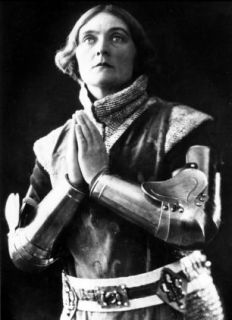
Characters:
- St. Joan
- Robert de Baudricourt (local squire where Joan lives)
- Richard de Beauchamp (Machiavellian English Earl of Warwick)
- Peter Cauchon, Bishop of Beauvais, tried to find Joan a loophole in the Inquisition.
- John De Stogumber is Warwick’s chaplain (religious fanatic).
- Dauphin, Charles (heir to the throne)
- Archbishop of Rheims
- Dunois, Commander of the French troops at Orleans
- ..and God and France are also major players in this play
Introduction:
- We all know the plot: (1 act with 7 scenes)
- Joan of Arc, claiming to have been told directly by God to
- flush the English out of northern France.
- She was granted control of the French army in 1429.
- She went on to break the siege of Orléans, only to be captured by the English.
- In the end she was tried for heresy and burnt at the stake.
- Timeline:
- scenes 1-5 (February – July 1429);
- scene 6 (May 1431, trial and burning at the stake)
- scene 7 (25 years later…1456) epilogue
Conclusion:
- This is a tragedy …with comic moments.
- Shaw’s melancholy attitude in part the result of his reaction to WWI.
- It took the Church of Rome nearly 500 years
- ….to decide whether she was a heretic or a saint.
- It took the Church of Rome only 30 minutes to burn her!
- Shaw wrote the play 3 years after St. Joan’s canonization.
- The play contains some of the playwright’s most acerbic writing.
- Strong point: Girl power
- the role of Saint Joan is …considered the actress’s equivalent of Hamlet
- It is not an easy role.
- Joan gushes sentimentality and melodrama yet she must…
- make Joan believable with her passion for both soldiering and religion.
- Strong point: epilogue
- This is THE most powerful part of the play….magnificent!
- #MustReadClassic …once in your lifetime!
- I read the play (free online)
- and listened to an audio version.
- I highly recommend St. Joan with Siobhan McKenna.
- It is available at Downpour.com
Last thoughts:
- I was surprised to learn that Shaw made specific notes about the play.
- He did NOT want it to be preformed in a medieval setting!
- On opening night…..faced with medieval stage decor, Shaw said:
- “They’ve killed my play.”
- National Theatre London broadcast on 16th February 2017
- St. Joan with Gemma Arterton live from the Donmar Warehouse.
- Here is a short trailer just to give you an impression.…
- I hope this performance will be available on DVD soon.
Female Bodies on the American Stage

Author: J. Mobley
Genre: non-fiction (2014)
Rating: B
Review: Ms Jennifer Scott-Mobley is Assistant Professor – Theatre History & Dramaturgy at East Carolina University. She highlights and thus alters deeply ingrained attitudes about fat.
Ms Scott-Mobley takes the reader through ‘fat actress’ performances across stage, screen and television.
Strong point: the author makes clear that American audiences have become so accustomed to slender beauties as the standard…..that any body that strays outside the parameter interferes with the viewer’s notion of what is believable or what is realistic.
Strong point: Scott-Mobley reveals what many in society feel…
a woman’s body is associated with the base and material….her body is her identity. Man’s identity is connected to his soul and intellect.
Strong point: The book is filled with statements that made me stop and think:
1. As civil rights and freedoms for women increased
in the US.…the acceptable dress-size….decreased!
2. The media capitalizes on cultural fears, at times
obscuring facts and data in order to get
the results a public must hear: fat is bad and dangerous!
3. Those last 10 pounds which have NO significant
health consequences drive a multibillion-dollar diet industry!
Last thoughts:
I enjoyed this book…even though Ms Scott-Mobley
goes down several rabbit holes which were of no interest to me whatsoever. My interest lay in the analysis of plays by Tennessee Williams. He created female characters that used ‘fat behavior’ to disrupt the stasis (balance in the play) with their immoderate behavior
….driving the plot forward.
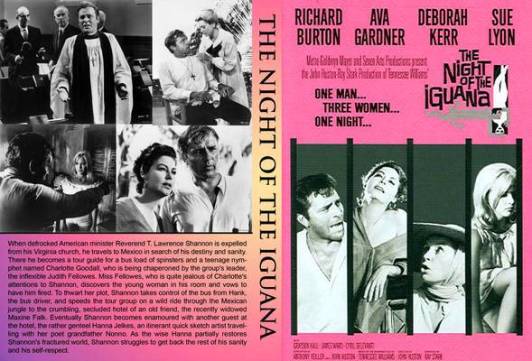
I will read plays The Rose Tattoo, Small Craft Warning and The Night of the Ignuana with
these new insights!
UPDATE:
I just read in the news that a Dutch super model walked down the catwalk in New York City. No, it isn’t our famous ex-Victoria Secret Doutzen Kroes …but Daniëlle Grondelle. Finally the barriers are being broken….. height 1,80 m 80 kg!


Famine by Tom Murphy Irish Playwright

- Author: Tom Murphy (1935 – 2018)
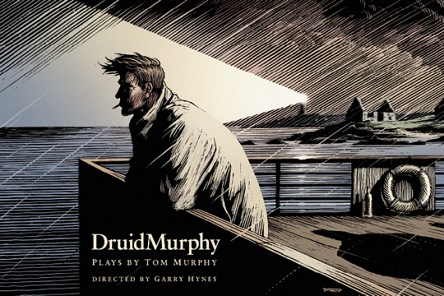
- Title: DruidMurphy: Plays by Tom Murphy
- Published: 1977
- Table of contents: 3 plays
- A Whistle in the Dark (1961) (read)
- Famine (1977) (read + review)
- Conversations on a Homecoming (1985) (read)
- Trivia: Ireland: Luck of the Irish Reading Challenge
- List Reading Challenges 2017
- T. Murphy died on 15 May 2018 (obituary)
Introduction:
- Tom Murphy grew up in Tuam, County Galway, a tough frontier town.
- The youngest of 10 children, he saw his family “wiped out” by emigration.
- He was religious as a child, but had faith beaten out of him by the Christian Brothers.
- “The repressiveness of the Catholic upbringing was extreme,” he shivers
- Murphy was inspired to write this play after
- ….reading The Great Hunger by C. Woodham-Smith.
What is Tom Murphy’s approach to writing a play with a historical background?
- Murphy reads many books about the subject of his play.
- Sometimes is takes him 1-2 years to write the script.
- He read at least 6 non fiction books
- …researched the collections of the Irish Folklore Commission
- …and 3 novels about the famine in Ireland.
- Novels: all by William Carleton
Valentine McClutchy: the Irish Agent
The Emigrants of Ahadarra
The Black Prophet.
In each case noting passages of dialogue and colloquial phrases.
What was TM’s biggest challenge?
- How to represent the action of more than 100 years ago so as to
- …engage audiences in the present time of theater.
What was Murphy’s goal?
- Murphy wanted to voice through the actors the
- general effect of famines on the poor.
- The neighborhood ties loosen of dissolve.
- Theft becomes endemic.
- Resistance changes into apathy.
- The feeling of a ‘group’ is shattered.
Famine
- Style: Brechtian history
- the Brechtian style that relies on the audience’s reflective detachment
- …rather than emotional involvement.
- Structure: 12 scenes (not divided into acts)
- Main character: John Connor —- unofficial leader of the village
- Minor characters: 3 women and 15 other male villagers
- Timeline: 1846 (Autumn) – 1847 (Spring)
- Setting: village of Glanconor – space is ‘charged’ with historical trauma.
What is the problem?
- John tells the villagers ‘We must do what is right’.
- — restrain violence
- — no attacks on convoy of corn-carts
- — providing hospitality to others…..even when his own family is starving.
What is the conflict?
- Doing ‘what’s right’ and placing faith in the laws of God and man
- …get him and the villagers no where.
- Passive resistance; pragmatic idealism ( John Connor) VS.
- Desperate reality (John’s wife) and
- Militant, activist, a survivor who favors violent action (Malachy O’ Leary)
Conclusion:
- Tom Murphy writes with more force and less nostalgia.
- Famine is hard edged realism.
- Scenes 1-4 introduce the reader to the characters and village.
- Scene 5 is powerful.…
- …and the language indicates the higher-class officials are speaking.
- Landlord, tenant John and the clergy Fr Horan and Fr Daley discuss the political
- …strategy that has been agreed upon by the government.
- The policy is to offer “..a great number of people an alternative to death.”
- The farmers will be given a paid ticket to leave the country…to emigrate to Canada.
- Fr Daley explodes when he hears “It is cheaper it clear them away”
- Fr Daley ask: “Who are we saving?”
- Scene 6-10 builds the tension…planned assassination, final interview for John Connor.
- He must choose to leave or stay in Glanconor
- “…I was born here, I’ll die here, I’ll rot here.”
- Scene 11 Tom Murphy brings the play to a close introducing unexpected actions.
- John Connor continues to be defiant, “..do what’s right”
- We see John as an isolated figure, perhaps he has lost his senses.
- Now the reader must decide: was John a hero or a fool?
Last thoughts:
Tom Murphy does not seek the limelight
…but his plays are ‘beacons’ of insight into
the Irish psyche.
He is considered to be the greatest living Irish playwright.
 NancyElin.blog