
#AWW2019 Maxine Beneba Clarke
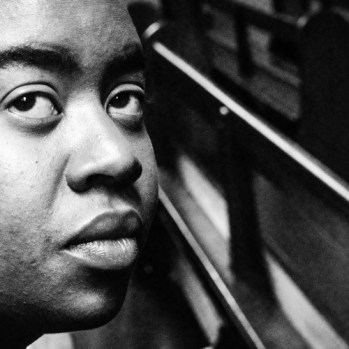
Introduction:
- I needed to share
- Maxine Beneba Clarke’s poem on my blog.
- There is something so rewarding in this poem
- if you are willing to
- …let go of what you already know.
Ritual
We’ll go cardboard-boothed
to the primary schools
community centres
and the churches to boot
and friendly neighbours
ideologically opposed
will avert their eyes
as they fold up their votes
Last thoughts:
You want a poem to unsettle something…
- Maxine Beneba Clarke has done it
- ..about Australian elections 2019
- There’s not a word wasted in these clean, spare lines.
- We could use this poem for elections all over Europe!
- You can read THE ENTIRE POEM HERE
- Thank you @slamup
#Poetry Pulitzer Prize 2017 Olio

- Author: Tyehimba Jess
- Title: Olio
- Published: 2016
- Genre: poetry …and then some!
- Cover: pictogram.
- ..if you hold the book at a distance OLIO
- …you will see a face!
- OLIO: same if you read it left–>right or left<– right!
- Title: OLIO = middle part of a minstrel show.
- List of Challenges 2019
- Monthly plan
Awards:
- WINNER 2017 Pulitzer Prize in Poetry
- WINNER 2017 Anisfield-Wolf Book Award in Poetry
- WINNER 2017 Book Award from the Society of Midland Authors for Poetry
- 2016 National Book Critics Circle Award finalist for poetry
- 2017 PEN/Jean Stein Book Award finalist
- 2017 Kingsley Tufts Poetry Award finalist
- Named a Top Poetry Book of 2016 by Library Journal
Introduction:
- Olio centers on African-American artists and creators,
- an interest spawned from Jess’ curiosity about the origin of black music.
- Tyehimba Jess presents the
- …sweat and story behind America’s blues
- work songs and church hymns.
- Part fact, part fiction.
- He weaves sonnet, song, and narrative to examine
- …the lives of mostly unrecorded African American performers
- directly before and after the Civil War up to World War I.
Strong point:
- Tyehimba Jess has introduced me to a
- new type of poem: sonnet
- where 2 voices are counterpoints and syncopated.
- Two speakers are made to finsh each other’s sentences
- composing the same thought but
- …from a different position.
- Poem: General Bethune v. W.C. Handy
- The exploitive master/ manager of Blind Tom (austic pianist)
- and a great blues composer have a eery conversaton! (pg 22)
Conclusion:
- Jess has created a poetry book as a ‘world’
- and not a private place in his mind.
- He intertwines blues, history, letters, legend
- persona poems, prose poems, interviews
- song, culture …and illustrations.
- I learned about Blind Tom Wiggens (austic pianist)
- Edmonia Lewis (sculptor), Fisk Jubilee Singers
- Scott Joplin, John Boone….and many more.
- The book is an experience
- …that is the only way I can
- describe it!
- PS: Tyehimba Jess’s personal persona
- …is Julius Monroe Trotter in the book.
- He interviews some acquaintances of Scott Joplin.
- #JustSaying
- This is not a book where you tie a poem to a chair
- with a rope and attempt to beat out its meaning.
- You have to take your time….read a few poems a
- day then close the book.
- I tried to discover the starting subject and
- …then the discovered subject in a poem.
- There is always a door to be opened the
- will lead you down another path.
- I’ve reviewed one poem to show you what I mean.
- #MustRead….really, amazing!
Blind Tom Plays for Confederate Troops, 1863 (pg 15)
- Shape is the familiar left margin.
- Line breaks are punctuation.
- 1 stanza: a continuous musical flow in the poem.
- Starting subject:
- Tom is a blind piano player stomping his feet with the music
- …for the REB’s ..the Confederate soldier sing-a-long.
- Discovered subject:
- ..is introduced by a “door in the poem”….
- the word freedom (line 8/14 lines).
- The second half of the poem
- …gives us the stark message that:
- Tom still is somebody’s property
- …his Dixie sounds more like a work song.
- “…ringing with slaver’s song at master’s bidding.”
Last thoughts:
- This a short poetry review with the sole goal of
- ..describing a book of contemporary poetry.
- I’ve stopped with the compulsion to say everything
- …just want to give you
- …a few observations with the hope
- …that you will read more
- #Poetry !
#Poetry Winner Victorian Lit Award 2019
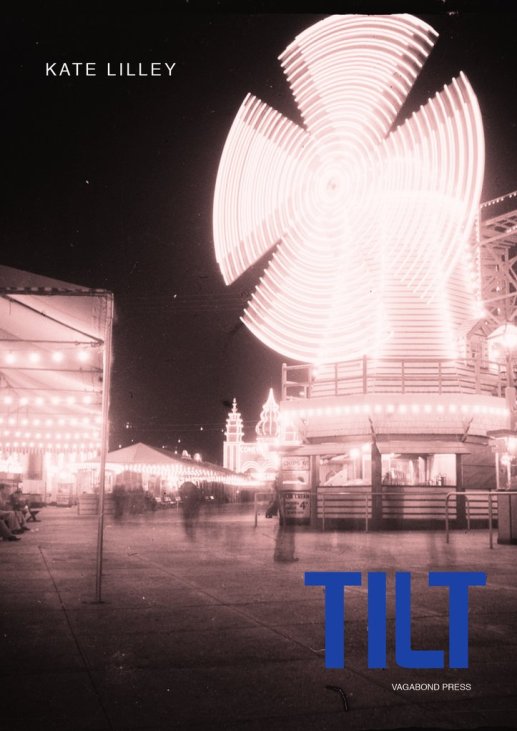
- Author: Kate Lilley
- Title: Tilt
- Published: 2018
- Genre: poetry (38 poems)
- Cover: 1948 photograph of Luna Park lighted windmill, Sydney
- Title: Tilt….express the feeling of being off-balance
- Trivia: 2019 Victorian Premier’s Award for poetry – winner
- List of Challenges 2019
- Monthly plan
- #AWW2019
- @AusWomenWriters
Introduction:
- Just finished reading 38 poems:
- TILT by Kate Lilley.
- Her talents…are mentally exhausting
- …and I mean that in a good way.
- Time for aperitif #Heineken.
- Poetry is hard work….more so than a novel!

What did I learn about just by reading these poems?
- Queen Christina – cult scenes in the movie with Greta Garbo (Poem: Femme Forte)
- Taboo subject unheard of in polite circles 19th C Edinburgh
- …The Drumsheugh Gardens School scandal 1810 (Poem: Children’s Hour)
- Slice of life of forgotten 1970s queer strip in Sydney (Poem: Tilt)
- Lillian Hellman’s 1934 production of Children’s Hour
- ….(see scandal Edinburgh) (Poem: Children’s Hour)
- La Maupin 17th C French swordswoman who caused
- havoc in a convent trying to escape with
- …her lesbian lover (OH!) (Poem: Children’s Hour)
- Kate Lilley’s 10 autobiographical poems (part 1) #heartwrenching
- I learned about Greta Garbo’s post showbiz life as recluse in NYC
- ..this was a poem-essay (Poem: Garbo at ‘Wits End’)
- Corporate talk “If you need me get in touch, backchannel me”
- (Poem: Coda)…sense of closure with first poem Tilt
- Poem for lovers in a transnational/digital world (Poem: Weather Channel)
- I learned why Lilley wrote an elegy for her father (author)
- …Merv Lilley (Poem: Her Bush Balland [Bourke St Elegy])
- …but not for her mother (poet) Dorothy Hewett (Poem: Memorandum)
- Lilley asks the question: (social issues)
- Why send a ship to sea unseaworthy? (refugees, mandatory detention)
- ..offering care to cargo
- …rather than care for people (Poem: In Harm’s Way)
Strong point: autobiographical poems
- Poetry tells us the history of the human heart.
- If you only read these 10 poems (pg 11-30)
- …than my mission is accomplished to encourage
- more readers to pick up a book of poems.
- I dove into TILT cold turkey.
- I thought:
- I speak English, the poem is in English
- and I still have no idea what it all means.
- Then I started to research Kate Lilley’s
- dysfunctional family.
- There are issues in the autobiographical poems
- …major issues!
- Kate Lilley was immersed (involuntarily)
- into the Bohemian lifestyle of her parents
- Merv Lilley and Dorothy Hewett in 1970s Sydney.
- Both Kate and her sister were being
- …abused by friends of their parents, predators.
- Lilley has suffered for years trying to put her life back together
- …after living with a mother who’s mottto was: ”Boys Will Be Boys”.
First lines of autobiographical poems: set the scene, setting
- This is a seductive device
- …dangling a setting in front of the reader.
- It does not make too many demands
- of there reader at the beginning.
- That will come later.
- The first couple of stanzas takes the reader
- …by the hand and guides him into the poem.
First lines…
- Fonzies Fantasyland at 31 Oxford St nows a disappointing IGA [SETS SCENE, A SETTING]
- One morning walking down Bourke St I hear my father’s voice [SETS SCENE, A SETTING]
- Mystic Rainbow cuisenaire rods (math learning aid)
- The first man who put his hands on me ( Oh, we are curious)
- Sounds quaint but in those days… [SETS SCENE, A SETTING]
- Winter White crepe maxi (…don’t know where this is going)
- At the Australian Society of Authors Xmas Party ( …we are curious)
- Conversation meant listening to adults (…been there, done that!)
- We were all there (…who is WE? …where is THERE?)
- He appears in the doorway [SETS SCENE, A SETTING]
- The girl I sat next to in maths at high-school (…we are curious, what about her?)
- Pushed up against the metal rim of the shower (…feels aggressive, [SETS SCENE, A SETTING]
- Overhead on the street [SETS SCENE, A SETTING]
- For her to die like that nobody there (…who? ) [SETS SCENE, A SETTING]
Conclusion:
- 38 poems
- 3 parts:
- Tilt (autobiographical and confessional poems)
- In Harm’s Way (based on events and experience in psychiatry)
- Realia (facts) – (poems related to Greta Garbo, and many ‘list poems’)
- I liked 65% of these poems
- ….pretty good return on investment.
- Unique: Kate Lilley writes list poems (…completely new for me!)
- By listing words Lilley wants to create a sense of what this book
- is about: dysfunctional family – therapy, hospital – Greta Garbo
- by just listing carefully selected words.
- List poems are puzzles!
Last thoughts:
- A poem is like a diary
- ….without the lock and key.
- Poetry is not difficult.
- I’ve read 5 different collections in the past weeks
- …and EVERY book was enthralling!
- I never get this buzz after reading a novel…never!
Collections read:
- USA – Jericho Brown – Anisfield-Wolf Award 2015
- IRELAND – Gerard Fanning – Winner Rooney Prize Poetry 1993
- NEW ZEALAND – Therese Lloyd – Shorlist Ockham Prize 2019 (prize 14 May 2019)
- AUSTRALIA – Kate Lilley – Winner Victorian Premier’s Award 2019
- NEW ZEALAND – Cilla McQueen – Shorlist Ockham Prize 2011
#Poetry Cilla McQueen

- Author: Cilla McQueen
- Title: The Radio Room (34 poems)
- Published: 2011
- Genre: poetry
- List of Challenges 2019
- Monthly plan
- #AWW2019
- @AusWomenWriters
- Trivia: Ockham NZ Awards shortlisted Poetry Prize 2011
- Trivia: If you ever read this collection of poems
- …I will save you some time.
- It took me 2 days to find the meaning of Maori words
- mentioned in three poems: About the Fog, Reprise and
- Talking to My Tokotoko.
- “Hopupu Honengenenge Matangi Rau”
- …which in Maori means
- “the long water which bubbles, swirls and is uneven”.
- #YourWelcome
Who is Cilla McQueen?
- Mcqueen was Born in Birmingham, England
- …and moved to New Zealand when she was four years old.
- She ranks amongst the finest poets of her generation.
- Trivia: Three New Zealand Book Awards
- Trivia: 2009 Prime Minister’s Award for Literary Achievement
- Trivia: New Zealand’s Poet Laureateship (2009-2011)
- In The Radio Room, Poet Laureate Cilla McQueen
- …travels space and time, throwing thoughts (Poem: Bookworm)
- from Bluff NZ , her corner of the world, to the ancient Celtic islands
- of her ancestors. (St Klida, Island Mull) (Poem series: Elements 1,2,3,4)
Conclusion: My notes about a few poems….
Poem: The Ghostly Beast
- Reference: 15th C Scottish history
- Macdonalds of Clanranald…carry off booty van rival clan
- …rough estimante 600 cows.
- McQueen describes fear of people “in the bothy” (cottage)
- Sounds of “song of a storm, roiling tempest”
- “…a lowing so close”
- Is it a our cow or the ghosts of stolen cattle?
- Conclusion: No emotional impact but I do
- learn that McQueen bases many poems
- on her Scottish heritage.
- #BadChoice for kick-off poem in collecton :(
Poem: About the Fog
- Reference: feelings about loss (mother)
- McQueen’s personal journal…
- …pages destroyed b/c book left on a table
- ….during a foggy night.
- …”vanished thoughts”
- washed away “…as if by tears.”
- Blue ink turned “…turquoise wash
- …word-slivers….beld edges”
- Conclusion: very moving poem
- #TimeForKleenex
Reading tip:
- I read this poem 1 x … it made no sense.
- I’m too close to the text, to eager to understand
- …hence see nothing!
- Then I wrote each stanza in longhand,
- absorbing each sentence as I went on.
- That is the best way to ‘read’ poems.
- You just have to invest some time and
- effort to distill the poet’s message.
- Sometimes objects art not things.
- Objects are news…that is part of the puzzle.
Poems: Altar (Elements 1)
- Reference: Island of Mull– 15th C MacKinnon’s Cave
- Deep inside lies a large, flat slab of rock, known as Fingal’s Table
- used as an altar by hermits and early followers of the Christian church.
- The first part of the poem
- …refers to the ‘sin’ of killing
- the Great Auk bird on St. Kilda, Scotland 1844.
- The second part refers to a Greek mythical figure of
- a warrior Amazon.
- She offers the spirits a gift as does…the narrator.
- The poem is bookended:
- Part 1: laid our sin on the altar
- Part 2: laid our prayer on the altar
- Conclusion: this poem needed some
- research to understand it (Great Auk).
- No emotional impact…just historical interest
- #Dud
Poem Beacon (Elements 2)
- Reference: Island of Mull– 15th C MacKinnon’s Cave
- This was very different compared to Altar (Elements 1)
- I thought there would be a connection
- ….but the contrast was the best part!
- McQueen uses beautiful lyrical language to
- give us an image of a beacon of light
- leaping from “altar to altar, island to island”.
- Conclusion: Images linger; fascinated
- McQueen makes a (lighthouse) beam come to life …
- “a quartz shiver”….with ” quicksilver feet’!
- #Magical
Poem: Bookworm
- Reference: Martin Martin from the Island of Skye.
- 1690s he decided to visit St. Kilda and
- record the natural history and culture.
- This was a frustrating read.
- I must have read it 10 x…!
- It feels as if McQueen read the historical
- document by M. Martin and just left her
- thoughts drift: “tell past to know time present”.
- She compares herself with a (title) bookworm
- that tunnels through books
- …as she does through memory.
- Literary device:
- antimetabole (reversal of words)
- “…on dark ground white words, on white ground dark words.”
- This device can be pithy and powerful
- …but it fell flat in this poem.
- Conclusion: exasperated…only wish Ms McQueen
- could explain this poem to me.
- PS:...to make matters worse
- …my reading glasses broke today
- so I was forced to read this through “old lenses”!
Poem: Foveaux Express
- Reference: ferry between Bluff and Stewart Island
- McQueen compares poetry to the catamaran ferry ride.
- Ferry: it is ‘swift as the stroke of a pen…text in motion’
- Poem: “…gimballed (supported) on muscling swells (waves)
- …word-ware cargo.”
- Conclusion: McQueen tells me why I should read poems:
- “Poetry takes you apart, puts you back different”
Poem: Lens
- Literary devices: filled with …alliteration and assonant rhyme
- webbed wash-house windows
- dusty dwang (building), bee-sting blue-bag
Poem: Ripples
- This poem is considered one of the best poems of New Zealand
- The Poets mentioned in “Ripples” are Joanna Paul (1945-2003)
- and Hone Tuwhare (1922-2008).
- #Impressive
Poem: Soapy Water
- McQueen is so clever!
- #Hysterical!
Poem: Three Elaborations
- After reading several poems like this one
- ….topic is about a beloved one who passed away.
- …gone with Ganyede, beloved one,
- to fill the crystal glasses of the gods.
- …you swore to send a message back from death…
- …empty VB bottles queueing by the sink
- …all gone – the house as quiet as Miss McKenzie’s old piano…
- I can assume Hone Tuwhare was
- Cilla McQueens life partner after her divorce in 1986.
- I can find no biographical information to support my
- assumption…just a ‘woman’s intuition’ that Hone was the
- #LoveOfHerLife.
Poem: Coastling (Elements 3)
- I took a page out of Mcqueen’s book and
- …let MY thoughts drift after reading this poem:
Poem:
- I meet myself coming the other way.
- Distinguish between two grains of sand.
- No power on earth can change me,
- nothing pins me down.
- Within my high and low I belong to none.
- A sacred slate where law is written.
- Conclusion: Title: Coastline
- I imagine a beach and
- …the poet gazing at her footprints (“…met myself”).
- Nothing “pins me down”.
- Footprints are washed away
- …by the next wave (“belong to none”).
- The next step she makes is
- …on “a sacred slate where law is written.”
Poem: Mining Lament
- This is playful poetic pantoum!
- A verse form composed of stanzas in which the
- second and fourth lines
- ….are repeated as the
- …first and third lines of the following stanza.
- 10 lines and McQueen stretches the poem to 20 lines
- ….a pantoum!
- She repeats lines so subtly
- …that if you read it without a warning
- you would think it contains 20 separate lines of poetry!
- #BrainTeaser
- NOTE: the last line of a pantoum is the same as the first,
- making this a form of ouroboros type.
- The ouroboros a SYMBOL in the form of a snake
- …consuming its own tail.
- The poem ends where it begins
- ….a never-ending circle.
- How cool is that?
- #WhoSaidPoetryIsBoring
What is my favorite poem in the collection?
- It has to be a poem of friendship for 2nd Poet Laureate of
- New Zealand Hone Tuwhare. (1922-2008).
Poem: Letter to Hone 1
- I so impressed by the tenderness and
- affectionate words McQueen uses to celebrate this poet.
- I can only assume this is a tribute to him just after his death.
- He passed away in 2008 and
- …this collection was published 2010.
- I don’t usually post the poems I read…but this one
- I must share:
- Note: Matua Tokotoko = Maori carved walking stick
- …that is a symbol of great respect.
Letter to Hone 1
- Dear Hone, by your Matua Tokotoko
- sacred in my awkward arms,
- its cool black mockings
- my shallow grasp
- I was
- utterly blown away.
- I am sitting beside you at Kaka Point
- in an armchair with chrome arm-rests
- very close to the stove.
- You smile at me,
- look back at the flames,
- add a couple of logs,
- take my hand in your bronze one,
- doze awhile;
- Open your bright dark eyes,
- give precise instructions as to the location of
- the whisky bottle
- on the kitchen shelf, and of two glasses.
- I bring them like a lamb.
- You pour a might dram.
Last Poem: Your Eyes
- Of course…no mistake
- Hoen T. was McQueen’s soul mate.
- Trivia: Yvonne mentioned in the last line
- is the NZ writer Yvonne du Fresne (1929-2011)
Last thoughts:
- Unlike poems by
- Jericho Brown (USA, raw, gritty)
- Gerard Fanning (IRELAND, nostalgic, playful)
- Therese Lloyd (NZ, heartbreak, visiting Ed Hopper’s paintings)
- Cilla McQueen’s poems were exhausting!
- I mean this in a good way…she makes me think.
- Her best poems are about her grief losing Hone Tuwhare.
- Also best poems include the ones in which
- …McQueen shows us what is like at…
- the end of the world in New Zealand her hometown
- Bluff in Southland is the country’s most southerly tip,
- Subjects: weather, animals, whaling, oystering, shipwrecks, the sea.
- She has a sharp eye for particularly New Zealand detail.
- “my Tolotoko” (Poem: About the Fog)
- A tokotoko is a traditional Māori carved ceremonial walking stick.
- ..a symbol of authority and status for the speaker holding it.
- “bronze totara” (Poem: Crazy Horse) – tree in New Zealand
- “In a kowhai two bellbird sing…” (Poem: In Hand) –
- small tree and bird prevalent to New Zealand (greenish colors)
- McQueen’s most difficult poems are based on
- …Scottish myth, legend and history.
- It requires more research to understand
- …just a few snapshots in the poems.
#Poetry Month Gerard Fanning (Irish)

- Author: Gerard Fanning (1952-2017)
- Title: Water & Power
- Published: 2004
- Genre: poetry
- Table of contents: 30 poems
- List of Challenges 2019
- Monthly plan
- #PoetryMonth
Introduction:
- Who was Gerard Fanning?
- You probably NEVER heard of him!
- Neither had I…
- While researching Black Rock Baths in
- The IrishTimes I read an article:
- “Poet and Rooney Prize winner Gerard Fanning dies”.
- Who was this man?
- As soon as I opened the article
- …Fanning’s gaze stared past me
- without recognition.
- I looked again.
- There was a puzzling
- …melancholy in his eyes.
- Where was the Irish lilt?
- I knew I had to read his poems.

Cover:
- The title Water & Power is from
- …one of Fanning’s favorite films
- Chinatown.
- The cover of the book is …
- muted fungus-green water
- with a tugboat and a few ships
- on the far horizon.
- How bland can you make a book?
- I found the link b/t cover and poem Water & Power.
- Fanning dives into the Merrimack River (USA)
- ..makes a splash (cover)...with an unexpected result!
- Niall Naessens (Irish artist)
- has made better paintings than this! (see fotos at end of review)
- The popular idiom is
- “Don’t judge a book by its cover,”
- …warns us to be objective….
- the vast majority of readers use the cover of a book
- …as a deciding factor in the decision to buy/read the book!
- Despite the cover design
- I dove into the murky water.
.
Poem: Offering The Light
- The first poem was frustrating
- …so not a good start.
- The only clue I had was the word scoreboard.
- After 2 attempts I finally discovered the poem is about cricket!
- to offer the light = take batsmen off the pitch b/c of fading daylight
- night watchman = rookie batsman sent out to finish the game by fading light
- silly point = field position
- bye = extra scored runs
- If you don’t know these words the poem makes no sense!
Poem: A Carol For Clare
- This is a haunting poem for a woman named Clare.
- Fanning dedicated the book to her
- …but who is Clare?
- There is not much information about Gerard Fanning available.
- 47 words, 5 stanzas, rhyme (ab-ab-ab-ab-ab)
- The poem gives the reader clues…suburbs of Dublin
- Philboro, Portobello, Railto, Pimlico and Marino.
- It feels like Fanning is describing a life moving from
- one place to another with his beloved Clare.
- “Lie with your ghost in Marino…
- Shepherd the fading decibel.”
Poem: The Railway Guard
- This is a description of a walk
- from Drogheda…past the church to Marsh Road.
- Two young lovers….pause to kiss in the
- (lyrical descriptions of flowers) white eel grass,
- sea holly and sea lavender.
- But the young girl turns whiter than all
- the flowers when she meets the narrator’s
- grandfather…the railway guard.
- What is so fascinating about the poem?
- This line:
- “…but Clare smiles and whispers….”
- There she is again …Fanning’s mystery woman!
- Now we know
- …Clare must be Gerard Fanning’s mother.
Poems: that brush at mortality:
The Cancer Bureau
- Images of the patient’s puffed belly being painted with a
- “Load Line or the Plimsol mark.”
- (level reached when a ship is properly load
- “She (nurse) says it will rise and fall in salt water.”
Wide of the Mark
- Image of a nurse coaxing a mirror down throat
- “Pointing like an idot savant
- To the very heart of things.”
The Wards
- Images of patient in intensive care
- “…after the final blizzard…(stroke)
- head lying amongst the strings of the tent.” (oxygen tent)
Playful poems:
- Fanning brings balance in the collection with
- …some very amusing poems!
- The Watcher’s House – a swallow guards his nest…his Alhambra!
- Moving a Garden Shed – describes this Herculean feat!
- Looking up – I’m learniing to read poems…”world of fleece’ = clouds!
Best quotes:
- These are found in the
- impressive last poem Canower Sound (pg 49-55)
- 40 couplets…snapshots of Ireland’s west coastline
- mixed with the poet’s thoughts that criss-cross
- with memories of Venice, Florence,
- Tall men like De Valera and De Gaulle,
- Western actor Jack Elam and Swedish director Bergman
- A poem that reflects changing times and places.
Quote:
- “Waves danced arm in arm
- like a couple of swells,”
- (stylish grand men of high social status)
Quote:
- Our tide comes and goes
- murmuring in the shag and slime of stones.”
Concluson:
- The poems are meditative, playful
- and some are haunting riddles.
- My only regret is I cannot find any biographical
- …material about the poet that might enrich my readings.
- There are many references to Canada:
- Vancouver, Pr. Edward Island, Cape Spear New Foundland
- Okanagan, British Columbia.
- Fanning must have had a
- …close connection to the country
- …but I’m clueless what the link was.
- Poem: Ludwig, Ruth and I is an other example.
- It took a lot of investigating but I learned that
- ..Fanning refers to
- Ludwig Wittgenstein.
- I still don’t know who Ruth is!
- #PoemsArePuzzles
- Strong point: Fanning is a wordsmith!
- He dazzled me with his rich vocabulary
- Strong point: Fanning does not go “mythical”
- …as many poets do to impress.
- It was a pleasent change with no references
- to the gods on Mount Olympus “N”em ( …see post Jericho Brown!)
Playlist:
- Here is the audible essence of Gerard Fanning’s poems.
- He mentioned this classic
- piece of music in the last poem
- Canower Sound
Last thoughts:
- Don’t be fooled by Fanning’s
- …melancholy “baby-blues”.
- His poems are so rewarding for readers who are
- willing to do some work.
- Some of the poems were hard to read because
- I had to look up so many of the words,
- so there was quite a bit of learning involved!
- That is coming from someone that reads all the time
- …but I do like a good challenge!
- New rule: I put the poetry book under
- my pillow + magnifying glass. (..I can never find my glasses in the dark!)
- Now I can re-read a few poems in the morning…
- while the cat is purring …my brain is still fresh.
- Poems have to settle in my mind.
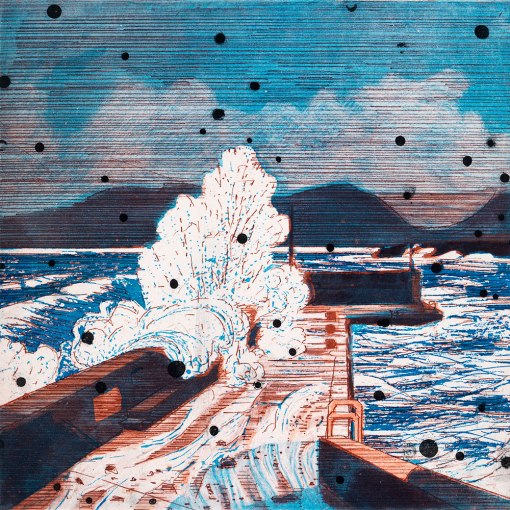
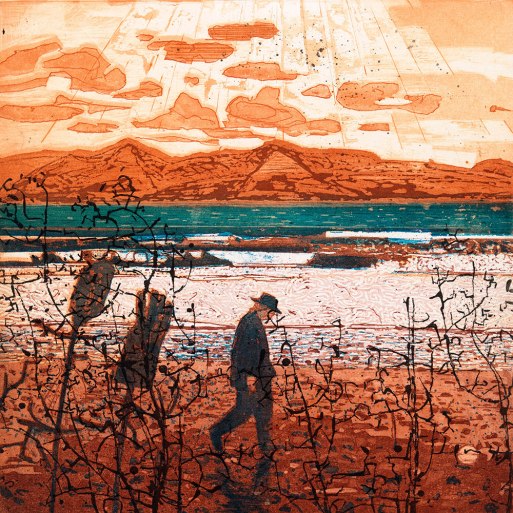
Paintings by Niall Naessens
- Look at the color!
- Why not use these colors for Water & Power?
Brandon Bay, Ireland
Good Morning, Mr Turner
#Poetry Month April Jericho Brown
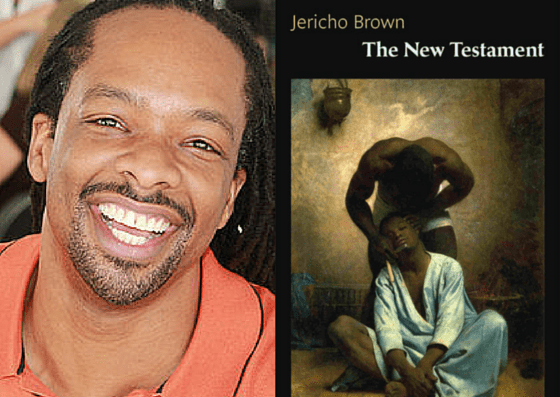
- Author: Jericho Brown
- Title: The New Testament
- Published: 2014
- Genre: poetry
- Table of contents: 41 poems
- Trivia: 2015 Anisfield-Wolf Book Award.
- Trivia: Brown holds a
- Ph.D. University of Houston
M.F.A. University of New Orleans
B.A. Dillard University. - He is an associate professor and
- the director of the Creative Writing Program
- …at Emory University.
- List of Challenges 2019
- Monthly plan
- #PoetryMonth
Narrator:
- Extended version of Jericho Brown…
- …an American gay black man attacked by society and dying of disease.
- The author became very ill with HIV in 2010.
Conclusion:
- Moving on to a new poet after spending
- days with The Facts by Therese Lloyd
- …in New Zealand is not easy.
- But ‘reading life’ goes on.
- Jericho Brown…some say he is the new James Baldwin.
- His commentary on race is deeply vivid. (see poem: The Interrogation)
- His poetry explores trauma, race, class, sexuality, spirituality.
- I’m reading Jericho Brown
- because he supplies the shock and awe
- that only poetry can express.
- I was NEVER taught poetry in school.
- Everything was about Shakespeare’s plays or
- classic like N. Hawthorne’s The Scarlet Letter or
- R.L. Stevenson’s The Deerslayer.
- Now that I have finally immersed myself in this genre.
- I loved Brown’s explanation how he got to love poetry:
- ” My mother would drop me off at the library because
- …she could not afford childcare…the best thing that happened to me!”
Last thoughts
- The downside:
- …I can only read 5-6 poems a day.
- It is just too much to absorb.
- I tried to read a poem without any foreknowledge
- …but realized some allusions went way over my head.
- So I have to study the poem…before I read it.
- It attests to the depth and intensity of the poems.
- The upside:
- … I enjoy the isolation of reading a small
- piece of prose
- …not in the mood for novels at the moment.
- There is so much to discover in
- just 20-60 lines and ….a few stanzas.
- I am amazed by Brown’s command of language
- …and his ability to combine his personal grief
- …with social injustice.
My notes on a few poems:
- According to Brown…
- “Poetry wakes us up!”
- Poetry It is not difficult.
- It asks something of us
- …that reality TV does not ask of us.”
Colosseum
- I completely missed the importance to the
- word gladiator in this poem.
- A man who stands bravely
- and fights the inevitable slaughter.
- Best quote:
- “I know how my own (slaughter) feels
- …that I live with it, and sometimes uses it
- …to get the living done.”
- Jericho Brown stands bravely in his poems
- …knowing all too well what is at stake.
Romans 12:1
- Bible text:
- “…to offer your bodies as a living sacrifice
- … your true and proper worship”
- I thought I understood the poem
- Reading the bible text gives me the
- insight that Brown is alluding to
- …offering his body to another man.
- But in the lines we discover the American
- society’s aversion to feminity in the male.
- “…my people {…} will not call me brother”
- In a podcast I heard
- Jericho Brown reveal the difficulty of separating
- a poet’s autobiography from his work.
- Writing confessional poetry is difficult when
- a person is so private…as Brown is.
- But who does it hurt more me or you to
- write these poems?
- Jericho Brown rarely speaks to his
- evangelical fundamentalist Christian parents.
- After his coming out as a gay man…his parents
- did not embrace him.
- Jericho Brown lets you hear what it is
- …like to live in his world.
Heartland
- The local doctor has a biblical echo
- “…the boy can only hope for miracles.”
- In “Heartland,” one of the book’s opening poems, Brown writes,
- “I do anything other than the human thing,”
- Central idea of the book:
- The narrator is one who doesn’t completely fit in
- …is made to feel less than human.
Labor
- Description of narrator’s Saturday odd-job cutting lawns for old ladies
- Nice sentence: “….they (mothers and big sisters)
- …want to please and pray for the chance to say please to.”
- — five-dollar bill rolled tighter than a joint! (funny)
- — tell the difference between mowed lawns and vacuumed carpets
- — “The loneliest people have earth to love…and not one friend their own age.”
The Interrogation – divided into seven parts.
II. Cross-Examination” and IV. Redirect
- Brown narrates an imagined conversation
- between himself and an interrogator.
- The narrator defends his heritage:
- (Best quote)
- “What you call a color I call
- …A way.”
- The interrogator responds:
- “Forgive us. We don’t mean to laugh
- It’s just that black is,
- After all, the absence of color.”
.
VI. Multiple Choice
- Haunting:
- “Show me A man who tells his children
- The police will protect them
- And I’ll show you the son of a man
- Who taught his children where
- To dig.”
- The exchanges between these two voices are haunting and memorable.
- The poem reminds the reader of Ferguson…
- The Ferguson Unrest (Aug 2014) protests and riots that began the day
- …after the fatal shooting of Michael Brown by police.
- The unrest sparked a vigorous debate about
- …relationship police officers and African Americans.
Paradise
- The narrator talks to his abusive father.
- The last sentence knocked the wind out of my sails.
To Be Seen
- Narrator: (Jericho Brown was diagnosed 2010 with HIV)
- recalls his doctor speaking in metaphors of war…
- ”Its always the virus that attacks the cells..”
- “Hell, I remember his saying the word SIEGE when a rash returned.”
’N’em
- Jericho Brown moved back to the south
- …after living many years in California.
- He had forgotten some missing terms he once knew.
- One of these terms is ’N’em.
- Meaning:
- that person and everyone who might associate with that person.
- Use in a sentence:
- “Hey, how you been…how’s your mama and ’N’em.
- This poem is absolutely stunning in its simplicity.
- It packs an emotional punch without cliché
- …especially in the last 2 line.
Langston’s Blues
- Persona poem in which Brown uses the voice of Langston Hughes.
- It alludes to the poem Hughes
- wrote when he was 18yr The Negro Speaks of Rivers.
#Ockham NZ Awards poetry Therese Lloyd
- Author: Therese Lloyd
- Title: The Facts
- Published: 2018
- Genre: poetry
- Trivia: 2019 Ockham NZ Book Awards shortlist
- List of Challenges 2019
- Monthly plan
- @theockhams
- @VUPBooks
- #AWW2019
- @AusWomenWriters
Poem: “no title”
- Just 64 words, no title, no punctuation, no capital letters.
- But this poem had the
- …emotional impact of fear and hope.
- Fear moves one away from something a feeling
- “common and strangely comfortable.”
- Hope moves one towards something a feeling
- that starts with “a voiceless wish”.
- The heightened image of a ‘pinned down moth”
- who wants to fly home is beautiful.
- A moth where the ‘hot glass ceiling” (of specimen drawer)
- “reflected only her calm, resolute gaze.”
- How often do we feel ‘pinned down’?
- Conclusion: excellent poem to kick-off this collection
- …it will linger in your mind.
Prose poem: On Looking at Photographs in High School Yearbooks
Appears as prose (anecdotes about school chums and her mother)
Reads like poetry (…not really, no pattern, rhythm, rhyme)
No line breaks (…just paragraphs)
What can I find ‘poetic about it?
No much, no elaborate metaphors
but I did find one symbol: eclipse and
repetition of the word ‘lack’ to help me pinpoint
the core message of the prose poem.
Conclusion:
Narrator: “…hated myself” for the “..lack of shimmer, the confusion”
The yearbooks “brought a swift eclipse of 28 years.” (Re: symbol)
“There is always more lack waiting” and
it fell like a shadow (Re: phase of eclipse) over her life.
Now the yearbooks have shone light on her memories (Re: phase of eclipse)
and she discovers the faces of those girls (Re: in yearbooks)
“All naked and plain. We all had it.”
Poem: Y2k
- Y2K (2 long stanzas) felt like to distinct poems.
- stanza 1: What is humanness….what does it feel like?
- stanza 2: NZ feels high-esteem “… That lovely conceit of time”
- …because in 2000 Gisbourne NZ felt the first rays of sunshine
- …in the new millennium.
- Conclusion: average poem with no emotional impact for me.
Poem: On Metaphysical Insight (metaphysical = ‘after the physical’)
- It took me an hour to read 10 lines!
- That attests to the Therese Lloyd’s talent.
- She walks creatively into a painting by Ed Hopper
- ….but the reader must discover
- …which painting it is from the clues in the poem.
- Lloyd opens the poem:
- “Night-time alone suffocates colour.”
- Now the reader must see the
- …thick black oils, smeared yellow lights
- and a frowning bowl of fruit
- …to help one to unlock this poem.
- Conclusion: Chef d’oeuvre, master work!
- I saw things in Ed Hopper’s painting after reading
- …this poem that I never saw before.
Most difficult section to comprehend:
Pg 34-43
- Lloyd wants to illustrate that poems echo
- and reecho against each other.
- ‘They cannot live alone anymore than we can”.
- Five poems and than five second drafts of these poems
- …were difficult appreciate.
- I just do not have the poetic savvy
- to see connections or disjunction between the poems.
- Sigh.
Update: I found the connections! Now you try!
Best selection…..absolutely amazing.
- The Facts (pg 44-52)
- Listen to a broken heart….
- …it is sounds more like a confession.
Poem: Funeral Playlist (pg 68)
- Never read a poem with a playlist before!
- With Spotify I listened to Lloyd’s selections.
- I tried to find the line(s) in the lyrics that would
- reveal the emotions Lloyd has hidden in this poem
- #Inventive
- Playlist:
- Into My Arms (Nick Cave and The Bad Seeds)
- Here’s Where the Story Ends (The Sundays)
- Avalon (Brian Ferry, Roxy Music)
Conclusion:
- I reviewed a few of the poems in this book.
- There are 32 poems divided into groups:
- Time — Desire — Absence.
- Lloyd writes 3 poems with reference to
- 3 paintings by Ed Hopper: Office at Night
- Western Hotel and Eleven a.m.
- If you place the image of the painting from Google images
- in front of you and then read these poems
- …it is an unique poetic experience!
- The Facts is MY CHOICE to win
- Ockham NZ Book Award 2019 for poetry.
- It is the ONLY collection I could get my hands on
- before 14 May 2019.
- Will one of the other nominees win?
- …only the jury can tell us
- …and I will see if I agree after 15th of July
- …when my books arrive!
Last thoughts:
- I think of reading poetry in terms of Zen:
- Trying new things reminds us
- …that it’s ok to take small steps,
- to make a little progress each day.
- It’s ok to feel inept at something at first.
- The goal is learning, not perfecting.
#Ockham New Zealand Awards shortlist
- My next shortlist: Ockham New Zealand Book Awards 2019
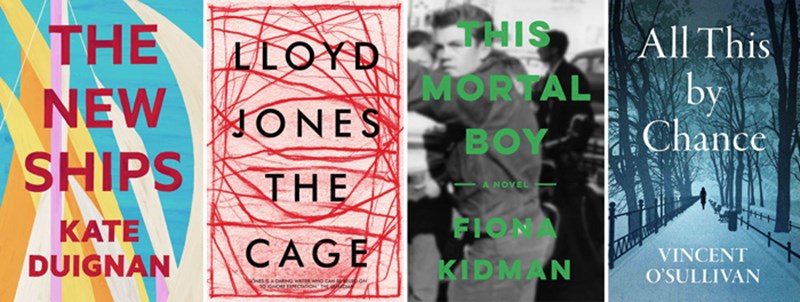
- Kate Duignan
- Lloyd Jones
- Fiona Kidman
- Vincent O’Sullivan
- …have all made the shortlist for the coveted $53,000 Fiction prize.
- I won’t have much time to read them all because
- the prize will be announced on 14 May 2019.
- How many can I read before the deadline?
- Today starts my Ockham Awards read-a-thon!
- My POETRY predictions….will be late (pre-order books)
Fiction:
- The New Ships – Kate Duignan – pre-order arrives 15 July!
- The Cage – Lloyd Jones – READ (review)
- This Mortal Boy – Fiona Kidman – READ (review)
- All This by Chance – V. O’Sullivan – NOT reading…novel over 3 generations…not for me!
Non-Fiction:

- Hudson & Halls: The Food of Love – Joanne Drayton (no e-book yet…)
- Memory Pieces – Maurice Gee – pre-order arrives 08 Aug
- We Can Make a Life – C. Henry – READ
- With Them Through Hell – Anna Rogers – NOT READING
- (only in hardcover and costs 68 euros! (...too expensive for me!)
Poetry:
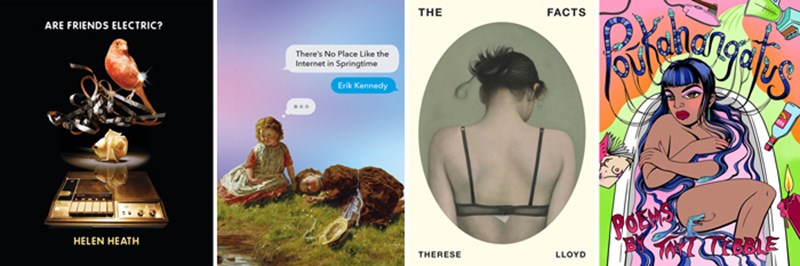
- Are Friends Electric ? – H. Heath (Ockham NZ Award poetry 2019) – READ
- There’s No Place Like the Internet in Springtime – E.Kennedy – pre-order 15 July
- The Facts – Therese Lloyd – READ
- Poūkahangatus by Tayi Tibble – pre-order 15 July
#Ireland: Poetry
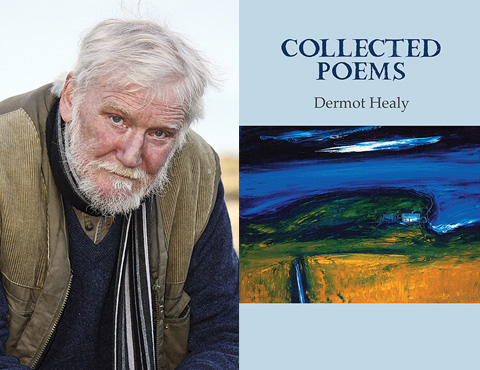
- Author: Dermot Healy
- Poem: The Lost Limb
- Published: 2015
- List of Challenges 2019
- Monthly plan
- #ReadingIrelandMonth19
- @746books.com
- I have been struggling with poetry since December 2017
- I read:
- Poetry for Dummies (reference with basic glossary etc)
- Why Poetry? (review)
- The Hatred of Poetry – Ben Lerner (86 pg)
- And I have learned so much from watching simple
- ‘learn poetry videos’…on You Tube for young school children!
- So last night I tried to gather my strength and apply what I learned to
- …a poem by the Irishman Dermot Healy.
- It is the forward for his book
- …Dermot Healy Collected Short Stories (2015)
- I looked at the stanza’s tired to discover rhythm in the line breaks.
- There are no line breaks….the poem is one long sentence.
- There was no rhyme… not even eye rhyme that would help me.
- The first line “Feeling for the right word“
- reminded met of “Feeling into Words”, an essay in Preoccupations
- ..by Seamus Heaney.
- Heaney was Dermot Healy’s mentor.
- I found a few images that seemed to
- …lead me to the theme of of the poem.
- But it was getting late…I turned out the lights.
- I shut the book
- So what was the main idea in the poem?
- Well, the saying ‘sleep on it’ does really work.
- I discovered that Healy was
- …describing his writing process
- as a physical experience!
- Images of a
- lost limb, fingers, being breathless, young flesh
- …blood through the veins, exercise (writing) as healing.
- It was fascinating to finally find something in the poem
- …that just hours ago
- were only words, sounds and shapes.
- This may seem trifle…something of small importance
- …but it is a giant leap for me towards
- appreciating poetry!
- #ReadAPoem
The Lost Limb
- Feeling for the right word
- Leave me breathless for the many
- As if through a lost limb sewn on (image)
- Feeling gradually grew
- Through cold young flesh
- Lit some fingers with old identity
- And excitement, while others
- Craved possession
- Of life withheld,
- Hung awkwardly till breathing as one
- The first words came like blood (image)
- Down distressed veins
- And, with a healing yaw,
- New writing began like an exercise (image)
- Over and back across the empty yard
- Turn, start all over.
#Poetry Seamus Heaney
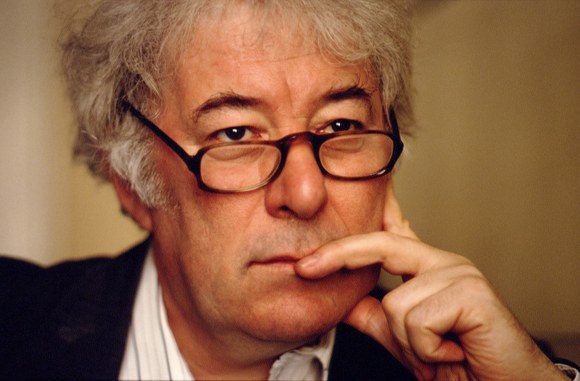
- Author: Seamus Heaney
- Title: Field Work
- Published: 1979
- Genre: 27 poems
- List of Challenges 2019
- Monthly plan
- #ReadingIrelandMonth19
- @746books.com
Field Work (1979)
- Field Work is the fifth poetry collection.
- It is a record of Heaney’s four years (1972-1976)
- living in rural County Wicklow, Ireland
- after leaving the violence in Northern Ireland.
- Heaney lived in Belfast and was a professor at Queen’s University.
- The years in Ireland were years of retreat
- …a quiet time for thinking and renewal.
- Field Work is less political.
- 50% elegies…a choice to remain on the everyday level.
- 50% domestic life…love poems for his wife and friends.
- Style: sketch the living before death and
- …do justice to the moment of extinction
- Heaney calls it the ‘music of what happens’.
- The title Field Work implies his investigation
- …into a culture not one’s own in County Wicklow Ireland.
My Notes:
- Oysters:
- starts with images of shared eating and friendship to anger over being the colonized (Romans). Strange…I really did not ‘get’ this poem.
- A Drink of Water:
- sonnet that describes an elderly women who used to collect water from the well each morning, but now she has passed away.
- The Strand at Lough Beg:
- for Colum McCarthy (cousin shot in a sectarian ambush)
- A Postcard from North Antrium:
- friend S. Armstrong shot by “a pointblank teatime bulllet”
- Casualty:
- for L. O’ Neill – friend, went out for his usual nightly
- drink in a pub bar and was blown up by a bomb set by his own people.
- Note: in Casualty – revenant meaning someone has come back from the dead to haunt them
- The Badgers: badger is a Heaney animal alter-ego.
- The Singer’s House:
- is full of imagery…even if one does not know where Carrickfergus is. Heaney uses images to carry his poem to levels where straightforward propaganda could never reach. Much of what goes on in this poem can best be understood as a contrast between life in the North (industry, mining) and life in the South of Ireland,
- The Guttural Muse: refers to the noise of young people leaving a discotheque
- In Memoriam Sean O’ Riada: Irish composer traditional music
- Elegy:
- for Robert Lowell (poet) death-moment is represented by “…the wind off the Atlantic”.
- Glanmore Sonnets:
- Ten poems in the ‘marriage group’ .
- An Afterwards:
- the poet imagines himself in the ninth circle of hell,
- as his widow comes from the upper life to indict him and
- all poets saying…“I have closed my widowed ears…”
- High Summer: what an image! ….maggots in a paper bag as fish bait (jick)
- The Otter: image of his wife (otter) love poem…when they first met
- The Skunk: image of his wife (skunk ) love poem..describes married life
- The Harvest Bow: looks back to his father using a harvest bow
- In Memoriam Francis Ledwidge:
- Irish WW I poet/soldier; aka “poet of the blackbirds”
- Ugolino:
- version of the Ugolino episode in Cantos 32 and 33 of Dante’s “Inferno.”
 NancyElin.blog