
Non-fiction: James Wright: A Life in Poetry

- Author: J. Blunk
- Title: James Wright: A Life in Poetry
- Published: 2017
- Trivia: 1972 Collected Poems won the Pulitzer Prize.
- List Reading Challenges 2018
- Monthly planning
- #20BooksOfAutumn
Introduction:
- You know how once in a while you run into a book that’s
- so good you don’t want it to end,
- so you draw read it very slowly, drawing it out?
- For me, this is one of those books.
- I just had a few pages more to read
- ….but stopped and started to end my night’s reading last night and
- ….went to bed.
- I just did not want Jimmy to leave me last night.
Conclusion:
- James Wright is one of the best poets I’ve ever read.
- (Seamus Heaney…is the very best!)
- Why?
- His poems are written in plain language that can connect with the reader.
- Too many poets are cryptic
- ….they think the purpose of poetry is to be cryptic.
- Poetry should be plain and simple
- …but that does not mean it cannot be complex.
Strong point:
- The book packs an emotional punch without cliche.
- Blunt succeeds in conveying a portrait of James Wright’s
- frenzied urgency, his depression, struggle with alcoholism
- …and the obsession to know what makes us tick.
James Wright (1927-1980)
- He was the poet of the downtrodden in mind and body,
- the castaways of society,
- the commonplace victims trapped in the poor streets.
James Wright
- He did not walk around, observing the world and
- coining apt analogies for what appears most striking.
- He suffered to express is emotions….
James Wright
- He had an appetite for new materials during sabbaticals in Europe
- …especially his beloved Verona.
- “ I’d rather be dead in Verona than immortal in Ohio.”
James Wright
- He suffered from depression and his poems were
- his newly invented safe rooms.
- Places we might not have noticed until Wright showed them to us.
James Wright
- A poem has physical landscapes….”my grave, my ditch of defeat.”
- Martins Ferry, Ohio was the center of James Wright’s poetic imagination
- …hardscrabble existance.
- It was a touchstone and other landscapes are tried against it.
James Wright
- He gives vivid impression of grief and longing.
- …when he wrote an elegy for the scholar Philip Timberlake.
- He was one of Wright’s first mentors in 1949.
- The title is in itself a poem… What Can a Man Bear.
- It is sorrow distilled into eight lines:
…alone
All afternoon, I take my time to
mourn.
I am too cold to cry against the
snow
Of roots and stars, drifting above
your face.
Why is this poem to poignant?
- James Wright seems to….
- extend a hand to the reader and say:
- “Come here, with me and lets share
- …this experience of language.”
Last thoughts:
- Reading this book these last 5 days
- …felt like breathing pure oxygen.
- Being immersed with such a troubled and
- …brilliant poet has shaken me to the core.
- Wright’s poems contain a density of emotion that stirs the soul.
- Who did Wright emulate? Meister Eckhart.
- Wright reminds himself often of Eckahrt’s way toward an orderly life:
- “…simply to do the next thing.”
- Wright was tormented by depression and loneliness
- …not of the body, but loneliness of the soul.
- I think the title of one of his
- …most famous collections sums it up:
- “The Branch Will Not Break”
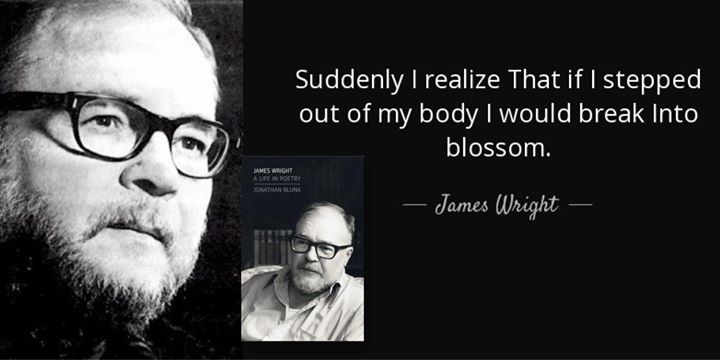
#Poetry Danez Smith: Forward Award Poetry 2018

- Author: Danez Smith
- Title: Don’t Call Us Dead
- Published: 2017
- Genre: poems
- Trivia: Short list National Book Award 2017
- Trivia: Awarded Forward Prize in London 18 September 2018
Conclusion:
- Once I figured out who ‘WE” were and
- what “HERE” meant and
- where SOMEWHERE and SOMEPLACE is…
- in the first poem ‘Summer, Somehere’
- my mind wanted to race through the entire collection immediately.
- Don’t.
- Take the time to read each poem at least 10 x…let them sink in.
- Danez Smith has broken through the formal poetry rules and created a
- poetry that is unique …all its own.
- There is a crude but eloquent energy in every piece of writing
- Danez Smith is a meteorite of the poetry world.
“Don’t Call Us Dead,” landed on the longlist for the National Book Award 2017.
WINNER:
Frank Bidart, Half-light: Collected Poems 1965-2016 (Farrar, Straus and Giroux / Macmillan Publishers)
Finalists:
- Leslie Harrison, The Book of Endings (University of Akron Press)
- Layli Long Soldier, WHEREAS (Graywolf Press)
- Shane McCrae, In the Language of My Captor (Wesleyan University Press)
- Danez Smith, Don’t Call Us Dead (Graywolf Press)
Last thoughts:
- Don’t Call Us Dead wrestles with what it means to
- be a young black gay man in America.
- It begins with a lengthy poem — “summer, somewhere” —
- that imagines a utopic afterlife for
- victims of racism and police brutality.
- This is not language…it is music in your head!
- Here is the first stanza of the poem…..amazing!
“summer, somewhere”
somewhere, a sun. below, boys brown
as rye play the dozens & ball, jump
in the air & stay there. boys become new
moons, gum-dark on all sides, beg bruise
-blue water to fly, at least tide, at least
spit back a father or two. i won’t get started.
history is what it is. it knows what it did.
bad dog. bad blood. bad day to be a boy
color of a July well spent. but here, not earth
not heaven, we can’t recall our white shirts
turned ruby gowns. here, there’s no language
for officer or law, no color to call white.
if snow fell, it’d fall black. please, don’t call
us dead, call us alive someplace better.
we say our own names when we pray.
we go out for sweets & come back.
#RIPXIII Classic: E.A. Poe “The Raven”
Author: Edgar Allan Poe
Genre: poem
Title: The Raven
Published: (1845)
Table of Contents: 18 six-line stanzas (108 lines)
Published by Penguin Books
Theme: remembrance vs forgetting
Just LISTEN to the poem…..goosebumps!
Introduction:
“The Raven” is a narrative poem by the American writer and poet Edgar Allan Poe.
It was published for the first time on January 29, 1845, in the New York Evening Mirror
Noted for its musicality, stylized language and supernatural atmosphere,
This is one of Poe’s best known and most reviewed poems.
I hope to find something interesting to mention about this classic!
Story:
The poem describes the tale of a student, desolated by the death of his beloved,
He is visitied on a stormy `bleak December´ night by an ominous bird´.
It traces the student´s slow descent into madness.
Strong point: Alliteration: is the repetition of the initial sounds of adjacent words.
While I nodded nearly napping, suddenly there came a tapping
Doubting, dreaming dreams no mortals ever dared to dream before
Followed fast and followed faster….
On this home by horror haunted…
And the Raven, never flitting, still is sitting, still is sitting.
Strong point: Rhythm
Repetition of words to give the poem a ‘throbbing’ rhythm….like a heart
“rapping, rapping”- tell me, tell me – “still is sitting, still is sitting”
Strong point: Rhyme
The structure of the poem is based on: A-B-C-B-B-B
Every 2nd – 4th lines rhyme – the 4th – 5th and 6th lines rhyme
- Line 1: Once upon a midnight dreary, while I pondered, weak and weary, A
- Line 2: Over many a quaint and curious volume of forgotten lore – B
- Line 3: While I nodded, nearly napping, suddenly there came a tapping, C
- Line 4: As of some one gently rapping, rapping at my chamber door – B
- Line 5:”‘Tis some visitor,” I muttered, “tapping at my chamber door – B
- Line 6: Only this and nothing more.” B
Strong point: meter with surprises!
In this poem Poe has used ‘meter’ in 3 different ways:
lines 1st – 3rd lines of evey stanza have 16 syllables
lines 2nd – 4th – 5th of every stanza have 15 syllables
line 6 of every stanza has only 7 syllables
Symbol: The Raven
There are some very subtle hidden meanings in the poem about the raven.
Finding these words is the most difficult part of reading poetry.
Line 38-40: The Raven enters the room. He is ‘stately’ and has a ‘mien of lord or lady’ – this suggests an image of a king.
Line 45: The Raven is not ‘craven’ ( cowardly).
The allusion to ‘crest be shorn and shaven’ refers to medieval tradition of head shaving of a coward.
Line 48: The Raven ‘quoth the Raven, Nevermore’ –
The student ‘marvelled’ (line 49) to hear the bird speak.
After 10 x repetitions of this utterance the narrator slides into a maddend, frenzied state.
Line 85: The narrator call the raven a ‘prophet’ believing he foretells the future.
Line 105 – 108: Final image of the bird is a ‘demon that is dreaming’
casting a ‘shadow that lies floating on the floor’.
Narrator is terrified
Symbol: bust of Pallas (line 42 and 105): –
symbol of wisdom meant to imply the narrator is a student
Symbol: Night’s Plutonian shore (line 48 and 98) –
allusion to the Roman god of the underworld
Symbol: nepenthe ( line 83-84)
allusion to a mythological drug that you might take to forget your grief and sadness.
Symbol: chamber door is repeated 11x
This refers to room and the chamber of the heart ( feelings)
Conclusion:
This is a poem for people who don’t like poetry!
It is one of my favorites and was FUN to ready and analyse.
The student “shrieked’ ‘take thy beak from out of my heart’.
But the bird ‘still is sitting, still is sitting’.
The beak keeps pecking at the heart repeating ‘Nevermore’
Theme: those we have loved and who become lost to us…
…can never be forgotten.
It may be painful to remember them….but it is more painful to give them up.
Last thoughts: Depressing stories can be uplifting.
It all depends on the writing skills…
Edgar Allan Poe is a master of words and chilling images.
Clive James: poem ‘The River in the Sky’

- Author: Clive James
- Title: The River in the Sky (epic poem)
- Published: 2018
- List of Challenges 2018
- Monthly plan
- #20BooksOfAutumn
Quickscan:
- Genre: autobiographical epic poem
- Topic: meditation on aging…lost golden age…now inaccessible
- Tone: We find Clive James in ill-health but high spirits
- ….clear impassioned wisdom alwys quietly carving sage words.
- Form: dramatic monologue (epic poem with Clive as the hero)
- Language: unadorned, forceful with many flyaway cultural observations
- …and allusions that should be investigated!
- Trauma: Father’s death
- “I was there to watch my mother take the news.
- It still now deprives me of speech,”
- James said his life’s works “ springs from that one dreadful moment”.
- First line: “All is not lost….out past the journey’s edge.” (repeated line: 77)
- It is a reference to Milton’s poem Paradise Lost.
How did Clive James write this book?
- I think the writer sat in his kitchen/library and
- …just starred at the walls
- ..his thoughts take us on an autobiographical journey.
- Books are beautiful.
- He compares his wall of books
- …to the painted colorful frescoes in a Pharaoh’s tomb.
- James mentions his daughters:
- “…of this tomb when you helped me weed my books”.
- These are the walls he sees first thing in the morning.
- It is a work of art, with all of the
- different size books and their color bindings.
- Clive James is a master at creating images:
- “.. (I am) ..but the living god (Pharaoh)
- in the departure lounge (tomb/kitchen-library) surrounded
- …by his glistering aftermath–. (books)
What does Clive James want to achieve in this book?
- James is dying….and he has know this for many years.
- He is: “Planning last strategies…employ these closing hours
- to write its seedlings down“. (seedlings of poetry)
- “This is a river song linking vivd foci where
- once my mind was formed that now must fall apart.”
- The turning point in the writer’s life was
- the death of his father in a plane crash. (1945)
- The flight was to return this prisoner of war WW II to his wife and son
- ….10 days after the war ended.
- We read “…strength ebbs from my limbs” but James wants to…
- “…my fragile treasures link together in review.”
What is the structure of the book?
- This is an epic poem with Clive James as the hero.
- He shifts constantly….from the ancient past with
- Egyptian, Greek mythology to his childhood
- …Jannali in the summer heat, Clifton Gardens, Botany Bay;
- college days (dedicated book May Week was in June (1990)
- …to Tom Weiskel.…college friend who died;
- life in Australia with memories about
- Keith Miller (cricket player, war pilot) and
- Kim Bonython (war pilot, lover of jazz, race cars and art)
- Darcy Dugan (Australian bank robber)
- and of course the Hill at the SCG, Sydney Cricket Ground.
- There are many overlaps between
- …events and states as presented by the text.
- This requires some dedication from the reader
- to investigate items mentioned by Clive James.
- If you take the time to do this
- …it will enrich the reading experience.
What was the sentence(s) – image that impressed me the most?
- QUOTE:
- “Gliding is what I do, here at the finish, in the final hour.”
- Note: This can also be a reference to the title
- The River in the Sky.
- The writer tells us he will be gliding…
- “in the star clusters, in the gulf between the galaxies.” (pg 4)
- IMAGE:
- Clive James compares himself to the Sun Voyager.
- The Sun Voyager in Reykjavik Iceland was
- …essentially envisaged as being a dreamboat
- …an ode to the sun symbolizing light and hope.

Conclusion:
- If you read this book be prepared to follow Clive James
- through a maze of memories.
- He backtracks, looks forward and stands still amazed that he is still alive!
- He’s danced the tango in Rio with a beautiful blind woman.
- He’s met the love of his life while listening to Maria Callas
- He’s pampered by two beautiful daughters.
- James is a poet and some of his insights took my breath away:
- “Time, it is thereby proven, is the sea
- …whose artifacts are joined by separateness.”
- Strong point: James shows us his spirit of youth.
- Even in old age, and his refusal to resign and face life passively.
- “If my ashes end up in an hour-glass….I can go on working.”
- Note: I’m reading this poem slowly, carefully line for line
- this my be the last time I can enjoy
- ….Clive James while he is still with us.
- I don’t want to read his books in grief…but in joy.
- #MustRead
- #MustReflect

#Classic: Patrick Kavanagh Irish poet
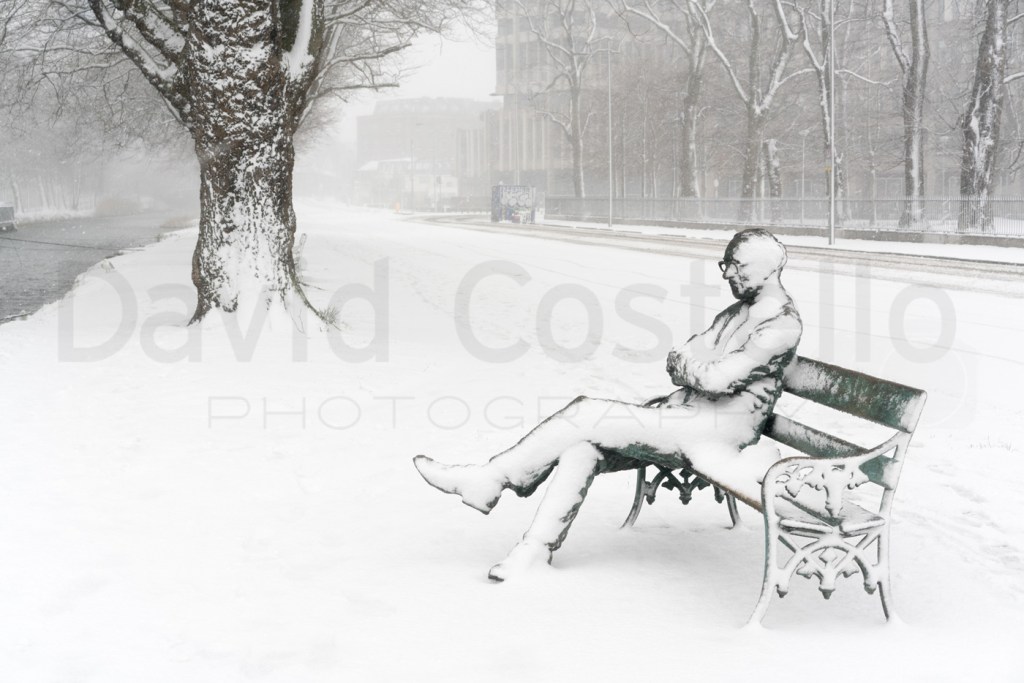
P. Kavanagh
(photo) https://www.davidcostellophotography.com/
- This lifelike statue of him seated on a bench
- on the bank or the Grand Canal in Dublin.
- Poem: The Bluebells are Withered Now under the Beech Trees
- Author: Patrick Kavanagh (Irish) 1904-1967
- Published: 1945
- List Challenges 2018
- Monthly planning
- Reading Ireland Month (…poem was left over from March)
- Masterpost 746 Books (Cathy)
- #readireland18
- #begorrathon18
Analysis:
- This is a poem of greater emotional complexity
- The tone is sombre even meditative.
- The poem attempts to renew in the face of experience
- light-hearted attitude that has disappeared.
- The poet Kavanagh lived in a boarding house on
- Raglan Road between autumn 1944 – October 1945.
- The poem records his unrequited romance with Hilda Moriarty,
- a twenty-two years old medical student at University College Dublin.
- Hilda was acclaimed as one of the most beautiful women in the city.
- Kavanagh was infatuated with her and often stalked her.
- From early 1945 she was desperately trying to escape his obsessive attention.

- One day in May 1945 Patrick and Hilda arrived at the railway station in Drumree
- …a couple of miles from Dunsany castle.
- Every May, serried ranks of bluebells nod their heads.
- That first image of walking through the bluebells
- made a profound impression on the poet.
The bluebells are withered now under the beech trees
The bluebells are withered now under the beech trees
And I am there – the ghost of myself – alone
Trying to remember a truth I once had known
Poking among the weeds on bare knees
Praying, praying poetic incantation
To call back life to that once-green plantation.
A score of grey ungrowthy stumps stand up
Like an old graveyard in my mind: Dingle, Cooleen
A shadowed corner of Saint Stephen’s Green
A noisy corner of the Country Shop
All chilly thoughts that bring no exaltation
No green leaf love to the beautiful plantation.
I dreamt it in my heart, it was not real
I should have known that love is but a season
Like spring. The flowers fade. Reason
Knows it cannot find its old ideal
And yet her breath still blows some undulation
Of leaf and flower to charm my dream plantation.
Last thoughts:
- I am very impressed with Kavanagh’s poetry.
- He did not have the posh education at Blackrock College in Dublin
- as did his friend Flann O’ Brian.
- But still Kavanagh produced some wonderful
- works based on his rural backround and
- …determination to educate himself.

The Divine Comedy

- Author: Dante Alighierie
- Title: The Divine Comedy
- Trivia: Title is called a comedy because it narrates Dante’s salvation.
- This was considered comic in the medieval sense.
- Trivia: Topics are politics (Italy, Florence), poetry, papacy, theology, literature.
- Published: 1320
- List of Challenges 2018
- Monthly reading plan
Inferno – Dante distances himself from the sinners – DOWN 9 circles of hell
- Dante meets his guide, Virgil….
- Virgil was heaven sent (a feeling of grace)
- The way to rise…you must first go down. (Hell)
- Virgil tells the pilgrim that he will help him.
- Dante is not enthusiastic
- ….he even wants out of the deal!
- Virgil has been sent by others….to guide Dante.
- For the way of salvation you have to go another route.
- Virgil will stay with Dante for 2/3 of the way.
- Abandon all hope …he who enter here.
- Dante’s response: “these words are cruel.”
- The sign says this is a place of justice
- but the pilgrim does not accept these words…yet.
Purgatorio – Dante goes UP 7 story mountain (terraces)
- Beatrice arrives in 3 colors white, green and red (Faith, Hope, Love).
- Dante consults his guide Virgil. But Virgil was not there!
- This is the handing off from Virgil to Beatrice.
- Beatrice begins by speaking sternly to Dante
- …to take him to task for all for the things he has failed to do.
- Part of Beatrice’s function is to be a stern judge.
- Beatrice tells him he had so many talents
- …why was this potential so unfulfilled in you?
- You should re-orientate yourself to only ‘very high things.
- Dante does not go defensive
- …because he saw so many do that and they are in Hell!
- He must go back into the world and help other
- sinners by writing when this journey has been completed.
Paradiso: Dante goes OUTWARD to 7 planets where souls contemplate God.
- Who does Dante meet on the Moon, Mercury, Venus?
- Dante meets ex-sinners who lack the virtues of faith, hope and love.
- Conclusion: heaven is not reserved for people who have led perfect lives.
- Who is on the Sun? (wisdom)
- Famous scholars …St Thomas Aquinas, Albertus Magnus
- …but there are some simple folks there.
- Conclusion: wisdom does not equal scholarship.
- Who is on Mars, Jupiter and Saturn?
- We meet Dante’s great-great-grandfather,
- just rulers (Emperor Trajan), monk (Peter Damian).
- On the Fixed Stars Dante meets the Virgin Mary.
- Then Dante reaches the Primum Mobile.
- Dante finally sees God as an intensely bright point of light.
- Beatrice has not disappeared as Virgil did…
- …but Dante can still see her in the mystical rose (love)
- Now St Bernard of Clairvaux stands next to Dante.
- Why St Bernard as the last guide?
- This man was a mystic and a poet.
- He is the final mediator in this journey.
- Virgil prepared Dante for Beatrice.
- Beatrice has prepared Dante for St Bernard
- …..and St. Bernard prepares Dante for God.
Goal:
- Dante sees God,
- …the Triune God, the Mystery of the Trinity.
- Dante tries to describe this mystical experience.
Last thoughts:
- After 14,233 lines that are divided into three canticas
- Inferno, Purgatorio, and Paradiso each and
- …the total number of cantos to 100
- I can finally say I have read this great classic!
- There are many allusions that were difficult to discover
- in the Purgatorio
- eagle = Emperor Constantine, first Christian Roman emperor
- chariot in procession = Catholic Church
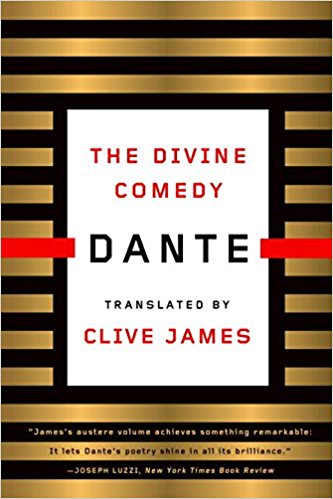
- I am deeply impressed with Clive James’ translation, bravo!
- Also I would recommend reading + listening to The Divine Comedy
- with Audible version.
- It helped me…to push on through 100 cantos!
- #MustRead Classic….once in your lifetime!

#Poetry Seamus Heaney

- Author: H. Vendler
- Title: Seamus Heaney
- Published: 1998
- List Reading Challenges 2018
- Monthly reading planning
- Reading Ireland Month
- Masterpost 746 Books (Cathy)
- #readireland18
- #begorrathon18
- #NonFicReads18 Doing Dewey (Katie)
- #DealMeIn2018 Jay’s Bibliophilopolis (book = 7 essays)
- Trivia: Seamus Heaney died following a short illness
- on August 30, 2013 at the age of 74.
- Heaney’s last words were in a text to his wife Marie were:
- “Noli timere“, which means “Do not be afraid.
Introduction:
- It took me a week to read this
- excellent overview of Seamus Heaney’s poems by
- American literary critic Helen Vendler.
- I could only manage 1 chapter day.
- There was so much to learn.
- …so much detail…that my mind
- …could absorb no more after 3 hours of reading.
Ch 1: Death of a Naturalist (1966) Door Into the Dark (1969) Wintering Out (1972)
- Early poems rooted in the Irish landscape.
- Heaney’s pastoral poems were not always idyllic.
- Midterm Break was heartbreaking
- ….about the death of his 4 yr brother.
- And of course Digging is one of his most famous poems.
- Heaney wanted to measure the pen against the sword
- “Between my finger and my thumb / The squat pen rests; snug as a gun”.
- Summer Home is a marriage-poem.
- It is a chilling account of a quarrel finally mended.
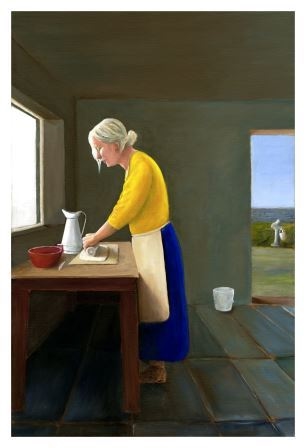
- But one of my favorites is ….Sunlight.
- I get ‘goosebumps’ when I read it.
- This is memorial to the central figure Aunt Mary.
- It is a warm, nostalgic rural sturdy.
- I can see my mother with her floured hands, whitend nails
- …rubbing her hand s on her apron while she taught me how to make an apple pie.
- I imagine ‘honeyed water’ in a bucket warmed by the sun.
- Heaney truly brings you into a poetic state
- …dreaming while you are awake!
Ch 2: North (1975)
- This collection was the first that
- …dealt about the Troubles in Northern Ireland.
- Heaney looks frequently to the past for images and
- …symbols relevant to the violence and political unrest.
- The Bog poems are a symbolic representation of history.
- The poem should sound like the subject.
- Heaney tried to pull language as close as possible to the thing itself
- — so that a bog poem sounded boggy or a
- — Viking ship poem sounded lithe.
Ch 3: Station Island (1984)
- The title refers to Station Island also known as
- St. Patrick’s Purgatory Co. Donegal.
- It is a site of Christian pilgrimage for many centuries.
- In this long Dantesque fiction of the poem the ghosts of Heaney’s past come
- crowding thick and fast around him in twelve episodes.
- One of my favorites poems in this collection is:
- The Old Icons – Heaney contemplates old pictures he
- …cannot bear to throw away.
- ” Why when it was all over, did I hold on to them?”
- SH cannot throw them out because they are NOT outdated.
- Everything has altered but nothing has changed.
- There will always be a huddled Catholic minority, a patriot and traitor.
Ch 3: Field Work (1979)
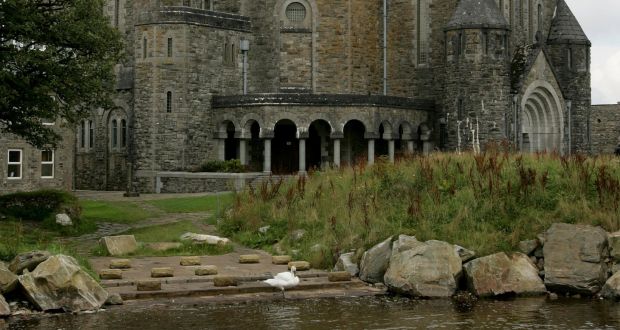
- Field Work is a record of Heaney’s four years (1972-1976)
- …living in rural County Wicklow in the
- …Republic of Ireland after leaving the violence of The Troubles.
- Field work is less political.
- 50% elegies (deliberate choice to remain on the everyday level)
- 50% domestic life with his wife (love poems) and friends.
- Heaney calls it the ‘music of what happens’.
- “It was still a proof that I could write poetry in my new situation.” (S. Heaney)
Ch 4: Alter Egos
- Alter-egos are people Heaney…might have become.
- These alter-egos were agriculturally timeless ones,
- …single artisans, seed-cutters, the thatcher, blacksmith and …the digger.
- Station Island is a long autobiographical poem-of-alter-egos.
Ch 5: The Haw Lantern (1987)
- Between 1984-1987 both parents died
- ….this caused a tear in the fabric of Heaney’s verse.
- Emptiness had replaced reality.
- The Haw Lantern is an intellectual volume.
- It ponders, values, chooses, judges and
- …examines the poet’s tendency to ‘second thoughts’.
- The title of the collection refers to the haw fruit.
- The fruit is an important symbol of defiance against winter
- It is a a symbol of the dignity of the Northern Irish in the face of violence and trouble.
- The image of the lantern is a reference to the traditional account of
- …philosopher Diogenes of Sinope.
- According to the story, Diogenes carried a lantern
- …through the streets in search of an honest man in the light.
Ch 6: Seeing Things (1991)
- What does the world look like seen through the eyes
- …approaching death?
- It erases senses and memory alike.
- Such a given entails and an alteration of style.
- These poems did not have the rich sensuality of Death of a Naturalist
- These poems did not have historicized thickness of the bog poems in North
- …or folk-quality of The Haw Lantern
- But rather the Shaker simplicity.
- Heaney uses the higher senses of sight and hearing
- …to make contact with objects without touching them.

Ch 7: The Spirit Level (1996)
- Heaney’s poetry in The Spirit Level is social.
- It is connected to the possibilities of hope, trust and mutual help.
- The Spirit Level looks into sustaining of life in an Afterwards.
- The poems are grounded in the doings of every day:
- — the poet as a child and his siblings are playing ‘train’ on the sofa,
- — Caedmon is a hardworking yardman,
- — Heaney’s mother ‘steeping her swollen feet’,
- — a blind neighbour, childhood playmate Rosie Keenan playing the piano,
- — Mary Heaney’ father after the death of his wife,
- becoming more and more adventurous as he
- ‘took out the power mower in his stride
- / Flirted and vaunted…/ Learned to microwave.’
- Stoicism is the virture of old age, when one’s progress is a best horizontal.
- It is a matter of living with and within the choices one has made
- ….like the old couple in A Walk.
- Two sonnets: first about parental devotion in a pastoral landscape
- …second about Heaney’s married relationship that has lasted more than three decades.
Conclusion:
- Helen Vendler is not easy to read.
- She is an important literary scholar
- …and her vocabulary is challenging.
- But this book was worth every minute I spent reading it
- Every minute.
- It is the first book I’ve read about
- …the changes in a poet’s writing through the years.
- Heaney started as an anonymous narrator in his early collections.
- He became political because of
- …his experiences during The Troubles.
- Later he turned to the everyday-ness of life.
- As he says…the music of what happens.
- As the American poet Christian Wiman said in his essay
- Take Love (Poetry Ireland Review, 27 September 2104):
- Seamus Heaney “…could take the edge of existence and
- give it actual edges.
- He could bring the cosmic into commonplace.“
- #MustRead

#Read Ireland Patrick Kavanagh (poem)
Writer: Patrick Kavanagh (1904-1967)
Poem: Inniskeen Road: July Evening
Published: 1929-1938
- List Reading Challenges 2018
- Monthly reading planning
- Reading Ireland Month
- Masterpost 746 Books (Cathy)
- #readireland18
- #begorrathon18
Notes: Kavanaugh uses the structure of an English Sonnet
14 lines
structure: 3 quatrains (4 lines) and couplet (2 lines)
rhyme pattern: abab-cdcd-efef-gg
9th line: the ‘volta’ or turn indicates a change in tone, mood
Couplet: summarizes the theme
- Inniskeen Road: July Evening
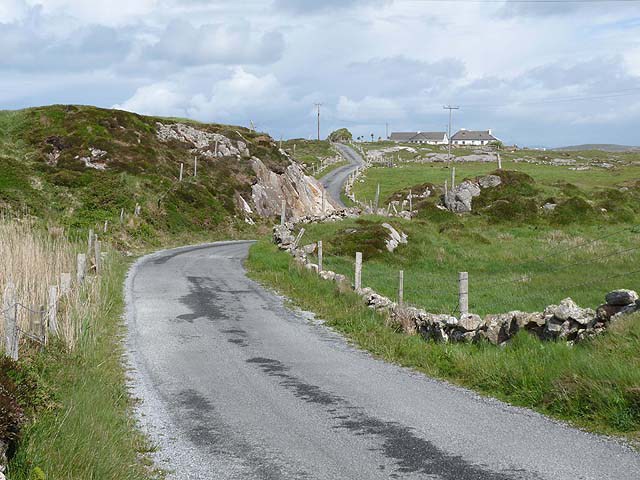
- …it is a love poem to a place .
- The title contains the name of place and time.
- This is which all-important in the world of Kavanagh.
- Inniskeen is the poet’s birthplace and home for more than 30 years.
- These are the contrasts in first stanza.
- First four lines: Billy Brennan’s barn dance is bubbling with life.
- Second four lines: the roads are silent.…everyone is at the dance.
- These are the similarities in second stanza.
- Selkirk ‘ knew the plight of being king …”
- Selkirk is king of his island
- Kavanagh is king of Inniskeen Road.
- Alexander Selkirk was a famous Scottish
- Royal Navy officier.
- He spent 4 yrs a castaway on a South Pacific Island!!
- Kavanaugh likens his loneliness
- on Inniskeen Rodad to that of Selkirk on the island.
- Solitude:
- — solitude of the ROAD — solitude of the POET.
Poem: Inniskeen Road: July Evening
The bicycles go by in twos and threes -
There's a dance in Billy Brennan's barn tonight,
And there's the half-talk code of mysteries
And the wink-and-elbow language of delight.
Half-past eight and there is not a spot
Upon a mile of road, no shadow thrown
That might turn out a man or woman, not
A footfall tapping secrecies of stone.

I have what every poet hates in spite         [9th line = change of mood]
Of all the solemn talk of contemplation.
Oh, Alexander Selkirk knew the plight
Of being king and government and nation.      [= loneliness]
A road, a mile of kingdom. I am king          [Couplet}
Of banks and stones and every blooming thing.






 NancyElin.blog