#2026 TBR 26in26

TBR selections for 2026 challenge: Sign-up at Rose City Reader (Gillian)
- The Great Railway Bazaar – P. Theroux
- The Master and Margarita – M. Bulgakov
- The Making of the President – T. H. White
- The Red Hot Vacuum – T. Solotoaroff
- The Election Game and How to Win It – J. Napolitan
- The New Gilded Age: The New Yorker Culture of Affluence – D. Remnick
- The Battle for Rome – R. Katz
- Miles: The Autobiography – M. Davis with Quincy Troupe
- The Kennedy Tapes – E.R. May and P.D. Zelikow
- Memoires – B. et S. Klarsfeld
- Kafka: Making of an Icon – R. Robertson
- Des Souris Des Hommes (bande dessinée) – Rébecca Dautremer
- Principles of Art History – H. Wölffin
- An Unfinished Love Story – D.K. Goodwin
- Aunt Julia and the Scriptwriter – M. V. Llosa
- Between Eternities – Javier Marías (essays) – READING
- Heinrich Heine- G. Prochnik
- Without Conscience: Disturbing World of Psychopaths Among Us – R.D. Hare
- How the Scots Invented the Modern World – A. Herman
- A Certain Idea of France – J. Jackson (life of C. De Gaulle)
- Trilogy – Jon Fosse (3 interlocking novellas)
- Selected Poems – C. Milosz
- The Scandal of the Century – G. G Márquez (essays) – REVIEW
- Off to the Side – Jim Harrison (memoir)
- Our Man in Havana – G. Greene
- The Power and the Glory – G. Greene – REVIEW
#Classic Lost Illusions

Finish date: 15.12.2025
Genre: novel
Rating: A+++
#Classics
Good News: What a magnificent novel…this a #MustRead!
It is a great stand alone novel but you can also
start with:
Father Goriot
Lost Illusions …and the sequel
A Harlot High and Low
Good News:
- Book starts with a detailed look at fashions, furnishings, finances, and class hierarchies in French provincial society.
- Lucien is headed for a shock in part 2: Paris is ready to crush this wannabe poet!
- Everyone wants good reviews: actresses submit to journalists….journalists submit to publishers and
- the public never reads the truth just comments paid for by interested parties who will make money!
-
Lucien feels poetry is being dragged through the mire his friend says:
-
“…you still have your illusions.” (part 2, pg 286)
-
Why have I put off reading this novel for years…no decades?
-
All of the characters want something intensely—love, money, revenge, or social recognition.
-
..and now we see who is successful and who ends up in the gutter!
Bad News: I watched the 2021 movie Lost Illusions on AppleTV
The movie only tells Lucien’s story that is part 2 of the book.
My advice is to READ the book…the movie is a waste of time!
Parts 1 and 3 are missing from the movie and the ending was never written like this by Balzac!
The movie does NOT do Balzac justice! Awful!
Personal: Balzac weaves in dozens of characters in this 3 book series.
Balzac…supremely gifted storyteller,
adept at the slow windup and the rapid turn of the screw!
Balzac is a phenomenal writer!
You will not be disappointed!
#2026 Challenge: TBR 26 IN ’26

TBR 26 IN ’26
THE CHALLENGE
My first challenge will be. the TBR 26 in ’26 Challenge, hosted by Rose City Reader!
Please join HERE read all the information about the challenge.
#TBR26in26 #bookchallenge2026
#2026 TBR26in26
- The Great Railway Bazaar – P. Theroux
- The Master and Margarita – M. Bulgakov
- The Making of the President – T. H. White
- The Red Hot Vacuum – T. Solotoaroff
- The Election Game and How to Win It – J. Napolitan
- The New Gilded Age: The New Yorker Culture of Affluence – D. Remnick
- The Battle for Rome – R. Katz
- Miles: The Autobiography – M. Davis with Quincy Troupe
- The Kennedy Tapes – E.R. May and P.D. Zelikow
- Memoires – B. et S. Klarsfeld
- Kafka: Making of an Icon – R. Robertson
- Des Souris Des Hommes (bande dessinée) – Rébecca Dautremer
- Principles of Art History – H. Wölffin
- An Unfinished Love Story – D.K. Goodwin
- Aunt Julia and the Scriptwriter – M. V. Llosa
- Between Eternities – Javier Marías (essays)
- Heinrich Heine – G. Prochnik
- Without Conscience: The Disturbing World of the Psychopaths Among Us – R.D. Hare
- How the Scots Invented the Modern World – A. Herman
- A Certain Idea of France – J. Jackson (life of C. De Gaulle)
- Trilogy – Jon Fosse (3 interlocking novellas)
- Selected Poems – C. Milosz
- The Scandal of the Century – G. G Márquez (essays)
- Off to the Side – Jim Harrison (memoir)
- Our Man in Havana – G. Greene
- The Power and the Glory – G. Greene
- The challenge runs from January 1, 2026 to December 31, 2026. You can sign up any time before December 31, 2026.
#NonFicNov25 week 5 “New To My TBR”

- Here is my list of YOUR books….that I want to read (TBR).
- It’s important to read outside of your experience,
- …outside of your time,
- …outside of your comfort zones.
- That is the most important take-away #NonFicNov25
- Thanks to the readers for sharing your best non-fiction!
- Thanks to hosts…
- Heather @Based OnA TrueStory
- Frances@volatilerune.blog
- Liz@librofulltime.wordpress.com
- Rebekah@She Seeks Nonfiction.
- Deb@Readerbuzz
- Shakespeare: The Man Who Pays the Rent – J. Dench (@AnaBookBel.com)
- Dead and Alive: Essays – Z. Smith (@746Books.com)
- Wild Thing: A Life of Paul Gauguin – S. Prideaux (@volatilerune)
- The Coming Wave – M.Suleyman (@unsolicitedfeedback.com)
- End Times – P. Turchin (@BookAroundTheCorner)
- Everything Is Tuberculosis – J. Green (@Maphead.com) – READING
- No More Tears – G. Harris (@lakesidemusings.com)
- Original Sins – E. Ewing (@Joyweesemoll.com)
- Killers of the Flower Moon – D. Grain (@Wordbyword)
- The Worlds I See: Dawn of AI – Fei-Fei Li (@unsolicitedfeedback.com)
- The Immune Mind – M. Lyman (@breathesbooks.com)
- Nuclear War: A Scenario – A. Jacobson (@musingsliterarywanderer.com)
- Conversations with Rilke – M. Betz (@Bronasbooks.com)
- Africa Is Not a Country – D. Faloyin (@SheSeeksNonfiction.com)
#GermanLitMonth25 Rummelplatz (GDR week)

by Werner Bräunig (no photo)
Finish date: 25.11.2025
Genre: novel
Rating: C
#GermanLitMonth25
Good News: I finished it, whew!
Bad News: There are a series of complexities in the book not obvious to me as a first time reader of GDR German literature: the endless bureaucracy, repressive bureaucrats and a scathing indictment of communism. I was overwhelmed. The scope of characters (…the minor ones who appear then disappear!) the disjointed but passionate writing and my lack of knowledge about the uprising in 1953 of the Soviet owned uranium mines of the Wismut AG, the paper factory in Chemnitz, and a paper factory in West Germany….made for exhausting reading.
Personal: At times I had to read very attentively, re-reading to even grasp the basic meaning of the book! I need Wikipedia to explain to me what happened in the GRD during the 1953 uprising.
It is not is not difficult, obscure or forbidding book in any way, you can get through it with some reading discipline…but it is also NOT for the fainthearted!
#GermanLitMonth25 H. Hesse “The Glass Bead Game”

Finish date: 22.11.2025
Genre: SciFi utopian novel
Rating: A++++++
#GermanLitMonth25 – #ReadingTheNobels – #SciFiMonth2025
Good News: Hermann Hesse was truly a gifted writer and scholar. I am so impressed how he got all his theories and warnings on paper to shock the world and see the dangers of fascisim that were approaching. Who is “our” Hesse in the 2020s?
Bad News: Chapters are 1 hour in length (audio). I don’t know if I could keep reading the paperback version b/c my mind would wander. Why? Each chapter can be summed up in 3 sentences!
Where is the beauty in his book….where? My poor leisure-reading brain is suffering to this interminable, meandering mess of endless verbiage.
Good News: I managed 2 more chapters today. I have to push myself and keep up the reading momentum b/c without a fast moving plot….I fear my interest will diminish. I want to finish this book asap b/c after that I will start reading a biography about Hesse by Gunnar Decker. There must be a lot to learn about Hesse’s books….once I know more about the man.
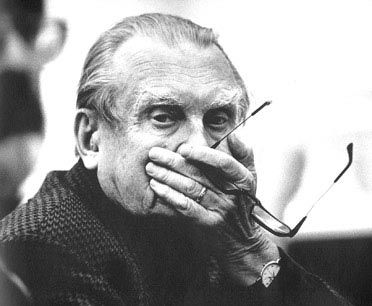
Gunnar Decker
Good News: In chapter 9-10-11-12 I finally understand what Hesse is trying to say. He wrote it in neutral Switzerland in the 1930s…and was concerned with the rise of fascisim all around him. Hesse’s plea to leaders was NOT to isolate yourselves in thoughts and theories (…as did the scholars in Castilia, a utopian province in Europe created purely to preserve and study knowledge and play the “The Glass Bead Game” ) …but go out into the world of reality and confront the evils at your border!
Personal: If you decide to read this book be warned: Hesse’s challenging writing style may not agree with many reader’s tastes—especially for those expecting a more conventional plot-driven story. To put it bluntly…there is a lot of blah, blah, blah. Chapters 1-8 are basically biography of the main character Joseph Knecht. Feel free to skim these pages….as long as you don’t give up on the book! Once you reach ch 9…the tone changes completely and is much more interesting.
Note: The book ends with 3 short stories by Hesse previously written (“Three Lives”). If you still have the energy after reading this complex novel…these stories await you! I did not have the energy…I was exhausted.
#NobelPrize 1946.
#Magnificent last chapter 12…2 hr on audiobook! — So glad I finally read Hermann Hesse…an exceptional thinker and writer.
#GermanLitMonth The Collini Case

Finish date: 18.11.2025
Genre: novella (193 pg)
Rating: C-
#GermanLitMonth25 – #NovNov25
Good News: The opening first chapter….was an excellent “hook”. Hoping to launch his career, a rookie defense lawyer takes on the mysterious case of a prominent industrialist who’s accused of murder.
Bad News: The book lacked dramatic moments of high tension. A short look back the background of the lawyers and family…look back at fascist Italy 1943… did not make this book unforgettable. Court scenes were orderly, rules-based and predictable.
Personal: The Collini Case is a classic example of poetic justice. This act of the accused is seen as poetic justice because industrialist Hans Meyer escaped accountability for his horrific past.
The reader still gets a feeling of satisfaction b/c Meyer is punished…albeit outside the conventional legal system.
Would I recommend the book? No. I expected more from Von Schirach…this book pales in comparison to his short stories which at times left me speechless!! Read the stories!
#NonFicNov25 The Heat Will Kill You First

by
Jeff Goodell
Finish date: 17.11.2025
Genre: non-fiction
Rating: D-
#NonFicNov25
Personal:
I’m learning to critically read a book and want to avoid praising it on the basis of emotion. Yes, some of the anecdotes that Goodell (BTW, he’s a journalist not a scientist!) uses are intimate and heartbreaking personal stories to emotionally supercharge his works. That’s what sells!
There are a few interesting chapters but many were just info dumps about his travels and irrelevant people he met along the way. I don’t care who invented the air-conditioner or whose bright idea it was to put names on heat waves. Read some of the 1 score reviews on Goodreeads…(R. Wilson and J. Farnsworth)…then you will get the gist. One reviewer put is this way: a book that could have been a blogpost!
#SciFiMonth2025 Tusks of Extinction

by
Ray Nayler
Finish date: 16.11.2025
Genre: novella
Rating: C
#SciFiMonth2025
Good News: When you bring back a long-extinct species, there’s more to success than the DNA. Moscow has resurrected the mammoth. I had to look up on Google what a mammoth looked like!
But someone must teach them how to be mammoths…or they are doomed to die out again.
How do you teach a mammoth?
Good News: In the first chapters reaching out to the mind of a mammoth expert to help teach the animals to survive after their extinction…had its moments. How did the scientists do this? No spoilers.
Personal: This NOT a book I’d grab off the shelf…but is is short, novella
…so that’s a good thing! I #NeededMoreCoffee than usual …to finish the book!
It wasn’t too bad …the author clearly has done his research.
Winner of the Hugo Award for Best Novella 2025
#GermanLitMonth25 The Wall

Finish date: 14.11.2025
Genre: SciFi novel (dystopia)
Rating: A
#GermanLitMonth25 – #SciFiMonth2025
Good News: Life shows up with a sledgehammer…in this case an invisible wall…and the reader expects the main character to crumble. But she doesn’t. That is what kept me reading. I wanted to see how she battled the risk of mental collapse.
Good News: And when the test comes…dystopian scenes on an Austrian mountain top …the clock’s already running. The woman finds fragile ways to survive despite total isolation through
through writing and caregiving to her animals: cow (Bella), cats (Pearl, Tiger, Panther) and a dog (Lynx).
Bad News: I was not enthusiastic with Ms Haushofer’s writing style. The first 50-60 pages were the perfect hook…but soon fell into a repetive cycle: Eat, sleep, care for the animals, maintain a food supply in the forest, rince and repeat. This went on for the next 200 pages!
Good News: Despite my feeling about the writing style (….others may have no problem with it), I should not diminsh the message Ms Haushofer reveals: don’t try to escape solitude…embrace it. This was an was an unnerving read…really! Can you imagine trying to survive after an apoclolyptic disaster and you were isolated? The strong point of the book is that it makes the reader (me) uncomfortable, lets the reader squirm.The situation demanded that the woman break, but she did not. She built something out of nothing and carried the weight of caring or her animals.
Personal: Struggling to get a few comments about The Wall on paper. It had an impact on me from many sides: writing style – dystopian dread of inevitable death…just so much to unpack. Animals? It hard to read when the nameless isolated woman loses a beloved friend/animal. I had to skim some pages. This book reminds me of On the Beach by Neil Shute: a profound feeling of doom and the inevitability of death once the food, ammunition, matches….run out. This doom is not depicted as violent….but rather through a creeping, quiet, and inevitable approach of death the nameless female character feels. The book was unnerving at times b/c I kept asking myself how would it feel to be so isolated? The book followed me all day after finishing it….such a terrifying situation to be in.

Marlen Haushofer (1920 – 1970) was an Austrian author, most famous for her novel The Wall (1963)