
#Classic The Bostonians
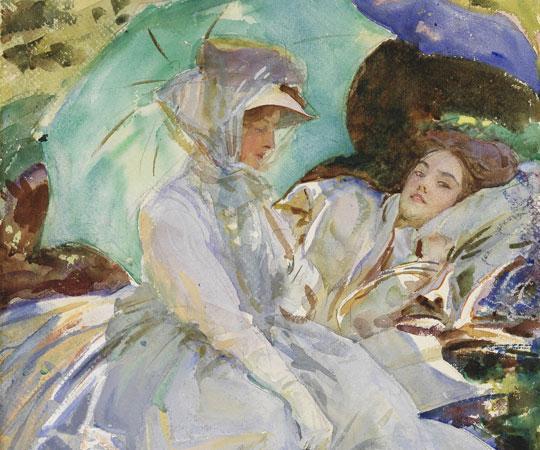
 by
by  Henry James
Finished: December 2022
Genre: fiction
Rating: F
Bad news: HJ pummels the reader with a firehose of words!
Really, while reading for hours I realised I could underline
4 sentences that summed up each page!
Bad news: PACE: The slow start always affects my overall opinion of a book. Don’t get me wrong — not all books will start with some big action sequence and that’s not what I’m asking either. But after book 1 (pg 35—190) I’m seriously considering DNF status.
Bad news: Where are the interesting characters and beautiful writing?
Good news: Theme is the classic “love triangle“ with a twist!
Verena (our ingénue) has many male suitors (Mr Burrage, Mr Ransom) and they are all competing with Verena’s ‘close relationship’ with Miss Olive Chancellor (one of Boston’s society). Olive succeeds in weaving a fine web of authority and dependence around Verena. The only thing that kept me reading was to see if Verena can escape Olive’s tentacles!
Personal: When I gritted my teeth every time I picked up this book
is all the proof I needed to give The Bostonians a low score.
Don’t waste your time reading this book.
I must note…the introduction to this Penguin edition was MORE interesting than the entire story!
There is little dialogue and too much detail wrapped in convoluted sentences. It may sound cliché but true: men who don’t really understand women should not write books about them.
Read Edith Wharton (House of Mirth and Age of Innocence)…now those are unforgettable classics!


#Classic Club Spin # 32

Claude Monet
What is the spin?
- Compile list of 20 books by December 11 2022.
- Try to challenge yourself!
- The challenge is to read whatever book falls under that number
- on your Spin List by the 29th January, 2023.
- Hashtag: #ccspin
- I have chosen the first 20 books from my Classic club List (50 books)
My List:
- 1970: 84, Charing Cross Road – Helene Hanff
- 1970: Bury My Heart at Wounded Knee – Dee Brown
- 1927: Death Comes for the Archbishop – W. Cather
- 1963: The Bell Jar – Sylvia Plath
- 1963: Cat’s Cradle – Kurt Vonnegut
- 1969: I Know Why the Caged Bird Sings – Maya Angelou –> READING !!
- 1819: Ivanhoe – Walter Scott
- 1895: Jude the Obscure – Thomas Hardy
- 1905: The Jungle – Upton Sinclair
- 1854: North and South – Elizabeth Gaskell
- 1958: The Once and Future King – T.H. White
- 1924: A Passage to India – E.M. Forster
- 1961: Revolutionary Road – R. Yates
- 1942: The Stranger – Albert Camus
- 1887: A Study in Scarlet – Arthur Conan Doyle
- 1958: Things Fall Apart – Chinua Achebe
- 1962: We Have Always Lived in the Castle – Shirley Jackson
- 1859: The Woman in White – Wilkie Collins
- 1943: A Tree Grows in Brooklyn – Betty Smith
- 1927: To the Lighthouse – V. Woolf
#2023 Classic Club Reading List
- It is time for some some classic reading starting 01.01.2023.
- I hope to complete this list by 01.01.2026.
- I have selected 50 books for third classic list!
READ: 50/50
- The Quiet American – G. Greene – REVIEW
- The Charterhouse of Parma – Stendahl – REVIEW
- Salammbô – G. Flaubert – REVIEW
- Tartuffe – Molière – REVIEW
- Rue des Boutiques Obscures – P. Modiano – REVIEW
- Max Havelaar – Multatuli – REVIEW
- Atlas Shrugged – Ayn Rand – REVIEW
- Dossier Nr 113 – E. Gaboriau – REVIEW
- Les Grandes Meaulnes – Fournier, Henri-Alban (aka Alain-Fournier) – REVIEW
- The Chouans – H. de Balzac – REVIEW
- Animal Farm – G. Orwell – REVIEW
- Go Tell It On The Mountain – J. Baldwin – REVIEW
- On Living and Dying Well – Cicero (179 pg) – REVIEW
- Macbeth – Shakespeare – REVIEW
- Barnaby Rudge – C. Dickens (752 pg) (novel) – REVIEW
- Crito – Plato NF (dialogue) – REVIEW
- The Spy That Came In From the Cold – J. Le Carré – REVIEW
- Call For the Dead – John Le Carré – REVIEW (#1 George Smiley)
- A Murder of Quality – John Le Carré – (#2 George Smiley) – REVIEW
- If Beale Street Could Talk (novella) – J. Baldwin – REVIEW
- Surfeit of Suspects (1974) – G. Bellairs (CF) – REVIEW
- Elias Portolu (1903) – Grazia Deledda – Nobel Prize 1926 – REVIEW
- Hester – Mrs. Oliphant (518 pg) (novel) – REVIEW
- Prometheus Bound (play) -Aeschylus – REVIEW
- City of God – St. Augstine (1143 pg) Books X-XXII – REVIEW
- City of God – St. Augustine (1143 pg) Books I-IX – REVIEW
- The Iron Heel – Jack London – REVIEW
- Lolly Willowes – S. T. Warner – REVIEW
- Taming of the Shrew – W. Shakespeare – REVIEW
- The Moviegoer – Walker Percy – REVIEW
- Bury My Heart at Wounded Knee – Dee Brown – REVIEW
- Death Comes for the Archbishop – W. Cather – REVIEW
- The Jungle – Upton Sinclair – REVIEW
- A Passage to India – E.M. Forster – REVIEW
- Revolutionary Road – R. Yates – REVIEW
- The Stranger – Albert Camus – REVIEW
- Things Fall Apart – C. Achebe – REVIEW
- We Have Always Lived in the Castle (1962) – Shirley Jackson – REVIEW
- The Woman in White – Wilkie Collins – REVIEW
- A Tree Grows in Brooklyn – Betty Smith – REVIEW
- To the Lighthouse – V. Woolf – REVIEW
- Darkness at Noon – Arthur Koestler – REVIEW
- Tobacco Road – Erskine Caldwell – REVIEW
- A Study in Scarlet – Arthur Conan Doyle – REVIEW
- The Prime of Miss Jean Brodie – Muriel Spark – REVIEW
- The Caine Mutiny – Herman Wouk – REVIEW
- The Lonely Londoners S. Selvon (139 pg) REVIEW
- Giovanni’s Room – J. Baldwin – (178 pg) – REVIEW
- Romola – G. Eliot 1863 (633 pg) – REVIEW
- Cyrano de Bergerac – E. Rostand – REVIEW
#Biography Stefan Zweig

Autumn in Vienna
 by
by  George Prochnik
Finish date:December 2022
Genre: biography/memoir
Rating: A+++++
Review: The Impossible Exile (ISBN: 9781783781164)
Good news: Amazing introduction (pg 1-28)…just enthralling!
If this is any indication of what I am about to read (ch 1…) I’m in for
a great reading experience !
This book won the National Jewish Book Award for Biography/Memoir 2014.
Good news: The author is an excellent writer…the book reads like a novel.
Porchnik had a personal connection with Stefan Zweig. The author’s father and family had to flee Vienna during the Anschluss 1938. When Hitler made his triumphal march into Vienna…the Porchniks left their apartment with a handful of belongings they could conceal on their person. It felt like Porchnik by documenting Zweig’s blacklisting and exile…he was tracing ghosts of his own family.
Good news: Stefan Zweig was an at the height of his literary career in the 1920s and 1930s. Now I rarely if ever see his name reading lists despite the fact he as written many biographies (Napoleon, Erasmus, Marie Antoinette) short stories and novellas! I’m so glad I finally learned about this tormented but brilliant man.
Personal: Reading a massive biography is always a commitment…but I has discovered if you take the time to read about an author/playwright you gain so much insight into the masterpieces they have written. There is so much of the “personal” in everything they write. I’d like to recommend a few books that really made me appreciate the man/woman before exploring their books. These are excellent reading choices for #NonFicNov challenge!
Dorothy Parker: What Fresh Hell is This – M. Meade
Shirley Jackson: A Rather Haunted Life – R. Franklin
James Wright: A Life in Poetry – J. Blunk
Tennessee Williams: Mad Pilgrimage of the Flesh – J. Lahr
#Non-fiction The Long Game
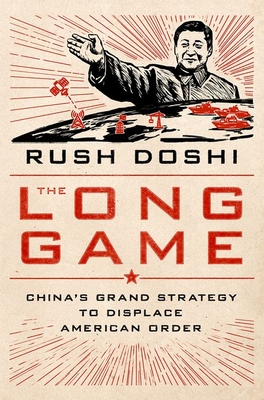
DECEMBER
 by Rush Doshi (no photo)
Finish date: 01 December 2022
Genre: non-fiction (audio 18 hr 24 min)
Rating: B
Review: The Long Game (ISBN: 97801975527917)
Good news: I had to sift the text (Doshi likes to use a waterfall of words…) and picked out the “core message” China’s grand strategy to displace American order. It is a pleasure to sweep through years of China-USA relations with such a special guide as Rush Doshi. He is USA’s go-to-guy about China. I saw him in the news sitting next to Biden during his meeting with Xi Jinping at the G20.
Bad news: Huge book and I found listening to the audio version helped me “push on” each day. I popped my air buds in after my shower…and had Xi Jinping with my smoothie, toast and coffee. That is all I could absorb. (1 hr listening)
Good news: Too much history to go into detail in this short review but let me say ch 1-3 is historical backdrop – ch 5-6 explains how China bided its time blunting USA at every turn (military, politics, economy). Now the book gets MORE interesting: ch 7 reveals that China is moving on to building (regional alliances and expanding naval forces). Ch 7-13 The words really sink in b/c I’m living in this timeline and the power behind it is NO stranger….it is Xi Jinping!
Personal: The guiding philosophy of China’s foreign policy was “keep a low profile” Well, those days are over and Xi is ready to fight (Taiwan)! Don’t be fooled when you see Xi who resembles Winnie-the-Pooh...he is flexing his muscles onder that suit jacket. He even dismissed Canada’s Justin Trudeau as a “boy” at the G20. This book is so interesting…but you have to WANT to read it. The book reads like a college text…..the three classifications of this, the four theories of that, the six components of the other thing, Doshi could have woven a little bit of a story flow into this to make it interesting. But I still can use all that I learned to decipher China’s “chess moves”. Believe me, Xi is playing The Long Game!

#AusReadingMonth2022 Voss

Author: Patrick White (1912 – 1990)
Title: Voss
Published: 1957
Trivia: In 1973 White accepted the Nobel Prize
for an epic and psychological narrative art…
which has introduced a new continent into literature.
ANALYSIS:
1. Explain the title. In what way is it suitable to the story? The name of the main character: Johan Ulrich Voss
2. What is the predominant element in the story? Character: We see how Voss and Laura will change in the book.
3. Who is the single main character about? Johan Voss: Laura is also seen as a main character.
4. How does the author handle characterization?
White lets the other characters describe Voss….
Le Mesurier: ‘greedy looking pig, German swine (ch 2)
Topp (represents White’s mentor Roy de Maitre):
“great men are exempt from trivial duties… […]
if the German was not great, Topp would have liked him to be” (ch 2)
Brother Muller: “Mr Voss, you have a contempt for God
…because He is not in your own image.” (ch 2)
Narrator: ‘Voss and Laura, they shared some guilty secret of personality.
Only, nobody noticed.” (makes the reader very curious….) (ch 3)
Mrs. Sanderson – Voss is troubled in some way “…needs to be saved” (ch 6)
The expedition reveals the characters of the the men involved.
A group of people whose characters and
…relationships are fixed are placed in new circumstances
The men are forced to adjust.
Some thrive and survive (Judd) …others are destroyed and never return.
The way the characters either grow and change or
….deepen reveal elements of themselves.
Team: Harry Robarts, Mr. Turner, Frank Le Mesurier,
…Ralph Angus, Judd, Mr Palfreyman and Voss.
5. What sort of conflict confronts the leading character or characters?
- External – Voss has contempt for God. He even feels he is better than God.
- Internal – Voss must be humbled. He must learn he is not God…only then will he be nearest to becoming so.
6. How is the conflict resolved?
There must be a sacrifice so that sins can be forgiven, redemption.
Laura knows either she or Voss must die.
She is prepared to do it when she becomes ill (ch 13).
She will lose her daughter and Voss forever.
Through the ‘mystical telepathy’ that Voss and Laura share…she knows he has been killed.
She regains her strength….and lives, but Voss is always with her.
7. Who tells the story? 3rd person narrator
8. What is the general theme of the story?
Self-discovery — suffering — mystical experience — redemption
“..country develops ‘out of the suffering of the humble.”
“…true knowledge only comes ‘of death by torture in the country of the mind.”
9. Where does the primary action take place?
Sydney
journey to Newcastle by ship
Rhine Towers (Mr. Sanderson’s home; represents the romantic Germany)
…into the desert country….into hell.
10. What is the timeline? The book begins when Laura is 20 and ends when she is 45 yrs. ( 25 yrs)
11. How does the story get started, initial incident?
Johann Ulrich Voss, a German immigrant, calls on Edmund Bonner,
…the major financial backer of the expedition.
Voss meets Bonner’s niece Laura Trevelyen.
The development of their ensuing relationship parallels the fate of the expedition.
12. Briefly describe the rising action:
Laura and Voss meet in a garden.
There they experience a ‘mystical’ moment when their souls bonded.
Laura sees Voss’s pride as a dangerous thing.
She will pray for him even is she has to teach herself to pray.
” Then he was touching her, his hand was upon her shoulderblades,
…and they realized they had returned into their bodies.” (ch 4)
13. What is the high point, or climax, of the story?
Voss sees himself as a god-like figure.
White uses many words in the narrative to emphasize this:
eminence, sovereign, superior “he stares imperiously over the heads of men” (ch 6)
Irony: the aboriginals see him NOT as a god but as an alien (foreigner)
….that must be destroyed.
14. Discuss the falling action or close of the story.
Chapter 16 is the best section.
Laura is now a schoolmistress and her adopted daughter Mercy still with her.
Judd, a member of expedition presumed lost, has appeared.
Colonel Hebden, who is determined to find the
…remains of the expedition wants to talk with Laura.
She is reluctant…but finally reveals new insights.
15. Does this story create any special mood?
The mood is mystical with all the extensive religious symbolism.
Voss is compared repeatedly to God, Christ and the Devil.
Like Christ Voss goes into the desert.
16. Is this story realistic or true to life?
It is based upon the life of the 19th C Prussian explorer / naturalist Ludwig Leichhardt.
He disappeared while on an expedition into the Australian outback 1848.
17. What is the structure of the book? Ch 1-4 introduction to characters with back round information Ch 5 – 11: expedition with alternating chapters taking the reader back to Laura on Sydney Ch 12 – 13: parallel each other – last days of Voss in desert – sudden sickness of Laura in Sydney Ch 14-16: 25 years after the Voss’s expedition
18. Did you identify with any of the characters?
Laura: in chapter 1 she looks inward.
She was absorbed in the depths of her own predicament.
In chapter 6 she is a humble, kind woman who loves outcasts:
the ‘strange man’ (Voss) and the adopted daughter (Mercy) (ch 9)
…for whom she cared for after the child’s mother had died.
She now looks outward …to others.
She will not be brushed to the sidelines
because others think her plain, ugly a little freakish in her black dresses.
” No, I will not go. I am here. I will stay. Thus she made her covenant”. (ch 16)
…her divine promise establishing God’s relationship to humanity.
19. Can you find any examples of figurative language? (ch 8)
White can go overboard with the ‘poetic style’...example:
Valley = bride; sun = bridegroom; joined in = liquid gold of complete union
White can be so so original…example:
– pelicans, making off on wings of creaking basket-work
– creases in his black trousers appeared to have been sculpted for eternity
White can be a word virtuoso…example:
“Blank faces (members team) like so many paper kites
…dangling a vertebral tail, could prevent him (Voss) soaring
towards the apotheosis (god-like state) for which he was reserved.”
20. Does this story contain any of the following elements?
Foreshadowing:
Voss hopes to be absorbed by the land ( conversation at the Sanderson’s home)
This is a terrible foreshadowing.
…but the reader has no idea what it relates to.
The ‘ah-ha’ moment will come at the end of the story. (ch 2)
Symbols:
Mirror = reflects the true self
Laura gazes in the mirror to see her deformities
Voss gazes in the mirror to see his importance (god-like figure,) (ch 4)
Desert = represents Voss
Laura describes Voss ‘vast and ugly’; ‘with rocks of prejudice’; a person ‘isolated’
She is fascinated by him: “You are my desert.” (ch 4)
Biblical allusion:
Voss asks Judd to kill a lamb for the Christmas celebration in the camp
Foreshadowing: sacrifice of a lamb in the OT was a symbol to
…the complete and perfect sacrifice of Jesus Christ.
(Hebrews 9:22) “…without shedding of blood there will be no forgiveness (redemption).
This is symbolic because Voss, who sees himself as a Christ-figure,
will at the end submit to the aboriginals, be humbled and also sacrificed.
His blood will be absorbed by the earth.
He will be finally redeemed. (ch 8)
Names of characters: (…clever…)
Mr Plumpton – was thin, scrawny and always hungry
Mrs. Child – was…’the midwife’
Mr. Palfreyman – member of expedition, name reminds one of medieval quests
Simile:
Brendan Boyle… was like the big, rude, red potatoes, the shapely ones,
but hard with the fine red dust coating them” (ch 8)
Metaphor: (…strange…)
Voss’s expedition is compared to
“like being worm…butting my head at whatsoever darkness of the earth” (ch 2)
Irony:
The farther Voss and Laura are separated from each other physically ( Sydney – the desert)
…the closer they become spiritually.
“…(I) include my love, since distance has united us thus closely.” (ch 8)
21. Does the story contain a single effect or impression for the reader?
The book left me with one effect….exhaustion.
Patrick White is very poetic, verbose (descriptions) and
….allusions representing complex ideas and emotions.
At times it was hard to keep up with…his genius.
In chapters 10-13 White mingles Voss’s thoughts
….about Laura with the narrative without warning.
Voss sees her with him ….there in the desert.
This was at times very confusing.
22: What were the sentences that impressed you the most? Laura: quotations (ch 4)
Laura’s realization that she is beset by dark helplessness
…that might become obsessions:
” If I am lost, than who can be saved…”
Laura told Voss what she thought about him:
” Everyone is offended by the truth and you will not be an exception”. (ouch!)
Voss: quotation (ch 8)
” Life starts fresh with every new journey…even into the dust.”
After I finished the book I realized the foreshadowing implied
Voss’s blood will be absorbed by the dust (execution).
The beginning of his new journey will start….his redemption.
Conclusion:
I could not put this book down.
It cast a spell
…but not always in the good way.
The chapters paralleling the relationship between Laura and Voss
with the fate of the expedition were very good.
The descriptions of secondary characters,
The Bonners, Belle, maid Rose, The Pringles was Dickensian.
We read details of houses, interiors, ball gowns, parties and picnics.
White paints a picture of jollity and conviviality
..that are a stark contrast to the chapters describing the expedition.
These sections were at times gruesome.
I read a summary of the book before reading.
I was afraid Patrick White would otherwise overwhelm me.
He is an author that can be intimidating.
Pre-warned about the eventual fate of Voss,
…I was able to identify many moments of ‘foreshadowing’.
Last thoughts:
Warning: Ch 10 ends with Voss finally reading Frank Le Mesurier’s secret journal.
The journal contains poems.
Remember all these strange poems = the voice of Patrick White!
Beyond strange…
I am impressed by Patrick White’s writing.
He deservedly received the Nobel Prize 1973.
Patrick White: (1912 – 1990)
#NonFicNov Week 5 New to My TBR

New nonfiction to My TBR
Week 5: (November 28-Dec 2) – New to My TBR: It’s been a month full of amazing nonfiction books! Which ones have made it onto your TBR? Be sure to link back to the original blogger who posted about that book! Pro tip: Start this draft post at the beginning of the month and add to it as your TBR multiplies. (Jaymi @ The OC Bookgirl)
- @ SheSeeksNonfiction – Christian Nationalism
- Conservative teachings of Christian Nationalism
- …have influenced every part of American culture.
- As Rebekah says in her blogpost:
- “…Christian Nationalism is literally threatening our democracy and
- …using religion as an excuse to strip everyone of their rights.”
- #MustRead
- Jesus and John Wayne
- American Crusade


- @WhisperingGums
- I keep reading post from #NonFicNov and find so many good books!
- I gravitate mostly to Australian nonfiction …and will add
- Mark McKenna’s Returning to Uluru to my November 2023 Ausreading list and to
- Week 5 post #NonFicNov “New to My TBR, thanks Sue!
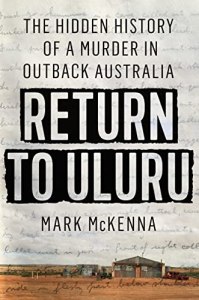
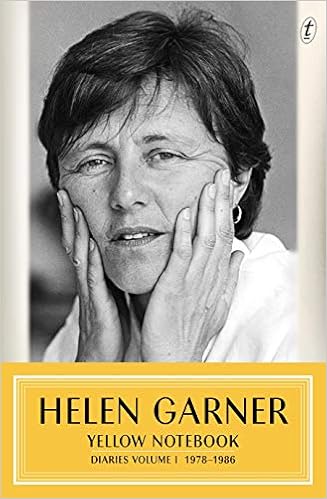
- @ The Intrepid Arkansawyer
- I’ve read a few of Ms Garner’s books.
- Her writing is clean and crisp…..nothing is slick or shallow.
- Looking forward to reading this Yellow Notebook.
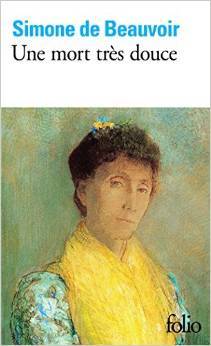
- Another book Jinjer read was a book by Simone Beauvoir (novella, memoir)
- A Very Easy Death – Une mort très douce
- “…When someone you love dies you pay for the sin of
- outliving her with a thousand piercing regrets.”
- I must put this book on my French reading list.
- @Book’d Out
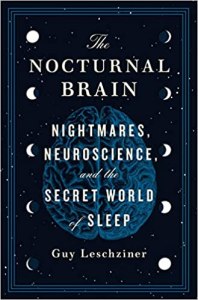
- I am always curious what goes on with our bodies…at night!
- The Nocturnal Brain – this sounds fascinating!
- Thank you Shellyrae for bring this book to my attention
- @ What’s nonfiction?
- You can’t open a newspaper (digital) and you are confronted
- …with Russia and Putin.
- Rennie, @what’snonfiction assures me that The Return of the Russian Levithan will
- provide some context and concisely summarize what’s going on and how we got there!
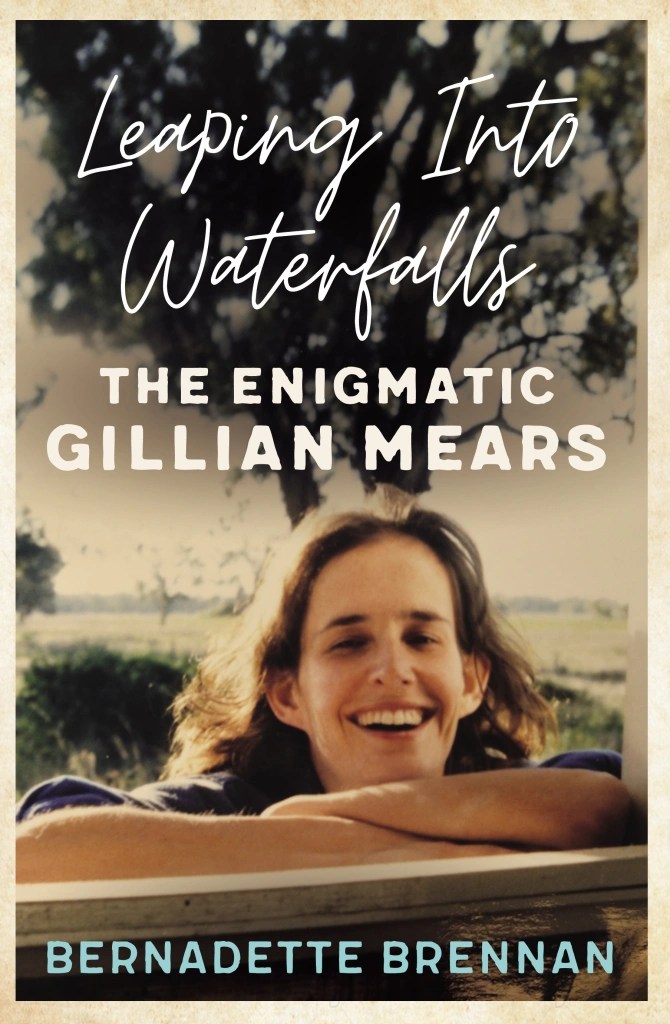
- @ Bronasbooks
- I never heard of Gillian Mears….but Brona has convinced me to take a chance!
- This is the story of Gillian Mears….Leaping Into Waterfalls
- …the dazzling Australian author who wrote, loved and lived passionately
- …until her death at 51 from multiple sclerosis in 2016.

- @ DoingDewey
- When searching for a few more books for 2023
- I found three that I need to read asap.
- The Wrong Kind of Women: Inside Our Revolution to Dismantle the Gods of Hollywood
- on DoingDewey’s non-fiction list.
- Katie is careful giving books 5 stars….
- …but she did for this one!
- The opioid crisis….has me in its grip.
- Death in Mud Lick: A Coal Country Fight against the Drug Companies That Delivered the Opioid Epidemic
![Death in Mud Lick: A Coal Country Fight against the Drug Companies That Delivered the Opioid Epidemic by [Eric Eyre]](https://m.media-amazon.com/images/I/51Dd05dMbhL.jpg)
- Another book I found on Doing Dewey is The Law of Colour.
- A look at the deep historical roots in USA…
- the active role of the US government in promoting residential segregation.
- #MustRead.…and educate yourself about what is happing in real time!
#AusReadingMonth2022 Brenda Niall (…last minute!)
 by Brenda Niall (no photo)
Genre: non-fiction
Rating: D
Review: Friends and Rivals (ISBN:9781922268594)
Quick Scan:
O-29%: Ethel Turner….not very interesting….kept falling asleep.
30-47%: Barbara Baynton…insights into a now forgotten writer.
48-70%: H.H. Richardson…this was the best section…there was more depth in the writing.
71-91%: Nettie Palmer…complete unknown writer for me before reading this book.
Good news: I read this book because I KNOW Brenda Niall is a great writer…
Bad news:
- …but this time I felt she “phoned in” the manuscript.
- There was no “buzz” in her writing and it is just my opinion
- ...the writing showed low enthusiasm or effort.
- Much of what I learned about these women writers I could have found on
- Wikipedia and other websites on the internet.
Personal:
- The book was informative…just textbook dull.
- I’ve read H.H.Richardson’s The Fortunes of Richard Mahoney and
- …it was a great book…worth your reading time!
- After reading about Ms Turner, Baynton and Palmer I feel no urge to
- explore their writings.
- There are so many other Australian women to read!
 NancyElin.blog