Skip to content

Posts from the ‘Uncategorized’ Category

21
Nov

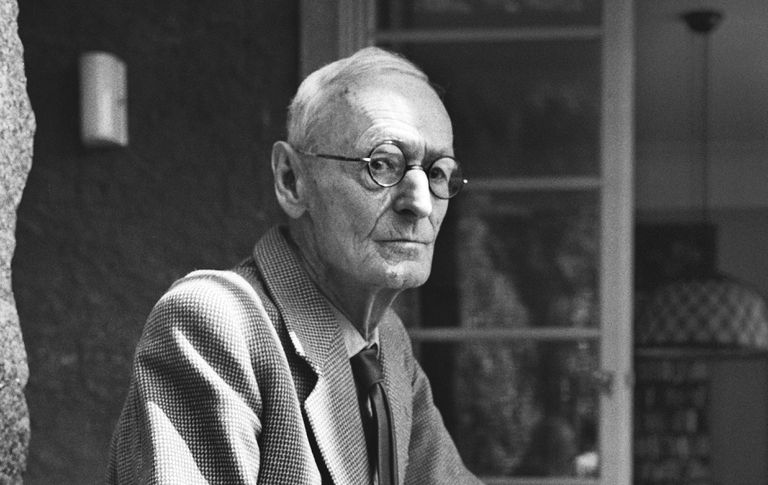
#GermanLitMonth25 H. Hesse “The Glass Bead Game”


The Glass Bead Game by Hermann Hesse by Hermann Hesse Hermann Hesse

Finish date: 22.11.2025
Genre: SciFi utopian novel
Rating: A++++++
#GermanLitMonth25 – #ReadingTheNobels – #SciFiMonth2025


Good News: Hermann Hesse was truly a gifted writer and scholar. I am so impressed how he got all his theories and warnings on paper to shock the world and see the dangers of fascisim that were approaching.  Who is “our” Hesse in the 2020s? 


Bad News: Chapters are 1 hour in length (audio). I don’t know if I could keep reading the paperback version b/c my mind would wander. Why? Each chapter can be summed up in 3 sentences!
Where is the beauty in his book….where? My poor leisure-reading brain is suffering to this interminable, meandering mess of endless verbiage.


Good News: I managed 2 more chapters today. I have to push myself and keep up the reading momentum b/c without a fast moving plot….I fear my interest will diminish. I want to finish this book asap b/c after that I will start reading a biography about Hesse by Gunnar Decker. There must be a lot to learn about Hesse’s books….once I know more about the man.
Hesse The Wanderer and His Shadow by Gunnar Decker Gunnar Decker


Good News: In chapter 9-10-11-12 I finally understand what Hesse is trying to say. He wrote it in neutral Switzerland in the 1930s…and was concerned with the rise of fascisim all around him. Hesse’s plea to leaders was NOT to isolate yourselves in thoughts and theories (…as did the scholars in Castilia, a utopian province in Europe created purely to preserve and study knowledge and play the “The Glass Bead Game” ) …but go out into the world of reality and confront the evils at your border!


Personal: If you decide to read this book be warned: Hesse’s challenging writing style may not agree with many reader’s tastes—especially for those expecting a more conventional plot-driven story. To put it bluntly…there is a lot of blah, blah, blah.  Chapters 1-8 are basically biography of the main character Joseph Knecht. Feel free to skim these pages….as long as you don’t give up on the book! Once you reach ch 9…the tone changes completely and is much more interesting.

Note: The book ends with 3 short stories by Hesse previously written (“Three Lives”). If you still have the energy after reading this complex novel…these stories await you! I did not have the energy…I was exhausted.
#NobelPrize 1946.

#Magnificent last chapter 12…2 hr on audiobook! — So glad I finally read Hermann Hesse…an exceptional thinker and writer.

19
Nov

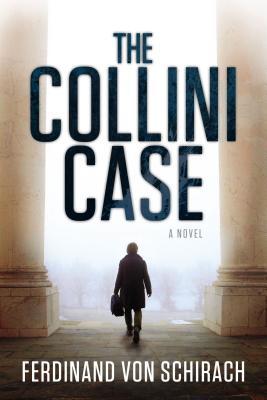
#GermanLitMonth The Collini Case

The Collini Case by Ferdinand von Schirach by Ferdinand von Schirach Ferdinand von Schirach

Finish date: 18.11.2025
Genre: novella (193 pg)
Rating: C-
#GermanLitMonth25 – #NovNov25


Good News: The opening first chapter….was an excellent “hook”. Hoping to launch his career, a rookie defense lawyer takes on the mysterious case of a prominent industrialist who’s accused of murder.


Bad News: The book lacked dramatic moments of high tension. A short look back the background of the lawyers and family…look back at fascist Italy 1943… did not make this book unforgettable. Court scenes were orderly, rules-based and predictable.


Personal: The Collini Case is a classic example of poetic justice. This act of the accused is seen as poetic justice because industrialist Hans Meyer escaped accountability for his horrific past.
The reader still gets a feeling of satisfaction b/c Meyer is punished…albeit outside the conventional legal system.
Would I recommend the book? No. I expected more from Von Schirach…this book pales in comparison to his short stories which at times left me speechless!! Read the stories!

17
Nov

#NonFicNov25 The Heat Will Kill You First


The Heat Will Kill You First Life and Death on a Scorched Planet by Jeff Goodell by Jeff Goodell Jeff Goodell

Finish date: 17.11.2025
Genre: non-fiction
Rating: D-
#NonFicNov25


Personal:

I’m learning to critically read a book and want to avoid praising it on the basis of emotion. Yes, some of the anecdotes that Goodell (BTW, he’s a journalist not a scientist!) uses are intimate and heartbreaking personal stories to emotionally supercharge his works. That’s what sells!

There are a few interesting chapters but many were just info dumps about his travels and irrelevant people he met along the way. I don’t care who invented the air-conditioner or whose bright idea it was to put names on heat waves. Read some of the 1 score reviews  on Goodreeads…(R. Wilson and J. Farnsworth)…then you will get the gist. One reviewer put is this way: a book that could have been a blogpost!

16
Nov

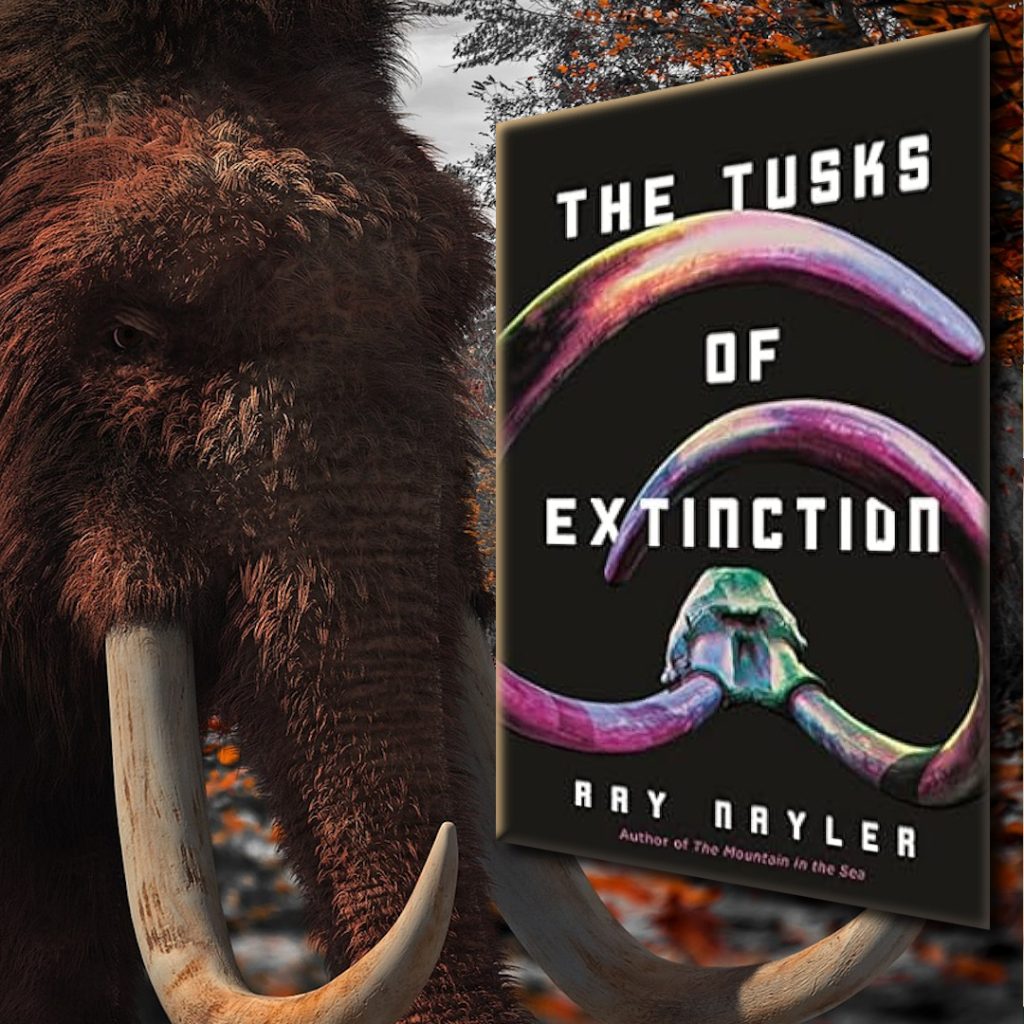
#SciFiMonth2025 Tusks of Extinction

The Tusks of Extinction by Ray Nayler by Ray Nayler Ray Nayler

Finish date: 16.11.2025
Genre: novella
Rating: C
#SciFiMonth2025


Good News: When you bring back a long-extinct species, there’s more to success than the DNA. Moscow has resurrected the mammoth. I had to look up on Google what a mammoth looked like!
But someone must teach them how to be mammoths…or they are doomed to die out again.
How do you teach a mammoth?


Good News: In the first chapters reaching out to the mind of a mammoth expert to help teach the animals to survive after their extinction…had its moments. How did the scientists do this? No spoilers.


Personal: This NOT a book I’d grab off the shelf…but is is short, novella
…so that’s a good thing! I #NeededMoreCoffee than usual …to finish the book!
It wasn’t too bad …the author clearly has done his research.

I even started to feel for these extinct animals. Just leave them alone…don’t hunt them for their tusks!
Winner of the Hugo Award for Best Novella 2025
14
Nov

#GermanLitMonth25 The Wall


The Wall by Marlen Haushofer by Marlen Haushofer Marlen Haushofer

Finish date: 14.11.2025
Genre: SciFi novel (dystopia)
Rating: A
#GermanLitMonth25 – #SciFiMonth2025


Good News: Life shows up with a sledgehammer…in this case an invisible wall…and the reader expects the main character to crumble. But she doesn’t. That is what kept me reading. I wanted to see how she battled the risk of mental collapse.


Good News: And when the test comes…dystopian scenes on an Austrian mountain top …the clock’s already running. The woman finds fragile ways to survive despite total isolation through
through writing and caregiving to her animals: cow (Bella), cats (Pearl, Tiger, Panther) and a dog  (Lynx).


Bad News: I was not enthusiastic with Ms Haushofer’s writing style. The first 50-60 pages were the perfect hook…but soon fell into a repetive cycle: Eat, sleep, care for the animals, maintain a food supply in the forest, rince and repeat. This went on for the next 200 pages!


Good News: Despite my feeling about the writing style (….others may have no problem with it), I should not diminsh the message Ms Haushofer reveals: don’t try to escape solitude…embrace it. This was an  was an unnerving read…really! Can you imagine trying to survive after an apoclolyptic disaster and you were isolated? The strong point of the book is that it makes the reader (me) uncomfortable, lets the reader squirm.The situation demanded that the woman break, but she did not. She built something out of nothing and carried the weight of caring or her animals.


Personal: Struggling to get a few comments about The Wall on paper. It had an impact on me from many sides: writing style – dystopian dread of inevitable death…just so much to unpack. Animals? It hard to read when the nameless isolated woman loses a beloved friend/animal. I had to skim some pages. This book reminds me of On the Beach by Neil Shute: a profound feeling of doom and the inevitability of death once the food, ammunition, matches….run out. This doom is not depicted as violent….but rather through a creeping, quiet, and inevitable approach of death the nameless female character feels. The book was unnerving at times b/c I kept asking myself how would it feel to be so isolated? The book followed me all day after finishing it….such a terrifying situation to be in.


Marlen Haushofer  (1920 – 1970) was an Austrian author, most famous for her novel The Wall (1963)

13
Nov

#NonFicNov25 The Alignment Problem


The Alignment Problem 'If you're going to read one book on artificial intelligence, this is the one' New York Times by Brian Christian by Brian Christian Brian Christian

Finish date: 12.11.2025
Genre: non-fiction
Rating: A-
#NonFicNov25

Conclusion:

The writing has its “ups and downs” but the
most important part of the book was to make the reader
AWARE of what AI is doing in our lives. It is making desicions
about medical treatment, parole from prison and even
the rise of AI Agents replacing human recruiters for jobs!

Every AI model works according to a data set it has been trained with.
Imagine: just the mention of the name of the “all women’s college” on your
job application could be detrimental to your future….according to the AI recruiter!

AI is the rockstar these days…and it is time to open books about AI and learn what is
happening around you!
#Eye-Opener

12
Nov

#Prix Goncourt 2025 Nominated: La maison vide (private)

The literary season begins with a strong shortlist

Every September, French literary circles turn their attention to the Prix Goncourt, a symbolic and highly influential award that sets the tone for the fall publishing season. On September 3, 2025, the Académie Goncourt unveiled the first selection of 15 novels in the running for this year’s prize, offering a compelling snapshot of contemporary French literature.

The 2025 list features a mix of celebrated voices and emerging talents, tackling topics ranging from personal trauma to colonial histories, political decay to intimate family dramas. Notable names such as Nathacha Appanah, Emmanuel Carrère, Laurent Mauvignier, and David Diop headline this year’s selection.

The second selection for the 2025 Goncourt Prize:

  • Nathacha APPANAH, La nuit au cœur (Gallimard)
  • Emmanuel CARRÈRE, Kolkhoze (P.O.L)
  • Paul GASNIER, La collision (Gallimard)
  • Yanick LAHENS, Passagères de nuit (Sabine Wespieser)
  • Caroline LAMARCHE, Le bel obscur (Seuil)
  • Charif MAJDALANI, Le nom des rois (Stock)
  • Laurent MAUVIGNIER, La maison vide (Minuit)
  • Alfred de MONTESQUIOU, Le crépuscule des hommes (Robert Laffont)

The 15 shortlisted novels for the 2025 Prix Goncourt:

  • La nuit au cœur by Nathacha Appanah (Gallimard)
  • Kolkhoze by Emmanuel Carrère (P.O.L)
  • L’adieu au visage by David Deneufgermain (Marchialy)
  • Où s’adosse le ciel by David Diop (Julliard)
  • Un amour infini by Ghislaine Dunant (Albin Michel)
  • La collision by Paul Gasnier (Gallimard)
  • Passagères de nuit by Yanick Lahens (Sabine Wespieser)
  • Le bel obscur by Caroline Lamarche (Seuil)
  • Tambora by Hélène Laurain (Verdier)
  • Le nom des rois by Charif Majdalani (Stock)
  • La maison vide by Laurent Mauvignier (Minuit)
  • Le crépuscule des hommes by Alfred de Montesquiou (Robert Laffont)
  • Perpétuité by Guillaume Poix (Verticales)
  • Tressaillir by Maria Pourchet (Stock)
  • Un frère by David Thomas (L’Olivier)

What’s next in the Goncourt calendar?

The Prix Goncourt, awarded since 1903, follows a multi-step selection process:

  • 📚 First selection (15 titles) – announced on September 3
  • 📘 Second selection (8 titles) – to be announced on October 7
  • 📗 Finalists (4 titles) – revealed on October 28
  • 🏆 Winner announcement – November 4 at the traditional Drouant restaurant in Paris

The Goncourt jury, currently chaired by Philippe Claudel, includes ten members from France’s literary elite, such as Christine Angot, Françoise Chandernagor, and Pierre Assouline.

A symbolic prize with real impact

Although the actual monetary reward for the Prix Goncourt is just 10 euros, its true value lies in the prestige and visibility it offers. The winning novel typically becomes a major commercial success, often selling hundreds of thousands of copies. In 2024, Houris by Kamel Daoud (Gallimard) exceeded 400,000 sales following his win.

A reflection of the literary and cultural moment

As always, the Goncourt shortlist is more than a contest — it’s a mirror of the literary, political, and cultural tensions shaping today’s France. Whether tackling post-colonial identity, climate anxiety, or the complexities of personal grief, these 15 books provide readers with a powerful lens through which to engage with the world.

Stay tuned for our coverage of the second selection and final deliberations as we inch closer to discovering the next winner of the Prix Goncourt 2025.

The eight books on the second selection for the 2025 Prix Goncourt are

La nuit au cœur by Nathacha Appanah, Kolkhoze by Emmanuel Carrère, La collision by Paul Gasnier, Passagères de nuit by Yanick Lahens, Le bel obscur by Caroline Lamarche, Le nom des rois by Charif Majdalani, La maison vide by Laurent Mauvignier, and Le crépuscule des hommes by Alfred de Montesquiou. 


HUGE LIST BOOKS 2025 FRENCH – SAVE

Le Grand Guide de la rentrée 2025


La Maision Vide:

Prix littéraire Le Monde 2025
En lice pour le Prix Goncourt 2025
En lice pour le Prix Femina 2025
En lice pour le Prix Medicis 2025
En lice pour le Prix Terre de France 2025
En lice pour le Prix Jean Giono 2025
Finaliste du Prix Landerneau 2025

En deux mots
La Maison vide est remplie de secrets que le narrateur va peu à peu débusquer en fouillant une commode au coin cassé, une armoire, les malles du grenier ou encore le piano. Cette traversée du XXe siècle est aussi celle de trois générations de femmes au destin c


Un siècle de secrets de famille

Laurent Mauvignier fouille dans les tiroirs de la maison familiale à la recherche d’une Légion d’honneur. Il y découvre bien plus : l’histoire tragique de trois générations de femmes, de Marie-Ernestine la pianiste empêchée à Marguerite la grand-mère effacée des photos. Un roman qui se dévore comme un thriller intime.

S’il faut un peu de courage pour s’attaquer à un roman de 745 pages, je peux vous certifier qu’il ne vous faudra que quelques minutes pour entrer dans ce livre et vous trouver comme dans un cocon, avide de découvrir les secrets de famille que Laurent Mauvignier est allé dénicher dans la maison familiale.
Tout commence par une quête apparemment anodine. Le narrateur cherche la Légion d’honneur de son arrière-grand-père Jules, tombé « en héros » en 1916. Il fouille « partout où j’étais pour ainsi dire sûr de la retrouver les yeux fermés ». Dans les tiroirs de la commode centenaire « avec son plateau de marbre gris et rose fendu à l’angle supérieur gauche », il ne trouve pas la médaille. Mais il découvre des lettres, des photos découpées, des objets qui racontent une tout autre histoire.
Car ce qui se cache dans cette maison, c’est le silence. Le silence autour de Marguerite, la grand-mère dont le visage a été « découpé aux ciseaux » ou « griffonné au stylo à bille jusqu’à ce qu’il disparaisse complètement dans l’encre noire » sur toutes les photos de famille. Pourquoi un tel acharnement ? Quelle faute a-t-elle commise pour être ainsi rayée de la mémoire familiale ?
Si l’enquête ne remonte pas jusqu’à l’ancêtre François, qui aura traversé la Révolution et la période Napoléonienne – qui sera peut-être l’objet d’un prochain roman – elle remonte jus l’arrière-arrière grand-père Firmin et à ses trois enfants, Paul devenu ecclésiastique, Anatole parti à Paris comme vendeur dans un magasin de vêtements et « Boule d’Or », Marie-Ernestine avec laquelle « tout commence ».
Firmin, propriétaire terrien régnant sur La Bassée, l’envoie au couvent où elle découvre le piano. Son professeur, le séduisant Florentin Cabanel, lui fait miroiter le Conservatoire de Paris. Elle se voit déjà pianiste virtuose.
Mais son père en a décidé autrement. Il lui achète un piano à queue, un magnifique Bösendorfer, et lui impose Jules Chichery comme époux. Marie-Ernestine ne se remettra jamais de ce mariage forcé et de sa vocation brisée. Elle ne pardonnera jamais et sera incapable d’aimer sa fille unique, Marguerite qui naît trois ans avant que Jules ne meure pour la patrie sur le front de l’est.
L’enfant grandit sans attache affective. Elle est placée à 13 ans comme vendeuse dans le magasin Vêtements Claude où le droit de cuissage semble faire partie des règles de la maison. Puis vient la Seconde Guerre mondiale. Son mari André est fait prisonnier. Régulièrement Marguerite se rend auprès des autorités allemandes pour tenter de savoir où se trouve son mari, espérant pouvoir le faire revenir. Jusqu’à commettre l’irréparable et briser les liens familiaux déjà fragiles.
« Cette histoire, des milliers d’hommes l’ont connue en rentrant d’Allemagne ; des milliers de familles détruites l’ont vécue. Et pourtant — ou peut-être parce qu’elle est trop banale et vaste — elle me semble invisible ou indescriptible. » Il reconstruit pourtant cette violence « en l’arrachant à l’impossible », donnant chair à ce qui ne fut que rumeurs et silences.
Le romancier assume la part de fiction nécessaire pour combler les blancs du récit : « C’est parce que je ne connais rien, ou presque rien de mon histoire familiale que j’ai besoin d’en écrire une sur mesure, à partir de faits vérifiés, de gens ayant existé, mais dont les histoires sont tellement lacunaires. » Cette honnêteté traverse tout le livre. Il nous prend par la main, nous montre ses doutes, ses intuitions, ses trouvailles.
Ses phrases coulent comme un fleuve. Elles épousent le mouvement de la mémoire qui hésite, revient en arrière, s’emballe. Sa langue est d’une précision chirurgicale pour décrire les violences ordinaires : celles des hommes sur les femmes, celles de la société sur les individus, celles de l’Histoire sur les destins.
Il n’est pas étonnant que La Maison vide soit favorite pour le Goncourt. Les critiques ont unanimement salué le roman. Le Monde, qui lui a déjà décerné son Prix littéraire, parle d’ « une œuvre magistrale par son style poétique, sa composition claire, sa palette humaine ». Pour Les Inrocks, c’est « un texte hors norme qui s’inscrit dans la cohérence des précédents tout en les surpassant ». Le Nouvel Obs y voit « l’un des très grands livres de la rentrée ».
Des louanges auxquelles je m’associe, car depuis son premier roman Loin d’eux(1999) puis avec Des hommes (2009), qui explorait les traumatismes de la guerre d’Algérie, Continuer (2016) et Histoires de la nuit (2020), une fresques haletante, Laurent Mauvignier s’impose comme l’une des voix majeures de la littérature française.

La Maison vide
Laurent Mauvignier
Éditions de Minuit
Roman
745 p., 25€
EAN 9782707356741
Paru le 28/08/2025

Où ?
Le roman est situé principalement à La Bassée, où se trouve la maison familiale de l’auteur.

Quand ?
L’action se déroule de 1860 à nos jours.

Ce qu’en dit l’éditeur
En 1976, mon père a rouvert la maison qu’il avait reçue de sa mère, restée fermée pendant vingt ans. À l’intérieur : un piano, une commode au marbre ébréché, une Légion d’honneur, des photographies sur lesquelles un visage a été découpé aux ciseaux.
Une maison peuplée de récits, où se croisent deux guerres mondiales, la vie rurale de la première moitié du vingtième siècle, mais aussi Marguerite, ma grand-mère, sa mère Marie-Ernestine, la mère de celle-ci, et tous les hommes qui ont gravité autour d’elles.
Toutes et tous ont marqué la maison et ont été progressivement effacés. J’ai tenté de les ramener à la lumière pour comprendre ce qui a pu être leur histoire, et son ombre portée sur la nôtre.

Les critiques
Babelio 
Viabooks (Littéraraflure) 
Benzine mag. (Jean-François Lahorgue) 
Kimamori (Norbert Czarny) 
France Culture (Les midis de culture) 
En Attendant Nadeau (Hugo Pradelle) 
France Inter (La 20e heure) 
France Culture (Le Book Club) 
Franceinfo culture (Laurence Houot) 
Atlantico (Annick Geille) 
Collateral (Johan Faerber) 
RFI (De vive(s) voix) 
L’Écho.be (Sophie Creuz) 
Unidivers ( Rocky Brokenbrain) 
Page des libraires (Michel Edo, librairie Lucioles à Vienne) 
Automn’Halles (Laurent Cachard) 
Blog Shangols 


12
Nov

#SciFiMonth2025 QualityLand (dystopia)


Qualityland (QualityLand, #1) by Marc-Uwe Kling by Marc-Uwe Kling Marc-Uwe Kling

Finish date: 12.11.2025
Genre: novel (dystopian SciFi)
Rating: F-
#GermanLitMonth25 – #SciFiMonth2025


Bad News: This is a major waste of my reading time. I made it to page 100…then I could not take it any more. There are better SciFi books to read!


Personal: Beyond the quirky gimmick of “surnames” this book had little to offer me in the form of reading entertainment. I usually push onwards with a book, even if I have to skim it. My advice? … “ drop it like 3rd period algebra”

10
Nov

#GermanLitMonth Stefan Zweig “Chess Story”

The Royal Game A Chess Story by Stefan Zweig by Stefan Zweig Stefan Zweig

Finish date: 10.11.2025
Genre: novella
Rating: A++++
#GermanLitMonth25


Good News: Stefan Zweig’s “Chess Story” (aka “The Royal Game”) refers to an obsessive fixation of Dr. B. for the game of chess. He suffers extreme mental torment during solitary confinement by the Gestapo. Dr. B. becomes consumed by chess pieces King (leadership), Queen (strategy), Bishop (wisdom), Knight (chivalry) and Rook (protection).


Good News: Zweig himself felt ever more isolated (…as did his main character Dr. B) and was aware that the European world he knew and loved was lost forever…with his forced displacement during the Nazi era.


Personal: I read a Zweig’s biography in 2022 The Impossible Exile Stefan Zweig at the End of the World by George Prochnik by George Prochnik George Prochnik. This book won the National Jewish Book Award for Biography/Memoir 2014.

It is the best book to read before entering into Zweig’s bibliography. So much torment about his personal life is in his writing. I’ll never forget the photo in the biography of
of Zweig and his wife, Lotte who were found dead in each other’s arms. The couple committed suicide by taking a lethal dose of pills. (February 22nd 1942). Haunting….and now to have read is final work….published only days before killing himself made an impact on me.

Last thoughts: This novella …it was beyond excellent! Zweig draws the reader into the “madness” of chess poisoning in the mind.  I was totally absorbed in the story and the tone reminded me of  reading a tale by Edgar Allan Poe.  Dr. B describes his mental torture so vividly ….it was scary.  Definitely add this novella to your #NovNov25 reading list!

8
Nov

#ScifiMonth2025 Ministry for the Future (CliFi)


The Ministry for the Future by Kim Stanley Robinson by Kim Stanley Robinson Kim Stanley Robinson

Finish date: 08.11.2025
Genre: SciFi (climate change: “Clifi”)
Rating: F
#SciFiMonth2025


Good News: I finished it ….but it was too long and a chore to read.


Bad News: Structure: chapter rotation, we hopped from solar radiation with people boiling in a lake, PTSD activist, Geneva to open the Ministry of the Future the off to Glasgow Scotland! That is just a small intro to the book. It was messy, chaotic and just not worth my reading time. (…but you may like it!)


Bad News: Close to half the chapters are just information dumps. (..skimmed these chapters) that add nothing to the narrative.


Personal: I read that Kim Stanley Robinson is considered to be one of the best living authors of Science Fiction. Says who? (…essayist in The New Yorker). I beg to differ. I’ve read better science fiction by Le Guin,  Andy Wier, N. K. Jemisin, Ann Leckie, Martha Wells and Connie Willis.