
#Ireland Abbie Spallen (playwright)

- Author: Abbie Spallen
- Title: Lally the Scut
- Premiered: Belfast’s Mac Theatre in April 2015
- Trivia: Winner of the 2016 Windham-Campbell Prize for Drama
- The individual prize ($165.000) is among
- …the richest literary prize amounts in the world!
- List of Challenges 2019
- Monthly plan
- #ReadingIrelandMonth19
- @746books.com
- List of Plays Read… and Theatre Websites
Quickscan:
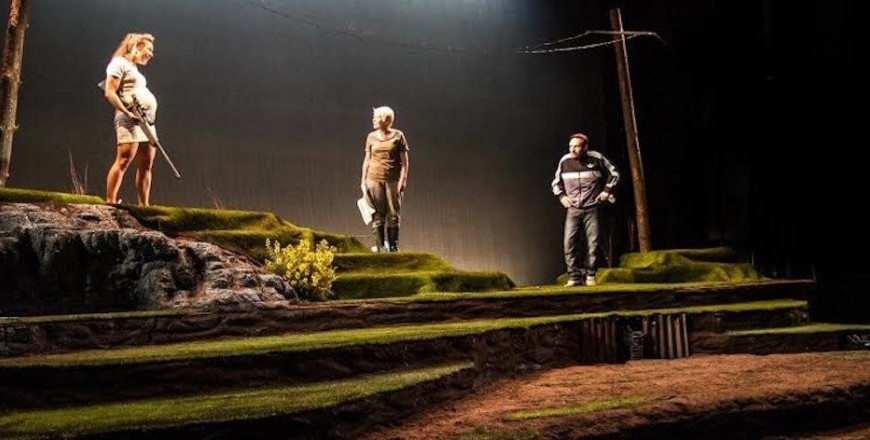
- In the political satire…Lally the Scut
- a mother struggles to save her little boy
- …after he falls into a bog hole.
- The play follows Lallys journey going to one towns-person
- …to the next trying to find anybody
- …who will help her in her crisis.
- This task proves difficult for many reasons.
- Her neighbors’ fear that digging up the fields
- …will uncover secrets from the Troubles.

Cast: 9 male actors – 3 female actors
- Mother: Lally (mid 20s), 7 months pregnant
- Father: Francis (…a bet, drink and a song…happy-go-lucky guy)
- Grandmothers: Rahab and Ellen
- Townsfolk, media persons, priest, politians
- Setting: outskirts of a Northern Irish border town
- Theme: conflict in Ireland …is not over!
- The play’s recurrent image of the child lost down a hole
- is a allegory for the island of Ireland’s uncertain future.
Conclusion:
- The child’s down a hole.
- The town’s up in arms.
- I would not have understood the allegory
- …without having done some research.
- This play had so much potential.
- Act 1 was just a chaotic mess.
- Narratives from several characters do not intertwine
- …but clash. This reader was exasperated.
- Also I felt NO real urgency to save the child
- …only nonsensical histrionics by local baker, builder and
- …man with a golf club.
- To make matters worst Spallen insists on including
- ..an expletive-laden narrative.
- I can understand this writing style that is
- …dependant on the tone, genre and audience for the play.
- But…less is more.
- There must be another way to express rage.
- Act 2 did not improve.
- By the time we get to a mock-torture scene,
- shrugged off by a former terrorist
- …I had decided this is not for me.
- It is very political and somebody
- …more in tuned with the The Troubles
- the peace process in Northern Ireland
- may understand Abbie Spallen’s satire.
- I did not.
- I could not connect…and believe me I tried.
- I researched the play and playwright.
- My advice: read the play and form your own opinion.
- #BraveDarkIrishPlay
#Short Story: 28 Tales by Edgar Allan Poe
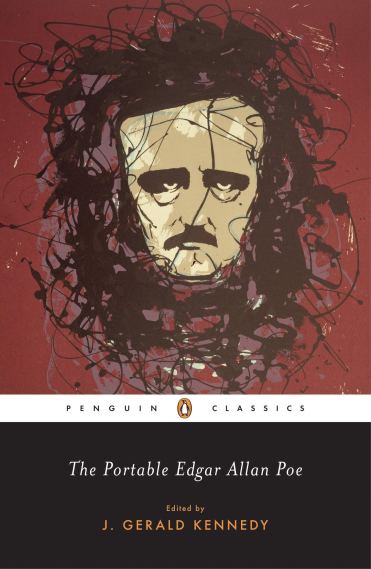
- Author: E.A. Poe
- Title: The Portable Edgar Allan Poe (tales, poems, letters)
- Published: 2006
- List of Challenges
- Classic Club Master list –> UPDATE: 20.02.2019 –> 50 classics COMPLETED!!
- Monthly planning
- List of Short Stories read
Introduction:
- After a grueling fitness lesson to increase my ‘mobility’
- that felt more like torture during the Inquisition
- I was very happy that I had audio book of E.A. Poe’s tales.
- All I needed to do was lie down, relax and listen.
- I read 28 tales….and 1 poem. I did not read all the letters!
- 50% of the 28 stories were good!
Conclusion:
- I only read 28 stories
- …and still have 43 to read to
- finish the complete list of Poe’s tales.
- I have the highest admiration for Poe’s genius.
- With his words the demon was visible,
- insanity palpable and the reader
- …is mesmerized by Poe’s bizarre mind.
- Baudelaire became obsessed with Poe and
- who was both is idol and as he saw it his
- …American double.
- I enjoyed reading/listening to the stories but
- feel that some are overrated.
- I’m sure Poe got paid ‘by the word’ because at times
- he uses 4 adjectives….where one could suffice!
- Pit and the Pendulum:
- “…with a steady movement, cautious, sidelong, shrinking and slow.”
- I read 1 paragraph summary of ‘The Spectacles’ and the
- audio version lasted 1 hour and 13 min!
- So you can imagine how
- …Poe goes on…and on….and on.
Last thoughts:
- Edgar Allan Poe was an oddity.
- His life was odd, his literature is odd.
- He sent a man to the moon 30 years before Jules Verne.
- He created the modern detective story.
- He destroyed our planet with a comet.
- He sent shivers down my spine with the horror stories.
- Poe was plagued with many personal issues.
- “Poe purchased a couple of ounces of laudanum
- …to cure him of the fever called living.” (Poe-Land, J. W. Ocker)
- #Classic
- “The Angel of The Odd” – GOOD
- “Berenice” – GOOD
- “The Black Cat” – GOOD
- “The Cask of Amontillado”
- “The Maelstrom”
- “Eleanora” – GOOD
- “The Facts in the Case Of M. Valdemar”
- “The House of Usher”
- “Hop Frog”
- “Imp of the Perverse” – GOOD
- “Island of the Fay”
- “Ligiea” – GOOD
- “Man of the Crowd”– GOOD
- “Message in a Bottle”
- “The Masque of the Red Death”
- “Mesmeric Revelation”
- “The Murders in the Rue Morgue” – GOOD…but the ending…far-fetched!
- “Never Be the Devil Your Head”
- “The Oval Portrait”
- “The Pit and the Pendulum” – GOOD
- “The Premature Burial”
- “The Purloined Letter”
- “Silence – A Fable”
- “Some Words with a Mummy”
- “The Spectacles” – GOOD
- “The System of Doctor Tarr and Professor Feather” – GOOD
- “The Tell Tale Heart” – GOOD
- “William Wilson” – GOOD
- “The Raven” – GOOD
#Short Story: James Tiptree jr. (SF)
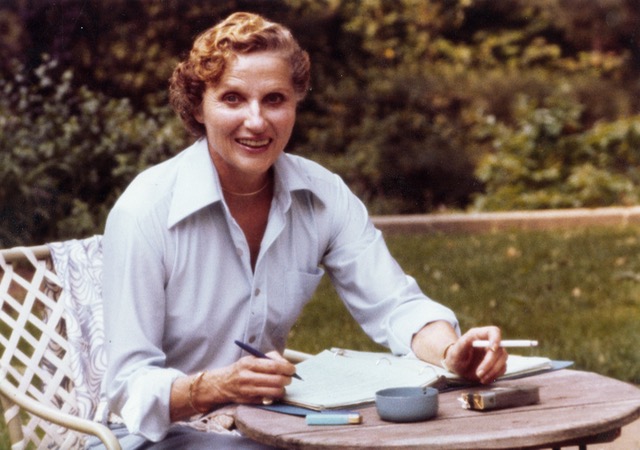
- Author: James Tiptree jr. 1915-1987
- Real name: Alice Sheldon
- Title: The Screwfly Solution
- Published: 1977
- Genre: ‘long’ short story
- Trivia: Awarded Nebula Award Novelette 1977
- Trivia: Short List Hugo Award Novelette 1978
- Finished: 17.02.2019
- Rating: A
- List of Challenges
- Monthly planning
- List of Short Stories read
Conclusion:
- The Screwfly Solution (1977 )… the story’s tone was playful and threatening.
- POV: told alternately from the perspective of a devoted husband and wife.
- The ‘hook’ was the POV of Anne (the wife) in her letters
- bubbling with news and love….but later fear
- to Alan (husband) in Columbia doing scientific research.
- After reading Anne’s letter with the words:
- “The quietness is worse, though, it’s like
- …something terrible was going on just out of sight.”
- I could not put this short story down!
- I even dreamed about it last night!
- The Screwfly Solution is a quick read, and although
- …knowing the ending doesn’t remotely spoil it,
- …I’m hesitant to spell out too much.
- Here is the best description of aliens I’ve ever read:
- “…it was big and sparkly, like
- …a Christmas tree without the tree.”
Last thoughts:
- Truly, reading short stories is most rewarding
- ….intense writing
- …and instant gratificaton (reading time 30-45 min)
- I’ve included a Wikipedia link about Alice Sheldon’s life
- It was unconventional….and ended in double suicide.
- #ReadShortStories
#Classic: A Tale of Two Cities
- Author: C. Dickens
- Title: A Tale of Two Cities
- Published: 1859
- Plot: Wikipedia
- List Reading Challenges
- Monthly planning
- Classic Club Master list
Introduction:
- This book needs NO introduction…but here goes!
- A Tale of Two Cities (1859) is a historical novel.
- The plot centers on the years leading up to the French Revolution
- and culminates in the Jacobin Reign of Terror.
- Set in London and Paris, it tells the story of two men
- Charles Darnay and Sydney Carton,
- …who look similar but are very different in traits.
- The book starts with the iconic paradox:
- “It was the best of times, it was the worst of times,
- it was the age of wisdom, it was the age of foolishness…. etc.”
- The book ends with the famous haunting words:
- “It is a far, far better thing that I do, than I have ever done;
- it is a far, far better rest that I go to than I have ever known.”
Conclusion:
- You must put your “Dickens hat” on
- to get through…
- Part 1:
- cryptic beginning (Dover mail coach)
- “zoom out” ch 5 ‘The Wine-Shop’
- to give you and idea of the chaos in Paris
- gaunt scarecrows = peasants
- broken casket spilling wine = blood
- approaching tempest = revolution.
- Best quote:
- “…every wind shook the rags of the scarecrows in vain,
- for the birds (aristocrats),
- …fine of song and feather, took no warning.”
- You will need some coffee
- to get through…
- Part 2:
- Tellson’s Bank controls its staff and customers
- Best quote:
- If the bank took on a young worker
- “…they kept him in a dark place, like a cheese,
- until he had the full Tellson flavor and blue-mould upon him.”
- Father and daughter bonding (Dr. Manette and Lucie)
- Emerging love entanglements
- French Revolution rages on
- Part 3:
- You will need kleenex
- to get through…
- the last ‘page-turning’ chapters
- …with the guillotine in the backround!
Dickens Template: – (This book contains very few ‘Dickens’ comic elements).
- Love triangle: Lucie Manette – Darnay – Carton
- Deaths : Marquis Evrémonde (assassinated) – Sydney Carton (guillotine, indifferent, and alcoholic attorney) – child killed under marquis’ carriage (Gaspard’s son) – Foulon (hanged, unscrupulous financier ancien régime) – Mme Defarge (shot with her own gun!)
- Nicknames: Ladybird (Lucie) – The resurrection man (Cruncher) grave robber.
- Star crossed lovers: Lucie Manette and Charles Darnay
- Little person (dwarf): None
- Little baby dies: None
- Prop: (secret) document found in chimney in cell 105 North Tower Bastille
- Dr. Manette’s letter (which is read to the court) (Book 3, ch 10)
- Eccentric but loving character: None
- Lawyer(s): Mr Stryver and Sydney Carton
- Banker: Mr. Jarvis Lorry
- Unrequited love: Sydney Carton for Lucie Manette
- Profesional money lender: None
- Villian: Mme T. Defarge
- Trusting and naive girl: None
- Young lower class gir who reached a good position: none
- Marriage: Charles Darnay and Lucie Manette
- Simpleton character….but very loving: none
- Schoolmaster: none
- Fairy godmother: none
- Maid/nurse: Miss Pross (reminds me nurse Peggoty in David Copperfield)
- Dickens likes to toss shoes in stories: Dr. Manette is also a cobbler
- Quirky names: none
- Son caring for father: none
- Daughter caring for father: Lucie Manette – Dr. Manette
- Theater: none
- Friends for life: none
- Pub: none
- Comic relief character: none
- Theme: revenge Mme DeFarge: always knitting
- “…with the steadfastness of fate”
- Malapropism: Dickens is famous for his witty malapropism:
- Cruncher speaks of the year of our Lord as “Anna Dominoes”.
- Apparently under the impression that
- ..the Christian era dated from the invention of a popular game
- …by a lady named Anna. (this book had very few comic moments…)
- Literary technique: extended metaphor “buzzing blue-flies” (book 2, ch 3)
- Flies suggest that the way the spectators hovered
- ..around the trial is similar to flies that are attracted to a potential feast.
- Dickens creates a clear comparison between the two items.
- Foreshadowing most poignant quote: book 2, ch 13 (Carton–> Lucie)
- “…think now and then that there is a man who would
- …give his life to keep a life you love beside you.”
Last Thoughts:
- After reading A Tale of Two Cites I felt closure.
- I was mesmerized by the movie version (1935) seen
- on TV in the 60s’ with my mother.
- Nothing impresses a child more than a guillotine!
- Then in high-school this was my first classic ‘study’.
- I remembered nothing about the book
- …except Mme Defarge and her knitting.
- Now it was time to re-read the book as an adult.
- #MustRead
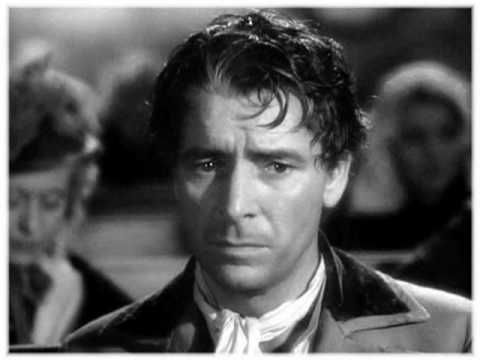
Ronald Coleman as the classic Sydney Carton.
#AWW2019 Louise Mack
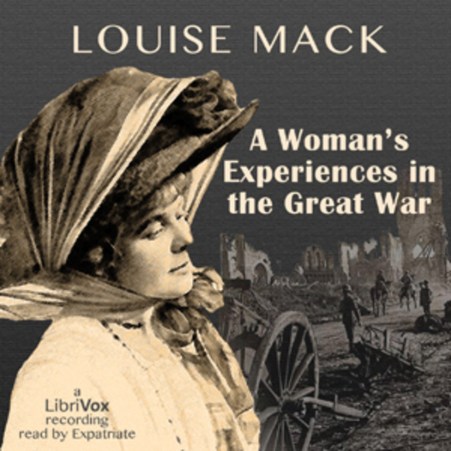
- Author: Louise Mack (1870-1935)
- Title: A Woman’s Experiences in the Great War
- Genre: non-fiction
- Published: 1915
- List of Challenges
- Monthly planning
- Non-Fiction List
- #AWW2019
- AWW Gen 2 Bill @The Australian Legend
Quickscan:
- In 1914 when war broke out Louise Mack was in Belgium
- where she continued to work as the first woman
- war correspondent for the
- Evening News and the London Daily Mail.
- This book is her eye-witness
- …account of the German invasion of Antwerp.
- 28 September – 10 October 1914 (1 week and 5 days)
Conclusion:
- While I read to this book I had to think of
- …the difference between Marie Colvin (1956-2012)
- foreign affairs correspondent for the British newspaper
- The Sunday Times and Louise Mack (1870-1935).
- While the Zeppelin returns to attack Antwerp
- I read Louise Mack saying:
- “…I saw my powder puff. I saw my bag.”
- “…no slippers came under my fingers,
- and I wanted slippers
- in case of going out into the streets.“
- I must just accept that this book
- …was written more than 100 years ago.
Last thoughts:
- Weak point: choppy writing style.
- Strong point: The chapters 46-47 were of special
- interest for me (I live in Netherlands)
- They describe Louise Mack’s impression
- of the Dutch welcoming
- …Belgium refugees after the fall of Antwerp.
- Good eye-witness reporting.
- …but very outmoded.
#Non-fiction: The Age of Eisenhower
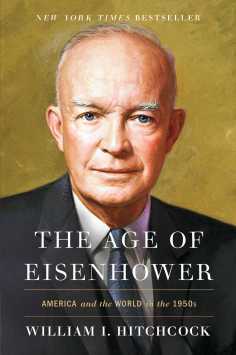
- Author: W.L. Hitchcock
- Title: The Age of Eisenhower
- Genre: non-fiction
- Published: 2018
- #NonFiction
- List of Challenges
- Monthly plan
Did you know?
- Eisenhower agreed to give 400 million dollar
- to France to keep them fighting in Indo-China 1956.
- Eisenhower did not trust Nixon. Ike tried to ‘push’ off the ticket election
- 1956 by dangling a cabinet post in front of ‘Tricky Dick’.
- Nixon did not take the bait.
- Eisenhower suffered from a blood clot in his heart September 1956.
- What did Nixon do? He slipped out of his house through the back door
- to avoid the press.
- Nixon was scared to death ….he might have to lead the country!
Conclusion:
- These are some of the items that I did not know.
- This book reflected a man who remained
- a social conservative who was anxious about
- …clashes b/t federal courts and local customs (civil rights movement).
- Eisenhower was not used to change
- ….wary of challenging hierarchy.
- Yet Eisenhower did manage
- to surpass his limitations and supported
- The Civil Rights act 1957 and enforced court ordered
- …for desegragation in Little Rock Arkansas.
- which makes him a worthy president in my opinion.
Last thoughts:
- I thought America in the 1950’s would electrify me.
- Unfortunately, it was …to be the fractious 1960’s
- with Nixon, Kennedy, LBJ these were presidents that
- interested me more than “I like IKE’.
- The book was interesting and informative.
- Eisenhower made many good calls in the White House
- …an ran a fundamentally honest administration.
- Ike was and remained a #GoodSoldier.
#Classic: George Eliot, Essays and Poems

- Author: George Eliot
- Title: Selected Essays, Poems and Other Writings (544 pg)
- Published: 1991, Penguin Classics
- Table of contents:
- 9 essays — 6 letters — 20 reviews — 3 poems
- 1 essay written by a fictional scholar
- ….Eliot’s last piece of fictional writing
- 2 translations (…these I did not read)
- List of Challenges 2018
- Monthly plan
- Non-Fiction Reading List
- Classic Club Master list
Introduction:
- Why did I buy this book?
- That is what I kept asking myself as I struggled
- …reading Eliot’s essays.
- But I am determined in 2019 to read TBR books
- …and live under a book buying embargo
- …until further notice!
Essays:
- Prospectus of the Westiminister and Foreign Quarterl – terrible
- Woman In France: Mme de Sablé – ONLY ESSAY I LIKED!
- Dr. Cumming – Eliot being the most prominent figure to criticize him for his anti-Catholicism.
- German Wit: Heinrich Heine – awful, not interested in Heine’s wit. 50% quotes of HH’s works.
- The Natural History of German Life – pointless
- Silly Novels by Lady Novelists –Eliot is critical of women who think they can write novels.
- Worldliness: the Poet Young – famous essay by Eliot
- She discusses the “radical insincerity as a poetic artist Edward Young”.
- Young is famous for long poem Night Thoughts
- The poet muses on death over a series of nine “nights”.
- Essay is too long ….just nothing I want to know.
- Eliot is clearly NOT a fan of Edward Young.
- The Ilfrcombe Journal: personal notes, vacation with husband, nature walks – boring.
- Notes on Form in Art: – written in another time….for another audience, not me.
- Weak point: overstatement, too many details, should be edited
Letters:
- 6 letters discussing Positivism and
- …George Eliot’s dramatic poem The Spanish Gypsy
- …with Frederic Harrison.
- Harrison (1831-1923) was a religious teacher, literary critic, historian and jurist.
- What is Positivism?
- It is a philosophical theory stating that certain knowledge
- is based on information derived from sensory experience
- …interpreted through reason and logic.
- Weak point: uninteresting topic for the general reader
Reviews:
-
Little did I know that George Eliot was a book critic!
-
Eliot published her reviews in the Coventry Herald and Observer,
-
…The Westminster Review (Eliot was assistant editor)
-
…Leader and The Fortnightly Review.
- George Eliot has a wonderful
- …way of dissing a book, really criticizing it with a smile:
- “…So we restrain our noble rage, and say good bye now
- …and for ever to Lord Brougham’s Lives of Men of Letters…”
- 20 reviews have more to say to the modern reader.
- Strong point reviews: Reviews were at times too grand-eloquent
- …but I learned something from each review.
- When I lost track of Eliot’s core message….I looked up a
- condensed version about the book/author in Wikipedia.
- Then I could read (if needed…skim) Eliot’s reviews
- ..with an eye for the issues of interest.
- Discovery: A Lost Love (1854, 232 pg) by Ashford Owen
- …pen name Anne Charlotte Ogle, (1832-1918).
- Her book is considered one of the best novella’s of it’s era
- .…but who has ever read it?
- Discovery: John Ruskin (1819 – 1900)
- ….was the leading English art critic of the Victorian era.
- Unfortunately I enjoyed the Wikipedia page on Ruskin
- …more than Eliot’s review!
- Strong point: Eliot’s elaborate writing style that characterized the essays
- …gave way in time to plainer language in her 20 reviews (pg 261-389).
Poem: Armgart (1871)
- George Eliot is an important 19th C novelist
- …but her two volumes of poetry are often ignored.
- Poem: Armgart (dramatic poem with 7 scenes)
- Like Middlemarch…
- Armgart tells the story of the incompatibility
- of love and art for an artist who is a woman.
- Strange….this feels more like a ‘mini play’…not a poem!
Poem: The Spanish Gypsy (1868)
- Poem: The Spanish Gypsy
- Set 15th C Andalucía: Fedalma, a young woman
- born as a gypsy…she was snatched by marauding Spaniards.
- She was raised a Catholic by her fiancé Don Silva’s family.
- Weak point: this is a long winded dramatic poem
- It has sunk out of sight under its own weight!
- Sorry, this is just not good.
- Eliot should stick to what she does best….write novels!
Poem: Brother and Sister (1874)
- Just when I was giving up on Eliot’s poetry I found…
- Poem: Brother and Sister
- Shakespearean sonnet: ABAB-CDCD-EFEF-GG)
- This is a delightful poem drawing on the
- …relationship Eliot had with her brother Isaac.
- This relationship is also the center of The Mill on the Floss (1860)
- Strong point: You have to discover the world underneath the words.
- The shape and rhyme of the poem is familiar.
- The voice of a little girl is innocent. She adores her brother.
- The rhythm is used to bring certain feelings of responses.
- You may even think about
- …your connection to an elder brother…or sister!
Fictional essay by G. Eliot: – From…Impressions of Theophrastus Such (1879)
- This was Eliot’s last published fiction writing
- …and her most experimental.
- Debasing the Moral Currency
- …is a essay by an imaginary minor scholar
- His eccentric character is revealed through his work.
- I read this essay twice
- ….and all Eliot is saying could
- …be summed up in 3 short sentences!
- She regrets that we are losing the art of of fine wit and humor
- We now turn to burlesque and parodies.
- We are at the mercy of poor jest…frivolous mood or manner.
- Weak point: too long, feels pointless and waste of my reading time!
Translations (447-468 pg)
- I am NOT reading the very last section:
- Eliot’s translations of:
- David Strauss’s Life of Jesus
- Ludwig Feuerbach’s The Essence of Christianity
- I have read enough!
Conclusion:
- How did I read this dense book?
- You have to be motivated.
- This was my first book 2019 and
- …I was not going to stumble and
- …fall with the first challenging book!
- #FirstBook 2019
2019 Monthly Planning + Reading Stats 2018

January 2019
READ:
- George Eliot: Selected Essays, Poems and Other Writings – READ #ClassicMasterList
READING:
- Moby Dick – H. Melville – READING ch 94/135 #ClassicMasterList
- How Does a Poem Read – J. Ciardi – READING pg 205/399
- Two Moons – Jennifer Johnston – READING #ReadIreland pg 155/231
December 2018 Reading stats 2018
- 63 fiction
- 73 non-fiction
- 20 French books
- 18 plays
- 13 posts about poems/poet
- 105 short stories
- 105 essays
READ:
- The History of the Church – Eusebius – READ #ClassicMasterList
- Satires – Horace – READ #ClassicMasterList
- Moby-Dick as Philosophy – M. Anderson – READ
- Axiomatic – M. Tumarkin – READ Winner of the Melbourne Prize Best Writing Award 2018
- Alice in Space – G. Beer (literary criticism) – READ
- Downstairs No Upstairs – Brian Friel (short story) New Yorker 24.08.1963 – funny! – READ
- Go, Went, Gone – J. Erpenbeck – READ
- Literary Brian Friel Companion – M. Snodgrass – READ #ReadIreland
- Essay: From Monaghan to the Grand Canal ( Dublin) – S. Heaney – READ #ReadIreland
- The Pull of the Moon – Julie Paul – READ (12 short stories) #CanBookChallenge
- The Hummingbird – K. Hiekkapelto – READ #TBR since 2015!
- Speaking Up – G. Triggs #AWW2018 – DNF…not my kind or writer
- In Extremis: War Correspondent Marie Colvin – L. Hilsum – READ #TBRnovember2018
- Philadelphia , Here I Come! – Brian Friel (play)- READ #ReadIreland
- Growing Up Aboriginal in Australia – editor Anita Heiss (NF) – READ #AWW2018
- Indonesia etc – E. Pisani – READ #WorldFromMyArmchair
- The Tall Man – Chloe Hooper – READ #AWW2018 2009 Queensland Premier’s Literary Prize
- The Christmas Carol – C. Dickens – READ #ClassicMasterList
- Sisters In Law (S. Day ‘O Connor and Ruth Bader Ginsberg) – L. Hirshman – READ
- Infinity – Hannah Moscovitch (play) – READ #CanBookChallenge
- American Poetry Review – editor E. Scanlon – READ Vol 47 Nov/Dec no. 6
- Saints and Sinners – Edna O’Brien (short stories) – READ only 4 /10 good #ReadIreland
- The New Yorker 24-31 December 2018 – READ
- The Evening of the Holiday – S. Hazzard – READ
- The Rich Brew – S. Pinsker – (NF) READ
November 2018
- The Aeneid – Vrigil – READ #ClassicMasterList
- Mythos – Stephen Fry (audio book) – READ
- A Raisin in the Sun – L. Hansberry (play) – READ Best Play 1959 NY Drama Critic’s Circle
- David Copperfield – C. Dickens – READ #ClassicMasterList (audio and paperback)
- Poets Corner – editor J. Lithgow – READ (audio book)
- Great Expectations – C. Dickens – READ #ClassicMasterList
- Pulitzer – J. McGrath Morris ( biography) – READ
- Rosmersholm – Henk Ibsen (play) – READ #ClassicMasterList
- The Lusiads – L. Vaz de Camões – READ (epic poem) #ClassicMasterList
- Electra – Sophocles – READ #ClassicMasterList
- The Knights Tale – Chaucer – READ #ClassicMasterList
- Mrs. Dalloway – V. Woolf – READ #ClassicMasterList
- Evicted: Poverty and Profit – M. Desmond – READ #NonFicNov
- Kilonova (poem) – A. Sometimes – READ #AWW2018
- To Our Miscarried One, Age Fifty Now (poem) – S. Olds – READ #PulitzerPrize 2013
- The Best Australian Science Writing 2018 – editor J. Pickrell – READ #NonFicNov
- Death of a Salesman – A. Miller – READ- Pulitzer Prize Drama 1949 – #ClassicMasterList
October 2018
- Our Mutual Friend – C. Dickens – READ #ClassicMasterList
- Je reste ici – M. Balzano (longlist Prix Fémina 2018) – READ
- Mãn – K. Thuy – READ #CanBookChallenge
- An Ordinary Day (NF) – Leigh Sales – READ #AWW2018
- Christ Stopped at Eboli – Carlo Levi – READ #ClassicMasterList
- The Keys of My Prison – F. Wees – READ #CanBookChallenge
- The Tenant of Wildfell Hall – Ann Brontë – READ #ClassicMasterList
- Zolitude – Paige Cooper (14 short stories) – READ #CanBookChallenge
- An Ocean of Minutes – T. Lim – READ #CanBookChallenge
- French Exit – P. deWitt – READ #CanBookChallenge
- March Violets – P. Kerr (CF) – READ
- Looking for Lorraine – I. Perry – READ
- Nobel Streven – F. van Oostrom – READ #LibrisPrijs2018 shortlist Best Dutch History Book
- Thorbecke Wil Het – R. Aerts – READ – winner Prinsjesboekenprijs (best political book)
- De Sigarenfabriek van Isay Rottenberg – H/S Rottenberg – READ
- ….#LibrisPrijs2018 shortlist Best Dutch History Book
- Adieu Montaigne – J. Delacomptée – READ ( 50%…gave up, read why!)
- Frankenstein – M. Shelley – READ #RIPXIII and #CCdare
September 2018
- The Raven – E.A. Poe – READ #RIPXIII
- Dark Entries – R. Aickman (6 short stories) – READ #RIPXIII
- A Vindication of the Rights of Women – M. Wollstonecraft – READ
- Our Man in Charleston – C. Dickey (NF) – READ #20BooksOfAutumn
- The Pillow Book – Sei Shonagon – READ
- The Life of Johnson – J. Boswell – READ #ClassicMasterList
- Hawthorne – Henry James – READ #RIPXII
- A Kim Jong-IL Production – Fischer, P. – READ #20BooksOfAutumn
- The Bed-Making Competition – A. Jackson – READ #AWW2018
- Atomic Thunder – E. Tynan (Prime Minister’s Literary Awards 2017 History) – READ #AWW2018
- The Enigmatic Mr. Deakin – J. Brett – READ #AWW2018 Nat Biography Award 2018
- Patrick Kavanagh – Irish poet poem – READ
- Audition – S. Sayarfiezadeh – READ (short story) #DealMeIn2018
- The River in the Sky – Clive James ( epic poem…reading it line for line) – READ
- Just Enough Liebling – J. Liebling (NF) – READ
- Washington Black – Esi Edugyan – READ #CanBookChallenge (shortlist Man Booker)
- Don’t Call Us Dead – D. Smith – READ (collection of poems)
- Nooit Meer Slapen – W.F. Hermans- READ Dutch – in translation Beyond Sleep
- James Wright: A Life in Poetry (NF) – J. Blunk – READ
- Pensées – B. Pascal – READ
August 2018
- Pride and Prejudice – J. Austen – Re-READ
- Letters From a Stoic – Seneca – READ
- The Angel of the Odd – E.A. Poe – READ (short story)
- The Birthday of the Infanta – O. Wilde – READ (short story)
- The Masnavi Book vol 1 – Rūmī (poet of Sufism Islamic mysticism) – READ
- Myths from Mesopotamia – (Anonymous) trans. S. Dalley – READ
- Nation – T. Pratchett – READ
- Means of Ascent – R. Caro – READ (non-fiction)
- The Charterhouse of Parma – Stendhal – READ (french edition)
- Chateaubriand – Jean-Claude Berchet – READ (french edition)
- Trois femmes puissantes – M. NDiaye – READ (french edition) Prix Goncourt 2009
- Le Roman de la Rose – De Lorris, G. et De Meun, J. – READ (french edition)
- The Revolutionary Road – L. Pryce – READ (Iran)
- Une Vie – G. de Maupassant – READ (french edition)
- Maupassant – F. Martinez – READ (french edition) (biography)
- Darkness Visible – W. Styron – READ (essay/memoir)
- Between Riverside and Crazy – S. Guirgis – (Pulitzer Prize 2015) (play – READ
- The Outrun – A. Liptrot – READ
- L’Éspoir – A. Malraux – READ/ DNF …here’s why!
July 2018
- The Rise and Fall of the Third Reich – W. Shirer – READ ….chunkster!
- Berthe Morisot – D. Bona – READ (french editon)
- Women In Love – D.H. Lawrence – READ – …intense book!
- The Dispossessed – U. Le Guin – READ
- The Sun Also Rises – E. Hemingway – READ
- View From the Cheap Seats – N. Gaiman – READ (essays)
- The Deerslayer – James Fenimore Cooper – RE–READ – classic Fini
- Like a House on Fire – C. Kennedy – READ (15 short stories)
- Victor Hugo: Romancier de l’abîme – editor J. Hiddleston – READ (11 essays)
June 2018
- Brit(ish) – A. Hirsch – READ
- Jenna’s Truth – N.L. King – READ
- A Spy Named Orphan – R. Philipps – READ
- The End of Seeing – C. Collins – READ
- Australian A. Kissane ‘Flannel Flowers’ – READ (poem)
- Essays: The Australian Face (editor C. Menzies-Pike) – READ (17 essays)
- Pipeline – D. Morisseau – READ (play)
- Americanah – C.N. Adichie – READ
- Saga Land – R. Fidler, K. Gislason – READ
- How to Get There – M. Mackellar – READ
- Very Expensive Poison – L. Harding – READ
- Deep South – P. Theroux – READ
- Islander: Journey Around Our Archipelago – P. Barkham – READ
- Why Horror Seduces – M. Clasen – READ
- Rice – Michele Lee – READ (play)
- From the Edge: Australia’s Lost Histories – M. McKenna (NF) – READ
- The Redemption of Galen Pike – C. Davies (short stories) – READ
- Flowers For Algernon – D. Keyes – READ
- The Serious Game – H. Söderberg – READ
- Judge and His Hangman – F. Dürrenmatt – READ
- Hunting the Wild Pineapple – T. Astley – READ (8 short stories)
- Down These Green Streets – D. Burke – READ
May 2018
- Her Father’s Daughter – A. Pung – READ
- Who’s Afraid? – M. Lewis – READ
- Cardinal – L. Milligan – READ (non-fiction)
- The Drover’s Wife – L. Purcell – READ (play)
- Broken – M.A. Butler – READ (play)
- Psynode – M.J. Ward – READ (YA)
- Do Not Go Gentle – P. Cornelius – READ (play)
- The Golden Bowl – H. James – READ (classic)
- Closing Down – S. Abbott – READ (SF)
- Too Easy – J.M. Green – READ (CF)
- This Mortal Coil – E. Suvada – READ (YA)
- Aletheia – J.S. Breukelaar – READ (Horror)
- Enormous Changes at the Last Minute:Stories – G. Paley – READ
- Wounds – F. Keane – READ winner Best Irish Non-fiction 2017
- Kitchen Sink Realisms – D. Chansky – READ
- Memories of Youghal – W. Trevor – READ (short story)
April 2018
- The Museum of Modern Love – H. Rose – READ – Stella Prize 2017
- Extinctions – J. Wilson – READ – Miles Franklin Award 2017
- Thea Astley’s Writing: Magnetic North – Kerryn Goldsworthy – READ
- Feeling the Heat – J. Chandler – READ – Chandler Best Freelanc Journalist 2017
- The Acolyte – T. Astley – READ – Miles Franklin Award 1972
- From the Wreck – J. Rawson – READ – Aurealis Award 2018 Best SF novel
- Girl Reporter – T. Roberts – READ – Aurealis Award 2018 Best SF novella
- The Green Road – A. Enright – READ
- Feel Free – Z. Smith (31 essays) – READ
- The Fifth Season – N.K. Jemisin – READ – Hugo Award 2016
- Autumn – A. Smith – READ
- Dying in the First Person – N. Sulway – READ
- The Third Policeman – F. O’ Brian – READ
- The Trauma Cleaner – S. Krasnostein – READ – Victorian Premier’s Award 2018
- Locking Up Our Own – J. Forman jr. – READ Pulitzer Prize 2018
- Joan: The Remarkable Life of Joan Leigh Fermor – S. Fenwick – READ
- Fahrenheit 451 – R. Bradbury – READ
- The Butchering Art – L. Fitzharris – READ
- 1984 – G. Orwell – READ
- Winesburg, Ohio – S. Anderson – READ
- The Hate Race – M. B. Clarke – READ
- Dark Lies the Island – K. Barry (13 short stories) – READ
- Rubik – E. Tan (15 short stories) – READ
- Ironweed – W. Kennedy – READ
- Soon – L. Murphy – READ
March 2018:
- Seamus Heaney – H. Vendler – READ
- Simon Leys: Navigator Between Worlds – P. Paquet – READ
- Without America – Quarterly Essay, vol. 68; White, H. 16.11.2017 – READ
- Short story: Deer Season – K. Barry – READ (The New Yorker)
- Short story: You Know How It Is – A. Spargo-Ryan – READ
- Short story: The Island and the Calves – Dermot Healy – READ
- Midwinter Break – B. MacLaverty – READ
- The Weir – C. McPherson – READ
- Mapping Irish Theatre – C. Morash and S. Richards – READ
- A Long Long Way – S. Barry – READ
- Tracker – A. Wright – READ abandoned…read why!
- Poem: Inniskeen Road: July Evening – P. Kavanagh – READ
- Quicksilver – N. Rothwell – READ (6 essays)
- Flame Tip – K. Thompson – READ (short fictions, Tasmania)
- The Divine Comedy – Dante – READ
- The Nightingale – K. Hannah – READ abandoned…read why!
- Best Words, Best Order: Essays of Poetry – S. Dobyns – READ
- Play: Two Pints – Roddy Doyle – READ
- Play: Alice Trilogy – T. Murphy – READ
- Essay: Aussie Albert – Julian Bull – READ
- Essay: Dancing Lessons for Writers – Z. Smith – READ
- A Writing Life: Helen Garner and Her Work – B. Brennan – READ
- Blood in the Water – H. Thompson – READ
February 2018:
- Tartuffe – Molière – READ
- Girls and Boys – D. Kelly – READ
- The Path to Power – R. Caro – READ
- River Town: Two Years on the Yangtze – P. Hessler – READ
- Couleurs de l’incendie – P. Lemaître – READ
- La Prophétie de Langley – P. Pouchairet – READ
- Psychanalyse de Victor Hugo – C. Baudouin – READ
-
Art Chrétien / Art Sacré – Isabelle Saint-Martin) – READ (difficult…score 1/5)
- Victor Hugo: 1802-1851 – J.M. Hovasse – READ – FINI !! (1159 pg) = 4 books!
- Border – K. Kassabova – READ
January 2018:
- Là-bas, août est un mois d’automne – B. Pellegrino – READ
- Wild Kingdom – S. Moss – READ
- St. Joan – G.B. Shaw (play) – READ
- Feather Your Nest – A. O’Brien (short story) – READ
- In With A Chance – K. Murray (short story) – READ
- Bottle Party – J. Collier (short story) – READ
- The New Yorker dd 01.01.2018 – READ
- Enemy Within – Quarterly Essay, vol. 63; Watson, Don, 16.09.2016 – READ
- The Hidden Life of Trees – P. Wohlleben – READ
- The Left Hand of Darkness – U. Le Guin – READ
- The Rule of the Land: Walking Ireland’s Border – G. Carr – READ
- Towards Mellbreak – M. Bragg – READ
- The Glass Canoe – D. Ireland – READ
#AWW2018: Shirley Hazzard

- Editor: Brigitta Olubas
- Title: Essays on the works of Shirley Hazzard
- Read essay: Future Anterior: The Evening of the Holiday (2014)
- Read story: The Evening of the Holiday
- Pubished: 1966 (novel)
- Monthly reading plan
First reading: essay by J. Frow Prof. Literature University of Sydney
- The text was NOT educating despite this man’s stellar credentials!
- But that was my fault….I have to learn to read these scholarly works:
- I thought a literary professor would encourage me to read Shirley Hazzard’s
- book The Evening of the Holiday….he has done just the opposite!
- Frow has made the book so confusing (theme of punctuality…huh?).
- I was not going to let this happen…I read the essay a second time.
Second reading:
- I have now learned to gather specific information that
- I feel enlightening and if the author wants to
- go off on a tangent (punctuality)…I let him go but did to follow him!
- I’ve also learned to make a plan: if the words are ‘too academic’
- for example, comedy of incommensuration I must take the time to find
- …words in the dictionary that make the meaning clearer.
- Also in literary theory the words aesthetic and ethical are often used.
- As soon as I see these words my mind goes blank.
- Now I have learned the basic meanings of these words
- …so I can continue in the flow of reading without losing my mind!
- aesthetic – more concerned with the love of beauty, emotion and sensation…as opposed to
- ethical – more intellectualism ( accepted morals; principles of right and wrong)
Conclusion:
- Despite my rocky start reading J. Frow’s essay
- …I do want to read The Evening Holiday!
- The story which quietly allows people to change their
- …minds about one another
- …and fall in love without melodrama.
- Characters:
- Middle aged, married Tancredi
- young Sophia (British/Italian descent) in 1950’s Tuscany.
- I am curious how Shirley Hazzard
- …brings this all together in just 144 pages.
The Evening Holiday (story)
- Published: 1962 ‘long short story’ in the New Yorker
- Published: 1966 novella
- Trivia: textures of Italian life and culture are bound up with the romance
- Structure:
- ch 1-6 courtship – ch 7 festival in village – ch 8-14 affair – ch 15-16 au revoir.
- Characters: are attracted to each other’s complications
- Weak point: Hazzard spends 50% book describing everything
- …fountains, gardens, piazza’s, villa’s countryside and even the post office.
- This sense of space gets ‘out of control’.
- Strong point: Hazzard uses inner dialogues to move the action along.
- We read what Sophia is thinking VS
- …what Tancredi THINKS she is thinking.
Last Thoughts:
- This book was very short and easy to read.
- There is a rhythm to the sentences.
- Personally I found the love affair too sugar spin sweet.
- There were no passionate outbursts, pledges of love
- …just a ho-hum fling that was reaching an inevitable ending.
- I will not let one book discourage me….
- ..and will try to read more of Shirley Hazzard!
- #NeverGiveUp
#DealMeIn2019 Challenge
- Hosted by Jay sign up here: @Bibliophilopols
- What is the goal of the challenge?
- To read 52 short stories in 2019 (that’s only one per week )
- What do I need?
- 1) fifty-two short stories
2) A deck of cards - LIST:
- Stories published in 2018 The New Yorker:
Hearts:
- Ace – Whoever is there, come on through – Colin Barett
- Foreign Returned – Sadia Shepard
- Texas – David Gates
- Writing Teacher – John E. Wideman
- The Boundary – J. Lahiri
- Bronze – Jeffrey Eugenides
- Stansville – Rachel Kushner
- Mrs. Crasthorpe – Willliam Trevor
- Seeing Ershadi – Nicole Kraus
- The Poltroon Husband – Joseph O’ Neill
- Jack – No More Maybe – Gish Jen
- Queen – The State – Tommy Orange
- King – The Intermediate Class – Sam Allingham
Clubs:
- Ace – The State of Nature – Camille Bordas
- How Did We Come to Know You – Keith Gressen
- A Flawless Silence – Yiyun Li
- Treatments – Robert Coover
- The Boarder – Isaac Bashevis Singer
- Without Inspection – Edwidge Danticat
- The Long Black Line – John L’Heureux
- Stay Down and Take It – Ben Marcus
- Silver Tiger – Lu Wang
- Orange World – Karen Russel
- Jack – Fungus – David Gilbert
- Queen – Omakase – Weike Wang
- King – The Luck of Kotura – Gary Shteyngart
Spades:
- Ace –The First World – Joseph O’ Neill
- Under the Wave – Lauren Groff
- The Dog – J.M. Coetzee (Dec 2017)
- No More Than Ever – Zadie Smith
- I Walk Between the Raindrops – T. Coraghessan Boyle
- Displaced – Richard Ford
- A Refugee Crisis – Callan Wink
- Ways and Means – Sana Krasikov
- The Wind Cave – Haruki Murakami
- Cecilia Awakened – Tessa Hadley
- Jack – Poor Girl – Ludmilla Petrushevssky
- Queen – When We Were Happy We Had Other Names – Yiyun Li
- King – The Rise and Rise of Annie Clark – John L’Heureux
Diamonds:
- Ace – The Coast of Leitrim – Kevin Barry (Ireland)
- Flaubert Again – Anne Carson
- Waugh – Bryan Washington
- Backpack – Tom Earley
- Cattle Praise Song – S. Mukasonga
- Show Recent Some Love – Sam Lipsyte
- The Frog King – Garth Greenwell
- Snowing in Greenwich Village – John Updike
- Children are Bored on Sunday – Jean Stafford
- Chaunt – Jay Williams
- Jack – Time for the Eyes to Adjust – Linn Ullmann
- Queen – Acceptance Journey – Mary Gaitskill
- King – The Lazy River – Zadie Smith (Dec 2017)
 NancyElin.blog