
#Non-fiction The Jakarta Method
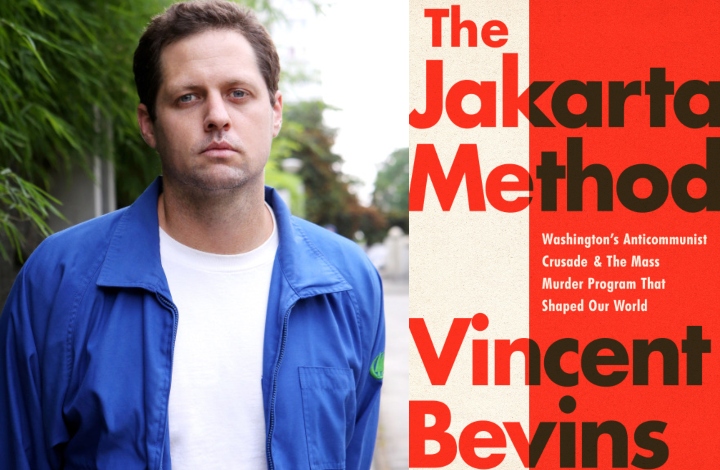
- Author: Vincent Bevins
- Title: The Jakarta Method
- Published: 2020
- List of Challenges 2021
- Monthly plan
Conclusion:
- This book is accessible, clear, easy to digest and impactful.
- It is a necessary and terrifying read.
- Vincent Bivens is an experienced journalist (Washington Post, LA Times)
- The act of writing requires a constant plunging back
- into the shadow of the past where time hovers ghostlike.
- Mr Bivens does just that…lifting the scab off of the USA’s
- …aggressive policy during the Cold War.
- Remember….Guatemala 1953? — Iran 1953?
- When the leader of a land was considered a problem
- rather than the solution to the crisis…the USA
- based strictly on Cold War calculations…organized a coup!
- This book highlights Indonesia that we tend to forget to add to the
- list of countries forced to be “quiet, compliant partner” on the United States.
- But Mr Bevins goes further to demonstrate “The Jakarta Method” used
- in Chili, Brazil and Argentina!
- #Fascinating book with using recently declassified documents,
- archival research and eye-witness testimony collected
- across twelve countries to reveal a shocking legacy that spans the globe
- #MustRead







#ReadingIrelandMonth21 Irish Short Stories
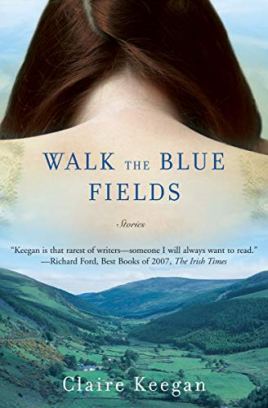
- There is nothing more soothing than reading Irish short stories
- at 0400 am when you are jolted out of sleep.
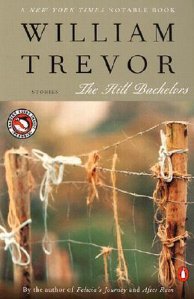
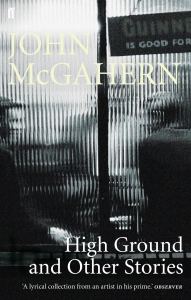
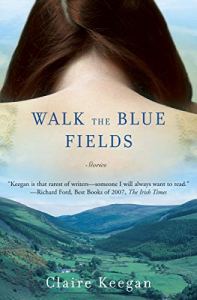
- Claire Keegen, John McGahern and William Trevor guided me
- back into a ‘literary dream world.”
- PLAN:
- I’m reading 3 short story collections.
- By rotating one story from each book I want to feel
- …the different writing styles.
- List of Challenges 2021
- Monthly plan
- List of Plays
- #ReadingIrelandMonth21 @cathy746books
Conclusion:
- I will have to choose William Trevor the best of these three writers.
- His stories are moving, concise tightly structured and still in just a
- few short pages he manages to present “living and breathing’ characters.
- #Bravo
- John McGahern was so disappointing.
- His novels and memoir are much better.
- McGahern’s strenght is his novels and he tries to
- explore multiple events with a complex plot in a short story.
- It just does not work. McGhahen should stick to his day job…novels.
- Claire Keegan is a rising star!!
- Keegan’s writing is delicate: not prudish, but exact.
- I look forward to reading ALL her books!
- #BestIsYetToCome
My Notes:
Keegan: The Parting Gift
- Strong point: indelible images
- her father’s shadow crossed the floor — puppies — and a bathroom stall at an airport
- Strong point: the small details
- “The saucepan boils
- …three eggs knock against each other. One cracked, a ribbon of streaming white.”
- “…cord of the electric heater swinging out like a tail from under the bed.”
- Ms Keegan uses a first person “observer”. But restricting the viewpoint to the “observer”it
- actually makes the protagonist (we don’t even learn her name) more mysterious.
- She remains a mystery because we have no access to her innermost thoughts and feelings.
- The girl’s reasons for going to America will become evident in the story (no spoilers).
- We feel her secret loathing towards an uncommunicative and cruel father.
Walking the Blue Fields
- Beautiful story….
- A priest catalogs the evidence of a
- bride’s uncertainty on her wedding day:
- “…the light, shaky signature in
- The bride’s hand was shaking”…why?
- This short story was a page-turner.
- I wanted to know the meaning of the quote early in the story:
- “There’s pleasure to be had from history.
- What’s recent is another matter and painful to recall.”
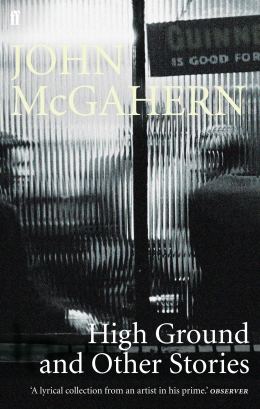
McGahern: Parachutes
- A short story should be a slice of life…to fit on the pinhead of a needle.
- McGahern makes some classic mistakes in “Parachutes”:
- Weak point: Too many scene breaks: I counted 11 including 3 flashbacks
- Weak point: Too many characters: 8
- I would have preferred McGahern had concentrated only on
- the lovers who are ending a relationship.
- Weak point: the title did not connect to the story as strongly as it should.
- The thistledown felt like an aside…a digression.
- Weak point: Vague ending: I invested my time to follow the story to is end and
- felt cheated…he end doesn’t offer a conclusion to the plot.
- This is not a stellar short story…by any means.
- #TerribleDisappointment
McGahern: The Ballad
- Weak points: The story was pointless!
- Four males live in Mrs. McKinney’s boarding house.
- One of them, O’Reilly, has put one local girl “in the family way”
- He tries to avoid marrying her….but ends op doing so.
- They live happy ever after.
- Where is the plot, tension?
- Where is the conflict between characters?
- Yet again McGahern uses 7 different scenes!
- To complete my disappointment the title “The Ballad” makes no
- connection with the story. I did not read about a song or a ditty.
- I rest my case.
- #TerribleDisappointment
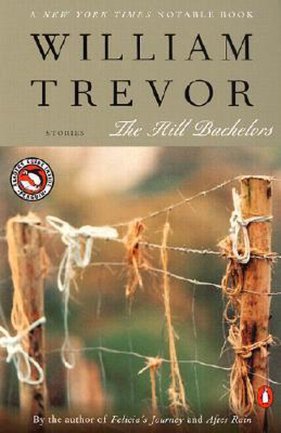
Trevor: Three People (Vera, Sidney and Mr. Schele)
- Strong point: …you can feel the tension on the pages!
- ‘They do not talk about a time that
- …was a distressing time for Vera, and Mr. Schele too.” (?)
- Strong point – structure of the story
- …put together like pieces of a puzzle for the reader to discover.
- Strong point: Trevor peppers his story with clues that increase the tension.
- The reader is getting a ‘glimpse’ of a break-in,
- but the evidence doesn’t seem to be believable!
- Why is Vera’s photo in the newspaper!
- Strong point: has ALL THE ELEMENTS of a memorable short story!!
- It felt like reading a novel…so engrossing.
- #ExcellentShortStory!
Trevor: Good News
- Strong Point: Characterization: Mr Trevor does not rely on physical appearance but rather
- thoughts, feelings, and interaction to describe the characters.
- Dialogue: Light conversational dialogue between Bea (9 years old)
- and her mother Iris and father Dickie.
- Her mother is “a pushy stage mother”
- reliving her bygone days as an actress while her daughter films a movie.
- Theme: Harassment: The story zooms in on
- …Bea’s inner thoughts and her fears
- while taking part in filming a movie.
- She feels it is an unsafe environment (no spoiler)
- Strong point: Title reflects core message:
- Good News – always brightened things up between
- her parents before they were divorced.
- Bea’s acting job was good news.
- But Bea is torn between admitting her fears (unsafe on the acting set)
- …and or say nothing.
- She sees her parents interact in a loving way again
- ….and she does not want to ruin that.
- She chooses to suffer in silence.
- #ExcellentShortStory!
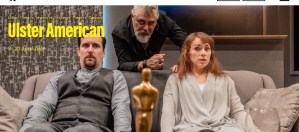
#ReadingIrelandMonth21 Ulster American

- Author: David Ireland (1976)
- Title: Ulster American
- Published: 2018
- Genre: Satire play
- List of Challenges 2021
- Monthly plan
- List of Plays
- #ReadingIrelandMonth21 @cathy746books
Quickscan:
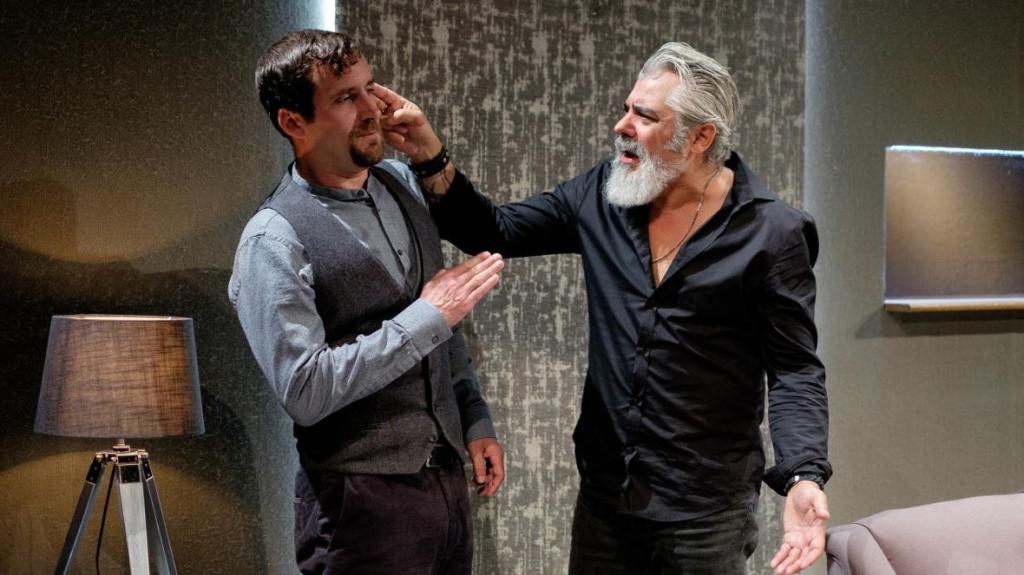
- This is a one Act single setting “pressure-cooker ” play.
- Ulster American is set in an apartment where an
- Oscar-winning actor, an ambitious English director (both male)
- …and a female Northern Irish playwright meet to discuss a play.
- A bloodbath ensues from a Hollywood actor’s
- attempt to turn a Protestant playwright’s script
- …into a celebration of the IRA.
- Ulster American is a challenging satire that
- …exposes the hypocrisies and ritual abuses of those in power.
Conclusion:
- How would I describe Ulster American in just four words?
- Political. Provocative. Bloody. Brutal.
- It is a queasy-making power-play drama.
- No plot, text filled with sound-bite clichés.
- Characters have zero depth.
- No twist, no story only crass shock and conflict.
- Not a single thing to cherish in this play.
- #WasteOfReadingTime
QUICKSCAN:
3 characters:
- Jay Conway – male, 40s American actor
- Leigh Carver – male, 40s English director
- Ruth Davenport – female, 30s Northern Irish playwright
Location:
- London, Leigh’s living room (Sunday Evening)
- on the eve of rehearsals for a West End play.
- Jay and Leigh discuss several subjects.
- “Staccato” dialogue (between Jay and Leigh Act 1…until Ruth enters)
- is where you speak in fragments of short sentences and
- is how people truly talk and communicate.
- Jay and Leigh jump from one subject to another
- racism? women? nationality? religion? UK monarchy? feminism? rape?
- By reading the stage directions you can feel the tension between the two men.
- They prowl the stage….in macho madness.
Enter Ruth (38%)
- Introductions all around.
Exit Leigh (41%)
- Now Ruth and Jay talk Hollywood trivia ( Jack Lemmon, Quentin Tarantino,
- …Turkish director Nuri Bilge Ceylan, favorite movie?
- …again “staccato dialogue”…a bit boring, to be honest.
- This type of conversation is a quick read but reveals little about the characters.
Enter Leigh..with glass of wine (43%)
- Conversation continues.
Exit Jay (46%)
- They discuss Jay the crass, petulant American Oscar-winning
- actor of Irish Catholic descent.
- As David Ireland writes: “…sounding like a “Belfast Dick Van Dyke”.
- Ruth is determined to “…protect my f***ing play!”
Enter Jay (50%)
- He just talked to his AA sponsor on the telephone. (character info)
Exit Leigh (52%)
- Jay and Ruth start analyzing the play.
Enter Leigh…with more drinks (53%)
- Leigh and Ruth start the production process of a ‘run-through with Jay.
- They try to explain what Northern Ireland Irish sounds like
- why Brexit is or is not relevant…and what is Ulster unionism?
- First monologue: (59%)
- Ruth focuses her attention on “The Troubles”.
- Again…Ruth defends her play: “I’m not rewriting anything!”
- …no eye-patch, Irish dancing or pigs!
- Second monologue: (71%)
- Jay displays his Oscar Academy Award to boost his
- …influence about making changes in the play.
- Third (very long) monologue (74%)
- Leigh tries to find some common ground between Ruth and Jay….
- ..it’s not easy!
Exit Ruth (80%)
- Leigh try to be the peacemaker
- between volatile Jay and stubborn Ruth.
Enter Ruth …with her phone (81%)
- Sign of the times….Ruth threatens Jay with a “blackmail tweet”!
- Ruth plays hard-ball!
- Agree to her terms….then she won’t send the tweet!
Turning point in the play (85%)
- Ruth answers her phone
- ….she is lost in her thoughts.
Exit Ruth into the bathroom
Enter Ruth…after a few minutes
- Now the tables have turned.
- Leigh and Ruth have a serious discussion.
Climax (94%)
Fight. Blood. Attack. Tweet sent
…the curtain falls.
#Non-fiction A Promised Land
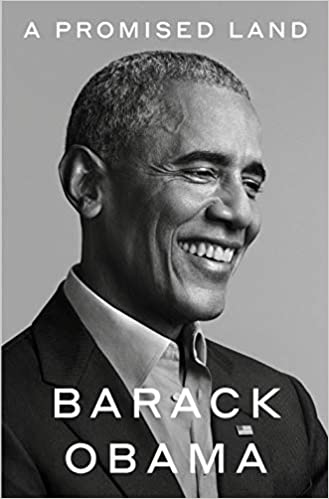
- Author: Barak Obama
- Title: A Promised Land
- Published: 2020
- Genre: memoir (7 parts, pg 768)
- Trivia: Goodreads Choice Award for Memoir & Autobiography (2020)
- List of Challenges 2021
- Monthly plan
Conclusion:
- I was looking for a soothing voice to guide me out of my pandemic rut.
- An audio book that would captivate my attention and push me out the
- ….door every day just to continue the story!
- A Promised Land: A Memoir by Barack Obama was the book I needed.
- I had been cooped up at home from November – February.
- My body was withering away (muscle strength)
- …and I needed to take action.
- I embarked on a 6 week plan: during Lent I
- would bike every day for 1 hour outside.
- …only with exceptions for a storm
- …with wind and rain that would have me pedaling
- 5 feet forward only to be blown back 3 feet!
- No need to become a masochist…or catch pneumonia!
- Very enjoyable audio book for daily bike rides.
Obama always speaks from the heart!
- Sometimes people like books because
- they think they’re supposed to
- but how could you NOT like this book!
- This book is a great historical “look behind the scenes”
- during Obama’s first years in office.
- Just helped Obama pass the Affordable Care Act
- while on my bike in glacial winter fog. Life is good! #AudioBook
- I heard how Obama surprised everyone and attended in
- Copenhagen on December 18 the final day of the meeting
- about the so-called Copenhagen Accord.
- He knocked some heads together and
- did some “gangsta-sh*t” and got the job done.
- Not often do you read about Obama’s
- “street creds” in the newspaper….but you do in this book!
Last Thoughts:
- Reading this book was like drinking fortified wine.
- It was heavy and sweet and bitter and swirled in my head long
- after I came home from biking and took off the earphones.
- I consumed the book daily…. in slow sips.
- It was an honest and eye opening perspective of what life
- was like as President of the United States…first black American.
- Thank you, Barack, the world needs this gorgeously written
- ….raw honest truth.
- #MustRead
#ReadingIrelandMonth21 Why the Moon Travels
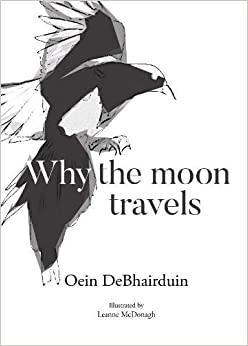
- Author: Oein DeBhairduin
- Title: When The Moon Travels
- Published: 2020 (pg 120)
- Genre: Traveller folktales
- Travellers: Ireland’s indigenous nomadic people and an ethnic minority
- Trivia: Shortlist for the KPMG Children’s Books Ireland Awards 2021
- List of Challenges 2021
- Monthly plan
- #ReadingIrelandMonth21 @cathy746books
- #DiversityInIreland
Introduction:
- Why the Moon Travels contains twenty folktales
- …from the Mincéirí or Traveller community.
- It is the first known collection of Traveller folktales
- …that has been written by a Traveller.
- In these tales separation between
- …the human and natural worlds does not exist.
- This is an example of an oral culture.
- This oral culture has a deep understanding of how
- …nature can speak to us and offer healing.
What are the primary aspects of telling tales?
- put into context and space in which they are shared
- as entertainment
- are always truthful and real
Conclusion:
- First impression: the introduction is a work of art.
- Breathtaking in its lyrical beauty…and provides a sudden
- enlightenment about the Travellers, their language, Gammon, and core values.
- The author hopes “…this book be another crack in the
- …wall that all to often divides us.”
- These are tales about the ancient world, the otherworld
- …some speak of the dead and others name the living.
Strong point:

The Yew Tree
- This is a story of grief that resonates so profoundly in this pandemic.
- The author uses the setting of a graveyard…a sacred place
- where a wall marks the boundary line between the living and the dead.
- Word choices establish the tone:
- brambles of ancestry
- trees beaten by age and waves of grief
- solitary and bewildered figure, his bright future in ashes
- grief that binds us into a rigid loss
- I was speechless after reading the very short tale.
- The author introduces the story and bookends it
- with his thoughts…about the Travellers rituals to celebrate the ancestors.
- #AbsolutelyStunning
Strong point:
- Oein DeBhairduin addresses the reader directly.
- He draws the reader into the tale with a personal revelations:
- He spends time in graveyards (“The Yew Tree”)
- The simple things of his youth…the joy of his mother’s garden (“Why dandelions Grow”)
- He lived beside the Seuleen river a place of connection (“The Birth of Rivers”)
- Stargazing brings great joy to his heart (“Where the Stars Come From”)
- Debhairduin extends the world of the story
- …to provide us a the illusion
- …that the reader is included in it.
Strong Point: so many quotes that linger…so beautiful
- My mother always said there were
- three things that men NEVER understand:
- the sharp edges of a broken heart
- the mind of a woman
- the value of the dandelion.

Who is Oein DeBhairduin?

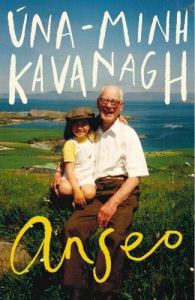
#ReadingIrelandMonth21 Anseo

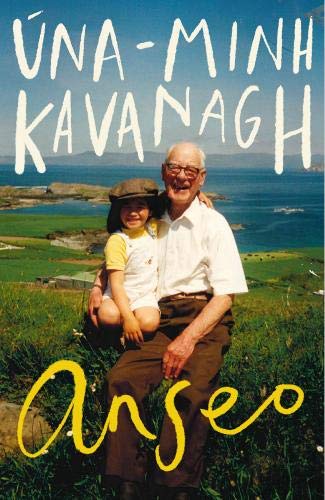
- Author: Úna-Minh Kavanagh
- Title: Anseo (120 pg)
- Published: 2019
- Genre: biography
- Title: Here! (describing a location of a person) Anseo
- Info: Úna-Minh Kavanagh is a Gaeilgeoir from Co. Kerry. Her book, Anseo, is about growing up in Kerry, the Irish language, identity and racism in 2019. Úna-Minh now edits WeAreIrish.ie and is a member of the Department of Children, Equality, Disability, Integration and Youth Committee. She also live-streams broadcasts in both English and as Gaeilge.
- List of Challenges 2021
- Monthly plan
- #ReadingIrelandMonth21
- #DiversityInIreland
Who is Úna-Minh Kavanagh?
Freelance Writer, journalist/editor, freelance content creator and Kerrywoman.
She has been working as a regular on streaming giant Twitch.
There she plays the latest video games in Gaelic for a dedicated audience.
Ms Úna-Minh Kavanagh is a media professional.
She noticed there were NO Irish-language streamers
…and decided to do something about it!
Here is just a look at what she does! Lovely to hear the Irish language!!
What makes Úna-Minh Kavanagh so fresh and exciting?
She has used her positivity and media savvy to make a difference to celebrate
diversity in Ireland!
But Ms Kavanagh reveals how rampant racism is on
Twitter, Facebook, Trolls and Doxxers.
This is scary stuff!
Conclusion:
- This a a gem of a book!
- I really enjoyed reading Ms Kavanagh’s life story
- …and her stand against racism!
- Today’s phrase of the day is:
- ní ghlacaimid beag ná mór le ciníochas
- Meaning: we have zero tolerance for racism
- #Gaeilge #FrásaAnLae
Best quote:
“…the false deduction that what a person looks like
is the equivalent of how a that person identifies.”
Quickscan:
- 1-35 % birth, adoption, life 1-15 years… and a love letter to her grandfather
- 36- 45% college life (2009-2012) in Dublin…and a love letter the the Irish-language
- 46-55% casual racism and physical attacks
- …the corrosive ‘drip, drip, drip effect’ it has on her life
- 56-60% what is going on with Irish identity today?
- …it is a multicultural society should be celebrated
- “Where are you really from?” a question that infuriates Úna-Minh Kavanagh.
- “All strangers care about is my physical appearance
- …nothing deeper than how I look”
- 61-63% working life (2013-2015) as freelance journalist
- prolific in Irish and English language
- 64-67% entertainer as a live-stream gamer “as Gaelige” (in Gaelic)
- 68-70% grassroots social media diversity project (2017)
- on Twitter and Facebook.
- ….stories of people like Úna-Minh Kavanagh who spoke to
- the beauty and diversity in Ireland and how
- they had been challenged about their “Irishness”
- The hashtag...
- #WeAreIrish
- #IsÉireannaighMuid were born.
- HAVE A LOOK ON Twitter!!
- 71-76 % TROLLS…and the dark world of 4chan.org.
- This is one of the scariest corners of the wild and weird web.
- It is an image based forum
- …all users are anonymous and approximately 70% male.
- It gets pretty dark quickly
- ….and the users corrupted images of Úna-Minh Kavanagh to exploit.
- 22 million people use the website each month
- ….42 billion users have visited the site since its inception in 2004.
- Úna-Minh Kavanagh does not shy away from the darkish….trolls.
- Good advice:
- …if the are not bots, they are entrenched in their views.
- Their goal is NOT to change a user’s mind….it is to upset the user.
- Don’t waste you precious energy, time and headspace
- to engage in any amount of discussion with them.
- 77-86% passion for learning a language. Is Gaelic a dead language?
- No….it is useful because it can connect you to your ancestors’ culture.
- I agree with Úna-Minh…the key to learning a language is immersion.
- My own experience living in The Netherlands..it is the only way to learn Dutch.
- When I first came to this country I took a job “immersed’ with people
- ….a grocery store cashier!
- Within 6 months I could hold my own in Dutch conversation.
- It took a few years after that
- to master the written part of the language….at night school.
- Jumping into a new language can be daunting
- …but attitude is everything.
- 87-89% “term on the day” project
- …tweeting Gaelic phrases that are short, snappy and humorous
- The hashtag…. #FrásaAnLae is born!
- 90-100% Úna-Minh Kavanagh concludes her book with
- the hope she can give people real reasons to communicate in Irish.
- Through ups and downs, Irish had given her shelter
- …it is an innate part of her.
- Irish is hers to cherish!
#Non-fiction Hannah Arendt
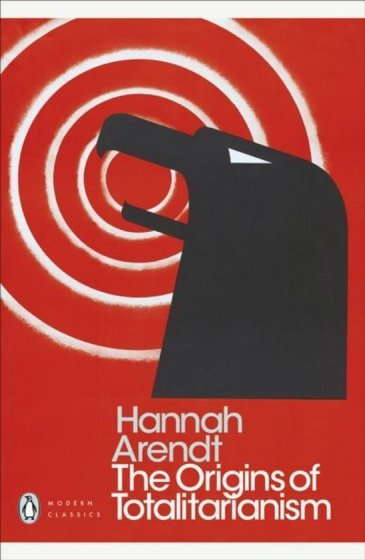
- Author: Hannah Arendt (1906-1975)
- Title: The Origins of Totalitarianism
- Published: 1951
- List of Challenges 2021
- Monthly plan
Introduction:
- The Origins of Totalitarianism was published in 1951.
- It was Hannah Arendt’s first major work.
- She describes and analyzes Nazism and Stalinism as the
- ….major totalitarian political movements of the first half of the 20th century.
- The book is regularly listed as
- …one of the best non-fiction books of the 20th century.
Conclusion:
- This is not an easy read.
- It is encyclopedic and exhausting
- .…yet I plodded through it.
- It took me a month to read in installments.
- While reading this book I could not help comparing some items
- to Trump and his ‘Trumpism’.
- It felt like Arendt’s writing was part of
- …Stephen Miller’s playbook! (close Trump advisor)
- Arendt discusses a few subjects as
- …antisemitism, Disraeli, Dreyfus Affair, Algiers and Imperialism.
- But I enjoyed the last chapters the most:
- The Totalitarian Moment (ch 11) and Totalitarianism Power (ch 12).
- Arendt helps us understand what Trump is not:
- He’s not a totalitarian.
- There are a number of ideas in Hannah Arendt’s work
- …that I think are very helpful in understanding what Trump is.
- While Trump is not a totalitarian in her understanding,
- …he incorporates what she calls “elements” of totalitarianism.
- She thinks that one of the core elements of
- …totalitarianism is that it’s based in a movement.
- I had to stop and think what I heard on
- 14 February after Trump was acquitted:
- “Our historic, patirotic movement #MAGA had only just begun.”
- 19 January Trump’s final address at the White house:
- “The movement we started is only just beginning.
- There’s never been anything like it”.
- I never heard a President of the US ever refer to his
- time in office as a “movement”!
- Just think about it...
- Trump calls himself the mouthpiece of a movement.
- That’s a very dangerous position for a politician.
- Because it actually means that
- …what he cares about more is
- …the mobilization of people (the Base)
- …rather than working on a platform about a particular aim
- …to help the nation and its citizens!
- If you want to read how a leader can manipulate the
- masses (…the Base) the book is a fascinating read.
- Chapters about Imperialism and Race and Bureaucracy
- …I skimmed, there’s a lot of history in this book.
- I was more interested in the concept of Totalitarianism.
- I took from this book what I needed…but it must emphasize
- …it is NOT an easy read…it is a challenge.
- I preferred “How Fascism Works” (2018) by Jason Stanley.
My notes from Goodreads.com:
February 12, 2021 –
5.31% Every monarch had a court Jew to handle financial business.
Later we read how of the establishment of the house of the Rothschilds had a monopoly for the issuance of government loans.
Ms Arendt will soon explain…why countries developed such a strong policy of antisemitism.
February 14, 2021 –
16.7% The shift from Jews in banking to professional/intellectual professions was caused by the growth of nations. Several important Jewish banking houses were too small to meet the new financial demands. (Ch 2)
February 15, 2021 –
22.77% Push through the first ‘less engaging’ pages and you will discover
the book really gets interesting in chapter 3!
Arendt speaks about Jews….but between the lines she is speaking about herself: The majority of assimilated Jews lived in a twilight of favor and misfortune. Resigned to the fact that…to be a Jew meant to belong either to an OVERPRIVILEGED upper class…or an UNDERPRIVILEGED mass.
February 18, 2021 –
66.41% I was shocked after reading:
“NOT Stalin’s and Hitler’s skill in the art of lying
BUT the way they were able to organize the masses into a collective unit to back up their lies with impressive magnificence.”
Now, just let that sink in….and remember what happened in USA “The Big Lie” and I’m sure you can see that S’s and H’s playbook is being read by politicians and Fox News!”
Still cold…




#ReadingIrelandMonth21 “Still” (poem)

- Title: Still
- Author: Felicia Olusanya (aka FeliSpeaks)
- Genre: poem
- Published: 2020
- List of Challenges 2021
- Monthly reading plan
- #ReadingIrelandMonth21 @cathy746books
Introduction:
- RTÉ commissioned STILL to aptly describe and capture
- Ireland’s reaction to the deadly virus.
- It puts forward the reality of our current uncertainty.
- Ms Olusanya was born in Nigeria and moved to Ireland with her mother.
- She has settled in Longford where her application for refugee status was accepted.
- Core message:
- Covid-19 virus It is touching us all in different ways and different degrees.
- The only thing we can do for each other right now
- ...is to remain as still as possible.
- It is how we can save each otherl
Still.
Covid came.
And Ireland stood still.
Shocked at how much could gather at our doorsteps – like dust.
We wrestled with what we might, What we may, How life would continue, the ways it must.
Stood still.
The virus ate through limbs of every family tree,
It choked out the lives we’d built roots around,
It emptied out purses; cutting money by the foot,
Rendered hearts bruised and persons forgotten, Left us breathless. For dead.
Still.
We closed into ourselves.
We folded behind lock and key, Inhaled through the fogs of uncertainty,
We found fun in the walls of our homes,
Made it work, Fashioned it for play,
Carved out sections we can fill joy with,
So we can hold it firm on the days we didn’t know what we next, what could happen.
Stood still.
For those whom age had known beyond a golden jubilee,
whose eyes glaze with film reel memories,
whose daughters have vowed to love them in their sunset,
whose sons have kissed them in their sunrise.
We want your vision of us in full colour.
Stood still.
For the Frontline workers armed with nothing but faith,
For the emerging minds that must dare to dream in high definition,
For the lonely minds that are glaring at love through a screen,
For the bodies that create homes in cardboard shelters.
Still.
For you. Ireland is standing still.
But tomorrow, when our knees get soft with impatience and the gates of our homes swing open,
Which way will our legs go?
Which path does our heart know?
 NancyElin.blog