
- Language shapes our thinking.
- Indigenous languages see the world in particular ways.
- There are three stories:
- Poppy Albert – built a dictionary of his language
- Granddaughter August – returned home for his funeral
- Reverend Ferdinand Greenleaf – defender of
- ….“the decent Natives whom I have lived amongst”
28
Dec
#Non-Fiction The Dead Are Arising
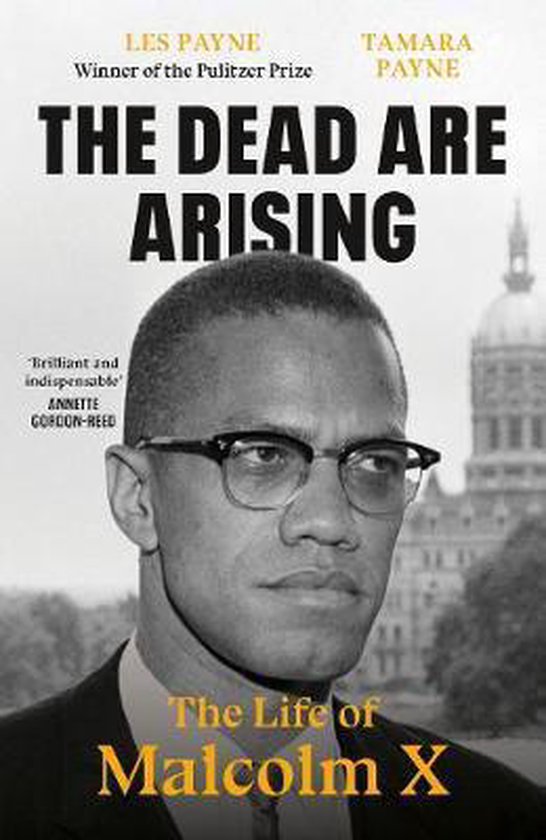
- Author: Les Payne (1941-2018)
- Title: The Dead Are Arising
- Published: 2020
- Genre: novel (4 parts, 19 chapters, pg 640)
- Trivia: winner National Book Award for Nonfiction 2020
- Trivia: winner Pulitzer Prize Biography 2021
- List of Challenges 2021
- Monthly plan
Conclusion:
- Decades of research went into the creation of
- The Dead Are Arising: The Life of Malcolm X
- by Les Payne and Tamara Payne, a fully realized portrait of Malcolm X.
- Pulitzer Prize winner Les Payne set out to interview anyone
- who had ever known Malcolm X, and after his death in 2018,
- his daughter and researcher Tamara Payne completed his work.
- This was a absloutely stunning book!
- Part 1: Malcolm’s young years 1- 15 yrs
- Part 2: Malcom move to live with half sister in Boston
- ….he is street wise and soon ends up in jail.
- These two sections are just the pre-show
- …and can feel a bit slow at times.
- Do not stop reading because Malcolm’s biography
- … is a riveting a page-turner!
- Les Payne has included many new items of information
- that Malcolm X…LEFT out of his own
- …autobiography written with Alex Haley.
Last Thoughts:
- This book filled in a lot of gaps in my memory of the 1960s.
- Growing up I had heard of Malcom X
- ….but only knew he was assassinated on February 25 1965.
- Why? Who was involved? I had no idea.
- The mainstream media placed
- …the spotlight on Martin Luther King
- …and left Malcom X in the shadows of my mind.
- Now…finally I know why Malcom X was killed
- …but it took 55 years and the painstaking research of Les Payne
- to solve this crime
- #MustRead
27
Dec
#Fiction The Yield
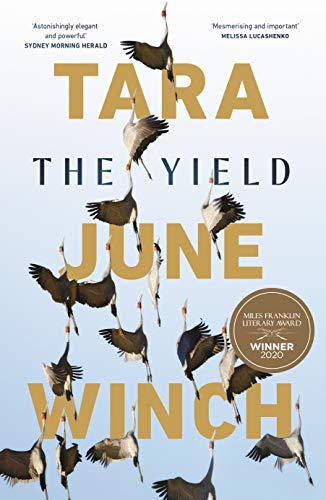
- Author: Tara June Winch (1983)
- Title: The Yield
- Published: 2020
- Genre: novel (42 chapters, pg 352)
- Winner of the Prime Minister’s Literary Award 2020
- Winner of the Miles Franklin Award 2020
- Shortlisted for the 2020 Stella Prize
- List of Challenges 2021
- Monthly plan
Quickscan:
Strong point:
- Each narrative has a distinct writing style…remarkable!
- The ways that the author uses words, sentence structure
- …and sentence arrangement all work together
- to establish mood, images.
Strong point:
- A sentence in chapter 6 struck a nerve.
- Thinking about all the people
- who have died in USA due to Covid-19.
- How the families must now cope with such grief and loss.
- …Ms Winch captures the moment for me:
- “…And just like that the home became just a house…”
- Albert: 40% of the book
- What does your this character want in the story?
- Determined to answer the call of the spirits (ancestors)
- …urging him to remember. (Prosperous Mission)
- – personal narrative about family told in the form of
- …definitions of aboriginal words.
- Rev. Greenleaf: 23% of the book
- What does your this character want in the story?
- Determined to set the record straight
- …as to what happened at the Prosperous Mission.
- Rev. Greenleaf mentions it was
- “not the sentiments that
- divided us…but the words.” (pg 148)
- Central in the book is the…
- importance of the Albert’s dictionary.
- August: 37% of the book
- What does your this character want in the story?
- Determined to honor her grandfather Albert (Poppy)
- …and save ancestral lands from a mining company.
Conclusion:
- To be honest….the book was OK.
- I enjoyed 2 narratives:
- Poppy’s dictionary and Rev. Greenblatt’s letters.
- August?
- Ms Winch writes with great insight of the
- unraveling of August…when exposed to loss.
- She has made some mistakes when her
- life seems to be careening out of control.
- But I felt the “unraveling” was a bit too lengthy.
- August keeps floundering around in their own distress
- …until chapter 33 when she finally decides to stay with her family.
- The last 9 chapters were full of action
- …and August’s new found purpose.
26
Dec
#Classic Iola Leroy

- Title: Iola Leroy (info characters and plot)
- Author: Frances E.W. Harper (1825-1911)
- Genre: novel (33 very short chapters, 200 pg)
- Published: 1892
- Trivia: 19th C Classic
- Trivia: One of the very first novels written by a black woman
- List of Challenges 2021
- Monthly plan
- #Classic
Quickscan:
- It tells the story of a wealthy Mississippi planter
- who frees and marries his mixed-race slave.
- They have two children, Iola and Harry.
- They are raised without knowledge of their
- mixed background and educated in the North.
- After the father’s death
- …greedy relatives thrust Iola and her mother into slavery.
Structure:
- Ch 1-8 present
- Ch 9-12 flashback ( 20 years ago….)
- Ch 13- 33 present
- Strong point: Regional dialect, characters influenced
- by a specific locale with speech and attitudes
- …reflected the deep South in 1860s.
- Mainly in ch 1-8…so if you find it irritating reading
- ….just remember the rest of the book is ordinary text.
- Strong point:
- This book as old as it is…just makes me think!
- Pg 32 says:
- THEN: “…when the colored men were being enlisted,
- …that he (soldier) would
- break his sword and resign.”
- NOW: 128 years later Lloyd Austin could would be
- the first African American to lead the Pentagon.
- West Point graduate, retired four-star general,
- former commander of the American military effort in Iraq
- …has been nominated by President Elect Biden
- …to be his Secretary of Defense.
- Oh,…times are a changin’!
- Strong point:
- Ms Harper is prescient…
- perceiving in 1892 the
- …significance of events before they occur.
- “Other men have plead his (black man’s) cause
- but out of the race must come its own defenders.
- With them the pen must be mightier than the sword.”
- REF: Opinion NYTimes dd. 12.12.2020
- Svp read –> “How White is Publishing?”
- …and add more voices of color to your reading lists!
Conclusion:
- Ms Harper fulfills the requirement of historical fiction:
- — bringing alive the past
- — speaking forcefully
- — to the readers of today.
- Themes: importance of religion, oppression of women
- Themes: racism, central role of women in community/family
- Subplot: a beautiful love triangle…
- Triangle: Iola – Dr. Gresham – Dr. Latimar
- Some have said this book feels outdated
- …but I disagree.
- It made many strong points
- …that we can learn from….even today!
- Iola Leroy is powerful enough to
- remain with readers for years to come.
- That is why it is a ….
- #MustRead #Classic!
25
Dec
#Merry Christmas 2020

- Glad to report that despite a
- …FULL LOCKDOWN in The Netherlands
- …Santa was able to visit us!
- Why are Santa’s reindeer allowed to travel on Christmas Eve?
- They have herd immunity.
MERRY CHRISTMAS!!

19
Dec
#Non-fiction Body Count
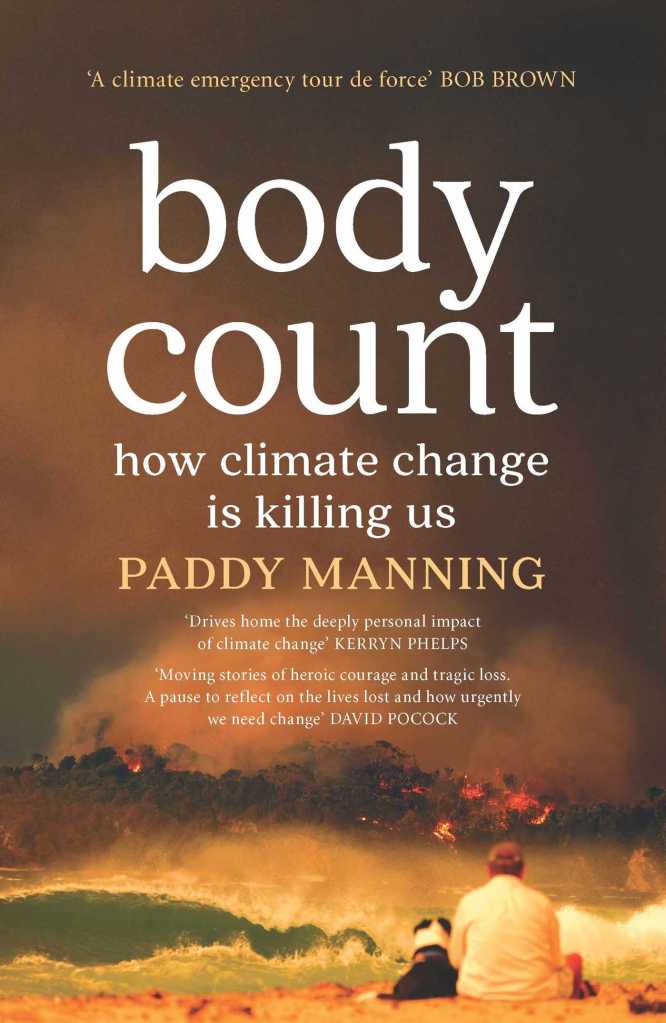
- Title: Body Count
- Author: Paddy Manning
- Genre: non-fiction (pg 292) (end notes pg 293-323)
- Published: 2020
- Trivia: Shortlist Victorian Premier’s Literary Award 2021
- Trivia: Shortlist Walkley Award 2020
Introduction:
- Suddenly, when Australia caught fire,
- …people realized what the government has not:
- that climate change is killing us.
Strong point:
- Prologue: The Black Summer
- Very good introduction (hook) describing the
- story about Dick Lang and his son Clayton.
- trapped in bushfires on Kangaroo Island.
- I’ve added this link to so you can see some
- “before and after” foto’s
- Before and after fotos Kangaroo Island
Conclusion:
- Unfortunately the rest of the book
- did not live up to my expectations.
- I hoped to learn much more about the “Black Summer”
- fires in Australia (Dec 2019-Jan 2020).
- Instead Mr Manning has given me his analysis
- of articles (2009 – 2020) found on websites of the
- The Guardian, Sydney Morning Herald,
- medical journals, inquiries, inquests
- …and royal commission reports.
- The author highlights topics starting with Black Saturday
- February 7 2009 and continues to describe
- the affect of heat, flood, disease, poor air quality,
- drought and heat waves have on Australians.
- That is a lot to process in just 292 pages.
- Mr Manning is good at giving the
- reader the broad ‘climate challenge’ picture
- but expected more depth about the most current
- disaster Black Summer 2019-2020.
Last thoughts:
- So my score for this book (2 stars)
- …is purely based on my opinion:
- what I wanted and what I got.
- It’s hard to dislike this book because
- it is an important topic:
- how climate change is injuring human health,
- …but in my case it is even harder to defend it.
16
Dec
#Non-fiction How To Do Nothing
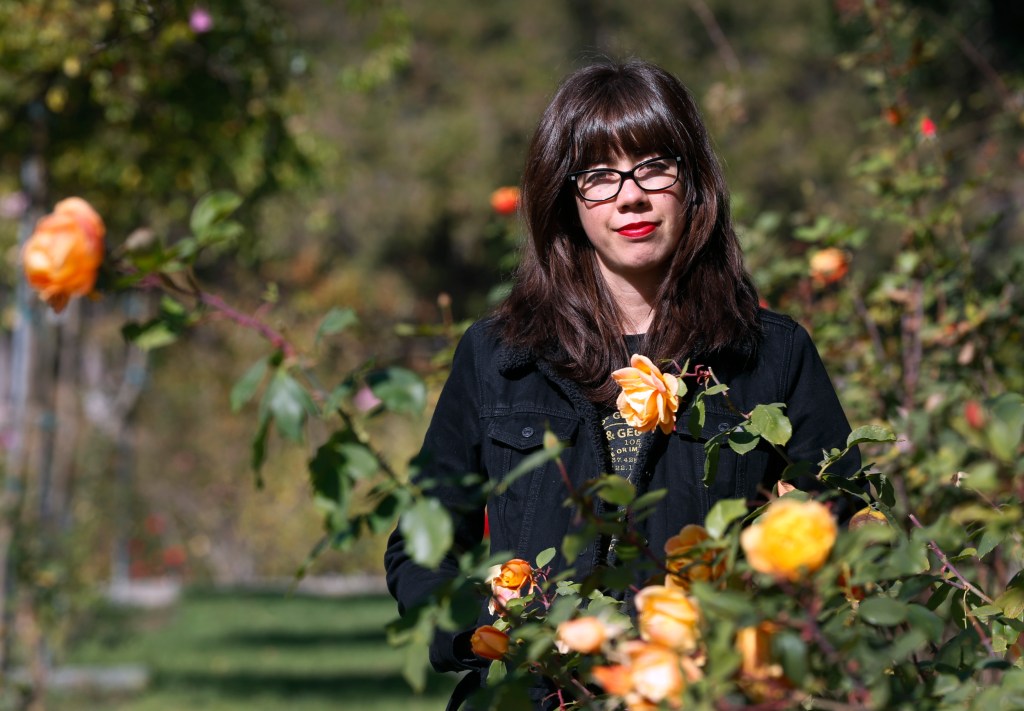
- Title: How to Do Nothing: Resisting the Attention Economy
- Author: Jenny Odell
- Genre:
- List of Challenges 2020
- Monthly reading plan
- #Obama’s reading list 2019
What are the two lessons in the book?
- Doing nothing is hard.
- It requires resistance:
- refusing the frame of reference
- ..in which value is determined by productivity
- maintaining the importance of nonverbal communication
- …and the experience of life as the highest goal.
- Doing nothing is hard.
- It requires rootedness:
- being firmly established, connected to ancient roots
- …the present grows out of the past.
What is the structure?
- Chapter 1 – disruption is more productive that work of maintenance
- Chapter 2 – to head for the hills?..or remain and escape from commercial social media
- Chapter 3 – create a space of refusal: “I would prefer not to.”
- Chapter 4 – how can art teach us new scales/tones of attention
- Chapter 5 – pop the filter bubble around us and how we view others
- Chapter 6 – utopian social network, more private communication
Conclusion:
- It was a collection of ramblings of Ms Odell
- …hoping to come across as philosophical.
- I couldn’t get through a single chapter.
- I started each one, hoping it would be
- …less awful than the last, to no avail.
- The book was OK…
- ….but I would not have included
- it on a best books list!
- #DisappointedObama !
12
Dec
#Non-fiction: Say Nothing
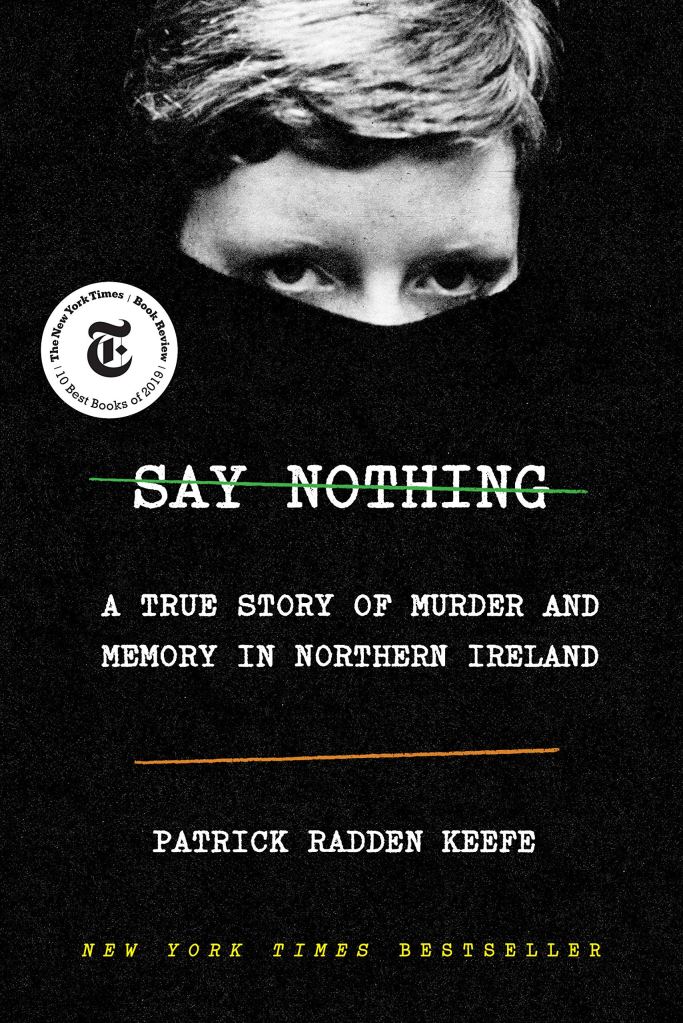
- Title: Say Nothing
- Author: P. R. Keefe (1976)
- Genre: narrative non-fiction
- Published: 2018
- List of Challenges 2020
- Monthly reading plan
- Title: from the poem “Whatever You Say, Say Nothing” by Seamus Heaney
- #Obama’s reading list 2019
- Trivia: Winner 2019 National Book Critics Circle Award for nonfiction.
Introduction:
- The books concerns the Troubles in Northern Ireland
- …beginning and ending with the 1972 murder of Jean McConville.
Strong point:
- This is a very good book if you want
- …to know what it felt like during The Troubles
- …fear, omertà, code of silence title: “Say Nothing”.
- Keefe’s writing style is cinematic.
- — POV meant to simulate the experience of watching a movie.
- —setting, characterization, structure
- — create visually dynamic scenes
- London car bombs, ch 11
- force feeding Dolours and Marion ch 14
- gruesome hunger strikes (Dolours, Brendan and Bobby Sands)
Strong point:
- Keefe realizes that this book has its ‘edgy sides’, unpleasant to read...
- …but he also knows the only way to keep the reader (in this case…me)
- engaged from cover to cover it to use the “glue” of empathy.
- Dolours is mentioned 525 x (…thank you Kindle).
- I keep reading because I feel connected to Dolours
- …interested in her plight.
- …wondering what makes a girl become so revolutionary, political?
Conclusion:
- Hook: 1972 – chapter one as Jean McConville is dragged
- out of her house
- ….and thrown in a van by masked thugs.
- Her body was finally found 43 years later in 2003.
- The crime remains unsolved.
- This book was slipping away… from me but
- …on page 50 things started to change!
- Chapters alternate between the Prices sisters (Dolorus and Marian)
- ..and the McConville’s (Arthur and Jean….and their children)
- …top-ranked IRA Gerry Adams and Brendan Hughes.
- This is a lot to take in
- ….it is almost numbing to read about The Troubles.
- Many key players are dead,
- Brendon ‘the Darkie’ Hughes (1948-2008)
- James Martin Pacelli McGuinness (1950-2017)
- Dolours Price (1950-2013)
- …one is still living Gerry Adams (1948)
- …Irish republican politician who was the
- …President of Sinn Féin until 2018.
- He advocated for a political movement to run
- parallel with the armed struggle.
Last Thoughts:
- I learned more about a period in recent history
- I hadn’t known much about.
- It was a loose framework for a historical look at
- …some of the everyday people who got caught up
- in the violence of the IRA.
- It’s a sobering book
- It is a hard read so…
- …prepare yourself to be drained
- ….when you close the book.
- #HistorySeenInRearViewMirror
10
Dec
#Non-fiction: 2020 Victorian Premier’s Literary Award

Bora Bora
- Author: Christina Thompson
- Title: Sea People: The Puzzle of Polynesia
- Published: 2019
- Genre: Non-fiction
- Rating: A
- Trivia: 2019 NSW Premier’s History Award General History
- Trivia: 2020 Victorian Premier’s Literary Award for Nonfiction
- List of Challenges 2020
- Monthly plan
- #PMLitAwards
Introduction:
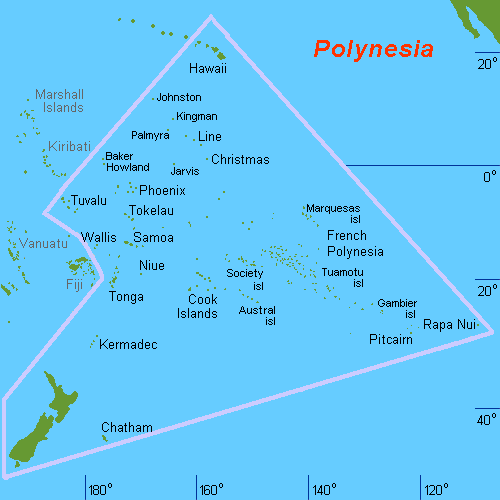
- Christina Thompson and her family (Maori husband and three sons)
- spent 8 weeks traveling across the Pacific, with stops in
- Tahiti, Ra’iatea, the Marquesas, the Tuamotu Archipelago, T
- onga, Hawai’i, New Zealand, and Vanuatu.
- They visited:
- two points of the Polynesian triangle (Hawai’i and New Zealand);
- a center of ancient Polynesian culture (Tahiti, Ra’iatea);
- one of the earliest Polynesian settlements (Tonga);
- and the most famous Lapita cemetery in the Western Pacific (Vanuatu).
Polynesian Triangle ( 10.000.000 square miles!)
What is the CORE MESSAGE ?
- Problems of Polynesian origins – a great geographical mystery
- How did the Sea People spread themselves over the vast ocean (P.Triangle)
- The problem is that the events are pre-history, no written records
- .…open to interpretation.
- Christina Thompson does NOT just follow
- …. James Cook’s three expeditions.
- She approaches the origin of the Polynesian ‘Sea People’ from a fresh angle:
- NOT what happened…
- ….but HOW WE KNOW what happened in the Pacific.
- In 20th C science delivers up whole new bodies of information.
- In 1970s an experimental voyaging movement emerged.
- Scientists used computer simulation the chance of
- settling Polynesia by drift voyagages alone was very small.
- There had to be some human decision making taken into account.
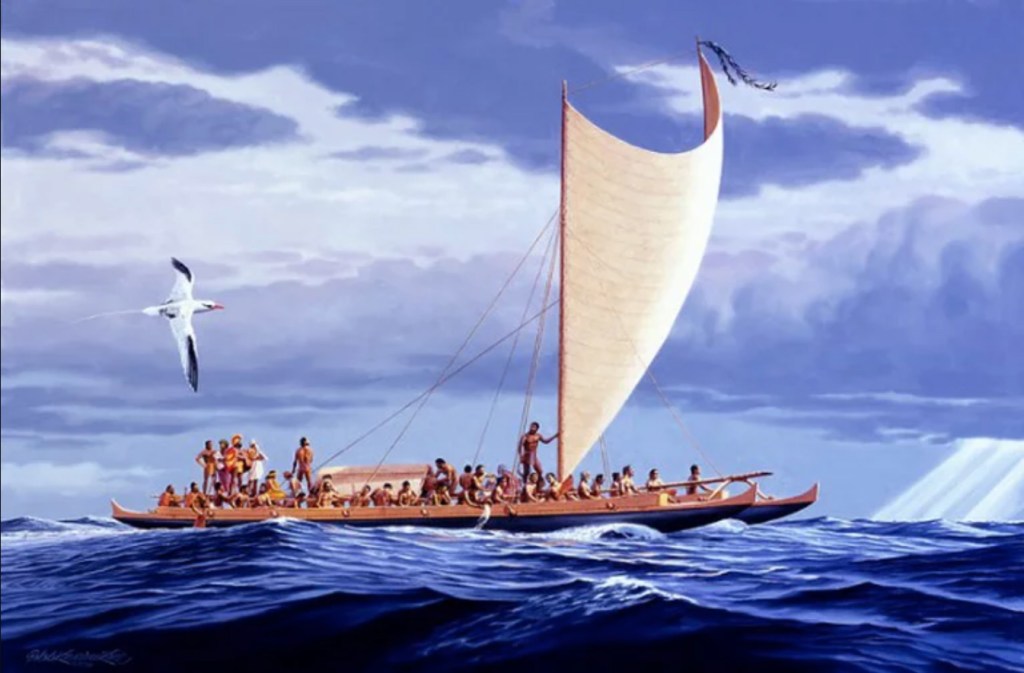
- This was to show that the ancient Polynesians
- …could have purposefully settled the Polynesian Triangle
- in double-hulled, voyaging canoes.
What did the Polynesians use to navigate?
- Without the aid of sextants or compasses
- …the ancient Polynesians navigated their canoes by the
- stars and other signs that came from the ocean and sky
- for example clouds, swells.
When did the Polynesians explore?
- 1200 BC – Polynesians reached Samoa and Tonga
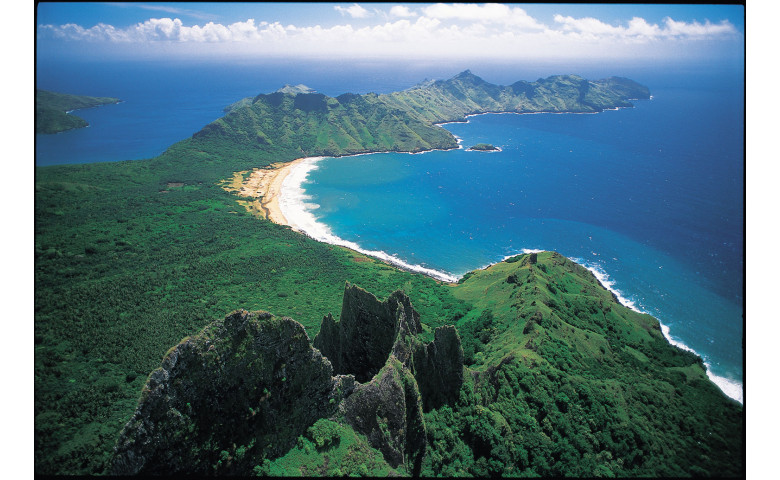
- 300 AD they fanned out to the Marquesas
- 400-600 AD heading north to the Hawaiian Islands
Where did the Polynesians come from?
- One of the most famous people to investigate
- and write about this was Abraham Fornander (1812 – 1887)
- He was a Swedish-born emigrant
- …who became an important Hawaiian journalist.
- He was committed to the Aryan thesis:
- ancestors of Polynesians were a chip of the same block
- from which the Hindu, Iranian and Indo-European family
- were fashioned.
Strong point:
- I knew NOTHING about James Cook’s expeditions
- …and this was a great overview of his three journeys.
Strong point:
- Thompson makes the book so interesting by discussing
- unexpected and closely related topics
- to explain the Polynesian Triangle
- …Part III, ch 1 “Drowned Continents”
- The Belgian voyager, scientist
- Jacques-Antoine Moerenhout (1796-1879)
- dedicated many years searching for
- the origin of the Polynesians and their culture.
Nuku Hiva, Marquesas Islands
Strong point: structure
- This book was easy to follow…even if you need to
- take a break and read something else.
- Thompson has divided the book in 6 parts
- The Eyewitness (1521-1722)
- Connecting the Dots (1764-1778) James Cook voyages
- Why Not Just Ask (1778-1920)
- The Rise of Science (1920-1959)
- Setting Sail (1947-1980)
- What We Know Now (1990-2018) DNA and Dates
Weak point: (Part II, chapter 4)
- Discussions about the Indo-European language family
- that is related to the languages used in Polynesia were
- took some determination to get through…but i did it.
- But this is important to know to discover the origin of
- the ‘sea people’ in Polynesia…by means of linguistics.
Conclusion:
- This book is not ONLY about the Polynesian mariners
- but also about the people who over the years have
- puzzled over their history
- …sailors, linguists, biologists, voyagers, geographers etc.
- I did not know Robert Lewis Stevenson visited the
- Marquesas Islands!
- This was a very interesting book…with some parts that
- were amazing
- …voyages and methods of
- …navigating without compass or sextant,
- …other parts a bit soporific (linguistics).
- This book is well worth your reading time!
- #NonFictionLovers
Last Thoughts:
- I recommend the audio book (11 hrs 40 min)
- A narrating voice brings life into this very
- interesting book.
- If you first want get into the Polynesian mood
- before you start this book
- …sit down (…with the kids) and watch
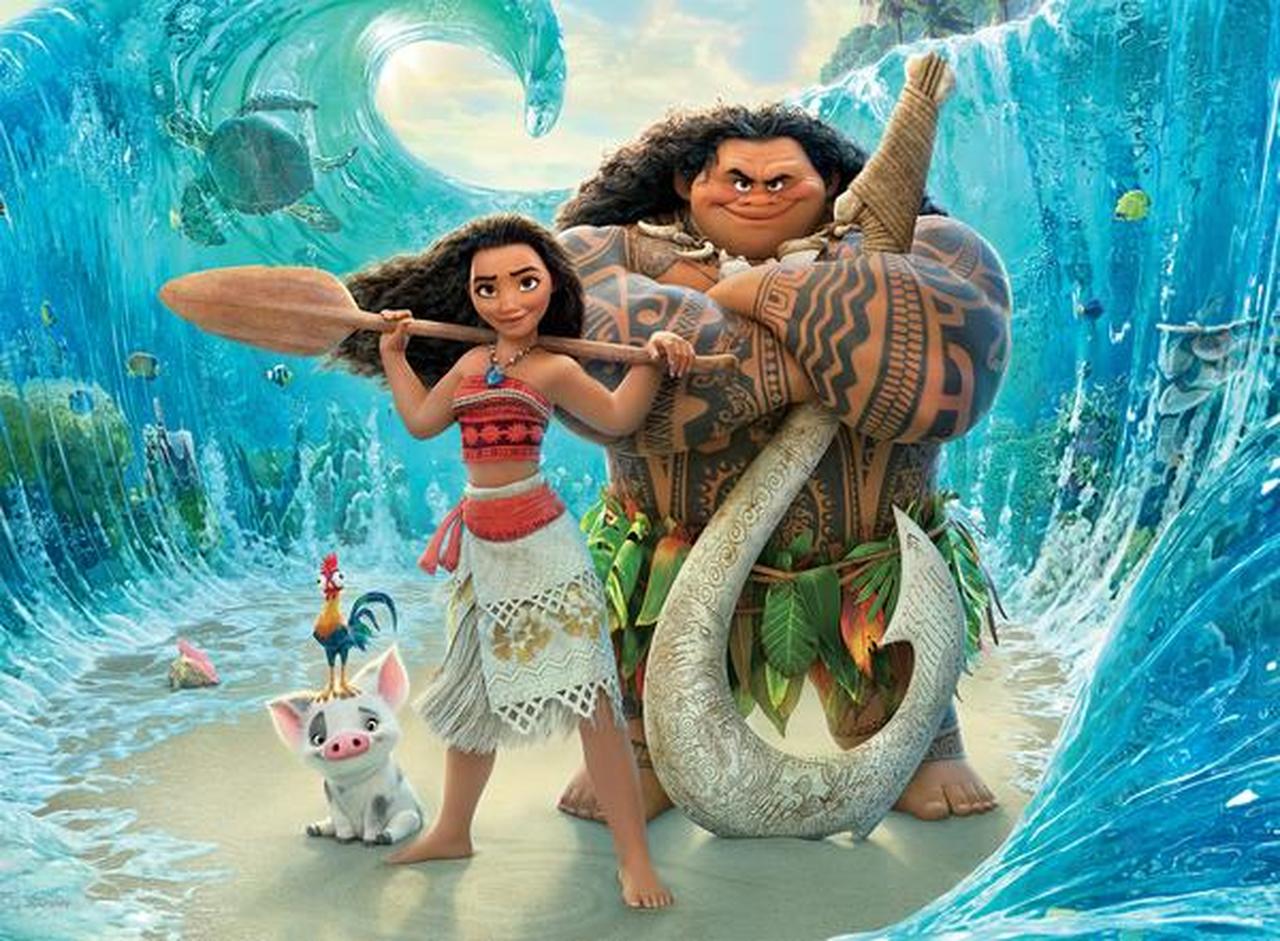
- Disney’s 2016 film Moana!
8
Dec
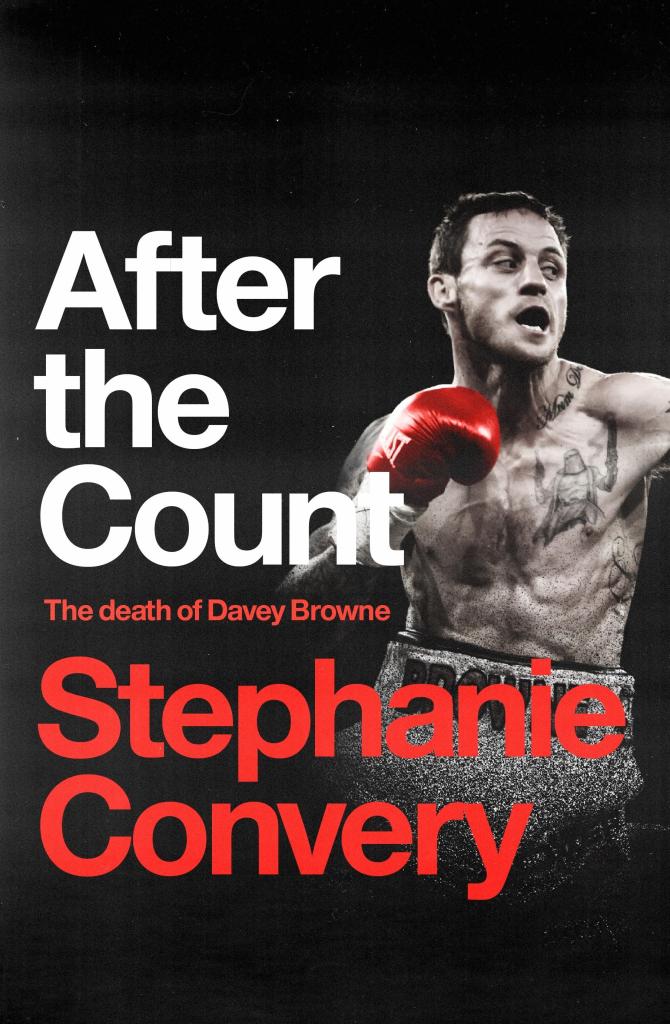
After the Count…should have won Walkley Award 2020
- Author: Stephanie Convery
- Title: After the Count
- List of Challenges 2020
- Monthly reading plan
- Trivia: Shortlist Walkley Award 2020
- Trivia: Shortlist Nib Literary Award 2020
- #AWW2020 @AustralianWomenWriters
Introduction:
- When young and fit professional boxer Davey Browne died in the ring
- pummeled to death in front of his family and friends…
- it was the result of a perfect storm of
- …incompetence by members of the boxing fraternity.
- For journalist Stephanie Convery it hit home hard.
- She was beginning her own serious boxing training
- …when she heard the news.
- After the Count investigates:
- the title fight
- the aftermath of David Browne Jr’s death
- interrogates the culture and history of boxing
- its gender dynamics
- the visceral appeal of the ring and
- the inherent contradictions of a violent sport
- …that refuses to face up
- the consequences of that violence.
Conclusion:
- Strong point: excellent ‘hook’ …hits you with a 1-2 punch
- Strong point: excellent introduction revealing the structure of the book.
- Strong point:
- The very personal perspective written by a woman
- ..boxing and trying to come to terms
- ..with the fear head injury and permanent brain damage.
- …this makes the book tremble
- …in my hands (pg 83-84) she must have a CT and MRI scan.
- Strong point:
- Ms Convery alternates between x-examination at
- inquest (lawyer vs neurosurgeon) with her personal visits to GP
- and hospital for CT scan.
- This makes for intense reading that keeps
- this reader glued to the page.
- Strong point:
- Ms Convery…adds her own questions to the narrative:
- How many deaths attributed to the boxing sport?
- How knocks to the head change the brain?
- What is the link between concussions sustained in
- contact sports and
- CTE (Chronic traumatic encephalopathy)?
- This is a neuro-degenerative disease which causes severe and
- irreparable brain damage, as a result of repeated head injuries.
- Her research reveals the shocking facts.
- Eye-opener:
- It wasn’t unusual for boxers to break their hands
- in fights and to punch on regardless! (pg 76)
- Strong point: pg 253-261
- The reader follows Ms Convery during
- her Fight Night for her final grading
- as boxing student at Joe’s Gym.
- Just amazing listening to her thoughts as she
- prepares herself explaining
- ….that with all the knowledge she as
- learned during her research for this book about concussion
- as she tries to pull herself away from the sport…
- …it draws her back somehow.
Last Thoughts;
- What a powerful book….I am absolutely bowled over by
- Ms Convery’s investigative research, her coverage of the death inquest
- and most importantly her conclusions in the last chapter.
- Sometimes the shorlisted book is BETTER that the prize winner!
- This is the best non-ficton read of 2020!
- I guess I’ve saved the best for last!
- #MustRead
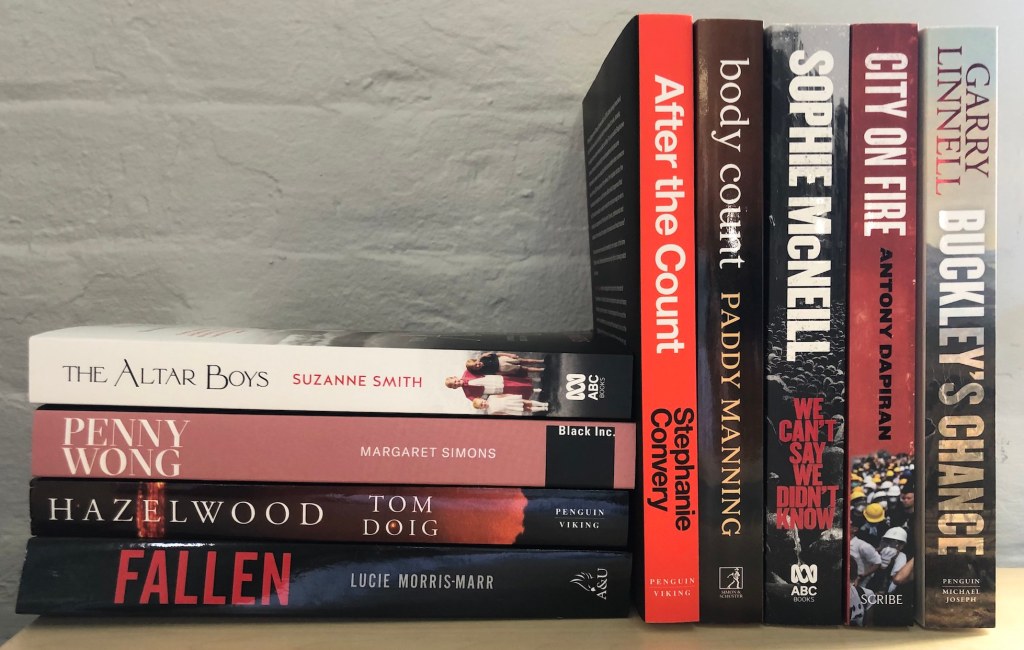
Books read:
- Fallen – Lucie Morris-Marr
- City On Fire: The Fight For Hong Kong – A. Dapiran
- Penny Wong – M. Simons
- The Altar Boys – S. Smith
- Hazelwood – Tom Doigt
- We Can’t Say We Didn’t Know – S. McNeill
 NancyElin.blog