
#Christmas 2020 African American Christmas Stories

- Editor Bettye Collier-Thomas (1941)
- Title: A Treasury of African American Christmas Stories
- Published: 2018
- Genre: 20 short stories – 4 poems
- List of Challenges 2020
- Monthly plan
- #DiverseDecember @DiverseDecember
- #ALiteraryChristmas In The Bookcase
Conclusion:
- A EXCELLENT collection of Christmas stories written by
- African-American journalists, activists, and writers from
- …the late 19th century to the modern civil rights movement.
- I’m reading this book because I want to let it show me
- how white our Christmas reading world is.
- I was so impressed how various authors found a way
- to use the theme of Christmas…..to highlight way
- African Americans experience the holiday.
- #DeeplyMoving
- #MustRead….this is a gem!
Strong Point:
- Each story is short…..and 4 poems
- are presented with an introduction about the author
- and in what context the story/poem was published.
- This is very informative because it is difficult to find information
- about little known writers in the book!
- Personal choice: I read the intro’s before reading the story
- …just to get a feel about the writer.
- an obscure short story writer (Leila Plummer)
- an editor of The Colored American Magazine (1902-1904) (Pauline Hopkins)
- a vaudeville performer/producer/writer (Salem Tutt Whitney)
- Brown Univ, Harvard Law prominent lawyer and civil rights advocate (Louis Redding)
Surprise:
- Included in this book is a simple story “Mirama’s Christmas Test”.
- I discovered Timothy Thomas Fortune.
- Ida B. Wells, W.E.B. Du Bois, and Booker T. Washington
- considered …him an equal,
- …if not a superior, in social and political thought!
Surprise:
- While researching these stories
- …I discovered many writers of color
- who played an important role in literature in the early 20th C.
- I can add them to my TBR 2021
- ….for my year of reading only authors of color.
- Langston Hughes poet/writer
- international correspondent Ethel Payne
- poet Gwendolyn Brooks
- author Willard Motley
- journalists Ida B. Wells
- Louis Lomax (1922-1970) . first African-American television journalist.
- Timothy Thomas Fortune – journalist, writer, editor and publisher
Table of Contents:
- The Sermon in the Cradle – W.E.B DuBois (1868-1963)
- The title says it all….it is a moving sermon!
- Du Bois was a prolific author.
- His collection of essays, The Souls of Black Folk,
- is a seminal work in African-American literature.
- A Carol of Color – Mary Jenness (poem)
- Poet of the Harlem Renaissance (not well known)
- The Christmas Reunion Down at Martensville – A. Hodges (poem)
- The story is set in Kentucky in 1893.
- Three generations of a family gather to celebrate Christmas.
- This story has the rhythm and rhyme of
- “‘Twas the Night Before Christmas”.
- The Children’s Christmas – Alice Dunbar (1875 – 1935)
- The story of 5 different children who
- …through no fault of their own
- …do not experience the joy,
- …spirit, and the meaning of Christmas.
- Very touching….it was written in 1897, but could be true today,
- ….timeless.
- Christmas Eve Story – Fanny Coppin (1837-1913)
- The story is written in a fairy tale style to appeal to young readers.
- It brings to light the concerns she had for poor black children
- …she saw in the streets of Philadelphia.
- ”Once upon a time….”
- Mollie’s Best Christmas Gift – Mary E. Lee
- 19th C holiday story emphasizes the
- importance of putting Christ back into Christmas.
- Also it gives the reader a glimpse of what Christmas was like for
- …middle class black children in the late 19th C.
- A Christmas Story – Carrie Thomas
- The story was written for middle class black children.
- …and their expectations of Christmas and Santa Clause
- No matter how old we are
- ….we never tire waiting for Santa Claus!
- Fannie May’s Christmas – Katherine Tillman (1870-1923)
- …uses the theme of Christmas
- …to also highlight role of women.
- So Christmas-y, uplifting story…..good feelings!
- Elsie’s Christmas – S. Whitney
- The author uses the theme of Christmas
- and illustrates important the role of Santa Claus.
- Power of prayer….a family reunited!
- General Washington: A Christmas Story – Paulien Elizabeth Hopkins
- The story uses a biographical sketch of
- “General Washington” ( …person in the neighborhood)
- as social commentary on racism, religion and child neglect.
- The Autobiography of a Dollar Bill – Leila Plummer
- …no biographical info about this short story writer.
- Dollar Bill is a metaphor for a slave: both are commodities.
- Such a clever idea…
- one-dollar bill that talks and tells his story!
- Mirama’s Christmas Test – Timothy Thomas Fortune
- The story (setting: Jason, Florida)
- …reflects the concerns of black educated women
- who wish to marry a men of equal stature.
- Alex and Mirama…do opposites attract?
- Read and find out!
- A Christmas Party That Prevented a Split in the Church – Margaret Black
- Margaret Black sets the story in the village of St Michaels,
- in the church to emphasize the
- centrality of the institution in black lives.
- All of St. Michaels formed a detective bureau
- to watch the young and single….Rev.Steele!
- Now….that must spark your reading curiosity.
- Three Men and a Woman – A. Hodges
- The story hinges on three Christmas Eves…starting in 1890
- when a woman hatches the plot to get rid of her husband!!
- It is a very long “short” story.
- Hodges touches on important and
- ‘explosive’ issues in this story
- …that many black newspapers would not have published.
- The story is finally serialized in
- Indianapolis Freeman…but abruptly
- ends with chapter 10. Why?
- Read the introduction and story to fine out!

- It Came to Pass: A Christmas Story – Bruce Reynolds
- The story opens on Christmas Eve in a large Northern city.
- The beauty and benevolance is seen in the business section of town
- ….Christmas lights, Christmas decorations in store windows.
- Reynolds juxtaposes the displays of Christmas with the abject poverty
- and suffering for people like Ella and Edward.
- Oh….divine intervention knocks on Ella and Edward’s door!
- A Christmas Journey
- The story is set in Boston the story uses social realism
- to explore the meaning of Christmas for the dispossessed.
- There’s always a sad story…
- Uncle U.S. Santa Claus – James Jackson (poem)
- At the beginning of the Great Migration (1913)
- J.C. Jackson challenges the US government in this narrative poem
- to address the issues of blacks who are leaving the South
- in droves to avoid lynching, poverty and discrimination.
- Devil Spends Christmas Eve in Dixie – Andrew Dobson (poem)
- He was a well known radio personality and journalist in Chicago 1930s.
- The poem uses the Christmas theme to
- bring attention to both lynching and
- anti-lynching bills pending in Congress.
- POWERFUL poem…
- This story has the rhythm and rhyme of
- “‘Twas the Night Before Christmas”.
- One Christmas Eve – Langston Hughes (1901-1967)
- He was one of the most acclaimed of
- poets, dramatists and novelists in the 20th C.
- Arcie is a black domestic servant and
- …she tries to make Christmas a happy occasion for her four year old son.
- Huges uses the Christmas theme to illustrate the
- vast economic gap between blacks and whites
- ....and the lack of concern whites have about the lives of their servants.
- Langston Hughes….is so good!
- Santa Claus is a White Man – John Henrik Clarke (1915-1998)
- The story uses the theme of Santa Claus, a mythical icon
- of benevolence, love and generosity who transcends the boundaries of race.
- But the Southren White Santa Claus could be the opposite of this image.
- Cruel… Jim Crowism
- …even Santa Claus takes part terrifying a little boy.
- Merry Christmas Eve – Adele Hamlin
- Angie is just out of a relationship (Rollins) .
- ..and starting a new one. (Doug).
- Angie asks herself the question which of these
- …men reflects the strength and character she wants in a man.
- Who does she want to spend Christmas Eve?
- Christmas Day?….and the rest of her life with?
- Luckily, there’s always a love story….
- White Christmas – Valena Minor Williams
- Ms Williams uses the theme of “White Christmas” in 1953
- …on the eve of the Civil Rights Movement to
- capture the mood and attitudes of African Americans.
- ….and they SAVE THE BEST FOR LAST !!
- Heartwarming story.
#Non-fiction The Anarchy: East India Company

- Author: William Dalrymple (1965)
- Title: The Anarchy: East India Company, Corporate Violence, the Pillage of an Empire
- Genre: non-fiction
- Published: 2019
- #Obama’s reading list 2019
- List of Challenges 2020
- Monthly plan
Conclusion:
- Enjoyed parts of the book but found it crushingly detailed.
- If you don’t know much about India or its history…
- you will be buried under a pile of names and
- places that will mean nothing to you.
- After 25% …I just skimmed the book, excruciatingly boring.
- It was a soulless history an 200 pages too long.
- Doesn’t anyone have a red pen at Bloomsbury Publishing?
- You can dislike a book for any variety of reasons,
- but in the end it comes down to a matter of opinion,
- and opinions can differ from person to person.
- So, if you are interested in history
- …read the book and perhaps you might like it.
- I did not.

#Autofiction: The Topeka School

- Author: Ben Lerner (1979)
- Title: The Topeka School
- Published: 2019
- Genre: autofiction
- List of Challenges 2020
- Monthly reading plan
- Reading time: 10 hrs 30 min
- #Obama’s reading list 2019
- Trivia: finalist for the 2020 Pulitzer Prize for Fiction
Personal note:
- I am trying to reading as many books
- as I can on #Obama’s reading list 2019.
- There are a few books I have pre-scanned
- that do not appeal to me…so I’ll skip those.
NOT READ —>“The Age of Surveillance Capitalism: Zuboff
NOT READ —>“We Live in Water: Stories,” J. Walter (White)
NOT READ —>“A Different Way to Win: J. Rooney
NOT READ —>“Furious Hours: Murder, Fraud and the Last Trial of Harper Lee
NOT READ —>“The Heartbeat of Wounded Knee: Native America From 1890

- When I saw The Topeka School on Goodreads.com
- …I knew I was in for a challenge.
- There were many negative reviews!
- Score 2 – 1833x (…and counting)
- Score 1 – 602x (…and counting)
- I thought….” fools rush in where angels fear to tread…”
- Wish me luck…..
Introduction:
- The Topeka School is set in the late 1990s in Topeka, Kansas.
- It is a very complex family saga.
- Three intertwined narratives:
- Adam, his parents, Jonathan and Jane and misfit Darren.
- Note: this is fictionalized autobiography
- It is helpful if you know something about Ben Lerner’s life. (Google)
- Characters Jane and Jonathan are modeled on
- …Lerner’s own parents! Harriet and Stephen
- …clinical psychologists at the world-renowned
- …Menninger Foundation in Topeka, Kansas
- Adam is representative of the author, Ben Lerner.
- Note:
- It takes a very, very profound mind to write a book like this!
- Harriet Lerner (feminist, clinical psychologist)
- is one of the…most important influence on her son’s writing.
Conclusion:
- Note: reading this book
- …is physically and mentally exhausting!
- It took me 3 days because
- …I had to pause and digest the intense writing:
- …dreams, stream-consciousness, philosophical issues,
- …feelings of floating about life, dizziness,
- …backstories of several minor characters
- I can understand that some readers
- …are just are overwhelmed by this book.
- That can explain the many 1 and 2 scores.
- Note: if you want to read this book
- ….you must be committed to finish it.
Structure:
- There are 4 alternating narratives.
- I decided to do something different:
- I read each narrative in its entirety
- …not alternating.
- In this way I tried to keep my
- …focus on one character at a time.
- Shifting POV….would make this book more difficult to finish!
- This is not an easy narrative!
- But…good books are often a challenge.
- 4 sections Adam = 4,5 hrs reading time
- 7 sections Darren = 2,5 hrs
- 2 sections Jonathan = 1,5 hrs
- 2 sections Jane = 2 hrs
Darren:
- I thought this would be THE most important subplot
- that would bring the others together.
- I was wrong.
- Foil for the main character Adam.
- Inarticulate, compelled to use actual violence (rage)
- Social misfit adopted by Adam and the “cool kids”
- Part mascot, part clown.
- He is treated with cruelty and confused affection.
- This character is a symbolic role (discover in the book)
- …who serves for closure, bookends the story.
Adam: (voice of author)
- Pretentious student – very articulate, increasing his level of “cool”
- prize winning debater – anxiety-ridden,
- …callow, and too clever for his own good.
- Uses his linguistic prowess as a weapon!
- He can destroy (rage) in a debate (the spread) or
- He can seduce with poetry.
- What is the spread?
- Term used in debating to indicate that one
- makes more arguments, give more evidence
- …than the other team
- can respond to within the allotted time.
- Challenge:
- difficult to keep track of Adam’s (author’s)
- …bizarre thoughts, revelations
- Core message:
- Feelings and language
- Jane: ( = Harriet Lerner)
- The stupid mistake psychologists make….
- We thought that if we had a language for our feelings
- …we might transcend them.
Strong point: commentary of society
- Ben Lerner gives some analysis of modern society
- ..that hits me with an antiseptic sting.
- He describes men as
- lost boys of privilege
- they are emptied out, mass men without mass
- perpetual boys, Peter Pans
- man-children since America is adolescence without end.
- He describes men as
- lost boys of privilege
- they are overfed; in a word starving
- the vacuum at the heart of privilege
- cannot be filled with stuff…
- the violence will recur periodically, like cicadas.
Strong point: Lerner writes what he knows….the world of debating champion!
- Lerner give the reader a glance behind the curtain
- …before the debate begins
- Coaching...
- Debate coach Evanson….insights into
- why US elects Texans who went to Yale (Pres Bush)
- Rhodes Scholars from Arkansas! ( President Clinton)
- “Interrupt your highbrow fluency
- ….with bland sound bites of regional decency.”
- “Serve into the folksy…and then BAM
- I want you all business again,
- back to wunderkind analysis and
- the movements we practiced.”
- …gestures, lean the body into the speech, pace the floor.
Strong point:
- The reader experiences the ‘debate championship’
- from two sides:
- Adam on stage (chapter Adam – The Cipher)
- Parents in the audience (chapter Jane – Paradoxical effects)
- …the blending and blurring of their voices
#AusReadingMonth2020 Wrap-up

- It has been a long November
- …filled with politics
- ….USA election and a
- …President who is living in a fantasy world!
- Luckily I had my books as a means
- …to escape “the Maddness of King Trump”.
- I posted 20 books.
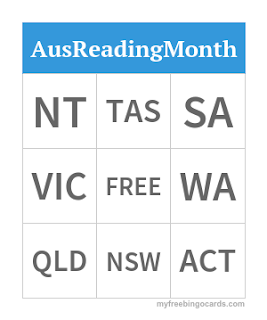
- I tried to complete 3 bingo cards
- ….and failed in all of them.
- It is very difficult finding authors in
- …NT (Northern Territory), TAS and ACT.
- Thanks to Brona for hosting my favorite challenge!
- List of Challenges 2020
- Monthly plan
- #AusReadingMonth2020 @Bronasbooks
- Here is my reading list:

- Nganajungu Yagu – C.P. Greene (WA) – (poetry)
- Hazelwood – Tom Doigt (VIC) – NF
- Pearly Gates – Owen Marshall (FREE SPACE) New Zealand author (novel)
- Argosy – Bella Li (VIC) (poetry)
- Fallen – Lucie Morris-Marr (VIC) – NF
- We Can’t Say We Didn’t Know – S. McNeill (WA)
- Fall On Me – Nigel Featherston (TAS) (novella)
- Comrade Ambassador – G. FitzGerald (TAS) – NF
- City On Fire: The Fight For Hong Kong – A. Dapiran (FREE SPACE) – NF
- Dolores – L.A. Curtis (novella)
- Simpson Returns – W. Mcauley (VIC) (novella)
- Icefall – S. Gunn (WA) (novella)
- Girl Reporter – T. Roberts – (novella) (TAS)
- Waiting for the Past – Les Murray (NSW) – (poetry)
- An Item from the Late News – T. Astley (QLD) (novel)
- Empirical – L. Gorton (poetry) (VIC) – (poetry)
- Ruby Moonlight – Ali C. Eckermann (SA) – (poetry)
- Things I’ve Thought To Tell You Since I Saw You Last – P. Layland (ACT) – (poetry)
- Penny Wong – M. Simons (SA) – NF
- The Altar Boys – S. Smith (NSW) – NF
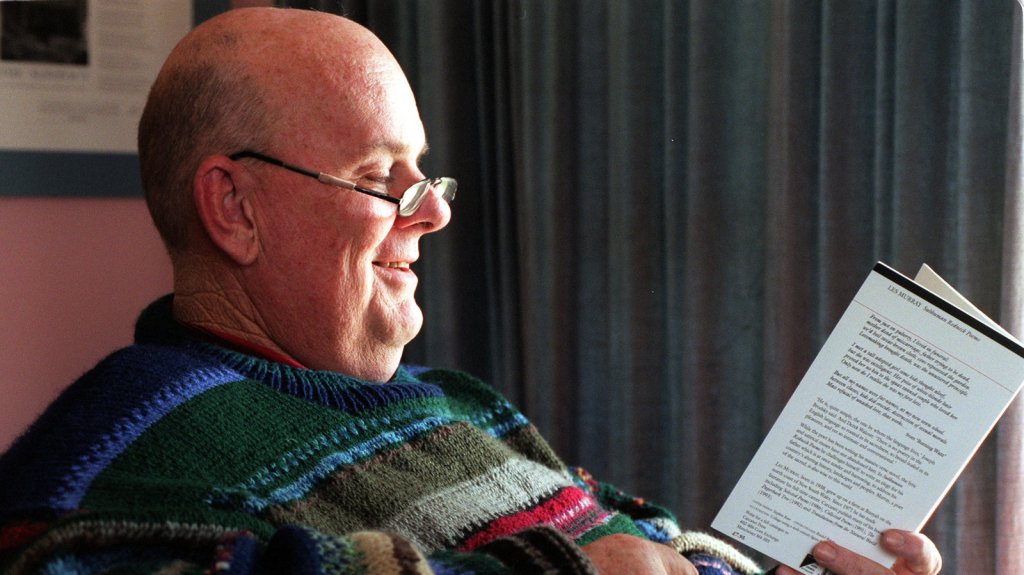
#AusReadingMonth2020 Les Murray
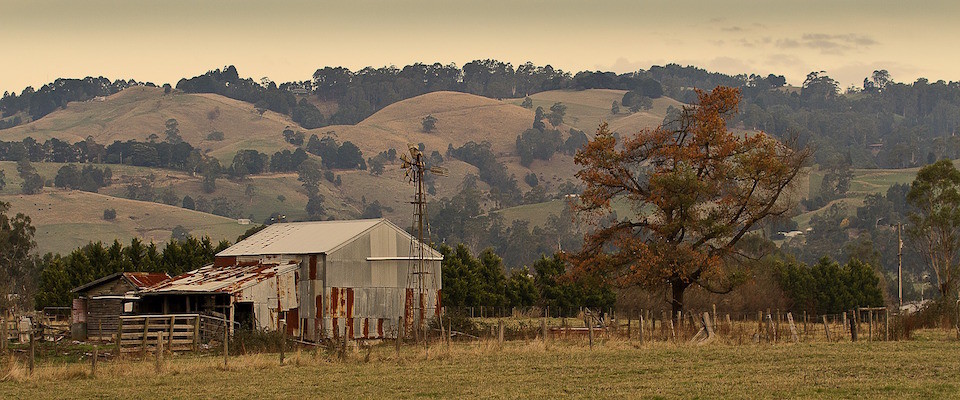
- Les Murray landscape…
- Murray’s work helped raise Australia’s poetry to a level of global importance.
- Author: Les Murray
- Title: Waiting for the Past: Poems
- Published: 2015
- Trivia: Queensland Literary Awards for Poetry Collection (2015)
- Bingo card: NSW
- List of Challenges 2020
- Monthly plan
- #AusReadingMonth2020 @Bronasbooks
Notes:
- Note: Murray’s poetry is deeply interested in memory
- …the past catching up.
- Note: Les Murray favors sound-patterns over strict rules of form.
- …through repeating patterns of alliteration and assonance, consonance.
- Note: I liked Murray’s explanation: prose is narrow speak…poetry is wide speak!
- Note: Of course the moment you read a poem influences your reaction to it.
- We are now in quarantimes …
- Murray’s first two stanzas in his poem ‘Self and Dream Self’
- ….struck a “corona” nerve:
Routines of decaying time
fade, and your waking life
gets laborious as science.You huddle in, becoming
the deathless younger self
who will survive your dreams
and vanish in surviving.
- The Black Beaches
- This was a poem I would never have understood without some help.
- What is peat? What is coal?
- ….what is Murray trying to say?
- Important to understand more about
- peat —>> coal in order to understand the poem!
- Theme: different lengths of time
- Very slow geological time to form coal
- 24 hr time….sun returning from half hid forest
- Instant time…frost disappears in a “sugar lick”
- Peat is not actually coal, but rather the precursor to coal.
- Peat is a soft organic material consisting of
- partly decayed plant and, in some cases,
deposited mineral matter. When peat is - placed under high pressure and heat, it becomes coal.
- Peat is the first step in the formation of coal.
- In order to be turned into coal,
- the peat must be buried from 4-10 km deep by sediment.
- When Two Percent Were Students
- Murray tells us how felt, what he saw
- …when he returned home after university:
- “when rush hours were so tough…a heart attack might get stepped on”
- “widows with no facelift of joy…spat their irons”
- “Host of depression time and wartime….hated their failure…which was you.“
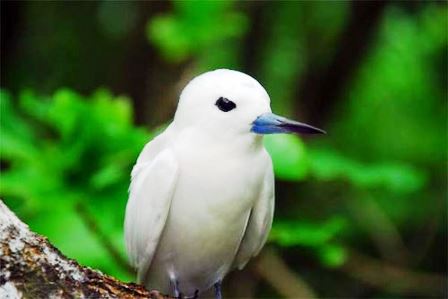
- Poem: Dynamic Rest (…all about these little birds, terns.)
- Dynamic and Rest
- Just a very simple poem…about birds, terns.
- It is one of my favorites.
- Murray’s power of observation is the key to his poetry.
- A simple bird, the wind, the sand and he weaves it all into perfection.
- Title is an oxymoron.
- Birds facing a ‘brunt wind’
- …the wind affects the birds on the ground.
- Their ‘feet have to grip the sand’.
- There was constant movement ‘terns rising up through terns’.
- The poem illustrates there is constant movement
- ….in this attempt of rest.
- The Care
- Touching poem introduced and read by the poet himself
- …in his gravelly Australian voice: LISTEN
- The Last Hellos (…again title is oxymoron)
- Beautiful elegy for his troubled father..
- “Don’t die Dad, but they die….”
- ““People can’t say goodbye / any more. They say last hellos.”
Last Thoughts:
- How do you read a book of 64 poems?
- The best thing to do is Google each poem before reading it.
- Get the feel of the poem…some insight. Then read the poem
- That is what I did.
- The poems are all under a page or two in word length.
- Perfect for reading and re-reading in
- order to gain maximum pleasure and understanding.
- Of all the articles I read…The New Yorker presented the best
- article written by Anna Heyward.
- She gives an excellent description of who Les Murray was.
- If you read Les Murray in the future…start
- with this link: The Homegrown Language of Les Murray
- Absolutely blown away by Les Murray’s words
- …he is as Aussie as a billabong by an old gum tree.
- So glad I took the time during #AusReadingMonth2020
- …to discover this Australian national treasure, Les Murray.
- #MustRead
- Score: A+++++++
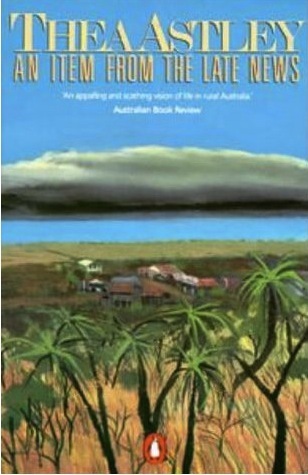
#AusReadingMonth2020 Thea Astley

- Author: Thea Astley (1925-2004)
- Title: An Item from the Late News
- Published: 1982
- Genre: novel
- Setting: Allbut (fictional town the resembles Carins Tablelands)
- Bingo card: QLD
- List of Challenges 2020
- Monthly plan
- #AusReadingMonth2020 @BronasBooks
- #AWW2020 @AustralianWomenWriters
Summary content:
- Wafer saw his father blown apart by a bomb in the second world war.
- He seeks to spend his middle years in a place of solitude.
- Wafer arrives in the town of Allbut.
- It is scarcely a dot on the map in the vast Queensland outback.
- But Wafer’s peace-loving ways are not understood by the locals.
- When the final blast comes (Wafer’s fear of a nuclear bomb)
- …it is not the one he expected.
- The locals suspect Wafer is depriving them of a fortune in sapphires
- by hiding the source of his ‘find’.
- This lump of mineral that he keeps hidden may not even
- …be precious!
Plot:
- Predictable
- .…Wafer may not walk away from this town
- …”a speck on the world’s glassy eye” (pg 1)…alive!
- Ms Astley fills the book with metaphysical ideas
- …and I thought, oke…this could be something:
- Time:
- ….we are the second hands. we are the movers.
- …60 seconds to the minute means nothing. (pg 2)
- …perhaps I’m not the only one fighting clocks. (pg 11)
- …we don’t reach forward when we’re down. We reach further down,
- …trying to beat the swing of the wheel
- …here Astley means the balance wheel in a clock
- …that creates the ‘tick’ sound.
- These ideas never were developed.
- I still don’t know why the narrartor
- Gabby was fighting clocks!
Nihilism: Wafer’s unfortunate fate….
- Moral nihilism is view that there is no morality whatsoever.
- For example, the ‘locals’ would say that killing someone,
- for whatever reason, is neither right nor wrong.
- The word ‘NOTHING’ was mentioned 42 times.
- Wafer: “Oh, the pointlessness of the struggle to be…” (pg 144)
- Narrator: ” There is nothing outside that town. Is nothing.
- Can nothing be walled by nothing?”
- This entire theme was depressing….and I just lost interest.
- There was not s smidgen of joy in the book.
Characters: bland, uninteresting, and unsympathetic.
Title: An Item from the Late News
- This is a reference to a hostage situation in a foreign country
- that was heard on the ‘late news’.
- Wafer feels he is ‘held hostage’ in Allbut.
- “Oh, truly here in Allbut we are hostages as much as those 50 Yanks…” (pg 139)
Conclusion:
- At the start I thought, even though the book was
- moving at a snails pace, I would give Thea Astley the
- benefit of the doubt.
- I let the plot develop and hoped it would make a good story.
- That was the high water mark for my experience with this book.
- Ms Astley has never disappointed me
- …but there is always a first time.
Feedback to @WhisperingGums (Sue)
Sue, you know if i can find anything good to say about Thea Astley I will.
I just missed her classic ‘catholic church bashing, snarky descriptions of women in her social circle, lyrical metaphors about music and her constant main character the weather…. it just wasn’t in this book. Ms. Astley left me a cryptic sentences that I thought would go somewhere: “Move forward, return to go. Move backward, to go. Move forward, to go. Return to one.” Oke, I imagined a chess game of life…but she didn’t dive into that thought of mine! I still have a few of Astley’s books to read…so I just consider this a speed bump in the road of her literary work!
Thanks so much for commenting!
Feedback to @ANZ Litlovers LitBlog (Lisa)
LOL we’ll have to agreee to disagree on this one!
as we did on blogpost 24 April 2019
#Ockham NZ Awards Shortlist Lloyd Jones!
#Poetry Empirical

- Title: Empirical
- Author: Lisa Gorton (1972) – Poet and Oxford scholar
- Genre: poetry
- Published: 2019
- List of Challenges 2020
- Monthly reading plan
- Bingo card: VIC
- Trivia: Shortlist 2020 – Kenneth Slessor Prize for Poetry
- #AusReadingMonth2020 @Bronasbooks
- #AWW2020 @AustralianWomenWriters
Introduction:
- Empirical means relying on observation.
- Book cover: Statue of Aphrodite as a symbol of the ‘beauty of the world.
- Goal book: Teach us to appreciate a different beauty no longer in its original form.
- Inspiration/timeline:
- Ms Gorton started Empirical in 2014.
- She had learned that the Victorian government planned an
- 8-lane highway through Melbourne’s Royal Park.
- Ms Gorton researched the colonial history of Melbourne
- …a young city on ancient land.
- She tries to understand how a feeling for place originates.
Quickscan:
- Part 1: Empirical I-VII document the poet’s walks
- through the Royal Park where an eight-lane motorway
- through Royal Park is to be contructed.
- Part 2: Crystal Palace: poems that include meditations on t
- he Great Exhibition’s antiquities and exhibits.
Empirical I
Summary: (believable…)
- Poet walks in the mounds of rubble and shattered concrete
- dumped in 2-3 near a factory, train line.
- Poet describes the weeds and grasses that have
- taken root in these mounds: head-high fennel,
- milk thistle, dandelion and tussock
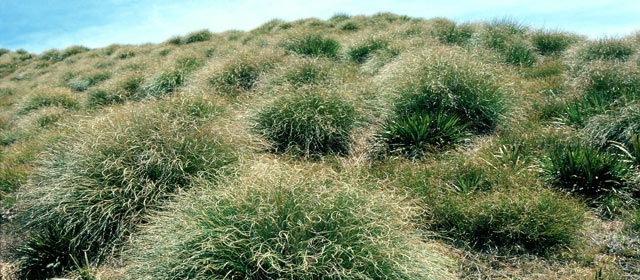
- Note: New Zealand’s native grasslands are tussocks –
- grasses that grow in the form of a clump.
- The tussock shape protects the plant, and helps it survive fire and drought.)
- Poet feels she is in an abyss and the weeds, grasses,
- mounds of rubble give the scenes a sense of place.
- It is a wilderness to itself, closed.
Tussock
Empirical II
Summary: (strange…)
- Poet continues to walk in the acres of rubble and grasses.
- She ‘vanishes into my life again’ (imagination)
- …with thoughts of this place as it was centuries ago.
- She asks the reader if we see the figures among the stones
- ….their worlds covered in rubble.
- Poet sees fragments of vases or urns and imagines Caesar gesturing…
Empirical III:
Summary: (again….very strange)
These words in Empirical I-II-III have NO emotional effect on this reader at all!
- Poet discovers a concrete table and chairs on the edge of the field
- She imagines the table set with various items: plates, cutlery, napkins in their rings, long stemmed
- glasses under a hanging lamp and a lion-footed salt cellar.
- Poet imagines ‘we’ (reader and poet?) sit and eat…..and ‘they’ (imaginary others??) vanish.
- The ‘others’ retreat and the ‘dining room’ is seen disappearing into a vanishing point, Droste effect.
- This effect represents the poet’s dream of landscape enclosing yet another dream of landscape .
Droste effect

Empirical IV:
Summary: (…it is not getting any better)
- Poet again describes grasses, seedbeds, and thistledown.
- She looks at the ‘front of now into the unreal scene out back’ and compares it to a
- drawing in perspective with lines shooting as far as the eye can see.
- Drawing on Empirical I the poet again refers to a factory, train line and envisages them
- ‘where your acts naturalise as monuments’.
- She compares them to a broken statues that ‘lies engulfed in grass’
- The entire scene is ‘a ruinable strangeness’
- that leads back to where she is sitting in head-high grass.
Empirical V:
Summary: (…the poet is speaking in circles with emphasis ‘grasses’)
- Tussock, rattling fennel tendrils from the root
- —speargrass with a rain wind and the grasses moving many way like shivers.
Poet invents a landscape (imagination) - …a ruinable see-through drawn into the plan in thought.
- Again the poet goes on about grasses:
- …in head-high grass, its pale seedbeds….
…the grass untidy, touchable, steeply its slant
…going in through leaf-clatter, corner branches out to where—
…privet (note: evergreen shrub) and the green palings (note: fences) - Finally a lucid thought I can cling to:
“…the road will come through here—“
Fennel

Speargrass

Empirical VI:
Summary: (…bizarre…completely out to touch with previous 5 poems)
- This is the only poem with a dedication : for Skye Baker
- Poet describes:
- cloud that is approaching and its shadow moves over
- (…of course more grasses)
- grasses, seedhead, tussock, milk-thistle and dry stalks of fennel.
- a cloud of ink and charcoal.
- The last words of the poem….baffling!
- “Battening over the hospital and the children’s prison—numb,
- ignorant rain falling (what is that?) from it without a
- sound the way it falls through mirrors.” (Huh?)
- “…She cuts the page in strips, pins them to a wall, would have them stained with hands”
- Note: I give up!
- …this book better improve considerably in part 2
- …or I’m tossing it in the bin!
Empirical VII:
Summary: (off-the-wall attempt for a ‘sense of place’)
- Poet describes:
- storm water piped down a gully filled with weed tracks.
- water flows to a standing pool
- water is pumped up to the golf course
- …that sometimes floods the creek
- a factory is surrounded by a cyclone fence.
- smoke from the furnaces moves upward
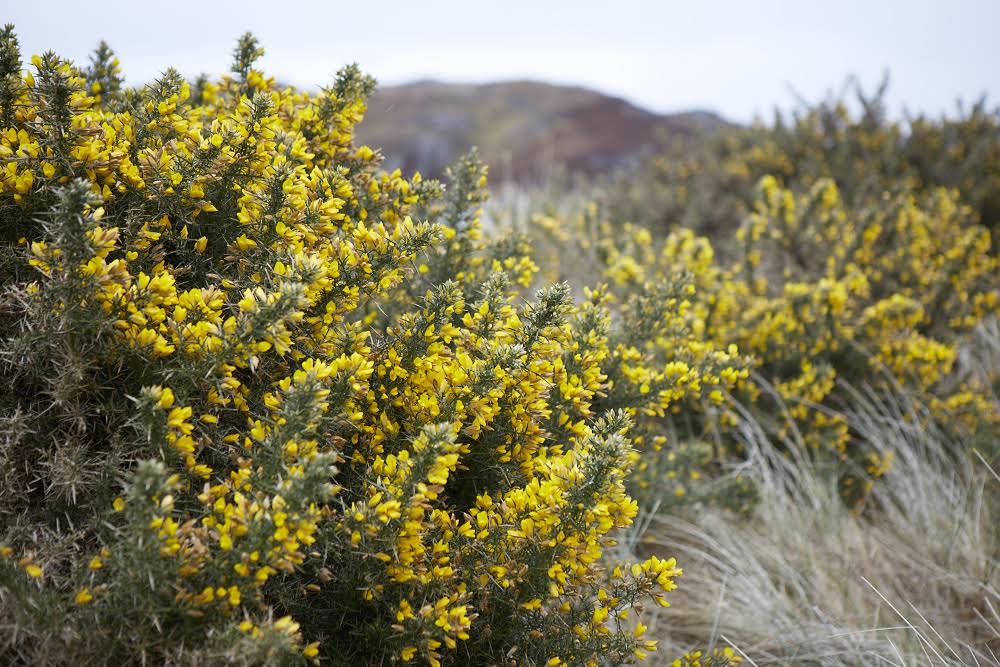
- rains….a screen on an leafless evergreen shrub, furze (aka gorse)
- I read that poetry is the best words in the best order.
- Ms Gorton seems to just scatter words willy-nilly
- …making no sense of place at all!
- Ms Gorton tries create her own inner land- and time-scapes… but THIS reader is left
- unsatisfied….and now thirsty.
- Water, water everywhere, Nor any drop to drink!)
- It just feels like prose with line-breaks added.
Furze (aka gorse)
Royal Park (longest poem in part 1, huge disappointment)
Summary
- This is a helicopter view of Royal Park’s history from 1835-1956.
- Ms Gorton uses 95% text from various historical documents
- mixed with 4% of words from the
- previous Empirical meditations and
- 1 % new thoughts captured in the last 100 words.
- Snippets about the original people
- involved in the history of Royal Park
- — descriptions of the map
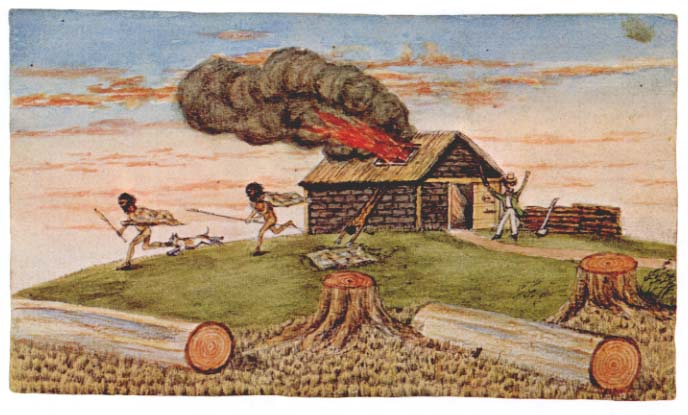
- — descriptions of a watercolour painting
- An Escape from the First Gaol
- … all these snippets/descriptions
- do not make Royal Park a poem by any stretch of the imagination!
Watercolour painting: An Escape from the First Gaol (Tullamareena burning prison)
Part 2: Crystal Palace
Aphrodite of Melos (poem)
Summary
- Ms Gorton has used information that can be
- found on Wikipedia and filtered it through a poet’s eyes.
- No harm in that. She mentions where and who found the statue etc.
- The poet describes the statue “drapery falls from her thighs like folds in water” or “
- …golden earrings in the shape of flowers…”.
- Now I’m no poet….but these comparisons
- sound like they are lacking in imagination.
- The object most mentioned is the mirror…3 x in the poem.
- I was not impressed with this poem, c’est la vie.
Aphrodite of Melos

- Rimbaud’s Cities I, Imperial Panoramas
- Summary:
- This is nothing else but
- Ms Gorton’s translation of Illuminations – 19 – Villes
- L’acropole officielle by Rimbaud.
- Rimbaud’s Cities II, Imperial Panoramas
- Summary: Again….just a transltion of Rimbaud’s poem.
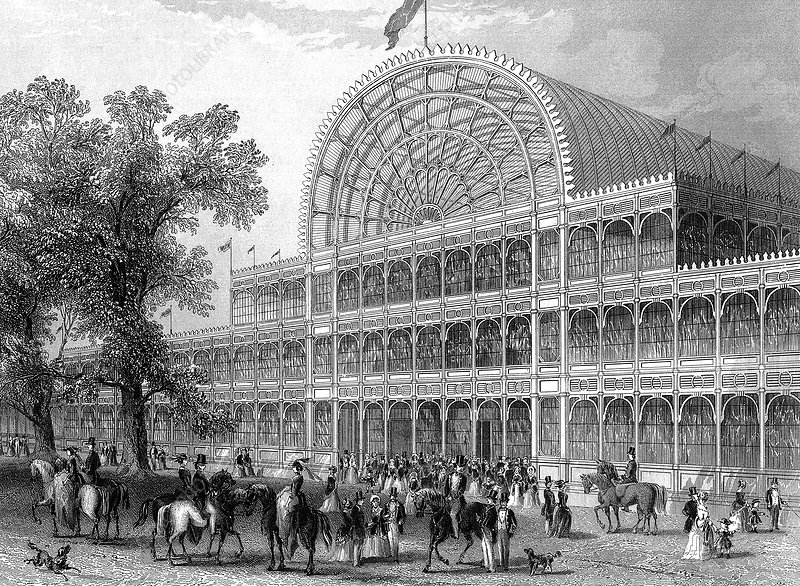
Crystal Palace (poem)
Summary:
- Ms Gorton lets her poetic mind roam while
- contemplating the history of Crystal Palace.
- The first half of the poem is a lyrical
- description of the building and
- a large part of the second half of the poem
- …is a list of 14 bizarre images a reader might
- see in the clouds that pass over the glass
- windows of Crystal Palace.
- Again….I am not impressed by this poem.
- I cannot find many poetic features
- that can highlight tone and mood
- (e.g., repetition, rhyme, alliteration, metaphor).
- It feels like a regurgitation of facts with a whiff of imagination.
Crystal Palace
Mirror, Palace (poem)
Summary:
- Again a poem that is based on the writing of Coleridge:
- Kubla Khan: or, A Vision in a Dream
- Note: Ms Gorton uses documents, quotes a few lines then
- gives her own interpretation of other unquoted lines….
- Marco Polo wrote: ‘…which he gives to his hawks…
- Ms Gorton wrote: “… carcasses for his gyrfalcons..”
- Last line of the poem sums it up:
- “I have annexed a fragment’ is a quote by Coleridge
- …..and that
- describes what Ms Gorton has done.
- I’m starting to sound like a broken record:
- Again….I am not impressed by this poem
Life Writing (poem? text?)
Of Coleridge’s Kubla Khan
Summary:
- This is a confused text that I had to skim
- It was exhausting and after having read 95% of this book
- I did not have the mental energy to read this carefully.
- I stumbled on references to:
- King Arthur and the Round Table ( How Morgan Le Fay Tried to Kill King Arthur ) “…Arthur had
- gone to rest for he had fought a hard battle, and for three nights had slept but little,”
- Extracts from the Excursion: [Mist Opening in the Hills]
- By William Wordsworth “…The appearance, instantaneously disclosed,
- Was of a mighty city..”
- …and many quotes from other writings that I had no desire to read.
- Again…this was a jumble of quotes, facts and God knows what else!
- …not impressed at all, sorry.
Landscape With Magic Lantern Slides (poem)
Summary:
- The poet uses words that have appeared in
- previous poems to give this poem a ‘bookend’ feeling:
- factory, landscape, train lines various forms of grasses and shrubs, statues.
- Ms Gorton quotes ‘You’ve seen the hands of statues that men have set by gateways”
- (note: quote De rerum natura On the Nature of Things.
Last Thoughts:
- I am at the end of this book and glad I can say…
- I did read EVERY word even when I felt
- like throwing the book in the bin.
- Ms Gorton is a very well-read scholar but is she a great poet?
- Perhaps I have been spoiled after reading 64 poems by Les Murray.
- The difference between Ms Gorton and Murray…is stiff and stark.
- My advice? Read Les Murray…
#AusReadingMonth2020 Simpson Returns (novella)

- Author: Wayne Macauley
- Title: Simpson Returns ( pg 135)
- Genre: novella
- Published: 2019
- List of Challenges 2020
- Monthly plan
- #AusReadingMonth2020 @Bronasbooks
- Bingo card: VIC
- #NovNov @746Books
NOTES:
- Main character:
- Jack Simpson – ghostly World War I hero soldier
- …not everyone can see him, apart from those who helps
- Helper: Murphy, his donkey
- Quest: Jack is in search for an inland sea in the center of the country.
- Majority of the tale: deals with characters he meets along the way
- teenage runaway
- refugee
- Vietnam veteran
- single mother
- deranged ex-teacher,
- Setting: Australia
- Theme: Jack tries to help others but sometimes fails….
- Jack defends his actions by claiming the
- …intention is more important than the result.
Conclusion:
- Backstory: Shrapnel Gully – bullet in the heart – Lasseter’s vial – the Inland Sea.
- Characters: Sad stories
- …that could not spark a scintilla of pathos in me, sorry.
- While the first half or so of the book
- …was interesting (Jack and Murphy) it became repetitious and tedious.
- Each section had the standard line to a character: “…tell me your story.”
- After 61% of the book….
- I decided to approach it from a different angle.
- With the help of KINDLE flashcards
- I noted ONLY the dialogue of Jack
- …and filtered out the tragic stories of the other characters.
- I flashed the cards
- ….and had a rolling conversation with Jack.
- I just wanted to salvage anything from the book.
Last Thoughts:
- Perhaps I’ve have been spoiled
- …after reading Nigel Featherstone’s
- stellar novella Fall On Me.
- Page turner? Only when I was turning
- …a few pages at a time hoping it would get better.
- It did not.
- #ReadAndDecideForYourself
#AusReadingMonth2020 Girl Reporter (novella)

- Author: Tansy Roberts
- Title: Girl Reporter ( pg 182)
- Genre: novella (SF)
- Published: 2017
- Trivia: Winner Aurealis Award 2018 Best SF Novella
- Bingo card: TAS
- List of Challenges 2020
- Monthly plan
- #AusReadingMonth2020 @Bronasbooks
- #NovNov
- #NovNov @746Books
Conclusion:
- I just loved this novella!
- Tansy Roberts just nailed it with the ‘new vocabulary‘ for the
- networked, connected, vlogging, livestreaming, vid, twitter feed generation.
- Friday Valentina (#SuperheroSpill reporter) made me laugh:
- “There’s something beautiful about the perfect hashtag.
- Truly, the hashtag is the epic poem of the 21st C.”
- Have some fun and enjoy Tina (mother), Friday Valentina
- Solar, Astra, The Dark and many more characters.
- This book is full of snark and satire!
- Strong point: snappy dialogue
- Tansy Roberts’ dialogue:
- develops the plot
- reveals characters’ motivation,
- creates an cyberspace experience for reader
- makes an average story extraordinary.
- #MustRead
- #MustLaugh
 NancyElin.blog