
#AUSReadingMonth 2019 Wrap UP

#AUSReadingMonth 2019 kick-off Q&A
- My heart broke when I heard that Louis
- …the koala who was saved
- by a very brave woman….had died.
- This #AUSReadingMonth 2019 will be overshadowed by
- some of the worst bushfires in Australian history.
- Help the climate…..#ShutDownAdani coal mine!
- Many thanks to Brona for hosting…
- Link #AUSReadigMonth wrap-up @Bronasbooks
- I enjoyed all my books.
- Happy that I completed the BINGO CARD!
Books:
- A Kindness Cup –Thea Astley
- The River in the Sky – Clive James (epic poem) RIP 1939-2019
- The Endsister – Penni Russon
- Sea People – C. Thompson – NSW 2019 History Award
- Boys Will Be Boys – Clementine Ford
- Dr Space Junk vs Universe: Archaeology the Future – A. Gorman
- The Phoenix Years – Madeleine O’Dea
- An Unconventional Wife – Mary Hoban
- Adani: Following Its Dirty Footsteps – L. Simpson
- It’s Raining in Mango – Thea Astley
- Troll Hunting – Ginger Gorman
- The Thinking Woman – Julienne van Loon
- Broken – M. A. Butler Victorian Literary Award 2016 (drama and literature)
- TILT – Kate Lilley Victorian Literary Award Poetry 2019
- Tide of Stone – K. Warren 2018 Aurealis Award Best Horror Novel
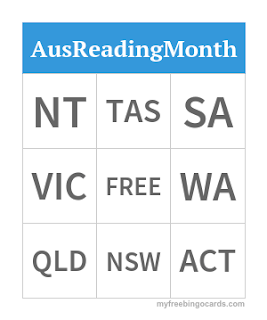
- NT – Broken – Mary Anne Butler (play)
- TAS – The Endsister – Penni Russon
- SA – Boys Will Be Boys – Clementine Ford
- VIC – Tide of Stone – Kaaron Warren
- FREE – The River in the Sky – Clive James
- WA – The Thinking Woman – Julienne van Loon
- QLD – The Kindness Cup – Thea Astley
- NSW – The Phoenix Years – Madeleine O’ Dea
- ACT – Troll Hunting – Ginger Gorman
#NonficNov: Week 1 Year in Non-Fiction

- Week 1: (Oct 28 to Nov 01)
- Hashtag: #NonficNov
- Hosted by: Julz of Julz Reads
- Stats: books read between –> 01 November 2018 – 31 October 2019
- Read 61 non-fiction books –> 29% of total books read
- Most read: (see list)
- Favoriet non-fiction: –> Everywhere I Look – H. Garner
Conclusion:
- This was a book I did not want to end.
- Garner’s insights for instance about Russel Crowe’s filmography
- or an Australian Ballet company were mesmerizing.
- But my favorite essay was ‘The Insults of Age”.
- This will be recognizable for every 60+’er!
- Helen Garner’s writing is clean and crisp
- ..nothing is slick or shallow.
- It is “reading caviar” !
Reviews:
Memoirs/personal essays
- A Woman’s Experiences in the Great War – L. Mack
- Thick – Tessie Cottom
- Small Acts of Disappearance: Essays on Hunger – F. Wright
- Can You Tolerate This? – A. Young –> #HiddenGem most recommended
- A Time of Gifts – Patrick Leigh Fermor
- The First Casualty – Peter Greste
- We Can Make a Life – C. Henry
- Le Lambeau – P. Lançon
- Aunts Up the Cross – R. Dalton
- Memoir: J McGahern
- Everywhere I Look – H. Garner
- Axiomatic – M. Tumarkin
Biography:
- In Extremis: War Correspondent Marie Colvin – L. Hilsum
- Sisters In Law (S. Day ‘O Connor and Ruth Bader Ginsberg) – L. Hirshman
- Pulitzer – J. McGrath Morris
- The New Negro: The Life of Alain Locke – J.C. Stewart
- No Friend but the Mountains – B. Boochani
- Teacher – G. Stroud
- Frederick Douglass: Prophet of Freedom – D. Blight
- Fouché – E. de Waresquiel
- Je suis fou de toi – D. Bona (Jeanne Voilier and lover poet Paul Valéry)
- Beyond Words: A Year with Kenneth Cook – J. Kent
- James Tiptree, jr. The Double Life Alice Sheldon – J. Phillips
Theatre
- Twenty-First Century American Playwrights – C. Bigsby
- 100 Essays I Don’t Have Time to Write – S. Ruhl
- August Wilson’s Pittsburgh Cycle: 13 critical essays – editor S. Shannon
Health
- All-Day Fat Burning Diet – Y. Elkaim (…I lost weight!)
History
- Deep Time Dreaming – B. Griffiths
- Age of Eisenhower – W. Hitchcock
- The Mueller Report – R. Mueller
- The Art of Time Travel – T. Griffiths
- Stamped From the Beginning – I.X. Kendi
- The History of the Church – Eusebius
- The Twelve Caesars – Suetonius
- The Billion Dollar Spy – D. Hoffman
- America’s War for the Greater Middle East – A. Bacevich
- These Truths – Jill Lepore
- Ghosts of the Tsunami – R. L. Parry
Social History
- Evicted: Poverty and Profit – M. Desmond
- The Rich Brew: How Cafés Created Modern Jewish Culture – S. Pinsker
- The Coddling of the American Mind – G. Lukianoff, J. Haidt –> #MustRead #Eye-opener!!
Literature
- Writers on Writers: Patrick White – Christos Tsiolkas
- Poemcrazy – S. Wooldridge
- On Poetry – Glyn Maxwell
- The British Short Story – A. Maunder
- The Cambridge Introduction to The American Short Story – M. Scofield
- Moby-Dick as Philosophy – M. Anderson
- Alice in Space: The Sideways Victorian World of Lewis Carroll – G. Beer
- Literary Brian Friel Companion – M. Snodgrass
- Essay: From Monaghan to the Grand Canal ( Dublin) – S. Heaney
- The Afterlife of Edgar Allan Poe – S. Peeples
- George Eliot: Selected Essays, Poems and Other Writing
- The Complete Essays – M. de Montaigne
Indigenous (Aboriginal, Indonesian)
- The Tall Man – Chloe Hooper
- Growing Up Aboriginal in Australia – editor Anita Heiss
- Indonesia etc: Exploring the Improbable Nation – E. Pisani
- Not Just Black and White – Lesley and Tammy Williams
True Crime
- The Arsonist – C. Hooper
- Trace: who killed Maria James?
- The Tall Man: Death and Life on Palm Island – C. Hooper
Science
- The Best Australian Science Writing 2018 – editor J. Pickre


Short blogging break…
- Taking a short break from blogging while I recuperate
- from a hip operation.
- There are so many reviews you can find on the blog
- …see Monthly Planning and Archive.
- I’ll be back in 2 weeks….
- …ready to start #AUSReadingMonth2019 @ Bronasbooks!
HQ…for the next two weeks!

#AUSReadingMonth Aurealis Award Best Horror Novel 2018

- Author Kaaron Warren
- Title: Tide of Stone
- Genre: Speculative fiction (horror)
- Published: 2018
- List of Challenges 2019
- Monthly plan
- #AusReadingMonth @Brona’s Books
- #AWW2019
- @AusWomenWriters
- Trivia: 2018 Winner Aurealis Award Best Horror Novel
Introduction:
- Once again I am leaving my comfort zone.
- Will this book leave me white-kunckled
- ….cringing in fear with
- …heightened pulse, sweaty palms and a
- sinking feeling in the pit of my stomach.
- I am about to find out!
Plot:
- Phillipa is a nurses aide in a home
- for the elderly (all….dementia patients).
- She is leaving for a 1 year internship in The Time Ball Tower.
- Phillippa: ” The tower never left me.
- I’d dream about it, hallucinate it when I was away.
- It calls to the best of us, they say.”
- Cover: The Time Ball Tower
- Symbolism: Ball dropping every day, keeping time
- Setting: small town in Australia, Tempuston (tempus; Latin for time)
- Motif: camera.…Phillipa is constantly taking photographs!
Conclusion:
- Chapter 1: Phillipa Muskett
- This must be the longest first chapter
- …I ever read! (reading time: 2 hours!)
- But Kaaron Warren is setting the scene
- ...leaving a path ‘hooks, moments of tension’
- …that overwhelmed this reader.
- …I noted at least 24 moments of reflection by Phillipa
- giving the reader a good impression about
- her wants (be famous), fears and hopes for the future.
- Many characters stop to give her advice before she
- leaves for a year in The Time Ball Tower
- Burnett (suffers from dementia, was keeper in 1868!)
- ….is still patient in elderly home! (time travel?, ghost?)
- BFF Renata (grandmother is a witch!)
- Phillipa’s Grandmother (Frances Styles, keeper 1938)
- Photography teacher
- and especially Kate Hoff (keeper 2010)
- She gives Philippa the most important advice:.
- how to act with the prisoners
- because they can
- …“Smell of a woman…makes them difficult.”
- Kate also give Phillipa all the report files
- …written by keepers who have served
- in The Tower in the past!
- I am sitting on the edge of my seat because
- …Philippa is about to read them all!
- I expect a lot of ‘shock and awe” in this book!
Weak point:
- After an exciting first chapter (18 % of the book)
- we read the ‘secret files’ from the Tower keepers.
- Quirky, repetitive…but not scary at all! (44 % of the book).
- Warren often refers to a personage from history
- Hess, Jacob H. Smith, Baron von Sternberg
- …and you have to consult Wikipedia to learn more about
- some unfamiliar names.
- Every file ends in a report that is identical for all keepers
- with an exception for Frances Styles, an a few mention that
- the prisoner does not need a bath.
- This just felt gimmicky.
- It does not add to the horror element of the book.
Strong or weak point?
- Palpable sexually oriented glaze over many elements
- of the story when Phillippa
- …is finally the keeper in The Tower. (62 % of the book)
- Does this increase the ‘horror element”
- …or is it good for book sales?
- You decide.
- Personally…I wish Warren was
- a more creative writer
- …rather than use the pornographic angle.
Weak point:
- There isn’t very much tension in the last section
- Phillipa as keeper.
- Prisoners babble on and on…nothing we haven’t
- heard before in the book.
- I try to keep engaged by noting how Phillipa
- is changing from the first day as keep….until her last.
- That is the only real interesting part at this point
- Where’s the horror?
- I’m not seeing it!
- I expected much more from a
- an Aurealis Awards prize
- …Best Horror book of 2018!
Weak point:
- Well, I did not find the shock and awe
- …I expected in this book
- Warren gives the reader and ‘information dump’ in chapter 1
- ….and now you have to try to connect that information with
- the individual keepers who have written reports.
- This involved flipping back and forth to chapter one.
- This is one way to structure a book
- …but I found it ruined the flow of the narrative.
- It became irritating.
Last Thoughts;
- Honestly, I enjoyed Warren’s book (2017)
- The Grief Hole much more than this book!
- 44% of the book was ‘filling” – keeper’s files.
- Plot twists with a bit of tension started
- on page 346…..91% of the book!
- I was expecting lightning in a bottle
- …and only I got static electricity on the rug!
- #Disappointment
Kaaron Warren

#AWW 2019 Gabbie Stroud “Teacher”
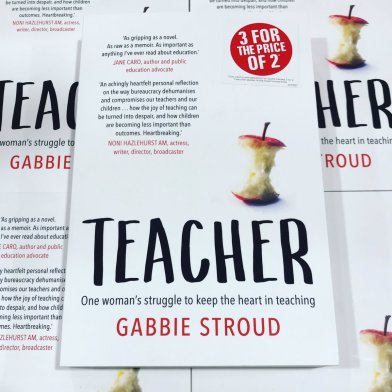
- Author: Gabbie Stroud
- Title: Teacher
- Published: 2018
- Genre: biography (290 pg)
- Trivia: 2019 ABIA Awards short list
- List of Challenges 2019
- Monthly plan
- #AWW2019
- @AusWomenWriter
Introduction:
- Gabrielle Stroud was a primary school teacher from 1999 to 2015.
- In 2014, Gabrielle Stroud was a very dedicated teacher.
- Months later, she resigned in frustration and despair.
- She realized that the Naplan-test education model
- …was stopping her from teaching individual children
- …according to their needs and talents.
- Gabrielle tells the full story:
- how she came to teaching…
- what makes a great teacher…
- what our kids need from their teachers…
- and what it was that finally broke her.
Conclusion:
- This book is a good effort of a teacher moving
- from the classroom into a writing career.
- I’m sure we will be hearing more from Gabbie Stroud
- and I hope her writing skills will be even better.
- I have seen many reviews on Goodreads and I
- cannot agree: this is not a 5 star book.
- It is enjoyable but not profound.
- In my opinion...less is more:
- less family backround
- — mother, sisters, boyfriend, chit-chat with daughters
- even more reflections about teaching
- — chapter 16 a teaching adventure at a Heritage School
- in Canada was wrapped up in less than a chapter!
- I’m sure there must be more to tell.
- Writing style: this all comes down to the reader’s
- own preferences.
- I felt that Stroud could improve her writing by
- less use of clichés...
- Ch 8:
- “I felt older, fatigued but the cup was still half full….”
- Ch 26:
- “…the glass is half full…but the water didn’t taste right.”
- Ch 30:
- “We all fall down Gab, our true measure is how we rise up.”
- Ch 30
- ” I did’t leave teaching….teaching left me.”
- Dialogue: is conversational, simple.
- Pathos: There were very few experiences
- …that stirred up my emotions of pity, sympathy, and sorrow.
- Problems were mentioned..but in a light, fluffy tone.
- I was not swept away by Stroud’s story
- …as I was with the personal essays of written
- Ashleigh Young in “Can You Tolerate This?“
- This is the type of depth in the writing I hoped
- Stroud would tell me about….the teaching profession.
- What finally broke Stroud? (..in my opinion)
- Teaching was changing too fast
- …and Stroud’s adaptation was too slow.
- Jack Welch…CEO of General Electric Company 1981-2001
- phrased it perfectly.
- ..and we all can learn from it:
- “When the rate of change on the outside
- …exceeds the rate of change on the inside
- …then the end is near.”
Last Thoughts:
- There was one spark in chapter 5 that
- I thought would ignite the book:
- Core message…
- ” You showed me how to teach
- …now show me how to be a teacher.”
- Unfortunately this memoir/biography…fizzled out.
- I hate flat soda.
#RIPXIV: E.A. Poe Imp of the Perverse
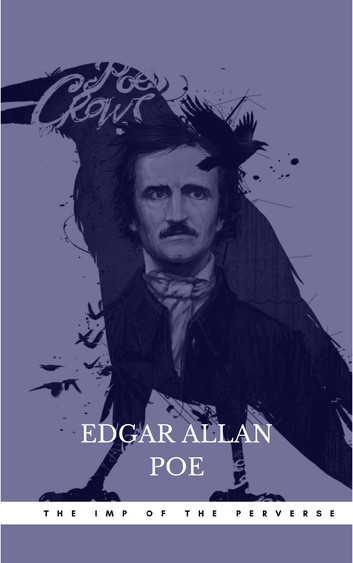
• Author: Edgar Allan Poe
• Genre: short story in the horror genre
• Title: The Imp of the Perverse
• Published: July 1845 in Graham’s Magazine
• Length of story: 4 pages [16 paragraphs]
• Published by Penguin Books
• Setting: 1830-1840’s in prison cell, narrator tells his story…how he got on death row
• Theme: an impulse forcing people to act irrationally
Introduction:
• The Imp of the Perverse is a short story that begins as an essay.
• It discusses the narrator’s self-destructive impulses, embodied as The Imp of the Perverse.
• Poe wrote it to justify his own actions of self-torment and self-destruction.
• Many of Poe’s characters display a failure to resist The Imp of the Perverse.
• Murder in The Black Cat
• Narrator in Tell Tale Heart
• The opposite is displayed in the character C. Auguste Dupin.
• He exhibits reason and deep analysis.
Structure:
• Part 1 Is written in essay style mentioning subjects
• in philosophical terms (primum mobile, à posteriori) ), logic (phrenology) and mysticism (Kabbala)
• Poe cleverly reveals the ‘narrator’s own ‘imp’ by being so wordy!
• The narrator admits he has always wanted to anger the listener (reader) with confusing language.
• “The impulse increases to a wish, the wish to a desire, the desire to an uncontrollable longing….”
• “I am one of the many uncounted victims of the Imp of the Perverse.” (pg 281)
• Part 2 contains the narrators story….
• He inherits an estate after murdering its owner.
• He ends up on death row after a perverse impulse causes him to confess the murder.
Characters:
• The Narrator: An apparently demented man who appears intelligent and well educated.
• The Listener: Unnamed person listening to the narrator’s story.
• Madame Pilau: Woman who died after inhaling the smoke from an accidentally poisoned candle.
• The Murder Victim: Unnamed person whose property passed to the narrator.
• Pedestrians: People who witness the narrator’s confession.
Style: first person point-of-view with an unreliable narrator
• Had I not been thus prolix, you might either have
• misunderstood me altogether or […] fancied me mad. (pg 283)
Symbols: Imp
• This is a spirit that tempts a person to do things….they would normally not do.
• Poe explains that the ‘imp’ is an impulse in each person’s mind.
Language:
• Alliteration: laconic and luminous language (pg 281)
• Climax: Poe uses a climax words that are arranged to increase their importance.
• “The impulse increases to a wish, the wish to a desire, the desire to an uncontrollable longing, and the longing ( to the deep regret and mortification of the speaker and in defiance of all consequences) in indulged.” (pg 282)
Voice of Poe:
• Poe states we use the word ‘perverse’ without really knowing what is means.
• Perverse = headstrong, obstinate, contradictory
• Poe is a master when it comes to entering human thoughts.
• He describes how we ‘put off until tomorrow that we could do today’ because we are perverse.
• With each passing day the anxiety grows.
• I do exactly what Poe describes…
• when I have to make an appointment for the dentist!
• “The clock strikes, and is the knell of our welfare.” (pg 282)
Voice of Poe:
• In paragraph 6 we read one of the famous lines:
• “ We stand upon the brink of a precipice.”
• Poe describes the uncontrollable urge to jump.
• I could only think of the Austrian, Felix Baumgartner.
• In 2012 he stood who on the ‘precipice’ of space before making his famous skydive from the stratosphere!
• Goosebumps!
Conclusion:
• This is one of Poe’s lesser known works.
• I expected great writing and got loopy sentences going on and on about nothing!
• After further reading I realized this was Poe’s intention….to irritate the reader!
• The story just kept getting better and better.
• Weak point: the first 4 paragraphs are difficult to get through.
• This almost deterred and discouraged me…but I did not stop!
• Strong point: the story in itself is ‘perverse’ .
• Poe deliberately uses confusing writing and structure to irritate the reader.
• A writer usually wants to please the reader!
• Poe preforms this “perverse” act that defies logic and reason.
Last thoughts:
• I thought I would just breeze through 4 pages of The Imp of the Perverse.
• How wrong I was.
• I have read each and every word in this story…twice!!
• That is an accomplishment in itself.
• Below is a summation of each paragraph.
• Read it ….or read the story first ……your choice.
• I was surprised by the style, structure and plot.
• Tales and Poems of Edgar Allan Poe are works of art….
• …and deserve a high score.
#RIP XIV The Afterlife of Edgar Allan Poe

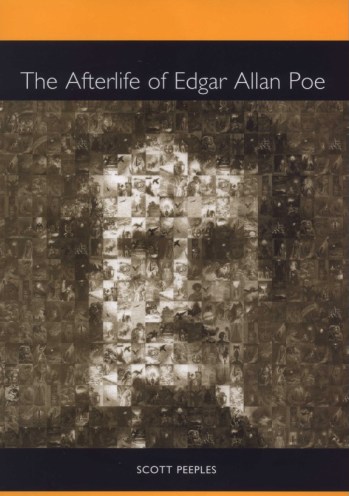
- Author: Scott Peeples
- Title: The Afterlife of Edgar Allan Poe
- Published: 2003
- Genre: non-fiction
- List Challenges 2019
- Monthly planning
- #RIPXIV @ReadersImbibingInPeril
Structure:
The Man That Was Used Up: Poe’s Place in American Literature
- Reading time 1 hr 15 min
- Discussion: about Poe’s character by biographers in the the late 19th C
- his alcoholism, inability to sympathize, fickleness, ugly humor, ill- tempered
- Paradox: Poe was unappreciated, rejected….but
- …this aura of mystery was good for business (bookselling)
- Why is Poe considered the most characteristic American poet?
- — he was beaten down by American materialism
- — he did not copy the English literary tradition
- — he explored the pathological side of American temperament
- — he was curious, interest toward the most strange and odd mysteries
- Conclusion: Poe was torn to pieces by many biographers but in
- 20th C he has been rebuilt into an ever more fascinating public figure
A Dream Within a Dream: Poe and Psychoanalysis
- Reading time 1 hr 15 min
- Discussion: Psychoanalysis could inspire new,
- inventive ways of reading Poe.
- Helicopter view…
- of several writers who have psychoanalyzed
- Poe’s writing:
- L. Purette, D.H. Lawrence, Marie Bonaparte, J. Robertson, J. Krutch
- …J. Lacan and many more.
- …looking at the anatomy of Poe’s unconscious.
- Conclusion:
- Basically this essay is about ‘What made Poe tick?‘
- Some insights made by Bonaparte sounded a bit
- far-tetched “…when Poe was tempted by living women, drink
- cleared the way for ‘flight’ and kept him faithful to his dead mother.”
- Honestly, this essay was more about the analysts
- ….pages and pages about Lacan,
- …then Poe himself!
Out of Space, Out of Time: From Early Formalism to Deconstruction
- Reading time 1 hr 02 min
- Discussion: is about 1950s New Criticism
- ….the deficiencies and limitations of Poe’s work.
- Not every critic feel Poe’s works should
- allowed into the temple of high literary art.
- Critics Brooks and Warren state:
- “…when you learn to read more carefully you’ll see
- that he’s (Poe) only a little better than pulp fiction
- …you read for pleasure.”
- Emerson had famously called Poe “the Jingle Man”
- because his poems sounded jingly, gimmicky!
- Conclusion: The critics want to teach me how to
- read Poe….I wish they would just let me enjoy his
- writing instead of trying to dissect Poe with structuralism,
- Post structuralism, and Deconstructism mumbo jumbo.
- The essay was filled with themes and philosophical issues.
- #Challenge
The Man of the Crowd: The Socio-Historical Poe
- Reading time 1 hr
- Discussion: In 1980s placing Poe’s text
- in question to other texts in the
- same period with emphasis on
- representations of race, gender and class.
- Conclusion: Again critics who insinuate the
- The Black Cat is figure for the abused slave
- …seems far-fetched.
- #IAmNotBuyingIt
Lionizing: Poe as Cultural Signifier
- Reading time 50 min
- Discussion: The pop-culture Poe
- Why has Poe proved so resilient over
- …150 years after his death?
- Peeples reviews books, plays, films and comics
- …entertainment derived from
- …Poe and his works.
- Conclusion: readable
Conclusion:
- We all know the uses of research material is
- a vital component to writing.
- Scott Peeples has cited about 350 works to
- create these essays.
- That feels a bit excessive
- for 5 essays with reading times of 1 hour 15 min.
- Great thoughts yes, but there is much
- ….cutting an pasting of direct quotes throughout the essays.
- This results in a confusion of voices and disrupts
- the flow of information.
- The writer must do more than parrot information!
- I did cherry pick some good insights about Poe and
- his writing but it was a laborious task.
- #NotWorthMyReadingTime
- …but you may enjoy this book!
 NancyElin.blog