
#ElPaso #Dayton 2019
- Taking a break from book blogging to bring you a message that has
- touched me to the core.
- Do you want to understand what is going on in the USA?
- Listen to Princeton professor E.S. Glaude
- ….listen carefully.
#TBR 2019 list: Tin Man

- Author: S. Winman
- Title: Tin Man
- Trivia: 2017 shortlist Costa book Awards
- Trivia 2019 longlist Dublin Literary Award
Finished: 03.08.2019
Genre: novel
Rating: C-
Conclusion:
- This book is about loneliness.
- I found the book to be an attempt to
- paint loneliness with landscapes….
- (sunflowers fill the frame,
- swallows soar with heat on their wings (pg 210)
- and not describe
- the deep feeling of loneliness
- …like a mould growing slowly around you.
- Yes there are cries of the heart that evoke your emotions
- …but all in all the book was too lyrical, too sugar-spin sweet
- and just seemed to scratch the surface of the ache of loss.
- #Disappointed

#Paris In July “Le Grand Meaulnes”
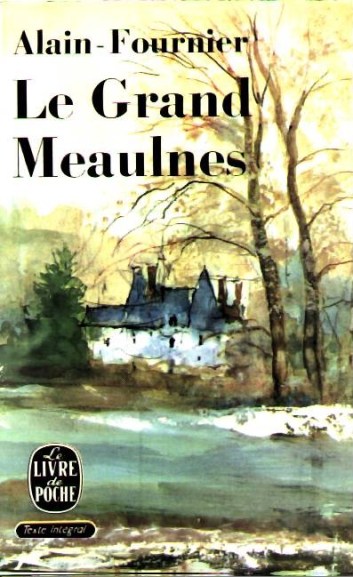
Author: Alain-Fournier (1886 – 1914)
Title: Le Grand Meaulnes
Published: 1913
Contents: 200 pages (3 parts)
Language: French
Trivia: Le Grand Meaulnes was shortlisted for Prix Goncourt 1913 but lost by 1 vote.
Trivia: Today the book is nr 9 on Le Monde’s list 100 best books of 20th C.
Trivia: …and the Prix Goncourt winner “Le peuple de la mer’ has been long forgotten!
Available in English “The Lost Estate”
Introduction:
- Le Grand Meaulnes is the only novel by French author Alain-Fournier.
- Fifteen-year-old François Seurel narrates the story of
- his relationship with seventeen-year-old Augustin Meaulnes
- as Meaulnes searches for his lost love.
- Impulsive, reckless and heroic,
- Meaulnes embodies the romantic ideal,
- the search for the unobtainable, and
- the mysterious world between childhood and adulthood.
ANALYSIS:
1. Explain the title. In what way is it suitable to the story?
Augustin Meaulnes, called ‘Le Grand Meaulnes’ fascinates the students with his mysterious personality.
2. What is the predominant element in the story?
Setting: (estate) The setting is the central focus of the book . The village of Sologne and its school, the mysterious ‘domain’/chateau with the surrounding paths , ponds, slopes, reeds, marshes. The characters are running away from the village school (Augustin), running away from the ‘domaine’ (Frantz), running away from village where young Yvonne waits for her new husband (Augustin).
3. Who is the single main character about. whom the story centers?
Main character is Augstin Meaulnes.
There are friendships: Augustin/François and Augustin/Frantz
There are loves: Augustin/Yvonne – Frantz/Valentine – François/Yvonne
4. What sort of conflict confronts the leading character or characters?
a. External – Augustin discovers an ‘enchanted forest’ meets a ‘princess’ (Yvonne). They part abruptly.
b. Internal – Augustin moves from childhood to adulthood, but never stops looking for his vanished beloved.
5. How is the conflict resolved?
Frantz: finds his ‘amour absolu’ (Valentine)
Augustin: finds his ‘amour libertine’ (Valentine) and ‘amour idéal’ (Yvonne)
François: finds his ‘amour impossilble’ (Yvonne)
7. Who tells the story? What point of view is used?
François is the narrator of the book. His parents are the teachers at Sainte Agathe in Sologne.
8. Where does the primary action take place?
Village of Sologne, Vierzon, Vieux-Nancay
9. How much time does the story cover?
I estimate that the story takes place over 10 years. It begins when Augustin arrives as a boarder with the Seruel family in Sologne. It ends as Augustin returns from a long trip.jaar.
10. How does the story get started? What is the initial incident?
Augustin arrives at the school. His arrival is going to change François’s calm and lonely life.
11. Briefly describe the rising action:
Augustin loses his way during a walk, discovers a beautiful estate, pre-wedding party and the love of his life.
12. What is the high point, or climax, of the story?
The writer uses language to indicate that Meaulnes and the ‘bohémien’ finally trust each other: (pg 92)
“Puis cessant d’ employer ce <vous> insolite chez des écoliers de Sainte-Agathe.”
Stop using ‘vous’ …unusual for students
The writer uses a mini-climax at the end of each part to move the story along. Part 1 gunshot in the forest; Part 2 letter from Augustin to François. The main climax in on page 104-105.
The illusions and pantomime disappear. Frantz removes the scarf. We see the scare of his attempted suicide. The tone in the book swings from an enchanted world of youth to harsh word of adulthood. “…enlève son bandeau pour être reonnu de nous.”
13. Discuss the falling action or close of the story.
François, Augustin and Frantz try to put the pieces of their ‘past youth and lost loves’ back together ‘…perhaps everything will be as in earlier times. Can the past return? Who knows! (Mais le passé peut-il renaítre? Qui sait!) (pg 159)
14. Does this story create any special mood?
Alain-Fournier creates through his atmospheric images a feeling of:
nostalgia: – tormented and cherished days ebb and flow against the rocks like waves, our adventures. (pg 11)
eeriness: – you hear the whistles and moans of the shipwrecked in the attic. (pg 164); “un vent noir et glacé soufflait dan le jardin mort” (pg 36)
enchantment: – I’m looking for something very mysterious. This passageway mentioned in books, the ancient hidden path, the one the exhausted prince was too tired to find. (pg111) (..famous quote from the book)
15. Is this story realistic or true to life?
We know that Alain-Fournier grew up far from the sea but had a life long desire to join the navy. The sea was his ideal and he used many nautical images in the book. Mysteriously he changed the little houses in the village of Sologne into ships, boats and sails. On page 57 the author describes men at the festive meal, freshly shaven who could have been ex-sailors. But he tells us they never sailed the seven seas…..only weathered rains and wind while making furrows in the fields and returning home in their carts. These are only a few nautical descriptions of the villages and people where the story takes place.
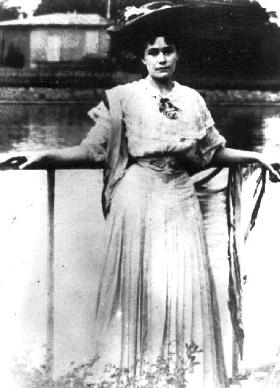
Yvonne de Quiévrecourt was born in 1885 in Paris.
In 1905 Alain Fournier was suddenly faced with the girl of his dreams.
This encounter changed Fournier’s life and provided the basis for Le Grand Meaulnes.
16. What is the structure of the book?
Part 1: (30%) Meaulnes’s arrival and departure in the village Solonge + strange adventure.
Part 2: (22%) Gypsy ‘Frantz’ – Meaulnes’s departure for Paris
Part 3: ( 37%) Wedding – Journal intime – lost happiness
The last chapter which reveals the intrigue, secret and its impact is only 3 pages!
17. What is the general theme of the story?
Adventure and discovery: Meaulnes and Yvonne after their wedding are ready to set out on an adventure. Like two passengers adrift in a boat (nautical image), in the winter wind, two lovers enclosed in happiness. (pg 170)
“Comme deux passagers dans un bateau à la dérive, ils sont dans le grand vent d’hivier, deux amants enfermés avec le bonheur.”
18. Did you identify with any of the characters?
François Seurel: Despite his unwavering loyalty to Augustin, his support of the abandoned Yvonne, his care of a nameless young child….he is left with nothing at the end. In ch1 we read of François’s sad and lonely days in the village. Augustin came and brightened his life. But after losing his best friend and the girl he had secretly fallen in love with (Yvonne) his days were again…sad and lonely.
19. Does this story contain any of the following elements?
Metaphor: sea, boats, sails, anchors, waves used to enhance the theme of an ‘adventure’.
The classroom is like a ship. (pg 23)
The village houses are boats anchored with their sails ready to be unfurled. (pg 142)
Symbol: Meaulnes is Robinson Crusoe on the brink of an adventure.
“Peut-être le gout des aventures plus fort que tout…” (pg 183)
The taste for adventure….stronger than everything.
Meaulnes reminds his young friend of Crusoe in the basket shop. (pg 22)
The title of ch 3 part 1 is a quote from Robinson Crusoe:
“Je fréquentais la boutique d’un cannier” .
Simile: Meaulnes is like a sailor keeping watch at night. (pg 36)
“comme ces marins qui n’ont pas pu se déhabituer defaire le quart…”
He is like a soldier on alert sleeping in his clothes. (pg 35)
“soldat au cantonnement d’ alerte”
All these actions increase the adventurous feeling of the book.
20. Does the story contain a single effect or impression for the reader?
Sadness: François is carrying Yvonne’s dead body. The only time he held her in his arms as the bridegroom he longed to be. “ Je baisse la tête sur la tête de celle que j’emporte, je respire fortement et ses cheveux blonds aspirés m’entrent dans la bouche, ces cheveux morts qui not un goût de terre.”
Translation:
I lowered my head onto the head of the one I was carrying,
I breathed deeply and inhaled her blond hairs into my mouth,
these dead hairs that have a taste of the earth.
Conclusion:
This book is more about rich images than tense action.
Because of author’s poetic style the words seem to float over the pages.
Weak point: part 2 the pantomime, band of roaming gypises….
This was diffcult to place in the narrative. I needed some help to understand why
Alain-Fournier included it. It is a mise-en-abyme, (frame story).
Pierrot struggling to grow up. (keeps falling and speaking in cries and hoots).
This parallels the struggle of the three main characters
…Francois, Augustin and Frantz – moving from youth to adulthood.
This is a very easy book to read, vocabulary is not difficult.
Strong point: I learned some beautiful words and wonderful expressions!
à la cornette! – a mock directed to a nun in reference to her headgear!
#Paris In July Mousse aux éclats de chocolat
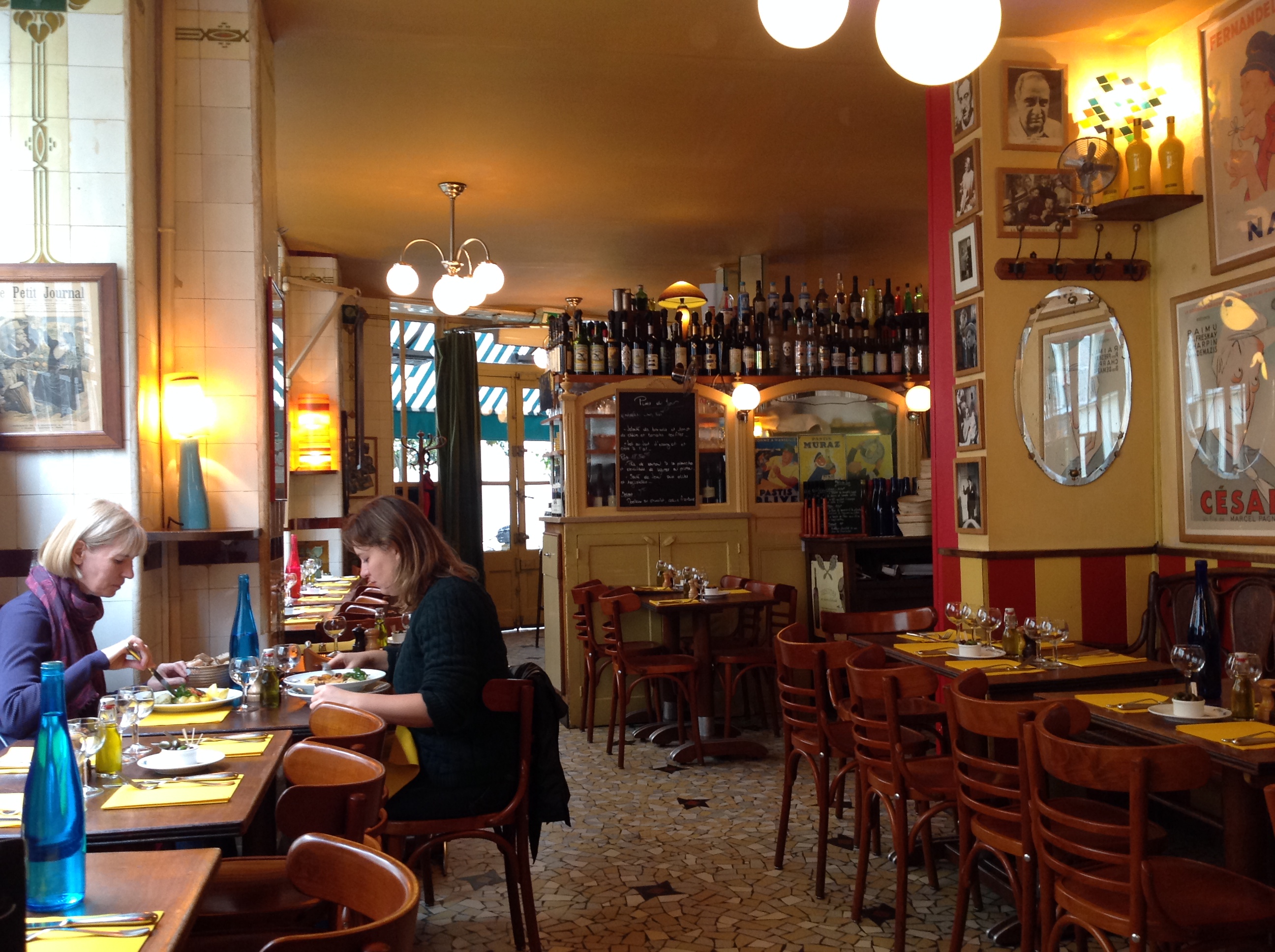
- Time for some bistro food….but this year
- I’m NOT making a main course.
- I have chosen to make a “to die for dessert“
- Mousse au chocolat!
- Cookbook: Petite Cuisine à Paris
- Rachel Khoo
- Crème pâtissière (pg 274)
- Mousse au chocolat (pg 222)
- Note: For more instructions how to share your posts go to Thyme for Tea.

Follow these steps:
- make crème pâtissère (let cool for one hour in fridge)
- make meringue au chocolat
- (60 gr egg whites, 1/3 c confec sugar, drops lemon juice, dash salt, 1 Tbs cacao)
- melt dark chocolate au bain maire (150 gr)
- whip heavy cream (200 ml)
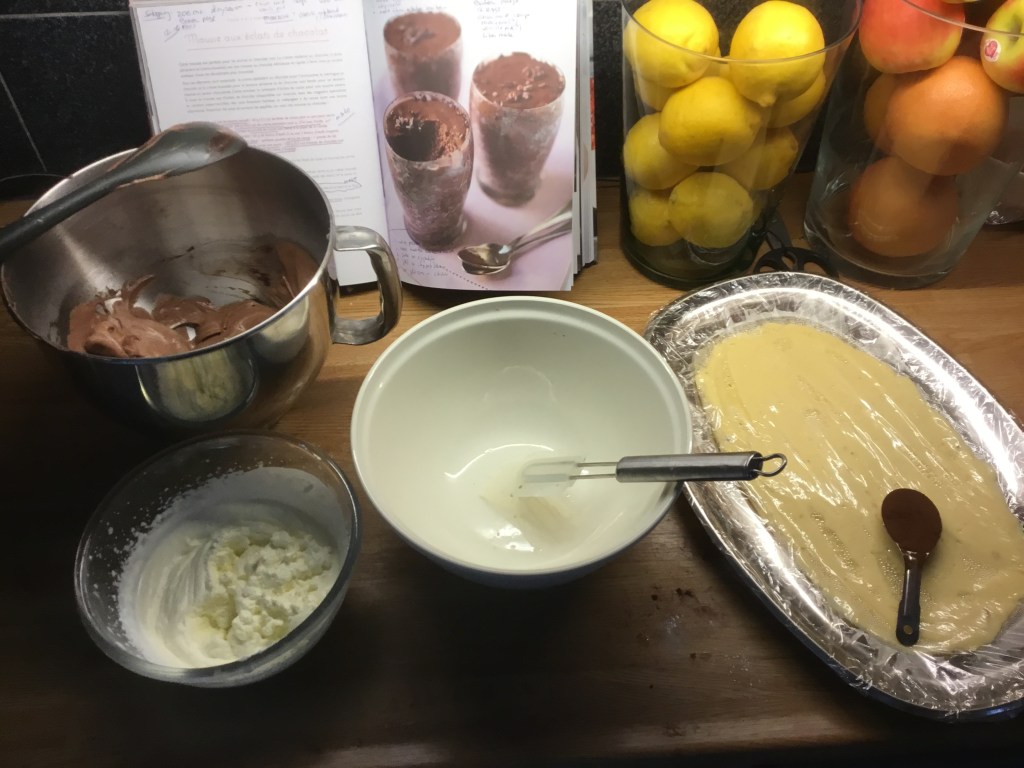
- fold all ingredients together in a large bowl
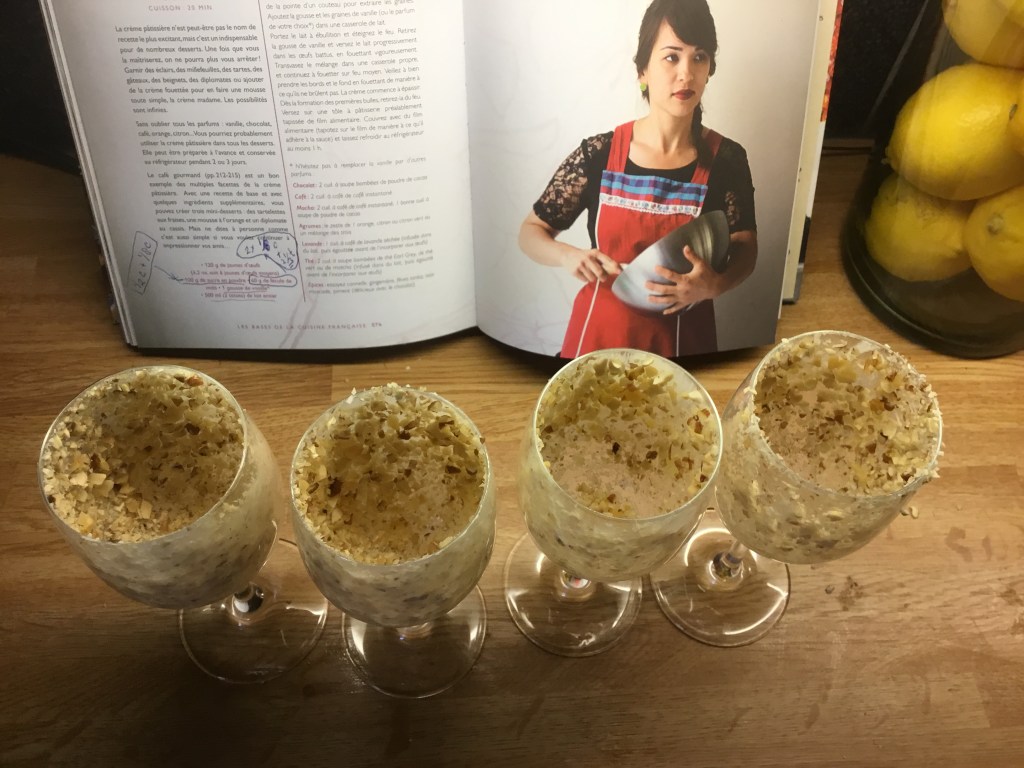
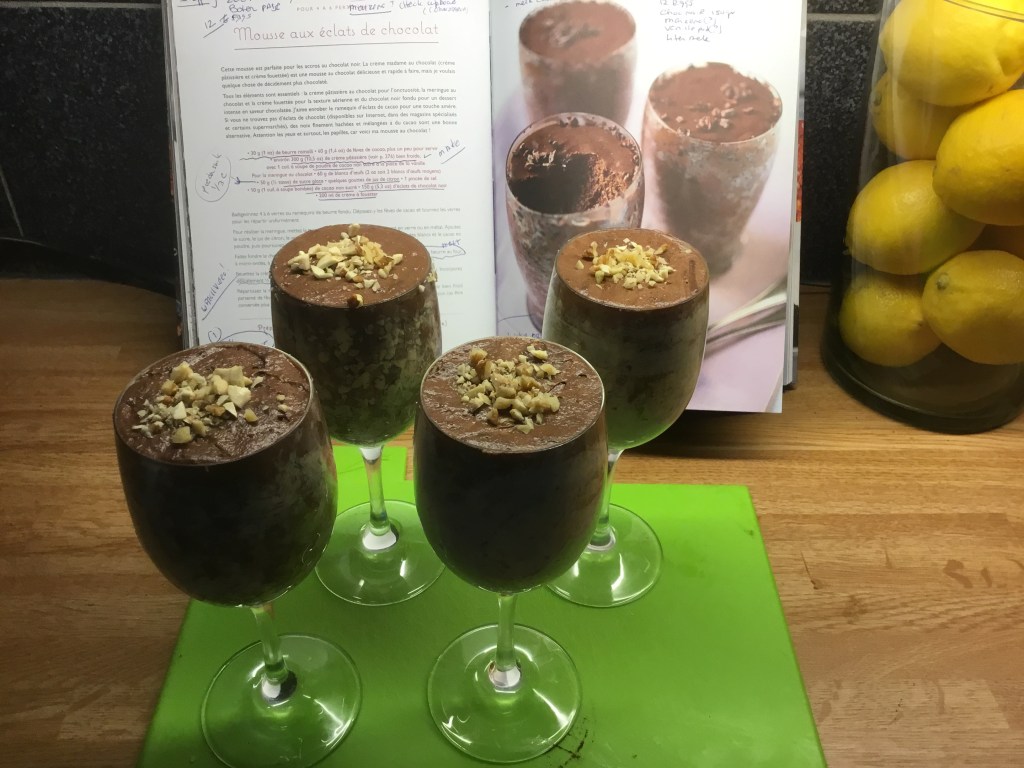
- fill glasses decorated with chopped nuts
- cool in fridge at least 2-4 hours
- Bon Appétit!
Ingredients:
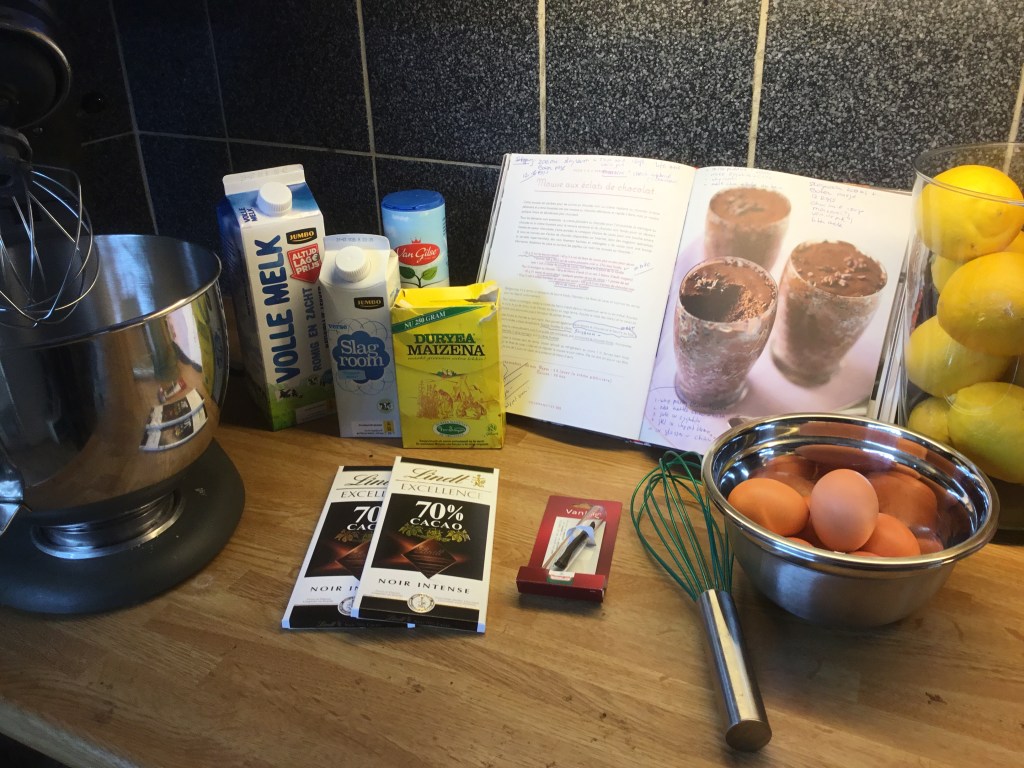
Cool crème pâtissère between sheets of saran wrap...cool for 1 hour
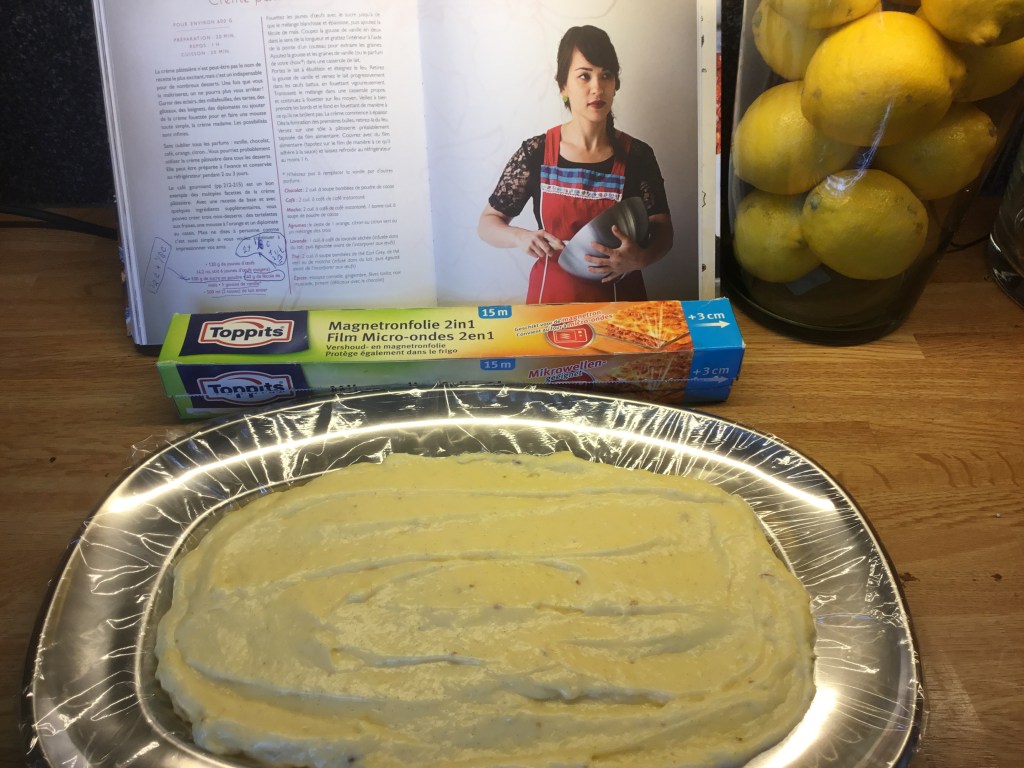
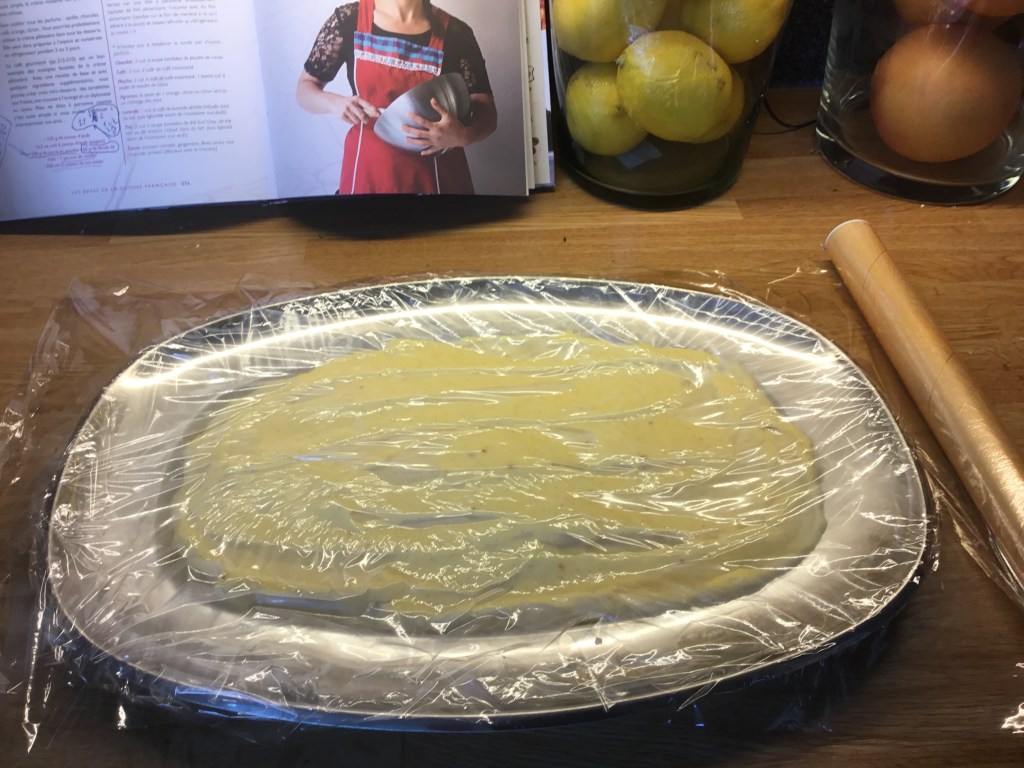
A good chef …..always cleans up her own mess! (…this was the rule in my house growing up!)

Chop nuts to decorate the glasses!

Fold together and add melted chocolate…..
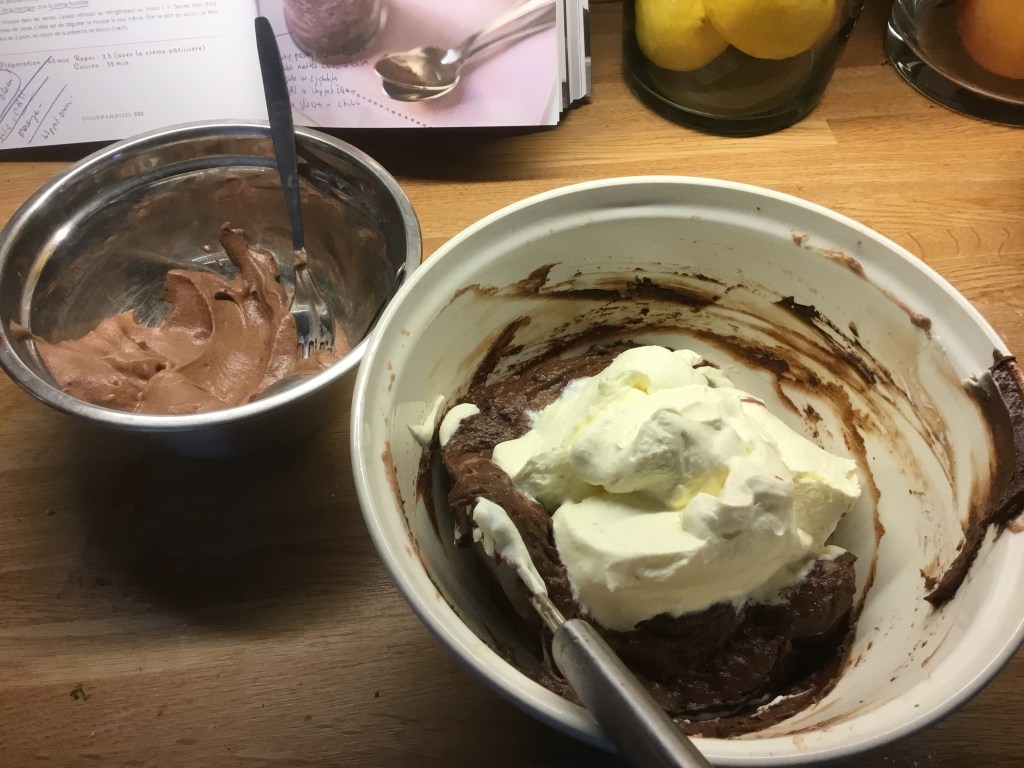
Voila!
#Paris In July Retour à Killybegs
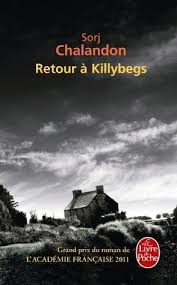
Author: S. Chaladon
Title: Return to Killybegs
Published: 2011
Language: I read it in French…but it is available in English.
- List of Challenges 2019
- Monthly reading plan
- #ParisInJuly
Trivia: Awarded the Grand prix du roman de l’Académie française 2011.
Le Grand Prix du Roman is a French literary award, created in 1918, and given each year by the Académie française. Along with the Prix Goncourt, it is one of the oldest and most prestigious literary awards in France.
Introduction:
Return to Killybegs is a novel about a traitor to Belfast’s Catholic community
during the war in 1970s and 1980s in Northern Ireland.
The narrative is inspired by the 2006 murder of Denis Donaldson.
He was a senior Sinn Féin member who was revealed as a British secret agent.
Chalandon had befriended Donaldson while working as a journalist in Belfast.
Chalandon attempts to understand the reasons for
Donaldson’s (character: Tyrone Meehan) betrayal of the IRA.
Perhaps Chalandon wanted to give his friend a chance to explain his side of the story.
Timeline:
24 December 2006 – 04 April 2007 (narrator is now 81 years old)
” I have often returned to my father’s house
…but I came here four days ago…..to die.”
Best chapters – 18, 21, 22, 23 (suspense)
Conclusion:
The writing is remarkable, compact and to the point.
Chalandon manages a journalistic style
yet breathes life into characters that leave the reader riveted.
Suspense builds while Chalandon alternates the past with the present.
Past: childhood, WWII, entrance into IRA, prison sentences and contre-espionage
Present: visit 2006 in Belfast for a wedding and confrontation with ex-IRA members
Despite the cease-fire, peace negations, destroyed arms caches
…the IRA is still there.






















#Play The Weir

Playwright: Conor McPherson (1971)
Title: The Weir (1997)
Theme: loneliness. Setting: pub in isolated town western Ireland
Trivia: Won Laurence Olivier Award for Best New Play 1997.
Trivia: Was voted one of the 100 most significant plays in 20th C
Genre: pastoral play. It gives the reader a slice of rural Irish life.
Analysis:
1. Explain the title. The Weir In what way is it suitable to the story?
a. OLD – The weir is a barrier whose function originally was a fence made of sticks or wattles built across streams or rivers that trap fish. It acts as a sieve.
b. NEW – The weir refers to a local dam built in 1951 to regulate water and generate power. c. The title is suitable as a symbol between the contrasts in the play: old vs modern; world of folklore vs contemporary life; between agricultural tradition vs 20th C modern development.
2. What is the predominant element in the story – plot, theme, character, setting?
Jack: garage owner, 50’s
Brendan: the owner of the pub 30’s (only listens, no story to tell)
Jim: garage assistant, 40’s
Finbar Mack: a local businessman late 40’s
Valerie: a Dublin woman 30.
3. Who is the single main character about whom the story centers?
Jack: is the main character. He undergoes the greatest change.
b. He is the talkative leader of the barflys, ‘old-school’ Irish,
c. devoted to the national beverage of Guinness.
d. Finbar: (foil for Jack) ‘get rich quick’ Irish real estate man, flashy, content to drink
e. the ‘last beer anyone would choose’ bottled Harp.
f. Valerie: incomer; city folk, drinks white wine; Brendan is flustered….Wine?
g. He finally finds a bottle he received as a gift.
h. When pouring her glass he fills it up as he would a pint.
4. How does the story get started?
The play opens on a stormy night in Brendan’s pub.
b. A rural Irish pub is located in an isolated town in County Leitrim.
c. Brendan, the owner of the pub, opens the bar, fills the till and checks the beer taps.
d. Jack and Jim (his regulars) are gathering for their daily pint.
5. Briefly describe the rising action of the story.
The action in the play is very subtle. The arrival of a stranger from Dublin city, a beautiful woman (Valerie). She has just rented an old house in the area.
The barflys want to impress her or perhaps scare her off (?) …with eerie stories about souls past, spirits present, ghosts and …half-haunted encounters. It is an authentic night drinking with locals who have the gift of blarney.
6. What is the high point, or climax, of the story?
a. 4: Valerie’s true story…(read the play and discover this for yourself!)
7. Discuss the falling action or close of the story.
After Valerie’s story the mood changes.
Jack’s talk with Brendan and Valerie is the last…..it is a confession.
McPherson bookends the play.
Brendan closes the bar.
Conclusion:
- This was my first one-act play.
- It should be tightly compressed, short,
- …with playing time max forty-five minutes.
- A single setting (pub) should be a ‘pressure-cooker play’.
- The energy should build up, ready to blow off the pan’s cover.
- This play is ninety minutes long on stage.
- The play felt like it was quietly simmering on the back-burner.
a. Weak point….but not really!
- No real conflict. But I’ve learned that play writing is NOT all about conflict.
- The power of the play derives from the
- power of argument in the dialogue.
- The story about transition….people realize that their
- beloved village, rural life is becoming the thing of the past.
b. Weak point…but not really!
- I was looking for the ‘lilt of Irish humor, the
- …capacity to make rapid and irresistible remarks.
- In this play I only chuckled twice:
- at the beginning (defect beer tap) and
- at the end (who are the Germans, really?)
- Perhaps McPherson choses to embed the humor in gestures
- …..intonation of the voice that is impossible to relate to while reading a play.
c. Weak point….really!
- The play contains 3 ghost stories barflys tell each other
- …that were not scary.
Last thoughts:
- This play does not come to life on paper.
- It….MUST have actors to relate the emotions in the dialogue.
- I read the play twice before making a conclusion.
- I want to see if I missed something
- The only way to really enjoy the play is to see a stage performance.
- Playwright’s task is to create stories that generate emotional responses.
- The rhythm of the language is as important as the words themselves.
- Conor McPherson uses the smallness of a tiny Irish village
- …in the service of bigness.
- He illustrates the difference between fading rural life
- …and the encroaching urban lifestyle.
#Classic Max Havelaar
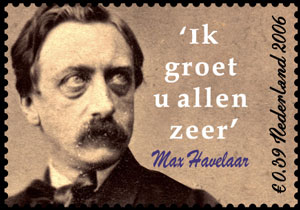
- Author: Eduard Douwes Dekker (Multatuli) (1820 – 1887)
- Genre: novel (satire)
- Title: Max Havelaar ( Language: Dutch)
- Published: 1860
- Table of Contents: 20 chapters, 315
- Timeline: 1842 ( Sumatra). 1856 (Lebak) 1860 (Amsterdam)
- Setting: Dutch East Indies
- Trivia: E. Douwes Dekker was one of Sigmund Freud’s favorite writers.
- List of Challenges 2019
- Monthly reading plan
Introduction:
- Eduard Douwes Dekker is better known by his pen name Multatuli.
- It is from latin ‘multa tuli’ meaning I have suffered much.
- This is a satire denouncing the abuses
- …of colonialism in the Dutch East Indies (Indonesia).
- 1838 Douwes Dekker became a civil servant in Java.
- All the secrets of Dutch administration were known to him.
- Disgusted with the actions of the Dutch in Java,
- …he had begun to about the abuses.
- Threatened with dismissal from
- …his office for his openness of speech.
- Dekker resigned his appointment.
- He returned to the Netherlands and wrote this
- scathing criticism of Dutch colonialism.
- In 2002 the Society of Dutch Literature proclaimed
- ….Multatuli the most important Dutch writer of all time
Quickscan:
- This is a grim depiction of life in a European colony, namely Indonesia.
- The description of web of hypocrisy of church-going Dutch.
- …and the repression of the natives under their rule endure.
- The Dutch derived benefits from others misery.
- Max Havelaar was beacon of hope.
- He was in a position of unquestionable power, Assistant-Resident.
- Havelaar struggled with the colonial government leaders ….to no avail.
Theme: exploitation; colonialism
Title: Dubble title “Max Havelaar or Coffee Auctions Dutch Trade Company”
- I had to research this information
- …..it would never have caught my eye!
- Irony: the title tells Mr. Droogstoppel that this book contains
- …information that he would be interested in: coffee auctions.
- He agrees to finance the rewriting of a final draft and publication of the book
- But it appears that there is nothing in the book about coffee or the Dutch Trade Company!
- The author misled Droogstoppel and the reading public!
- In 1860 coffee and trade were in the news.
- Multatuli wanted to have his book read. (pg 57)
- “Mijn boek moet de wereld in!”
- He was probably the first Dutch “whistleblower” !
- He used this ‘clever piece of irony’
- …to capture the public’s interest.
- Multatuli TRICKED the readers with a dubble title.
- He lured them to buy the book and
- …revealed the abuses he thought must be made public.
Narrators: 3 characters
- Droogstoppel: coffee broker at Last & Co.
- Stern: assistant Last & Co. ( = author Multatuli)
- Sjaalman: is thecharacter of Max Havelaar incognito in Amsterdam.
Structure: frame story (stories-within-stories)
- Story: Commentary in journals of Max Havelaar who abhors the exploitation of the Dutch East Indies natives.
- Story: Havelaar returns to Amsterdam with his exposé in rough draft and wants it to be published.
- Story: In the last chapter:
- Multatuli, the author himself, takes over the narrative.
- Droogstoppel is written ‘out of the book’.
- Multatuli writes what he wants to achieve.
- He wants the readers to share his outrage.
Breaking the 4th wall
- Multatuli speaks directly to the reader and ‘confronts’ him.
- Speaking to the reader acknowledges that this is a book or a story.
Unreliable narrator
- Mr. Droogstoppel coffee broker is characterized by exaggeration and bragging.
- Multatuli satirizes the coffee merchant, Droogstoppel, by simply letting him speak!
Irony:
- The use of words to convey the opposite of their literal meaning.
- Droogstoppel tells the reader ( pg 18) that the Dutch are successful because:
- …they conduct business honorably and maintain exemplary Christian beliefs.
- Irony: Mutatuli reveals that the Dutch say one thing in public and act differently in business!
- Droogstoppel gossips about other business partner’s family. (pg 25)
- Irony: But reminds us that he would never knowingly slander anybody!
Humor:
- There are some great examples of humor in Multatuli’s writing:
- The repetition in Droogstoppel’s emphatic dialogue
- reminding the reader that he always speaks the truth
- ” heus de zuivere waarheid” (pg 24) and
- conducts himself at all times with civility
- ” fatsoen gaat voor mijn boven alles” ( pg 31).
- In a bouncing carriage over a hobbley road Multatuli brings the choppy conversation
- before our eyes with one-word sentences. You can just hear it!
- I. Did. Not. Dare.To. Agree.
- ” Ik. Durfde. Het. Haar. Niet. Toezeggen.” ! (pg 101)
Conclusion:
- Weak point:
- This book was complicated with its intricate narrative structure.
- There is no chronological order, many flashbacks and 3 narrators.
- Weak point:
- Many pages of out-of-date style of dialogue which makes the reading difficult.
- Strong point:
- The shock effect caused by the author in chapter 20.
- This was his pulpit. It would be his chance to send a message to the Dutch and the world.
- Multatuli refers to the barbaric division in American society on pg 103.
- He must have read Uncle Tom’s Cabin (1852, H.B. Stowe) that exposed the abuse in USA.
- Multatuli shares Stowe’s social realism in his writing of Max Havelaar.
Last thoughts:
- I could relate to this book because
- of my knowledge of the ‘Dutch mentality’.
- I wonder if this book would appeal to
- a wider audience outside The Netherlands.
- I read the book in Dutch
- I liked the book but a recommendation to read it
- …..that’s a hard call.
- Dutch is the 7th most spoken language in Europe..
- The study of foreign languages
- …is simply the gift that keeps on giving.
 NancyElin.blog