
#Play Noises Off by Michael Frayn

- Playwright: M. Frayn
- Title: Noises off
- Preformed: 1982 Savoy Theatre London until 1987
- Wikipedia link: Michael Frayn (1933)
- List of Challenges 2019
- Monthly reading plan
- #20BooksOfSummer
- Play: nr 29 on list Best 50 Plays
- ….in past 100 years!
Introduction:
- The play has received two major Broadway productions and
- …numerous regional ones in the United States,
- United Kingdom, and other countries in Europe and Asia.
- In response to its popularity, Frayn has continued to
- rewrite the play in the thirty years since he first wrote it.
Conclusion:
- For once a blurb has lived up to expectations
- …this is surely the funniest farce ever written!
- This play-in-a-play left me laughing out loud!
- Noises Off (1982) by Michael Frayn.
- It is said to be one of the
- ...greatest comedies ever preformed on stage!
- Reading the introduction…and discover the first laugh!
- Prague: play performed without Act 3 for 10 years…
- NO one noticed until Frayn arrived for a show!
- The play is available on Kindle.
- Reading time: 2 hr 55 min
- Perfect poolside
- …reading this summer.
- #LOL

#Poetry Blakwork (title poem)
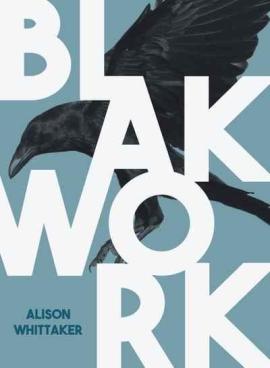
- Author: Alison Whittaker
- Title: Blakwork
- Published: 2018
- Publisher: @MagabalaBooks
- Trivia: 2019 shortlist Victorian Premier’s Award Indigenous Writing
- Trivia: 2019 WINNER Mascara Lit Review Avant-garde Award for literature
- Trivia: 2019 shortlist ABIA Small Publishers’ Adult Book of the Year
- List of Challenges 2019
- Monthly plan
- #AWW2019
- @AusWomenWriters
- Trivia: Review: poem Cotton On (pg 15)
Cover:
- I was staring at the book turning it front to back.
- Why the choice of a bird on the cover?
- Perhaps if you live in Australia you know what it means.
- I had to find out more about the metaphor of a blackbird.
- Difficult to read….
- Origin of the term ‘blackbirding’:
- The term may have been formed
- …directly as a contraction of ‘blackbird catching’.
- ‘Blackbird’ was a slang term for the local South Pacific indigenous people.
- It might also have derived from an earlier phrase,
- ‘blackbird shooting’, which referred to
- …recreational hunting of Aboriginal people by early European settlers
Title poem: Blakwork (pg 3)
- The sun rises 0530 am on this side of the world.
- No matter how hard I try…I’m wide awake at 0600 am.
- My eyes are not yet focused so I use a magnifying glass to
- …read the first poem in the chapter Whitework.
- Blakwork: 41 words that pack a punch.
- I didn’t realize that today (26 May) is #SorryDay in Australia
- This poem sums up the sentiment of
- …reconciliation from an other perspective.
- Type of Poem: poet-in-conversation (present tense)
- Who is speaking? Alison Whittaker the poet
- Who is ‘you’ in the poem? White Australia
- Title: Blakwork
- Australia’s slavery started because other countries abolished it.
- Aboriginal people were used in
- the pearling, sugar cane and cattle industries.
- They suffered terrible abuse and were denied their wages.
Conclusion:
- There is an energy…tension in this poem.
- I tried to discover the starting subject and
- …then the discovered subject in a poem.
- There is always a door to be opened the
- will lead you down another path
- …in this poem a ” cynical path”.
- Starting subject:
- blakfella works –> payment callous hands –> profit to white Australia
- Door: words “white guilt”
- Discovered subject:
- Blakfella works –> payment now bound by contract (indentured)
- profit –> white Australia can have “soothing” feeling of reconciliation
- “nine to five forgiving you.”
- #powerful
BLAKWORK
- Fresh blakwork; industrial complexes
- hands with
- smooth and flat palm callouses.
- Soothing re —
- –conciliation
- That dawdling off-trend meme
- white guilt. To survive it; well,
- it’s naff to say, but compul–
- –sory to do. Indentured blakwork, something like
- nine to five, forgiv–
- –ing you.
- Words I had to look up for a clear meaning of the poem:
- industrial complexes – (self-interest ahead of the well being of the Aboriginal people)
- dawdling – wasting time, idle, trifle
- meme – behavoir
- naff – clichéd, unstylish
- indentured – bound by contract
#Non-fiction August Wilson’s Pittsburgh Cycle
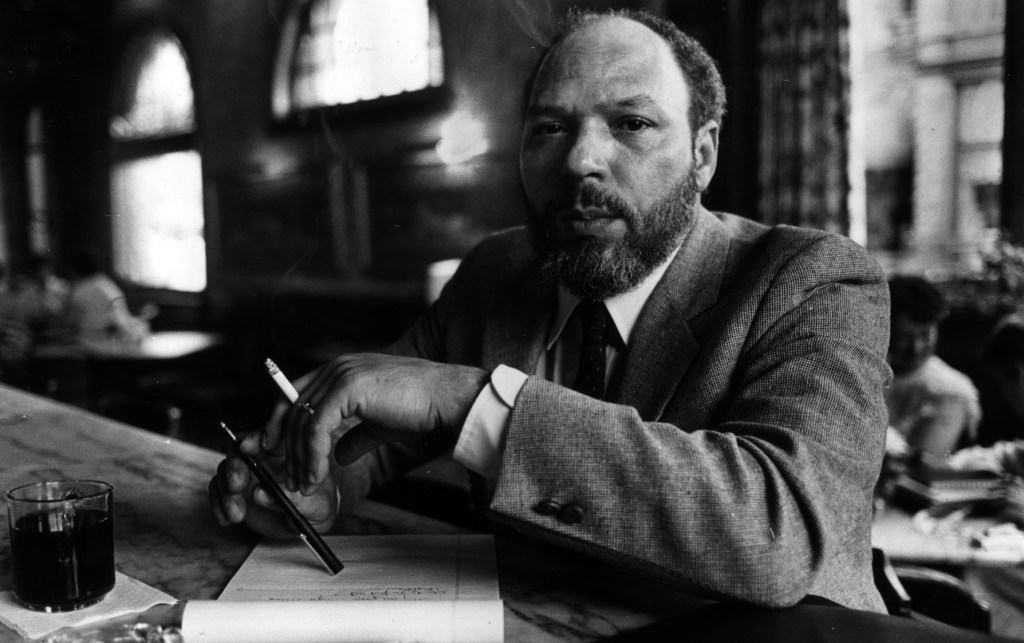
- Editor: S. Shannon
- Title: August Wilson’s Pittsburgh Cycle (13 essays)
- Published: 2016
- Wikipedia link: August Wilson (1945 – 2005)
- List of Challenges 2019
- Monthly reading plan
- #20BooksOfSummer
Introduction:
- August Wilson understood the power of the theater.
- He used it to its full potential by
- …inserting honesty and realism into every play.
- Some consider August Wilson “America’s Shakespeare”.
- August Wilson was an American playwright
- …who did the unheard of- penning ten plays.
- …one for each decade of the 20th C.
- Wilson received two Pulitzer Prizes for Drama:
- Fences (1987), The Piano Lesson (1990)
- These 10 plays gives a glimpse into
- …American history through the
- …lens of the Black experience.
- August Wilson’s Pittsburgh Cycle is a
- …series of critical essays about the plays.
- I have reviewed the first 5 essays
- …you can discover the rest of the book yourself!
Conclusion:
- Essays 1-6 were interesting
- Essays 7-13 …seemed to repeat many thoughts
- about two plays: Gem of the Ocean and Joe Turner’s Come and Gone.
- Weak point: the essays do NOT explain all 10 plays
- One of the most famous play is Fences NOT reviewed!
- It is considered the African-American version
- ot The Death of a Salesman
- A few essays were very instructive about…
- Seven Guitars, The Piano Lesson, Ma Rainey’s Black Bottom
- ….but still feel that the book
- does not live up to my expectations.
- #Disappointed
Plays:
- Jitney (1982) (no reviewed in an essay)
- Ma Rainey’s Black Bottom (1984)
- Joe Turner’s Come and Gone (1984)
- Fences (1987) (no reviewed in an essay)
- The Piano Lesson (1990)
- Two Trains Running (1991) (no reviewed in an essay…at length)
- Seven Guitars (1995)
- King Hedley II (1999)
- Gem of the Ocean (2003)
- Radio Golf (2005) (no reviewed in an essay)
Essays:
1. The emancipated century – J.H. Scott ( 2 plays discussed) – easy to read
- Play: Joe Turner’s Come and Gone
- Set in 1911… the play is about African Americans cut adrift by
- The Great Migration to the North and by slavery from their African past.
- The characters meet in a boarding house
- They represent a cross-section of African Americans.
- The boarders are in the midst of a
- …massive search for their “song,” or identity.
- Play: The Piano Lesson
- Set in 1936…this is a …
- Family conflict between Bernice and her
- …brother Boy Willie about the family piano.
- For Boy Willie the piano is a way to get some quick cash to buy land.
- For Bernice, the piano is a source of strength.
- It reminds her of the courage and endurance shown by her ancestors.
- Boy Willie looks to the future
- …while Bernice looks to the past.
2. Situated identity in The Janitor (J. Zeff): short essay about a play that is NOT in the cycle.
- The Janitor is a 1985 4 minute play.
- A janitor is someone society ignores.
- He is left to sweep the floor.
- The janitor gets an idea.
- …sees a microphone in an empty hall
- …and just starts talking.
- Message: identity is a work in progress which is in your control,
- “…but what you are now ain’t what you gonna become.”
3. Two Trains Running (S. Saddler, P. Bryant-Jackson) – This essay did not appeal to me. SKIM!
- This was a comparison of two books by
- American scholars Living Black History, M. Marable and
- The Archive and the Repertoire, D. Taylor.
- Where is the play?
- I noticed they referred to the play
- Two Trains Running but do NOT review this play at length
- …so I decided to skim this essay and
- …investigate the Pulitzer Prize 1992 play on Wikipedia.
- I learned more on Wiki…than in his essay!
4. World War II History (E. Bonds) – excellent essay, I learned a lot about the difficult period just after WW II. Black men struggle to move on after the war. They feel they are not benefiting from the post WW II economic boom. They feel like…they are still fighting.
- Play: Seven Guitars
- Set in 1948…
- …The play begins and ends after the funeral of one of the main characters.
- Events leading to the funeral are revealed in flashbacks.
- The essay explains the 7 characters (7 guitars) and their
- individual out-of-tune chords (life experiences).
- What I did not realize was how important the boxer
- Joe Lewis was for the African American community.
- Wilson uses Lewis’s fame and downfall as an essential part of the play.
- It is so sad to read that African American GI’s were fighting
- …on two fronts:
- the enemy overseas….and racism at home.
5. Stereotype and Archetype in Ma Rainey’s Black Bottom (M. Downing) – best explanation difference stereotype vs archetype I’ve ever read. Excellent essay, lucidly-written, logically-structured, and convincingly argued.
- Play: Ma Rainey’s Black Bottom
- Set in 1920s…the historic exploitation of
- black recording artists by white producers.
- The essay explains how August Wilson started with
- stereotypes assigned by whites to blacks in the play.
- Then he remakes them into archetypes.
- I would have missed this
- …completely by just reading the play!
- Wilson places the stereotype (ST) at the beginning of the play
- …adds monologues…adds POV of African American characters
- …draws the original ST (evokes criticism, suspicion, scorn)
- …into an archetype (evokes empathy, understanding, compassion)
- Example: Ma Rainey is introduced as
- ST: chaotic, unreasonable, difficult, a risk with the law
- Wilson breaks this ST into components and rebuilds Ma as
- AT: mother, queen, goddess
#Poetry Alison Whittaker “Blakwork”
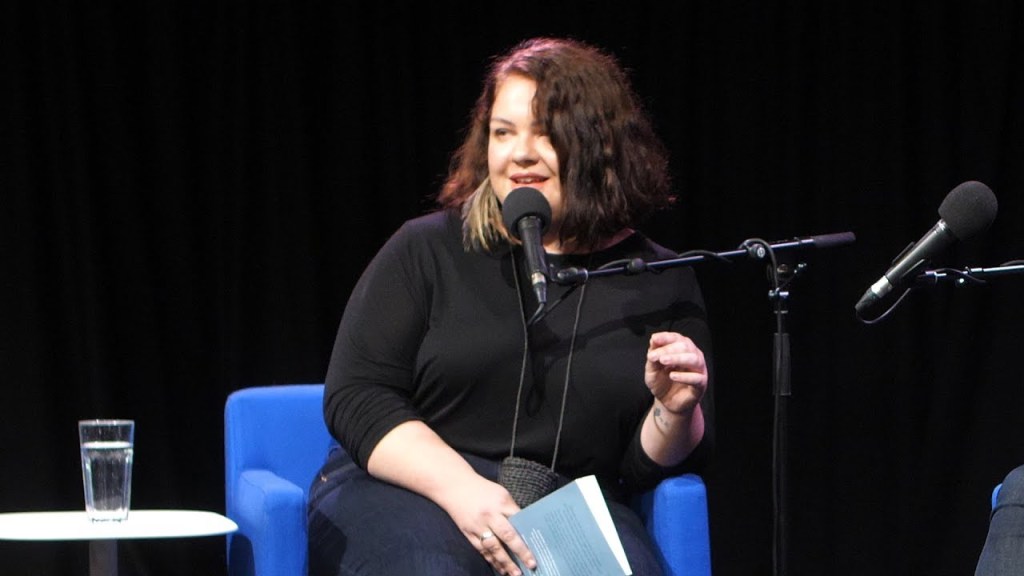
- Author: Alison Whittaker
- Title: Blakwork
- Published: 2018
- Publisher: @MagabalaBooks
- Trivia: 2019 shortlist Victorian Premier’s Award Indigenous Writing
- Trivia: 2019 winner Mascara Lit Review Avant-garde Award for literature
- Trivia: 2019 shortlist ABIA Small Publishers’ Adult Book of the Year
- List of Challenges 2019
- Monthly plan
- #AWW2019
- @AusWomenWriters
- Trivia: Review: poem Blakwork (pg 3) (title poem)
Conclusion:
- This book consists of 15 chapters and 94 poems.
- I still am trying to learn how to read a poem.
- I am going to read a poem …then really try to figure
- …out what the message is…or what do I see in the poem.
- More of my reviews about these poems
- …will appear during the summer..in drips and drabs.
- These poems will take time to read.
- The author has put so much thought into her words
- …I don’t want to rush my reading
- Poetry does not need a story…that is not its function.
- That is why poems sometimes make people cringe!
- The reader speaks English, the poem is in English
- and still the reader (me) has no idea what it means.
- This will be my biggest poetry reading challenge.
- Just look at the way the poems sit on the page!
- I glanced through the book and see images, emojis,
- poems with unique shapes, punctuation and lists.
- I am not going to review them in lofty poetic terms
- …but just by asking myself some basic questions.
- What is the shape of the poem? Who is speaking?
- What images does the poet use? Allusions?
- How do they make me feel? Stumped or enlightened?
- I’m even going to read the poems to the cat
- …I need to hear the sound!
- Poems tells us the history of the human heart.
- All poets are struggling with the different things:
- loneliness, racism, gender roles, sexuality
- colonialism, family, class, history,
- …violence, culture, pleasure, joy.
- I’m eager to learn what Alison Whittaker….
- …is struggling with.
Poem: Cotton On (pg 15)
let’s compare hands s t r e t c h
tendons wrists across o c e a n s
here: a common wound.
Cotton On:
- My FIRST reading: 12 words placed on the page leaving a 10×10 cm blank center page. words describe hands ready for planting and harvesting. The key word is ‘oceans‘ referring to the overseas labor force that is used in this industry. The blank page could indicate a field that is planted with cotton seeds. Title: Cotton On is perhaps a reference to seeds…starting.
- I then contacted the poet via Twitter:
- “I’m just starting to read poetry and I admit I don’t understand it after a first reading…so I re-read alot. Reading: Cotton on (pg 15) in Blakwork. May I ask…why the big open space in the poem? What am I missing! Thank you for your time #justasking”
- Reply from Alison Whittaker:
- “I try to not be too prescriptive with the poetry, but in Cotton on, the spaces denote the physical space across the pacific between communities wounded by cotton, and the act of stretching out to touch. it’s whatever you make of it!”
- My SECOND reading: Then I put my thinking cap on.
- Who was wounded by cotton?
- USA the slaves on the plantations.
- AUS the aboriginals who see their sacred rivers drying up.
- The aboriginals say: “If there’s no river, where’s our culture?”
- The landholders (cotton farms) are pumping all the water out
- for irragation and water management.
- Now I see the connection in the poem.
- The slaves and aboriginals are stretching their hands
- across the Pacific Ocean.
- Both wounded by cotton.
- “The last line “here: a common wound.


#Poetry Poet Laureate Tracy K. Smith
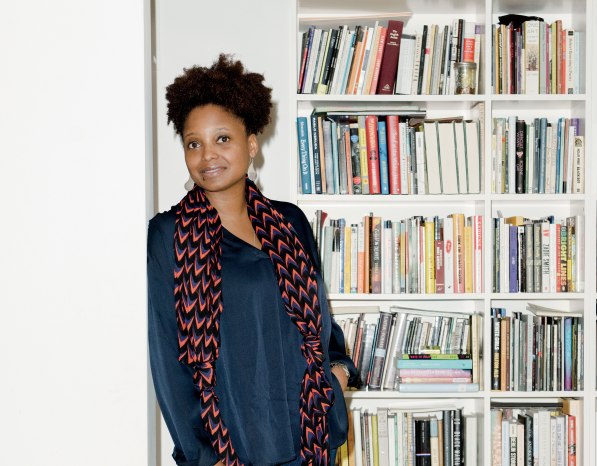
- Author: Tracy K. Smith
- Title: Wade in the Water (32 poems)
- Published: 2018
- Trivia: 2018 Shortlisted for the T. S. Eliot Prize
- Trivia: 2018 Finalist for the Forward Prize for Best Collection
- List of Challenges 2019
- Monthly plan
Introduction:
- I’m reading this book very slowly.
- I will review a few poems at a time
- because I want to give each poem the attention it deserves.
- I loved the explanation I learned in
- “How Does a Poem Mean?
- …about the beauty of poetry and
- …the technical sources of this beauty...
- by John Ciardi (1916-1986) who was a
- poet, professor Harvard, Rutgers University.
- “Greeting cards are pretty…no card is beautiful.”
- In Ciardi’s book he teaches the difference between
- pretty (greeting card)….and beautiful (poetry)
Comments after my first reading of all the poems in the train:
- I read all the poems…could not find any emotional ‘feeling’
- with this collection.
- I was so disappointed and was about to give this book a 2 score.
- Then I told myself…go to bed…sleep on it.
- Poet Laureate USA, graduate of Harvard,
- …studied with the eminent Helen Vendler (see Google)
- and professor at Princeton University
- …Smith MUST be doing something right.
- I’m just to blind to see it!
- I start a re-read of each poem today!
- #GiveBookAChance
Garden of Eden (1 stanza 25 lines)
My reaction: (….personal poem)
- Poem describes Smith’s joy of shopping in local Brooklyn Market.
- After some research
- …a critic claims she is commenting on capitalism in USA.
- What?
- Is it me…or do pundits go out of their way and try to find the most
- erudite explanation for every poem.
- The girl just likes some retail therapy…we all do!
- Smith mentions:
- “Where I seldom shopped,
- Only after therapy”.
- Shopping in an European Market store…
- filled with warmth, abundance and
- baskets of colorful and fragrant vegetables and fruit
- …foreign cheeses, glossy pasteries,
- teas, coffees.
- This “Garden of Eden…is the BEST therapy
- Close reading of language:
- oxymoron “desolate luxury”
- alliteration: “bag of black beluga lentils…”
- Assonant rhyme – rhyming of vowels iwith different consonants.
- “Everyone I knew as living
- The same desolate luxury
- Each ashamed of the same thing
- Innocence and privacy.”
NOTE:
- I am unable to discover the hidden meaning of a poem
- without the help of pundits and critics.
- In this poem…one sees a message about capitalism
- the other see a strong Biblical allusion…I see the
- therapeutic effect of retail-therapy!
The Angels (10 stanzas, 40 lines)
My reaction: (difficult poem to process…..)
- The first 5 stanza’s described
- 2 angels in speaker’s motel room.
- (clothes, their smell, playing with deck of cards)
- They even speak!
- “Quake, then fools, and fall away
- What God do you imagine we obey?”
- Annunciators of death?
- “Emissaries for something I needed to see.”
- In the last 3 stanza’s are mentioned tree, branches,rain, wind
- boulders, mounds of earth, rust-stained pipe
- …and “Bright a whorl so dangerous and near”.
- Whorl: form that coils, swirls, spirals…..( metaphor for death?)
- #Stumped…but trying hard to understand the poem!
Conclusion:
- My problem I was looking for an object
- ….and missed the idea
- …inspired by her teacher Lucille Clifton at Columbia University.
- Smith was letting strange poems come to her,
- as if from outside her own mind —
- poems that were telling her about the future.
- This conclusion is absolutely
- …not apparent by just reading the poem.
- I had to do some research about The Angels
- …otherwise I’d still be stumped!
- Smith was still trying to work though a period of
- grief after losing her mother.
- In a class Smith learned from teacher Lucille Clifton
- ..to let other voices reach her.
- Clifton had just lost her husband and was intimating
- …that her dead husband was not exactly dead.
- Tracy Smith recalls:
- “I remember her saying that there is energy all around us,
- communicating with us — if only we could listen,”
- In this poem Smith is
- indicating a rock (boulder), tree swaying
- in the wind, rust-stained pipe…an owl
- …are trying to communicate with her.
Last thoughts:
- It took me a week to read 32 poems.
- Part 1 and Part 3: are more personal
- …accessible but still you need to research
- reviews on internet and Tracy K. Smith’s back round
- to understand the meaning hidden in layers of language.
- Part 2: These are called founded poems and erasure poems
- (see Google). Smith uses documents, letters written by
- black African Americans during the Civil War period
- …husbands writing wives, soldiers requesting their pension etc.
- #MyJourneyInPoetryContinues
#AWW2019 Maxine Beneba Clarke
Introduction:
- I needed to share
- Maxine Beneba Clarke’s poem on my blog.
- There is something so rewarding in this poem
- if you are willing to
- …let go of what you already know.
Ritual
We’ll go cardboard-boothed
to the primary schools
community centres
and the churches to boot
and friendly neighbours
ideologically opposed
will avert their eyes
as they fold up their votes
Last thoughts:
You want a poem to unsettle something…
- Maxine Beneba Clarke has done it
- ..about Australian elections 2019
- There’s not a word wasted in these clean, spare lines.
- We could use this poem for elections all over Europe!
- You can read THE ENTIRE POEM HERE
- Thank you @slamup
#AWW2019 Lesley Williams

- Author: Lesley and Tammy Williams
- Title: Not Just Black and White
- Published: 2015
- Genre: indigenous issues non-fiction
- Trivia: 2016 Queensland Premier’s Award work of State Significance
- Trivia 2014 David Unaipon Award Winner
- List of Challenges 2019
- Monthly plan
- #AWW2019
- @AusWomenWriters
Quickscan:
- This is a writing collaboration between
- mother (Lesley) and daughter (Tammy).
- Lesley Williams was forced to leave the
- Cherbourg Aboriginal Settlement
- …at a young age to work as a domestic servant.
- Lesley never saw her wages.
- They were kept ‘safe’ by the government.
- This book relates her nine-year journey for answers:
- …where is all that money she earned?
- Lesley confronts the government
- …in a judicial wrestling match!
Conclusion:
- Mrs Williams describes her youth
- while giving the reader a clear mental image
- of the backdrop Cherbourg settlement.
- It was difficult to read about her life
- under cruel Protection Act that uprooted
- thousands of Aboriginal people.
- because of her strong character and vision
- she was able overcome many hardships.
- There were several messages in the book that
- resonated to me:
- Williams feels a strong sense of Aboriginal community. (safety network)
- Williams struggles to fight injustice (racial, financial)
- Williams reminds all people who suffer racism…
- Best quote:
- “There are two ways to fight racism:
- — fight with your fists
- — fight with your talents and achievements”
- Nothing hurts a racist more
- …when they see you achieving
Last thoughts
- Good literature unnerves you…..
- …or takes you somewhere to consider things
- ….things that you might not have considered
- thinking about before.
- This book took me into the Cherbourg Settlement.
- It showed me the strength of family…
- that remained unbroken for Lesley Williams.
- It has only been in the last generations
- …that Aboriginal writers have been published.
- They now are able to tell their stories, their truths.
- #ReadDiversity
#NSW Premier’s 2019 Special Award B. Boochani
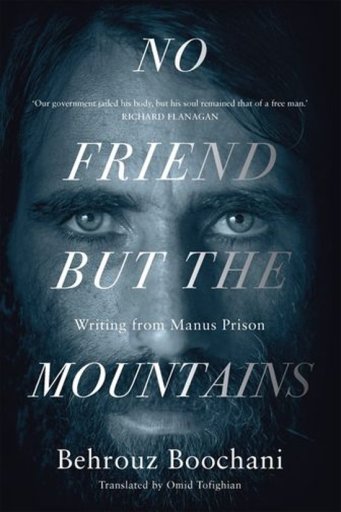
- Author: B. Boochani
- Title: No Friend But The Moutains
- Published: 2018
- Genre: non-fiction
- List of Challenges 2019
- Monthly plan
- #NSWPLA
- @MacmillianAus
- @Picadorbooks
- Trivia:
- A special award of $10,000 was made to
- Manus Island refugee Behrooz Boochani
- for his book No Friend but the Mountains: Writing from Manus Prison.
- Boochani’s book was ineligible for the NSW Premier’s Literary Awards
- which require authors to be Australian citizens.
- Trivia:
- The book won the top prize at the
- Victorian Premier’s Literary Awards in January 2019.
- This year was an exception made to the eligibility requirements.
- Trivia: WINNER ….Australia National Biography Award 2019
Introduction:
- Prison literature is always a difficult read.
- For instance the Pulitzer Prize Winner History 2017
- Blood in the Water by H. Thompson (worth your reading time!)
- But it is necessary to know the disturbing truths
- ….that are not always in the news.
- Boochani’s book was not a pleasure to read.
- I persevered to force myself out of my comfort zone.
- My review is in fragments.
- I could not add any commentary to this
- confrontational book.
- According to PEN International
- “Manus Island has become notorious for its
- …ill-treatment of detainees where violence,
- sexual abuse and self-harm are reportedly common.
- No Friend But the Mountains: Writing from Manus Prison
- is an autobiographical account
- …of Boochani’s perilous journey
- from Indonesia to Christmas Island and thence to Manus.
- He tells of what life is like for the detained men.
- #LiteratureDoesHavePower
Conclusion:
0-25%:
The trip to Manus (ch 1-4)
Boochani enters Manus Prison (ch 5-6)
25% – 60%:
- Once a concept is mentioned
- it is repeated over and over
- …again for several paragraphs:
- stench of hairy man’s breath (ch 7)
- smell of putrid soil
- fans
- mosquitos
- rooms
- pissing
- filthy toilets
- distress caused by saying ‘hi’
- bellowing of profanities
- prison becomes hive of killer bees
- prisoners become wolves…threat to everyone else
- Generator (cuts off water and electricity)
- ….manipulates minds
Queuing for food (ch 8)
- everything is micromanaged and mechanical
- meat is like pieces of car tyre
- guards like shepherds guiding a herd of sheep
- Nicknames: the Cow…first one entering dining area
- starvation has a smell…
- officers and cooks work 2 week shifts
- …then leave the island to be replaced
- answer to all the prisoners question:
- …”The Boss has given orders.”
- queue in the telephone room
Father’s Day…men struggle for the telephone (ch 9)
- …this leads to bruises and bodily harm.
- power of biceps can determine many situations
- distributing cakes….devoured right off the cardboard
- …mayhem but Boochiani does not move.
- …he knows “I am an animal that has already lost the game.”
60-100%
- I am a child of war. (ch 10)
- Boochani describes the guards crushing a unruly prisoner.
- This chapter reminds me of a mind becoming unhinged.
It’s hard to discern a genuine smile… (ch 11)
- Toothache…terrible pain…worse treatment!
- Self-harm in the prison becomes a cultural practice.
- When prisonor spills his blood he appears to enter into ecstasy.
- It is a moment emitting the scent of death.
- According to Boochani every prisoner must
- …look out for the prisoner standing next to him.
- The most important thing is they must challenge the
- Kyriarchal System of the prison.
- …Kyriarchy is a system that creates webs of privilege and exclusion.
Revolt in Mike Prison…August 2014. (ch 12)
- Death of Reza…the gentle giant.
Last thoughts:
- Despite winning the prestigious
- New South Wales Special Literary Award 2019
- with a prize worth $10.000 dollars
- Boochani may not leave Manus Island
- …and his future is unknown.
#AWW2019 Nakkiah Lui (playwright)

- Author: Nakkiah Lui (1991) Gamillaroi and Torres Strait Islander woman
- Title: Black is the New White
- Published: 2019 (book)
- Opening night: 10 May 2017 Sydney Theatre Company
- Genre: play (romantic comedy)
- Trivia: Indigenous issues
- Trivia: 2018 winner NSW Lit Award for Playwriting
- Trivia: 2018 shortlist Victorian Premier’s Award Drama
- List of Challenges 2019
- Monthly plan
- #AWW2019
- @AusWomenWriters
- @AllenandUnwin
Quickscan:
- Young couple Charlotte Gibson and
- Francis Smith are newly engaged.
- But their fathers are political rivals.
- The Gibson and Smith families gather for Christmas lunch.
- Unexpected guests, sudden self-realizations
- …and family secrets disrupt their meal.
- Themes: land rights, politics, relationships, identity, class.
- Question: What is it to be Aboriginal and middle class?
Structure:
- 7 scenes
- 8 characters:
- Engaged couple (20s) Charlotte and Francis
- Their respective parents (50-60s) Joan, Ray, Maire and Dennison
- Daughter (nr 2) and son-in-law (30s) Rose and Sonny
Dialogue:
- To speed up the pace Nakkiah uses overlapping dialogue.
- The idea was to write dialogue
- …the way people really speak
- …so that characters cut off the
- beginnings and ends of each other’s sentences.
- Full revelation of emotions is transformed into comedy.
- At times it feels like community (scene 3-4-5-6)
- ….and at times like chaos! (scene 7)
References:
- To give the play a very culturally modern feel we read about a
- virtual reality mask, twitter, Michell Obama, Hillary and Bill Clinton,
- Kim and Kayne Kardishan, Beyoncé and JayZ, Martin Luther King,
- Waleed Aly, Alicia Keyes,
- Netflix series House of Cards and the movie Cluesless.
Narrator:
- Lui uses a technique of the narrator to
- give the audience/reader the backstory.
- The narrator comments on action, adds insight
- …on characters, stage elements
- …developing a precise and complete character persona.
Conclusion:
- I will not reveal any spoilers
- …..the play should be read with a clean slate.
- You will enjoy the unfinished battles
- …in the character’s public and private lives!
- We follow the maze from character to character….
- …with the climatic scene 7
- …which includes 15 ‘bombshells’ of information!
- In Black is the New White (title revealed in scene 4)
- …you meet 8 characters who
- challenge stereotypes of
- Aboriginal and Torres Strait Islander people.
- With Nakkiah Lui’s comic descriptions of
- their personal interaction and commentary
- …you have an unforgettable romantic comedy
- …and many life lessons.
- #MustRead #MustLaugh
 NancyElin.blog