
#Ockham NZ Awards shortlist Lloyd Jones
- Author: Lloyd Jones
- Title: The Cage
- Published: 2018
- Trivia: 2019 Ockham NZ Book Awards shortlist
- List of Challenges 2019
- Monthly plan
- @theockhams
- @text_publishing
Why did I read this book?
- The Cage is shortlisted for Ockham Book Awards (New Zealand)
- I wanted to see why the jury selected this book.
Why after reading 20% of the book I was ready to call it quits?
- Usually a book starts out slowly and gets better and better.
- This book did exact the opposite.
- I slogged through chapters 1-8. (20%)
- The reader is presented a bizarre hotel that
- decides two strangers are too ‘other’ and should
- be caged in the backyard of the hotel.
What did I do differently after ch 8?
- I realized if I stop short I’ll risk missing something incredible.
- Resisting the impulse to stop midway also teaches the reader strength.
- I read the book as a fable
- Forget the bazaar framework of a hotel
- …and it’s eccentric owners who have caged two guests.
- Look for the observations that Lloyd Jones is making
- …to teach us a moral lesson.
- He wants us to see
- …strangers (refugees) from another perspective
- ….not just staring or gazing at them on a TV screen.
- He uses animals that mimic human traits
- …and humans that treat others as animals
Strong point:
- Lloyd Jones uses the
- ….fable, a literary device.
- The author made lets animals teach a moral lesson.
- There are some powerful images in the book:
- Narrator compares strangers to sheep:
- Sheep: spectacular single-mindedness
- …they eat in response to coming famine
- during the day they hardly know what to do with themselves
- Strangers: (refugees …like sheep)
- look forward to each new day
- it may bring release.
- It passes.
- There is another endless night to get through.
Strong point:
- Observations…and there were many excellent
- descriptions of the plight of refugees...
- that will pierce your soul.
- Once your soul has been pierced then you are able to help others.
- Example observation:
- Pressed around their eyes is a bruising confusion.
- They stand mesmerized by their circumstances
- …where just a moment ago, in their minds at least,
- they were in their kitchen at home.
- Example observation:
- Strangers (refugees) pace…
- they do it to alleviate a feeling of
- ..helplessness when rain is falling.
- They do not wish to be cooperative like grass
- …or submissive like mud.
- Example observation:
- Trustee (authority) Mr Bennett:
- “They are not incarcerated, they are temporally caged.”
- Viktor (cook in the hotel): “And the difference?”
Strong point:
- Best chapter for moral lesson – Ch 11 Setting: Zoo
- Lesson: The animals (strangers, refugees) don’t hate us
- …they alternate between bewilderment and boredom.”
- Core message book – Ch 21 Setting: Hotel backyard
- Trustees authorities) no longer go down to the yard
- …the narrator must transcribe what he sees.
- The Trustees are only interested in the facts
- …they don’t get the fuller story of life inside the cage”
Weak point:
- The book is too long!! (43 chapter and just 263 pages)
- After reading 50 % of the book
- …my interest seriously wavered.
- Note: I noticed around chapter 22
- ….the narrative repeats itself
- over and over
- with observations, food for the strangers at the feeding hole,
- narrator playing the clarinet,
- visits to a zoo, strangers pace in the cage,
- sit on log or huddle in the back against a stone memorial wall…
- relieving themselves in a newly dug hole.
- The strangers, visitors or Trustees (owners of hotel)
- keep asking “ Is there any news?
Weak point:
- Flashbacks that
- made no sense to me in the narrative!
- Narrator…
- flies in a plane with his father
- travels on a particular road with his father
- visits a lighthouse with his mother
- recalls a snorkeling holiday!
Weak point:
- Strange threads in the narrative…
- Note: I don’t really understand the symbol of the narrator playing his clarinet all the time. Is it just to make music “to sooth the savage beast?” (strangers, refugees)
- Note: constant thread in the book: narrator is serving breakfast ( eggs, toast, jam, coffee etc) to strangers through a feeding hole.
- Note: woman in the hat…demented neighbor who visits the cage or a asylum representative or just a vision?
Weak point: useless chapters…just useless ( filler?)
Ch 25 Stangers receive a plate warmer…Trustees celebrate with a sparkling glass of wine and the narrator plays a song on his clarinet. What is the point?
Ch 26 Descriptions of nightmares ( Mr. Bennett and the Mole), strangers attempt to stand on the plate warmer and piling stones against the cage as a wall. Narrator brings the strangers some toilet paper…then he plays a song on his clarinet. What is the point?
Ch 27 Katie (little girl in hotel) wants to feed them (strangers). Strangers asleep in the dirt. Strangers are encouraged to grow own vegetables – Katie and narrator visit zoo again. What is the point?
Conclusion:
- Criticism should be like a rain
- … gentle enough to nourish growth
- …without destroying the roots.
- I have found many strong points in this book
- …but I think the author could have trimmed
- his manuscript in ch 22 – 35.
- With a little less clarinet…wallowing in the dirty cage
- coffee, toast and eggs in the feeding hole
- …it would give this book extra polish.
- #JustSaying
- Yes this book is confronting.
- No….unfortunately…not my choice
- for the Ockham NZ Book Award 2019.
#Ockham New Zealand Awards shortlist
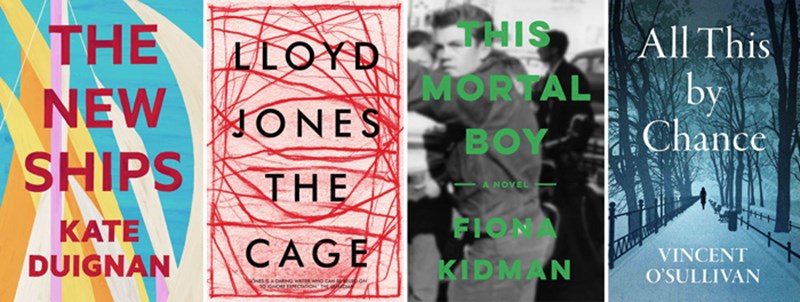
- My next shortlist: Ockham New Zealand Book Awards 2019
- Kate Duignan
- Lloyd Jones
- Fiona Kidman
- Vincent O’Sullivan
- …have all made the shortlist for the coveted $53,000 Fiction prize.
- I won’t have much time to read them all because
- the prize will be announced on 14 May 2019.
- How many can I read before the deadline?
- Today starts my Ockham Awards read-a-thon!
- My POETRY predictions….will be late (pre-order books)
Fiction:
- The New Ships – Kate Duignan – pre-order arrives 15 July!
- The Cage – Lloyd Jones – READ (review)
- This Mortal Boy – Fiona Kidman – READ (review)
- All This by Chance – V. O’Sullivan – NOT reading…novel over 3 generations…not for me!
Non-Fiction:

- Hudson & Halls: The Food of Love – Joanne Drayton (no e-book yet…)
- Memory Pieces – Maurice Gee – pre-order arrives 08 Aug
- We Can Make a Life – C. Henry – READ
- With Them Through Hell – Anna Rogers – NOT READING
- (only in hardcover and costs 68 euros! (...too expensive for me!)
Poetry:

- Are Friends Electric ? – H. Heath (Ockham NZ Award poetry 2019) – READ
- There’s No Place Like the Internet in Springtime – E.Kennedy – pre-order 15 July
- The Facts – Therese Lloyd – READ
- Poūkahangatus by Tayi Tibble – pre-order 15 July
#NSW Premier’s Award 2019 shortlist Chris Hammer
- Author: Chris Hammer
- Title: Scrublands
- Published: 2018
- Publisher: Allen & Unwin
- Genre: Aussie Noir
- Trivia: 2019 NSW Premier’s Literary Awards shortlist
- Trivia: 2019 ABIA Awards shortlist General Fiction Book of the Year
- Trivia: 2019 Indie Book Awards shortlist
- List of Challenges 2019
- Monthly plan
- @NSW_PLA
- @AllenandUnwin
Quickscan:
- In Riversend, an isolated rural community
- ….afflicted by an endless drought,
- a young priest does the unthinkable, killing five parishioners
- before being taken down himself.
- Journalist Martin Scarsden arrives in in town.
- He is assigned to write a feature story
- “a-year-after-the-crime” how people are coping with this tragedy.
- Some townsfolk don’t believe the priest was a child abuser.
- Some people were in love with him.
- Martin is here to get “the story behind the story”!
- Was Byron Swift a mass murder…who cared?
Strong point: The heat….is a character in this book!
- Great descriptions of the furnace wind
- …the blowtorch streetscape!
- Martin, journo visiting town, drapes a once-damp
- …towel around the steering wheel.
- …difficult it is to drive with burning fingers!
Strong point: narrator audio book Rupert Degas
- Rupert Degas is spot on!
- The voices of the characters that he creates
- drive this complex story.
- The voices he creates are distinct.
- — the local derro (Aus slang for vagrant)
- grizzled beard, streaked with grey, rheumy eyes
- — receptionist at local Black Dog Motel
- His female voices are the best I have heard a male produce!
- …be prepared for the Aussie accent…wonderful!
- I have never heard anything like him.
Conclusion:
- What can I say?
- No spoilers…not a single one
- because you have to experience
- the twists and turns as I did.
- Strong point: Like us, characters grow, change,
- ..make mistakes and learn (or don’t).
- Strong point: there was NO obvious foreshadowing
- ….I was stunned by every revelation because the
- characters can be very unreliable!
- Nothing felt predictable.
- Strong point: the setting is an active part in the plot twists!
- Hammer uses the setting to build suspense
- …2 huge fires and the fight to survive
- ….what is hidden in a locked room at the hotel?
- …what happened in the church on the day of the shooting?
- There is just so much to like in this book.
- It is a ripping read
- ….and the audio book brings (13 hr 17 min)
- the story alive!
- …voices of Harley Slouch, Codger Harris.
- I’ve read 4/6 nominees for New Writing Prize.
- Reading Flames this week but
- …this book is MY CHOICE
- to win UTS Glenda Adams Prize for New Writing
- in the NSW Premier’s Literary Awards 2019.
- The winner will be announced 29 April 2019.
- #BestCrimeFiction
- This is in the top 10 of all the mystery books I have read!
#NSW Premier’s Award shortlist Gerald Murnane

- Author: Gerald Murnane
- Title: Border Districts
- Published: 2017 (GiramondoBooks)
- Published 2019: (And Other Stories)
- Trivia: 2019 NSW Premier’s Literary Awards shortlist
- Trivia: 2018 Prime Minister’s Literary Awards winner
- Trivia: 2018 ALS Gold Medal shortlist
- Trivia: 2018 Miles Franklin Award shortlist
- Trivia: 2018 Voss Literary Prize longlist
- List of Challenges 2019
- Monthly plan
- @NSW_PLA
- @GiramondoBooks
- @andothertweets
Conclusion:
- This is one of the most difficult books to review.
- Initially I was tempted to close the book
- …after the first 20-30 pages.
- Murnane’s thoughts rambled on and on and
- …I just did not see the point.
- Then something happened.
- Words, phrases kept being repeated.
- I thought if I found the words that are most prominent in the
- narrative…this could guide me into finding a theme.
- coloured 80x – glass 109x – window(s) 78x – house 134x.
- I tried to find the meaning of:
- Window spaces (empty) = sightless people blind to the truth
- Window spaces (stained glass, leadlight glass) =
- people who have gathered in their life pieces of glass with
- …distortions and colors (like Murnane).
- They see reality that has been modified.
- Murnane calls it looking at things with
- …”a subtly different tint” this “wavering richness”.
- Murnane reveals:
- “I consider myself a student of colours, and shades and hues and tints.”
- It seems Murnane is telling us how
- his coloured panes of glass (stained glass)
- shaded the veranda in his mind.
Last thoughts:
- This is not an easy read.
- But great books are not meant to be easy!
- You must be prepared to go with the
- narrative flow even if you think
- …it is just going around in circles
- It is….but Murnane does have a purpose.
- Murnane wants us to be aware of the colors
- and distortions we are looking through!
- How we look at things makes all the difference
- Look at the glass from the sides of your eyes
- “…this has taught me more than gazing or staring.”
- Introspective books with self-examing characteristics
- do not always win a prestigious prize in the literary world.
- But this book does deserve awards for its
- ..innovative contemporary writing.
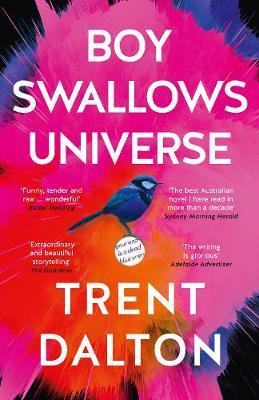
#NSW Premier’s Award shortlist Trent Dalton
- Author: Trent Dalton
- Title: Boy Swallows Universe
- Published: 2018
- Trivia: Winner of Book of the Year 2019 Indie Book Awards
- Trivia: Shortlist NSW Premier’s Awards (2 prizes)
- Trivia: Shortlist ABIA Awards (2 prizes)
- List of Challenges 2019
- Monthly plan
- @NSW_PLA
- @HarperCollinsAU
Finished: 20.04.2019
Genre: novel
Rating: A+++
Conclusion:
- In this book that is 60% fact and 40% fantasy
- we get to know the story of Eli Bell.
- And whether you realize it or not, you also
- get to know the story of Trent Dalton..the author.
- The novel gradually narrows its focus from
- bizarre childhood, teen years with stepfather and
- ex-con babysitter….
- to Eli’s life long ambition journalism.
- The ending becomes a bottleneck from which
- character and reader feel they can’t escape
- …..being dragged
- into a macabre universe!
- The book was a delight to read
- ..a real roller coaster ride!
- I have read 3/6 of the nominees that appealed to me.
- I’m NOT reading The Shepherd’s Hut
- …Aussie vernacular is too foulmouthed for my taste.
- Boy Swallows Universe is MY CHOICE
- as winner of Christina Stead Prize for Fiction
- (NSW Literary Awards 2019)

#NSW Premier’s Award shortlist Billy Griffiths (NF)
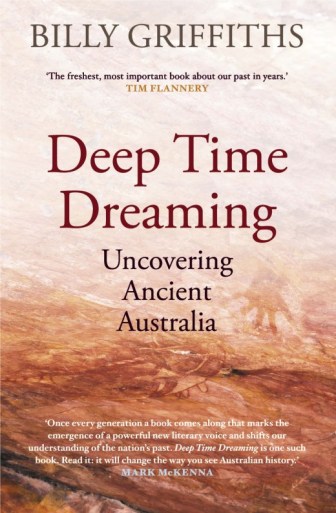
- Author: Billy Griffiths
- Title: Deep Time Dreaming
- Published: 2018
- Publisher: Black Inc.
- List of Challenges 2019
- Monthly plan
- @NSW_PLA
- @BlackIncBooks
Awards:
- 2018 John Mulvaney Book Award ( significant contribution to Australian archaeology)
- Shortlisted, 2018 Queensland Literary Awards
- Shortlisted, 2019 NSW Premier’s Literary Awards (29 April announcement)
- Longlisted, 2019 Australian Book Industry Awards (02 May announcement)
Quickscan:
- Deep Time Dreaming is a history of Australia
- …told in stones and bones.
- Griffiths highlights in several anecdotal chapters
- ….about many illustrative archeologists (male and female)
- the basic conflict in this discipline:
- How to view the past?
- critical deep time perspective vs the past as a living heritage.
- This is a complex question of ownership and belonging.
- Strong point: The book reveals in a conversational tone
- …easy to read for a novice like me…
- the slow slow shift to deep time dreaming.
Title:
- What is Deep Time Dreaming?
- The term was coined by B. Spencer and F. Gillen (Introduction)
- It is NOT to dig in search of treasure.
- It is to seek, understand a place from fragments
- …that have survived for thousands of years.
- It is an act of wonder.
Conclusion:
- I decided to read this book and listen to the audio. (11 hr 27 min)
- Listen to a sample of the book!
- Strong point: narrator Tom Griffiths is a delight to listen to!
- At times I was swept away by deep and profound
- sacredness of the Aboriginal people’s cultural life.
- Archeologist R.A. Gould published information/images that he promised
- ….would not be shared in his book Yiwara (1969)
- The author was on a Aboriginal ‘hit-list’ for his betrayal.

- At another time I read about the Franklin River dispute in Tasmania
- The Franklin was ‘not just a river‘
- …it has the epitome of a lost forest.
- The photo by Peter Dombrovskis
- … was the poster image during the
- explosive ecological and political debacle. (read chapter 9)
- The photo is impressive.
- …and takes me halfway across the world in
- my thoughts.

Morning Mist Rock Island Bend
Last thoughts:
- This book taught me more about Australia
- …and the rise of Aboriginal awareness by the nation,
- …it’s dedicated team of archeologists starting in 1950s
- with John Mulvaney than any other non-fiction I’ve read.
- I would highly recommend reading and listening to this book.
- With the help of Wikipedia (biographical info about archeologists)
- …and Google images this book is a magic carpet to
- …ancient Australia!
- I’ve read ALL the non-fictions shortlisted books
- …with the exception of The Erratics (not available in Netherlands).
- Deep Time Dreaming is MY CHOICE
- as winner of the non-fiction
- Douglas Stewart Prize ( NSW Literary Awards 2019)
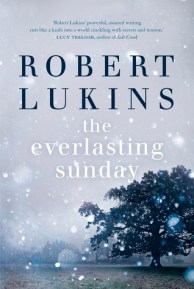
#NSW Premier’s Award shortlist Robert Lukins

- Author: Robert Lukins
- Title: The Everlasting Sunday
- Published: 2018
- Publisher: University of Queesland Press
- Trivia: NSW Premier’s Literary Awards shortlist
- Trivia: ALS Gold medal longlist (Australian Literature)
- List of Challenges 2019
- Monthly plan
- @NSW_PLA
- @UQPbooks
Finished: 17.04.2019
Genre: novel
Rating: A+
Quickscan:
- During the freezing English winter of 1962,
- seventeen-year-old Radford is sent to Goodwin Manor.
- It is a home for boys who have been ‘found by trouble’.
- Drawn immediately to the charismatic boy…West.
- …Radford soon discovers that each one of them
- …has something to hide.
Cover: symbol = great oak
- “Mighty oaks from little acorns grow.”
- Or as Chaucer wrote in 1374,
- “as an oak cometh of a litel spyr (sapling)”.

Conclusion:
- Strong point: foreshadowing
- Lukins interjects the ‘thoughts’ of winter
- …that builds the tension.
- You know something dreadful is going to happen:
- …Winter drew air into its cheeks and readied its spears
- …perhaps a lesson could go untaught
- …Winter’s hands could remain clean of blood.
- Strong point: foils Teddy (rector) vs Dr. Cass
- Cass – remains sullen and soundless, without humor
- Cass – remnant of past..pre-WWII (spare the rod, spoil the child)
- Teddy – his eyes sparkled with clarity
- Teddy – sweet eccentricity, charming father figure for the boys
- Best Quote: Teddy
- “I will stoke you, because fire lies unnourished in all your centers.”
- Strong point: character Teddy …extraordinary, words of wisdom for the boys
- Teddy is accused of being weak, to soft on the boys by Dr. Cass
- Teddy wants the boys to feel like brothers not rivals: “you must help each other.”
- Lukins illustrates one of the wisest truths we all need to learn
- through the character of Teddy:
- Criticism (discipline) should be like a rain
- … gentle enough to nourish growth
- …without destroying the roots.
- #GreatDebutNovel
- ...hope to read more by R. Lukins!
Last thoughts:
- This book surprised me as a debut novel
- That is why I gave it a 5 score instead of a solid 3.
- Usually the theory is write what you know.
- My first thought was how could a man in Australia
- …write about a correctional school in England for boys
- ..with the “wrong attitude”?
- Lukins placed more emphasis on character development
- instead of a sense of place.
- So it does not matter where the struggles take place
- …as long as the reader discovers how the character(s) change.
#NSW Premier’s Award 2019 shortlist – read-a-thon!



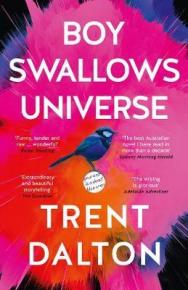
- My next shortlist: NSW Premier’s Award 2019
- I won’t have much time to read them all because
- the prize will be announced on 29 April 2019.
- How many can I read before the deadline?
- Today starts my NSW Premier’s Award read-a-thon!
- @NSW_PLA
- #NSWPLA
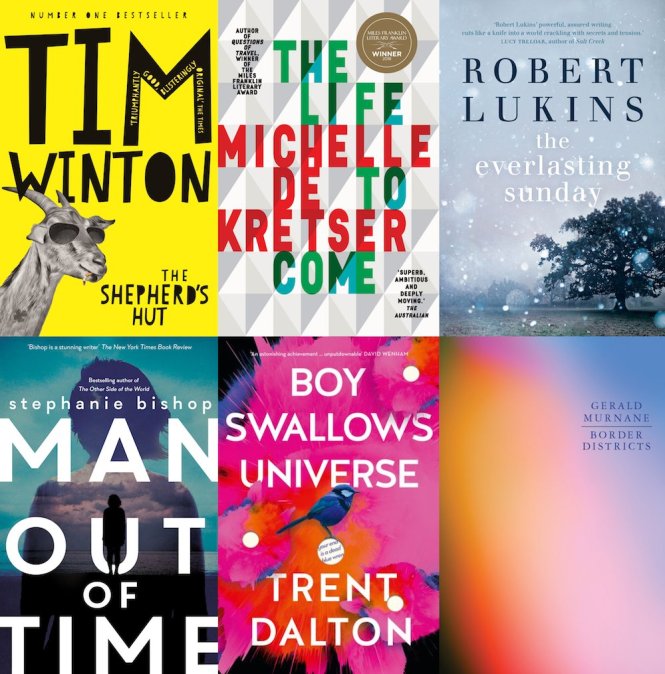
Christina Stead Prize for Fiction
4/6
Man Out of Time – Stephanie Bishop
Boy Swallows Universe – Trent Dalton – READ (Stunning!)
The Life to Come – Michelle de Kretser – WINNER
The Everlasting Sunday – Robert Lukins – READ
Border Districts – Gerald Murnane – READ
The Shepherd’s Hut – Tim Winton – READ (Bah!)
Douglas Stewart prize for Non-Fiction
5/6
Saga Land – Richard Fidler & Kári Gíslason – READ
Deep Time Dreaming: Uncovering Ancient Australia B. Griffiths – READ – WINNER
The Trauma Cleaner – Sarah Krasnostein – READ – WINNER
The Erratics – Vicki Laveau-Harvie
Axiomatic – Maria Tumarkin – READ
Tracker – Alexis Wright – READ
BOOK OF THE YEAR:
Deep Time Dreaming: Uncovering Ancient Australia B. Griffiths – READ – WINNER
SPECIAL AWARD
- No Friend But the Mountains:
- The True Story of an Illegaaly Imprisoned Refugee – B. Boochani
UTS Glenda Adams Prize for New Writing
4/6
Flames – Robbie Arnott – READ
Boy Swallows Universe – Trent Dalton – READ – WINNER + People’s Choice Award
Scrublands – Chris Hammer – READ
The Everlasting Sunday – Robert Lukins – READ
Pink Mountain on Locust Island – Jamie Marina Lau – READ
The Lucky Galah – Tracy Sorensen
Multicultural NSW Award
1/6
The Lebs – Michael Mohammed Ahmad – WINNER – READ
Rainforest – Eileen Chong – NOT reading yet ….no e-book
Home is Nearby – Magdalena McGuire – NOT reading yet …no e-book
Always Another Country: A Memoir- S. Msimang NOT reading yet …no e-book
Too Much Lip – Melissa Lucashenko – READ
Miss Ex-Yugoslavia – Sofija Stefanovic NOT reading yet …no e-book
Taboo – Kim Scott – Winner 2018
The Drover’s Wife – Leah Purcell – READ (review) – Winner 2017
#AWW 2019 Ashleigh Young

- Author: Ashleigh Young
- Title: Can You Tolerate This?
- Published: 2016
- Genre: essays
- List of Challenges 2019
- Monthly plan
- #AWW2019
- @AusWomenWriters
- Trivia: Shortlist Rathbones Folio Prize 2019
- Trivia: Yale University Windham-Campbell prize 2017
- Trivia: Ockham New Zealand Book Award (NF) 2017
- Trivia: Adam Foundation Prize Creative Writing 2017
Conclusion:
Bones
- This would not have been my choice to start an essay collection.
- Topic was not a good hook...not funny or emotional
- …just a bit strange.
Witches
- Story took me back to the carefree summer days on a beach.
- I can’t remember the last time
- …I jumped into the ocean….how sad is that?
The Te Kūiti Underground
- Absolutely enchanting…author’s memories of her father.
- “…he became in my eyes more and more eccentric,
- …and I became more narrow-minded.”
Postie
- Just a story that leaves the reader
- with a message from an eccentric French postman:
- “ …how wonderful it is if we just keep going
- …a simple stumbling block…can change
- the entire story of out lives and deaths.”
- #SmileOnMyFace
On Any Walk
- Once I start a walk…I never turn back.
- I just remember how far I’ve come
- .How much distance would be wasted
- …if I turn back?
- Once I’m home …the coffee tastes so special!
- Ashleigh Young will…
- #NeverGiveUp
Big Red
- I’m speechless….
- We are introduced tp author’s family
- …mom, dad and 2 brothers.
- Ashleigh Young is an amazing talent
- …..one of the BEST essays.
Window Seat
- We’ve all been there
- …on a plane with a talkative passenger next to us.
- Only this passenger….could she be and angel?
- #Spooky
Black Dog Book
- What you possess…you loose.
- Happy family dog story….but sometimes
- Mom has to make the difficult decision
- …and call the vet.
- #HardToSayGoodbye
Katherine Would Approve
- Anecdotes about the period when
- Ashleigh Young was director of
- Katherine Mansfield Birthplace House
- …in Wellington, New Zealand.
- #Job
Wolfman
- What to do when a harmless comment stings?
- #ThinkBeforeYouSpeak
Can You Tolerate This?
- After reading this essay I had to close my Kindle
- take off my glasses and close my eyes.
- #PowerfulWriting
- …one of the BEST essays
Seas of Trees
- Eye-opener about a disturbing
- …social trend in Japan: hikikomori.
- Creative young people becoming modern-day hermits.
- #PTSS
Bikram’s Knee
- If you are determined to find a way back to strength
- nothing is unfix-able.
- This is a very, very personal essay about Ashleigh’s
- Struggle to accept the awkwardness of her body.
- She keeps waiting on the gym bench, elbows on her knees
- head in her hand
- .…waiting for transformation.
- #Yoga #Running
- ….one of the BEST essays.
Unveiling
- The author visits a Maori ritual
- …unveiling a headstone of a family member.
- She will write a story to
- accompany the photographs her friend is taking.
On Breathing
- So funny about a simple decision
- ,,,author decides to breath noisily
- …when she feels puffed
- during a taxing bike ride.
- #Quirky
On Going Away
- Insightful look at relationships…
- Going away and then coming back together
- …this surge of
- anger and relief is toxic.
- Solution: compress it into one moment
- …like stepping into a manhole.
- A sharp, pure accident with a beginning and an end.
- #Insightful
Anemone
- Heartwrenching…to try to reach into the past
- and hold on to some one…
- …to try and stop time.
- #Depression
Lark
- Heartwarming observations and anecdotes
- about a woman who decides
- …to write a book about her life.
- The story is clearly referring to
- …Ashleigh Young’s mother.
- #Hysterical
- ...one of the BEST essays.
Last thoughts:
- Extremely well-written set of essays
- …in quiet, elegant joy-to-read prose.
- External circumstances
- …family, job, body shape or where you live..
- cannot determine your happiness.
- Ashleigh Young shows us
- happiness depends on what we are given.
- This a book best read ‘slowly’…
- I was not ready to say goodbye…
- ..to Ashleigh Young’s beautiful writing.
- I’m anxiously waiting for her next book!
- #MustRead
.
#AWW 2019 Fiona Wright
- Author: Fiona Wright
- Title: Small Acts of Disappearance: Essays on Hunger (10 essays)
- Published: 2015
- List of Challenges 2019
- Monthly reading plan
- #AWW2019 @AusWomenWriters
- Trivia: Winner of the Kibble Literary Award 2016
- Winner 2016 Non-Fiction Book Award in the Queensland Literary Awards.
- Shortlisted for the 2016 Stella Prize
Introduction:
- Wright examines her own anorexia and the significance of hunger.
- She writes frankly and movingly about a
- …difficult and very personal subject.
- She provides insights into her reading,
- …travels and her interactions with others.
- In several essays Wright relates
- …her experience to that of characters.
- In novels there are characters who starve themselves:
- For Love Alone by Christina Stead,
- Cloudstreet by Tim Winton and
- The Bluebird Cafe by Carmel Bird.
In Colombo …malnutrition, she misses it
- First sentence: I’ll always remember the
- …particular intensity that malnutrition brings on,
- …I know that I miss it still.
- Reaction: Hunger keeps the author separate from
- the rituals of society not only in Colombo.
- 70% impressions of the writer’s apprenticeship at a newspaper
- ….30% about her illness.
In Hospital …sickest
- First Sentence: At my sickest, a lover once folded a
- blanket over my shoulderblade before curling against my back to sleep.
- Reaction: Hunger is a mediator, it stands between the author and the world. Hunger is addictive. Hunger is support, it is scaffolding. Hunger became my safest state.
- 100%….very powerful, personal and disturbing.
In Berlin …interesting facts
- First sentence: I felt smaller in Berlin than I ever had before;
- the Northern Germans are, by and large, a big-boned people,
- …the shanks of their legs are particularly impressive.
- Reaction: The author visits a labour camp, Sachsenhausen.
- The body never forgets starvation.
- Sad…the author bought food to give her
- …pantry shelves an appearance of normality.
- “I didn’t choose my hunger. That no one ever does.”
- Wright describes returning to a family she
- …lived with during her studies 10 years ago.
- She had been well then.
- She did not know what lay ahead.
In Miniature …presenting a paradox
- First sentence: It seems a strange place to start writing about the miniature,
- but I want to begin on the internet, because I found there,
- for a time, a thing I could hardly have conceived would have existed,
- a community of illness, specifically for the kinds of illnesses that
- …we often keep silent and hidden within ourselves.
- Reaction: Breathtakingly beautiful…how Fiona Wright sees her
- …fascination with miniature reflected in her illness.
- This essay was poetic!
In Increments …sickness personified “gnawing”
- I’ll never know the point where my physical illness
- ..gave way to something different,
- something more complex, but more and more I think
- …now that hunger was always with me, always
- …gnawing away somewhere in me, and my illness
- …just allowed this hunger to assert itself in the only
- …way that could possibly have been acceptable to me.
In Books I …analogy in books
- The year that I first became ill, when my physical condition first developed,
- …was the first year that I studied Australian Literature.
In Books II …analogy in books
- There are books I have had with me in
- …hospital waiting rooms that I can never re-read without re-reading, too,
- …the traces that they carry of the spaces that I took them into.
In Group ….mother vs daughter
- There are some conversation that you shouldn’t have with your mother,
- especially if you are a poet, and especially if you are a
- …poet four months into you third stint of group therapy.
In Passing …sad news
- I received the news digitally, in a text
- …from my old housemate, Kat.
In Hindsight …looking back
- I resisted, for a long time, reading any anorexia memoirs,
- …even though I’d been reading about
- ..the condition in fiction and textbooks.
Conclusion:
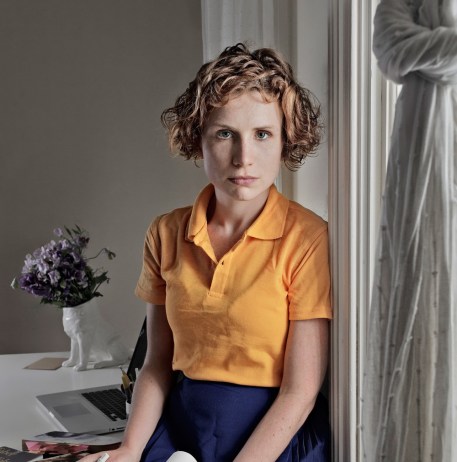
- The cover of Fiona Wright’s book keeps catching my eye.
- What kind of story is behind those eyes.
- Fiona Wright (born 1983) is an Australian poet and critic.
- Small Acts of Disappearance: Essays in Hunger (2015)
- is a collection of ten essays that detail the author’s
- own experience with anorexia.
- The longest essay is ‘In Group’
- …the shortest is ‘In Passing’.
- The best? I loved them all.
- I wrote down a few words about the first few essays.
- Each one draws me in with the first sentence.
- After reading one essay
- ….I have to get up and do something else
- …I must let my thoughts settle.
- Fiona Wright has shared her life
- …stripped bare and gray as sheet-iron.
- The more Fiona thinks about her body
- the more she knows it is no longer her own.
- Her body tries to fold up at the first sign of danger
- …as if disappearing into a shell.
- #MustRead
 NancyElin.blog