
#Ireland John McGahern

- Author: John McGahern
- Title: Memoir
- Published: 2005
- Genre: non-fiction
- List of Challenges 2019
- Monthly plan
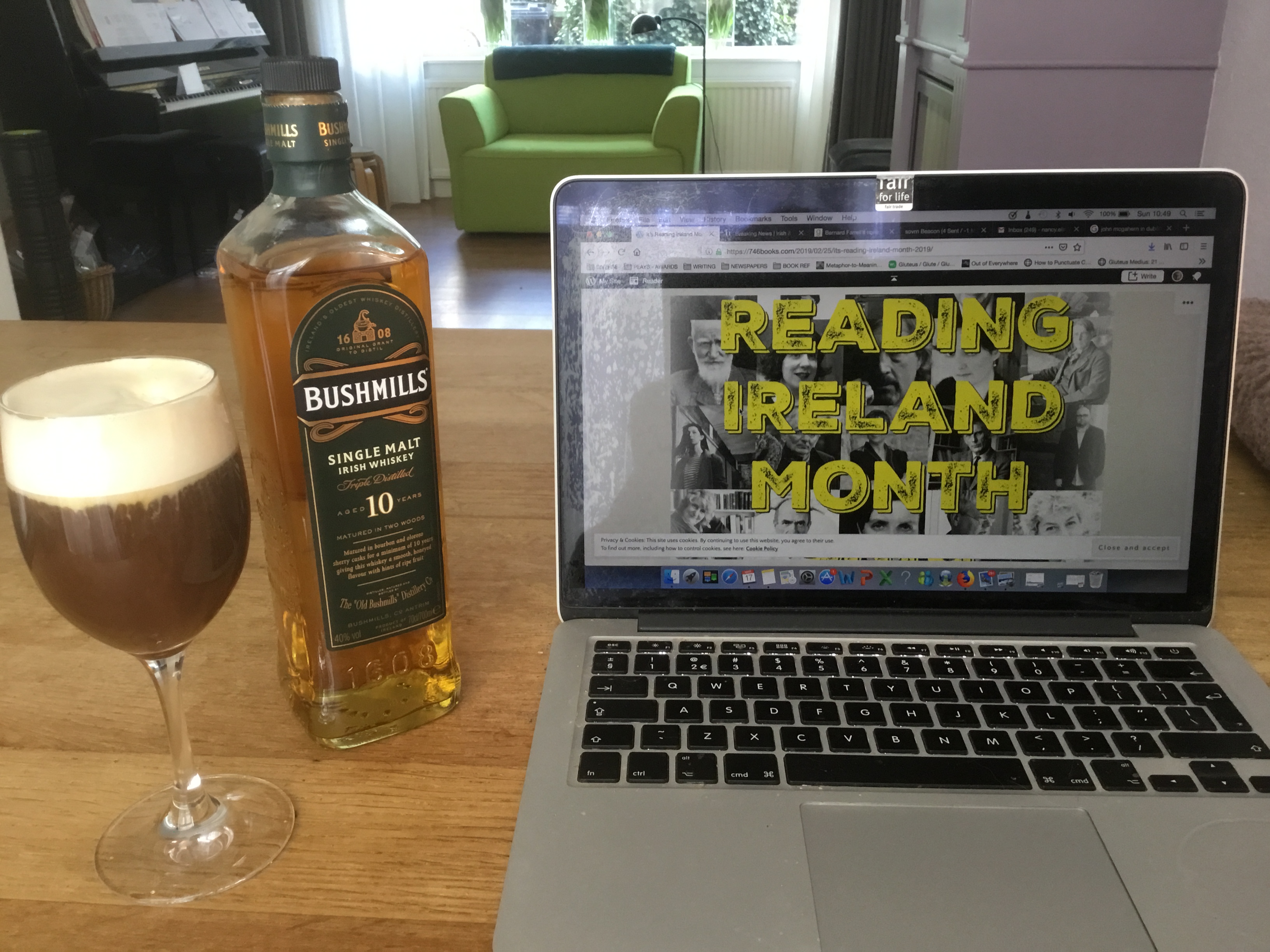
- #ReadingIrelandMonth19
- @746books.com
Author:
- The Observer hailed John McGahern as
- “the greatest living Irish novelist” before his death in 2006.
- The Guardian described him as
- “arguably the most important Irish novelist since Samuel Beckett”.
- I never heard of John McGahern! (1934-2006)
- McGahern had a very challenging life, moving schools repeatedly
- – often for no good reason
- – losing his mother to cancer when he was 10 yrs old (1944)
- — growing up with an absentee father
- — enduring physical, emotional, psychological abuse
- at the hands of his policeman father.

Conclusion:
- Memoir is an autobiographical account of
- the childhood of Irish writer John McGahern.
- It recalls his formative years in Leitrim, Ireland
- …,the death of his beloved mother Susan and
- …his relationship with his dark and enigmatic father.
- McGahern’s father visited the family
- from the Garda barracks only once a month.
- All 7 children were afraid of him.
- His father was very mercurial.
- He would go from ignoring a child…to beating him.
- McGahern while writing this book kept farther from himself
- …and closer to what happened.
- This was at times difficult to read
- …how a parent could be so cruel.
- The turning point in McGahern’s life was the death of his mother.
- “She was gone to where I could not follow.“
- Early childhood (3-15 yr) is described for the first 60% of the book.
- Once McGahern reaches the age of 19….and could stand up
- to his father physically…the book took on a combustive tone.
- The father’s domination of the family was now being challenged.
- Best quote: page 273
- Father speaking to McGahern: “What is your aim?”
- McGahern: “To write well, to write truly and well about
- …fellows like yourself.”
Last thoughts:
- This book has a rhythm that connects the images in the prose.
- It is well written with intelligence and feeling.
- There are sections of the book filled with emotional intensity.
- The writer takes you into his private world.
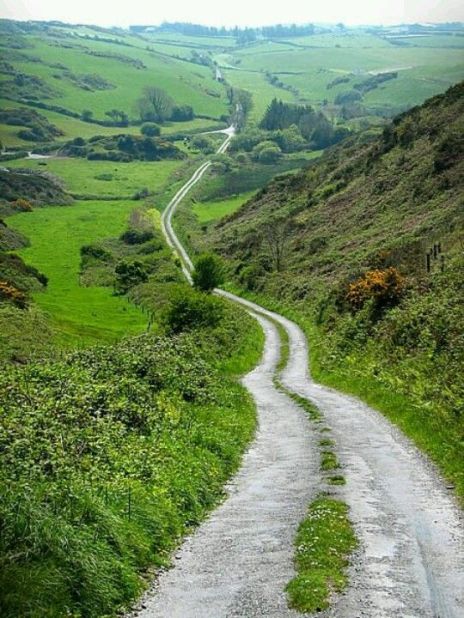
- The Irish rural country lanes
- …gave McGahern a sense of peace
- So the memoir begins with a 3 year old boy
- …walking with his beloved mother.
- So the memoir ends the man reflecting
- on those rare moments of childhood security.
- “…I know she has been with me all my life.”
- I was surprised how much I liked this book!
- John McGahern is an Irish novelist that deserves
- …to be on more reading lists.
- #VeryTouching

#Ireland Abbie Spallen (playwright)

- Author: Abbie Spallen
- Title: Lally the Scut
- Premiered: Belfast’s Mac Theatre in April 2015
- Trivia: Winner of the 2016 Windham-Campbell Prize for Drama
- The individual prize ($165.000) is among
- …the richest literary prize amounts in the world!
- List of Challenges 2019
- Monthly plan
- #ReadingIrelandMonth19
- @746books.com
- List of Plays Read… and Theatre Websites
Quickscan:
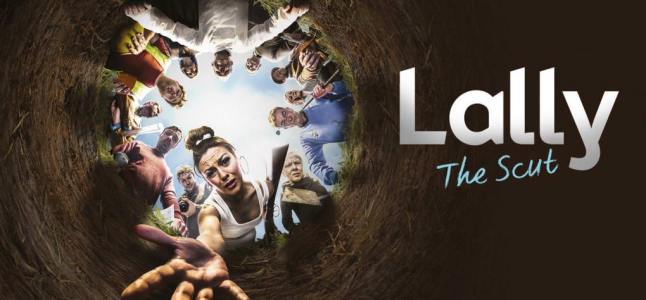
- In the political satire…Lally the Scut
- a mother struggles to save her little boy
- …after he falls into a bog hole.
- The play follows Lallys journey going to one towns-person
- …to the next trying to find anybody
- …who will help her in her crisis.
- This task proves difficult for many reasons.
- Her neighbors’ fear that digging up the fields
- …will uncover secrets from the Troubles.
Cast: 9 male actors – 3 female actors
- Mother: Lally (mid 20s), 7 months pregnant
- Father: Francis (…a bet, drink and a song…happy-go-lucky guy)
- Grandmothers: Rahab and Ellen
- Townsfolk, media persons, priest, politians
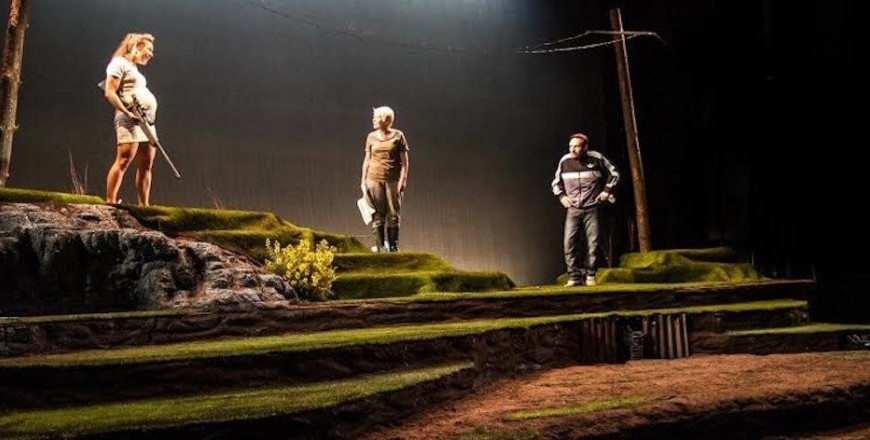
- Setting: outskirts of a Northern Irish border town
- Theme: conflict in Ireland …is not over!
- The play’s recurrent image of the child lost down a hole
- is a allegory for the island of Ireland’s uncertain future.
Conclusion:
- The child’s down a hole.
- The town’s up in arms.
- I would not have understood the allegory
- …without having done some research.
- This play had so much potential.
- Act 1 was just a chaotic mess.
- Narratives from several characters do not intertwine
- …but clash. This reader was exasperated.
- Also I felt NO real urgency to save the child
- …only nonsensical histrionics by local baker, builder and
- …man with a golf club.
- To make matters worst Spallen insists on including
- ..an expletive-laden narrative.
- I can understand this writing style that is
- …dependant on the tone, genre and audience for the play.
- But…less is more.
- There must be another way to express rage.
- Act 2 did not improve.
- By the time we get to a mock-torture scene,
- shrugged off by a former terrorist
- …I had decided this is not for me.
- It is very political and somebody
- …more in tuned with the The Troubles
- the peace process in Northern Ireland
- may understand Abbie Spallen’s satire.
- I did not.
- I could not connect…and believe me I tried.
- I researched the play and playwright.
- My advice: read the play and form your own opinion.
- #BraveDarkIrishPlay
#Poetry Seamus Heaney
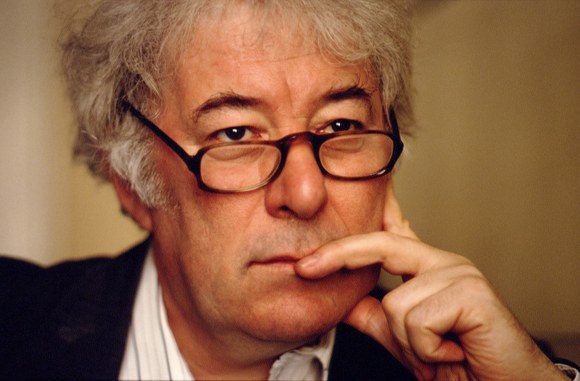
- Author: Seamus Heaney
- Title: Field Work
- Published: 1979
- Genre: 27 poems
- List of Challenges 2019
- Monthly plan
- #ReadingIrelandMonth19
- @746books.com
Field Work (1979)
- Field Work is the fifth poetry collection.
- It is a record of Heaney’s four years (1972-1976)
- living in rural County Wicklow, Ireland
- after leaving the violence in Northern Ireland.
- Heaney lived in Belfast and was a professor at Queen’s University.
- The years in Ireland were years of retreat
- …a quiet time for thinking and renewal.
- Field Work is less political.
- 50% elegies…a choice to remain on the everyday level.
- 50% domestic life…love poems for his wife and friends.
- Style: sketch the living before death and
- …do justice to the moment of extinction
- Heaney calls it the ‘music of what happens’.
- The title Field Work implies his investigation
- …into a culture not one’s own in County Wicklow Ireland.
My Notes:
- Oysters:
- starts with images of shared eating and friendship to anger over being the colonized (Romans). Strange…I really did not ‘get’ this poem.
- A Drink of Water:
- sonnet that describes an elderly women who used to collect water from the well each morning, but now she has passed away.
- The Strand at Lough Beg:
- for Colum McCarthy (cousin shot in a sectarian ambush)
- A Postcard from North Antrium:
- friend S. Armstrong shot by “a pointblank teatime bulllet”
- Casualty:
- for L. O’ Neill – friend, went out for his usual nightly
- drink in a pub bar and was blown up by a bomb set by his own people.
- Note: in Casualty – revenant meaning someone has come back from the dead to haunt them
- The Badgers: badger is a Heaney animal alter-ego.
- The Singer’s House:
- is full of imagery…even if one does not know where Carrickfergus is. Heaney uses images to carry his poem to levels where straightforward propaganda could never reach. Much of what goes on in this poem can best be understood as a contrast between life in the North (industry, mining) and life in the South of Ireland,
- The Guttural Muse: refers to the noise of young people leaving a discotheque
- In Memoriam Sean O’ Riada: Irish composer traditional music
- Elegy:
- for Robert Lowell (poet) death-moment is represented by “…the wind off the Atlantic”.
- Glanmore Sonnets:
- Ten poems in the ‘marriage group’ .
- An Afterwards:
- the poet imagines himself in the ninth circle of hell,
- as his widow comes from the upper life to indict him and
- all poets saying…“I have closed my widowed ears…”
- High Summer: what an image! ….maggots in a paper bag as fish bait (jick)
- The Otter: image of his wife (otter) love poem…when they first met
- The Skunk: image of his wife (skunk ) love poem..describes married life
- The Harvest Bow: looks back to his father using a harvest bow
- In Memoriam Francis Ledwidge:
- Irish WW I poet/soldier; aka “poet of the blackbirds”
- Ugolino:
- version of the Ugolino episode in Cantos 32 and 33 of Dante’s “Inferno.”
#Ireland Phillip McMahon (playwright)
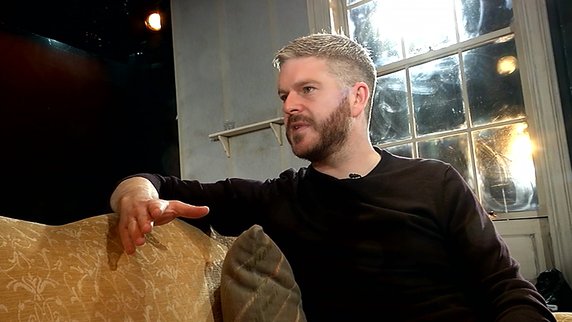
- Author: Phillip McMahon (1979)
- Title: Come On Home
- Opening night: July 2018
- Location: The Peacock Theatre is situated under the Abbey foyer.
- It is affiliated with Ireland’s National Theatre and
- The Abbey Theatre.Abbey Theatre Dublin
- Director: Rachel O’Riordan (1974)
- Trivia: Nominated Best New Play Irish Times Theatre Awards
- Winner: Announcement 31 March 2019
- List of Challenges 2019
- Monthly plan
- #ReadingIrelandMonth19
- @746books.com
Quickscan:
- The play is about a family forced
- …into a reunion under difficult circumstances.
- A family funeral is the best time to clear the air
- …and at the same time muddy the waters!
- The play deals with bigotry in a small town in Ireland.
- Characters talk about love, loss, abuse and drink.
- They must say difficult things.
- History and blood binds them
- …but they don’t know each other.
- Michael hasn’t been home in almost twenty years.
- He was kicked out of the seminary and
- …exiled from his family home.
- But now, the death of his mother sees him
- ….reunited with his two brothers
- …their partners and the local clergy.
- Questions must be answered.
- Scores met be settled.
Cast: 5 male actors – 2 female actors
- Brothers: Ray – Michael – Brian
- Clergy: Fr. Cleary – Fr. Seamus
- Partners: Aoife (Ray’s partner) – Martina (Brian’s wife)
- Setting: family living room, single setting = pressure-cooker play
- Secrets surface only under pressure.
- Strong emotions (despair, fear, anger) created by events
- Why does the character have difficulty telling these secrets?
- Is it fear? shame? pride?
- …that makes the words stick in the character’s throat?
- Theme: classic Irish drama –> exile …then returning home
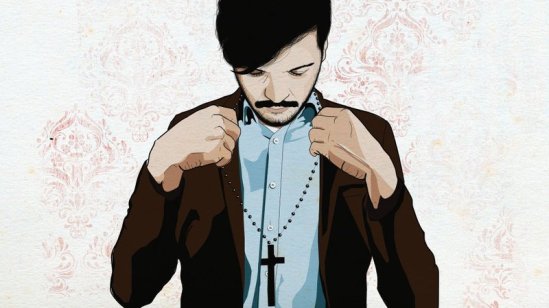
Conclusion:
- Phillip McMahon has created 2 act play with 8 scenes
- …that does NOT focus on a complex narrative plot line.
- He is interested in showing only the moments of intense conflict
- …that shape his characters.
- Ireland is changing and
- …themes as a gay priest…are now on stage.
- This makes the play feel fresh, surprising, and compelling.
- The real excitement is the pivotal moment
- …the moment when all control is in the balance.
- We hold our breath!
- What is that moment in this play?
- I’ll let you discover that
- Will it win the Irish Times Theatre Award?
- Award will be announced on 31st of March!
- #PowerfulPlay
#Ireland Essays on Modern Irish Writing
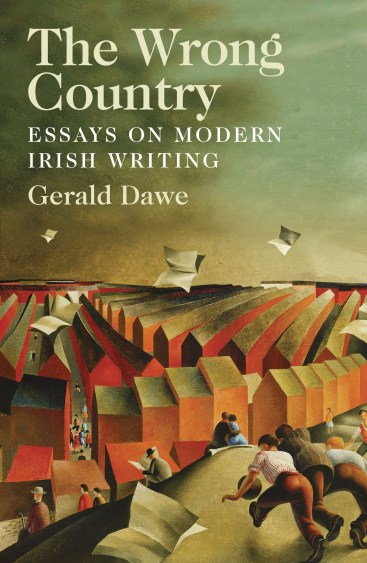
- Author: Gerard Dawe (1952)
- Title: The Wrong Country (14 essays)
- Published: 2018
- List of Challenges 2019
- Monthly plan
- #ReadingIrelandMonth19
- @746books.com
Introduction:
Gerard Dawe is a retired (2017) Professor in English from Trinity College Dublin and a poet.
Born in Belfast and started is family life in the west of Ireland, Galway.
Subject:
Series of 14 essay on modern Irish writing from from WB Yeats onwards.
Epigraph:
The epigraph is by Hugo Hamilton’s The Speckled People and
reflects Irish writers and their writing for me….excellent choice of words by G. Dawe!
“…You can’t be afraid of saying the opposite,
even if you look like a fool and everybody thinks you’re
in the wrong country, speaking the wrong language.
Dedication:
The book is also dedicated to an Irish poet who passed away in 2017, Gerard Fanning.
I have never heard of him.
His poem collections are difficult to find in The Netherlands.
I ordered his collection Water & Power.
I was the last book before his death.
I’m curious what he has to say.
Style:
The essays are in the form of invited lectures or contributions given by G. Dawe.
Tone is conversational and because it is a lecture it takes random turns.
I had to read carefully and ask myself “what did I really learn from this lecture?”
Tip:
I read about the author on Wikipedia before starting Dawe’s writing.
It gives a helicopter view of the writer before I start an essay.
Some of the writers discussed in the essays:
W.B. Yeats (1865-1939) Nobel Prize 1923 and
Samuel Beckett (1906-1989) Nobel Prize Literature 1969
Seamus Heaney (1939-2013) Nobel Prize 1995
- Note: …it is quite exceptional to have 3 Nobel Prize winners
- emerge from an Irish Protestant Group in literature!
James Plunkett, John Hewitt, Eavan Boland, Dorothy Molloy,
Michelle O’Sullivan, Leontia Flynn, Eiléan Ní Chuilleanáin, Ethna Carbery
Elizabeth Bowen, Mary Lavin, Kate O’Brien, John McGahern, Brendan Behan, JP Donleavy, Patrick Kavanagh, Seamus Deane, Derek Mahon, Medbh McGuckian, Stewart Parker.
- Read Eavan Boland’s The Poet’s Dublin....beautiful
- Reading Eiléan Ní Chuilleanáin‘s
- The Boys of Bluehill (40 poems published 2015)
- Read an essay by Seamus Heaney about Patrick Kavanaugh.
- Read Seamus Heaney Poetry
- Read Elizabeth Bowen The Death of the Heart
- Reading Medbh McGuckian Selected Poems 1978-1994
Topics:
- Early years: 1913 – 1939: Lockout Dublin, WW I, Easter 1916
- 1940s – 1950s: Tragic writing lives of American and Irish generations
- 1950s: Emigration of young Irish women to Britain
- 1960s: Boozy literary Dublin
- ….and onwards 2010s.
My notes on 7 essays:
Hearing Things: W.B. Yeats – S. Beckett
Beckett and Yeats had similar social, educational, Irish Protestantism backrounds. Beckett would create in his drama testimonials to Yeats. Beckett and Yeats met only once . 1933 Beckett went through extremely difficult tragic year: death cousin (TB) May 1933 and loss of his father (heart attack) June 1933. This marked the real beginnings of his life as a writer. He was 27 years old.
Plunkett’s City: James Plunkett
James Plunkett was an Irish writer (1920-2003) He was educated by The Christian Brothers in Dublin.
Plunkett grew up among the Dublin working class, petty bourgeoisie and lower intelligentsia.
Strumpet City is a 1969 historical novel by James Plunkett set in Dublin, Ireland, around the time of the 1913 Dublin Lock-out.
Strumpet City is movement between Dublin, Kingstown and the coastline of Dublin. Characters talk to one another as they observe the city around them. This is the long tradition of perambulation in Irish writing. The book starts in 1907 and ends 1914 with a troop ship leaving Dublin Bay for WW I. In the seven years the 1913 Lockout, struggles for social justice and democracy in Ireland revolve around Dublin.
Dawe introduces met to a poem which I read and listened to: Easter 1916 by W.B. Yeats.
This is a nice read/listen on Easter Morning….and remember what happened en changed Ireland forever.
Border Crossings:
John Harold Hewitt (1907 – 1987), who was born in Belfast, Northern Ireland, was the most significant Belfast poet to emerge before the 1960s generation of Northern Irish poets
that included Seamus Heaney, Derek Mahon and Michael Longley.
Hewitt’s verse expresses the
damage done by political division and nostalgia for a different past.
John Hewitt was a father figure for young Northern poets like Heaney and Longely.
I read Dawe’s essay and did not learn very much. I kept searching on the internet for a better image of this poet.I listened to readings of his poems “The Watchers” and “The Local Poet.” In this poem you can sense Hewitt’s modesty and shyness between the lines. Beautiful.
On Culture Northern Ireland website I found a concise introduction to John Hewitt that appealed to me more than Dawe’s essay.
We need Hewitt now more than ever to remind us that we have a tradition and a definable, colourful, multi-layered Ulsterness. That Ulster has a cultural and cultured mind that has nothing to do with universities. Now that we have, at least for political reasons, ceased to kill each other, Hewitt can teach us how to write poetry again in the peace of who we really are.
From The Ginger Man to Kitty Stobling
This is going to be an interesting essay because I HATED The Ginger Man by P J Donleavy. It was listed on Modern Library’s list of Best 100 novels of 20th C. Perhaps Gerard Dawe can tell me what I was not ‘getting’ in Donleavy’s book!
60% of the essay was a Dawe’s attempt to put Irish literature in the historical context of the 1950s (social,political) Donleavy was mentioned in two sentences! No analysis. 40% of the essay was about Patrick Kavanaugh. He produced an Irish classic “The Great Hunger” (poem) and fought tirelessly against the establishment in Dublin. Ireland 1950s was an age of innocence but also full of dark secrets (difficult (patriarchy) conditions for women, child abuse in the Catholic Church, Magdalene laundries).
The Passionate Transitory: John McGahern – REAL DISCOVERY!!
The Observer hailed him as “the greatest living Irish novelist” before his death in 2006 and in its obituary the Guardian described him as ‘arguably the most important Irish novelist since Samuel Beckett’. I never heard of John McGahern! (1934-2006)
Dawe’s essay was not very enlightening. I learned more while reading McGahern’s Wikipedia page!
McGahern had a very challenging life, moving schools repeatedly – often for no good reason – losing his mother to cancer when he was 10 yrs old…growing up with an absentee father and enduring physical, emotional, psychological abuse at the hands of his policeman father.
One of the preeminent Irish writers of our time, John McGahern has captivated readers with such poignant and heart-wrenching novels as Amongst Women and The Dark. Moving between tragedy and savage comedy, desperation and joy. John McGahern….all his books reflect his hard life experiences. Characters, events, attitudes are all peeled back to reveal reality. Sounds like a good author to add to reading lists!
I bought his first novel….The Barracks (1963) and his last book before he died…Memoir (2005).
Elizabeth Reegan (represents McGahern’s marries into the enclosed Irish village of her upbringing. The children are not her own; her husband is straining to break free from the servile security of the police force; and her own life, threatened by illness, seems to be losing the last vestiges of its purpose.
Novels
The Barracks (1963) AE Memorial Award, McCauley Fellowship.
The Dark (1965)
The Leavetaking (1975)
The Pornographer (1979)
Amongst Women (1990), Irish Times Literary Award (1991), nominated for the Booker Prize (1990).
That They May Face the Rising Sun (2001), Irish Novel of the Year (2003), nominated for the International Dublin Literary Award.
Non-Fiction: Memoir (2005)
Fatal Attractions: John Berryman in Dubiin
John Allyn McAlpin Berryman (1914 – 1972) was an American poet and scholar…not Irish but visited in Dublin. I wonder why Dawe added this essay to his book? This essay feels out of place…#JustSaying
History Lessons: Derek Mahon and Seamus Deane
Derek Mahon (1941) is an Irish poet. He was born in Belfast, Northern Ireland child of Ulster Protestant working class parents. Derek Mahon is regarded with Heaney and Longley as the leader of the resurgence of Irish poetry from the late 60s onwards. He writes lyric poetry of enormous wit, elegance and scepticism
Seamus Deane (1940) is an Irish poet, novelist, critic and intellectual historian. Born in Derry, Northern Ireland, Deane was brought up as part of a Catholic nationalist family. Of all the writers I’ve read about in the first 7 essays….Deane is the least interesting. Sorry, Seamus.
Last thoughts:
- I’ll let you discover the last 7 essays yourself.
- The purpose of reading this book was to broaden
- my Irish reading horizons.
- #MissionAccomplished
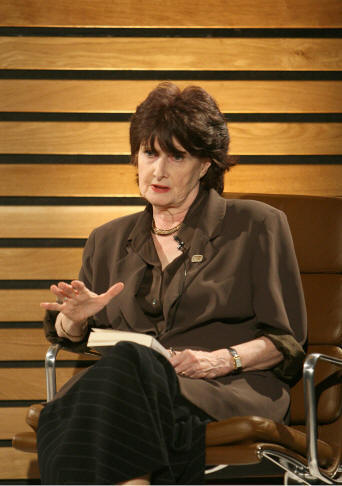
#Poetry Eavan Boland (poet)
- Author: Eavan Boland
- Title: A Poet’s Dublin (35 poems)
- Published: 2014
- List of Challenges 2019
- Monthly plan
- #ReadingIrelandMonth19
- @746books.com
Structure:
The book is divided into 3 parts representing:
- the city Dublin (architecture, women, colony)
- the River Liffey (without the river there would be no city)
- the suburb Dundrum (treat the mundane life of a woman in
- the suburbs with children fairly)
- The book ends with a conversation
- that took place between Eavan Boland and Paula Meehan
- on her 70th birthday at the Abbey Theatre in 2014.
Conclusion:
- Weak point:
- Part 3 – Suburban Dundrum
- Eavan Boland tries to capture the sense of
- living in the new Ireland….subrubia
- but the poems offered few opportunities to reflect.
- They did not generate emotional power
- …to help me connect to Boland’s words.
- Strong point:
- Part 1 and 2- The city of Dublin and The River Liffey
- There were difficult issues and experiences
- told with with a clear-eyed honesty, openess
- and much humanity.
- There were 3 poems about her mother
- (elegy, marriage and her death).
- Poems about Boland as a Trinity College
- student in Dublin.
- Part 2: The Gifts of the River
- …all these poems were very good
- emphasizing the feeling of being a colony under
- the English….and the palpable joy of the
- beauty of the Grand Canal in Dublin or the
- carefree summer swimming hole at
- Blackrock Baths!
Last thoughts:
- This is a lovely way to discover a city.
- Not just pages of facts and figures….but feelings
- through the author’s poems.
- This book marks Eavan Boland’s 70th birthday,
- The poet has paired her poems about her native city Dublin
- with her own photographs.
My notes:
Once in Dublin
- Why did this poem put a smile on my face?
- The poem has emotion, idea, physical setting,
- language, image, rhythm…that brought back
- memories of my visit to Dublin years ago.
- In this poem we visit a Dublin of Boand’s past.
The Huguenot Graveyard at the Heart of the City
- I learned of the French Protestants
- who left Nantes France to settle in Dublin 1600s.
- This hidden cemetery is a place of shadow
- and remembrance.
- Nostalgic poem…that sparked my interest because
- some of the names on the cemetery plaque were familiar!
- Le Fanu:
- Joseph Thomas Sheridan Le Fanu
- was an Irish writer of Gothic tales and mystery novels.
- He was the leading ghost-story writer of the nineteenth century
- Another name….Becquett
- This was a relative of Samuel Beckett.
- Now that explains why Beckett felt at home in France.
The Doll’s Museum in Dublin
- This poem can be read in multiple ways by
- different audiences.
- The poem highlights Easter Day in Ireland.
- While there seems to be a gleeful mood in the air
- …the poem ends on a note that implies there is an
- underlying sadness:
- Easter Uprising 1916.
Heroic (Sonnet)
- As you walk through a city like Dublin your eyes gaze on
- bonze orators and granite patriots.
- Arms wide. Lips apart
- Eavan Boland is in her late teens, a student
- having recently returned to Dublin.
- She senses the powerful threat of heroism in the city during
- the turbulent years of The Troubles.
- Also she feels the growing awareness of the
- troubled role of women in Irish history and culture.
- There is no statue as she describes in the poem in Dublin
- (man with a gun) but was inspired by the statue
- of Robert Emmet (1778-1803) in St. Stephen’s Green.
- Irish nationalist and Republican, orator and rebel leader.
- He led an abortive rebellion against British rule in
- 1803 and was captured, tried and executed for high treason
- In this sonnet Boland imagines
- stone maleness – Irish history – heroism.
- She would you look at the statues of the Irish past
- and try to imagine heroism.
- Could she be heroic?
Anna Liffey
- This is an example of an Irish pastoral poem
- It s about the River Liffey in Dublin.
- and one of the few rivers in the world that
- is considered ‘female’.
- The Irish phrase Abhainn na Life means River Liffey
- The phrase has been Anglicanized to Anna Liffey.
- James Joyce included a character in Finnegin’s Wake
- called Anna Livia.
- Eavan Boland holds a conversation in a fragmented style
- with the river she can see from her doorway at home.
#Ireland: Edna O’Brien

- Author: Edan O’ Brien
- Title: Saints and Sinners
- Published: 2011
- Genre: 10 short stories (208 pg)
- List of Challenges 2019
- Monthly plan
- #ReadingIrelandMonth19
- @746books.com
Shovel Kings
- An absolutely feel good story.…it is the longest in this collection.
- Title: Shovel Kings refers to the young Irishmen who
- …came to England to do construction and digging work.
- On payday they felt like (shovel) kings!
- Edna O’Brien describes Rafferty (60+)…
- “He doesn’t belong in England and ditto Ireland
- ….exile is in the mind and there is no cure for that”
- Rafferty and Edna O’Brien have something in common:
- …both felt themselves as exiles having lived in England for 50 years.
Sinners
- Delia runs a small B&B in a rural village.
- The beating heart of this story is her response to events internally.
- Her thoughts run wild
- ….imaging what her 3 guest are doing in one bedroom.
- Flashbacks of her marriage and her children combined with a
- bizarre dream of saints disrobed
- ….drives her to frantically taking a sleeping pill.
- Strong point: pace
- Pacing feels like a hand pressed in the middle of our backs.
- …pushing us along.
- The sense of trying to catch up with Delia’s thoughts.
- This sense must never slack.
- Delia alludes to lewd machinations
- ….going on under her roof.
- We want to know more….sort of voyeurism!
Madame Cassandra
- Mildred is the first person narrator sitting on the steps of
- …Mme Cassandra’s caravan hoping for a meeting.
- Her marriage is falling apart.
- In a moment of emotion she quotes W. B.Yeats:
- ...”Never give all the heart outright.”
- Does the older wife have a card up her sleeve ?
- Can she outplay the young lover’s trump card?
- Strong point: Tension increases.
- We want to know what Mildred will do.
- How can Mme Cassandra help her?
- This was impressive writing
- ….creating a flow of thoughts with a whiff of humor
- …that seems erratic but is so very well constructed.
- Strong point: Edna O’Brien is a champion ‘withholder’.
- It is her unwillingness to over explain.
- She lets the story end ….and the reader must decide.
Black Flower
- Woman: Mona, painting teacher
- Man: Shane …in prison 15 years …just out a few weeks ago
- Mona and Shane meet to take a drive and have
- dinner in a restaurant.
- Shane is free but his enemies
- …are still looking for him.
- This was a short depressing story.
- I didn’t like it.
#Ireland: Dermot Healy

- Author: Dermot Healy (1947-2014)
- Title: The Goat’s Song
- Published: 1994
- List of Challenges 2019
- Monthly plan
- #ReadingIrelandMonth19
- @746books.com
Finished: 04.03.2019
Genre: novel
Rating: C
Conclusion:
- Part 1: Alcoholic playwright
- Part 2: Sergeant (father of actress) in RUC during The Troubles in No. Ireland
- Part 3: Aspiring actress in a toxic relationship with playwright
- ..and still sleeping her way to the top in the theatre world.
- These are the basic components.
- Part 1 and Part 3 were filled with the shenanigans of
- Jack (stereotype alcoholic Irishman) and Catherine.
- These lovers will never be compatible.
- They do nothing, go nowhere and do it slowly.
- It was like watching somebody kill themselves with a butter-knife.
- Part 2 was the BEST.
- Dermot Healy should have written the entire book about
- the complex character Jonathan Adams (No. Irish policeman).
- You sensed the fear Adams experienced
- of being assassinated by the IRA.
Last thoughts:
- Strong point: the book…it is intense, part 2 is riveting.
- Weak point: the writing is not entrancing and beautiful throughout.
- #MyHonestOpinion
#Classic: Essays by Montaigne
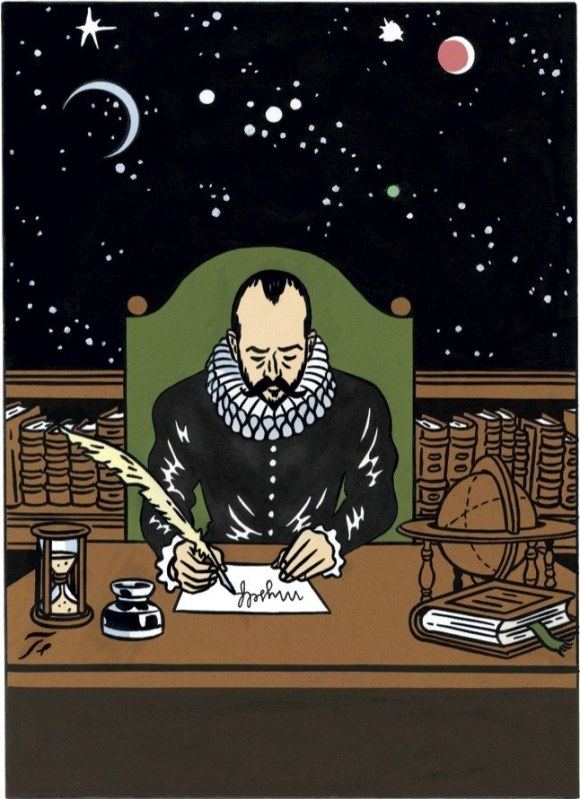
- Author: M. de Montaigne (1533-1592))
- Title: The Complete Essays
- Published: 1580
- Edition: Penguin Classic (1344 pages) + audio book 49 hrs 56 min
- List of Challenges 2019
- Monthly plan
- Classic Club Master list
Introduction:
- Michel de Montaigne explores the human condition
- …in a very personal and clever manner.
- His essays chart the course of 20 yr of self-investigation.
- He pretends to most of the vices.
- If there be any virtue in him, he says, it got in by stealth.
Conclusion:
- I enjoyed the most personal essays:
- Book I
- This selection of essays is ‘the hook’.
- They are personal and frank.
- Unfortunately there are also many essay in
- book II and III …. I consider ‘duds’.
Saddnes
Idleness
Liars
Fear
Happiness not be judged until after our death
Pedantry
Educating children
Friendship
Moderation
Solitude
Sleep
Prayers
Age
Book II
- …including 140 pages entitled “Apology for Raymond Sebond’
- The “Apology for Raymond Sebond” is
- three times as long as any other essay that Montaigne wrote
- The essay has been seen as an attack on authoritrian religion and
- a covert threat to Christian faith.
- It was a slog to listen to….and
- I just started to do some household chores
- …and let the words go in one ear and out the other!
- This essay sticks out like a sour thumb
- If you encounter this essay and feel as I did
- …just skip it!
Drunkenness
Conscience
Practice
Affection of fathers for children
Books
Cruelty
Glory
Thumbs
Cowardice
Anger
On resemblence of children to fathers
Book III (…there were only 3 essays I liked)
Repentance
Physiognomy
Experience
Last thoughts
- Montaigne is the frankest and honestest of all writers.
- He does have opinions that still ring true today.
- Strong point: Montaigne writes about themes that charm the
- reader ( see my list of favorites).
- We relate to them.
- Strong point: Montaigne’s style is not dry….but daring
- …filled with depth and witty observations.
- Weak point: don’t approach these essays expecting
- that they are an easy read (21st C standard)…they are not!
- The book was published 1580 and
- …written to one sex only.
- A certain nakedness of statement was permitted
- …which our manners of a literature addressed
- …equally to both sexes, do not allow.
- Montaigne could have used the advice of one of his
- favorite authors:
- “The eloquence that diverts us to itself harms its content.” (Seneca)
- #SomeEssaysBoring
 NancyElin.blog