
Classic: Mary Wollstonecraft
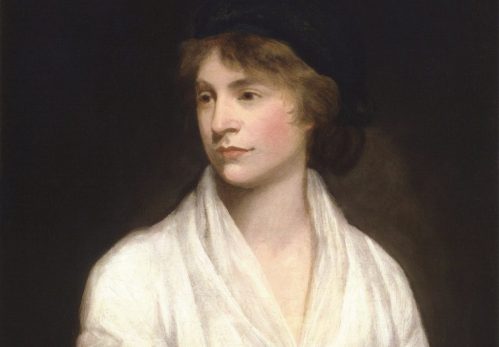
- Author: M. Wollstonecraft (1759-1797)
- Title: A Vindication of the Rights of Women
- Published: 1792
- Genre: philosophy
- List Challenges 2018
- Monthly planning
- Classic Club Master list
Feedback for Cleo Classical Carousel
Mary never had a formal education and she taught herself by
reading and working for a Scottish publication ‘Analytical Review’.
She wrote in her ‘peak’ 30 reviews per issue. Now that is a lot of reading…thinking….and writing. I guess she did like ‘namedropping’ .
Mary thought education/understanding (SENSE) was the touchstone…the standard by which judgement was made….and not as was the case by many women
being influenced by a gush of emotion! (SENSIBILITY)
This book needs a good eye to skim the ‘padding’ and get the Wollstonecraft’s important message. chapters 1-5 are the longest….then is it much easier.
One of my favorite chapters was 11 ‘Duty of Parents ( easy read and very short)
“The parent forms the heart and enlarges the
understanding of his child, has given the discharge of a duty.”
Introduction:
- A Vindication of the Rights of Women
- …is a document of 85.000 words (13 chapters, 222 pages)
- Wollstonecraft is an unusually repetitive writer
- ….and a lover of long quotes from Rousseau!
- This work could be condensed by 90 %
- …with no great amount of her sense lost.
Who was Mary Wollstonecraft?
- An in depth portrait of the author can be found here
- A self-taught London teacher, Mary
- ….and her sister Eliza became convinced
- that the girls they attempted to enlighten
- were already enslaved by a social training
- that subordinated them to men
- At the heart of Vindication of the Rights of Woman
- are the twin virtues of freedom of thought and devotion to family.
What is The Vindications in a nut shell?
- The document is a response to the many
- ‘Conduct Manuals’ circulating at the time.
- Jean-Jacques Rousseau: Emilius; Or, An Essay On Education. (1763)
- Dr. James Fordyce: Sermons To Young Women (1766)
- Dr. John Gregory: A Father’s Legacy To His Daughters (1774)
- Baroness De Stael: Corinne (1807)
- Mrs. Piozzi: Letters To And From The Late Samuel Johnson LL.D. (1788)
- Madame De Genlis: Adelaide And Theodore (1783)
- Hester Chapone: Letters On The Improvement Of The Mind (1773)
- Catherine Macaulay: Letters On Education (1790)
Reading strategy: 16 hours total reading
- Read the chapters preferably early in the day
- …with some strong coffee
- …when your mind is fresh.
- Wollstonecraft defends women
- against anti-feminist poets, clergymen,
- physicians and philosophers!
- She had read them all!
- Ch 1-3 – I took it slowly…just one chapter a day. = 5 hours
- Ch 4 – 5 = 5 hr
- Ch 6-7-8-9 took only 2,5 hours to read.
- I’m learning to skim..many extra paragraphs that
- are written to illustrate a single point
- example: ch 8: men becoming soldiers and statesmen
- or women who need representative is government.
- MW loves to elaborate on a proverbs
- …and more episodical observations.
- Ch 10-11-12-13 = 3,5 hr
Trivia:
- Novels, music, poetry, and gallantry,
- all tend to make women the creatures of sensation.
- Wollstonecraft: rejected the sentimental novel’s depiction of women
- silly shallow creature of emotion.
- Jane Austen: never mentioned Wollstonecraft by name
- …but several of her novels contain positive
- allusions to Wollstonecraft’s work….especially Sense and Sensibllity!
- Wollstonecraft:
- “ …reason is absolutely necessary to enable a woman to perform any duty properly,
- .. and I must again repeat, that sensibility is not reason!”
Conclusion:
- This was a great read….it really was!
- Warning: You just cannot rush the reading…it is too dense!
- I had to get used Wollstonecraft’s style
- She uses the ‘ask questions style.
- chapter 5 – 75 questions
- chapter 12 – (31x)
- chapter 13 – (29x)
- You have been warned!
- After reading 8 chapters
- ….I realized Wollstonecraft’s book
- is filled with self-indulgent verbiage.
- It is exasperating to read at times.
- Now I’ve decided to read the chapter
- selecting the CORE idea from each paragraph.
- I’m letting the rants against Rousseau flits by.
- Redundant questions per chapter
- …are getting only a glance from me.
- I get it….Wollstonecraft and Rousseau
- ….will never see eye to eye!
- I’ve finally finished A Vindication of the Rights of Women
- …and feel sad.
- I only wish I was given this piece of literature as a
- sophomore in high-school.
- It would have enlightened me more than the
- Catholic nuns who were part of the
- “pestiferous purple (pg 83)…which renders the
- progress of civilization a curse, and warps the understanding.”
- Wollstonecraft was well-read..for a woman of her times!
- Here are a few on the items she mentions:
- Milton
- Lord Francis Bacon
- Shakespeare: Hamlet
- Thomas Day: British author
- Job 38:11
- Matthew 25: 14-30 the parable of the five talents
- Philippians 4:7
- Mr David Hume
- S. Richardson (Clarissa)
- King Louis XIV
- Dr. Adam Smith: Scottish philosopher (Theory of Moral Sentiments, 1759)
- Gottfried von Leibniz (1646-1716) German philosopher
- Sir Edwin Sandys, English politician
- Lord Chesterfield’s Letters: (on education)
- Dryden
- Vicesimus Knox (1752-1821) essayist, headmaster, Anglican priest
- Lucretia: ancient Roman noblewoman
- Cerberus
- Dr. S. Johnson
- John Locke
- Jonathan Swift
- Charles James Fox, politician (1749-1806)
- Alexander Pope: 1743, Epistle to a Lady
- Cato
- WHEW!!
 NancyElin.blog
Hmm…this is on my classics club list as well. I put it on both spins but it escaped. I may have to move it up, but the fact that it feels padded is discouraging. But thanks for the review!
Padding? Oh, I just had to learn to read around the ‘padding’ and zoom in on the core issue.
If you read this book with that in mind….there is much to learn how in 18th C Mary was a trailblazer!
I wonder why she had to do so much name/book-dropping. Was it merely to prove that she was smart and educated, and to give her credibility? It sounds interesting. I hope to read it someday.
Mary never had a formal education and she taught herself by
reading and working for a Scottish publication ‘Analytical Review’.
She wrote in her ‘peak’ 30 reviews per issue. Now that is a lot of reading…thinking….and writing. I guess she did like ‘namedropping’ .
Mary thought education/understanding (SENSE) was the touchstone…the standard by which judgement was made….and not as was the case by many women
being influenced by a gush of emotion! (SENSIBILITY)
This book needs a good eye to skim the ‘padding’ and get the Wollstonecraft’s important message. chapters 1-5 are the longest….then is it much easier.
One of my favorite chapters was 11 ‘Duty of Parents ( easy read and very short)
“The parent forms the heart and enlarges the
understanding of his child, has given the discharge of a duty.”
This is on my list! I haven’t read it yet, but last year I read Woman in the 19th Century by Margaret Fuller, which also has a lot of name-dropping and digressions. It was interesting though.
I hope my notes will help while reading this book.
I needed to do some skimming to get to the end!
Mary loves to digress!