
#Classic Death of a Salesman
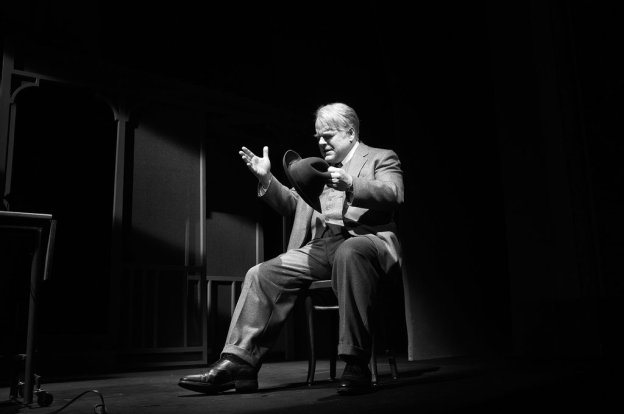
- Author: A. Miller
- Title: The Death of a Salesman
- Opening: February 10 1949
- Genre: tragedy of a common man
- Trivia: 1949 Pulitzer Prize for Drama and 1949 Tony Award for Best Play
- 50 Best Plays of the Past 100 years.
- List of Challenges 2018
- Monthly plan
- List of Plays
- Classic Club Master list
Quickscan:
- Before we begin the book….we know how it will end!
- The story revolves around
- …Willy Loman, (…notice name “low man”).
- He is a 63 yr salesman, who cannot understand
- …how he failed and cannot live the American Dream.
- Central: the hardships that come with trying
- …to meet social expectations in America.
- Irony: We never learn in the play what Willy sells!
Characters: major
- Willy Loman – insecure, self-deluded traveling salesman.
- He mirrors an everyday “character” of Post WWII American society
- inflexible to advice he just shuts people out and refuses to listen
- Tragic flaw: ridiculous idea of being “well-liked” as a way to succeed.
- Linda Loman – quintessential 50s housewife, devoted doormat
- blinded by loyality.
- Biff is telling her the truth but she is not listening.
- Hap Loman: son who represents Willy’s sense of importance,
- ambition, servitude to expectations.
- He lived in Biff’s shadow all of his life, ignored.
- Biff Loman: son who represents Willy’s vulnerable, poetic, tragic side.
- He has had twenty to thirty jobs,
- all of them fail to improve his station in life.
- But Biff is the only character in the play
- who changes from ignorance to knowledge.
Theme: betrayal
- Generations of Loman men betray their family.
- They place their desires above their families well-being.
- Grandfather: suddenly leaves when Willy was 4 yr.
- Father: suddenly leaves to find success in Alaska.
- Willy: betrays family (wife) with s sordid affair.
- Sons: Biff and Hap, abandon father
- in restaurant to trail after 2 women.
Theme: suicide as a means
- Willy is determined to eliminate himself in
- what has turned out to be an unfulfilling life.
- The payment of his insurance policy will help family survive.
- Suicide is a method for something else.
- Irony: Willy Loman is worth more dead
- ….than alive.
Structure:
- Structure: 2 acts + Requiem (118 pg)
- Reading time: 2,5 hours
- The acts are divided into conversations
- about the past and present.
- Timeline: an evening and the following day.
- The he action is interrupted by
- flashbacks or memories of a
- period approximately 17 years earlier.
- late 1920s – early 1930s (The Depression)
Staging the past and present:
- Shakespeare never tried to show the past as the present.
- His characters describe a past event in dialogue.
- Miller uses the forestage to illustrate
- Willy’s imaginings the of past.
- Flashbacks track Willy’s mental decline.
Modernism:
- Miller was modern because of his staging (forestage)
- and he believed a tragic downfall can happen
- to a common man, as Willy Loman.
- Aristotle stated a tragic hero is always
- a very important person.
Conclusion:
- This is one performance I wish I had seen March 2012
- Death of a Salesman (link play review NYT, 2012)
- with Philip Seymour Hoffman.
- It is a novel in a nutshell…so powerful!
- I’ve watched the movie (1985) starring Dustin Hoffman.
- To my delight I found the complete audio recording
- of the Broadway play (2012) click here
- and listen to Hoffman’s stunning performance!
- The voices mesmerized me.
- You could hear Willy hallucinatory….delusional.
- Death of a Salesman is considered the best play
- …written by an American playwright.
Feedback: comment Cleo @ClassicalCarousel (new blog!)
This play was just a complex as a novel…and only 2,5 hrs reading time!
I did not even go into the symbols in the play (rubber hose, silk stockings and a flute)…but you can discover them your self. I did notice after reading the play that Arthur Miller used music as a symbol. If I had not listened to the 2012 version on You Tube…I’d never known! You miss this symbol if you are not aware that the play begins and ends with flute music…and at other times in the play. It is a reminder to Willy that he could have chosen a free and wild life in the country like his father did. Lost opportunity…poor Willy
Last thought: my favorite quote:
- “Willy was a salesman.
- He’s a man way out there in the blue
- …riding on a smile and a shoeshine,”

 NancyElin.blog
Great review, Nancy! I’ll definitely have to read this sooner rather than later!
This play was just a complex as a novel…and only 2,5 hrs reading time!
I did not even go into the symbols in the play (rubber hose, silk stockings and a flute)…but you can discover them your self. I did notice after reading the play that Arthur Miller used music as a symbol. If I had not listened to the 2012 version on You Tube…I’d never known! You miss this symbol if you are not aware that the play begins and ends with flute music…and at other times in the play. It is a reminder to Willy that he could have chosen a free and wild life in the country like his father did. Lost opportunity…poor Willy