
#Classic: Dickens The Christmas Carol
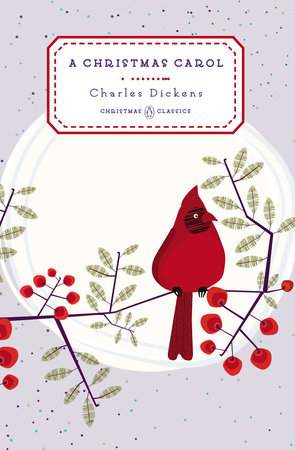
- Author: Charles Dickens
- Genre: novella
- Title: The Christmas Carol
- Published: 1843
- Themes: memory, importance of family and friends , generosity
- Setting: London
Trivia:
- Charles Dickens was among the first members of The Ghost Club 1862 focusing on paranormal ghosts and haunting.
- Dickens was thought to have created the character of Ebenezer Scrooge after stumbling across the wealthy trader’s tombstone.He was shocked by the inscription, “Meanman” Dickens noted “To be remembered through eternity only for being mean seemed the greatest testament to a life wasted.”What Dickens failed to realise was that the tombstone actually read “Mealman” in recognition of the desceased successful career as a corn trader.
Introduction:
- Published in England in 1843, Charles Dickens’s A Christmas Carol had an immediate
- and lasting impact on the Christmas holiday.
- The novel’s lessons of charity and family spoke directly to a Victorian society.
Characterization: Ebenezer Scrooge:
- Dickens always uses names of characters to attract the readers imagination.
- Dickens uses Ebenezer Scrooge to remind us of things we ought not forget.
- The first name appears 2 x Marley’s ghost. 1 x Fezziwig 1 x on Scrooge’s gravestone.
- Ebenezer is anglicized version of the Hebrew name eben = stone and ezer = helper
- Literally = a stone that would offer assistance
- Metaphor: the gravestone with the name ‘Ebenezer’ offers Scrooge help.
- It reminds him (and the reader) how his life might end it he does not become a new man.
Characterization: Ebenezer Scrooge by his words: (pg 9)
- Words like are there no prisons, Union workhouses, The Treadmill and Poor Law show Scrooge’s opinion about helping the poor.
- He is not donating any money to help the poor!
- “Nothing”, replied Scrooge. You wish to be anonymous? I wish to be left alone.“
- Workhouse: public institution in which the destitute receive board and lodging
- The Treadmill: machine designed to power a mill with manual labor
- Poor Law: allowed the poor to be brought to workhouses
Characterization: by physical appearance Ebenezer Scrooge:
- Scrooge’s cold heart has affected his appearance.
- Nipped his pointed nose
- shrivelled his cheek
- stiffened his gait
- made his eyes red
- his thin lips blue
- his grating voice.
Ebenezer Scrooge:
- Scrooge represents a class of rich Victorians.
- They refuse to see the plight of the lower working class.
- They miss the warmth of family that the poor manage to maintain without money.
- Greed is “squeezing, wrenching, grasping, scraping, clutching” the life out of these Victorian snobs.
Foil:
- Foil is secondary character who is used as a comparison to show the difference with the main character.
- Fred, Scrooge’s nephew, embodies the joy of sharing Christmas
- “..a good time,a kind, forgiving, charitable time […]
- when men and women consent to open their shut up hearts freely…”. (pg 6)
- Scrooge reacts with bitter clearsightedness:
- “…every idiot who goes about with ‘Merry Christmas’s should be boiled with his own pudding,
- buried with a stake of holly through the heart.” (pg 6)
- Fred: face ruddy, all in a glow, eyes sparkled, – Scrooge: shrivelled cheek, red eyes, thin blue lips
Expression: to come down handsomely (pg 3)
- ‘they often “came down” handsomely, and Scrooge never did.’
- This is an ‘old fashioned’’ expression, but if you don’t understand it you will not see the reference to Scrooge.
- The weather gave more in rain and snow than Scrooge gave in money.
Expression: I’ll retire to Bedlam (pg 8)
- Bedlam was a popular name for St. Mary of Bethlehem hospital in London at the time of Dickens’s classic.
- It was a hospital for the mentally disturbed.
- Scrooge felt that it was more sane there than outside where people foolishly were celebrating Christmas.
Expression: St Dunstan (pg 12)
- Dunstan was a monk, archbishop of Canterbury and a Saint.
- In an old English folk rhyme he pulls the devil’s nose with red-hot tongs.
- Scrooge feels St. Dunstan should have nipped the devil’s nose with some of the cold wintery weather.
Imagery: vivd example of a mental picture is on page 3
- “Even the blindman’s dogs appeared to know him; and when they saw him coming on,
- would tug their owners into doorways and up courts and then would wag their tails
- as though they said ‘No eye at all is better than an evil eye, dark master.
- ’The dogs say that being blind is better than having an evil eye
- This refers to having some part of you that drives other people away.
- Unfortunately, Scrooge couldn’t care less what the dogs think of him.
Symbols:
- One piece of coal fire in counting-house: Scrooge’s miserly ways
- Knocker: symbolizes ‘welcome’, becomes ghostly head of Marley = beware those who enter.
Conclusion:
- Holiday….#MustRead!
- Merry Christmas….and to all a good night!
 NancyElin.blog
All these years of reading and watching and listening to A Christmas Carol and yet I’ve learned more about it from your post than I ever did before!!
…good to hear you liked the review!
Have a great Christmas!
I did. You too!
I just posted about reading A Christmas Carol. It was a very good experience. I remember in the past you had said you really liked the story.
I am going to look for a smaller edition for future readings. I read the story in a large format edition with lovely illustrations but it is awkward to handle.
This is a great classic….real Christmas-y feeling!
Hope you are having a great hoikday season!
How’s the weather in Santa Barbara?
Thanks, Nancy. We usually have a quiet holiday, and enjoy it that way. The weather here is beautiful, cold in the morning but warms up midday. Much better than last year, when we had a fire nearby and nearly a month of smoke and ashes in the air.
Ah, looks like we’re all reading this book this Christmas! Have a very Merry Christmas, Nancy, and a wonderful holiday season!
The xame to you….Merry Christmas!