
#NonFicNov Black Lives, White Law

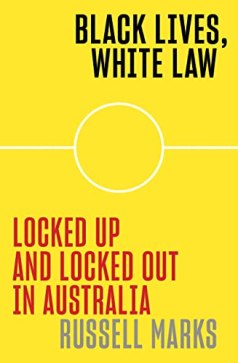
- Author: Russell Marks
- Title: Black Lives, White Law (368 pg) 2022
- Genre: Non-fiction
Conclusion:
- The book can be divided into 3 parts:
- Powerful introduction...Mr Marks does NOT hold back!
- Case studies and the people who want to advocate change of the criminal system.
- Conclusion: Australia must change.
- For 230 years the Australian criminal law has been
- …a tool of colonisation.
- Mr Marks makes a very strong arugument (ch 2) that
- despite all the bourhaha, uproar and hubbub about
- that Captian Cook was authorised to take possession of Australian
- eastern coast with consent of the King of Britain this is
- …an illuison, a product of the imagination!
- Captian cook bunny-hopped up the coast sticking
- a flag pole here and there then left for good!
- It was all a blatant “land-grab.”
Last thoughts:
- The legal case studies at times were difficult to read
- …so much injustice
- …and nothing changes.
- I must admit I had to skim some chapters
- because it was a firehose of information.
- I could not process it all.
- Good news: Mr Marks has drawn on his
- legal expertise to bring together in one
- book a impressive view of what the British brought to Australia:
- …their guns, chains, shackles and lashes.
- And they brought their own law
- …that to this day is ruining First Nation people’s lives.
- Just last month the Indigenous voice to parliament
- …referendum suffered an resounding defeat.
-
Will Black Lives, White Law win Australian Political Book 2023?
- I don’t think so.
- This book is definitely geared to readers with an interest
- in this dilemma that Australia sees itself in.
- It is definitely a wake-up call for Australia.
6 Comments
Post a comment
 NancyElin.blog
HAPPY THANKSGIVING NANCY!
Happy Thanksgiving to you too!
Don’t forget…pace yourself durng T-day meal
because you have to save “room for some pie! :)
I did
I did
I’m reading a book called 1788 written by Watkin Tench, one of the officers that came out on the First Fleet. He was obviously a sensitive, thoughtful man but at no point in his journal writing did he ever consider that maybe the reason the Natives (as he referred to them) didn’t want to have friendly relationships with them and retaliated every time one of the whites stole their spears, canoes etc was that they were angry, very angry that their country was being taken and despoiled. The English were so convinced that this land was for the taking and that they had every right to do so. That thinking was embedded in every structure, relationship and law that followed – which brings us to the contents of this book.
The injustice and arrogance of white British settlers in Australia exposed in this book along with “Killing For Country” by David Marr
was difficult to process. Thanks for highlighting the connection to your latest book “1788”.